 by
by 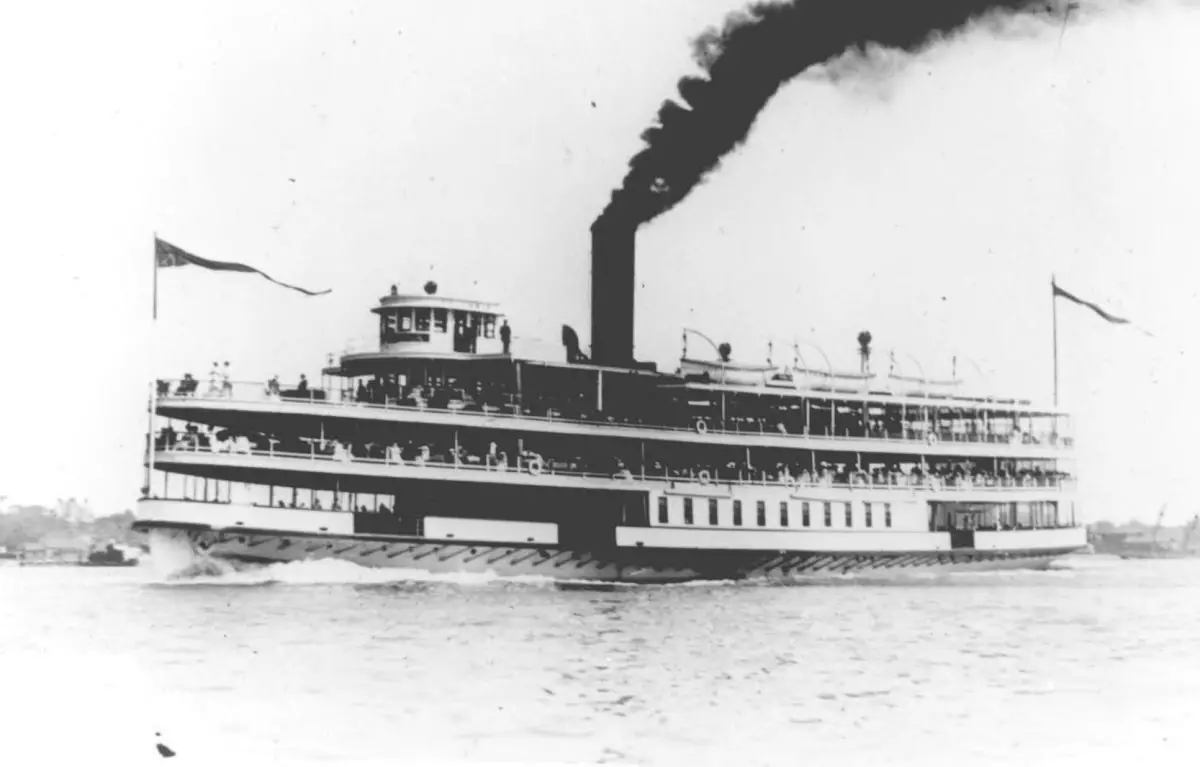
At the start of the twentieth century, steamships carried thousands of passengers across Lake Erie between Detroit and Buffalo. At the start of the twentieth century, Detroit Buffalo steamship travel carried thousands of passengers across Lake Erie each year. Overnight vessels connected Detroit with Buffalo, linking the Midwest to eastern railroad networks and Atlantic cities. In 1902, competition between rival companies sparked an intense fare battle that became known as the Detroit–Buffalo steamship rate war.
I ran across this piece in the Harbor Beach Times from July 1902. It highlights a rate war between railroads and steamships over excursions between Buffalo, New York, and Detroit, Michigan. It signals a sign that it’s the beginning of the end of steamship dominance on the Great Lakes in favor of railroads. Of course, it will only be a few short years before automobile travel dooms both forms of transportation.
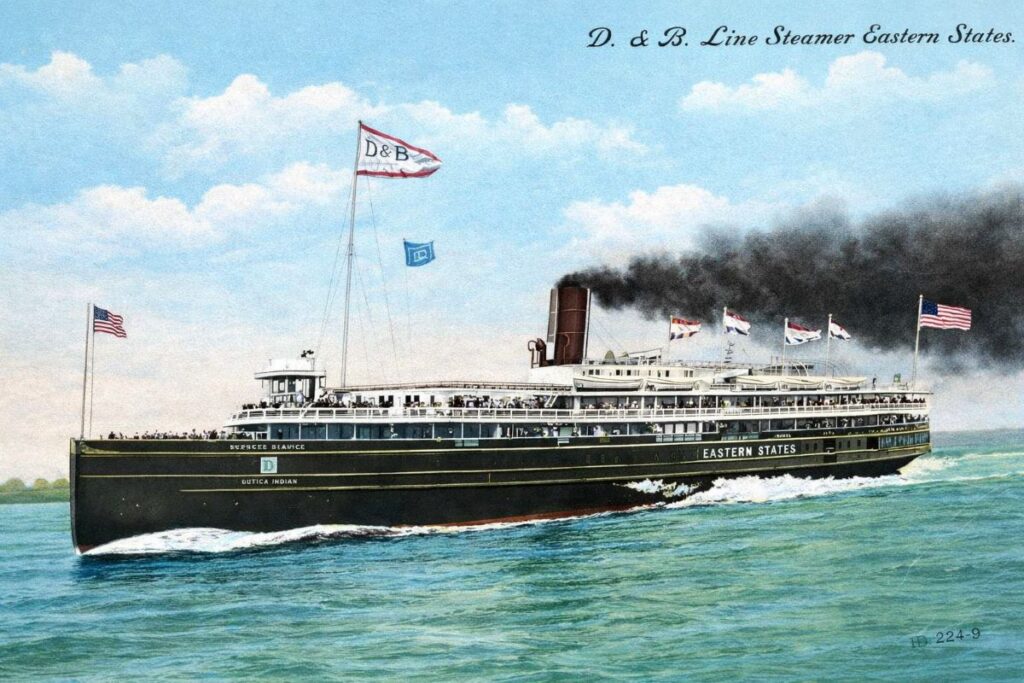
The distance between Detroit and Buffalo across Lake Erie is about 260 miles. Passenger steamships usually made the crossing overnight in roughly 12 to 14 hours, departing Detroit in the late afternoon and arriving in Buffalo early the following morning.
Detroit–Buffalo Steamship Travel Was Once a Major Route
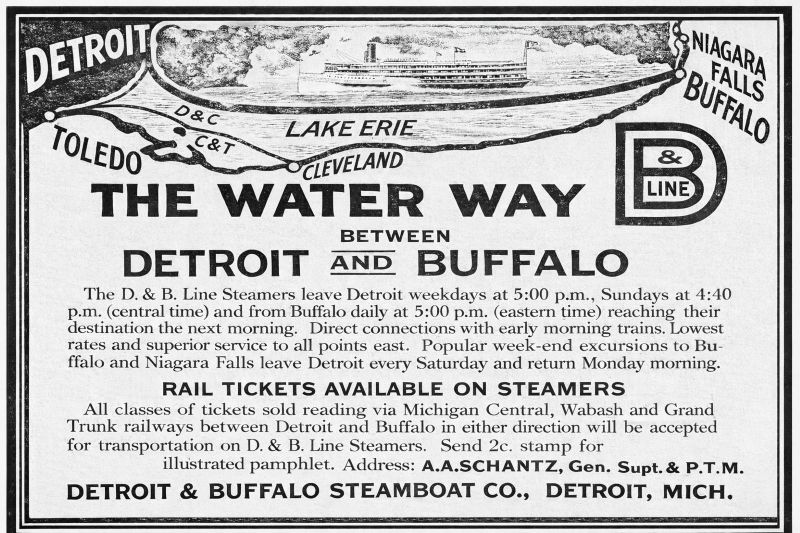
At the start of the twentieth century, traveling between Detroit and Buffalo often meant boarding a steamship and crossing Lake Erie overnight. Long before interstate highways and commercial air travel, Great Lakes passenger steamships connected Midwestern cities with eastern rail lines and coastal destinations.
The Detroit–Buffalo route was one of the busiest corridors on the Great Lakes. Thousands of passengers traveled between the two cities each year, including business travelers, immigrants heading west, and vacationers bound for resorts along Lake Erie and the upper Great Lakes.
Steamship companies competed aggressively for those travelers. In 1902, that competition erupted into a dramatic fare battle that newspapers soon described as the Detroit–Buffalo steamship rate war.
The conflict drove ticket prices sharply downward and revealed how fiercely companies fought to control passenger traffic on the Great Lakes.
Did You Know?
- The Detroit–Buffalo route covered about 260 miles across Lake Erie.
- Some passenger steamships carried more than 700 travelers.
- The overnight voyage typically lasted 12–14 hours.
1902 Newspaper Report on the Detroit–Buffalo Steamship Rate War
Weekend Railroad Excursions Started It. Passenger Boat Men Accepted the Challenge.
Rates tees Than One Cent Per Mile Now Obtainable
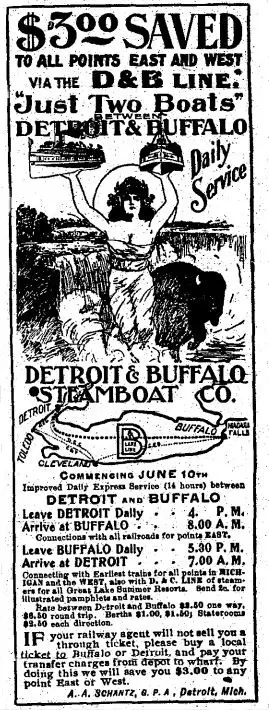
The promised rate War between the rail and lake lines operating between Detroit is now on in full blast, the opening gun having been fired Friday when the Detroit & Buffalo Steamboat Co. announced that it had established its first-class rate at exactly one-half of the second-class rail rate, thus making the rate by boat less than one: cent a mile, and allowing au first-class privileges.
The trouble between the rail and lake lines began when the rail line began to run weekend excursions to Buffalo, sell second-class tickets for $5, and then allowed first-class privileges, checked baggage, and granted sleeping car privileges without restriction.
Detroit & Buffalo Line Cut Rates To Answer Challenge
General Passenger Agent A. A. Schantz of the Detroit & Buffalo line, when he learned of this, he then notified the passenger agents of the Grand Trunk, Wabash, and Michigan Central roads that unless some restriction was made, he would proceed to cut the rates, not only on weekend excursions but On regular traffic. He fixed a daily limit on this action, but the railroads could hot see the situation from his point of view and would not meet his proposition.
The. ten days expired on Friday, And the Detroit & Buffalo line at once inaugurated a $2.50 regular rate to Buffalo, a distance of 256 miles— less than a cent a mile, Mr. Schahtz said Friday that should the railroads want a rate war and meet the present cut he would come down another dollar and, if necessary, carry passengers from the Eastern States and the Western States for 50 cents.
Weekend Tourist Excursions Between New York and Michigan
Speaking of the situation on Friday, Schahtz said that the new Detroit and Buffalo boats were built for legitimate business, and they had created this mainly for the weekend excursions, something which, until the new boats went on the run, had not existed between the two terminals
The new rate fixed by the Steamboat line will make a through rate to New York on all lines except the New York Central, $10:50; Boston, $13:40; and Philadelphia, $10.40, with a special rate to eastern summer resorts: from Buffalo to Detroit $2.50, Saginaw $5.66, Bay City $5.96, Grand Rapids $7.09, and Chicago $8.59.
Source: Harbor Beach Times, July 25, 1902
Steamships Dominated Great Lakes Passenger Travel
Before modern highways existed, water travel remained one of the most practical ways to move large numbers of people across the Great Lakes region. Railroads connected many cities, but steamships offered a comfortable alternative. Travelers could board a vessel in the evening, sleep in a cabin overnight, and arrive at their destination the next morning.
The Detroit–Buffalo run was particularly important because it connected two major transportation networks. Detroit served as a gateway to the Midwest and the upper Great Lakes, while Buffalo connected passengers to eastern rail lines serving New York, Pennsylvania, and the Atlantic coast.
Steamships running this route often carried:
- overnight passengers
- freight and express cargo
- mail shipments
- tourists heading to lake resorts
For many travelers in Michigan and Ohio, the steamship trip across Lake Erie was a routine part of long-distance travel.
The Detroit & Cleveland Navigation Company
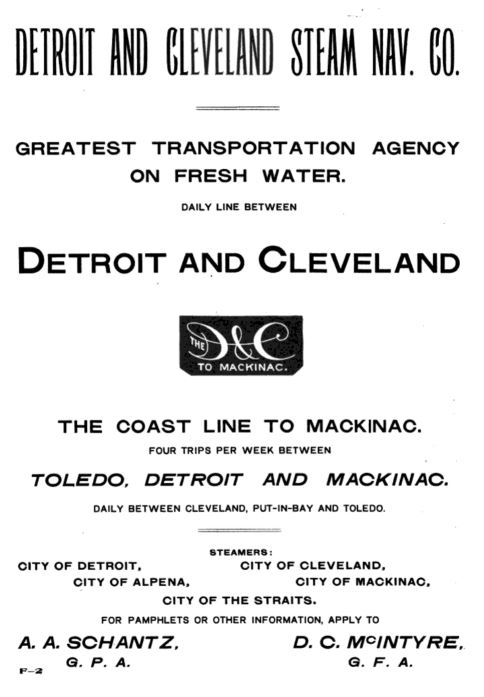
One of the most powerful players on the Great Lakes passenger market was the Detroit & Cleveland Navigation Company, often known simply as the D&C Line.
Founded in the nineteenth century, the company developed an extensive fleet of passenger steamers serving major cities across the region.
By the early 1900s, D&C vessels connected:
- Detroit
- Cleveland
- Buffalo
- Mackinac Island
- other Great Lakes destinations
The company invested heavily in large and comfortable steamships designed to attract travelers seeking convenience and luxury. Passengers could enjoy dining rooms, lounges, and private cabins during overnight voyages.
The D&C Line became one of the best-known passenger ship operators on the Great Lakes.
Rival Steamship Lines & Rail Enter the Detroit–Buffalo Market
Competition intensified as other steamship operators sought to capture part of the Detroit–Buffalo travel market. Independent companies launched vessels along the Lake Erie route, offering passengers alternative schedules and sometimes lower fares.
Steamship operators understood that controlling the Detroit–Buffalo route meant access to a large pool of travelers moving between the Midwest and the eastern United States. As a result, rival companies began competing more aggressively on price and service. By 1902, that competition escalated into a full-scale rate war.
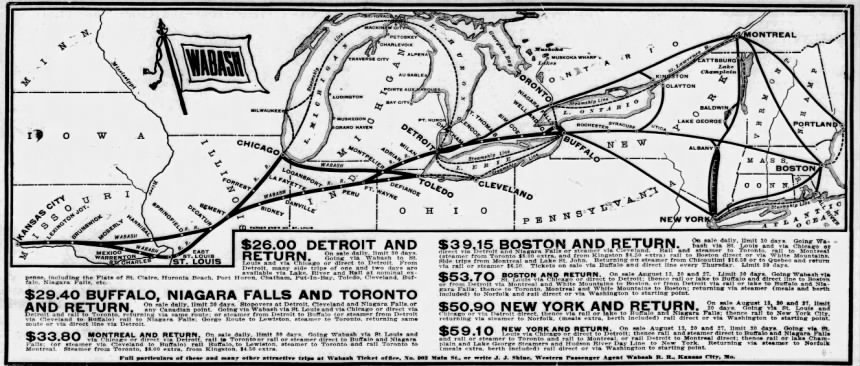
Railroads like the Wabash did not directly operate passenger steamships, but they competed indirectly with Great Lakes passenger lines such as the Detroit & Buffalo Transit Company and the Detroit & Cleveland Navigation Company. Travelers moving between Detroit and eastern cities had two main choices: take a train across Ohio and New York, or board an overnight steamship across Lake Erie to Buffalo and then transfer to eastern railroads. Both systems targeted the same passengers—business travelers, tourists, and long-distance rail connections—so fare promotions and advertising campaigns often reflected this rivalry between rail and lake transportation networks.
The 1902 Detroit–Buffalo Rate War Begins
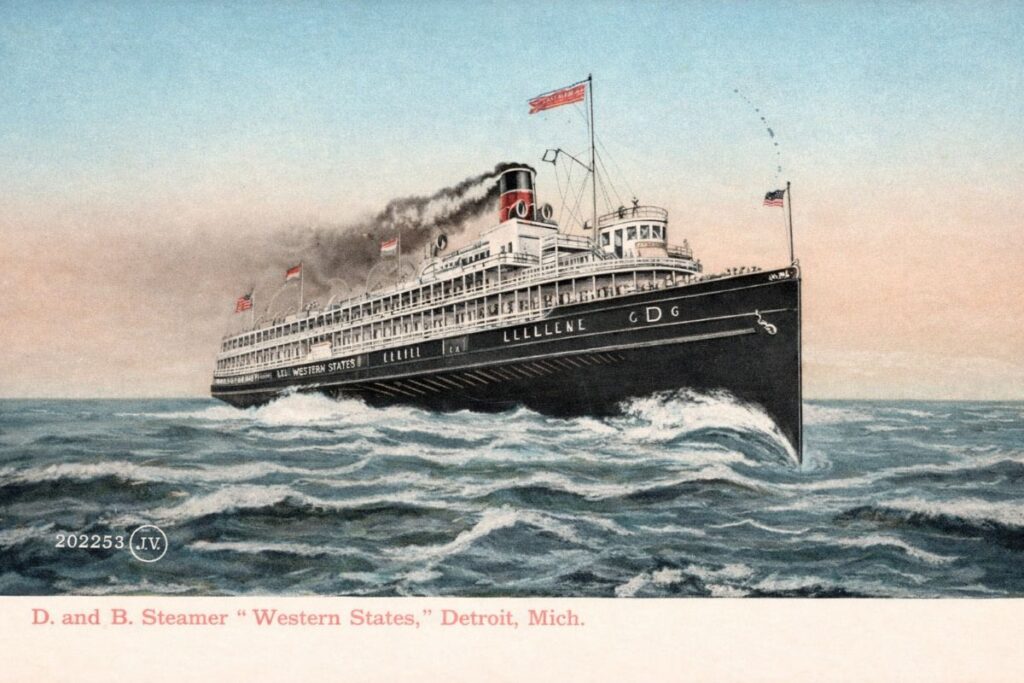
In the summer of 1902, steamship companies began cutting ticket prices on the Detroit–Buffalo route in an effort to attract more passengers.
The fare reductions were dramatic.
Companies slashed ticket prices far below their normal levels, sometimes selling passage for only a fraction of the typical cost. Passengers quickly noticed the opportunity. Travelers who might otherwise have taken the train or postponed their journey found that steamship travel had suddenly become remarkably affordable.
The low fares increased passenger traffic but also placed heavy financial pressure on the companies involved. Each operator hoped that competitors would eventually withdraw from the route or agree to restore normal pricing.
Newspapers Report the Fare Battle
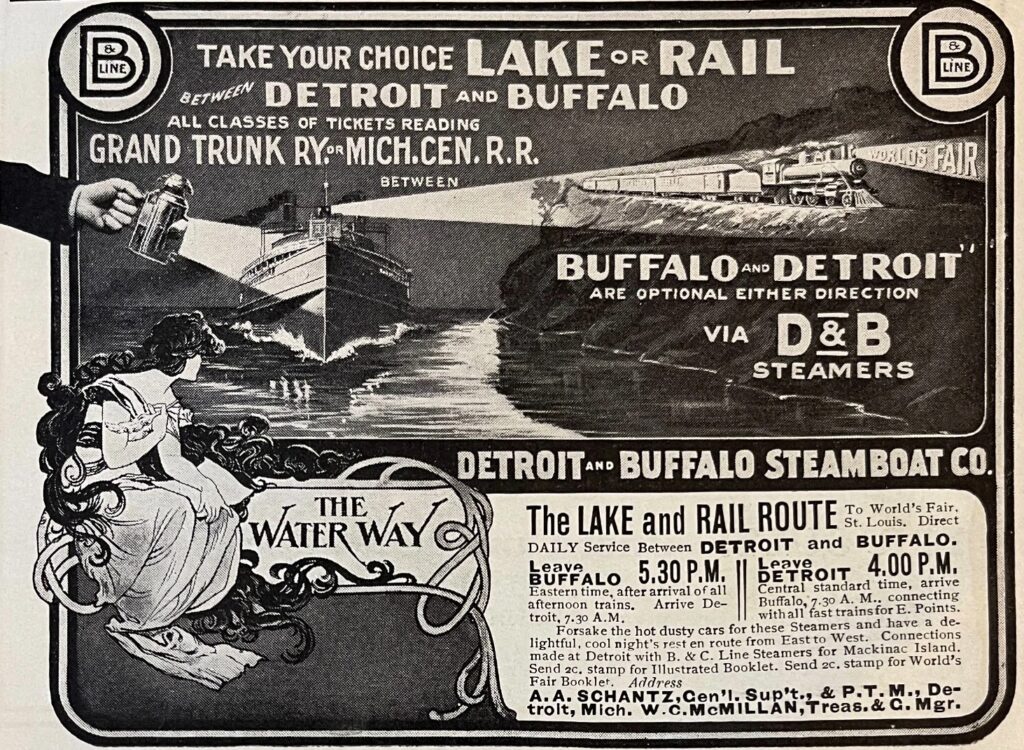
Newspapers across the Great Lakes region closely followed the unfolding fare war. Reports described how companies continually undercut one another’s ticket prices. Advertisements promoted unusually cheap fares designed to lure travelers away from competing ships.
The Detroit–Buffalo route became one of the most closely watched passenger markets on the Great Lakes. For travelers, the situation offered an unexpected advantage. Affordable fares made it easier to cross Lake Erie or continue eastward by rail. For steamship operators, however, the competition threatened profits.
Operating large passenger vessels required substantial fuel, crew wages, and maintenance costs. Selling tickets at extremely low prices could only be sustained for a limited time.
Why the Detroit–Buffalo Route Was So Valuable
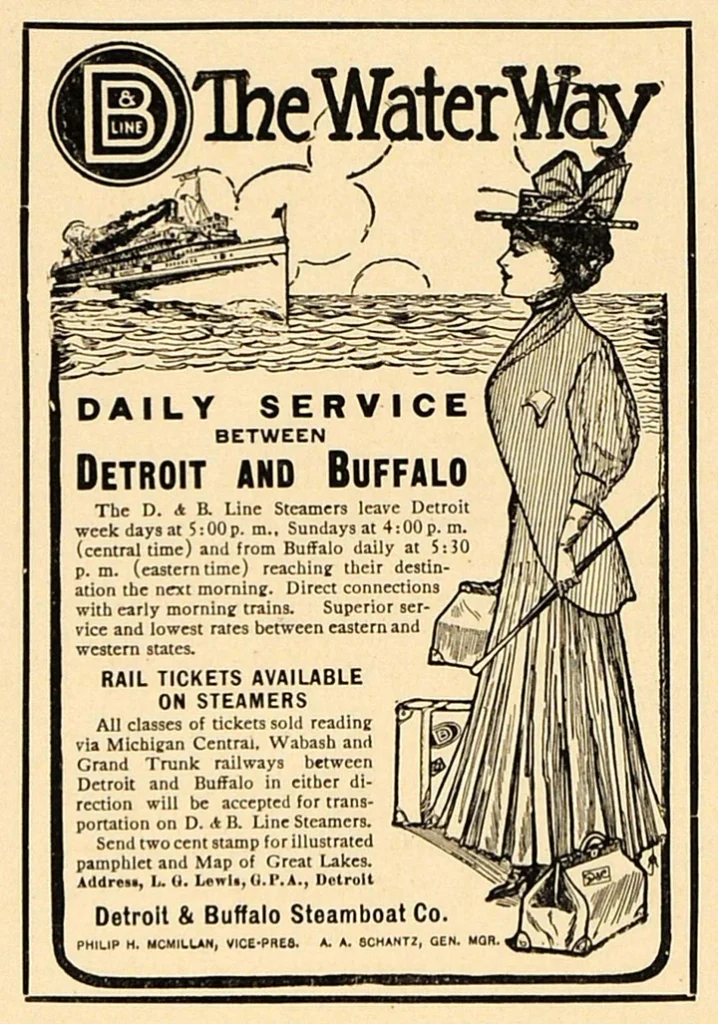
The Detroit–Buffalo route held strategic importance in the broader Great Lakes transportation network.
Travelers arriving in Buffalo could easily connect with railroads serving cities such as:
- New York
- Boston
- Philadelphia
- Pittsburgh
Meanwhile, Detroit offered access to rail lines running across Michigan and into Chicago and the western states. Steamship travel, therefore, functioned as a critical link between the Midwest and the eastern seaboard.
Companies that controlled passenger traffic on Lake Erie could influence the flow of travelers moving across the region. That strategic importance explains why steamship companies were willing to engage in such an intense fare battle.
Other Great Lakes Steamer Passenger Routes
- Detroit–Cleveland
- Chicago–Mackinac
- Buffalo–Duluth
Steamships Offered Comfort and Convenience
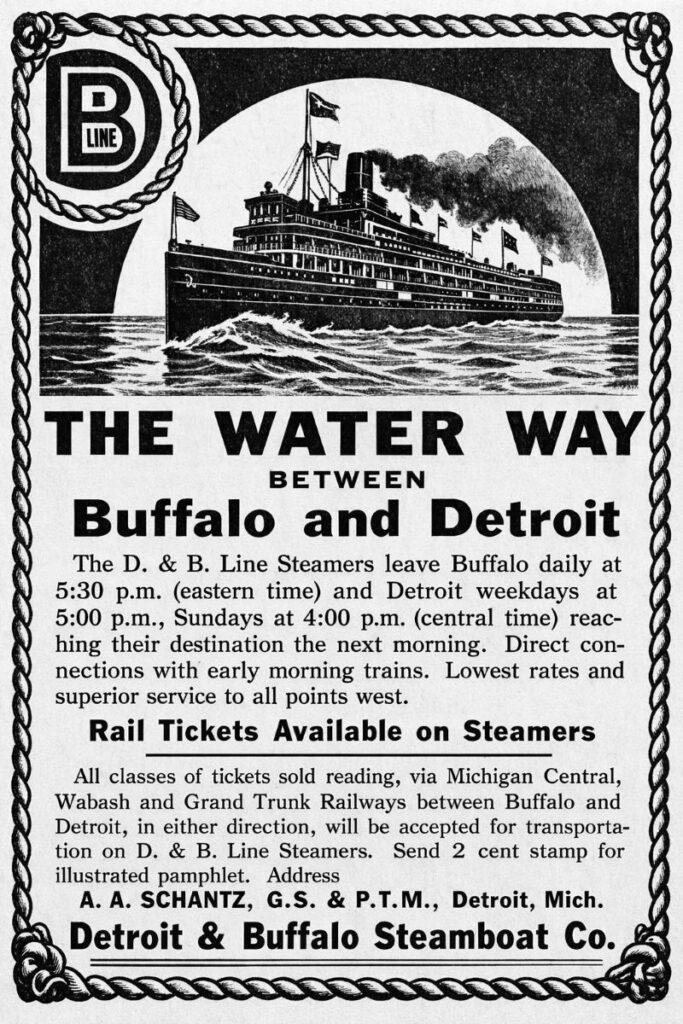
Despite the price war, steamship travel remained attractive because of the experience it offered passengers. Many vessels featured comfortable accommodations for overnight journeys across Lake Erie.
Typical amenities included:
- private sleeping cabins
- dining rooms serving hot meals
- spacious lounges
- open decks for fresh air and lake views
Passengers often described the trip as both relaxing and scenic. Even when trains could complete the journey faster, some travelers preferred the quiet comfort of an overnight voyage on the water.
How the Fare War Affected Steamship Companies
While passengers benefited from cheap fares, steamship companies faced mounting financial pressure. Fuel costs for large vessels remained high, and maintaining crews required steady revenue. As ticket prices dropped, companies risked operating their ships at a loss.
Eventually, such fare wars often ended when companies negotiated agreements to stabilize pricing or withdrew vessels from overcrowded routes. Although the Detroit–Buffalo rate war generated intense publicity, it also demonstrated how volatile the passenger shipping business could be on the Great Lakes.
The Gradual Decline of Passenger Steamships
In the decades that followed, technological changes began reshaping transportation across the Great Lakes region. Railroads improved service and expanded routes, offering faster travel between major cities. Later in the twentieth century, highways and automobiles made long-distance travel more flexible.
Air travel eventually replaced many overnight passenger routes entirely. By the mid-twentieth century, most Great Lakes passenger steamship lines had either closed or shifted focus to tourism. The once-busy Detroit–Buffalo route that sparked the 1902 rate war gradually faded from the transportation map.
The Legacy of Great Lakes Passenger Travel
Although passenger steamships eventually disappeared from regular service, their influence on regional travel remains significant. For decades, these vessels carried millions of travelers across the Great Lakes, connecting communities and supporting commerce throughout the Midwest. Routes such as Detroit–Buffalo played a key role in linking Michigan with the eastern United States.
The 1902 Detroit–Buffalo steamship rate war offers a glimpse into the competitive world of early twentieth-century transportation, when companies fought aggressively for passengers moving across Lake Erie. Today, the story stands as a reminder of how important steamships once were in shaping travel and trade across the Great Lakes.
FAQs – Detroit Buffalo Steamship Travel
How far is Detroit from Buffalo by water?
The distance across Lake Erie is roughly 260 miles.
Did steamships travel overnight between Detroit and Buffalo?
Yes. Most vessels departed Detroit in the evening and arrived in Buffalo the next morning.
When did Great Lakes passenger steamships decline?
Passenger service gradually declined after World War II as automobiles and airplanes became dominant.
Related Reading
The Side Wheeler Steamboats On Michigan’s Saginaw River – I ran across this advertisement for a side wheeler steamboat line running a route between Saginaw and Bay City. While information is scant, it does offer a little nugget of traveling by riverboat in Mid Michigan in the 1870s.
Steamer B.F. Ferris Burned In Caseville 1891 – On July 29, 1891, the Port Huron Daily Times published this short account. “The steamer B.F. Ferris, plying between Tawas and Caseville, burned at her dock in the port of Caseville Saturday night. The crew barely escaped with their lives.
Great Lakes Cruising History – 100 Luxurious Years Of Travel – In the days before the highway and autos, the only way to travel the vast distances of the Great Lakes was by sail and steamer. In the mid-1800s until well into the 1950s, one could travel most of the lakes in style and comfort. One of the most famous and beloved ships was the SS South American.