Best Boating Lakes in Michigan: From Inland Gems to Great Lakes Harbors
A 20-foot pontoon that handles beautifully on Higgins Lake can become a dangerous liability the moment it hits the unpredictable chop of Saginaw Bay….
News History & Fun in Michigan
![]()
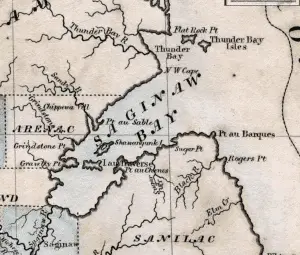
Saginaw Bay is a large inlet of Lake Huron, located along the eastern shoreline of Michigan’s Lower Peninsula. Known for its rich biodiversity, the bay supports vibrant fisheries, wetlands, and recreational activities, making it a hub for environmental conservation and tourism. Saginaw Bay also faces ecological challenges, such as nutrient pollution and invasive species, which have spurred ongoing restoration efforts to preserve its delicate ecosystem.
A 20-foot pontoon that handles beautifully on Higgins Lake can become a dangerous liability the moment it hits the unpredictable chop of Saginaw Bay….
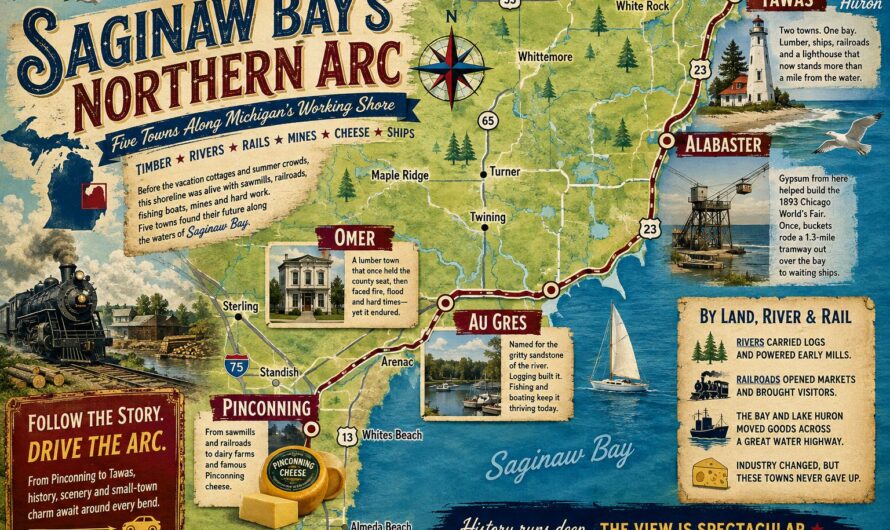
Follow five towns along northern Saginaw Bay where timber, rivers, railroads, gypsum, cheese and tourism shaped local life. This Michigan history hub gathers videos, photographs, supporting articles and travel stops from Pinconning through Omer, Au Gres and Alabaster to Tawas Bay.
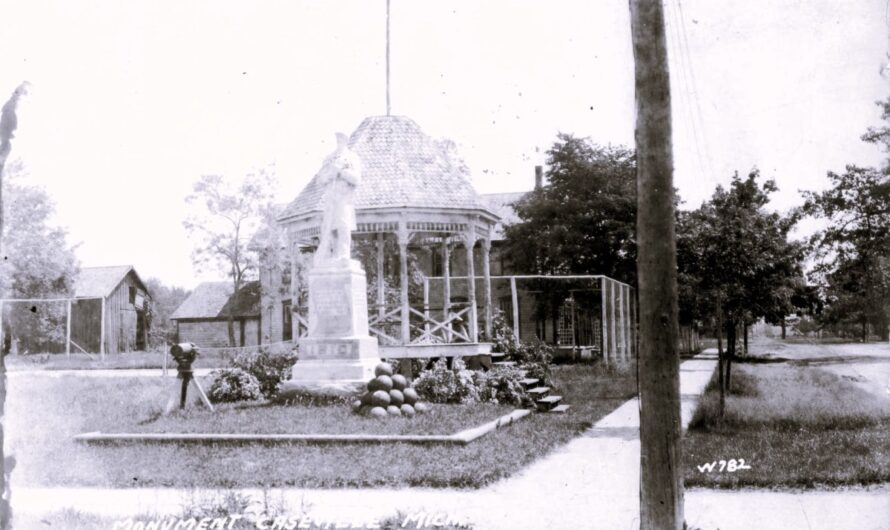
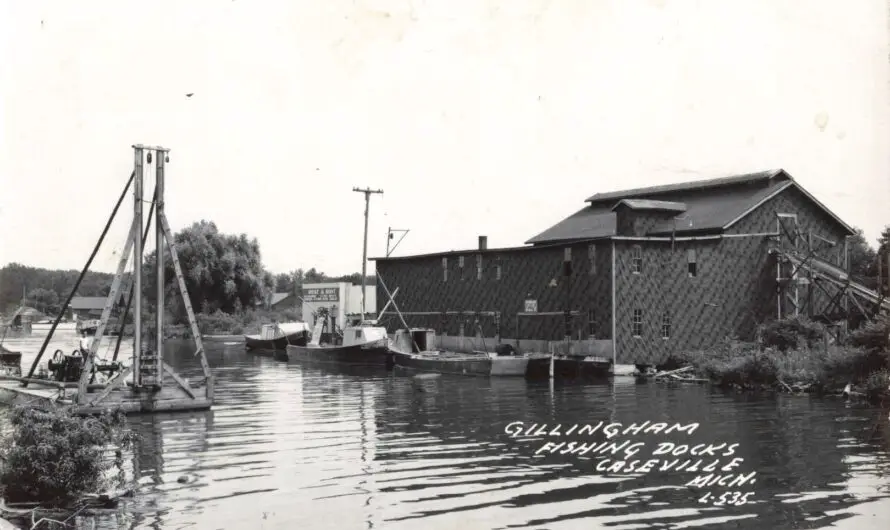
In the late 1800s, Caseville’s salt wells produced up to 50,000 barrels annually, a massive output that fueled the rapid growth of this Saginaw Bay…
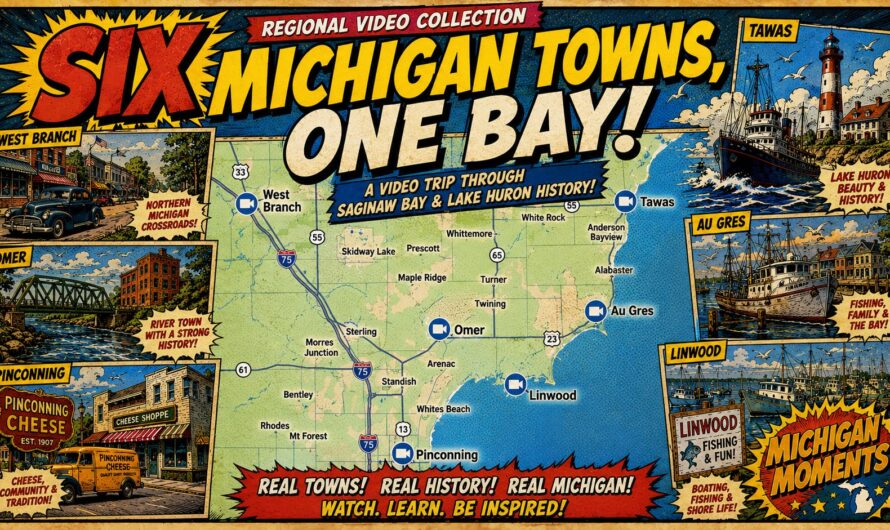
These six Michigan Moments videos follow small towns shaped by Lake Huron, Saginaw Bay, railroads, lumber, cheese, fishing and inland roads. From Tawas to Linwood, each town adds another piece to the story of northeast Michigan and the Great Lakes Bay region.
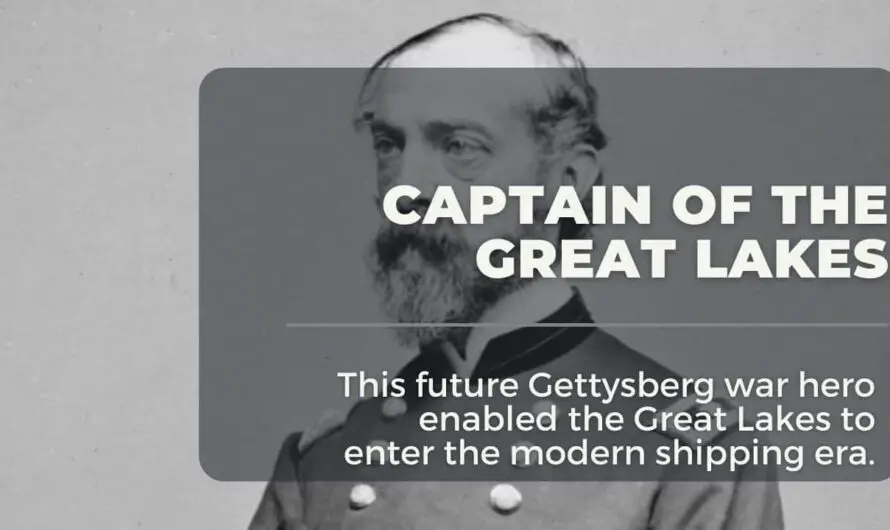
In the mid 1800’s much of Michigan was wilderness. In 1857, Captain George Meade took over the Lakes Survey mission of the Great Lakes.
The history of Au Gres, Michigan unfolds through rare photos and vivid storytelling. From Native fishing camps to sawmills and steamboats, this lakeside town’s past is rich with change, work, and water.
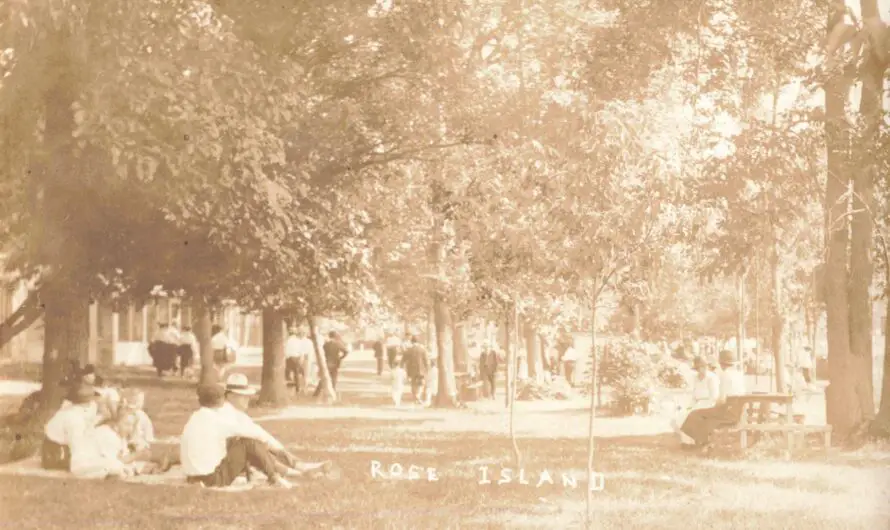
Rose Island, a popular Michigan resort since the early 20th century, thrived with amenities like boating, dancing, and picnics. Owned initially by the Durkees and later the Peters Brothers, it became a vibrant community hub before declining.
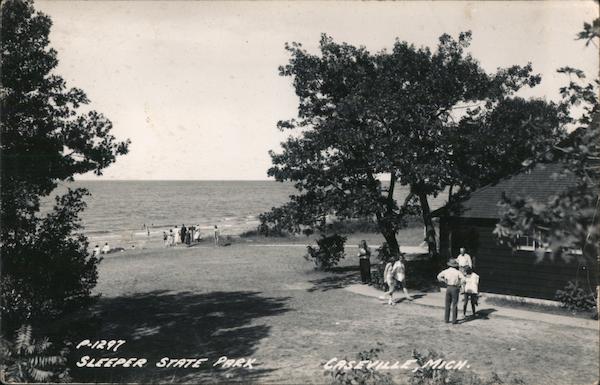
The park first opened as a county park in 1925. In 1927 the state acquired the property and called it Huron State Park. In 1944, the park was renamed in honor of Albert E. Sleeper, governor of Michigan (1917-1920) and resident …