 by
by 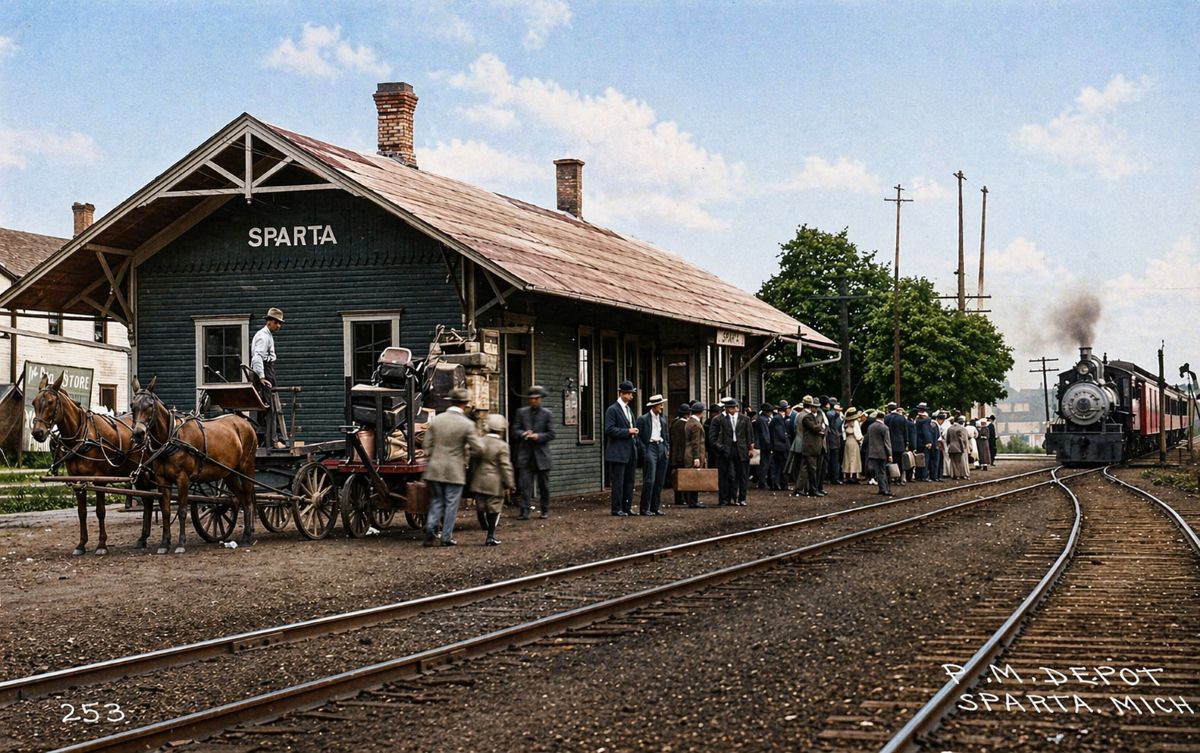
Sparta, Michigan, looks like a quiet farm town at first glance. Orchards stretch across the countryside, and the pace feels steady. But the record tells a different story.
Sparta Michigan history didn’t rely on just one thing to make it memerable. It built an economy in layers—farming, railroads, mills, factories, and even aviation. The photos you’ve gathered show that progression clearly.
Early Settlement and Farming Roots
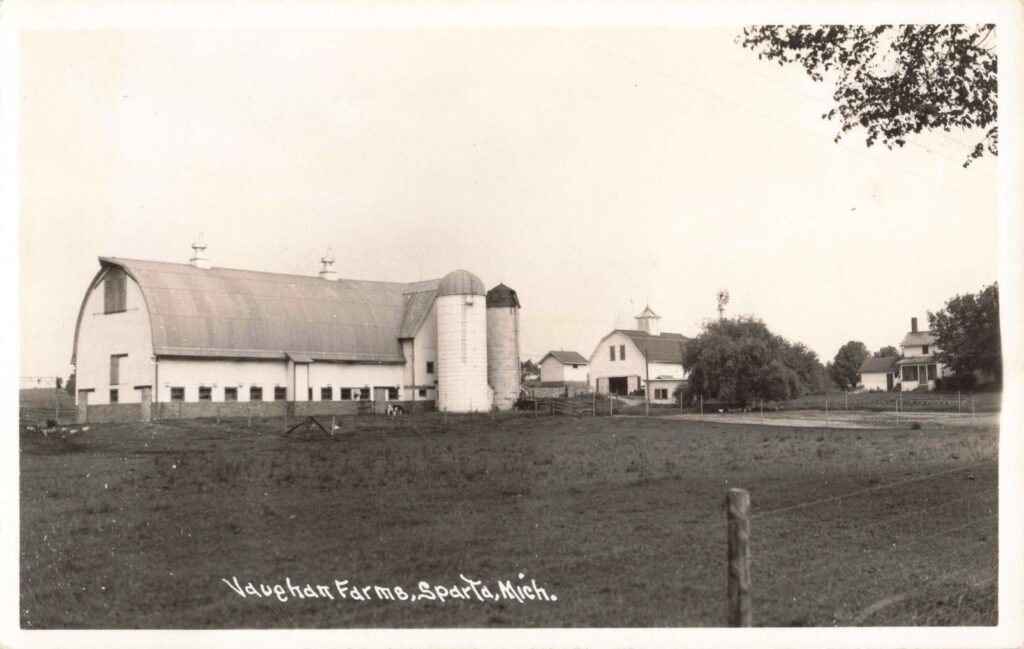
Sparta was first settled in the 1840s, when families cleared land and established farms in what is now Kent County. The soil proved well-suited for growing fruit, particularly apples and peaches. Over time, Sparta became part of Fruit Ridge, a belt of productive farmland that supplied crops to regional markets
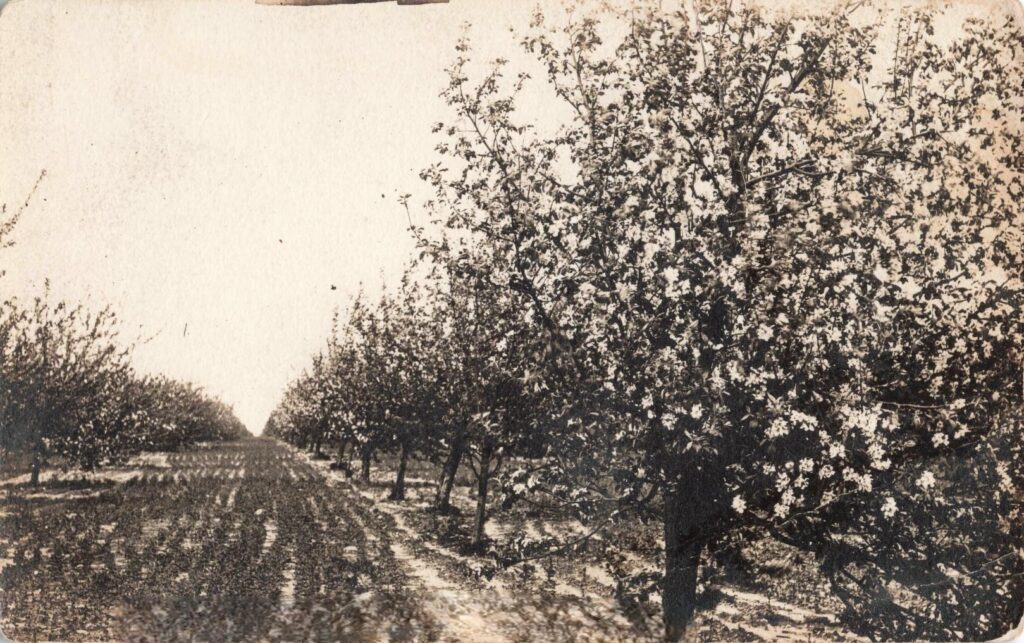
Michigan’s Fruit Ridge, a narrow band of high ground northwest of Grand Rapids known for some of the state’s most productive orchard soil. The ridge benefits from well-drained sandy loam and a moderating lake effect that helps protect blossoms from late spring freezes—conditions that made it ideal for apples, peaches, and cherries.
By the early 1900s, Sparta farmers were shipping fruit by rail to markets across the Midwest, tying the town’s economy to both agriculture and transportation. Packing houses, cold storage, and seasonal labor all grew around that cycle. Today, the area still ranks among Michigan’s leading apple-producing regions, and Sparta’s identity remains closely tied to the orchards that first put it on the map.
It Started Like a Typical Small Town
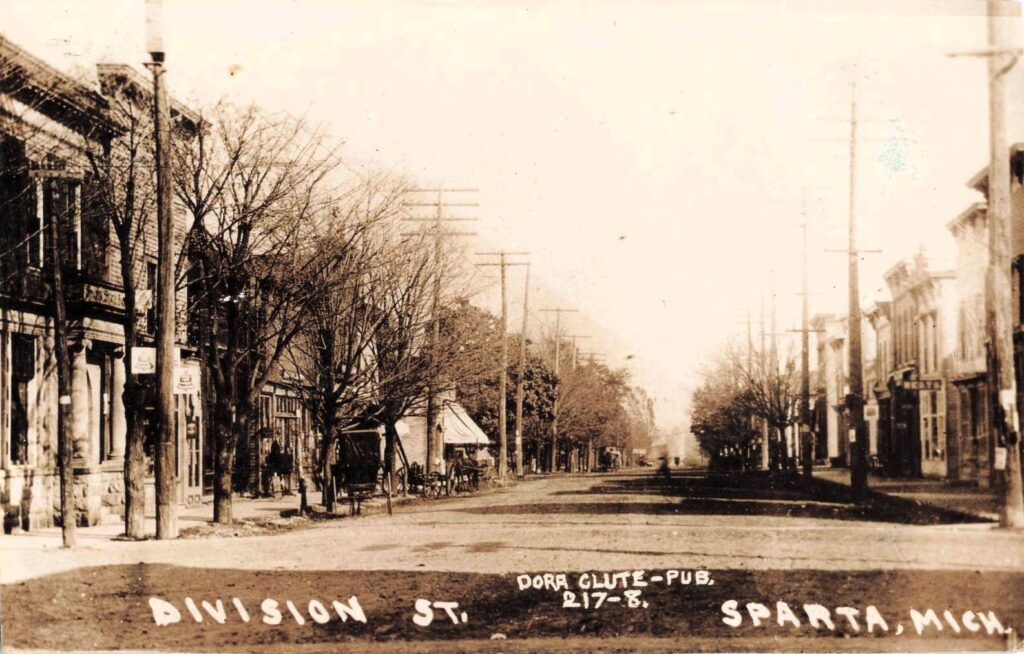
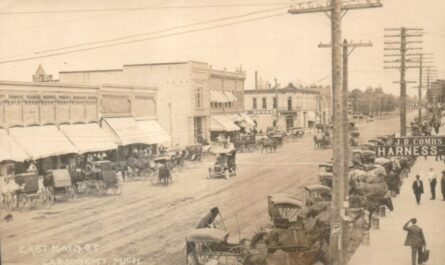
At first glance, Sparta looked like dozens of other towns.
A wide dirt street. Wooden storefronts. Wagons parked along the edge. People moving at a slower pace.
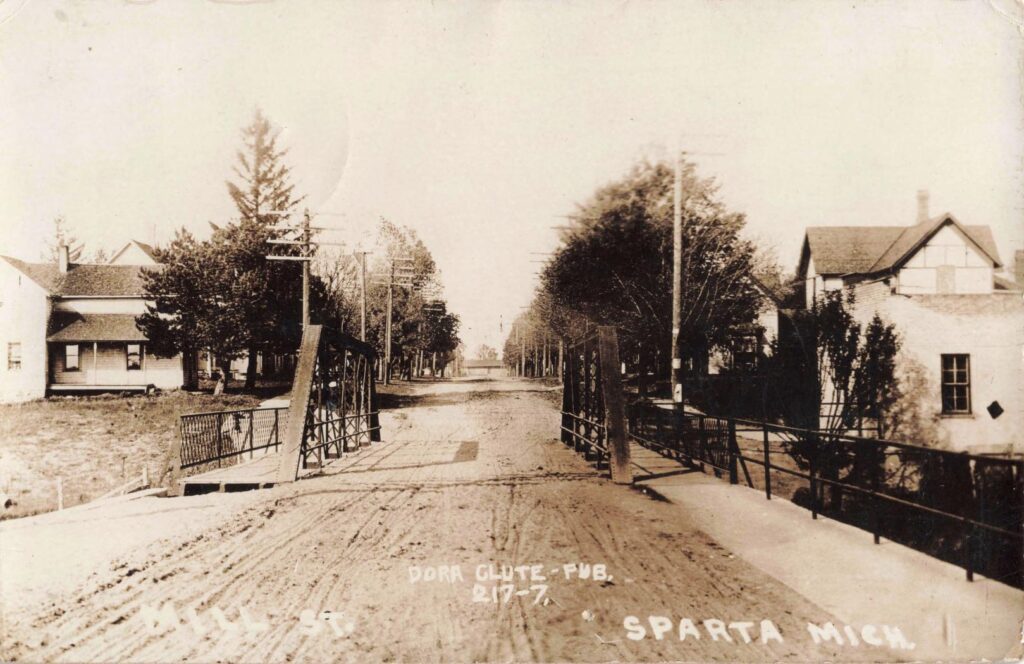
But even here, there are clues—larger buildings, wider streets, signs of planning.
Railroads Open New Markets
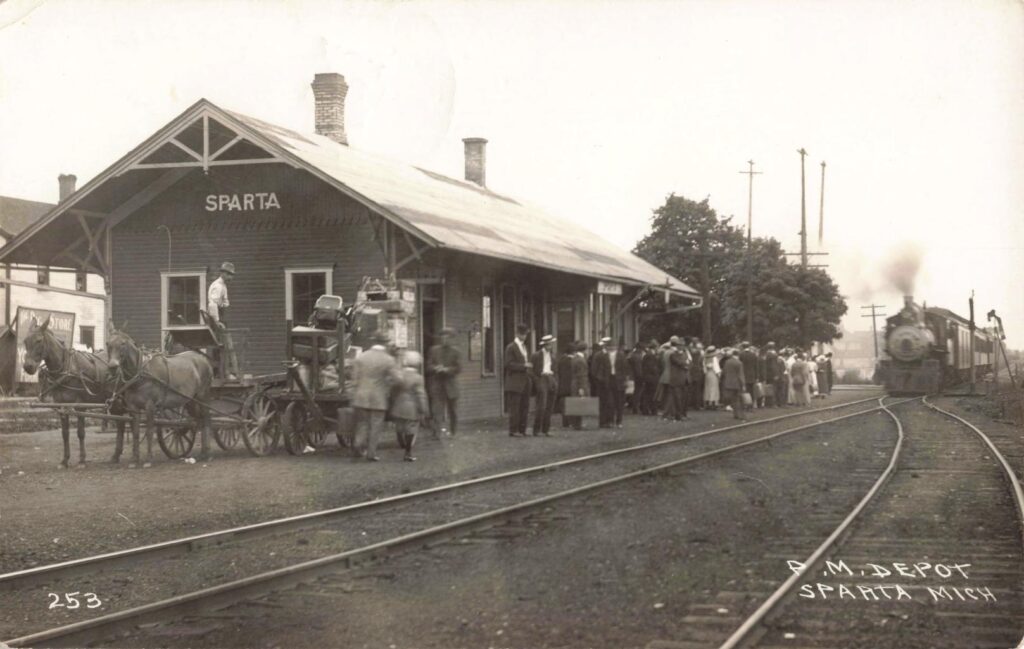
The arrival of railroads in the 1870s marked a turning point in Sparta Michigan history. With reliable transportation, farmers could send produce beyond West Michigan. Rail lines connected Sparta to Grand Rapids and other commercial centers, allowing goods to move quickly and in larger quantities.
But here, it’s not just infrastructure—it’s activity. Crowds waiting. Goods moving. A train pulling in.
This shift changed the local economy. Farming became more organized and more dependent on distant markets.
Where It All Began in Sparta
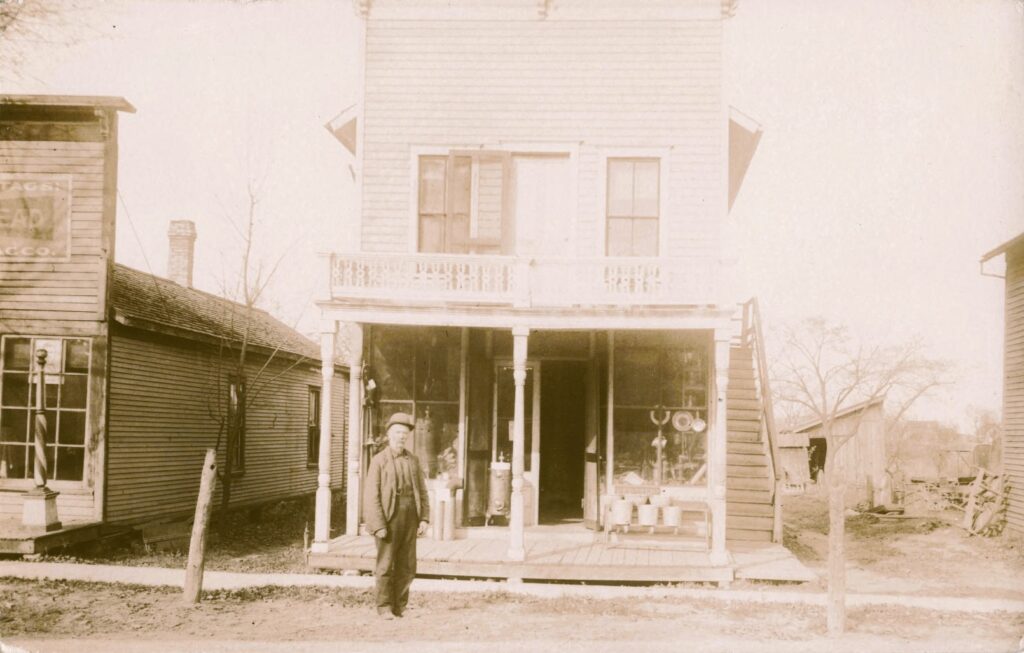
And before all of it—before the factories, the mills, and the rail lines—there was this. A small tin goods store, a book shop and a barber. One man standing out front caught by the camera. Everything else came later.
Money Was Already Flowing
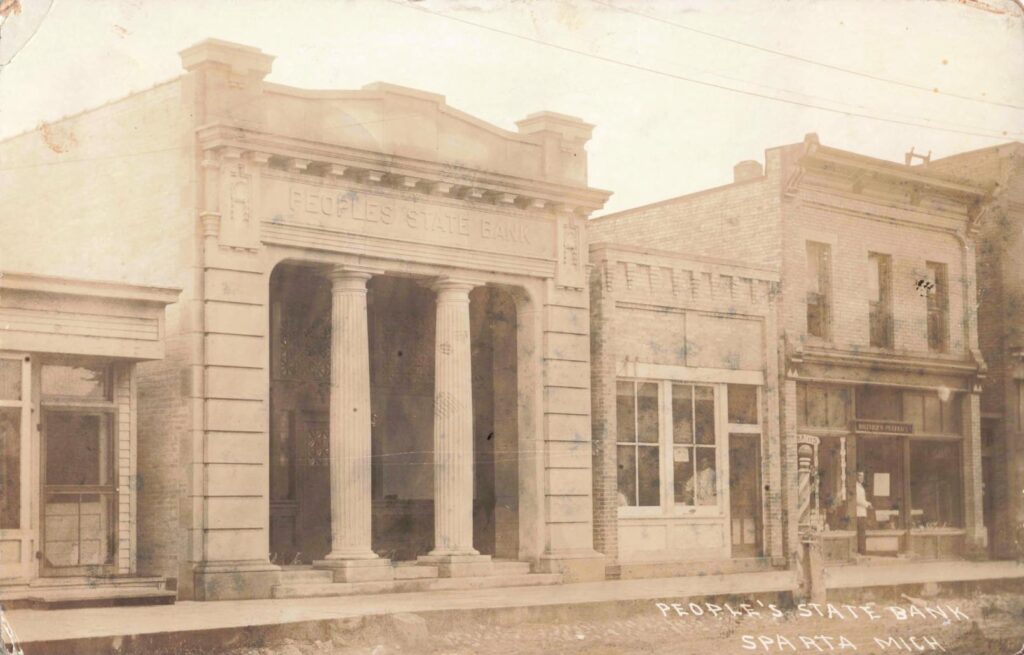
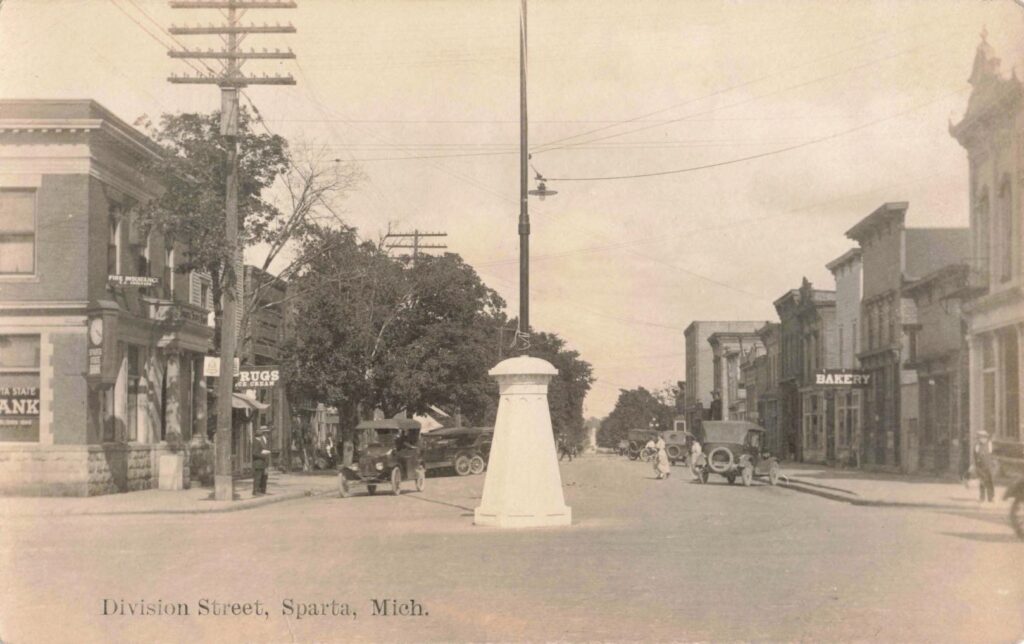
Then you notice the bank.
The People’s State Bank wasn’t a temporary structure. It was built to last—with columns, masonry, and presence.
That tells you something simple: Sparta had capital. It had confidence.
Growth of Processing and Industry
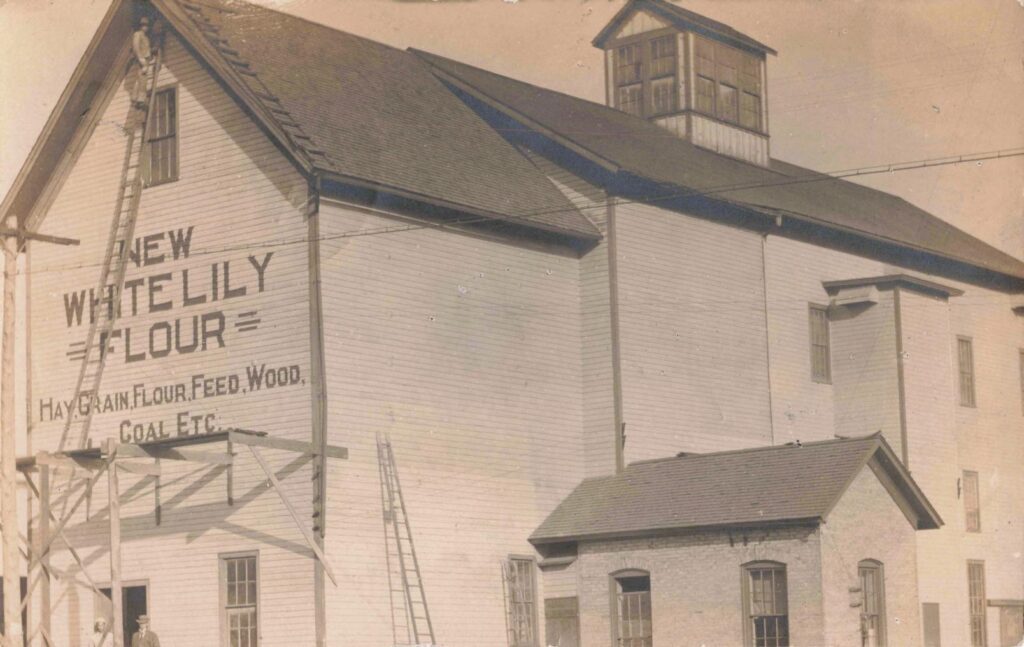
As production increased, Sparta developed facilities to process agricultural goods. Flour mills, including operations tied to brands like White Lily, converted grain into finished products ready for distribution.
The White Lily Flour Mill shows how agriculture scaled up. Grain wasn’t just grown—it was processed, packaged, and shipped. That’s a different level of economy that made a make in Sparta Michigan history.
Industry Was Already Established
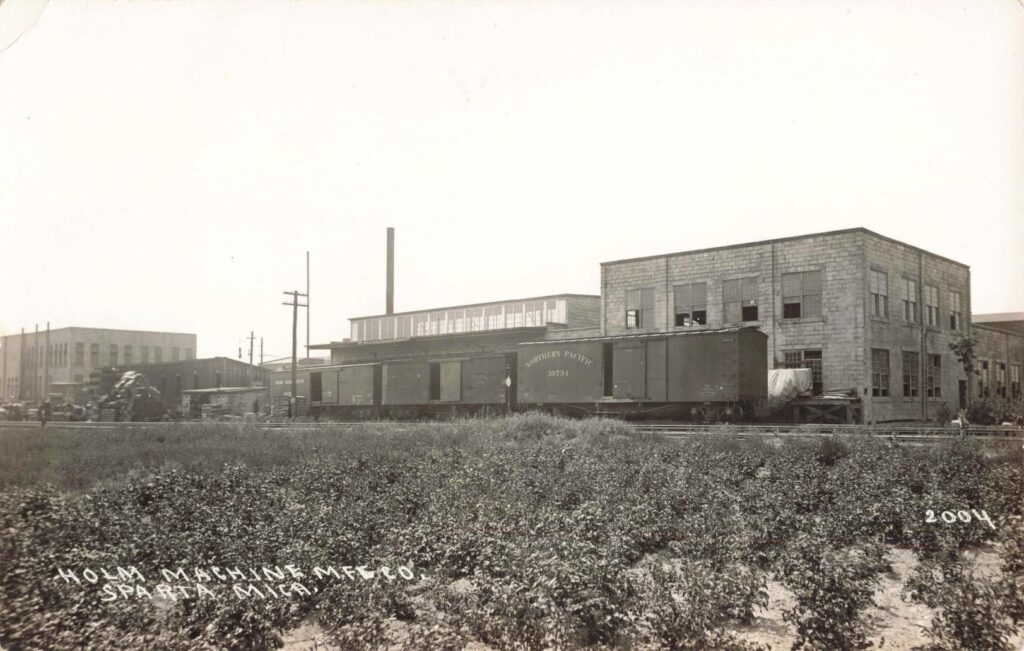
Follow the tracks and you find industry. Holm Manufacturing sits right along the line. Railcars are positioned for loading. Buildings are large and functional. This wasn’t experimental—it was established production.
Companies such as Holm Manufacturing and Welch Manufacturing produced goods tied to regional industries, including furniture production centered in Grand Rapids. These factories provided steady employment and added stability to the local economy.
This mix of agriculture and industry set the tone in Sparta Michigan history and set it apart from many small towns that relied on a single resource.
Inside the Factory
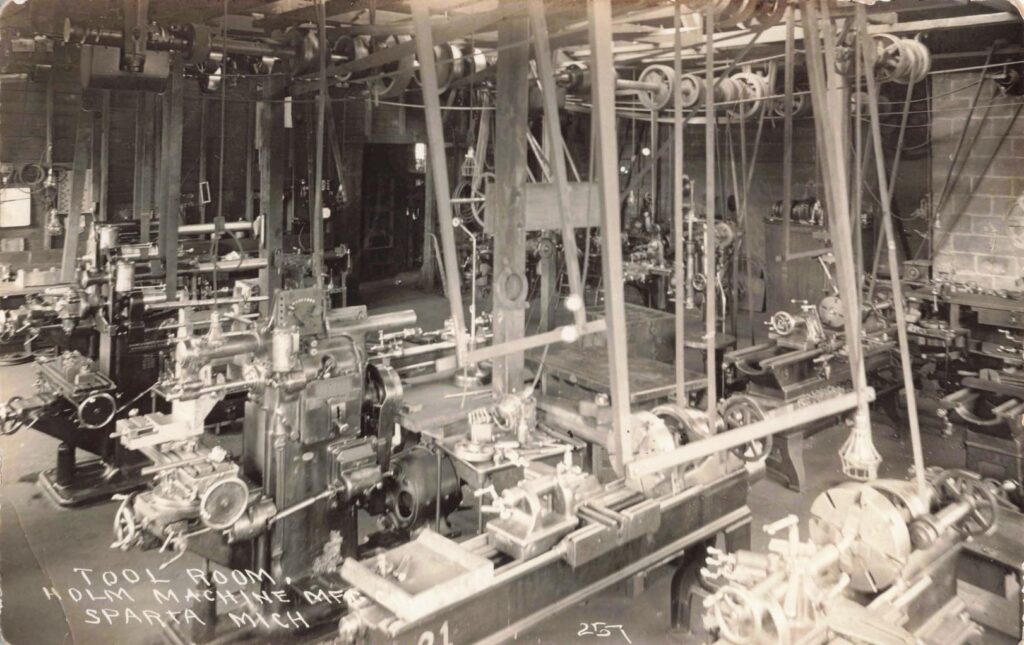
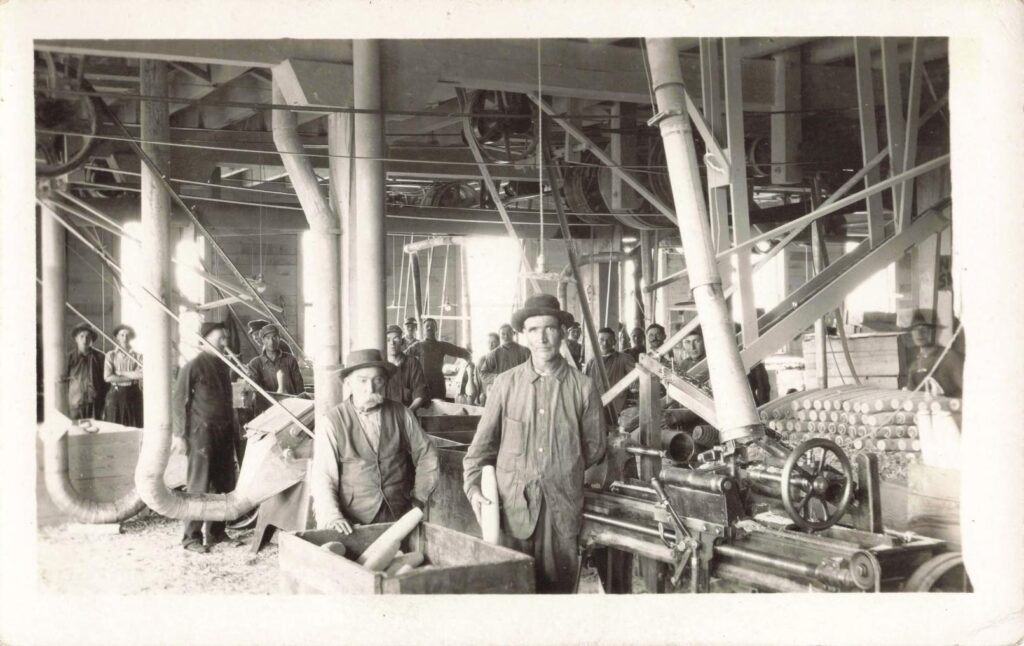
Step inside, and the scale becomes clear. Machines line the room. Belts hang from above. Workers operate equipment with precision.
This is skilled labor, not seasonal work.
More Than One Factory
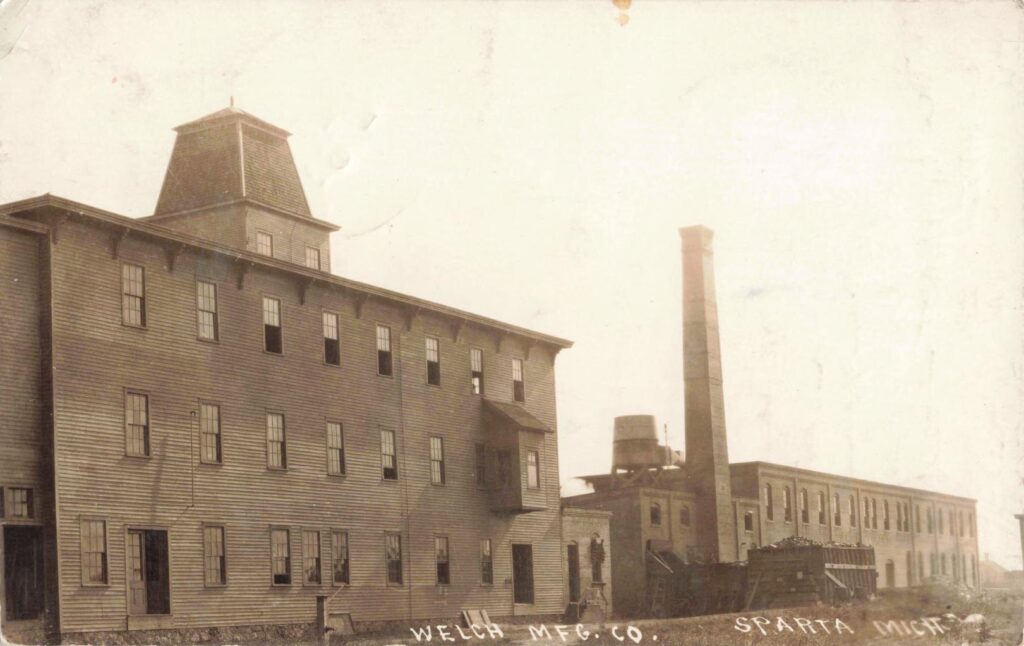
Holm wasn’t the only operation. Welch Manufacturing added another layer, tying Sparta into the larger furniture and production economy centered in Grand Rapids.
That matters. One industry can fail. Multiple industries give a town a chance.
A Working Industrial Town
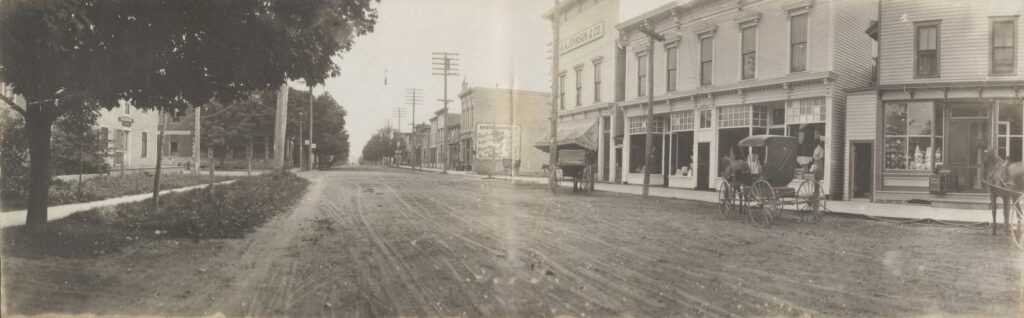
By the early 20th century, Sparta had evolved into a working industrial town. Railroads supported both farming and manufacturing. Factories operated alongside homes and businesses. Main Street reflected growth, with shops, banks, and services meeting the needs of residents.
Unlike lumber towns that declined after resources were depleted, Sparta’s economy was more balanced. It relied on multiple sectors, which helped it avoid sharp economic collapse.
Adapting to Change
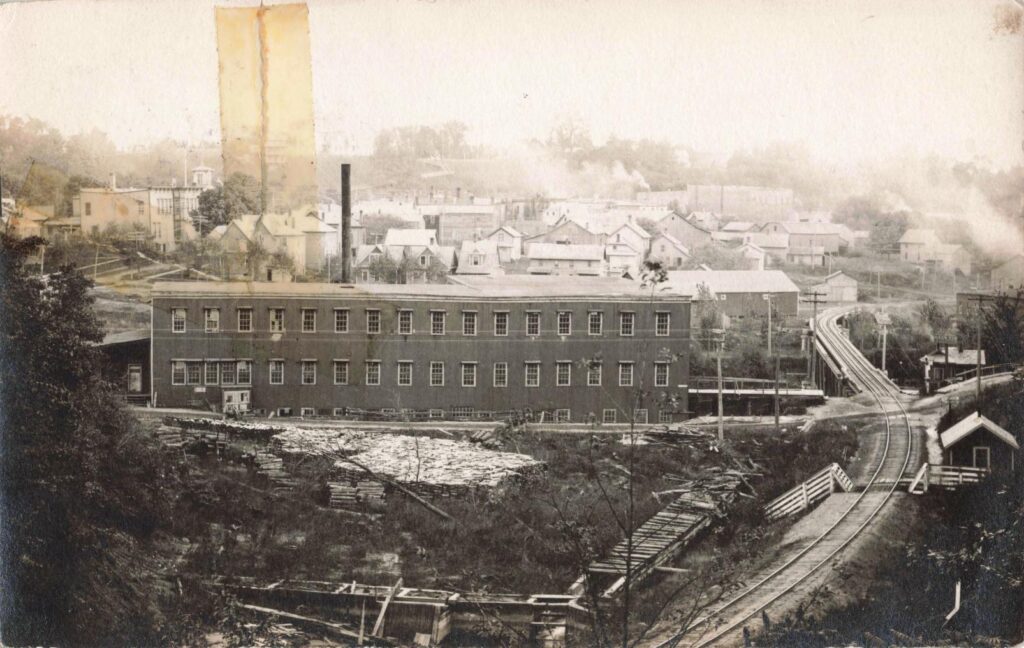
Sparta continued to adapt as transportation and technology changed. The presence of an early aviation service in the mid-20th century shows how even small towns engaged with new forms of travel and business.
A Landmark Above It All
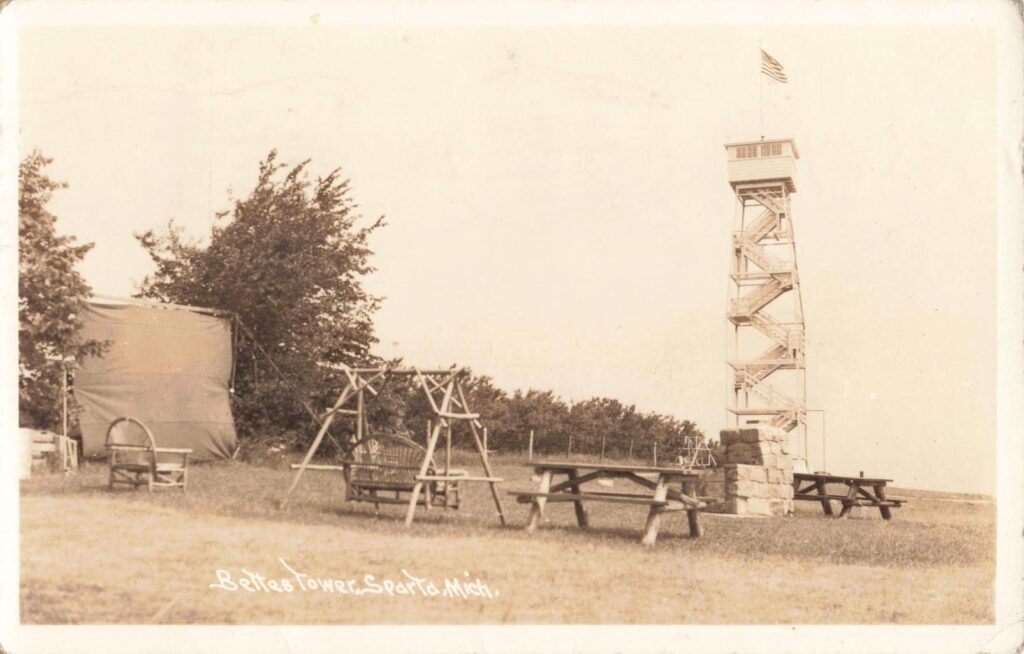
Built around 1940 on Bettes Hill, the 70-foot Bettes Tower served primarily as an observation tower, offering panoramic views of the “Ridge” fruit-growing region. The tower was popular through the 1960s, functioning as a tourist attraction, a Civil Air Patrol spot during WWII, and a National Weather Service weather station before being torn down in the late 1970s
Local landmarks, such as Bettes Tower, reflected community development and a sense of forward movement.
Life Wasn’t All Work
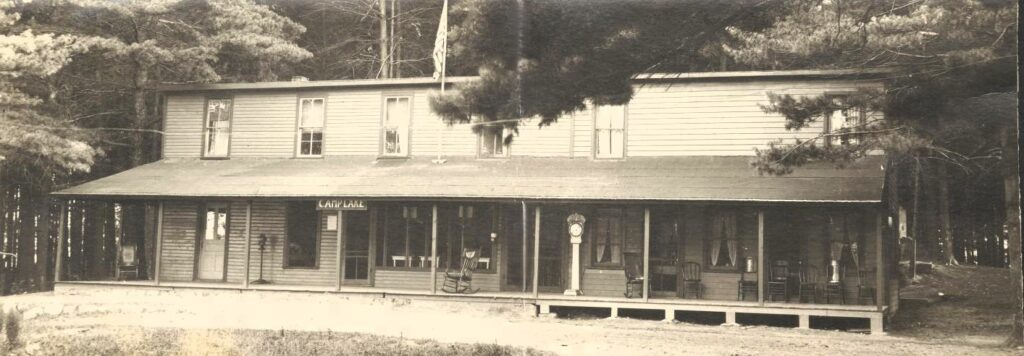
Away from the factories, life slowed down. Camp Lake offered a place to gather, rest, and step away from daily routines.
In the early 1900s, Camp Lake near Sparta, Michigan, served as a popular summer resort destination, hosting cottage rentals, swimming, and various recreational activities for visitors, including those arriving by train from the Chicago area. It was a, prominent gathering point for summer tourists and residents, functioning as a “up north” style getaway to enjoy nature
Even in a working town, people needed space.
A Different Kind of Michigan Story
Sparta Michigan history does not follow a simple boom-and-bust pattern. Instead, it shows gradual growth, diversification, and adaptation. Farming remained central, but it was supported by processing, manufacturing, and transportation. Each layer reinforced the others.
Today, that pattern still defines Sparta. The town did not depend on a single industry, and it did not disappear when markets shifted. Instead, it adjusted—quietly and steadily.
Before you go: Try this quick 30-second history check.
Quick Sparta History Check
Did you catch the key moments in Sparta’s story?
1. What was Sparta originally called?
2. What helped Sparta grow into a regional hub?
3. What industry became central to Sparta’s identity?
Works Cited in Sparta Michigan History