 by
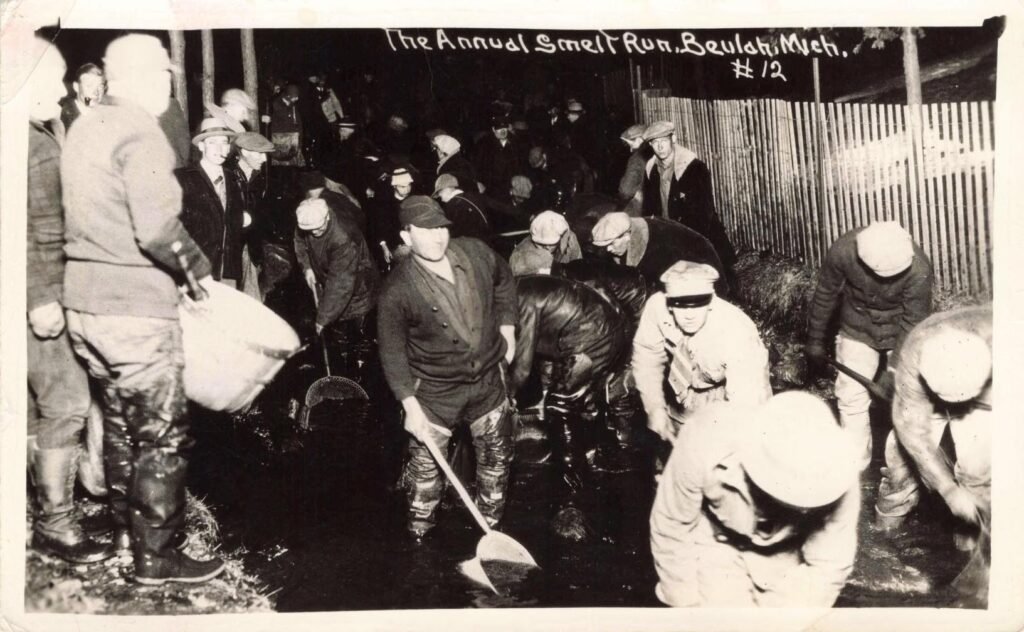
by Cold Creek, Beulah, Michigan, during the smelt boom of the 1920s–30s. Locals crowd into the icy water, dipping for buckets of fish running out of Crystal Lake. A small Benzie County village suddenly draws visitors from across the Midwest for the famous Beulah Michigan smelt run.
Video – Smelt Run Frinzy in Beulah 1938
On a cold spring night in Beulah, Michigan, men in hip boots crowd into Cold Creek, their lanterns throwing hard shadows on the water. Smelt, planted in nearby Crystal Lake in the 1890s, now run so thick that a single sweep of a dip net can fill a pail. By the late 1920s, hundreds jammed these banks, drawn by cheap fish and a hot meal, turning this quiet Benzie County village into “Smelt Capital, U.S.A.”
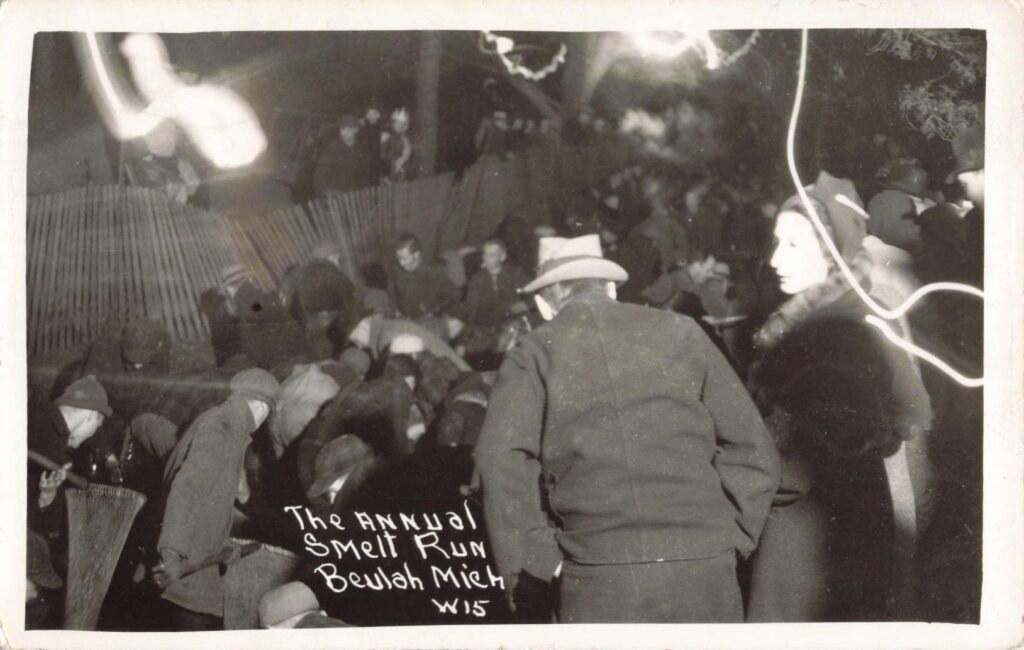
Headlights and bare bulbs ring the stream while dippers wait behind ropes for the signal. At 11 p.m., a gunshot starts ten frantic minutes in the water; another round at 4 a.m. offers one last chance. By the 1930s, as many as 1,300 cars lined these streets each night, chasing smelt suppers and a brief escape from Depression-era worry.
Shoulder to Shoulder at the Beulah Michigan, Smelt Run
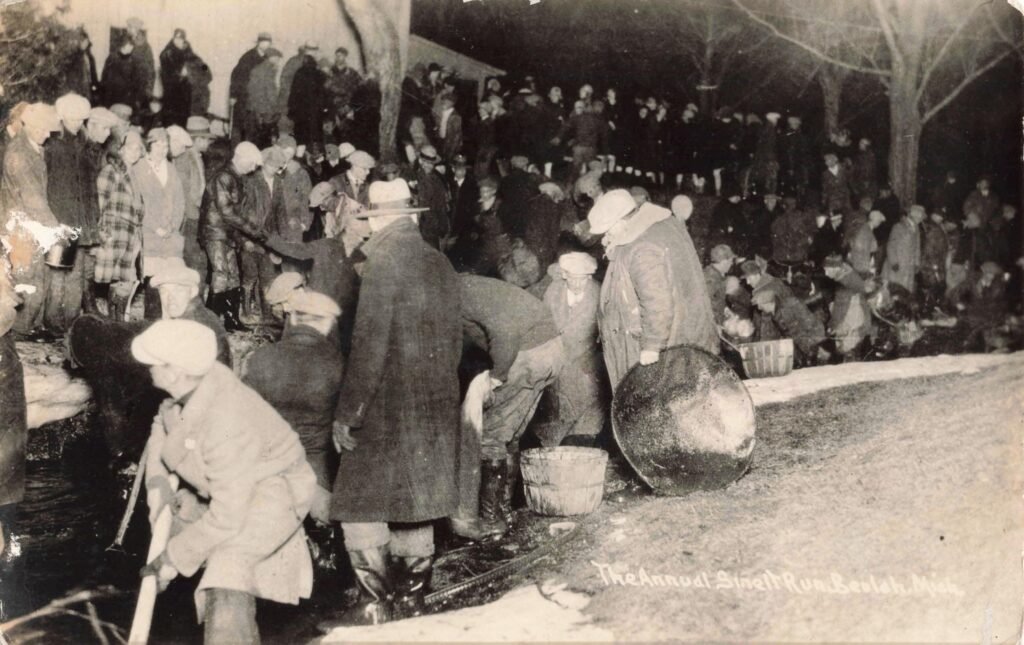
Farmers, shopkeepers and tourists crowd shoulder to shoulder, each with a net or washtub, scooping fish that once were meant only as trout food. Hotels filled, cafés fried smelt through the night, and Benzie County cashed in on a sudden boom. For a few weeks each spring, this quiet spot in northwest Lower Michigan tied its fortunes to a tiny silver fish flashing in the dark.