 by
by 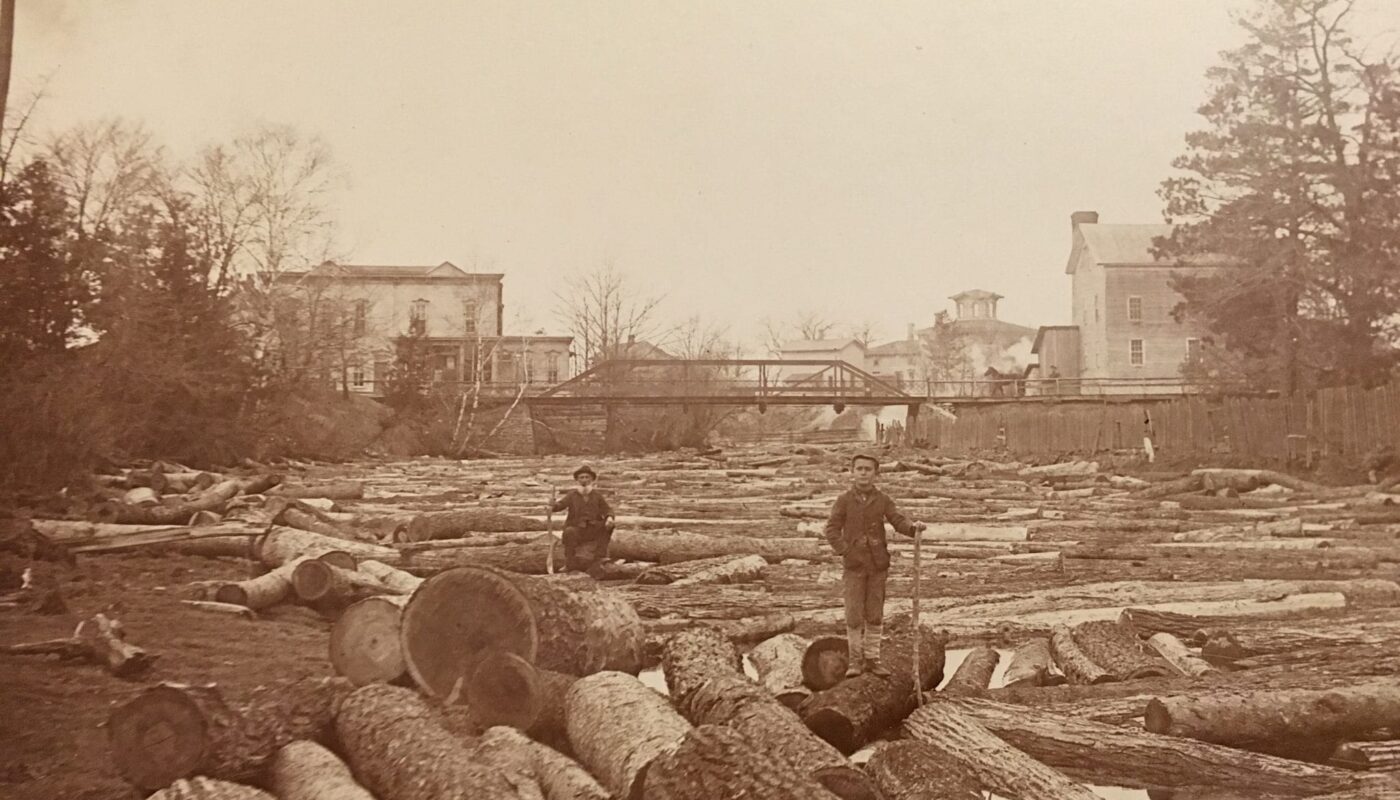
The lumbering era in Caseville Mi predates the vast growth of the village industry in the late 1800s. Today, it’s hard to imagine that the entire coastline did not have cottages and beach homes, and the interior of Huron County had no farms except for small clearings that the Native Americans had for squash and maze. It was a deep virgin forest, and it seemed we would never run out of trees.
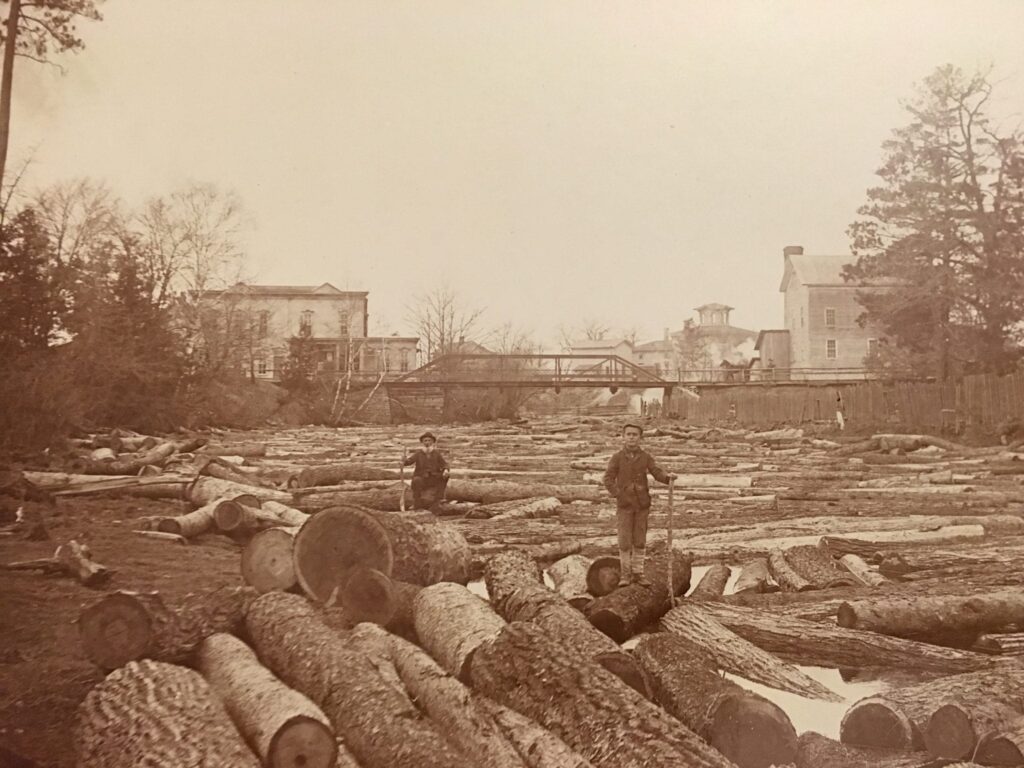
In spring, the winter logging operations ended, and the long run to the sawmill began. In this picture, two men, called River Hogs, worked to keep the logs moving along the Pigeon River to the sawmill in Caseville. The work took skill and was dangerous. River Hogs were paid up to $3.50 per day.
As the pin logs neared the sawmill near the mouth of the river, a boom was running across the river to stop the drive and guide the logs into a bottleneck where they could be sorted by the owner and sawed into lumber. The Caseville sawmill is believed to be on the other side of the bridge with the sloped roof. More details on Caseville’s early days as an industrial powerhouse, along with a town map, can be read in Caseville’s History of Industry.
Related Reading Like The Lumbering Era in Caseville
- Kids Pony Parade in 1930s Bad Axe Michigan
- Zingarella at the Bad Axe (Huron Community) Fair in Bad Axe 1912
- Warship on the Great Lakes – USS Michigan
- Visual History of the 46 US Life Saving Stations Serving Michigan