
 by
by 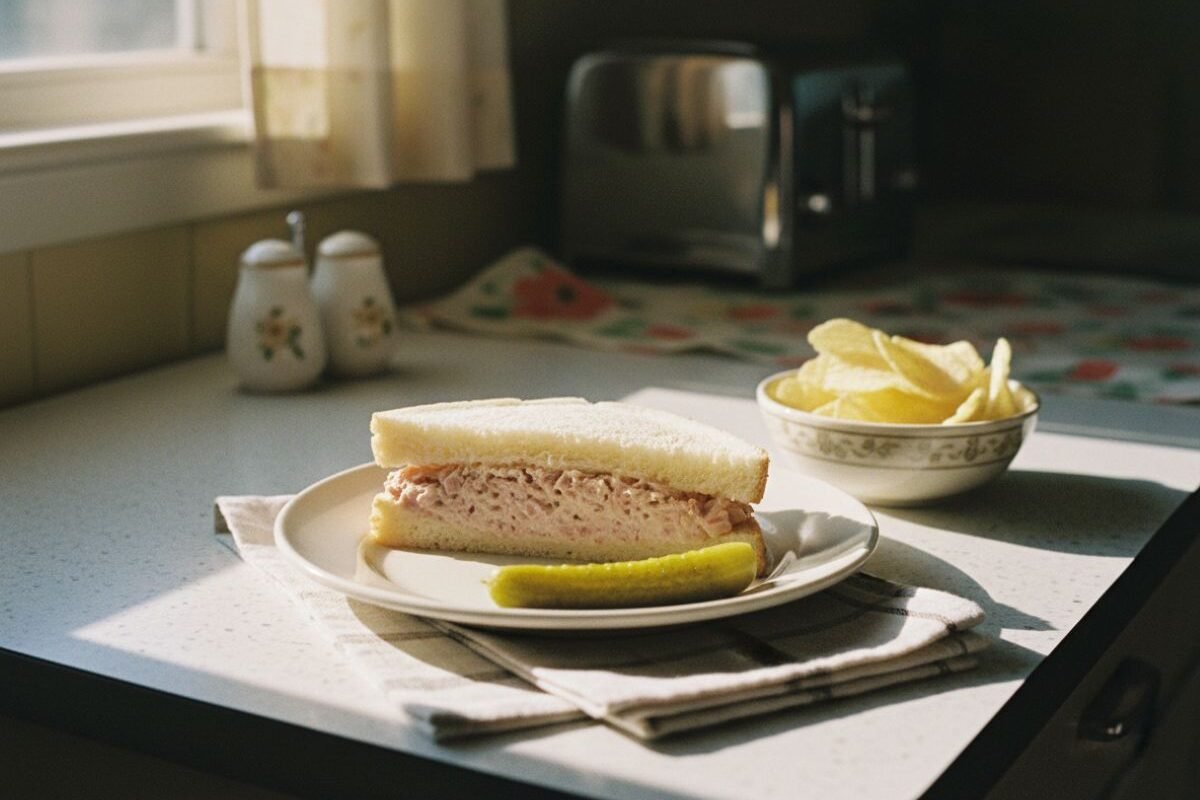
Before deli cases offered dozens of ready-made options, many American households relied on simple spreads made at home. This 1950s sandwich spread recipe reflects the era’s approach to food: practical, economical, and adaptable. One of the most common was a chopped ham sandwich spread, often built from leftovers and stretched to feed a family for several days.
Cheap, filling, and quick, it appeared on lunch tables throughout the 1940s and 1950s, especially in working-class homes.It required no specialty equipment beyond a hand grinder or basic food processor. Ingredients were familiar and usually already on hand. Most important, it could turn scraps into something new.
Today, this sandwich spread reads like a time capsule. But it still works.
Why Sandwich Spread Was So Popular
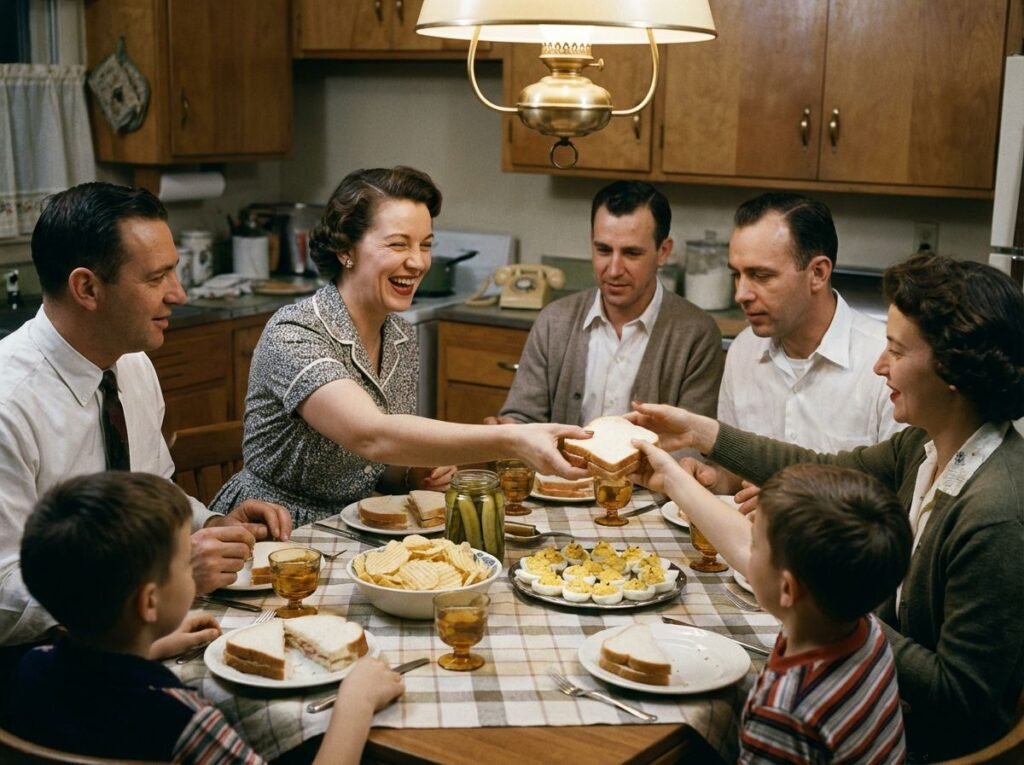
Postwar America prized efficiency in the kitchen. Many women balanced full households with limited time and tight budgets. Processed meats such as ham and bologna were affordable, widely available, and had a long shelf life. Mixed with eggs, onion, celery, and a small amount of mayonnaise, they became a spread that could be used in several ways. Back in the day, this lunch dish could be found at local diners, truck stops and evenlarge restaurant chains like Bill Knapps.
The spread served multiple roles:
- Leftover management: Cooked ham from a Sunday dinner rarely went to waste.
- Lunchbox food: The mixture held up well and could be packed without reheating.
- Crowd feeding: A few cups could be divided across many sandwiches.
It also matched the flavors Americans favored at midcentury: mild, creamy, slightly sweet, and lightly seasoned.
The Original 1950s Sandwich Spread Recipe, Explained
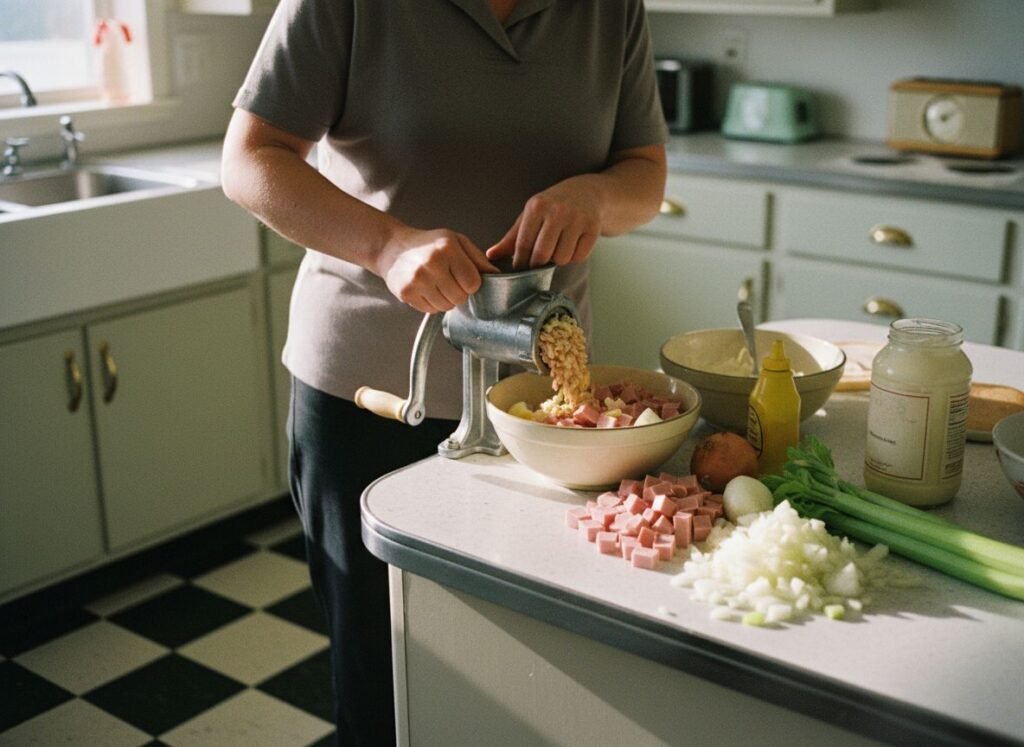
This recipe keeps close to the traditional version found in handwritten cards and community cookbooks.
Ingredients
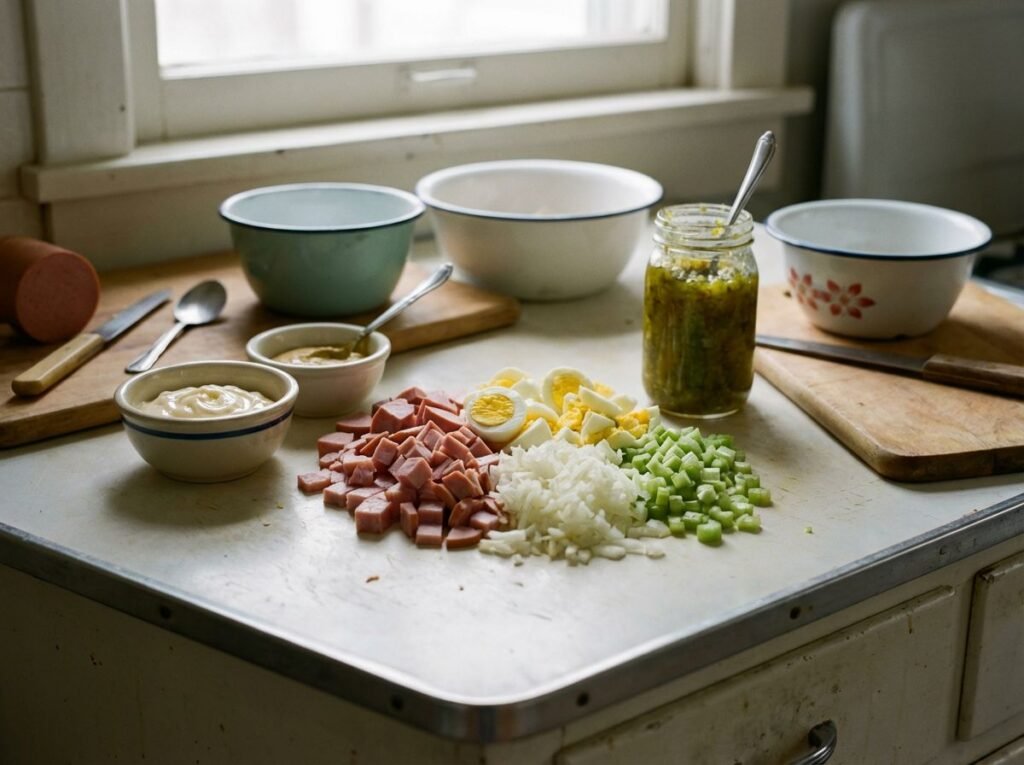
- About 3 cups chopped ham and/or bologna
- 1 or 2 hard-boiled eggs
- About ½ cup grated onion, to taste
- 1 celery stalk, finely diced
- 2 heaping tablespoons mayonnaise
- 1 teaspoon yellow mustard
- 1 teaspoon sweet pickle relish
- Salt and black pepper, to taste
- A small pinch of garlic powder
Method
Combine the ham or bologna, eggs, onion, and celery in a food processor or grinder. Pulse until finely chopped but not smooth. The mixture should hold texture.
Transfer to a bowl and fold in the mayonnaise, mustard, and relish. Season lightly with salt, pepper, and garlic powder. Mix just until combined.
Refrigerate at least 30 minutes before serving. This allows the flavors to settle and the texture to firm up.
Texture Matters More Than Flavor
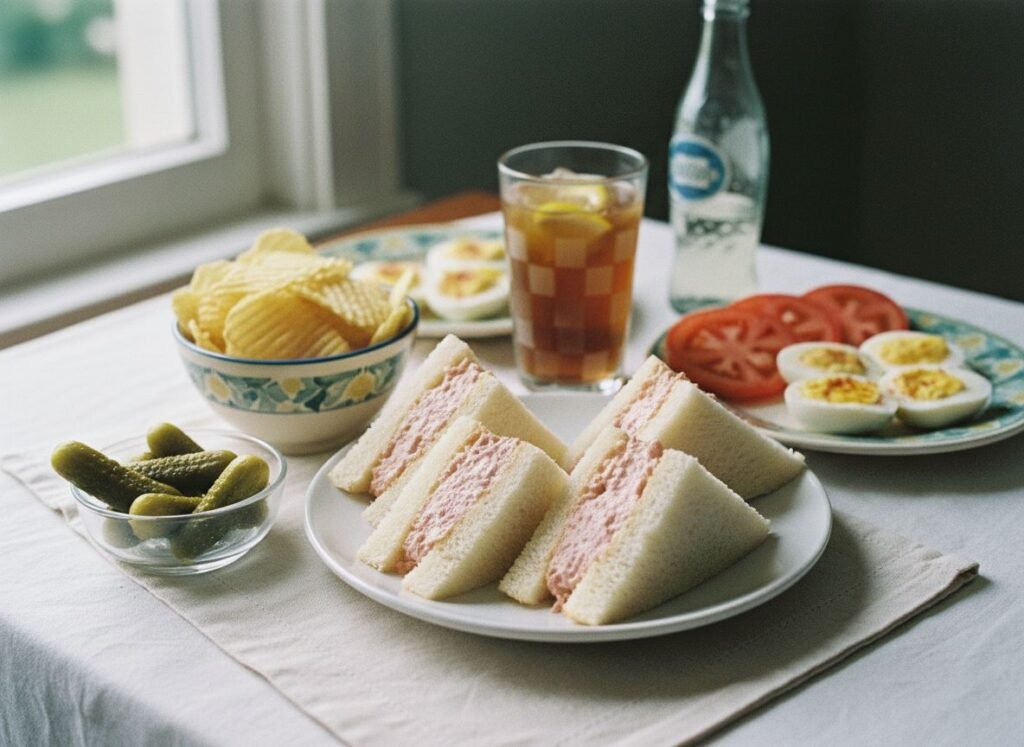
One mistake modern cooks often make is overprocessing the mixture. This is not meant to be a paste. In the 1950s, most households used hand-crank grinders, which naturally left small bits intact.
The best version has:
- Fine pieces of meat
- Small flecks of egg white and yolk
- Noticeable crunch from celery and onion
If the spread looks glossy or mousse-like, it has gone too far.
Bread Choices: Then and Now
While this is not considered one of Michigan’s favorite foods it was a at home mom go to for a quick lunch. In its original setting, this spread almost always went on soft white sandwich bread. That bread absorbed moisture and compressed easily, making it ideal for school lunches and picnics.
Other period-accurate options included:
- Sandwich rolls split lengthwise
- Toasted white bread for hot lunches
- Saltine crackers served as a snack plate
Modern alternatives that still work:
- Lightly toasted wheat bread
- Rye bread, if paired with mustard-forward seasoning
- Buttered hamburger buns
Avoid thick artisan loaves. They overpower the spread and fight its texture.
Classic Side Dishes
A sandwich like this was rarely served alone. Typical pairings in the 1950s included simple sides that required little prep.
Traditional pairings:
- Potato chips
- Pickle spears
- Applesauce
- Canned fruit salad
Still-effective modern sides:
- Vinegar-based coleslaw
- Tomato slices with salt and pepper
- Deviled eggs
- Plain kettle chips
Keep sides simple. This dish was never meant to compete for attention.
Optional Ingredient Variations (Still Period-Appropriate)
The original recipe left room for adjustment based on what was available. These additions fit the era and do not overpower the base flavor.
Add-Ins
- Chopped pimentos for color
- Green onions in place of yellow onion
- A splash of pickle juice instead of extra relish
- A teaspoon of sugar, if using unsweetened pickles
Protein Swaps
- All ham for a saltier profile
- All bologna for a smoother texture
- A mix of ham and bologna for balance
Avoid smoked or heavily spiced meats. They were uncommon in everyday home cooking of the period.
What Not to Add
Some modern ingredients clash with the original intent.
Avoid:
- Miracle Whip-style dressings if aiming for a traditional flavor
- Hot sauce or chili paste
- Strong cheeses
- Fresh herbs
This was a neutral, family-friendly spread designed to please many palates.
Storage and Food Safety
Stored properly, the spread keeps well.
- Refrigerate in a sealed container
- Use within three days
- Stir before serving
Because it contains eggs and mayonnaise, it should not be left at room temperature for extended periods.
Why This Recipe Still Works
Despite changing tastes, this sandwich spread endures for one reason: it is practical. It uses inexpensive ingredients, comes together quickly, and feeds more people than expected.
It also reflects a broader truth about midcentury cooking. Meals were built around efficiency, familiarity, and waste reduction. Nothing here is fancy, but nothing is accidental.
For readers interested in food history, this recipe offers more than nostalgia. It shows how everyday Americans cooked when time, money, and convenience mattered most.
And for today’s kitchen, it remains exactly what it was in the 1950s: a reliable lunch that does its job.