
 by
by 
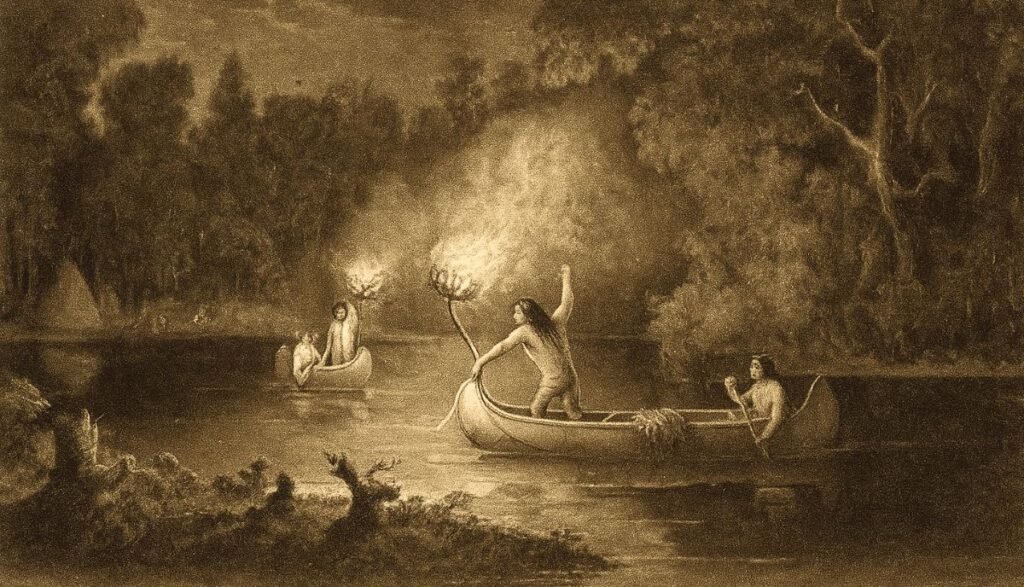
To understand the history of Alden Michigan, you start with Torch Lake itself. Long before the village appeared on maps, the lake was home ground for the Ojibwe, part of the broader Anishinaabe nations. They called the water Waswaaganing, “lake of the torches,” for the way men fished at night with birch-bark torches, drawing whitefish and trout toward nets and spears.
Video – Alden Michigan Moments
Torch Lake, Ojibwe Roots, and Spencer Creek
Spencer Creek, a small stream about 5.5 miles long, flows into Torch Lake at what would become Alden. In the mid-1800s, as lumber companies pushed north, camps sprang up along the creek. Manager John Spencer oversaw one of these operations, and his name soon attached to both the creek and the camp.
In 1868, storekeeper F. J. Lewis opened a general store here. The settlement was briefly called Noble, then became known as Spencer Creek when a post office took that name in 1869. The early village stood on Indigenous land, shaped by water routes long used by Native families and now targeted by lumber interests.
Mills, Harbors, and the Work of the Creek
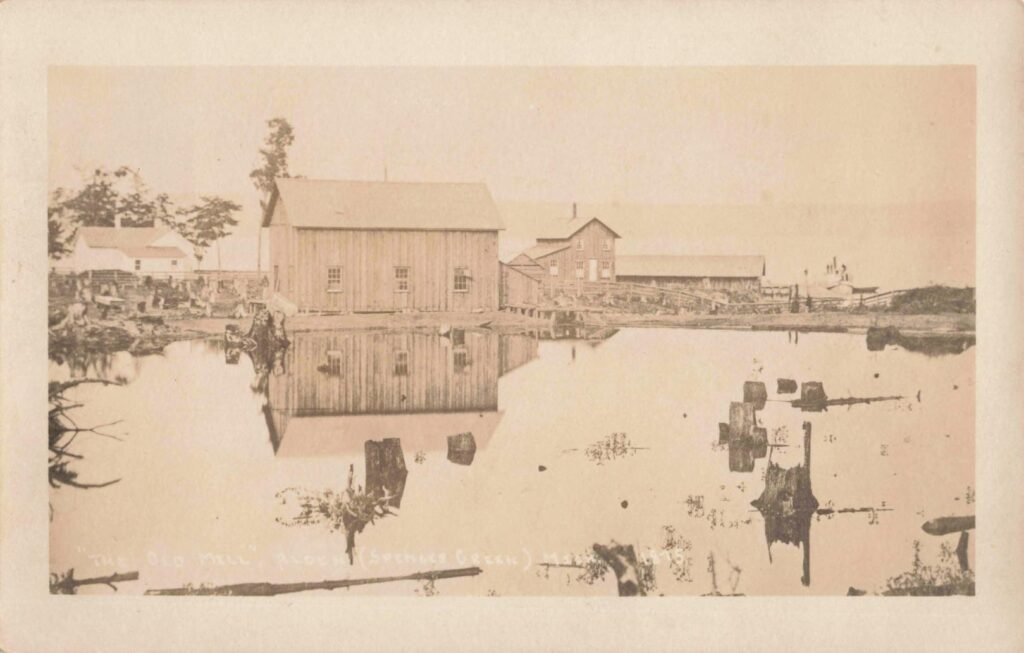
Industry grew quickly. Spencer Creek powered sawmills, a gristmill, and even a brick factory. Logs cut in nearby camps floated down to the lake, where slab wood and timbers were loaded for shipment.
Alden also served as a lumber port. A special harbor north of the village dock handled wood from a slab mill, feeding the broader Chain of Lakes and, through rivers and canals, markets far from Torch Lake.
While Alden looked like a remote outpost on a map, its mills and harbor tied it tightly into regional trade. For some years, it may have been easier to ship goods from Spencer Creek to Chicago than to haul them by wagon to nearby inland towns.
The Alden Michigan Railroad Effort Renames the Town
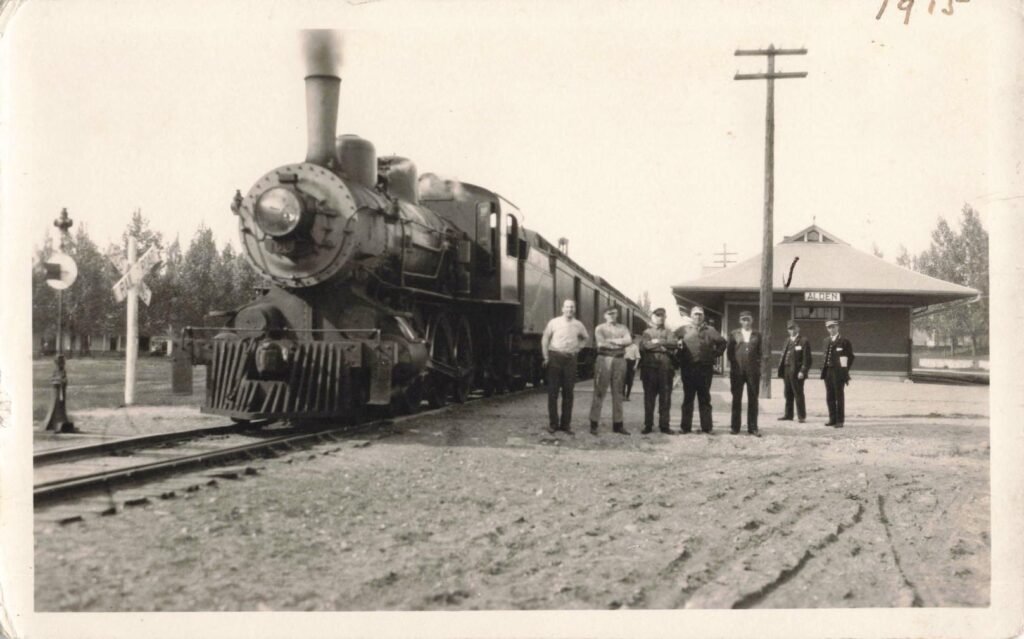
The turning point in the history of Alden Michigan came with iron rails. In 1891–92, the Chicago & West Michigan, later part of the Pere Marquette system, extended its line between Traverse City and Petoskey through Spencer Creek.
Railroad attorney William Alden Smith championed the route. When the line opened, local residents renamed their village Alden in his honor. The post office followed in 1892.
Rail changed more than the town’s name. It linked farms, mills, and resorts on Torch Lake to major cities. Newspapers later noted that the Pere Marquette depot at Alden would rank among the finest north of Grand Rapids.
Main Street Between 1890 and 1920
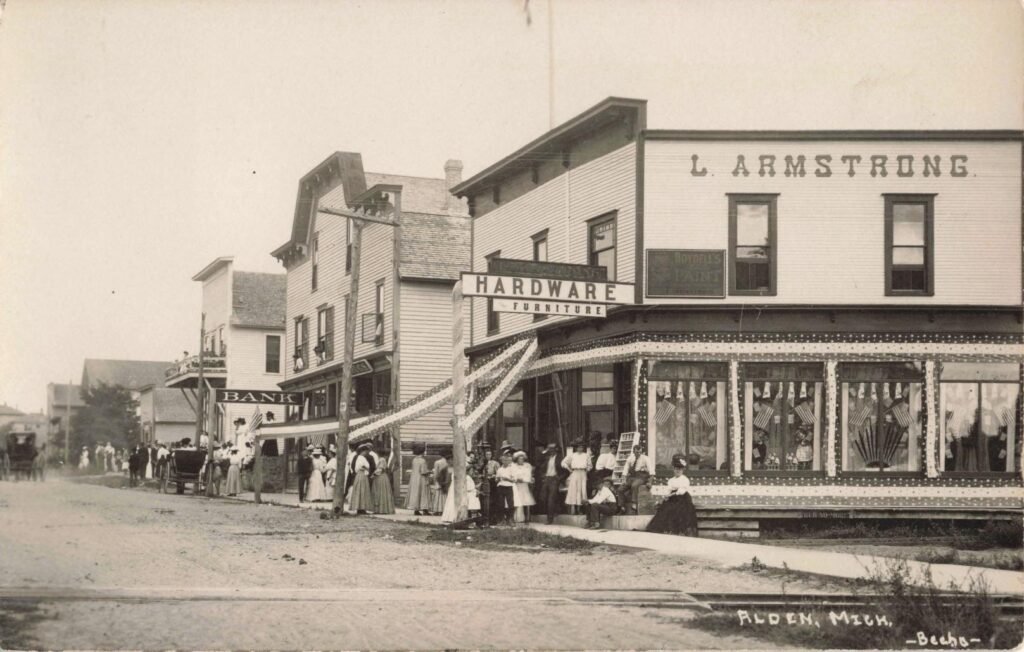
By 1900, the history of Alden Michigan was written in storefronts as much as in mills and rails. The business district rose on the hill above the lake. The Alden Bank, hotels, and the L. Armstrong Hardware store anchored the main street.
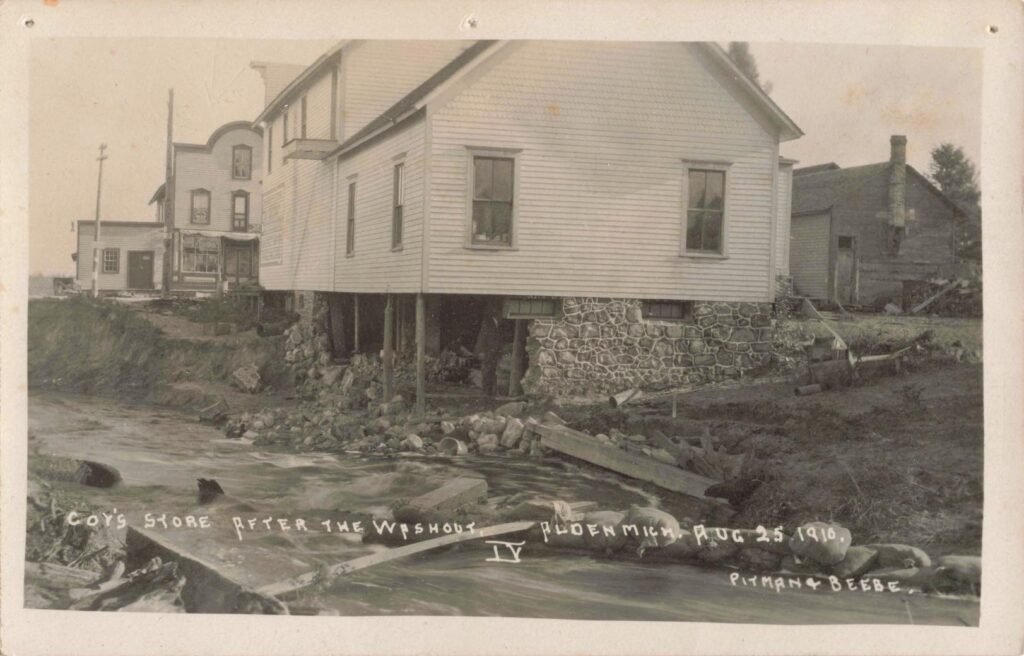
The creek still played a role. In August 1910, heavy rain caused a washout along Spencer Creek. A postcard image titled “Result of the Washout, Alden, Mich. Aug. 25, 1910” shows a house and bridge supports undermined by rushing water. The same stream that powered mills could undermine foundations in a single storm.
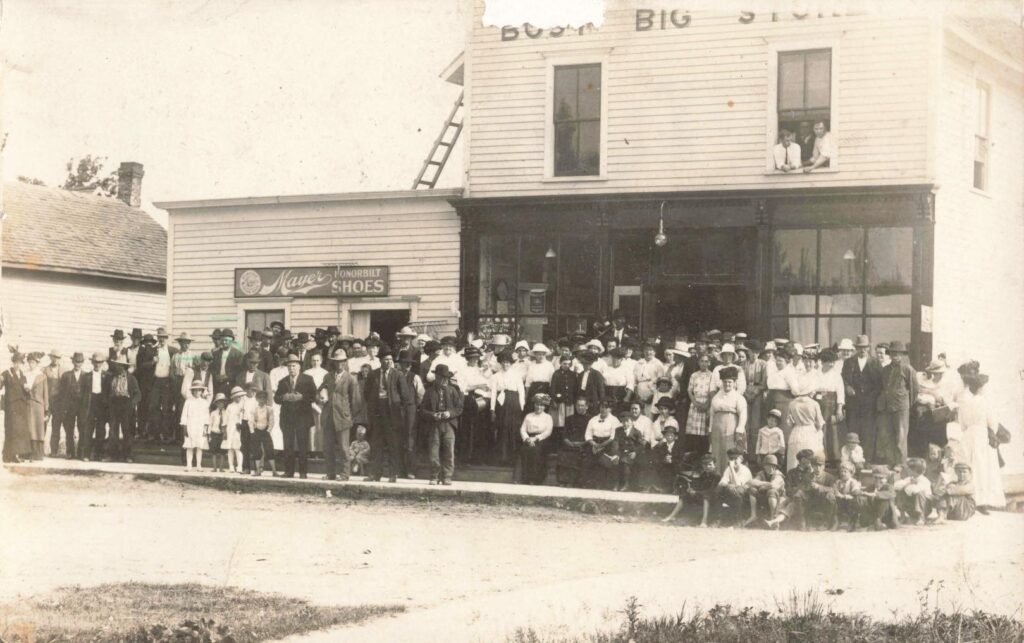
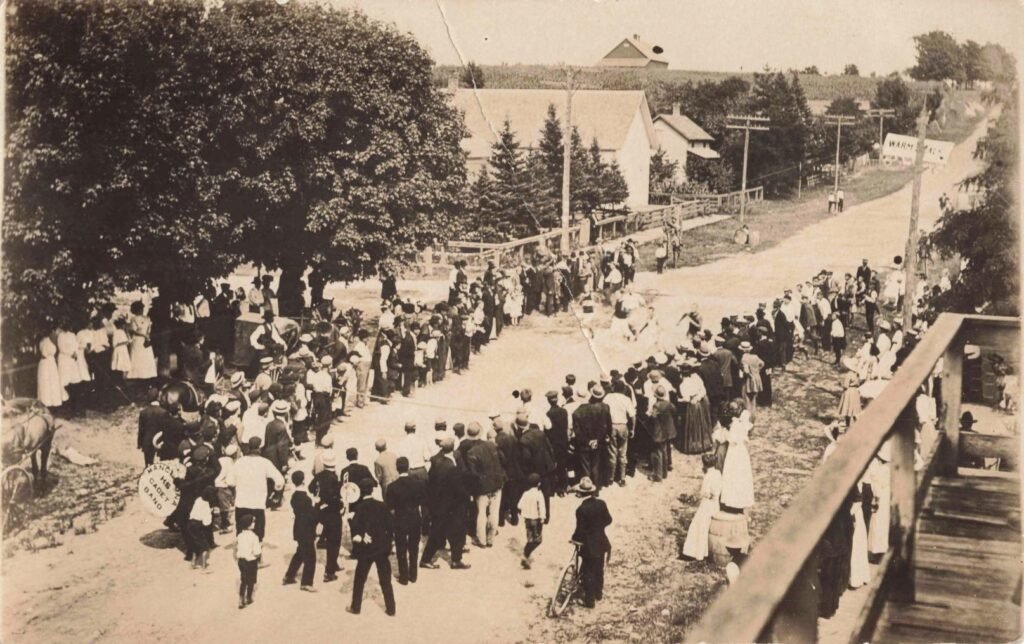
On good days, though, Alden’s main street was a social stage. One 1915 photograph shows Charles Coy’s general store packed with townspeople on the day a 100-piece set of dishes was given away. Men in suits, women in white blouses, and children in straw hats crowd the wooden sidewalk under a Mayers shoes sign. Events like this giveaway drew almost everyone out.
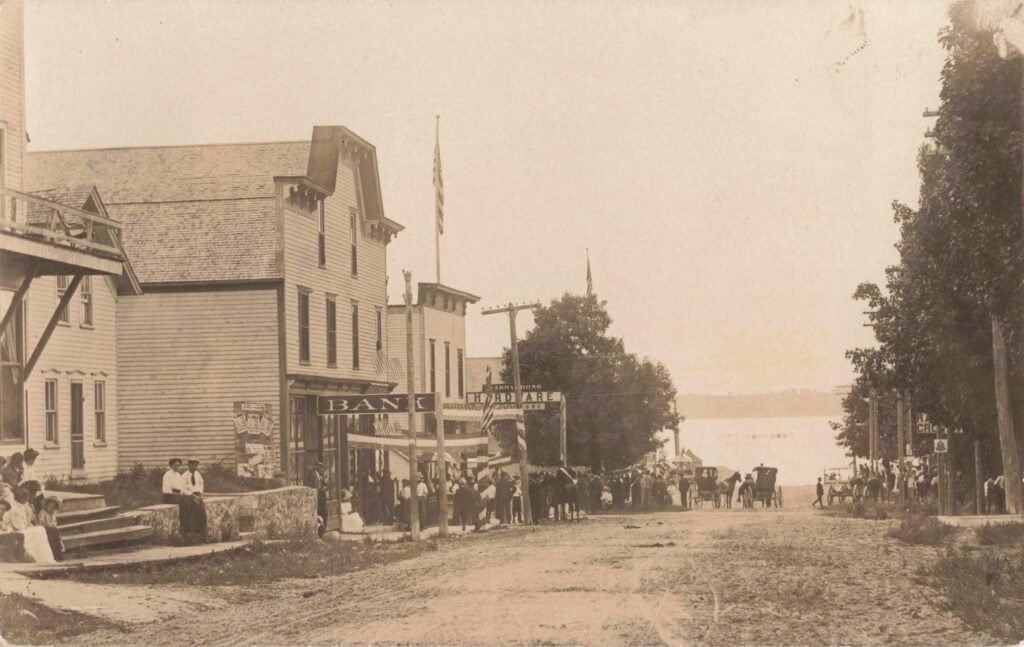
Another image captures a holiday or fair day. People line the dirt road, the Alden Bank and hardware store on one side, smaller shops on the other, as the street slopes down to Torch Lake. At the water’s edge, horse-drawn rigs and groups of people gather near docks and boats.
Boats on Torch Lake and the Rise of Tourism
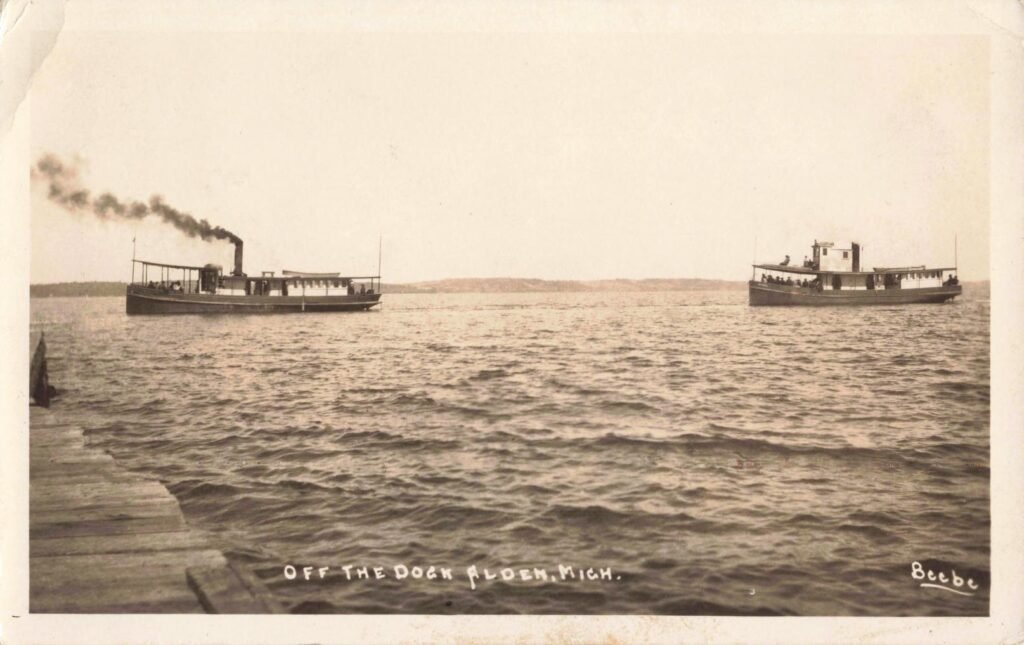
The history of Alden Michigan also runs across Torch Lake itself. As timber gave way to mixed farming and vacation traffic, boats became as important as trains. A photo captioned “Off the Dock, Alden, Mich.” shows two steamers crossing the lake, smoke trailing behind one of them. These boats carried passengers, mail, and supplies along the Chain of Lakes.
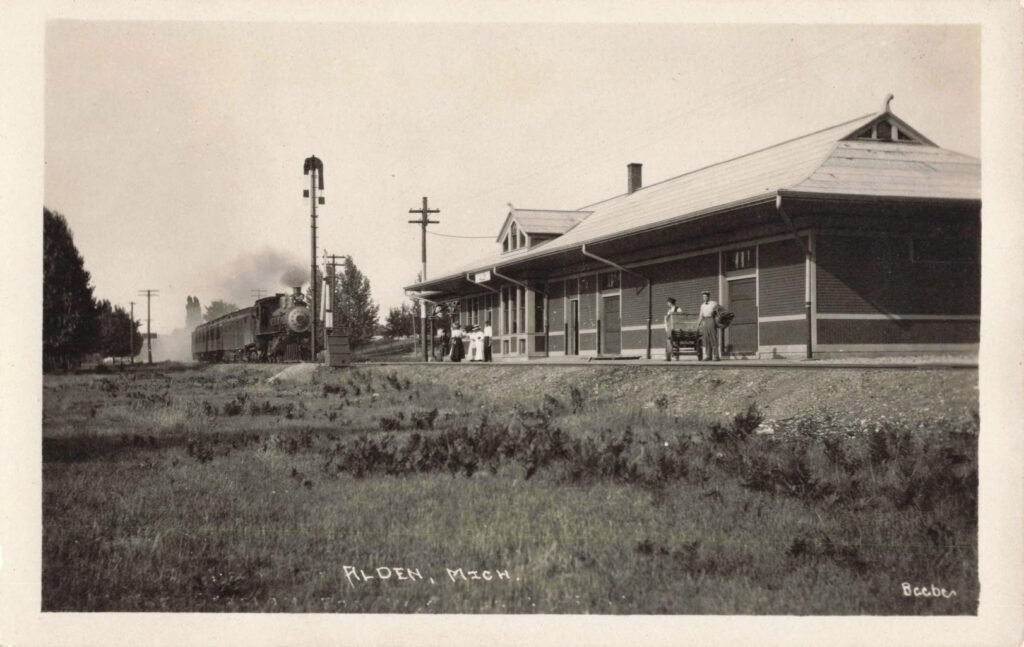
As rail connections improved, summer visitors poured in, drawn by the clear blue water that travel writers still praise. Boarding at cities to the south, families could ride north, step off at Alden’s depot, and walk down the hill to lakefront docks and cottages.
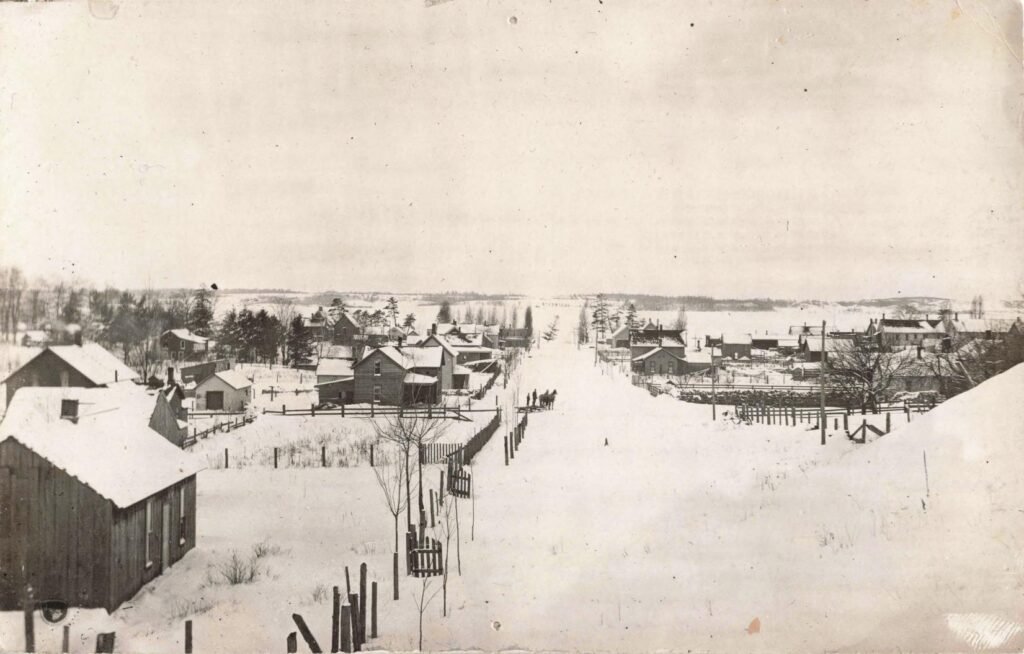
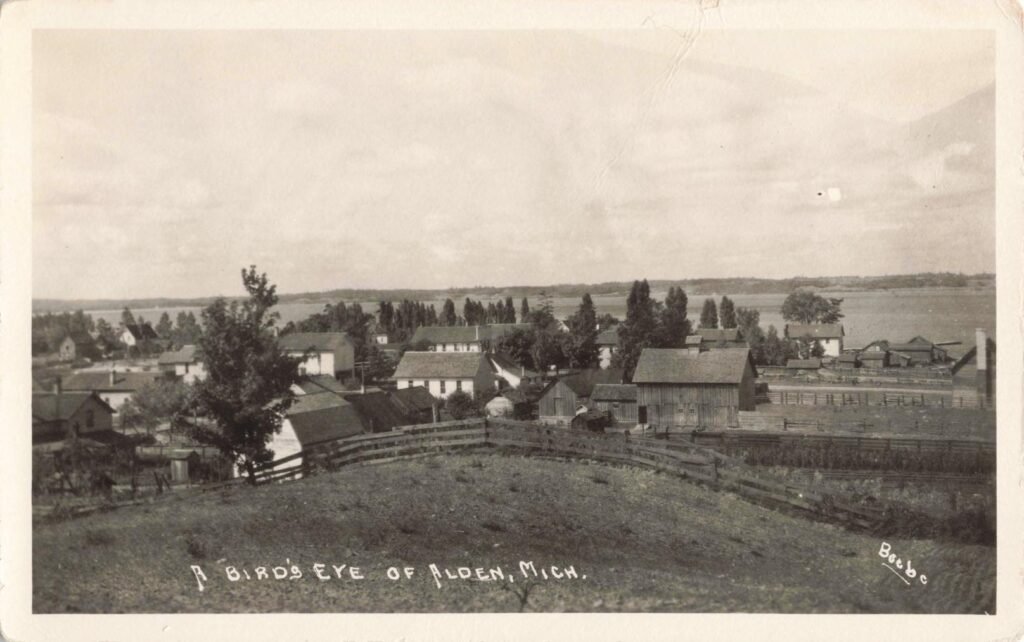
Winter brought a different scene. A panoramic photograph of Alden in snow shows houses, barns, and fences lining a straight road to the frozen lake. A horse-drawn sleigh moves along the street. Even in the off-season, the grid of streets and clustered buildings speaks to a settled community rather than a temporary camp.
From Rail Hub to Museum Piece
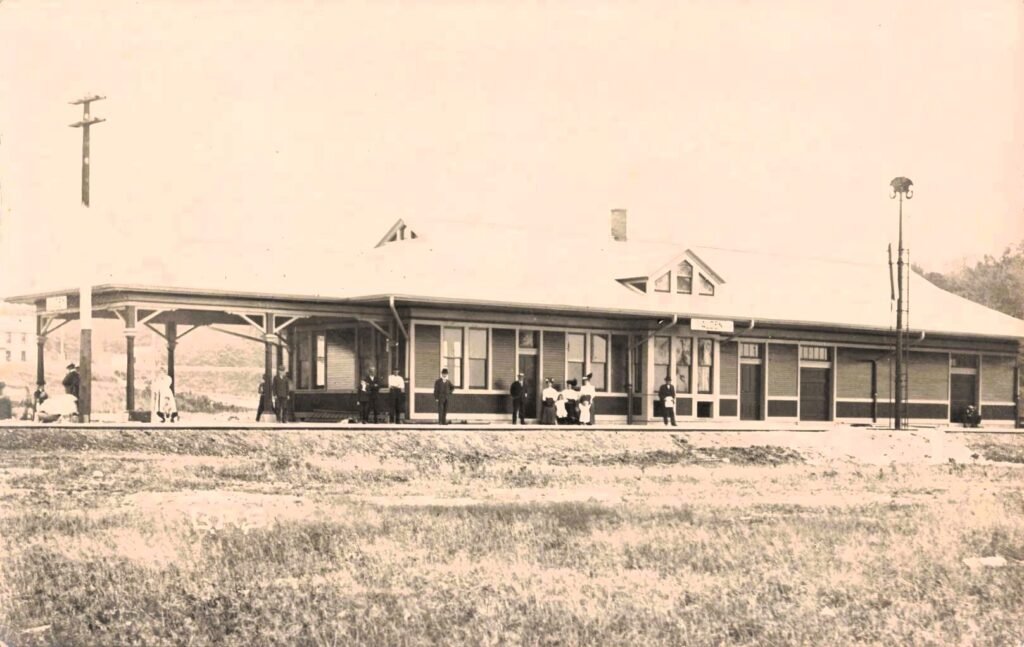
Passenger service gradually declined after World War II, but freight still rolled through Alden until 1981. That year, the last train left the village, closing a chapter that had started in 1891.
For a time, the depot sat vacant. In 1986, Helena Township reached an agreement to buy the building from the railroad, later restoring it as the Alden Depot Park & Museum, operated with help from the Helena Township Historical Society.
Today, visitors stroll past the old depot, shop in the business district, and look out across Torch Lake much as people did a century ago. The history of Alden Michigan lives in those views: Ojibwe torches on the water, mill dams on Spencer Creek, crowds outside Charles Coy’s store, and steam trains at a depot praised as the best north of Grand Rapids.