
 by
by A single postcard from 1911 captures a busy corner in downtown Pigeon, Michigan. Horse-drawn buggies crowd an unpaved street as women in long skirts stand under striped awnings lettered “Millinery” and “Cloaks.” The brick block behind them carries a bold sign: “Hirshberg’s Big Store.”
A Postcard Window into 1911
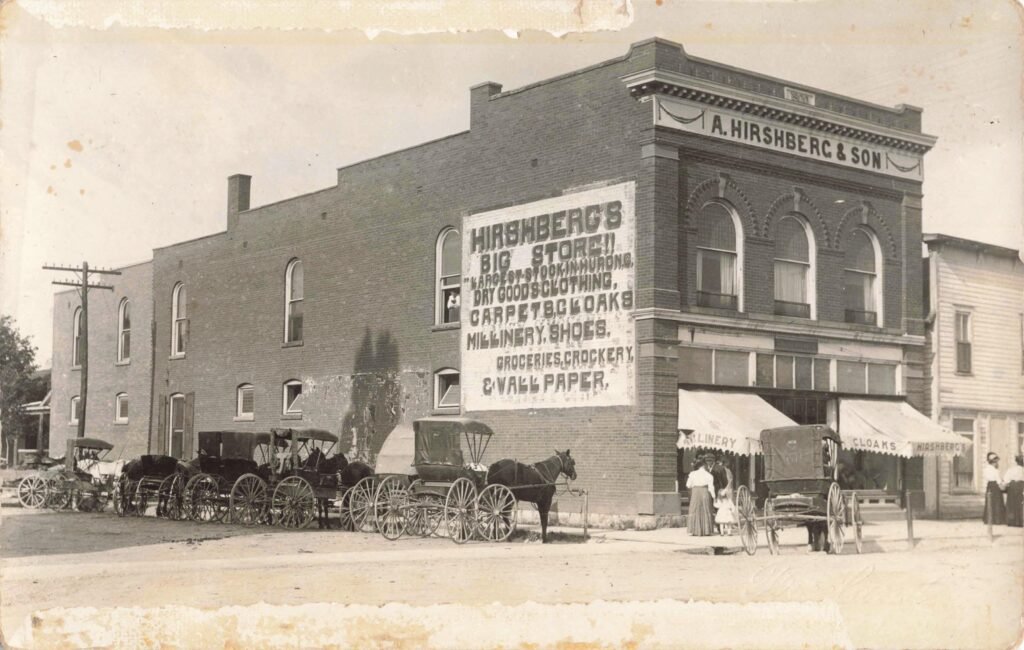
The card’s message invites customers to a cloak and millinery opening on Sept. 15 and 16 at A. Hirshberg & Son. That small ad turns the photograph into a time stamp, placing us in a Thumb farm town on the cusp of the automobile age, when a village department store could serve customers from miles around.
Video – Hirshbergs Big Store in Pigeon Michigan
A Small Thumb Village with a Big Store
Pigeon sits in Huron County, near the center of Michigan’s Thumb, about eight miles south of the Saginaw Bay resort town of Caseville. The village grew where rail lines and farm roads met, drawing grain, livestock, and people toward its grain elevators, banks, and shops.
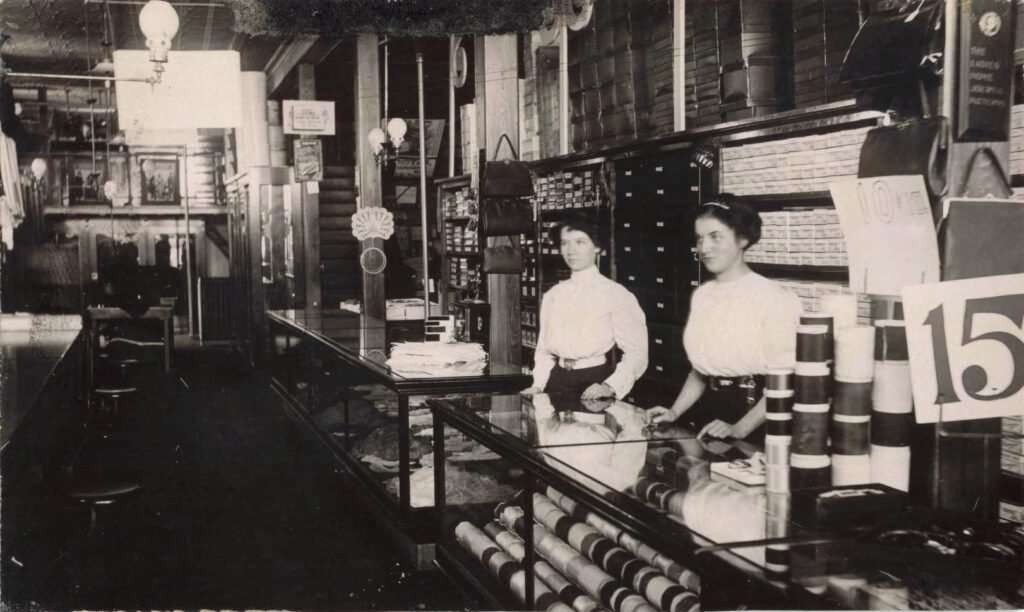
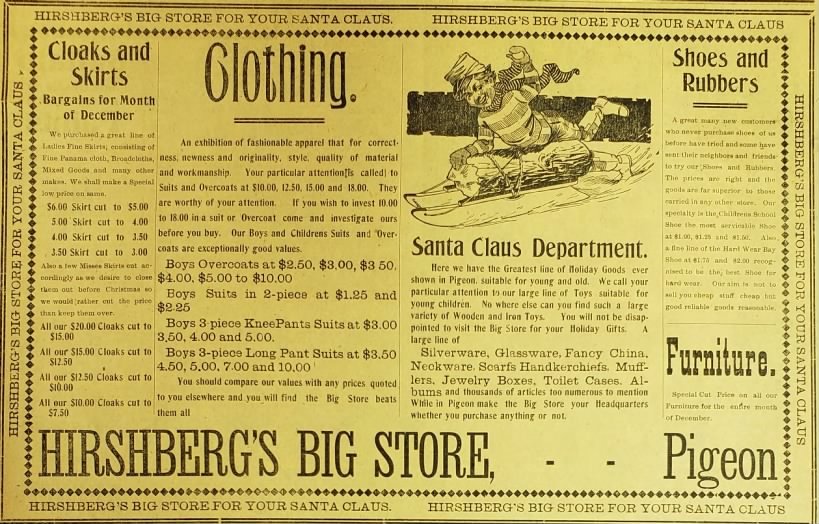
Abraham Hirshberg, a Russian Jewish immigrant, opened Hirshberg’s Big Store here in 1897. Local papers reported that by 1901, his new brick building on Main and Michigan was “the best arranged and most complete” store in the county, outfitted with a modern cash-carrier system that whisked payments from counters to a central cashier.
Inside A. Hirshberg & Son
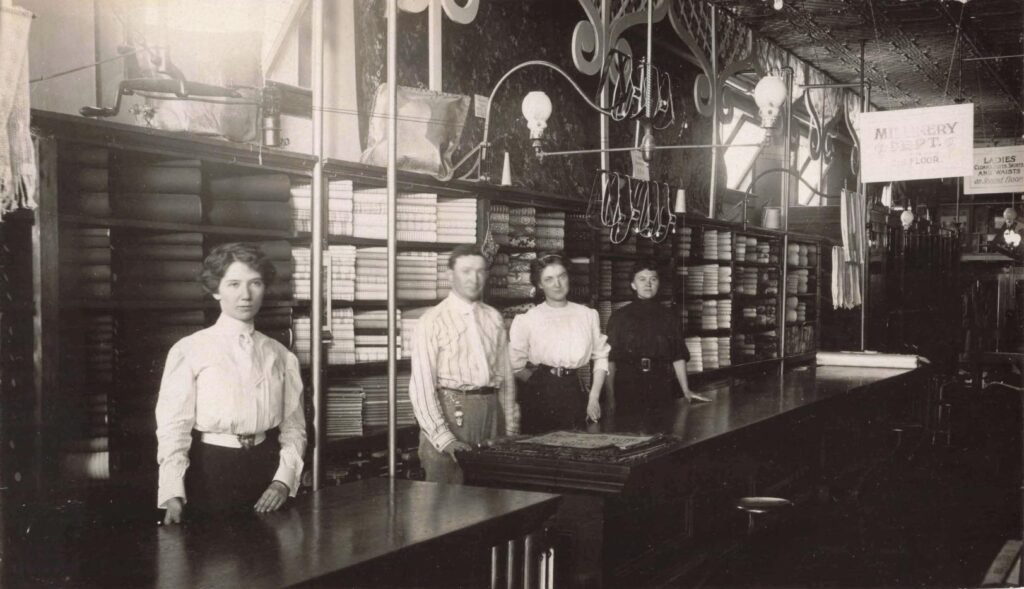
The painted wall in the postcard reads like an inventory. Hirshberg’s advertised dry goods, clothing, carpets, cloaks, millinery, shoes, groceries, crockery, and wallpaper. In an era before chain stores, one business could outfit a household from parlor to pantry.
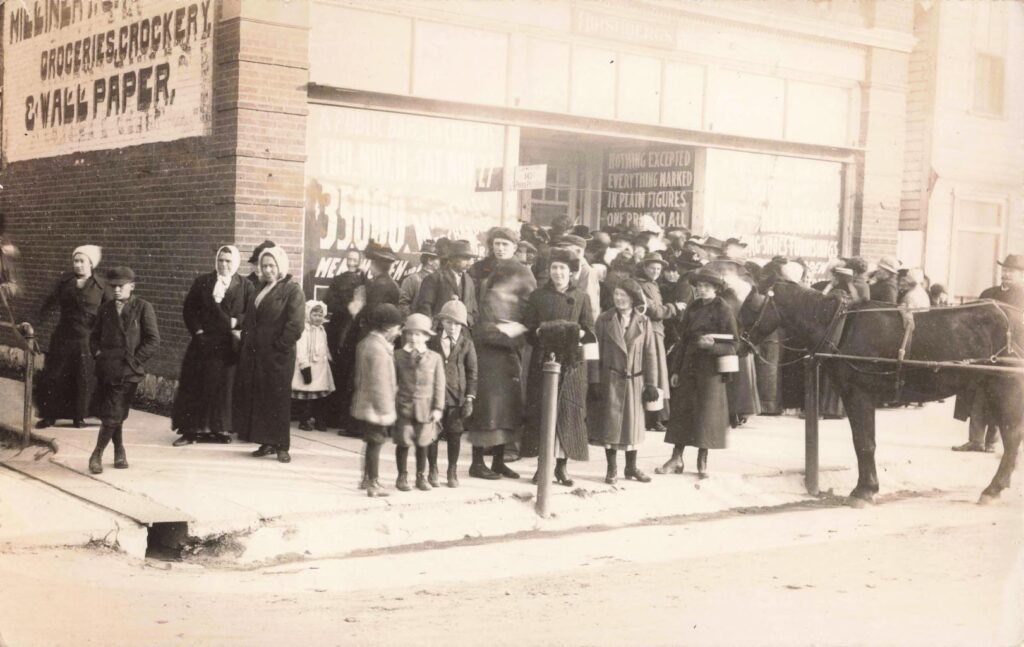
The 1911 cloak and millinery opening likely showcased new ready-made garments for farm families who wanted big-city fashion without the trip to Saginaw or Bay City. Seasonal events like this created reasons for rural customers to come to town, catch up on news and stock up on supplies before winter.
Why Pigeon Was Growing
Pigeon was incorporated as a village in 1903, just a few years after Hirshberg’s store went up. The community took its name from the Pigeon River, which flows north to Saginaw Bay and once attracted immense flocks of passenger pigeons.
By the early 1900s, the Thumb’s cutover forests had given way to fields of sugar beets, beans and corn. Pigeon sat in the middle of this new farm belt, and merchants like Hirshberg supplied everything from work clothes to dishes, often on credit carried in handwritten ledgers.
From Buggies to Automobiles
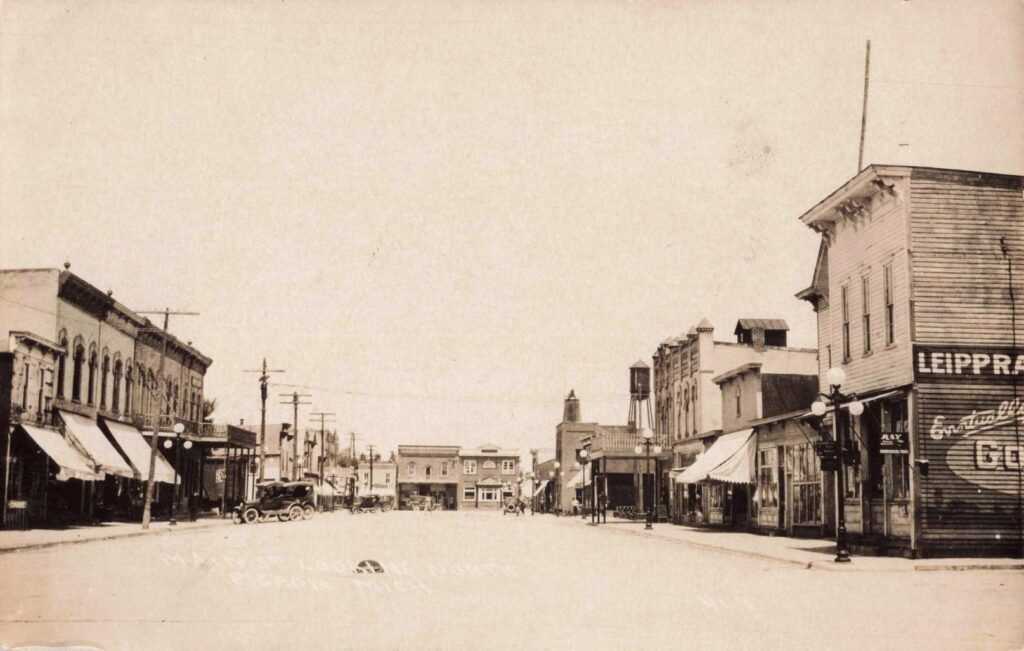
The row of buggies in the postcard underlines just how quickly life was changing. Within a decade, many of those rigs would give way to Model Ts rattling down the same dirt streets. Yet the Hirshberg building stayed put, a solid brick anchor on the corner as traffic shifted from hooves to engines.
In 1935, the Bechler family purchased the former Hirshberg block at East Michigan and North Main and carried out major renovations, a sign that the corner remained prime business real estate even after the original store passed into memory.
Why This Store Still Matters
Today, Pigeon is a village of about 1,200 residents, still serving as a service center for the surrounding countryside. When you stand on Main Street, it takes only a bit of imagination to match the present-day buildings with the 1911 postcard.
Hirshberg’s Big Store shows how one ambitious family business could shape daily life in a small Michigan town. The image of buggies, brickwork, and bold advertising reminds us that even remote Thumb communities were tied into national styles, technologies, and consumer habits more than a century ago.

Sources For Hirshberg’s Big Store
Hirshberg, Joy. “Hirshberg Tradition of Excellence.” Green Building Supply, 13 Mar. 2009. Accessed 5 Dec. 2025.
Village of Pigeon. “About the Village.” Village of Pigeon, n.d. Accessed 5 Dec. 2025.
“Pigeon, Michigan.” Wikipedia, Wikimedia Foundation, n.d. Accessed 5 Dec. 2025.
Pigeon Historical Society. “If Only the Walls Could Talk.” The Recorder, 18 Jan. 2015. Accessed 5 Dec. 2025.
Hardy, Michael. “How Pigeon Michigan Got Its Unique Name.” Thumbwind, 1 May 2021. Accessed 5 Dec. 2025.