
 by
by 
Michigan older drivers face high confidence behind the wheel but little planning for when health, vision, or Michigan winters make driving less safe.
Michigan older drivers show strong confidence but weak planning for the future
Most Michigan older drivers think they will be fine behind the wheel for years to come. Far fewer are ready for the day they are not.
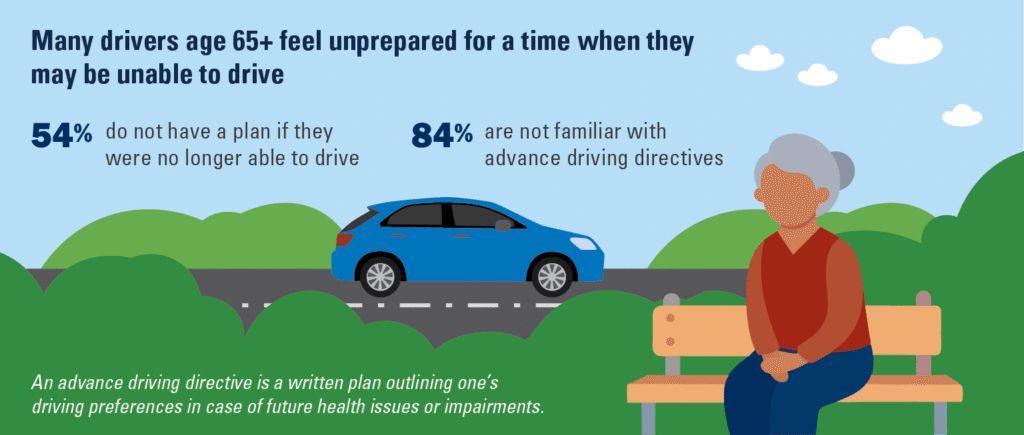
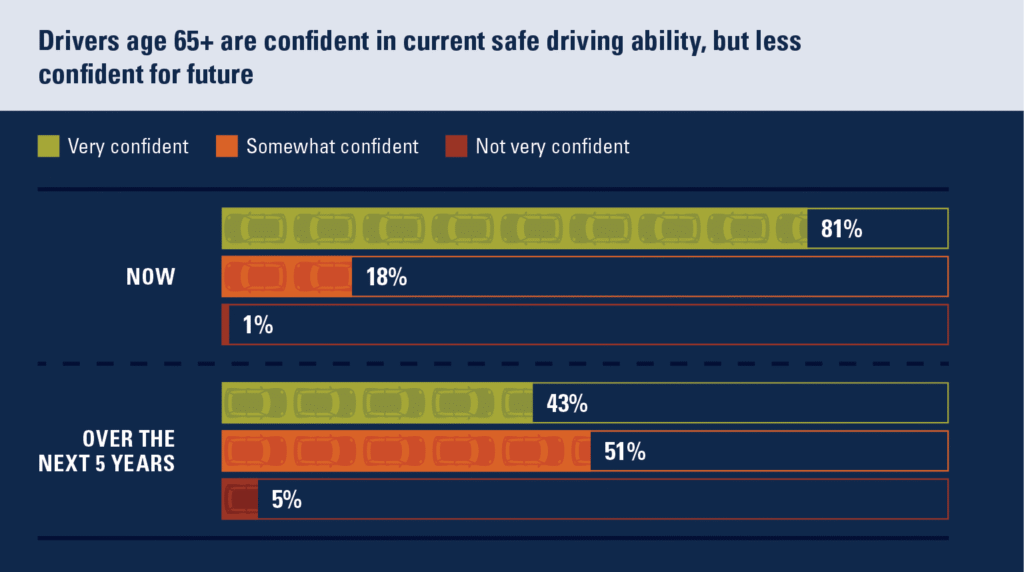
A new University of Michigan National Poll on Healthy Aging finds that 84% of Americans 65 and older drive at least once a week, and 62% drive most days. Among those who drove in the past six months, 81% say they are “very confident” in their current driving ability. Yet just over half feel confident looking five years ahead, and 54% of older drivers have no plan for the point when driving is no longer safe.
The numbers are even more striking close to home. In a Michigan-only analysis, 85% of adults 65 and older drive at least weekly, and 90% of Michigan older drivers who are still on the road say they are very confident driving now, compared with 81% in the rest of the country. But only 39% of Michigan drivers have a plan for the day they must give up the keys, compared with 46% elsewhere.
The poll, run in February 2025 by NORC at the University of Chicago for U-M’s Institute for Healthcare Policy and Innovation, surveyed 2,883 adults age 50 to 97 nationwide, including 1,353 Michigan residents. Results were weighted to represent both the U.S. and Michigan populations.
Michigan older drivers are caught between car culture pride and mobility reality
Researchers say the findings reflect Michigan’s longstanding car culture as much as its aging population.
“The freedom to drive where you want, when you want, is a critical part of independent living for older adults,” said Renée St. Louis, a researcher at the U-M Transportation Research Institute (UMTRI), which helped design the poll.
In a Michigan-focused report, St. Louis notes that “our state’s history as the home of the automotive industry, and of ‘car culture’ that values the role of the driver, is reflected in these findings.”
That pride shows up in behavior. Michigan older drivers are more likely than their peers elsewhere to say they drive most days and less likely to report avoiding night driving, highways, or heavy traffic. At the same time, 17% of older Michigan drivers say at least one health condition affects their driving, and 10% specifically mention vision problems.
Here is the counterintuitive part: as a group, older drivers are already changing how they drive—two-thirds nationwide avoid bad weather or night driving—yet most still have no written plan for when they should stop driving at all.
Only 16% of older drivers nationwide, and 15% in Michigan, had heard of an “advance driving directive,” a document that spells out a person’s driving preferences and names someone to help decide when to stop driving. Once the idea was explained, 70% said such a plan was important—but few had one in place.
Michigan older drivers, health care, and the missed chance to talk about quitting
One of the starkest numbers in the poll is how rarely health care enters the conversation. Just 6% of older drivers nationwide—and in Michigan—have ever discussed driving with a clinician, despite common conditions such as arthritis, diabetes, vision loss, and cognitive decline that can change risk behind the wheel. IHPI+1
“This demonstrates a major opportunity for primary care providers, vision care professionals, occupational therapists, pharmacists, and others,” said poll director Jeffrey Kullgren, a primary care physician at the VA Ann Arbor Healthcare System and a professor at the U-M Medical School. He argues that these discussions should take place before a crash or a near-miss forces a family crisis.
National safety data complicate the public debate. A recent LendingTree survey found that 61% of Americans support a maximum legal driving age. Yet national analysis by insurers and safety groups shows that crash rates per mile driven are often higher for younger drivers than for older ones, even as age-related fragility makes injuries more severe for seniors.
For Michigan older drivers, that tension is sharp. Many remain safe and cautious, but the poll suggests that families and doctors rarely discuss clear triggers for when driving should end.
Michigan older drivers get new planning tools, but few know they exist
The poll lands just as Michigan agencies and federal health officials are rolling out new mobility-planning tools.
UMTRI and the State of Michigan host Safe Drivers, Smart Options, a state-run site for older drivers, families, and professionals. It offers checklists, a downloadable guide in multiple languages, links to Area Agencies on Aging, and directories of local transportation options after “driving retirement.”
Nationally, the Centers for Disease Control and Prevention recently updated its MyMobility Plan, a step-by-step tool to help older adults plan for health, home safety, and transportation before a crash or fall forces a sudden change. The plan underscores that many people are diligent about retirement savings but rarely think about how they will physically get around when they can no longer drive.
Groups such as AAA and AARP offer defensive-driving classes tailored to older adults, along with a written Driver Planning Agreement that families can use to spell out warning signs, alternate transportation, and who gets the final say about stopping driving.
Despite this growing toolbox, the poll shows awareness still lags. Many Michigan older drivers either assume they will “know it when they see it” or hope a spouse or adult child will step in. For a state built around the auto industry, that may be an understandable instinct—but it also leaves tens of thousands of households one bad winter storm or medical setback away from a difficult, rushed decision.
Broader debates on aging and the driver’s seat
The U-M team argues that the new data should inform state and local policy: from how transit funding is aimed at older adults in rural Michigan, to how doctors are trained to raise driving with patients.
Nationally, the same week this poll was released, media coverage of the LendingTree survey on age limits for driving highlighted the political appetite for simple rules—“too old to drive”—even as safety data show a more complicated picture, with the riskiest driving clustered among younger motorists.
For Michigan, where the car has long been a symbol of independence and status, the new findings suggest a quieter task ahead: getting Michigan’s older drivers to treat driving the way they treat wills, health care proxies, and retirement savings—as something that deserves a written plan before a crisis hits.
Read More Interesting Feature Stories From ThumbWind
- “Michigan Feature News Stories” – Unveiling the diverse and vibrant people, captivating places, and remarkable events that come together to make the Great Lake State unique.
- “Strange Political News” – A sarcastic take on official news from around the U.S., exploring the absurdities that often arise in the political landscape while providing a humorous perspective on current events and highlighting the quirks of politicians and policies.
- “Michigan Hometown News” – News and events from Michigan’s Upper Thumb region worth knowing, including local stories, impactful interviews, and updates on community happenings that shape the culture and lifestyle of the area.
Your Turn – Like This, or Hate it – We Want To Hear From You
Please offer an insightful and thoughtful comment. We review each response. Follow us to have other feature stories fill up your email box, or check us out at “ThumbWind News“.
Works Cited
Institute for Healthcare Policy and Innovation. “Most Older Drivers Aren’t Thinking About the Road Ahead, Poll Suggests.” University of Michigan, 25 Nov. 2025, https://ihpi.umich.edu/news-events/news/most-older-drivers-arent-thinking-about-road-ahead-poll-suggests.
Institute for Healthcare Policy and Innovation. “Michigan’s Older Drivers Are Confident, but Not Planning Ahead.” University of Michigan, 25 Nov. 2025, https://ihpi.umich.edu/national-poll-healthy-aging/reports-and-resources/michigans-older-drivers-are-confident-not.
Institute for Healthcare Policy and Innovation. “National Poll on Healthy Aging.” University of Michigan, 2025, https://ihpi.umich.edu/national-poll-healthy-aging.
Michigan Department of State. “Safe Drivers, Smart Options – About Us.” State of Michigan, 2025, https://www.michigan.gov/agingdriver/about-us.
Centers for Disease Control and Prevention. “MyMobility Plan.” CDC, 28 July 2025, https://www.cdc.gov/older-adult-drivers/mymobility/index.html.
AAA. “AAA’s Advocacy & Additional Resources: Senior Driver Safety & Mobility.” AAA, 2024, https://exchange.aaa.com/safety/senior-driver-safety-mobility/aaas-advocacy-additional-resources/.
AAA. “Driver Planning Agreement.” AAA, 2011, https://exchange.aaa.com/wp-content/uploads/2021/03/Driver-Planning-Agreement.pdf.
LendingTree. “61% Support a Legal Driving Age Limit.” LendingTree, 18 Nov. 2025, https://www.lendingtree.com/insurance/driving-age-limit-survey/.
AAA. “Senior Driver Safety & Mobility.” AAA, 2023, https://exchange.aaa.com/safety/senior-driver-safety-mobility/.
LendingTree. “Gen Zers Are the Worst Drivers by Generation.” LendingTree, 22 Jan. 2024, https://www.lendingtree.com/insurance/generation-incidents-study/.