 by
by 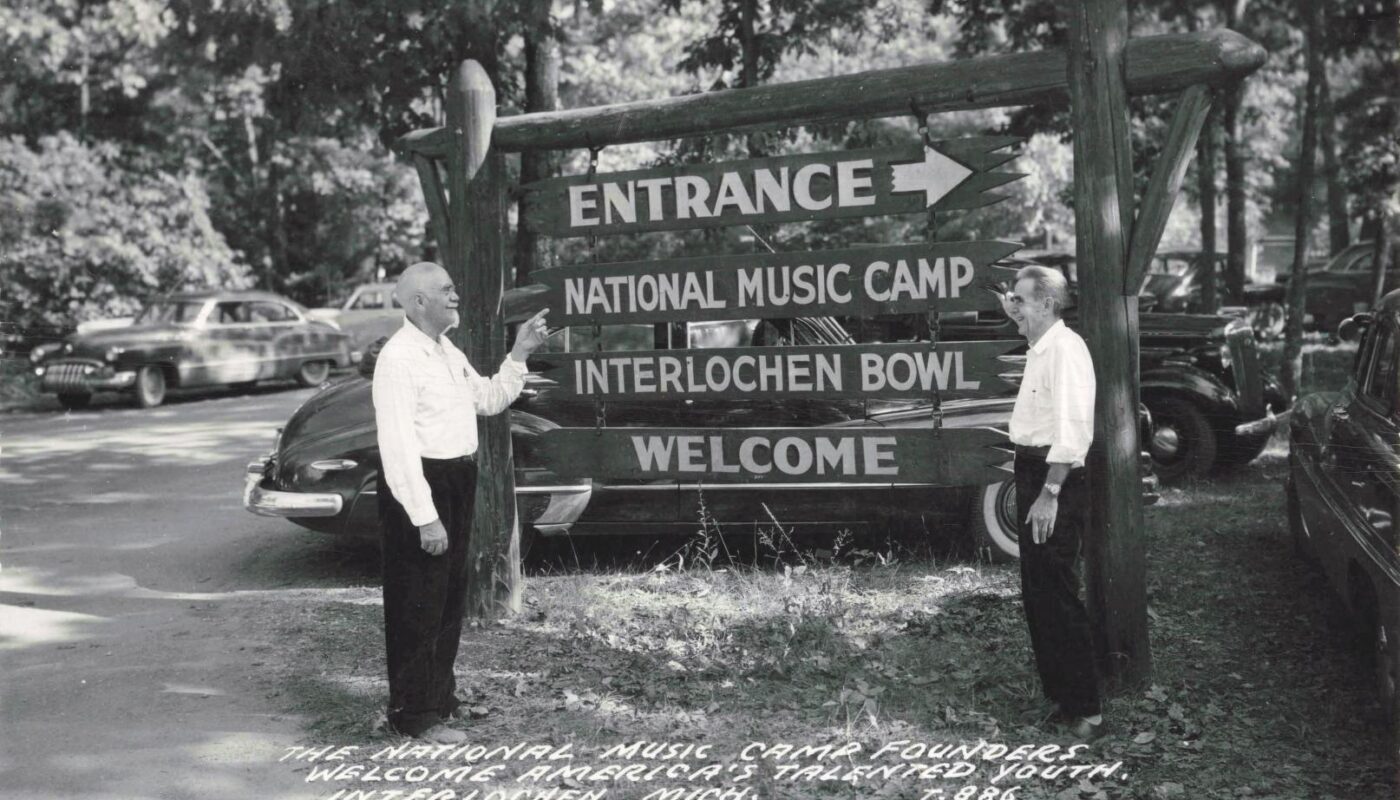
Interlochen, Michigan is a small place with a big story. It sits between Duck Lake and Green Lake in Grand Traverse County. The name fits the map. It means “between the lakes.”
The history of Interlochen Michigan is not only about music. It starts with trains, timber, and hard work. Then it shifts into summer travel, state park protection, and youth camps that changed the town’s name across the country.
Video – Interlochen Michigan – Amazing Secrets About Its Cultural Rise
A rail crossing built for timber
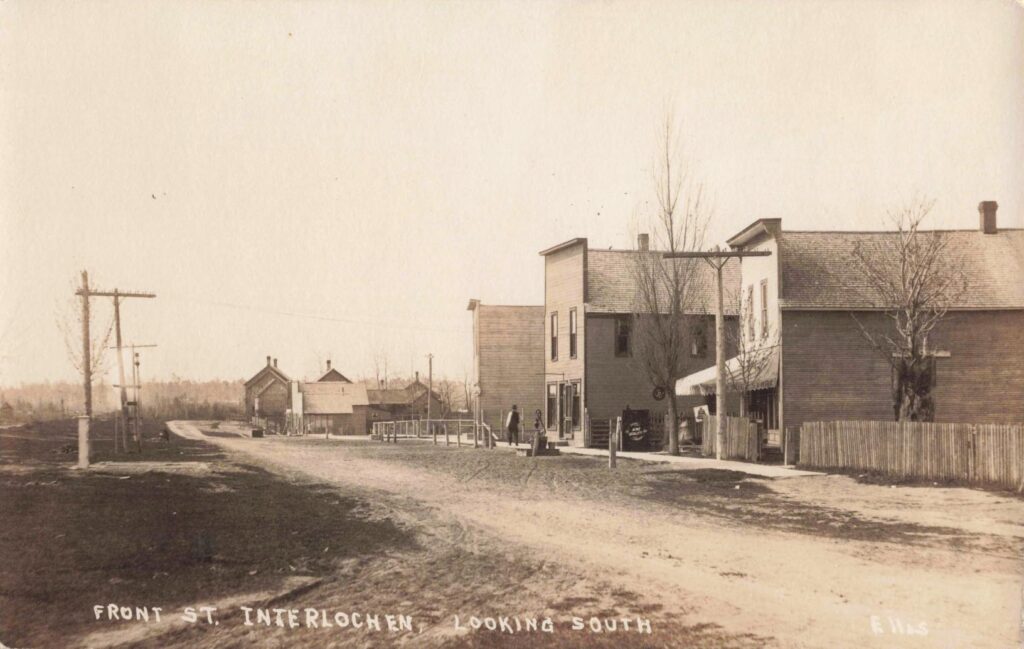
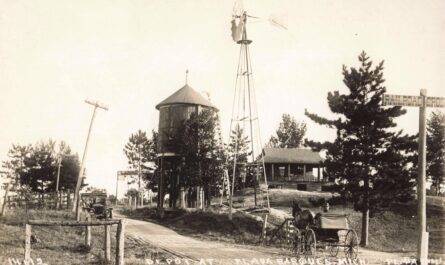
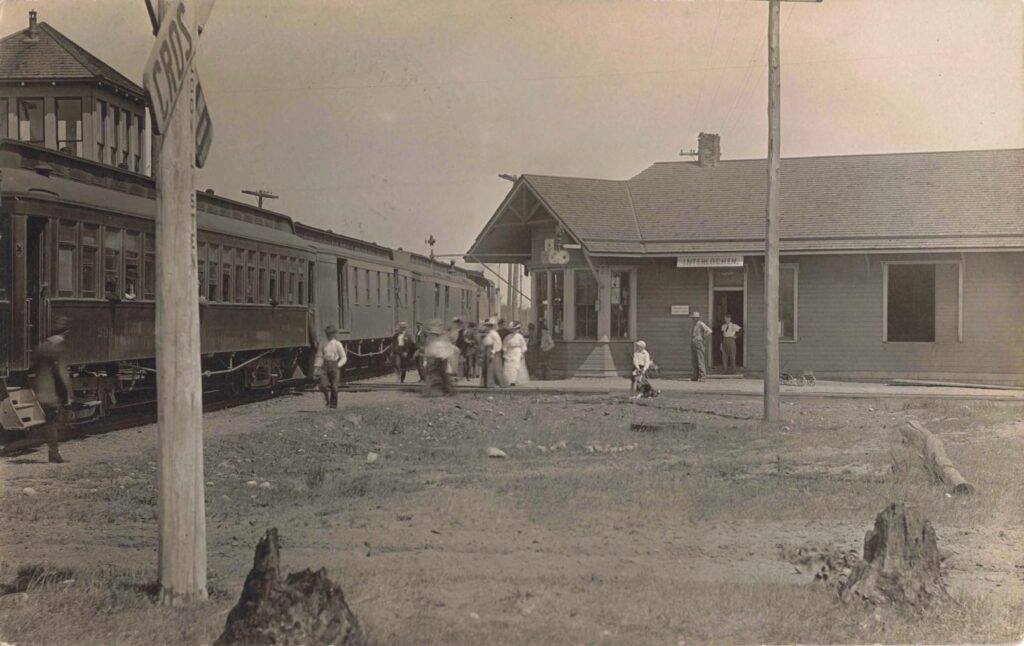
In the late 1800s, logging and fishing drew settlers into the area. Railroads followed. By 1889, one rail line reached the lakes. In 1890, another arrived. The two crossed near what is now downtown Interlochen. A depot and rail facilities grew up around that crossing.
This is the first key to the History of Interlochen Michigan: the town was planned to move goods. The depot was not decoration. It was infrastructure.
Mills, barrels, and the Wylie name
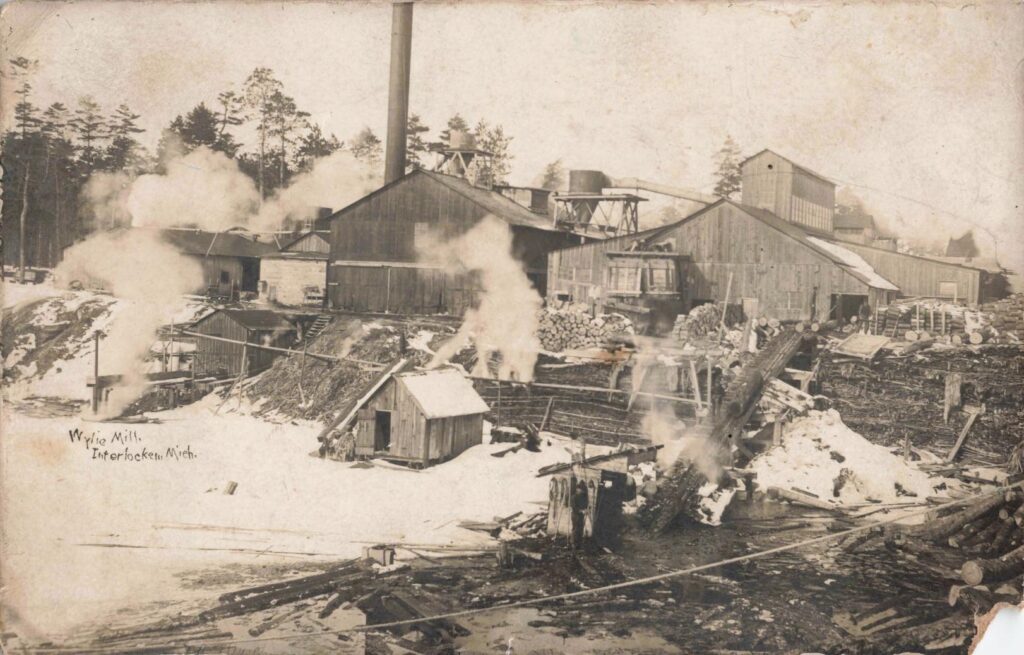
Interlochen’s early industry was not subtle. Mills ran hard, even in winter. One postcard title calls out the Wylie Mill. Another shows the scale of the cooperage works, the barrel-making side of a wood-products economy.
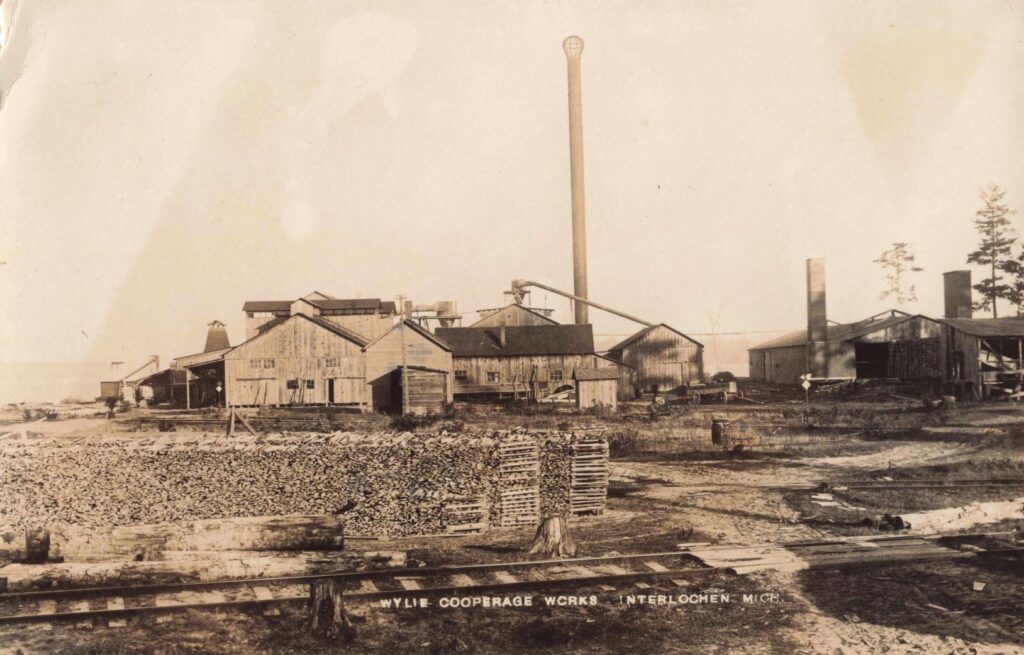
A 1908 county atlas directory includes a listing for a superintendent of the Wylie Cooperage Co. in Interlochen. That kind of directory entry is a small detail, but it helps confirm that the cooperage was not a local legend. It was part of the business life that people recognized in print.
The decision that changed everything
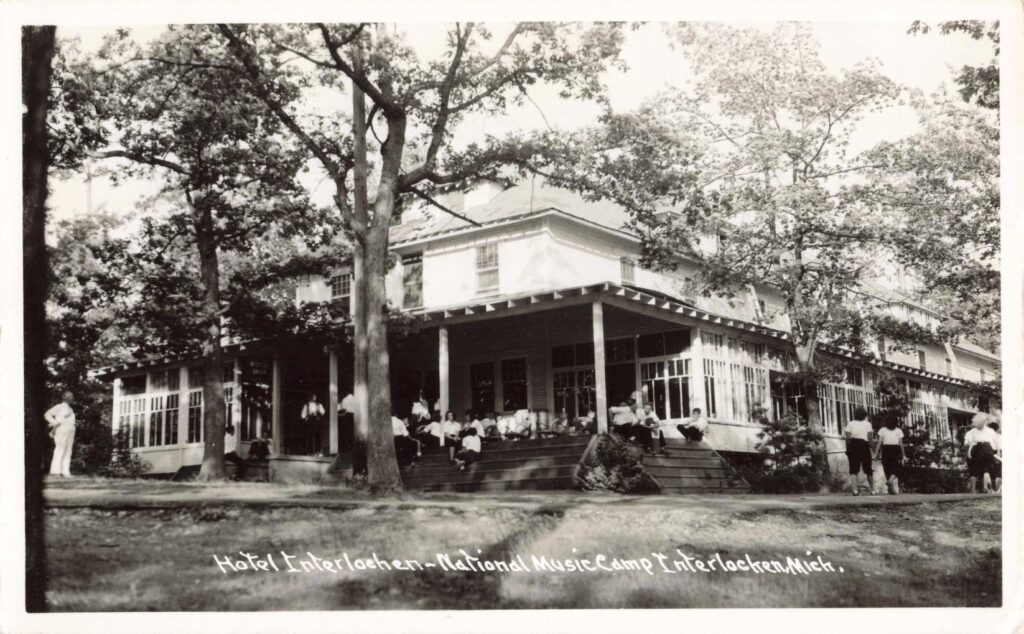
Here is the turn that makes Interlochen different from many cutover towns. A lumber company chose to spare a stand of pine along the lakes and create a public retreat called Pine Park. That move helped pull in summer visitors for camping, fishing, and swimming.
This is a counterintuitive fact at the heart of the history of Interlochen Michigan: in a timber economy, preservation helped make the next economy possible.
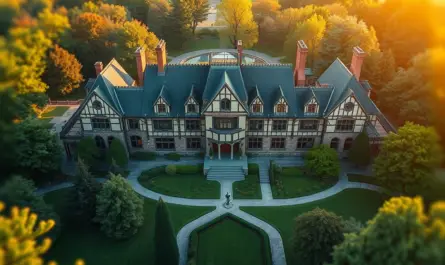
By 1909, local businessman Willis Pennington opened the Pennington Hotel near Pine Park. Resort life built up around porches, meals, and long stays by the water.
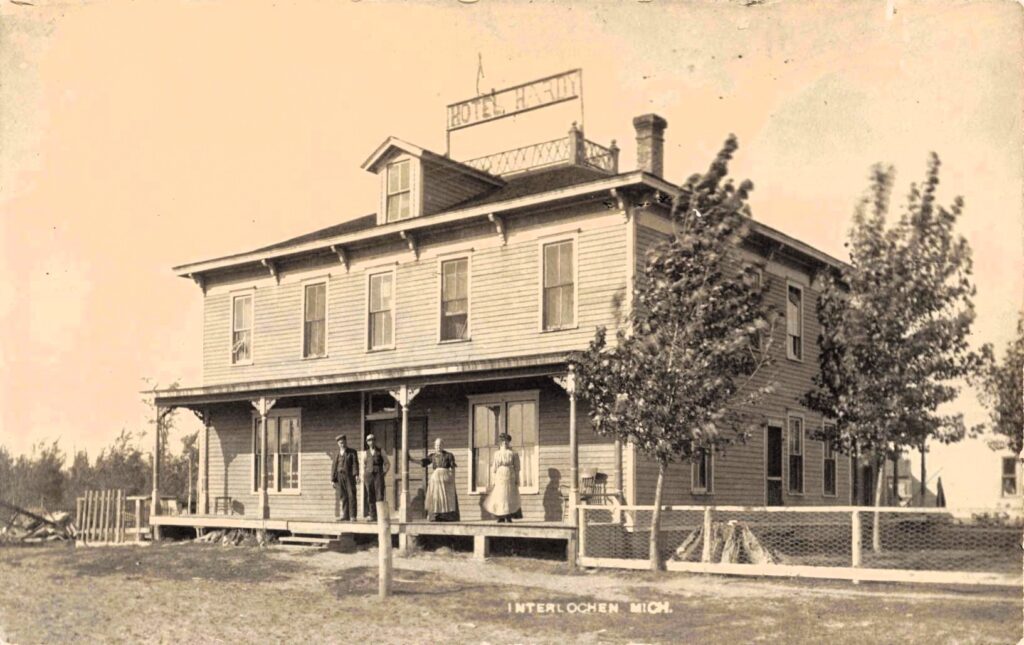
From Pine Park to Interlochen State Park
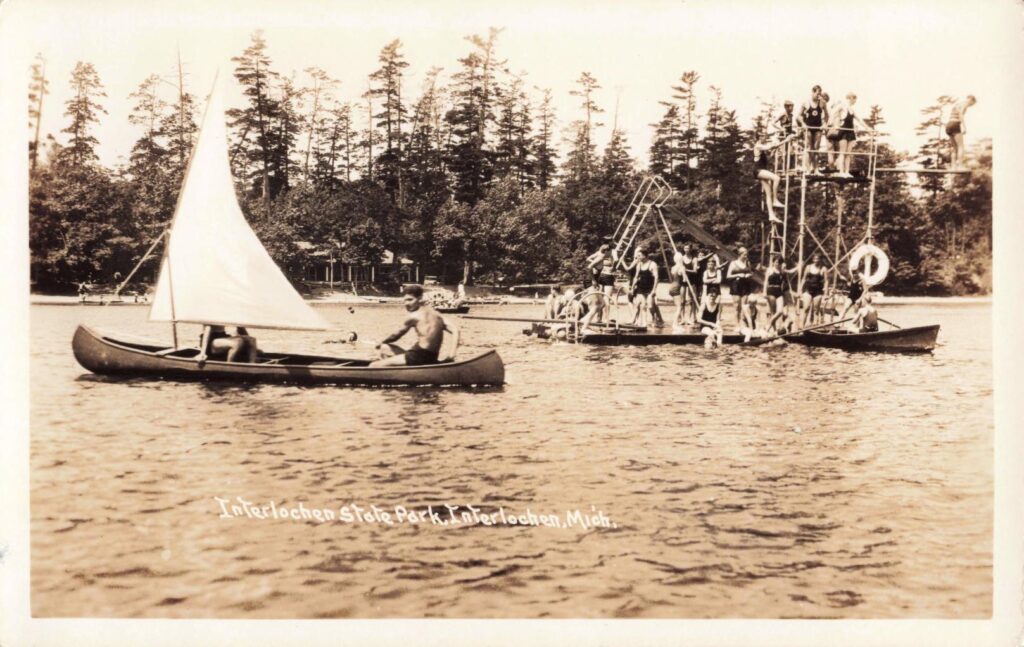
The parkland was not guaranteed to survive. By the mid-1910s, there was pressure to cut the spared trees. Local leaders pushed for state action. In 1917, the legislature purchased the land for $60,000. In 1919, it was recognized as a state park.
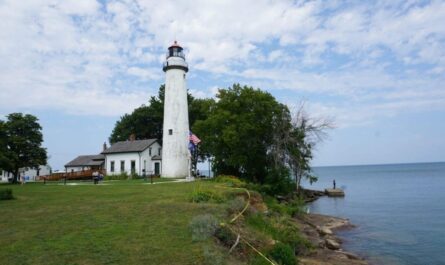
Today the DNR still points to the same basics: Interlochen State Park sits between Duck Lake and Green Lake and keeps some of the old pine stands that were the reason for protection in the first place.
Camps, horses, and organized summer
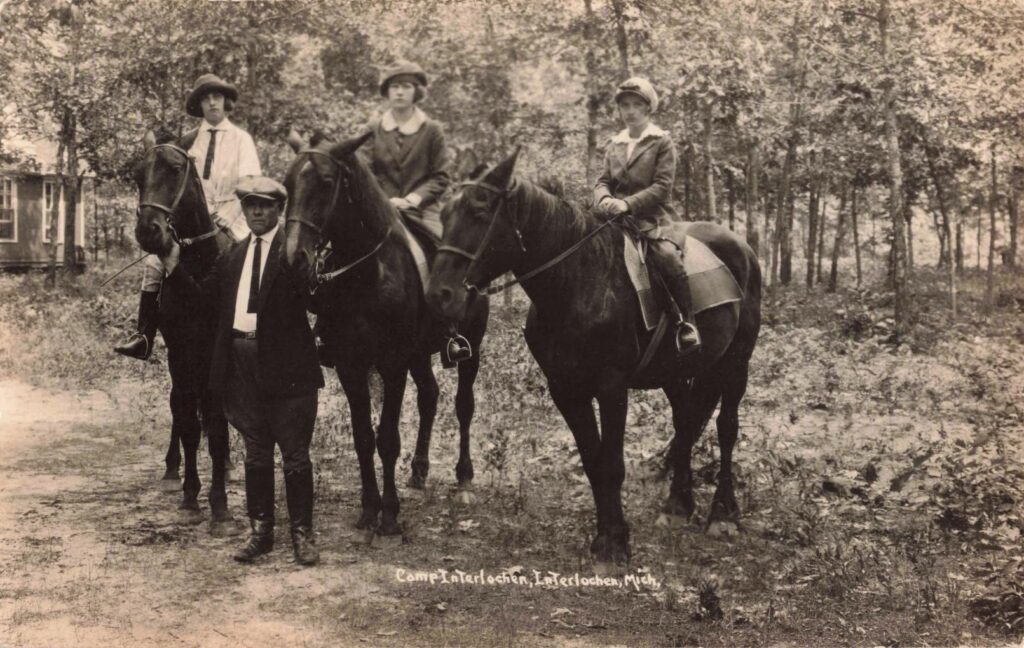
By the 1920s, summer in Interlochen was organized and commercial. Camp properties grew up near the lakes. The Interlochen Center’s own historical essay describes how Camp Interlochen and Camp Penn Loch were operating by the mid-1920s, with the hotel serving as a mess hall as well as a resort.
The music camp arrives
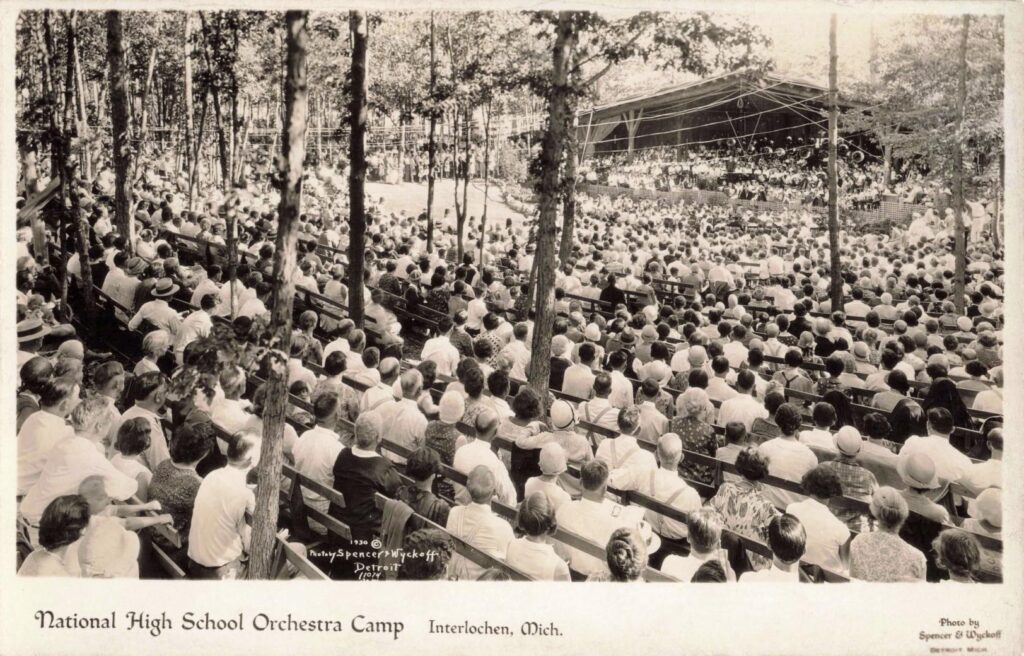
Then the town’s name took on a new meaning. In 1928, Joseph Maddy’s National High School Orchestra Camp opened in Interlochen. The Interlochen timeline records the opening date—June 24, 1928—and lists 115 campers in that first season. It also notes the completion of the Interlochen Bowl that year.
This is why the History of Interlochen Michigan still draws attention: the town did not erase its earlier identity. It layered a new one on top. The pines and park drew visitors. The camps created a working summer campus. Music made it national.
A final note for viewers
Let the images carry the transitions: depot to mill; mill to hotel; hotel to lakeshore; lakeshore to orchestra. That sequence mirrors the real changes Interlochen lived through between 1890 and 1940—work, leisure, then culture.
The History of Interlochen Michigan is a reminder that one saved strip of pine can change what a town becomes.
Works Cited
“Interlochen.” Encyclopedia Britannica. Accessed 12 Mar. 2026.
“Interlochen Timeline.” Interlochen Center for the Arts. Accessed 12 Mar. 2026.
“From timber to tourism: How conservation shaped Interlochen, Michigan.” Interlochen Center for the Arts, 8 Apr. 2019. Accessed 12 Mar. 2026.
“Interlochen State Park.” Michigan Department of Natural Resources. Accessed 12 Mar. 2026.
“Mackinac Island State Park.” Mackinac State Historic Parks. Accessed 12 Mar. 2026.
“Interlochen depot.” David V. Tinder Collection of Michigan Photography, William L. Clements Library, University of Michigan Library Digital Collections. Accessed 12 Mar. 2026.
“Wylie Mill, Interlocken, Mich.” David V. Tinder Collection of Michigan Photography, William L. Clements Library, University of Michigan Library Digital Collections. Accessed 12 Mar. 2026.
“Camp Interlochen, Interlochen, Mich.” David V. Tinder Collection of Michigan Photography, William L. Clements Library, University of Michigan Library Digital Collections. Accessed 12 Mar. 2026.
“National High School Orchestra Camp Interlochen, Mich.” David V. Tinder Collection of Michigan Photography, William L. Clements Library, University of Michigan Library Digital Collections. Accessed 12 Mar. 2026.
Geo. A. Ogle & Co. Standard Atlas of Grand Traverse County, Michigan (1908), page 82. University of Michigan Library Digital Collections. Accessed 12 Mar. 2026.