
 by
by 
I was at the Port Austin History Center the other day, taking pictures for our Log Cabins of the Upper Thumb article. It had been a while since I last visited the site, and I was pleased to see many updates to the on-site historical buildings. I especially enjoyed walking through Ed’s Barber Shop.
The parking lot was empty, and I decided to take a peek inside the Center. While inside, I was intrigued to see a small Coaster Craft display that showed in the mid-1900s, a company based in Port Austin made scooters, kids’ wagons, and bikes. In fact, it was a big operation!
When Port Austin Built Coaster Craft Scooters and Flying Scot Bikes
Between the early 1940s and the start of the postwar boom, a modest factory in Port Austin produced thousands of scooters, wagons, and bicycles that reached far beyond Michigan’s Thumb.
The company was Coaster Craft, a short-lived but productive manufacturer that operated during a period when small-town industry helped fill gaps left by wartime shortages and shifting consumer demand. Though largely forgotten today, Coaster Craft played a brief but notable role in Michigan’s mid-century manufacturing story.
Coaster Craft and Universal Cycle – A Wartime Factory in a Farm Town 1943-1950
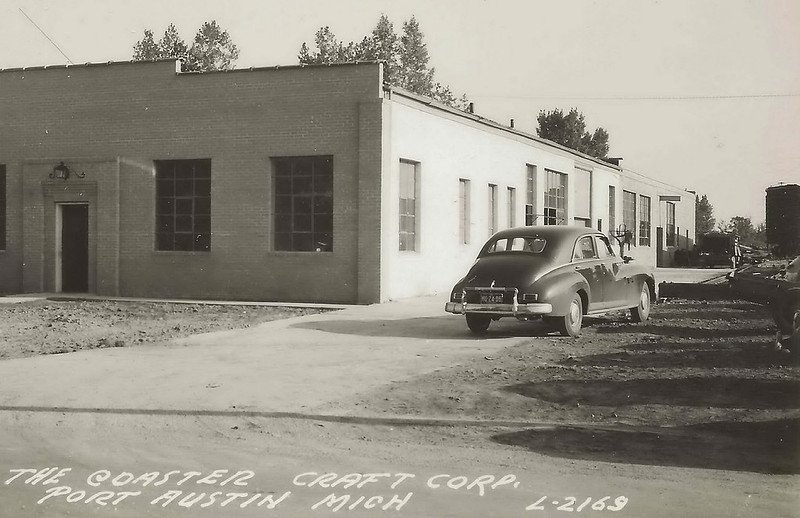
Coaster Craft began operations during World War II, when federal production priorities reshaped American industry. Large manufacturers focused on military contracts, leaving room for smaller firms to supply consumer goods made from limited materials.
Port Austin offered several advantages: available labor, rail access within Huron County, and industrial space adaptable to light manufacturing. Coaster Craft set up shop in a building that would later house several unrelated businesses, reflecting the town’s pattern of reuse rather than large-scale redevelopment.
The company’s product line fits the moment. Scooters, wagons, and bicycles required less steel than automobiles and could be sold to families eager for affordable recreation during and after the war.
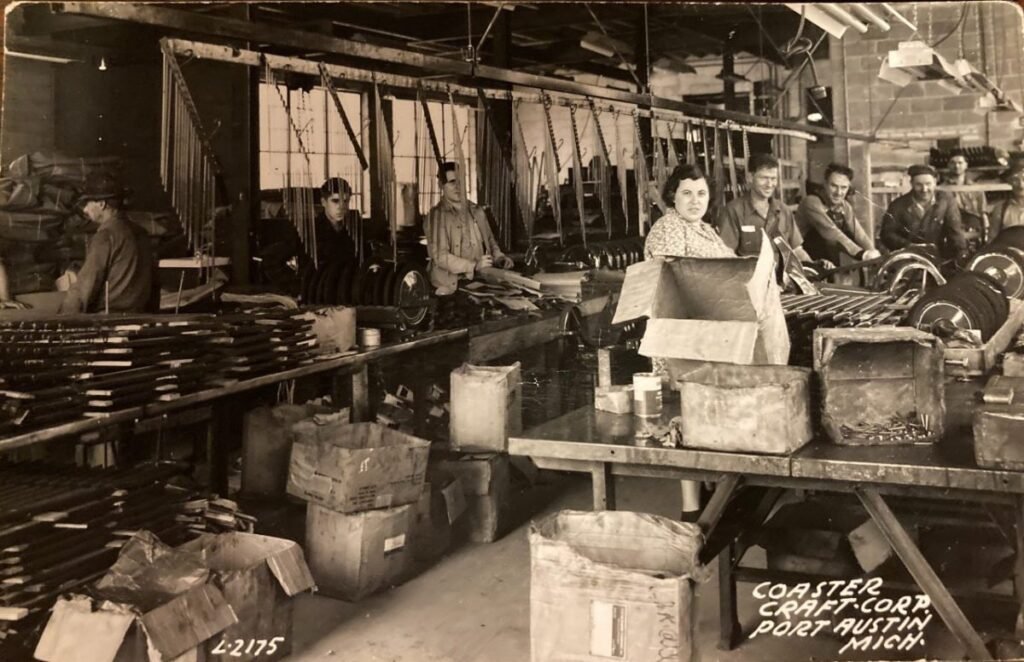
Supposedly, Detroit businessman Roy Wills came to Port Austin in the 1940s and built the small factory that today hosts PAK’S Garage. Wills founded Coaster Craft and, by 1943, built kids’ scooters and wagons at the small factory. I found this amazing, given that the country was in the midst of World War II. Most of the nation’s steel production was used for the war effort.
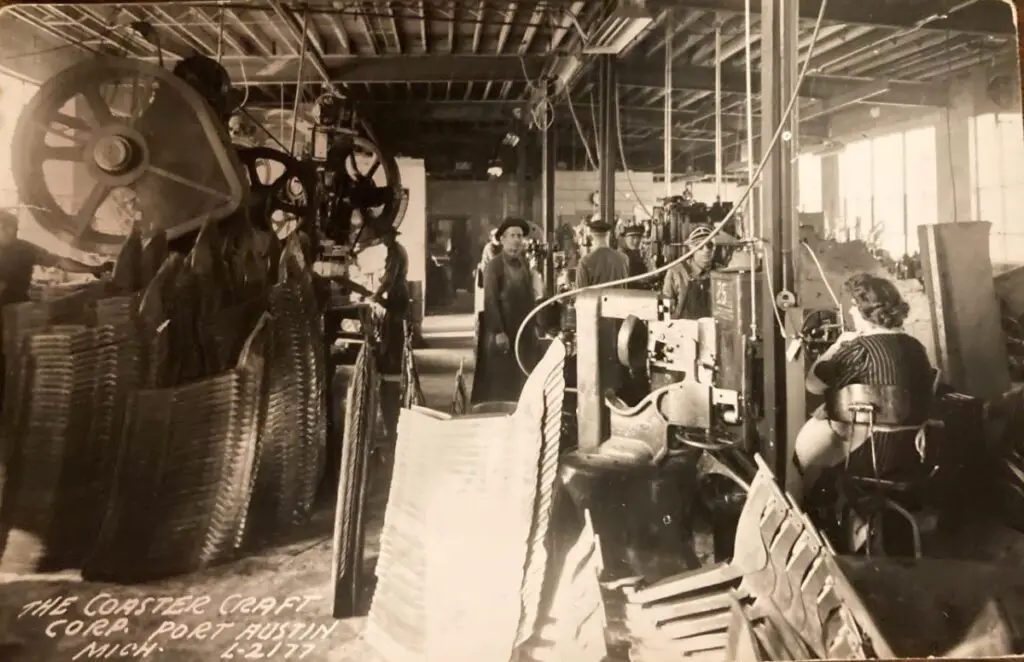
This operation continued until 1948, when the factory was sold to Universal Cycle. Over 100 employees made an impressive 400 bikes a day. These were distributed across the country. One brand manufactured at the Port Austin plant was the Flying Scot, a famous bike brand that originated in Scotland. However, operations appear to have lasted only a couple of years before the plant was closed.
What Coaster Craft Made
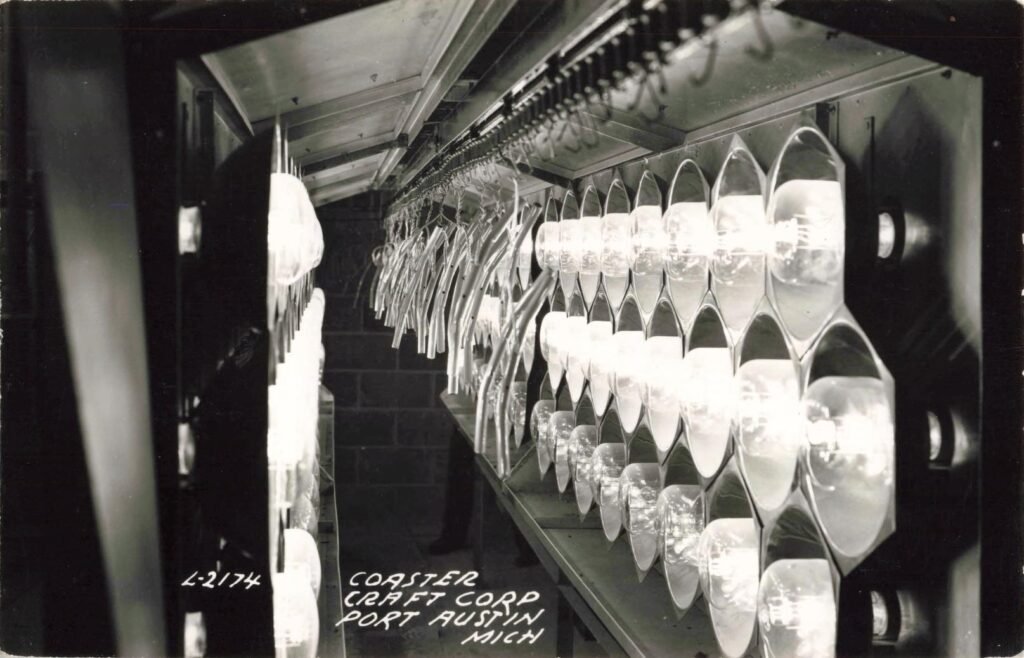
Coaster Craft’s output focused on three primary products:
- Children’s scooters, built with simple frames and durable wheels
- Steel wagons, aimed at postwar families and rural customers
- Flying Scot bicycles, produced under license rather than as an original brand
Contemporary accounts suggest peak production reached several hundred bicycles per day, a sizable number for a small-town operation. The factory’s scale remained limited, but its efficiency allowed Coaster
The Flying Scot Bicycle Connection

The Flying Scot name predates its production in Michigan. Originally associated with British bicycle manufacturing, the brand carried recognition that Coaster Craft could not generate on its own.
By producing Flying Scot bikes locally, the Port Austin factory tapped into a broader consumer market while avoiding the costs of brand development. These bicycles were sold through regional distributors and catalogs, reaching homes well beyond Michigan.
Surviving examples of Flying Scot bikes made during this period are now sought by collectors, particularly those with clear manufacturing marks linking them to Michigan production.
Labor and Daily Operations
Most factory workers were local residents. Like many small manufacturers of the era, Coaster Craft relied on semi-skilled labor, repetitive assembly processes, and minimal automation.
Workdays were long but steady, offering wages that supplemented farm income or replaced seasonal employment. The factory did not grow large enough to reshape Port Austin’s economy, but it provided stability during a volatile period.
Why Coaster Craft Didn’t Last
By the early 1950s, conditions that favored small manufacturers had changed. Steel restrictions eased. Large bicycle makers resumed full production. National brands regained dominance.
Coaster Craft could not compete on price or scale. The company closed quietly, leaving behind little formal documentation and no surviving corporate structure.
Its factory building outlived the business.
The Building After Coaster Craft
After manufacturing ended, the structure saw a series of new uses:
- Universal Cycle
- Salvo Tool & Engineering
- PAK’s Garage (current use)
Each transition reflected Port Austin’s shift away from manufacturing toward service-based businesses. The building itself remains one of the few physical links to the town’s industrial past.
Innovation of Salvo Tool & Engineering Co.
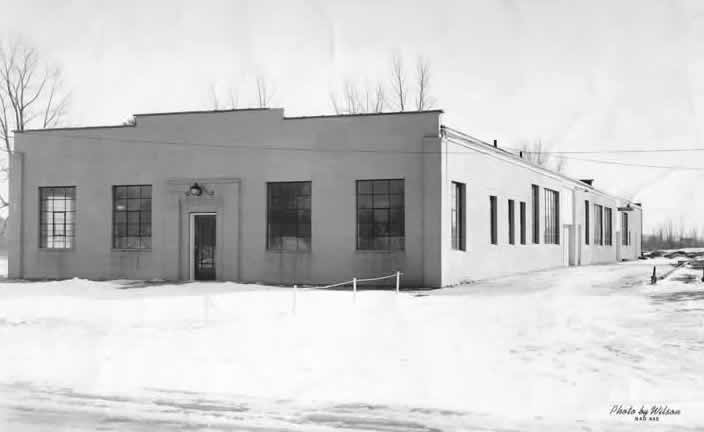
In 1951, an engineer and inventor was fishing in the Port Austin area and spotted the idle and empty building. Purchased in 1951 by Salvo Tool & Engineering Co., which manufactured screws. Its owner, Leo Bedker, had developed and patented a new manufacturing process for producing quality threads by rolling from the crosslide. He was looking for a spot to test and refine his innovative process. The Port Austin facility did the rough machining, then returned the products to Salvo’s Roseville plant for finishing and shipping. Operations ceased at the factory in 2007.
A New Era With PAK’S Garage
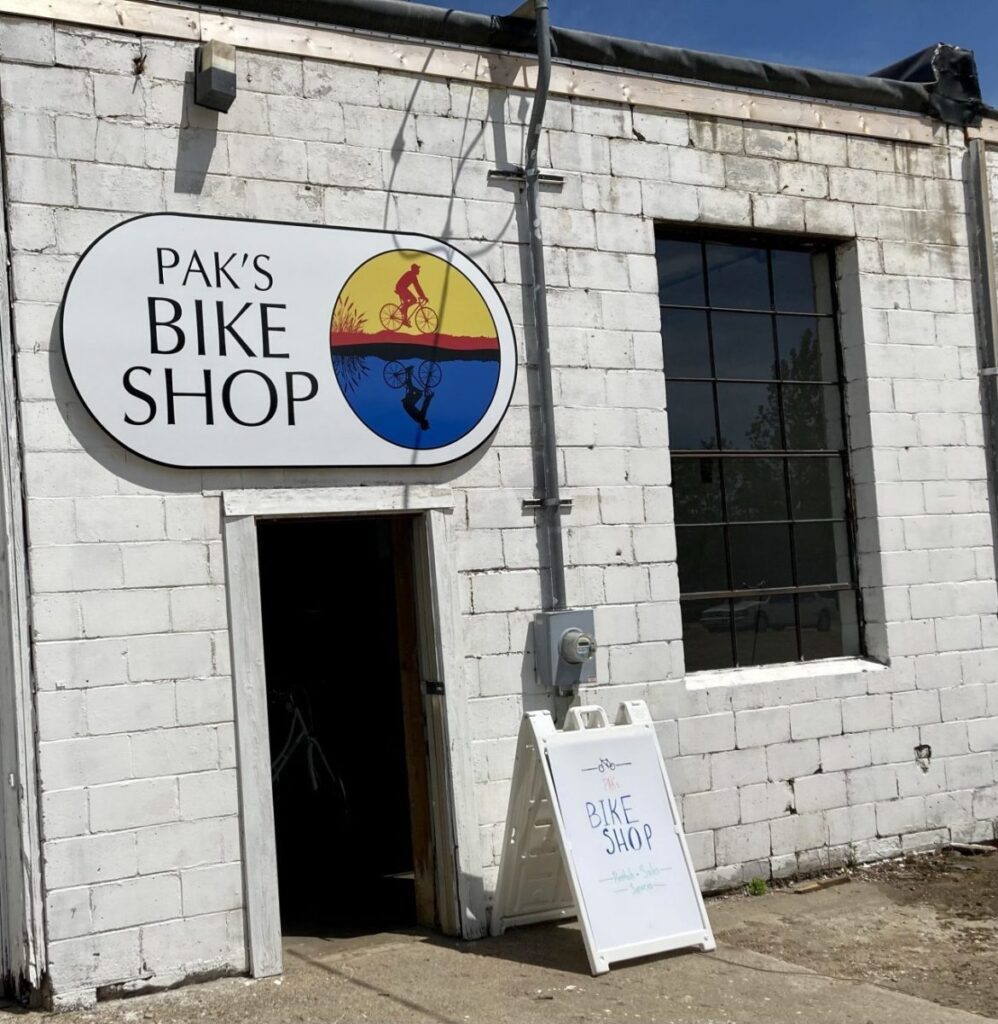
Port Austin Attorney and Entrepreneur Chris Boyle found he could make use of the abandoned plant. He bought the building in 2018 for parking and storage across from his two growing ventures, Port Austin Kayak and PAK’Ss Backyard. The building was refurbished as a bicycle repair shop in the past year and offers space for arts and craft dealers.
Cover Logo of Coaster Craft courtesy of Creative Graphics
Related Reading About Port Austin & The Upper Thumb