 by
by The history of Greenville Michigan, is a story driven by work, timing, and a steady push toward industry. What began as a sawmill settlement along the Flat River became one of the most productive factory towns in the state during the first half of the 20th century.
Between 1900 and 1950, Greenville shifted from farming and lumber to manufacturing on a national scale. Refrigerator plants shipped products across the country. Truck factories turned out heavy equipment. During World War II, the town’s factories and schoolchildren played a direct role in the war effort, including the funding of a military glider that flew on D-Day. Even retail history took shape here when a small local grocery store laid the groundwork for what would become Meijer.
This is the extraordinary history of Greenville, Michigan — a town whose factories, workers, and families helped shape industry, wartime production, and modern commerce far beyond Montcalm County.
Table of Contents
Video – Greenville, Michigan – The Town That Built Fridges, Trucks, and a Superstore
Greenville’s Early Settlement and “Potato Capital”
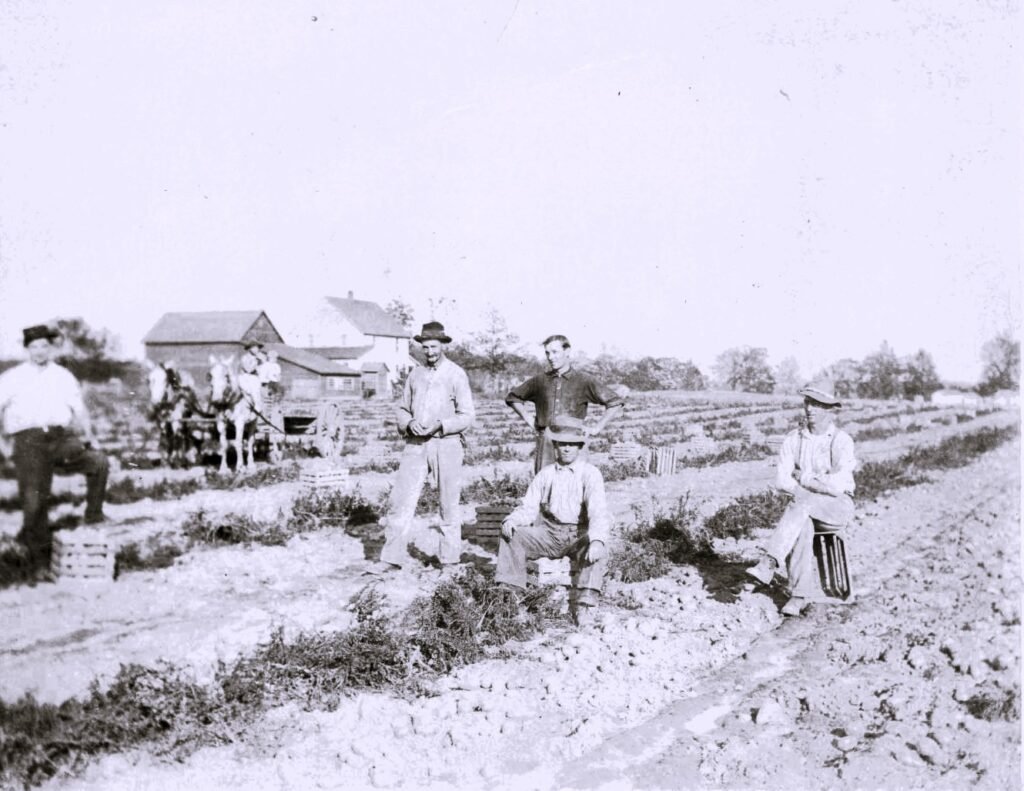
The history of Greenville, Michigan begins in 1844, when John Green built a sawmill on the Flat River. He platted the village in 1853, and it attracted many Danish settlers because the land was rich and the forests full of white pine. By the turn of the century, Greenville had moved past its logging roots. As the big pines were cleared, farmers planted potatoes in the fertile soil. In fact, Greenville grew to be the center of a huge potato-growing and marketing area. The river that once floated logs now carried potatoes, and trains linked the fields to distant markets.
Grew From Logging Camp to Industrial City
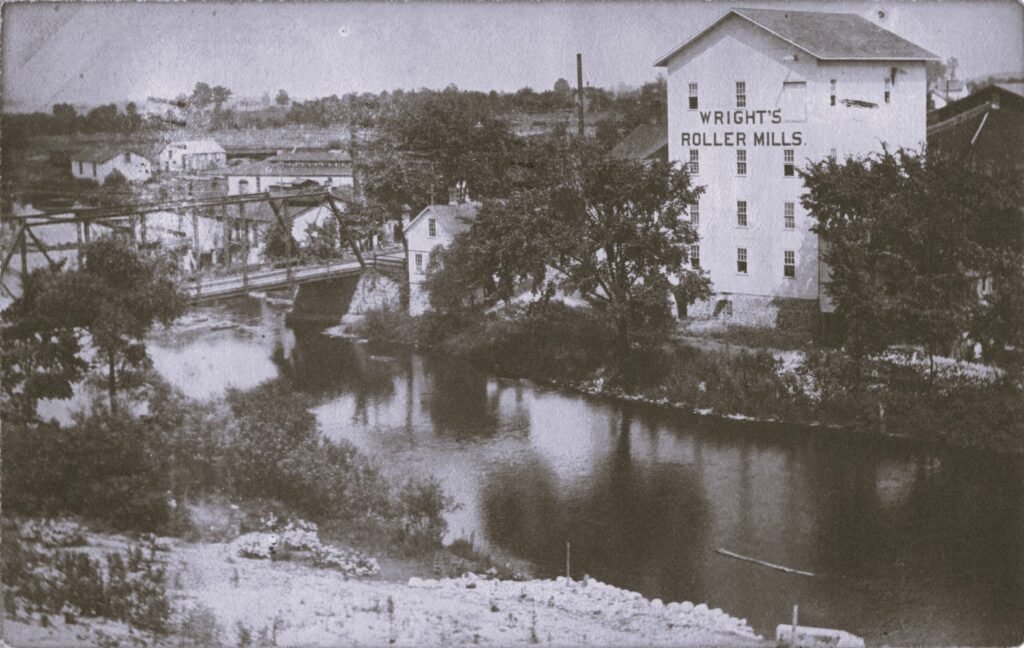
In the late 1800s, Greenville’s economy shifted from logging to industry. New factories and mills went up along the river and rail lines. A flour mill called Wright’s Roller Mills ground local grain. Wooden box and shingle factories made use of leftover lumber. A cement products company was founded, and large lumber yards (like Westfield Fall River Lumber) opened to supply building materials.
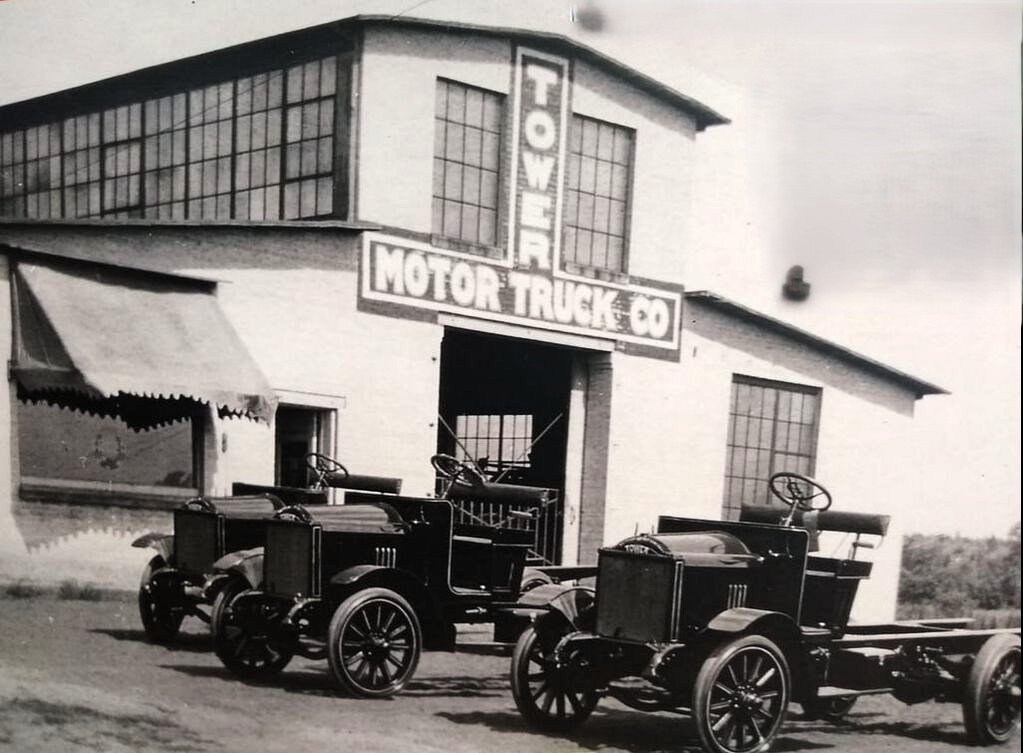
One notable factory was Tower’s Iron Works. Founder Samuel Tower started as a blacksmith and, in 1874, opened a machine shop. By the early 1900s, his company, the Tower Motor Company, was even producing motor trucks. This postcard (above) shows the Tower truck factory in Greenville – a symbol of the town’s industrial spirit.
Greenville – The Refrigerator Capital of the World
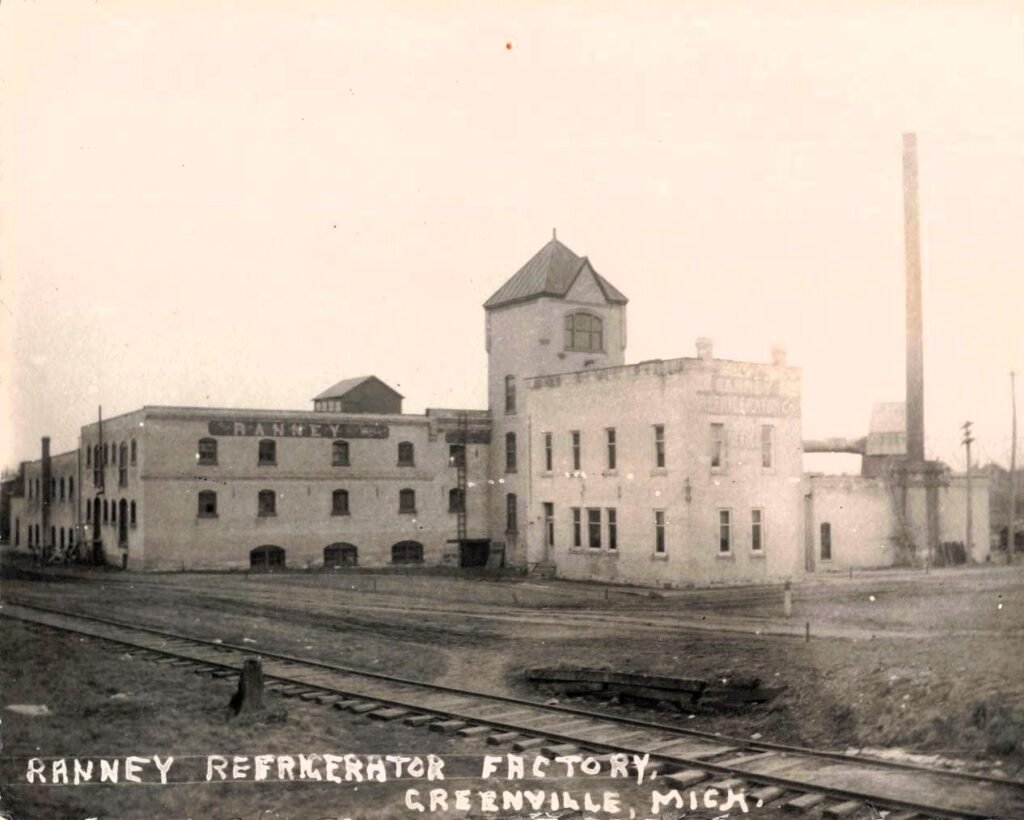
By 1892, Greenville had added a remarkable industry. That year, the Ranney Refrigerator Company began making wooden ice refrigerators using local hardwoods. The abundant timber made this a natural business, and other entrepreneurs joined in. A Greenville merchant named Frank Gibson converted an old furniture factory and hired engineer John Lewis to build ice refrigerators.
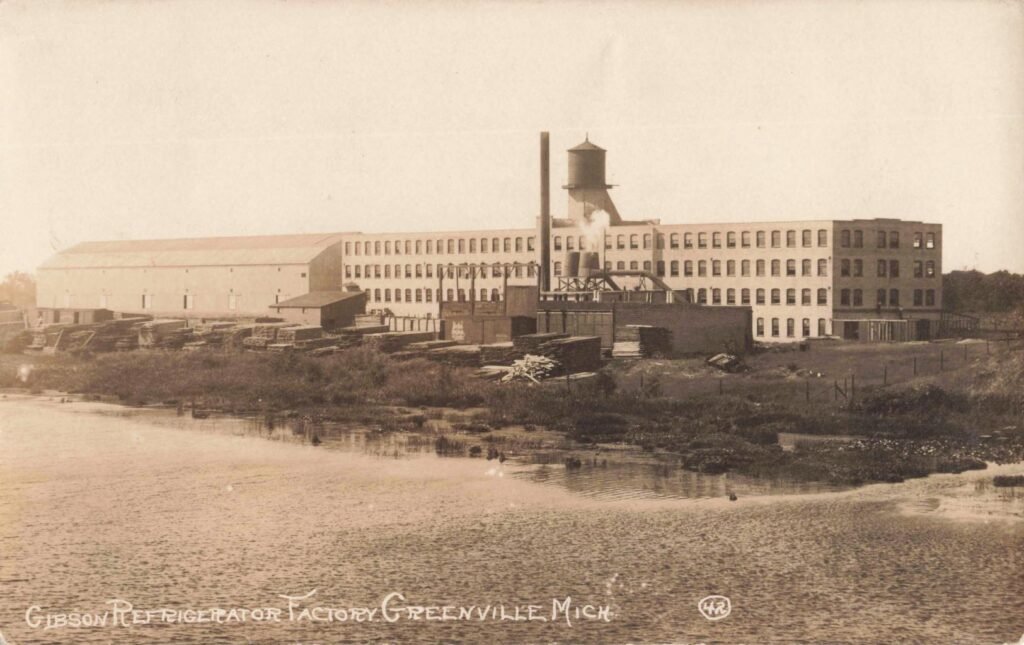
Over time, the town became famous as the “Refrigerator Capital of the World”. Families across America kept food cold with appliances built in Greenville. The Gibson Refrigerator Company later made electric kitchen refrigerators, and another brand, Electrolux, operated here, too. These factories employed thousands of people and carried Greenville’s name far beyond its borders.
Hendrik Meijer and Local Businesses
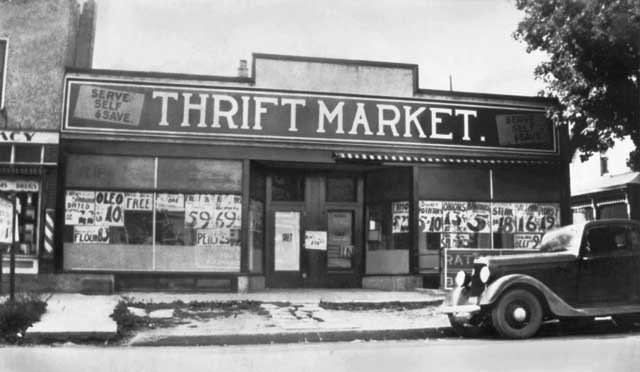
Amid the industry, everyday commerce grew as well. Immigrants and locals opened shops on downtown Lafayette Street. Among them was Hendrik Meijer, a Dutch-born barber. During the Great Depression in 1934, Meijer opened a small grocery, Meijer Thrift Market, on Greenville’s east side. It was a bold move given the hard times, but locals needed a store on that side of town. Over the decades, Meijer’s small store grew into a retail chain, but its roots stayed in Greenville.
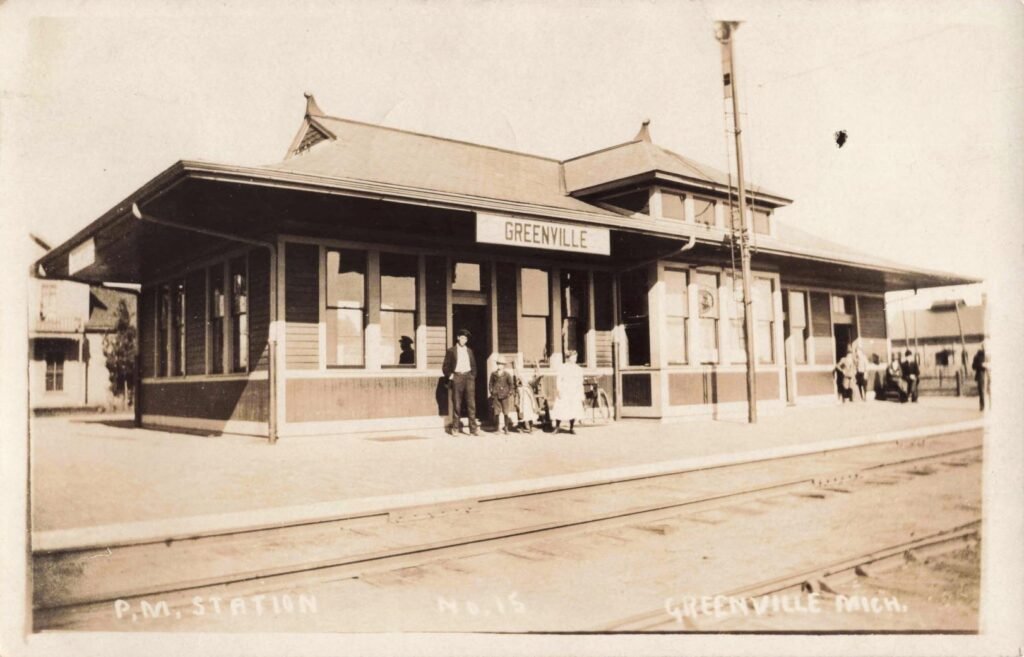
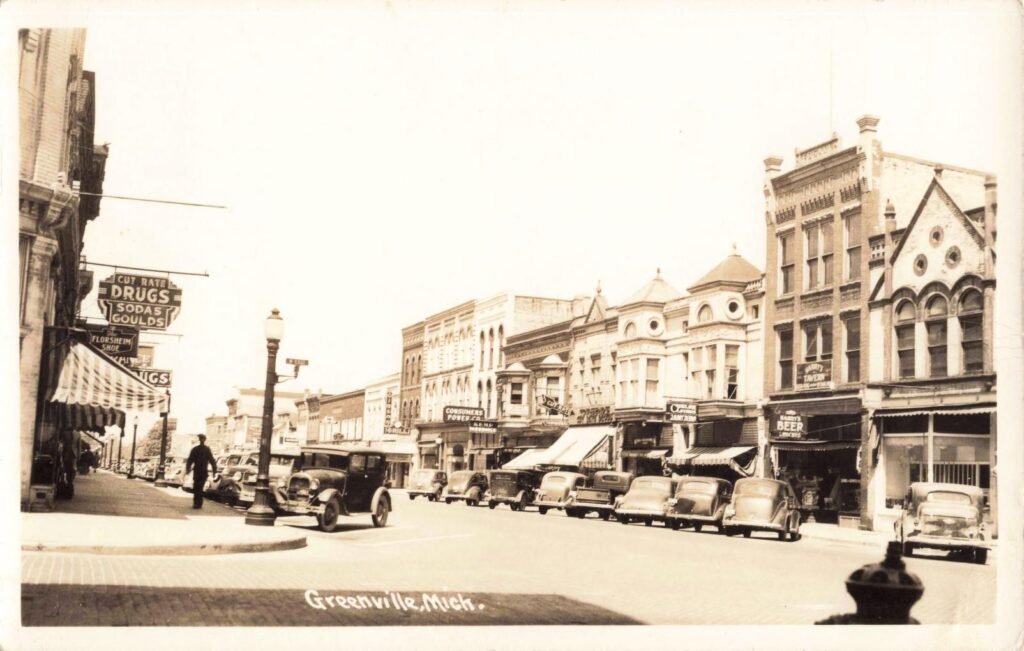
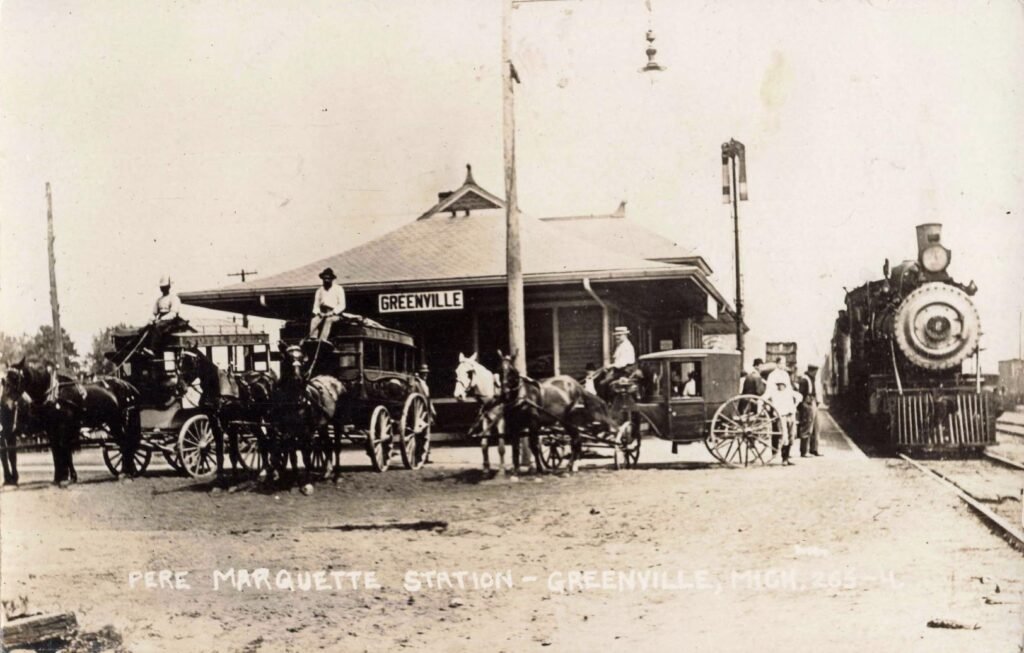
Today, a statue in town commemorates Hendrik Meijer’s entrepreneurial start. Other historic buildings downtown reflect this era: there was a stately hotel (the Winter Inn, built in 1903), the Pythian Temple lodge (1909), and the rebuilt high school (after the 1935 fire). In 1909, the town’s original railroad depot had burned, but a new Pere Marquette Railroad depot was built that year, keeping Greenville connected. Through these years, Greenville’s busy downtown and factories made it a booming small city in Michigan.
World War II and the Fighting Falcon
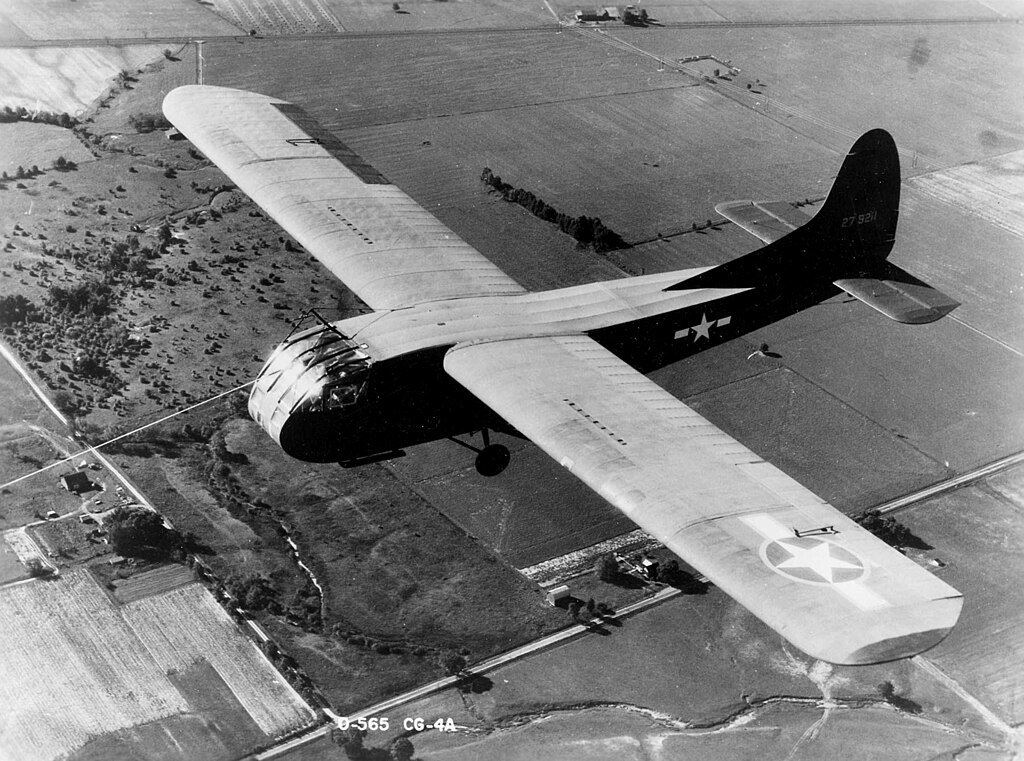
During World War II, Greenville’s factories turned to the war effort. The Gibson plant manufactured gliders for the Army Air Forces. Inspired by this, local schoolchildren held penny drives and fundraisers. In just a few months of 1943, they raised enough money – over $72,000 – to pay for four military gliders. One of these gliders was named the “Fighting Falcon.” On May 19, 1943, it was dedicated at the local high school football field. At the ceremony, uniformed soldiers gave the honor of christening the glider to Greenville’s school kids. The photo below shows that historic day.
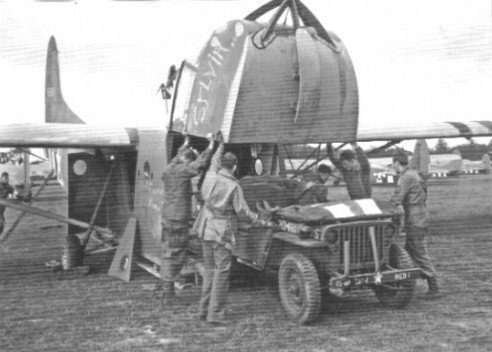
Exactly one year later, on June 6, 1944, the Fighting Falcon took part in D-Day. It was the lead glider in the first wave over Normandy. The town of Greenville earned a special mention in the operation’s reports. Back home, families proudly remembered that the Falcon was flying under an American star in France because Greenville’s children had raised the funds. For this patriotic effort, Greenville’s schoolchildren received a Distinguished Service Award from the U.S. Treasury – the only time a school has earned that honor.
Images on this page may contain affiliate links in which we may receive a commission. See our affiliate disclosure for details.
Historic Photos of Detroit in the 50s, 60s, and 70s
Historic Photos of Detroit in the 50s, 60s, and 70s documents what a Metro Detroiter would have experienced through those decades, from the commonplace to a visit from John F. Kennedy.
Greenville’s Continued Growth and Today
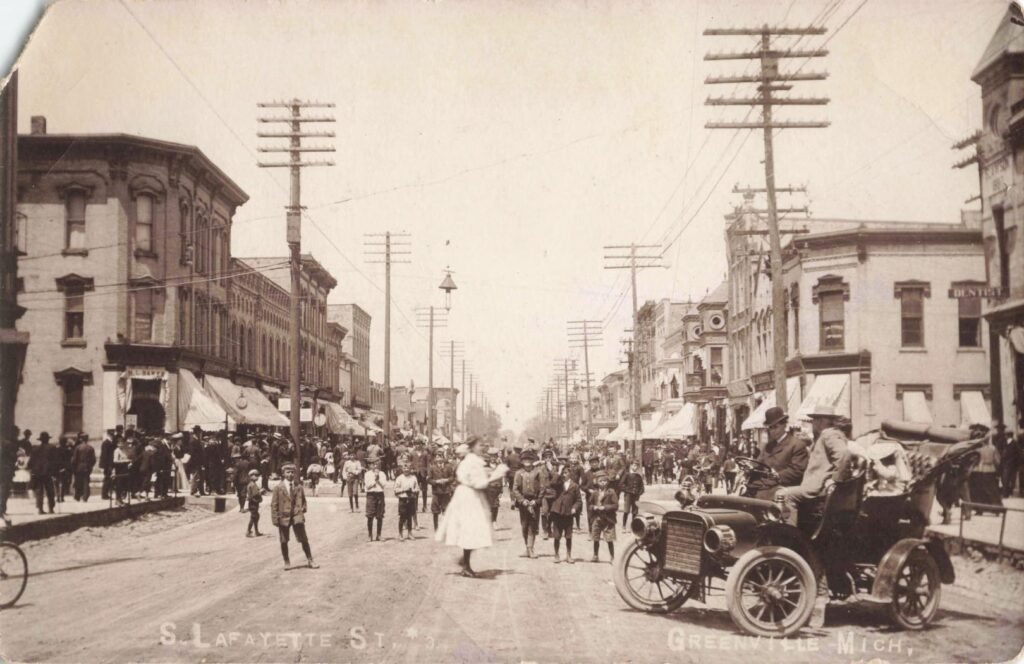
After the war, Greenville’s industries continued to evolve. The Federal-Mogul company opened a plant in 1939 to make automotive bearings, helping rebuild the economy. Many old factories remained, and new ones joined them. In 1956, Greenville adopted a city charter and continued to grow. Meanwhile, residents preserved the city’s history: the downtown Lafayette Street district was placed on the National Register of Historic Places in 2008. Today, visitors walking that street see early 20th-century brick buildings and restored storefronts – reminders of the town’s rise.
The history of Greenville, Michigan is a story of change and community spirit. From John Green’s first sawmill to a town of refrigerators and brave schoolchildren, Greenville made its mark. Its museum, historical plaques, and annual Danish Festival celebrate a heritage of hard work and civic pride. This blend of Midwestern optimism and industriousness is why Greenville, Michigan, remains a noteworthy chapter in American small-town history.
?Sources Cited For the History of Greenville Michigan
History of Greenville, Michigan.
City of Greenville, Michigan. Accessed Jan. 21, 2026.
Greenville, Michigan.
Wikipedia. Accessed Jan. 21, 2026.
(Used for cross-checking dates, population trends, and industrial overview.)
Greenville Danish Festival History.
Greenville Danish Festival Committee. Accessed Jan. 21, 2026.
The Fighting Falcon: Greenville’s D-Day Glider.
Greenville Area Museum / Fighting Falcon Historical Project. Accessed Jan. 21, 2026.
Waco CG-4A Glider Overview.
The National WWII Museum. Accessed Jan. 21, 2026.
(Used for historical context on military gliders flown on D-Day.)
Meijer History and Founding.
Meijer Corporate Archives. Accessed Jan. 21, 2026.
Tower Motor Truck Company.
Coachbuilt.com. Accessed Jan. 21, 2026.
(Primary source on early truck manufacturing connected to Greenville.)
Michigan Refrigerator Manufacturing History.
Michigan History Center, Michiganology. Accessed Jan. 21, 2026.
National Register of Historic Places – Lafayette Street Historic District.
National Park Service. Accessed Jan. 21, 2026.