 by
by 
Nestled between Brownlee and Lincoln Lakes in Alcona County, Lincoln, Michigan, has always been a place built on purpose. From its earliest days as a logging outpost to a quiet village lined with gas stations and grocery stores, the history of Lincoln Michigan has changed with the times while keeping its original shape.
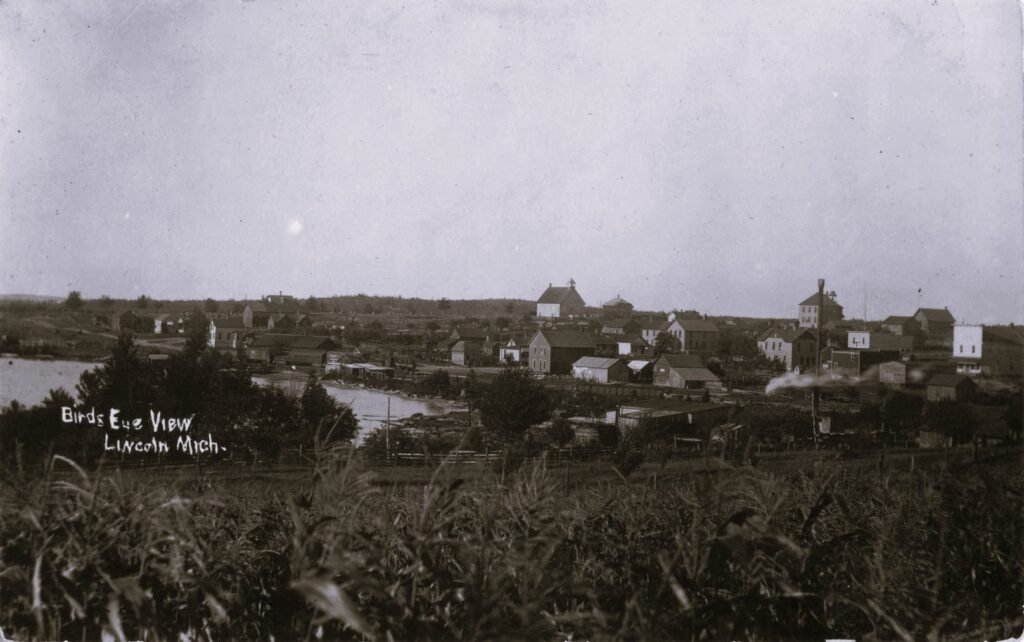
This is the story of Lincoln between 1890 and 1940 — told through records, rare images, and the people who lived it.
Video – Lincoln Michigan – Alcona’s Little Gem
A Town Drawn From Timber
Lincoln began with two things: trees and a train station. The Detroit, Bay City & Alpena Railroad arrived in 1886, carving a depot from the forests and naming it West Harrisville. That year, a surveyor named A.J. Freer platted a street grid just south of the tracks. The name “Lincoln” caught on soon after, and by 1907 the town was officially incorporated.
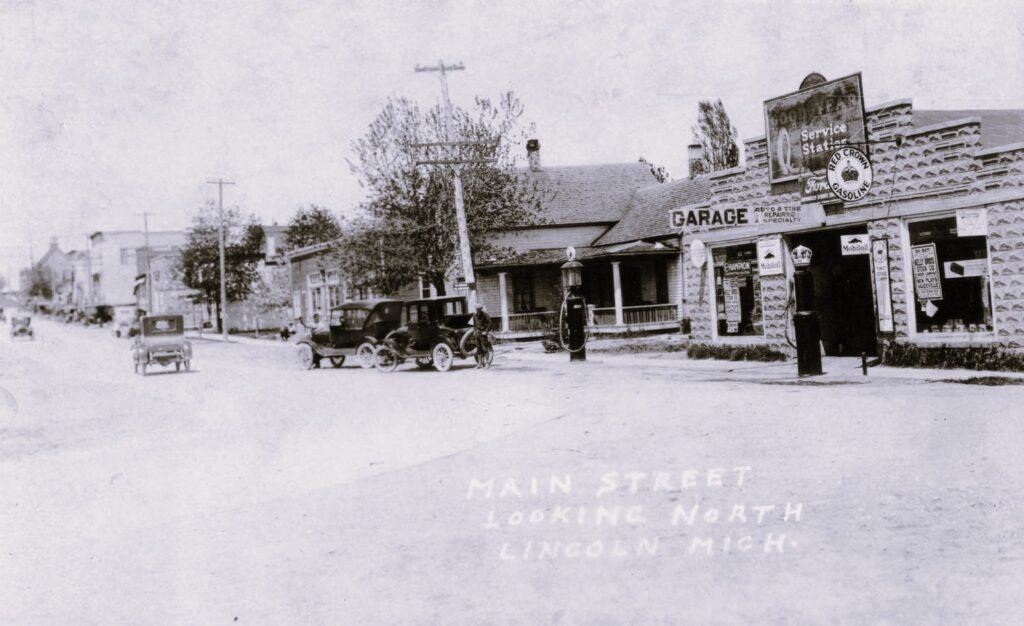
This early 20th-century photo shows Lincoln’s Main Street heading north. A line of automobiles sit parked beside a garage offering Goodyear tires and gasoline. Just across the way, the “Auto & Tire Repair” sign marks how far Lincoln had come from its sawmill days. This was modern Lincoln—gassed up and on the move.
Main Street at Work
In the years that followed, Lincoln grew slowly but deliberately. By 1910, it had 122 residents. By 1940, it had nearly tripled. As the lumber industry tapered off, farming, retail, and local services took hold. Main Street remained the town’s spine, lined with dry goods stores, repair garages, a post office, and a well-regarded bank.
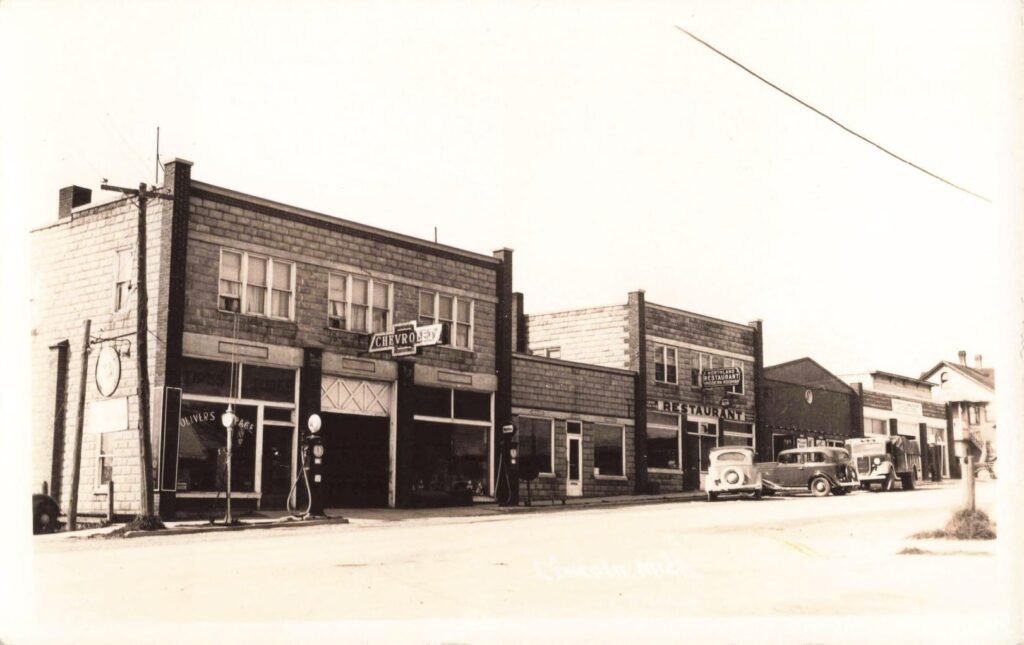
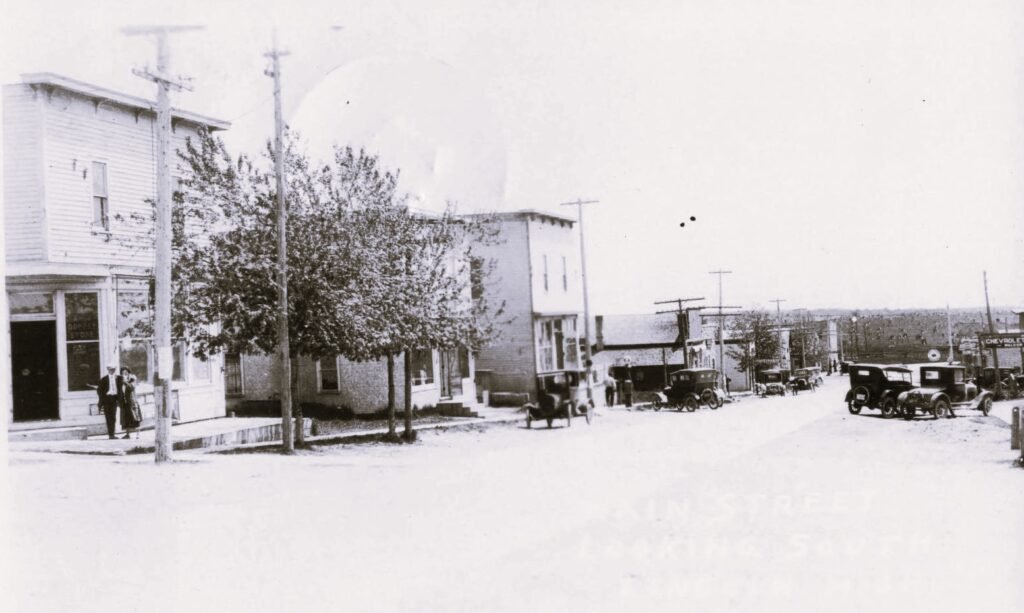
Looking south, you can see Lincoln’s business core in the 1930s. The Chevrolet dealership sign hangs over the street, and blocky storefronts march westward. Sidewalks are still wooden, and power poles run just overhead. A few parked cars and a cluster of men in hats complete the picture. Lincoln was no boomtown, but it kept pace.
This view shows the Lecuyer Brothers’ dry goods store, with bold signage offering groceries, boots, and shoes. Across the street, the Ford garage offers both repairs and refueling. Business owners lived above their shops. People knew each other’s names. It was personal.
Feeding the Town
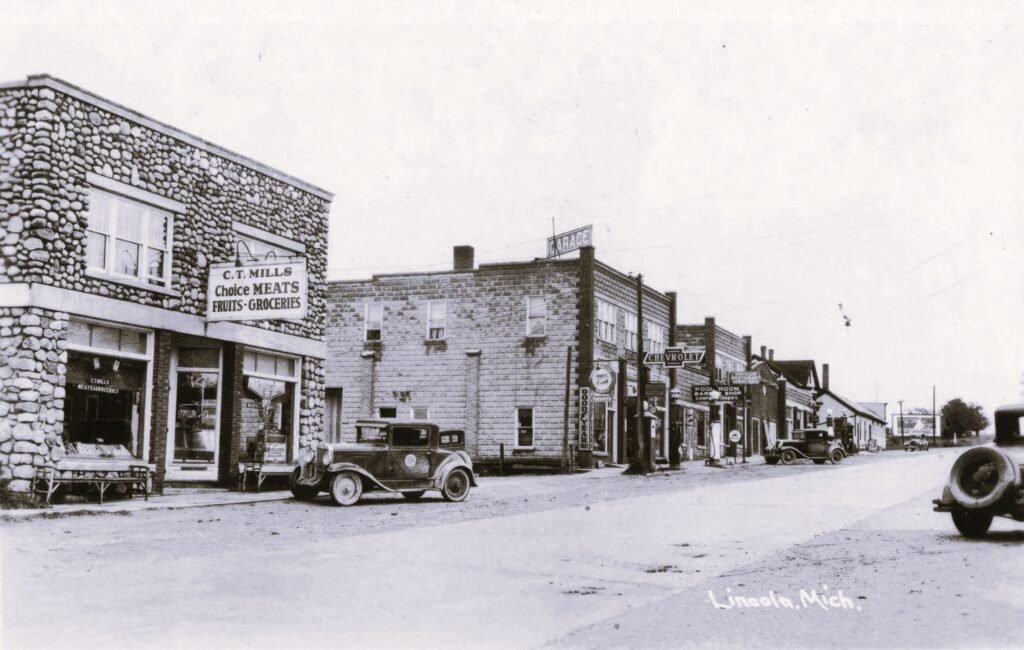
C.T. Mills’ store was a typical Lincoln fixture. The stone facade and tidy window displays promised quality—and likely credit, too. Outside, a coupe with a spare tire hints at the post-Model T era. Inside, Mills likely knew everyone’s usual order.
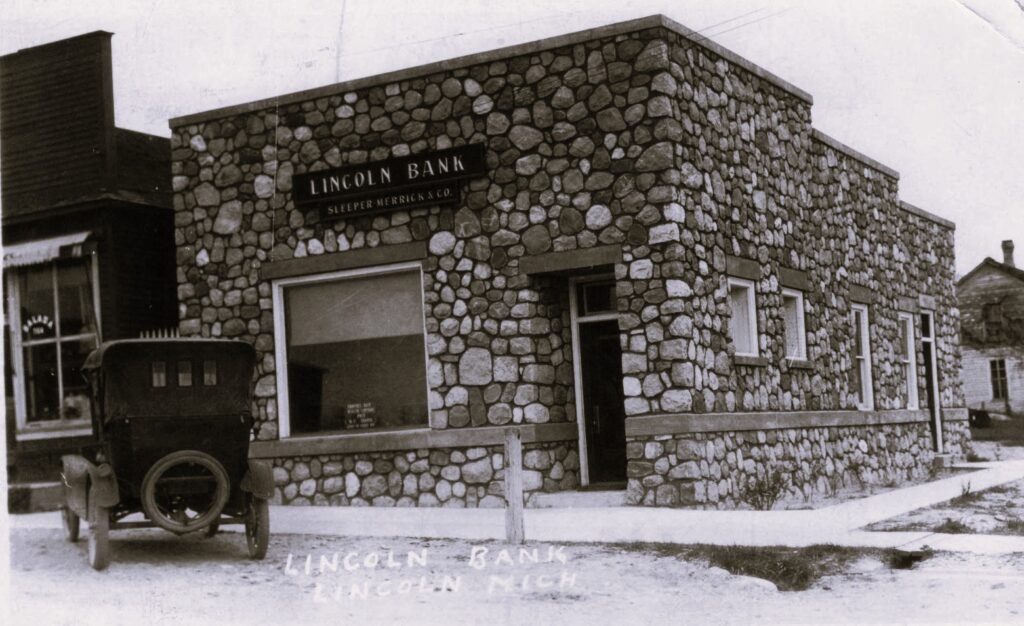
This photo was taken on June 20, 1929. Just months before the market crash, Lincoln’s bank still stood as a sign of stability. “Sleeper Merrick & Co.” had been handling the town’s money and mortgages for years. The hand-written note on the card simply says, “To-day is payday.”
That same day, in towns like Lincoln across the country, nobody saw what was coming.
Before Gasoline: The Blacksmith Era
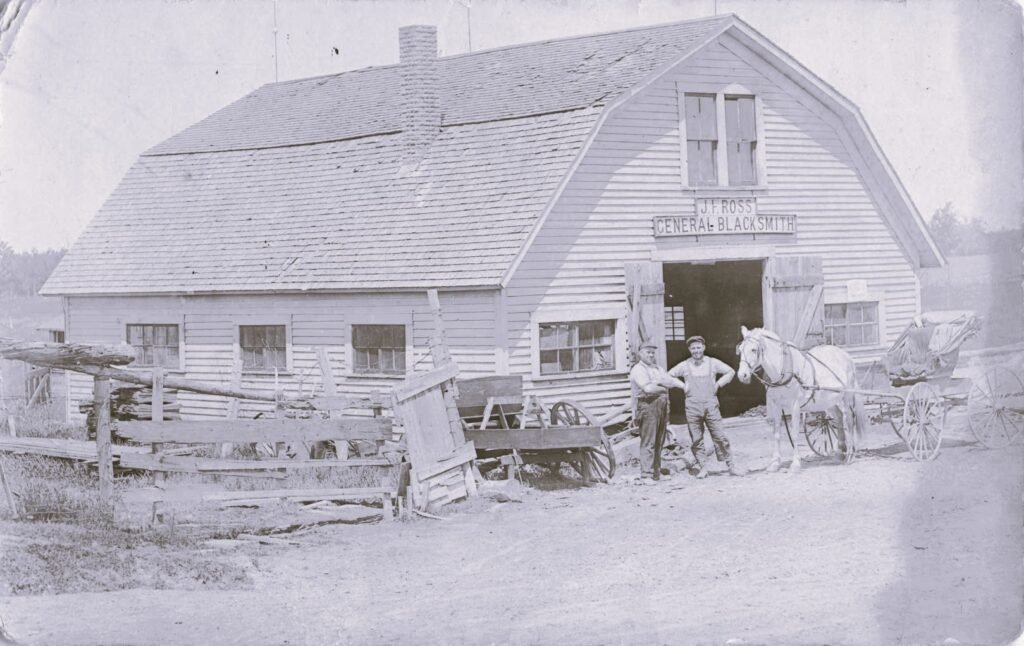
In the days before gasoline and garages, Lincoln’s blacksmith was its most essential trade. This image shows J.F. Ross with his sleeves rolled, flanked by another worker and a team of horses. Wagon wheels and tools are scattered outside the shop. Ross likely shod every horse in town at one point or another.
Even by the 1910s, this kind of scene was fading. But for decades, it was the sound of the village: metal on metal, and the snort of horses out front.
Railroads, Rooms, and Roads
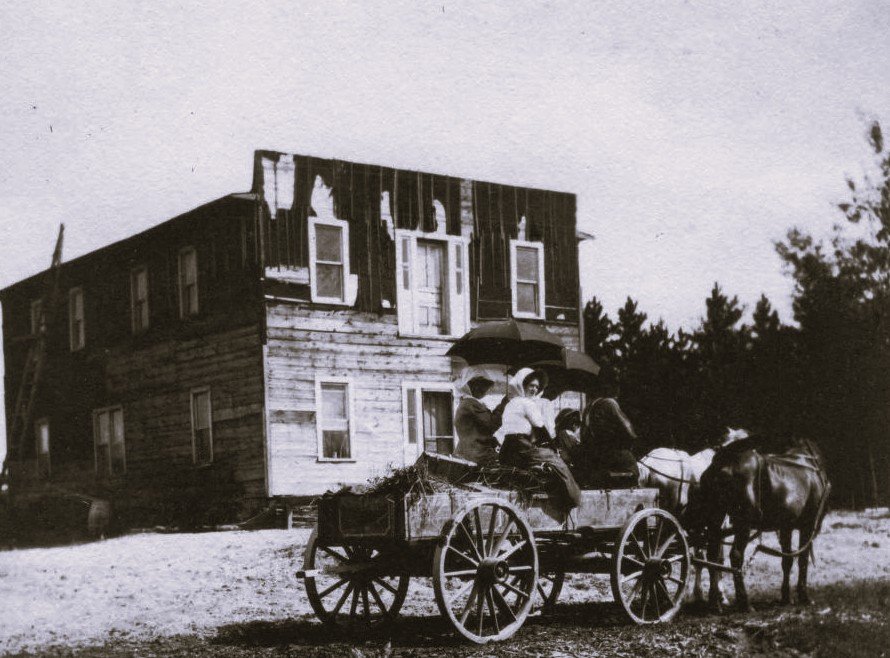
This image captures Lincoln’s “Leading Hotel”—two stories of wood, built for practical comfort. In front, a horse-drawn wagon carries two women holding parasols. Rooms were likely shared, heated by stoves, and furnished with the bare minimum. Still, this was the place to be if you were visiting or selling in town.
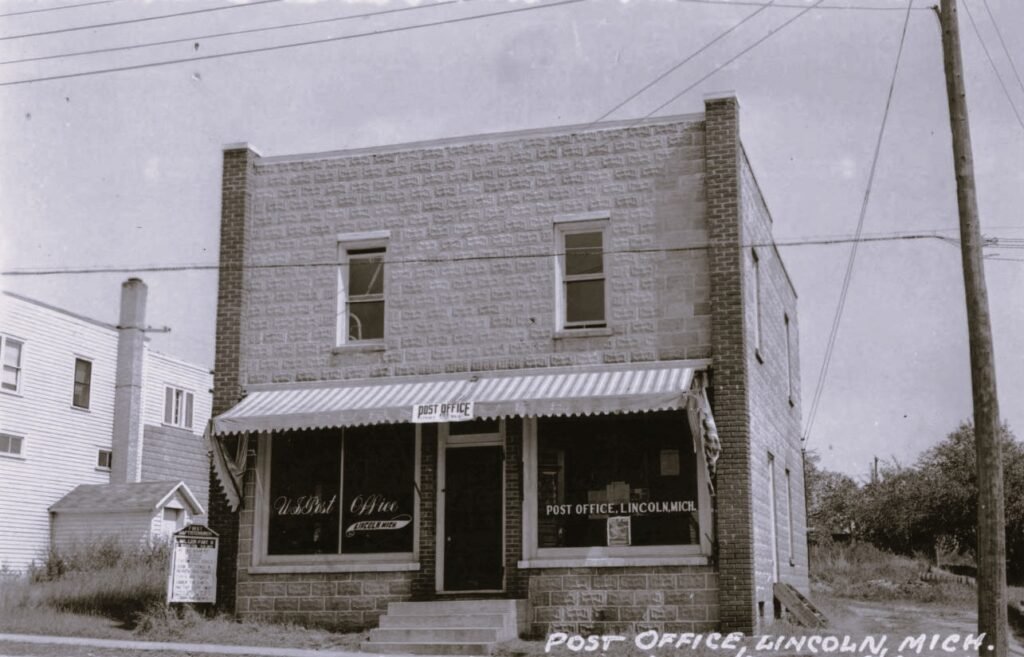
Even in a small town, the Post Office mattered. By the 1930s, Lincoln had a modern post office building, with large display windows and a solid concrete block frame. Mail was the town’s link to the world. It brought news, orders, and—when things were tight during the Depression—federal checks.
From Logging Hub to Twin Lakes Town
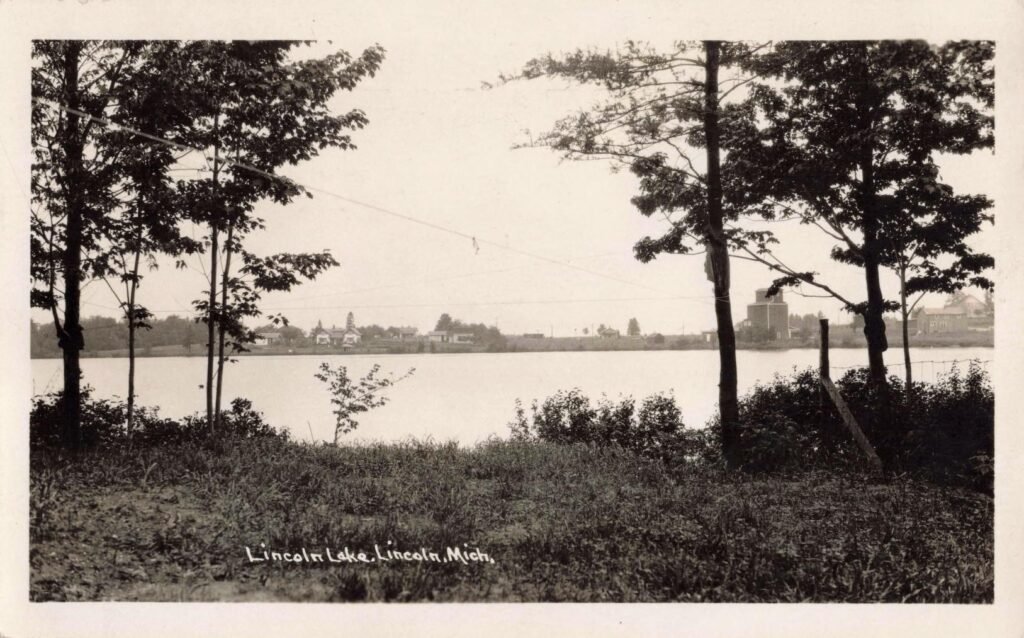
The lakes were always Lincoln’s anchor. This image shows the rolling hills and calm waters that framed the village. Originally used for floating timber to the mill and depot, by the 1930s these lakes supported a different life: summer fishing, picnics, and even early cottages.
Hard Times and Holding On
The Great Depression hit Michigan hard, and Lincoln was no exception. Crop prices fell. Business slowed. Some families left. But Lincoln never emptied out. WPA projects helped pave roads. Electricity slowly reached farms. The town leaned on its traditions—fairs, family, and faith.
By 1940, it had nearly 300 residents and the makings of a modern rural village: churches, schools, a post office, and two lakes still drawing fishermen each spring.
Lincoln didn’t explode. It endured.
Why Lincoln Matters
The history of Lincoln Michigan tells us what small-town America really looked like over time: self-made, modest, and deeply tied to its land and people. These photos are not just snapshots—they’re evidence of real labor, real pride, and real transition.
From blacksmiths to banks, from horses to Chevrolets, Lincoln didn’t chase headlines. It just kept going.

Works Cited History of Lincolm Michigan
“Alcona County Population 1910–1940.” U.S. Census Bureau.
“Lincoln Railroad Depot History.” Detroit & Mackinac Railway Collection, Michigan State Archives.
“History of Lincoln, Michigan.” Alcona Historical Society Archives, 1885–1940.
“Lincoln, Michigan Postcard Archive.” Tinder Postcard Collection, Clarke Historical Library.
“Freer, A.J. “Plat Map of West Harrisville (Now Lincoln).” Alcona County Survey Records, 1886.