
 by
by The History of Belleville Michigan is not built on sudden change. It is built on routine.
In 1910, Belleville was a small but organized village along the Huron River, five years after its incorporation. It had already passed its frontier phase. What remained was structure. Work happened on schedule. Commerce followed habits. People knew where they needed to be and when.
This was a town that functioned.
Belleville – A Village That Ran on the Clock of the Railway Station
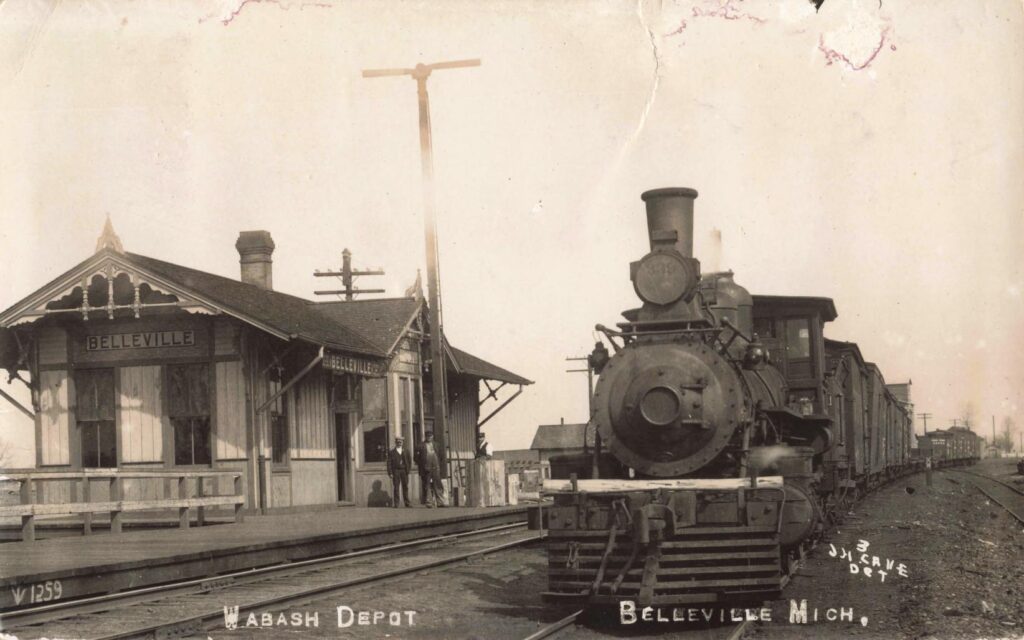
Each day in Belleville began with sound.
The whistle of a train cut through the morning air as the Wabash Railroad arrived at the depot. Mail sacks came off first, followed by newspapers, freight, and passengers. This routine connected Belleville to Detroit, Toledo, and Chicago.
Contrary to modern assumptions, residents here were not isolated. They received daily news. They handled goods moving in and out of regional markets. The History of Belleville Michigan shows that small towns were often better informed than remote farms only a few miles away.
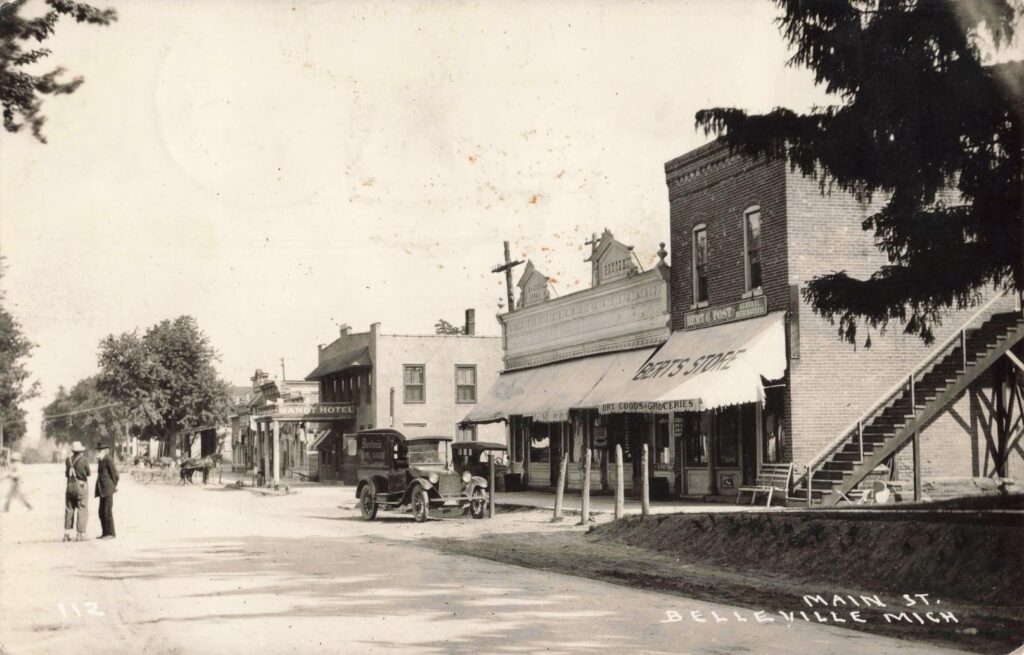
Main Street Was the Center of the Town
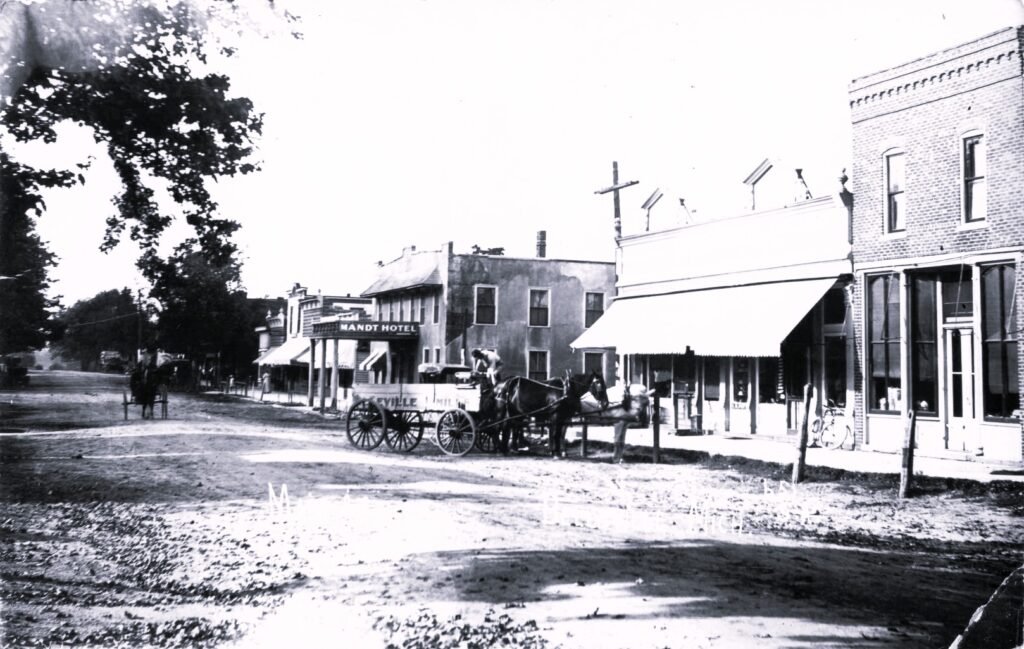
From the depot, people walked toward Main Street.
Hotels dominated the block. The Mandt Hotel and later the New Belleville Hotel served traveling salesmen, farmers negotiating prices, and local organizations holding meetings upstairs. These buildings were not luxuries. They were tools.
Storefronts opened early. Clerks swept sidewalks. Wagons lined the curb. A sign advertising flour or feed usually meant it came from the mill downriver.
Main Street was where Belleville decided things.
The Bank Meant the Town Expected to Last
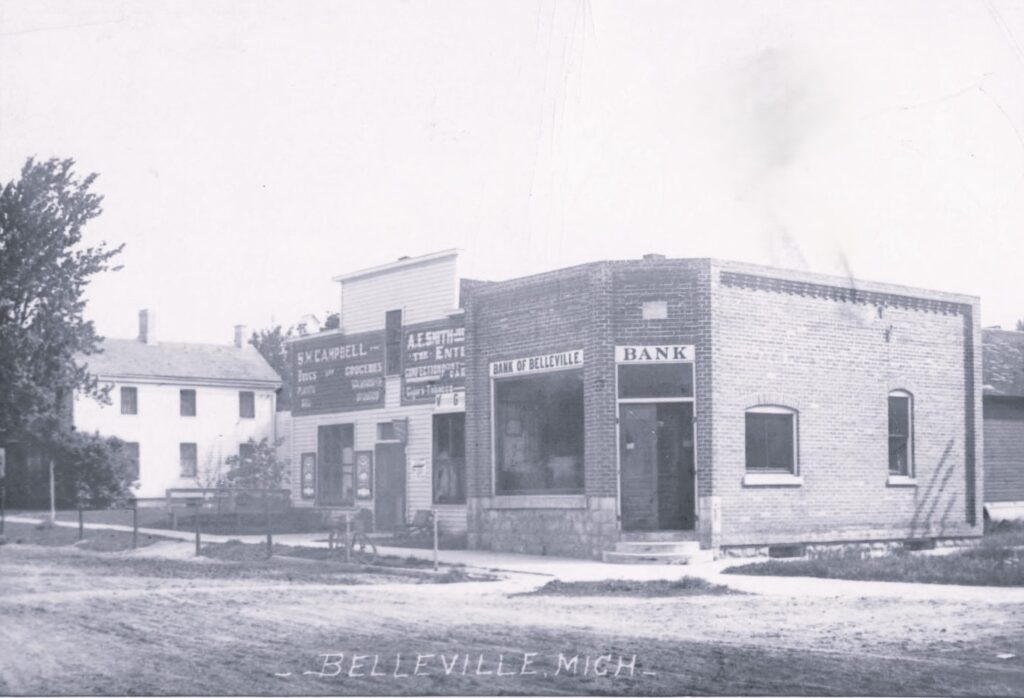
The Bank of Belleville stood out for one reason: brick.
In 1910, brick construction sent a clear message. This was not temporary. Inside, deposits were small but steady. Farm earnings. Payroll savings. Money set aside for land, tools, or education.
The presence of a stable bank changed behavior. People planned ahead. They borrowed cautiously. The History of Belleville Michigan reflects this shift from survival to expectation.
The River Did the Hard Work
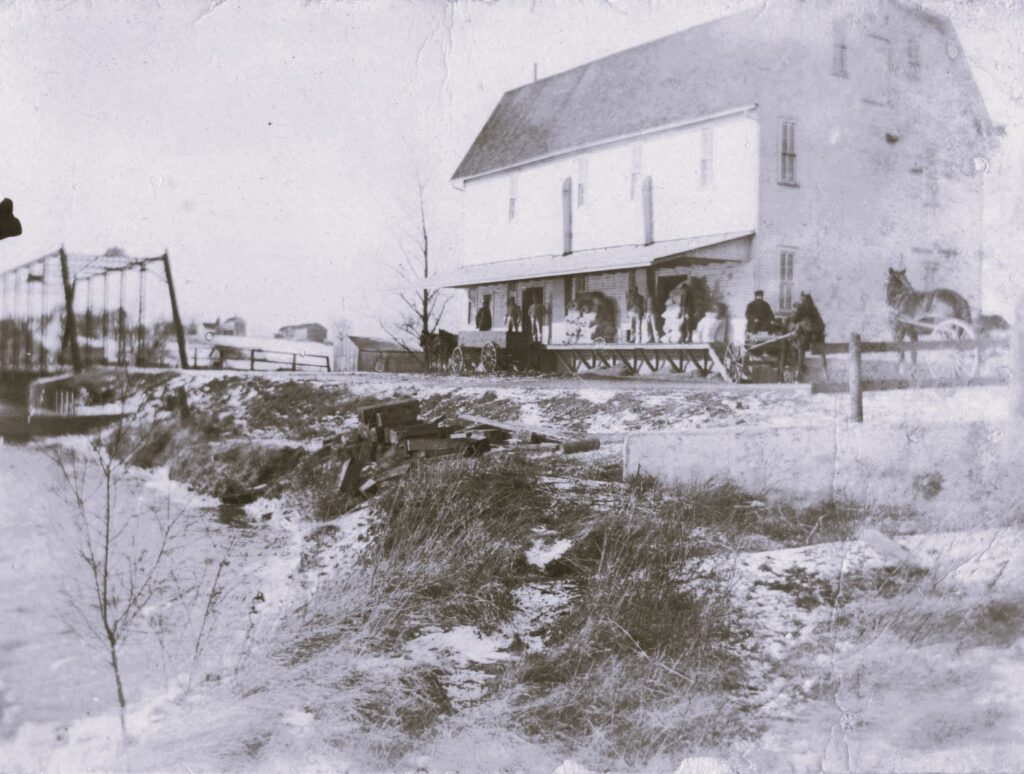
Long before Belleville Lake existed, the river powered the town.
The Belleville White mill sat close to the water, where grain arrived by wagon and left as flour or feed. The mill tied Belleville’s farms to broader markets. It also dictated the pace of work. When the mill ran, wagons lined up. When it stopped, the town slowed.
This was not romantic labor. It was mechanical. Reliable. Necessary.
Education Was a Local Priority
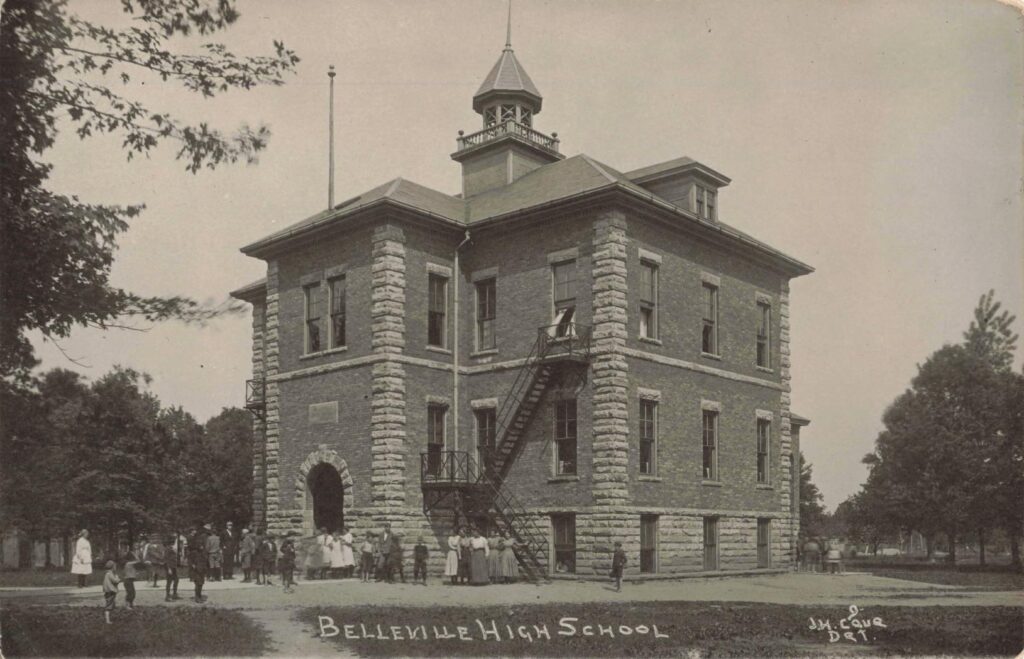
Belleville High School stood as proof that the village invested in its future.
Most students would not attend college. That was understood. What mattered was literacy, arithmetic, and discipline. Students were expected to work, to manage accounts, and to read contracts.
Teachers lived nearby. School bells marked time just as clearly as the train whistle. In the History of Belleville Michigan, education was preparation, not escape.
Belleville’s Evening Life Was Civic, Not Idle
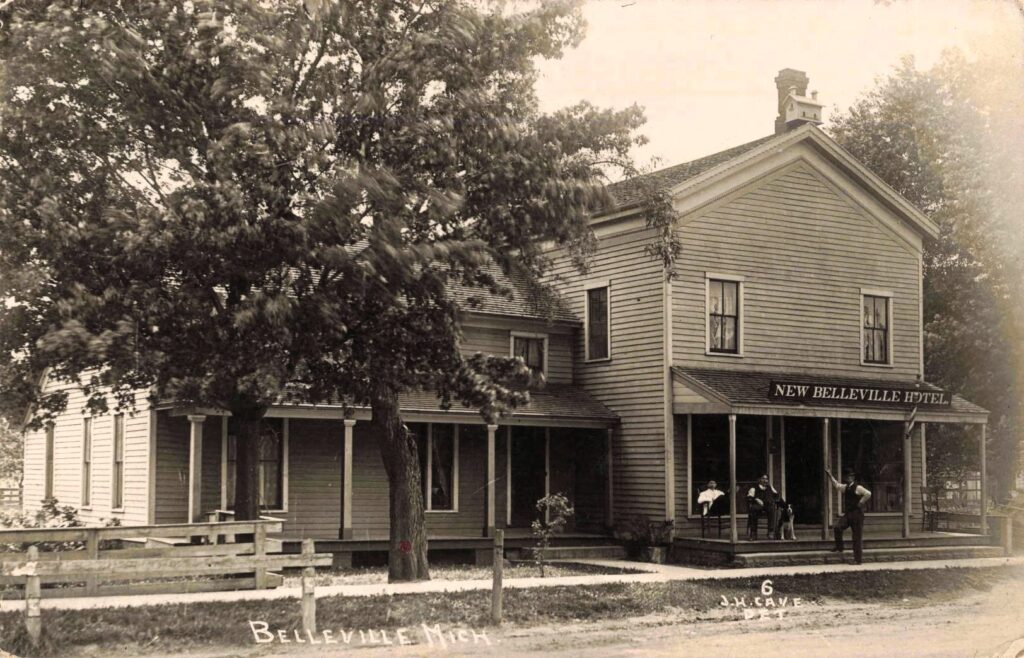
As daylight faded, Belleville did not shut down.
Hotel porches filled with conversation. Meetings took place upstairs in the Masonic Temple. Church activities and civic groups planned events and debated improvements. Roads, bridges, and services were common topics.
Life in Belleville in 1910 was often busier than it is today. Entertainment came from engagement, not screens.
A Town Unaware of What Was Coming
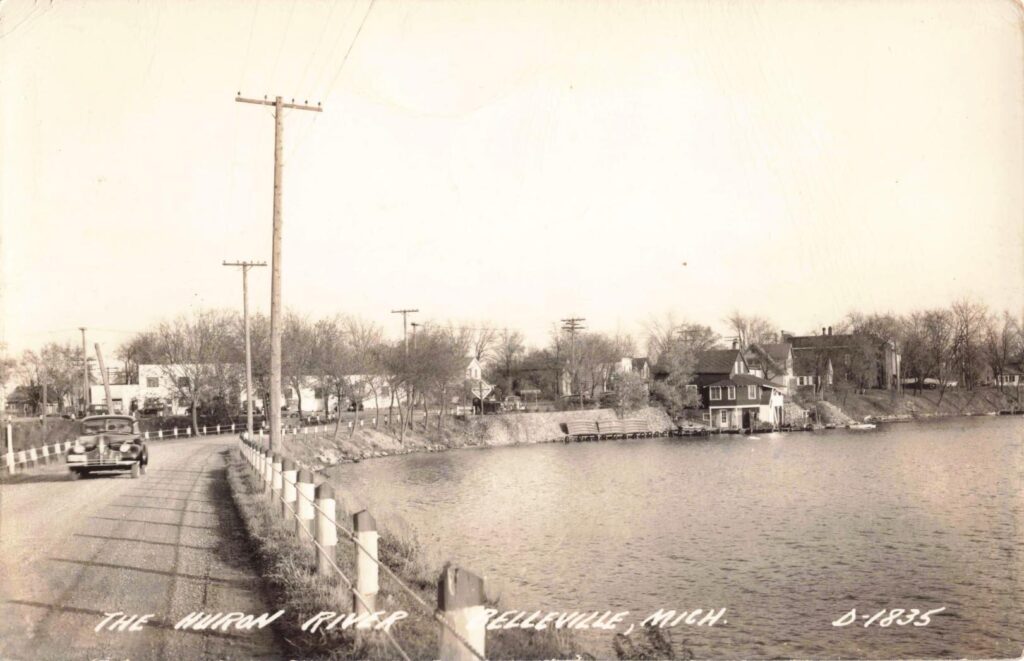
In 1910, Belleville residents did not yet know how much the river would change their town.
In 1925, the construction of the French Landing Dam would create Belleville Lake. Portions of nearby Rawsonville would be flooded. By the 1930s, the area would attract summer visitors and industrial interest. Even Henry Ford would take notice.
But none of that shaped daily life yet.
The History of Belleville Michigan during this period shows a town confident in what it already was. It did not wait for reinvention. It functioned on its own terms.
Why Belleville’s Ordinary Day Matters
What makes Belleville in 1910 important is not a single event.
It is consistency.
Trains arrived on time. Mills processed grain. Schools opened daily. Businesses met expectations. This reliability allowed Belleville to absorb future change without losing its identity.
The town did not grow by accident. It worked its way forward, one ordinary day at a time.
Works Cited For the History of Belleville Michigan
- Belleville Area Museum. “History of Belleville, Michigan.” https://bellevilleareamuseum.org
- Van Buren Township Historical Society. “Early Settlement and Industry.” https://vanburentwp.com
- Library of Congress. “Railroads in Michigan, 1880–1920.” https://www.loc.gov
- Wayne County History Project. “Huron River Milling Communities.” https://waynecountyhistory.org