
 by
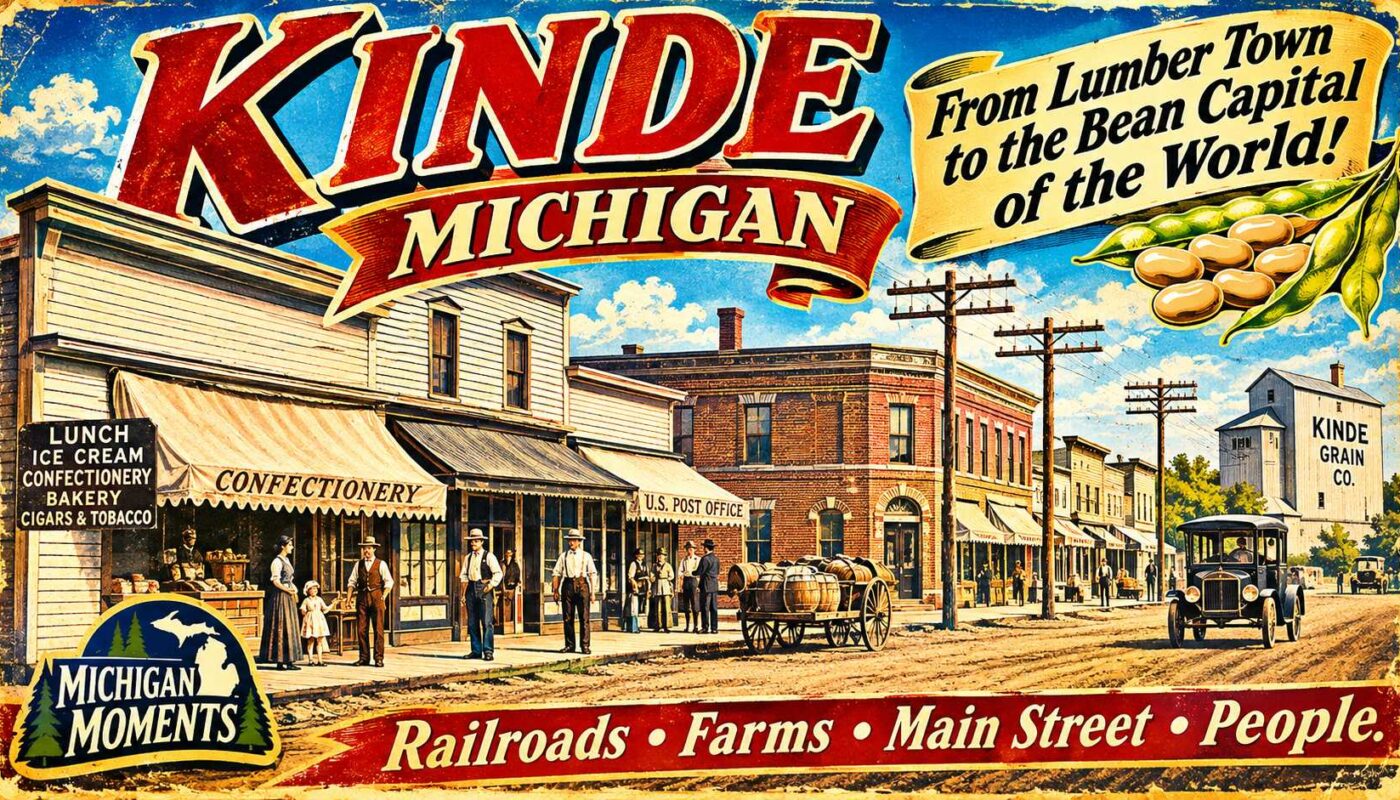
More than a century ago, Main Street in Kinde, Michigan, was the commercial center of a busy farming community. Historic photographs reveal a village built around agriculture, railroad transportation and businesses that served the surrounding countryside.
The history of Kinde Michigan begins with a German immigrant family, the arrival of the railroad and the transformation of Huron County’s forests into productive farmland. By the early 1900s, this small Thumb village had become an important agricultural shipping center, earning recognition as the Bean Capital of the World. Historic photographs reveal a community of merchants, farmers and railroad workers whose businesses helped shape rural Michigan.
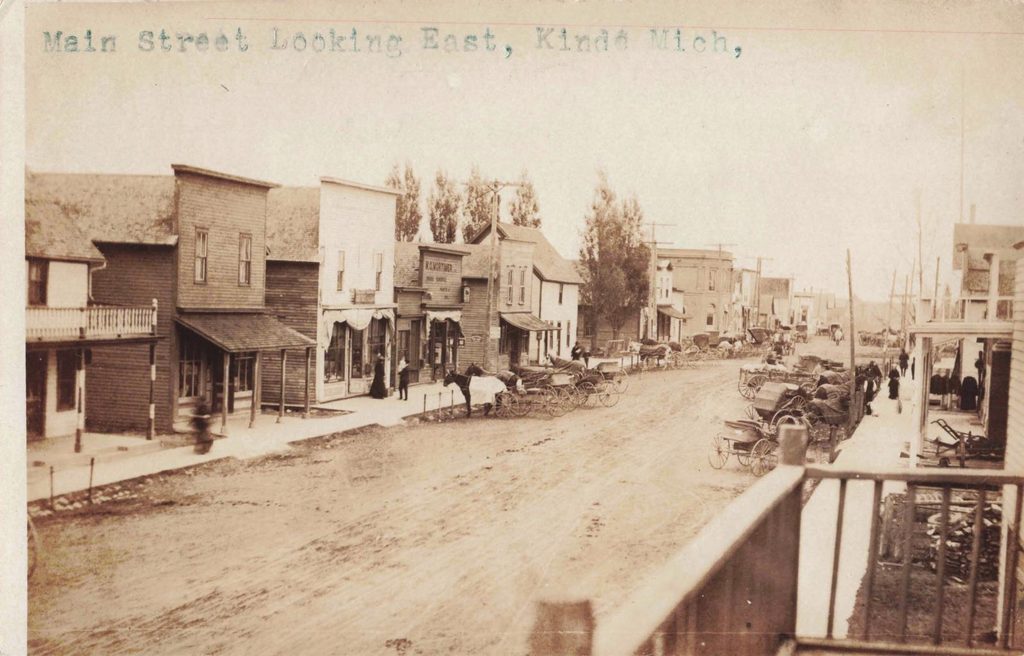
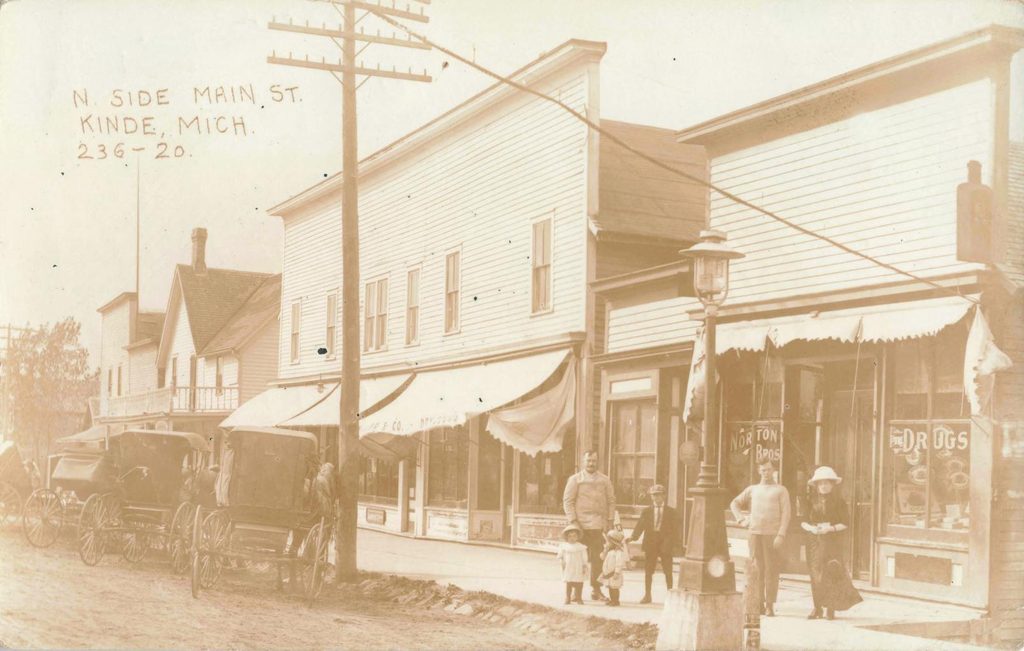
Horse-drawn wagons traveled the unpaved road. Farmers visited merchants selling tools, machinery and household supplies. A dentist advertised his services above a storefront, while railroad cars carried Huron County farm products to distant markets.
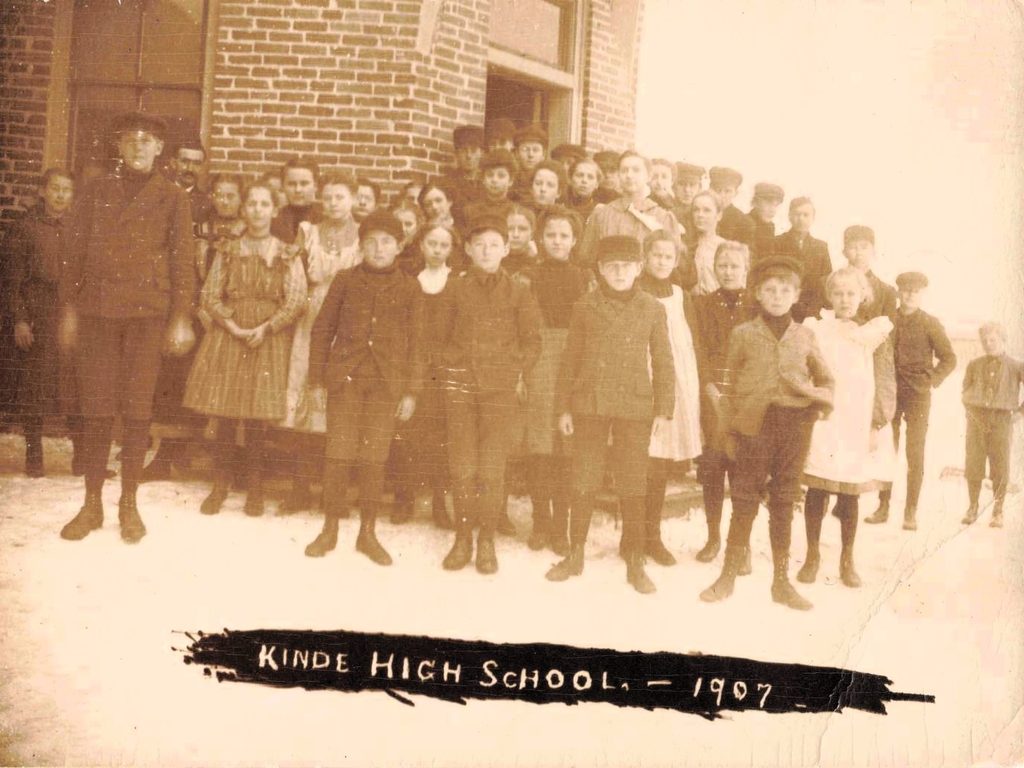
By the early 1900s, Kinde had become an important trading center for the surrounding countryside. Its railroad depot, grain elevators, hotel, and commercial district served a population that depended on the land for its livelihood.
Today, Kinde remains a small village about 10 miles north of Bad Axe. Yet its early history tells a much larger story about immigration, Michigan’s lumber boom, commercial farming and the transportation networks that helped rural communities survive.
Watch: Kinde Michigan 1919: Main Street and Farm Town Life
John Kinde and the Founding of a Michigan Thumb Village
The story of Kinde begins with a German immigrant family and an unusual chapter in Michigan history.
John Kinde was born in 1855, the son of Wilhelm and Johanna Kinde. His family immigrated from Germany and eventually settled at Ora Labora, a religious communal settlement established near Bay Port in Huron County.
Ora Labora was an ambitious experiment. German immigrants attempted to build a self-supporting community through shared labor, farming and religious life. The settlement ultimately failed, and many families moved elsewhere in the Thumb.
The Kinde family relocated to Sebewaing, where John’s father worked as a wagon maker. In the early 1880s, John Kinde arrived in the area that would eventually bear his name. He established several businesses essential to a growing settlement: a general store, lumberyard, grain elevator and post office.
The general store supplied farmers and their families. The lumberyard provided building materials. The grain elevator created a market for agricultural products. The post office connected residents with the outside world.
How the Railroad Transformed Kinde in the 1880s
For a village surrounded by farmland, the railroad was almost as important as the crops themselves. Before reliable rail transportation, farmers depended heavily on wagons and difficult rural roads. Spring mud, winter snow and long distances could make getting products to market expensive and uncertain.
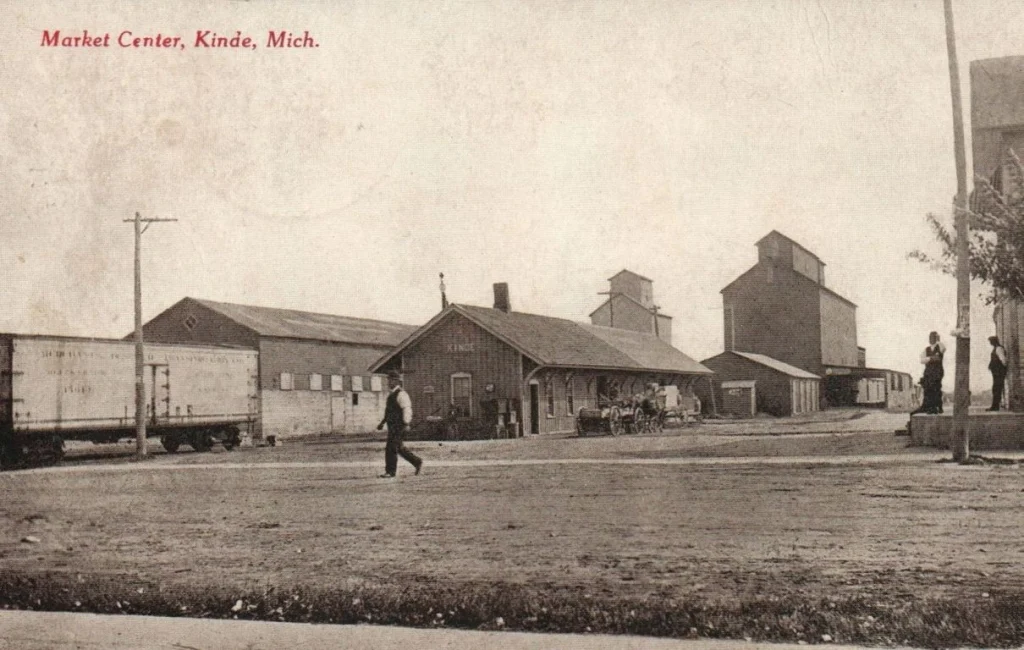
That changed when the Port Huron and Northwestern Railroad began serving Kinde in 1882. The railroad was organized in 1878 by Port Huron businessmen who wanted to improve transportation across Michigan’s Thumb. Its arrival allowed Kinde to become a shipping and receiving point for agricultural products, lumber, merchandise and passengers.
By 1898, Kinde was an established passenger station with a daytime railroad agent and a passing siding capable of accommodating 24 railcars. The railroad’s importance can be seen in historical photographs showing the depot, trains and nearby grain elevators. The line eventually became part of the Pere Marquette railroad system.

But the railroad also brought its share of problems. On Jan. 31, 1909, a morning passenger train traveling from Port Austin became stuck in snow near Kinde. The incident illustrates how winter weather could disrupt travel even after railroads transformed transportation.
The depot was more than a place to catch a train. It was where the agricultural economy met the outside world.
Main Street Around 1900: A Photograph Full of Clues
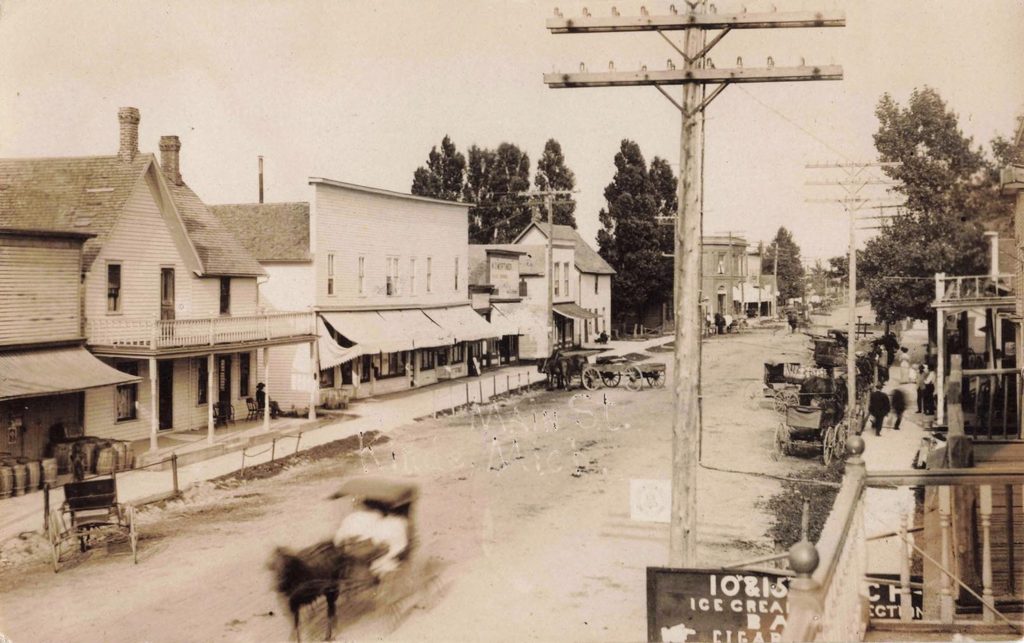
The original Main Street photograph provides an unusually detailed record of Kinde’s early commercial district.
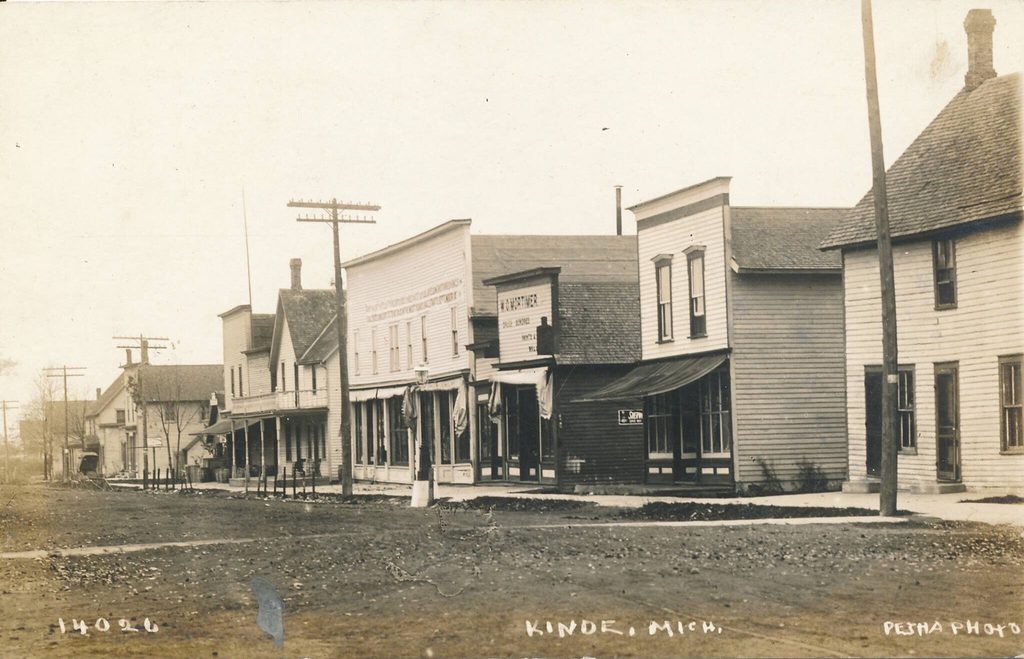
Look closely at the storefront signs. The business name Witzke & Wagner appears prominently, although the exact nature of the partnership requires further confirmation. Another sign identifies Dr. H. L. Wheeler, Dentist, showing that professional services had become part of the growing business district. Advertisements for Weber wagons, De Laval cream separators and Keen Kutter tools reveal even more about the economy.
These were products with direct value to surrounding farms.
Weber wagons helped move crops, equipment and supplies. Cream separators allowed dairy farmers to separate cream from milk more efficiently. Keen Kutter tools were marketed for household, workshop and agricultural use.
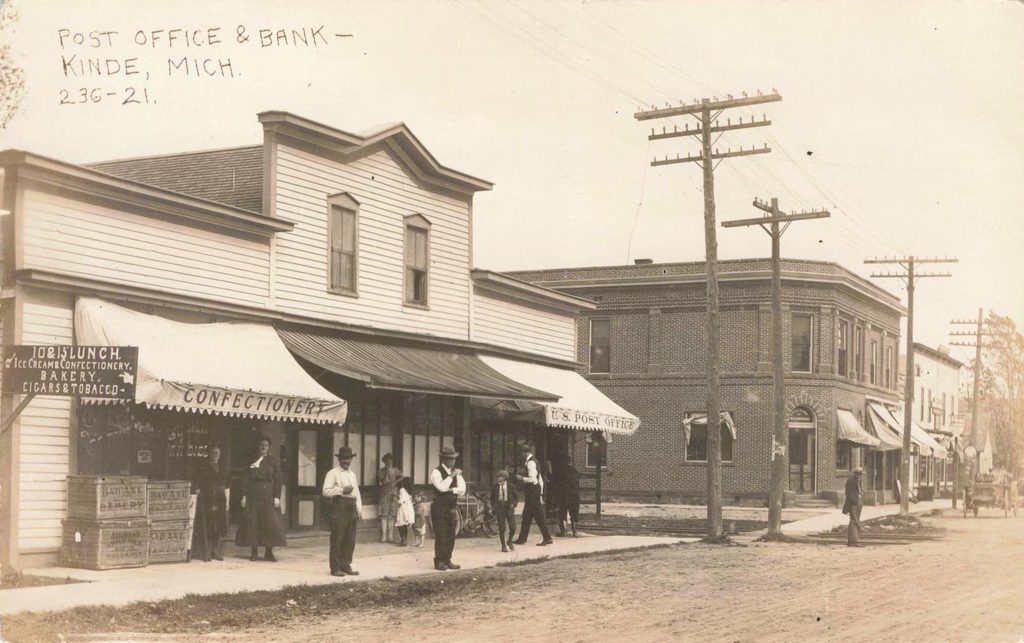
Wooden sidewalks raised pedestrians above dirt and mud. Commercial storefronts stood close together, making it easy for customers to visit several businesses in one trip. Yet this was hardly an isolated frontier settlement. Its merchants sold nationally marketed products, residents had access to professional services, and the railroad connected the village with larger cities.
Kinde was participating in the modernization of rural America.
Why Kinde Became Known as the Bean Capital of the World
Kinde’s most famous historical nickname came from an unlikely source: the humble navy bean. During the late 19th and early 20th centuries, Michigan’s Thumb became one of the country’s major dry bean-producing regions.
The area’s fertile soil and growing agricultural infrastructure supported an industry that supplied beans to markets well beyond Michigan. Kinde emerged as a major collection and shipping point. Farmers brought their harvests to local elevators, where grain and beans could be weighed, stored and loaded into railroad cars.
Why Was Kinde Called the Bean Capital? The nickname reflected Kinde’s importance as a bean shipping and marketing center. It should not be confused with a verified claim that the village produced more beans than every other place in the world.
A 1928 report in The Huron County Tribune, later quoted by The Huron Daily Tribune, described Kinde as one of Michigan’s important shipping points.
The two major elevators together reportedly shipped an average of approximately six railcars of grain and beans daily. For a small rural community, that represented a substantial volume of agricultural commerce.
Where lumbermen had once cut timber, farmers were now cultivating fields. Agricultural businesses replaced many commercial activities associated with the lumber era.Beans became one of the products that helped define the region’s new economy.
The Farmers Co-Operative Grain Company Began in 1914
One of Kinde’s most enduring institutions began when local farmers decided they needed greater control over the marketing of their crops. The Farmers Co-Operative Grain Company of Kinde was established in 1914.
According to the company’s history, it is Michigan’s oldest grain cooperative. The organization began as a small grain elevator serving area farmers. Its member-owned structure allowed producers to participate directly in the business responsible for handling their harvests.
Over time, the cooperative expanded beyond its original elevator. The company reports operating on an 18-acre property with three grain dryers and storage capacity of 2.8 million bushels. Its continued operation provides a direct connection between Kinde’s early agricultural economy and modern farming.
The Devastating Grain Elevator Fire of 1928
Kinde’s agricultural success also created a serious danger.

Grain elevators contained large quantities of combustible material, including grain dust. Wooden structures and closely grouped storage buildings could make fires especially destructive. On Nov. 13, 1928, disaster struck Kinde.
A major fire destroyed the Bad Axe Grain Co. and Farmers’ Co-operative elevator plants. The Huron County Tribune reported the loss in its Nov. 16 edition, estimating damage at nearly $200,000. The cause was undetermined.
1928: Nearly $200,000 in Fire Damage Both major grain elevator plants were destroyed. The loss threatened an important part of Kinde’s agricultural economy, but rebuilding plans began quickly. Within days, cooperative stockholders approved a rebuilding project. The newspaper reported plans for two elevators costing approximately $80,000.
Nearly 50 years later, Kinde experienced another major elevator disaster. On Sept. 5, 1978, fire again destroyed two grain elevators, with estimated losses exceeding $1 million. Approximately 400 residents were evacuated, and more than 125 firefighters from 11 departments responded.
Despite the destruction, the cooperative prepared to resume receiving beans almost immediately. The two fires became defining events in Kinde’s agricultural history.
The Grand Central Hotel and Kinde’s Traveling Salesmen
Kinde’s commercial growth supported more than grain elevators and farm supply stores. The village also had a hotel that became a familiar Main Street landmark.The Grand Central Hotel served railroad travelers, visiting merchants and people conducting business in the surrounding countryside.
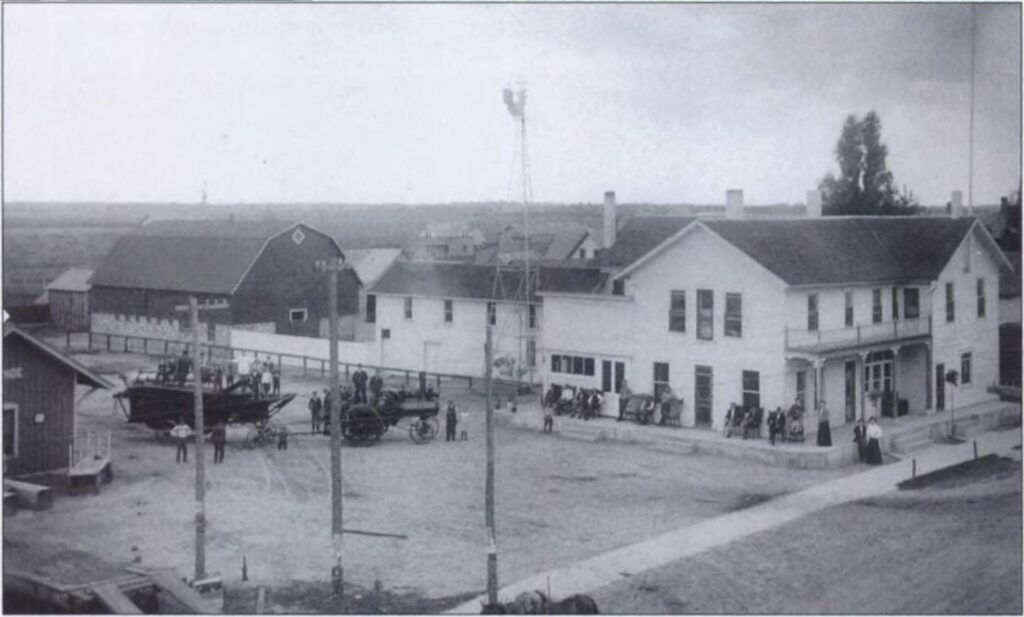
Its story may have begun in Port Crescent, a former lumber town near Saginaw Bay.
A separate Thumbwind history traces the building to an earlier hotel associated with Port Crescent. According to that account, the structure was moved to Kinde as the older lumber community declined. The precise date and method of the move remain uncertain.
Read more about the Grand Central Hotel in Kinde.
By the early 1900s, the Grand Central had become part of Kinde’s business and social life. Traveling salesmen, commonly called drummers, visited communities like Kinde to sell merchandise to local stores.
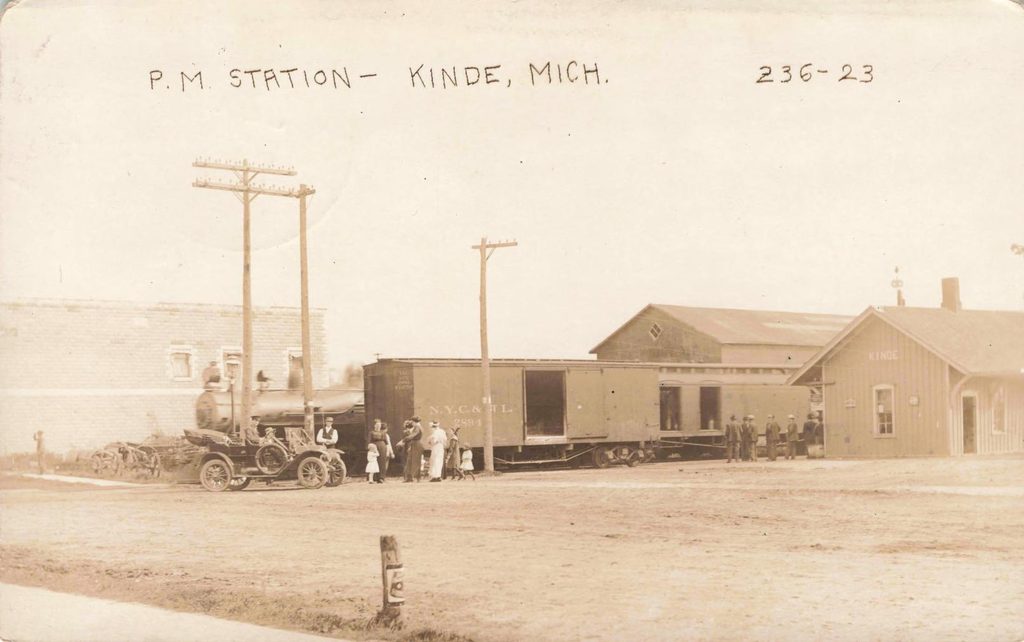
A hotel near the railroad depot offered them a place to sleep, eat and meet customers. The hotel also became the setting for an unusual episode in August 1903. According to a historical account citing the Detroit Free Press, two young couples from Northville arrived in Kinde while attempting to elope.
Hotel proprietor Peter Bushey reportedly became suspicious and contacted their families by telegraph. The fathers traveled to Kinde and interrupted the couples’ plans. The episode offers a glimpse of a time when railroad schedules, hotelkeepers and telegraph messages could play unexpected roles in family affairs.
What Everyday Life Was Like in Kinde Around 1919
By 1919, Kinde had been incorporated for 16 years. The United States had just emerged from World War I, and Michigan was adjusting to a peacetime economy.
The influenza pandemic of 1918 had also disrupted communities across the state. Although its specific toll in Kinde requires local newspaper or public health records, the pandemic formed part of the broader experience of Michigan residents.
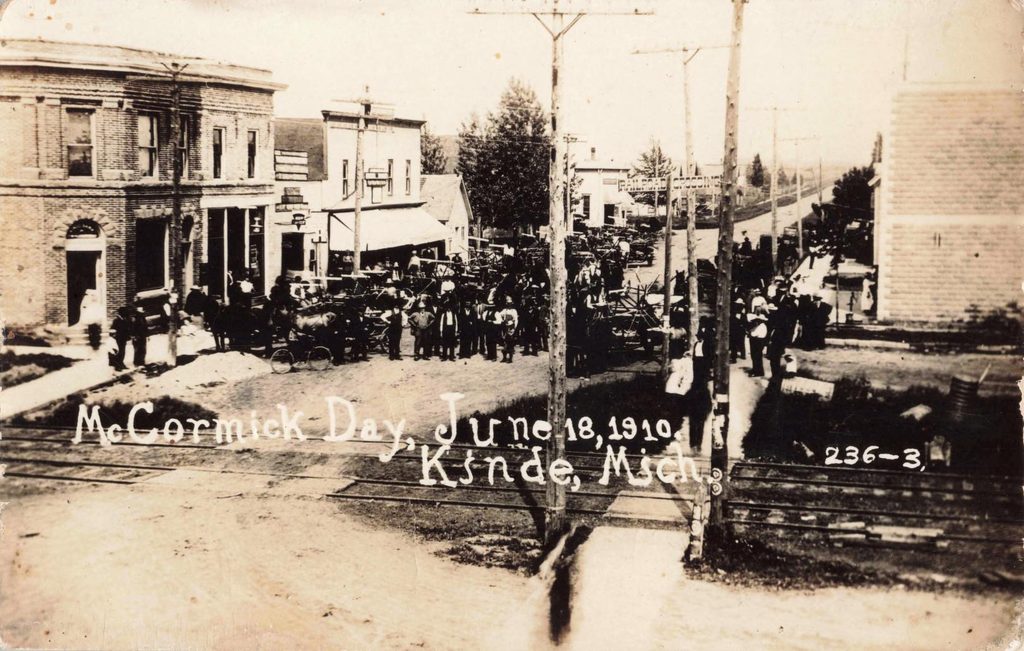
Most families in the surrounding countryside depended on agriculture. Farming involved long hours, physical labor and considerable uncertainty. Spring planting required careful timing. Summer brought fieldwork and maintenance. Autumn meant harvesting crops before winter weather arrived.
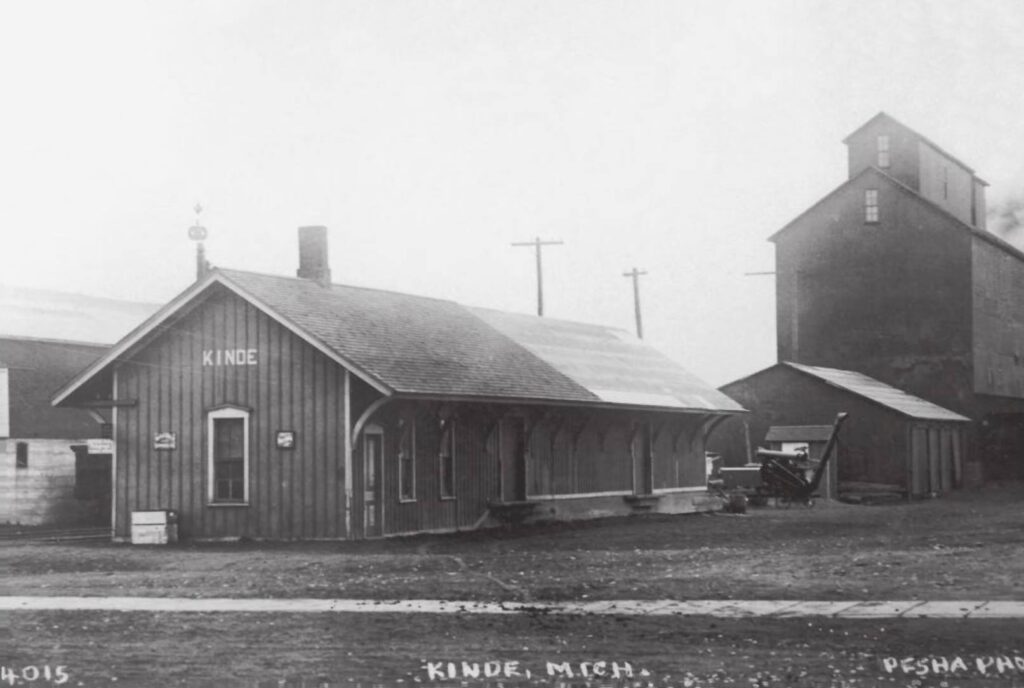
The railroad provided a route to market, but farm families still depended on horses, wagons and increasingly mechanized equipment. Inside the village, stores supplied products that could be difficult to obtain elsewhere. A farmer might travel into Kinde to purchase replacement tools, arrange for grain delivery, collect mail or discuss business with a merchant.
The general store was also a place to exchange news. Residents could hear about crop prices, approaching storms, local elections and events in neighboring communities. The village’s social life would have been shaped by family gatherings, churches, schools and the seasonal demands of farming.
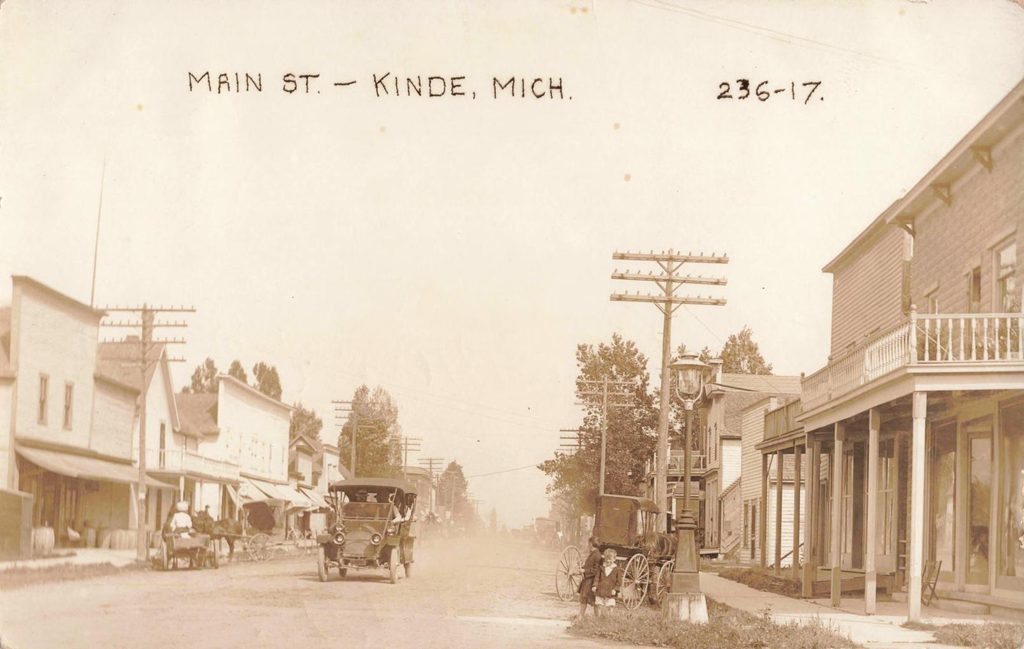
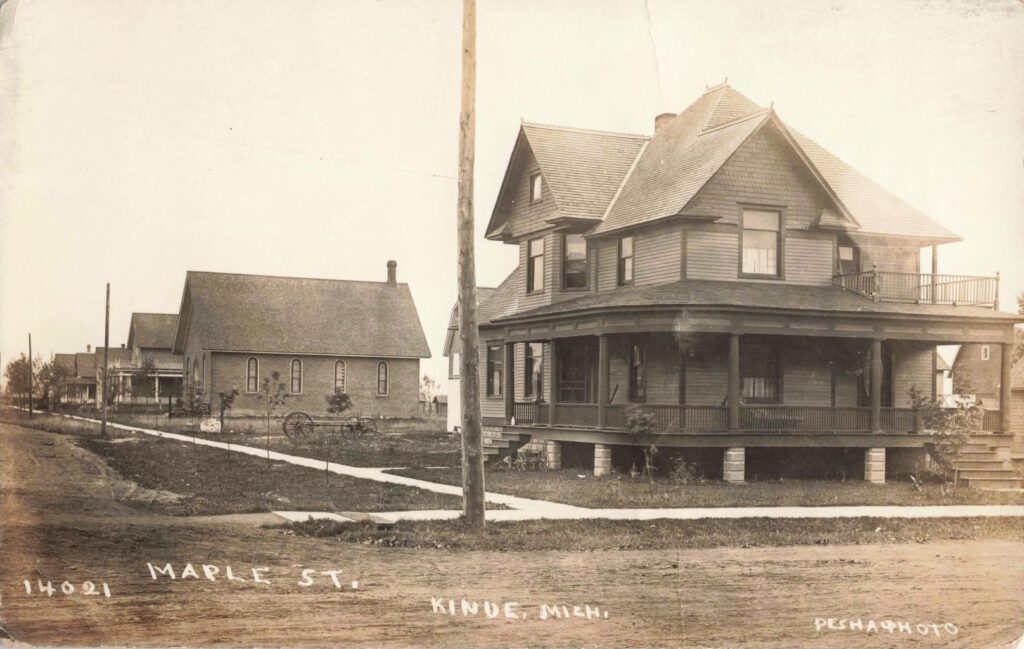
Historic photographs show a community in transition. Telephone and utility poles stood alongside wooden storefronts. Early automobiles were beginning to appear, but dirt streets and horse-drawn transportation remained familiar.
The contrast between old and new was part of everyday life in Kinde.
A 1929 Boulder That Became Part of Local History
Not every memorable event in Kinde involved crops or railroad cars. In September 1929, workers removed an enormous boulder from a farm field in the Kinde area. A historical photograph reproduced in the September 2011 issue of ThumbPrint News identifies the rock as weighing approximately 123,000 pounds.
123,000 Pounds of Michigan Glacial History The reported weight of the boulder exceeded 61 tons. Its removal illustrates the enormous obstacles farmers sometimes faced when clearing land. The region’s fields were shaped by glaciers, which left stones and boulders scattered across the soil.
Clearing farmland was an important part of turning former forest and glacial terrain into productive agricultural property.
Kinde’s History Continues Through Farming and Traditions
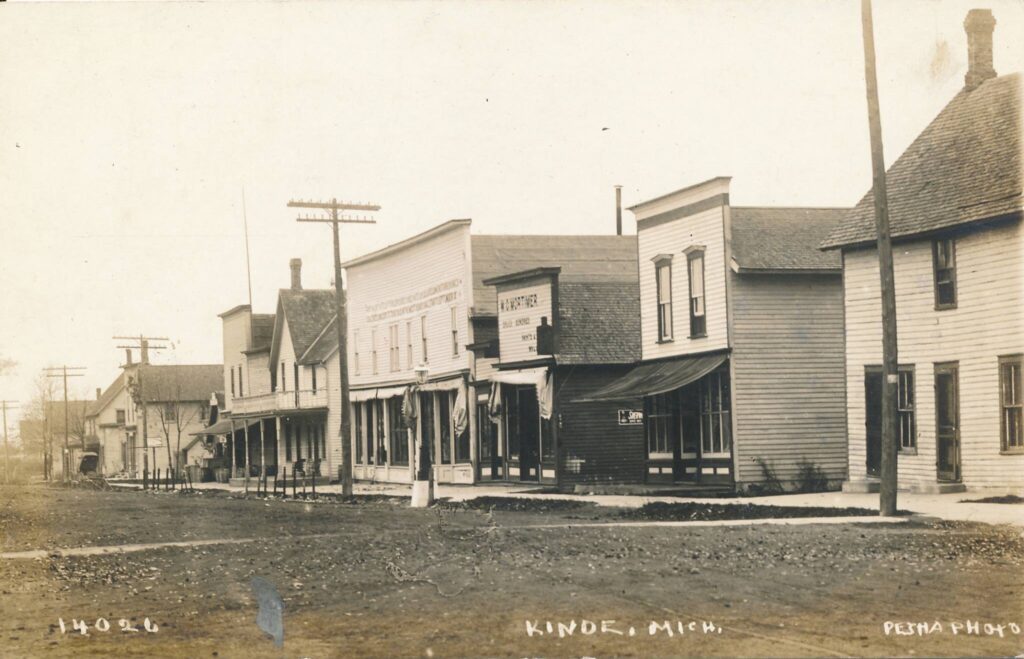
More than a century after John Kinde established his first businesses, agriculture remains central to the village. The Farmers Co-Operative Grain Company continues to serve regional producers, while local businesses and community organizations help maintain the village’s identity.
Kinde has also developed traditions celebrating its cultural heritage. The Friends of Kinde organization began organizing the Kinde Polka Fest in 2006. The festival celebrates the area’s Polish-American heritage through music, dancing, food and community activities. In 2017, organizers established the Polka Palace as a permanent gathering place. The festival marked its 20th anniversary in September 2026.
Kinde had 421 residents in the 2020 census, a modest population for a community that once played a significant role in Michigan’s agricultural shipping industry.
What Historic Photographs Tell Us About Kinde
Return to the original photograph of Kinde’s Main Street.
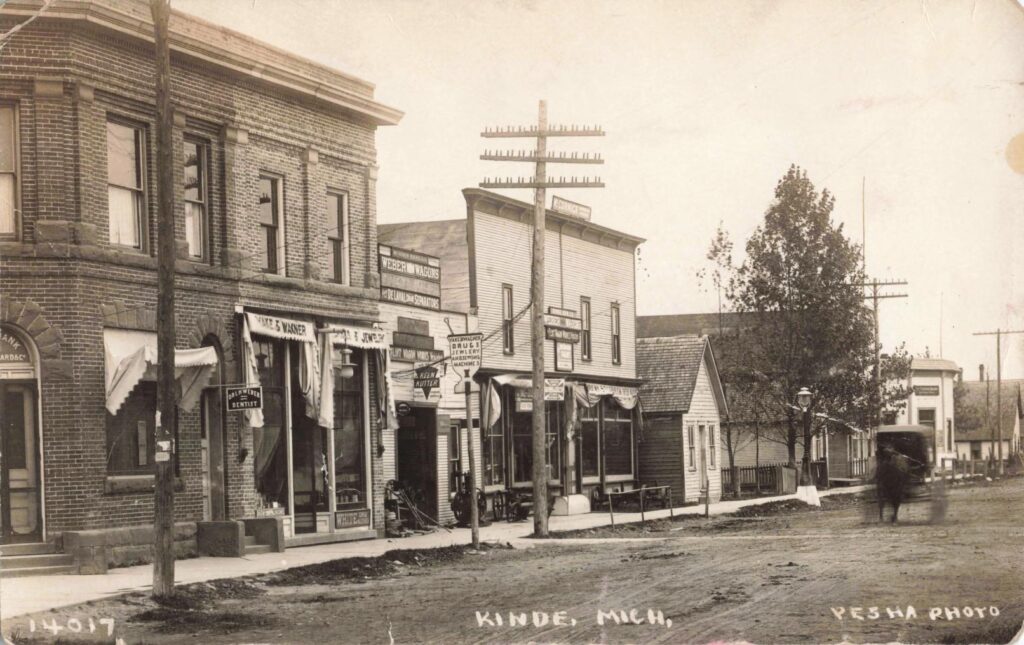
The businesses are more than names on wooden storefronts. They represent a period when rural Michigan was rapidly changing. The wagon dealer served farmers who still relied on horses. The cream separator advertisement reflected advances in dairy production. The dentist’s sign showed the arrival of professional services.
The grain elevators and railroad depot connected the village to markets throughout the country. Kinde was built during the transition from lumbering to agriculture. Its early residents helped turn a rural settlement into a commercial center serving surrounding farms. The village faced destructive fires, difficult winters and changing transportation systems.
Kinde, Michigan: A Historical Timeline
Kinde, Michigan
Through the Years
From a railroad village to Michigan’s celebrated bean market
Follow the people, businesses and events that shaped Kinde from the 1880s to today. Select a period below, then tap an event to read its story.
EARLY 1880sJohn Kinde Builds a Village
John Kinde, whose German immigrant family had lived in the Ora Labora settlement near Bay Port, established businesses in northern Huron County. His general store, lumberyard, grain elevator and post office helped turn a rural crossroads into a commercial village.
The community took his name. As the lumber industry declined, the surrounding countryside was increasingly devoted to farming.
Read Kinde’s Early History
1882The Railroad Arrives
Railroad service changed the village’s economic prospects. Farmers could ship grain and beans farther and more efficiently than by wagon. Merchandise, mail and passengers also moved through the station.
The line later became part of the Pere Marquette system. Kinde’s depot and elevators became familiar landmarks of the Thumb’s agricultural economy.
See Railroad and Elevator History
LATE 1800sA Hotel Finds a New Home
As Port Crescent’s lumber economy faded, a hotel associated with the former lumber town was reportedly relocated to Kinde. It became known as the Grand Central Hotel and served travelers, merchants and local residents.
The precise date and method of relocation remain uncertain, but historical postcards document the hotel’s long association with Kinde.
The Grand Central Hotel Story History of Port Crescent
1903Kinde Becomes an Incorporated Village
About two decades after its early commercial development, Kinde was incorporated as a village. The community now had an established business district and a railroad connection to the surrounding region.
That same year, the Grand Central Hotel was reportedly involved in an unusual episode when two young couples attempting to elope were intercepted after their families were notified.
The Hotel’s Remarkable History
1909A Train Stuck in the Snow
On Jan. 31, 1909, a passenger train traveling from Port Austin became stranded in snow near Kinde, according to Michigan railroad historical records.
Railroads had improved rural travel, but snowdrifts and severe winter weather could still bring service to a halt.
Kinde Railroad Records
1914Farmers Organize a Cooperative
The Farmers Co-Operative Grain Company of Kinde was established in 1914. The organization identifies itself as Michigan’s oldest grain cooperative.
Its member-owned structure allowed farmers to participate in the business of storing and marketing their crops. The cooperative became a lasting institution in the village.
Cooperative History Kinde’s Grain Elevators
1918–1919War Ends, Main Street Changes
Michigan was shifting from wartime production to a peacetime economy. The 1918 influenza pandemic had also disrupted communities across the state, although Kinde-specific illness and mortality figures need further research.
A 1919 Pesha photograph shows Kinde’s wooden storefronts, unpaved Main Street and utility poles. It preserves the appearance of a community between the horse-and-wagon era and the age of the automobile.
Historic Main Street Photographs Michigan Moments Videos
1928Fire Devastates the Grain Elevators
On Nov. 13, 1928, fire destroyed the Bad Axe Grain Co. and Farmers’ Co-operative elevator plants in Kinde.
Contemporary newspaper reporting estimated damage at nearly $200,000. The cause was undetermined. Cooperative stockholders soon approved rebuilding plans, showing how essential the elevators were to the community.
Read the Elevator Fire History
1929The 61-Ton Boulder
A historical account records the removal of a boulder reportedly weighing 123,000 pounds from a Kinde-area farm in September 1929.
The enormous stone illustrates a challenge faced by generations of Thumb farmers. Glaciers left large rocks scattered across the region, and clearing them was part of making land suitable for agriculture.
Read the Historical Account
1978Another Major Elevator Fire
On Sept. 5, 1978, another fire destroyed two grain elevators. Reported losses exceeded $1 million.
About 400 residents were evacuated, while more than 125 firefighters from 11 departments responded. The cooperative prepared to resume receiving beans soon afterward.
History of Kinde’s Elevator Fires
2006–2026Kinde’s Polka Tradition Grows
The Friends of Kinde began organizing Kinde Polka Fest in 2006, celebrating the community’s Polish-American heritage.
The Polka Palace was established in 2017 as a permanent gathering place. In 2026, the festival celebrated its 20th anniversary.
The event reflects a tradition of community gatherings that continues long after the railroad’s passenger era and the village’s early agricultural boom.
Frequently Asked Questions About Kinde, Michigan
Who founded Kinde, Michigan?
John Kinde, a businessman whose family had previously lived in the Ora Labora settlement near Bay Port, established several early businesses in the 1880s. The village was named for him.
When was Kinde incorporated?
Kinde became an incorporated village in 1903
Why was Kinde called the Bean Capital of the World?
The nickname reflected its importance as a collection and railroad shipping point for dry beans grown in Michigan’s Thumb.
What railroad served Kinde?
The Port Huron and Northwestern Railroad reached Kinde in 1882. The route later became associated with the Pere Marquette Railroad.
What is Michigan’s oldest grain cooperative?
Farmers Co-Operative Grain Company of Kinde, established in 1914, identifies itself as Michigan’s oldest grain cooperative.
Cited Sources for the History of Kinde Michigan
- “Kinde, Michigan.” Michigan Railroad History, MichiganRailroads.com. Accessed 13 Nov. 2026.
- “Kinde Co-op Celebrates 90 Years.” Huron Daily Tribune, Michigan’s Thumb. Accessed 13 Nov. 2026.
- “About Us.” Farmers Co-Operative Grain Company, Farmers Co-Operative Grain Company. Accessed 13 Nov. 2026.
- ThumbPrint News. Sept. 2011, September 2011 Issue (PDF).
- “Grand Central Hotel Kinde Michigan.” Thumbwind, 16 Apr. 2025, Grand Central Hotel History.
- “Kinde Michigan.” Thumbwind, 28 May 2020, Historic Kinde Photographs and History.
- “Ghost Towns in Michigan’s Thumb.” Thumbwind, 30 Apr. 2021, Port Crescent and Thumb Ghost Towns.
- “Main Street at Kinde Michigan c1900.” Thumbwind, 15 Apr. 2025, Historic Main Street at Kinde.
- “Celebrating 150 Years.” Huron County Historical Society, Huron County Historical Society. Accessed 13 Nov. 2026.



