 by
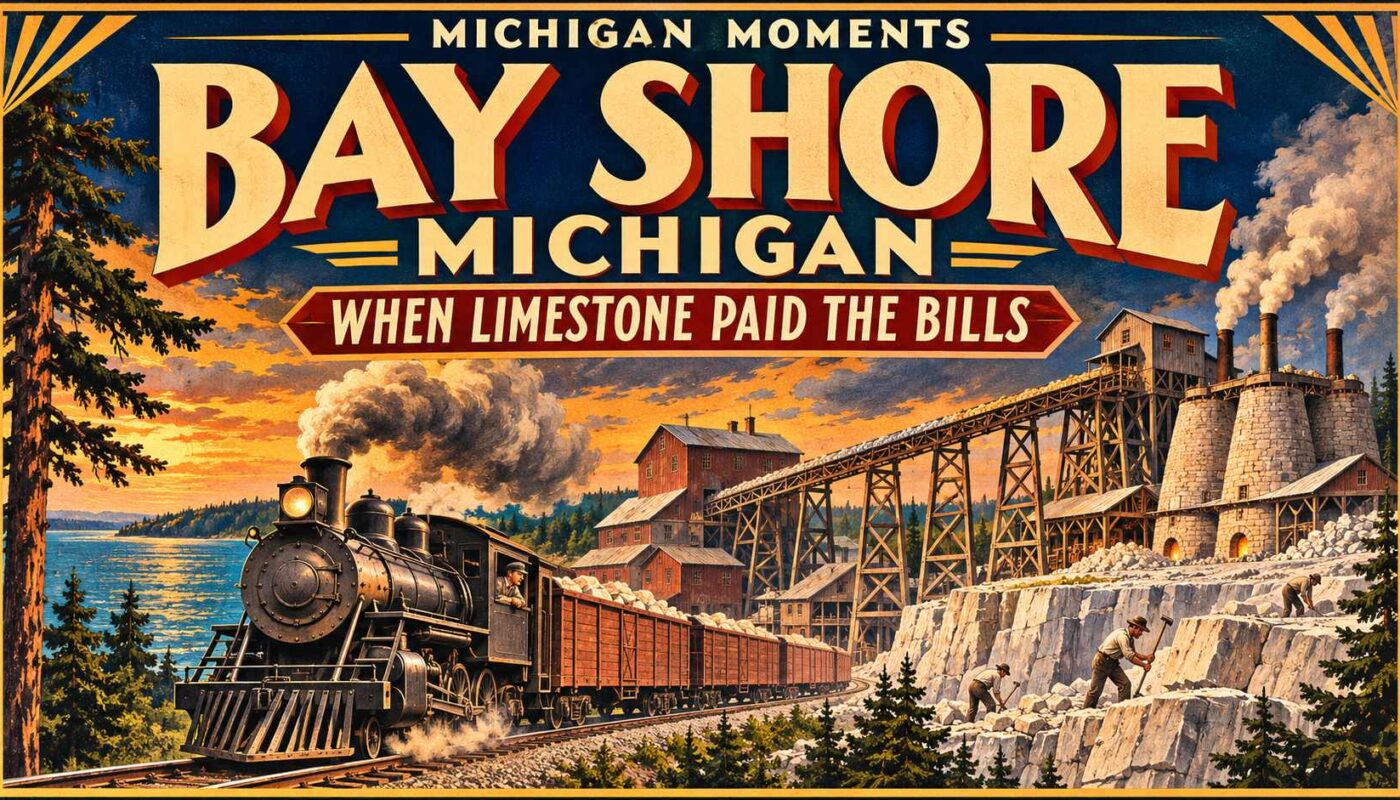
In 1903, the Bay Shore Lime Company reported producing more than 118,000 barrels of lime a year. Its plant stood on Little Traverse Bay in Bay Shore, Michigan, where a small industrial village developed around limestone quarries, the railroad, and wood-products mills. The history of Bay Shore, Michigan, is closely tied to the stone beneath the shoreline.
Today, travelers on U.S. 31 pass through a largely residential community between Charlevoix and Petoskey. But a century ago, the waterfront supported an economy that depended on the constant heat of lime kilns. A 1903 Michigan geological survey described a business whose products reached industries far removed from northern Michigan’s growing vacation trade.
Table of Contents
Watch: Bay Shore, Michigan: When Limestone Paid the Bills
Odawa Homelands and the Arrival of Eugene Sly
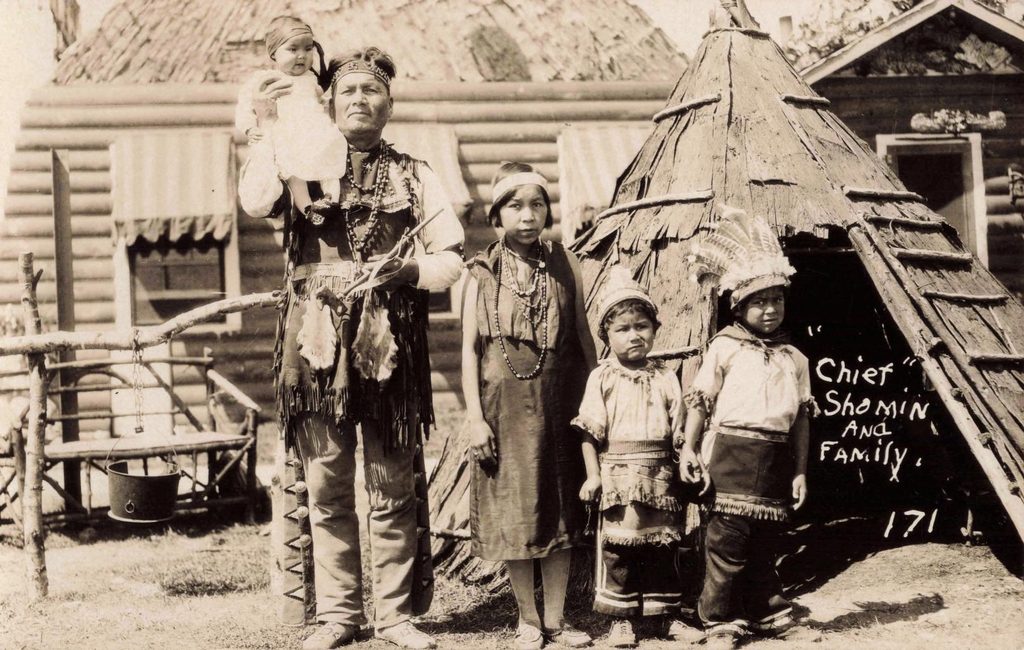
Bay Shore lies where Hayes Township in Charlevoix County meets Resort Township in Emmet County. Long before the industrial village developed, the region was home to the Odawa. Bay Shore is identified among the communities associated with the 1908 Durant Roll in the Little Traverse Bay Bands of Odawa Indians’ tribal code. Native American families continued to live and work in the village during its industrial years.
Eugene Ripley Sly arrived in the Petoskey area with his family in 1884. He was a Civil War veteran who had endured imprisonment during the war and subsequently worked in agriculture and business in Illinois. Sly saw a commercial opportunity in Michigan’s limestone and founded the Petoskey Lime Company, which brought employees and their families to what became Bay Shore.
Land associated with Sly and Nancy Stauffer formed part of the developing community. The area near Gilmartin Road was also called Bay Side, a name that would continue to appear in the local hotel trade. Bay Shore became the common name as the village acquired permanent institutions.
History of Bay Shore Michigan: The Railroad Arrives in 1892
The Chicago and West Michigan Railway established a station at Bay Shore by 1892. A post office opened July 25 of that year, with Sly as the first postmaster. John Swift surveyed and platted the village in 1896, giving the growing community a formal street and lot layout.
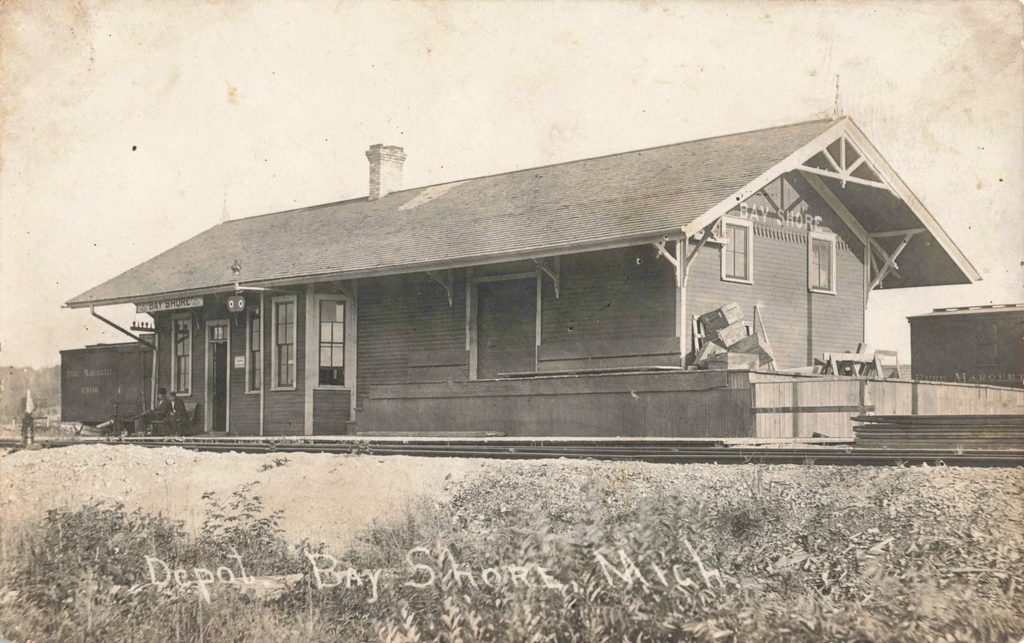
In a later newspaper account preserved by Northern Mich~Mash Preserve, longtime resident Bessie Zipp remembered the early shipment of limestone aboard the steamer Friant. She recalled that after a storm destroyed the dock in 1896, shipments moved to the railroad. The line eventually became part of the Pere Marquette system, expanding the possible market for local industries.
The Bay Shore railroad history also includes an ordinary but valuable service: a passenger train that residents remembered leaving at 10 a.m. for Petoskey and returning at 2:30 p.m. Before widespread automobile ownership, the schedule gave families a chance to shop or conduct business and come home the same afternoon.
Why the Kilns Never Cooled
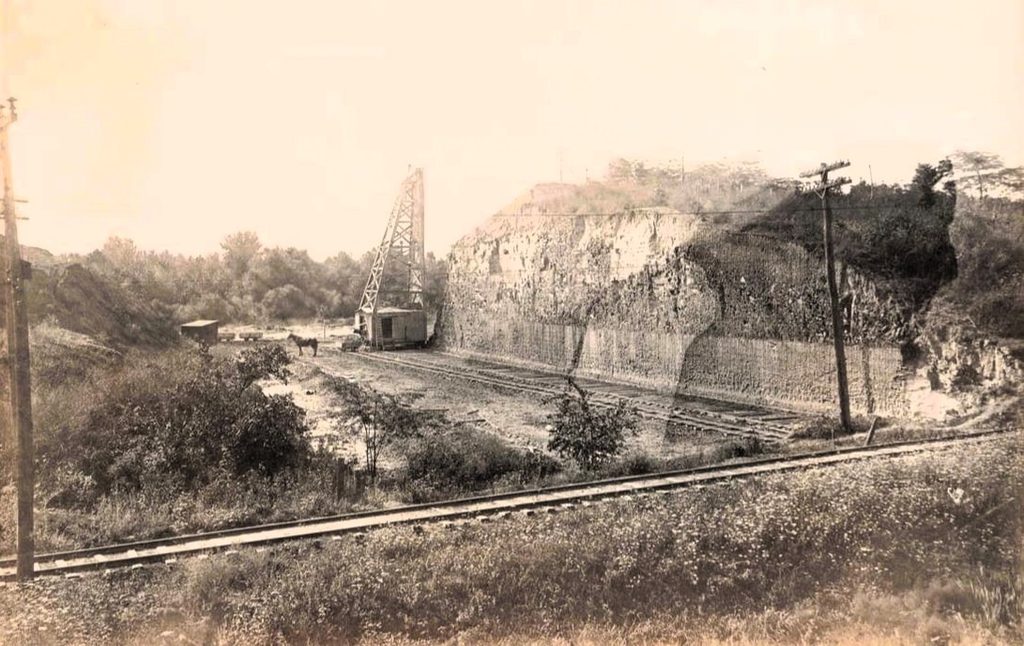
Michigan’s 1903 geological survey reported a striking increase in production at the Bay Shore Lime Company, from 16,500 barrels a year to 118,517 in a decade. It described four operating lime kilns and two under construction. The company reported owning nearly 900 acres, much of it underlain by usable limestone.
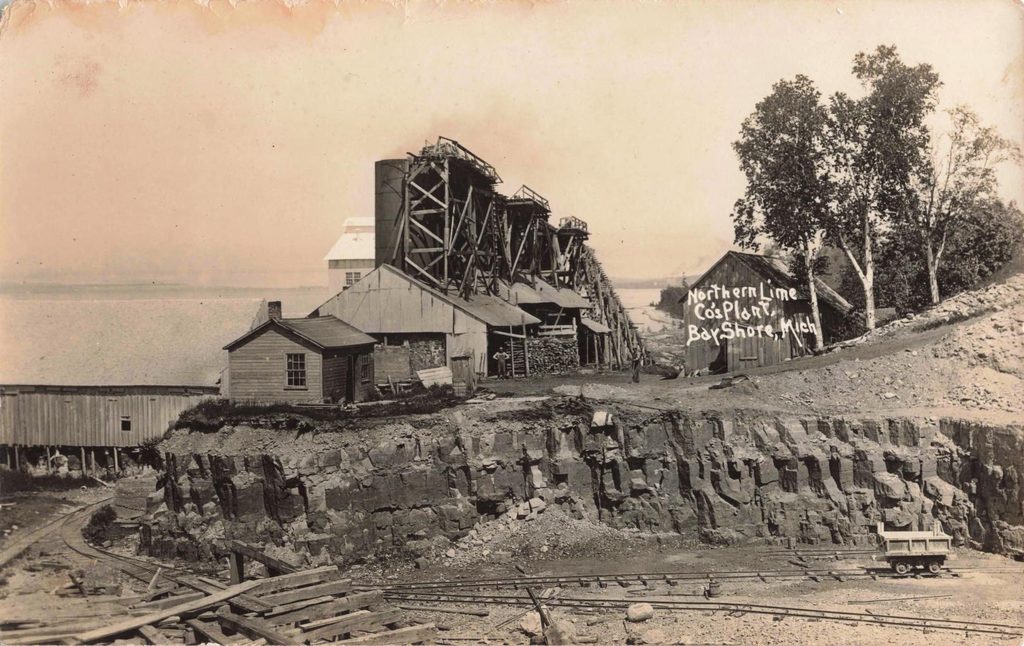
The company heated the raw stone in kilns to produce quicklime. In addition to its use in mortar and plaster, lime was a valuable supply for sugar-beet processing, the paper industry and steel production. The village’s location was useful because the rock was nearby and a railroad could handle the weight of the finished product.
How did the lime kilns work?
Limestone contains calcium carbonate. Heating it to a high temperature drives off carbon dioxide and produces calcium oxide, commonly called quicklime. The process required sustained heat, which explains the local demand for fuelwood.
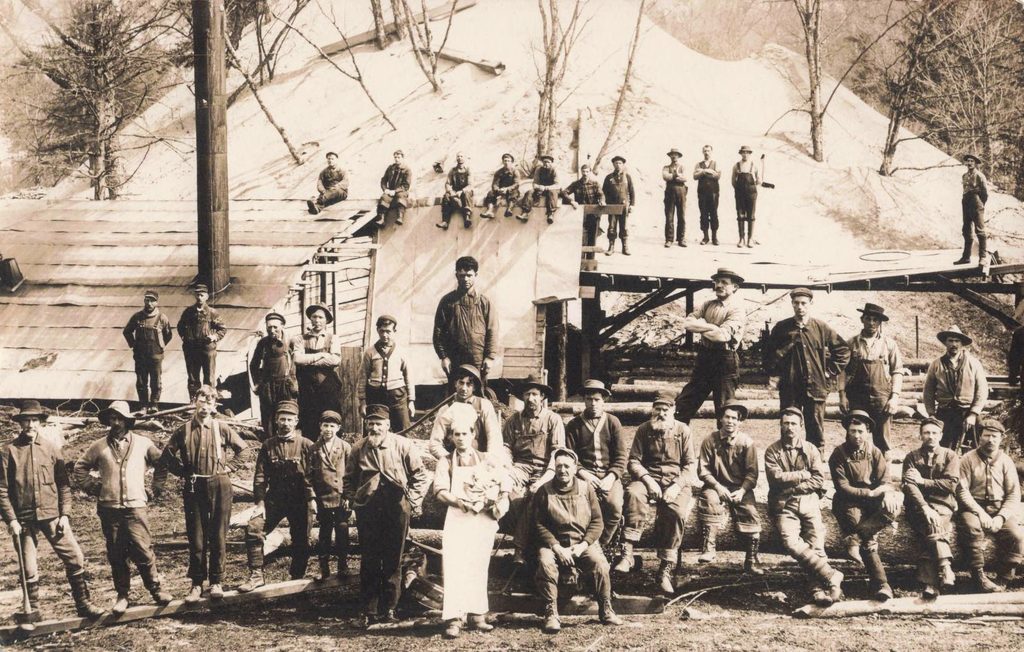
Keeping a kiln in operation required a dependable supply of fuel. Local loggers hauled wood cut into four-foot lengths to the Bay Shore plant, where kilns ran through the night. This link between the timber and stone businesses explains why both industries flourished in the same small village.
The Bay Shore Lumber Company also produced timber for shipment to Detroit and Chicago. Broom handles were among the other saleable products. A historic Charlevoix County plat book lists the local lime company as a supplier of building materials and a manufacturer of wood products, including staves and barrel heads. The community’s economic ties extended far outside the county.
A General Store With a Dance Floor Upstairs
Historic Bay Shore, Michigan, was a village of families and factories. The local general store supplied everything from hardware to feed, and the upstairs hall accommodated lodge meetings and dances. An additional grocery, meat market, barber, and blacksmith served residents who lived close to the mills and lime works.

A 1905 biographical history of northern Michigan identifies O.C. Atwood as the man who took charge of the Elk Cement and Lime Company‘s mercantile department in January 1902. Previously employed by a railroad in New York, he married Eugene Sly’s daughter, Loraine, and also served as Bay Shore’s postmaster and notary. In a small industrial community, a successful merchant often held several important jobs.

Among the families who settled in Bay Shore were John and Ada Gilmartin, who built a home there after moving to the village in 1900. John worked in the local lime industry and later at the Petoskey Portland Cement Company before retiring in 1939. His working life illustrates how the quarrying and manufacturing businesses around Little Traverse Bay supported families for decades.

Bay Shore’s Churches, Schooldays and Summer Afternoons
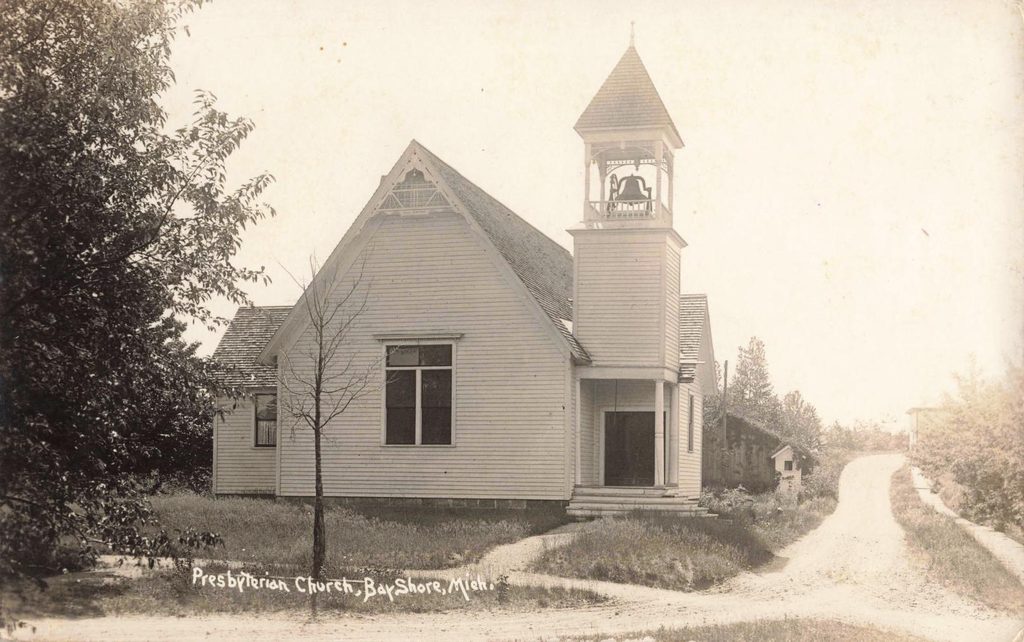
The village’s institutions were important to its residents. Catholic, Presbyterian and Methodist Episcopal church buildings appear in early postcards. Ann Smith, a longtime resident interviewed for a local historical account, remembered that approximately half of the pupils at Bay Shore’s two-room school were Native American. She continued to make baskets later in life and maintained ties with nearby Greensky Hill Methodist Church.


Local entertainment included a ball team, village music, and gatherings on the bluff. At one time, according to Hayes Township’s history, free motion pictures were projected against the side of a store. The bay itself had drawn visitors and residents alike, with its rocky beaches and opportunities for time outdoors.
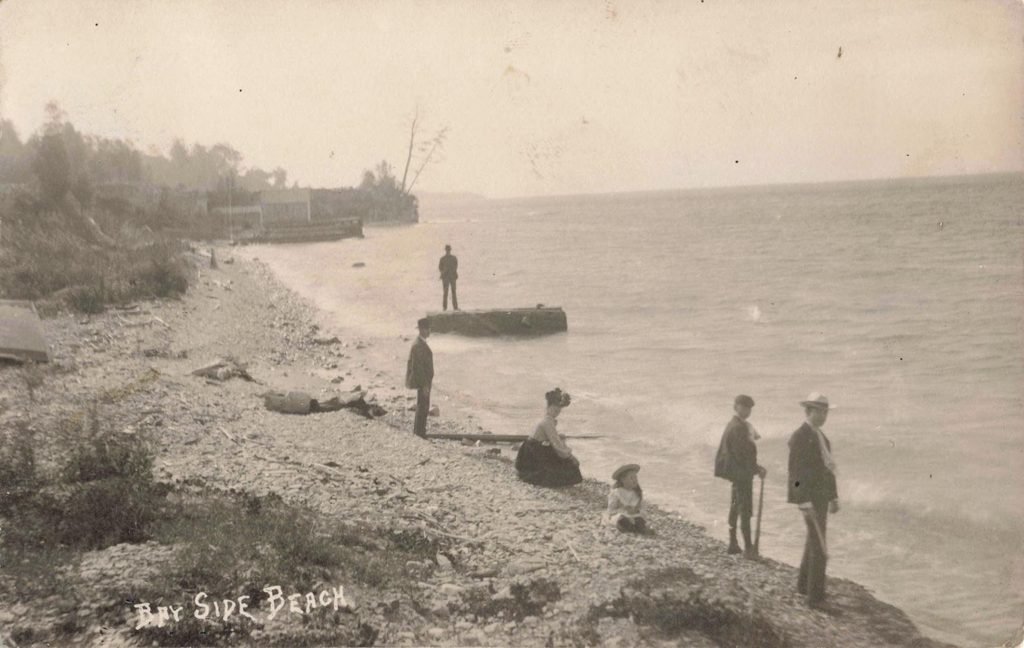
The Orphanage That Became a Waterfront Hotel
One of the Bay Shore’s most unusual historical buildings was a three-story hotel with spacious verandas. Originally planned as an orphanage by the Rocky Beach Benevolent Association under the Rev. Winfield Sly, the building was erected about 1896–97. Financial difficulties led the association to convert the property to the Irvington Hotel, later known as the Bay Side Inn.

The local business directory advertised the Irvington as a summer hotel with weekly rates of five to seven dollars. Lodging near the cool waters of Little Traverse Bay had commercial appeal even while limestone was being quarried nearby. It is a less familiar part of the history of Bay Shore Michigan than its lime industry.
Fire and the End of the Lime Era
Much of the industrial village was built of wood, and the kilns’ continuous operation added to the fire risk. Early factories burned, and the general store was destroyed in 1907. Local accounts record that two churches burned that winter and were rebuilt. A separate fire on Nov. 13, 1914, destroyed the hotel.
The lime works outlasted the hotel. The state’s 1915 list of limestone and lime producers recorded the Northern Lime Company quarry at Bay Shore, with offices in Petoskey. In the following years, automobile travel increasingly changed the region’s trade routes, and new businesses served motorists.

According to Hayes Township’s historical account, no lime kilns have operated in Bay Shore since 1930. The village’s post office closed Sept. 30, 1964. The 2010 census counted 754 people in the modern Bay Shore census-designated place, compared with 687 in 2020.
The history of Bay Shore, Michigan, is still visible in some of its old village buildings. The former St. Francis Solanus Catholic Church on Townline Road was serving as an antiques store in 2018. The building had found a new use, much as the former industrial settlement itself had become a largely residential community along U.S. 31.

Frequently asked questions about Bay Shore, Michigan
When was Bay Shore, Michigan, founded?
The industrial settlement developed in the late 1880s and early 1890s. A railroad station and post office were established by 1892, and John Swift surveyed and platted the village in 1896.
What was Bay Shore’s principal industry?
Limestone quarrying and lime manufacturing were major employers. The Bay Shore Lime Company reported producing 118,517 barrels of lime annually in 1903, while local lumber mills supplied timber and manufactured wood products.
Which railroad served Bay Shore?
The Chicago and West Michigan Railway established a station at Bay Shore by 1892. The route became part of the Pere Marquette system and carried local freight as well as passengers.
What happened to Bay Shore’s old hotel?
The three-story property began as an orphanage project and was later operated as the Irvington Hotel, also called the Bay Side Inn. Fire destroyed it on Nov. 13, 1914.
Do you have a Bay Shore connection?
If you remember an old business, have a family connection to the quarry or know who lived in one of these buildings, please share your information in the comments. Family records and memories can help add detail to the village’s history.
? Works Cited for History of Bay Shore Michigan
B. F. Bowen & Co. “Atwood, O. C.” Biographical History of Northern Michigan, 1905. Transcribed by Genealogy Trails.
Greenwood Cemetery. “Sly, Eugene Ripley.” Greenwood History Archive.
Hayes Township. “About Hayes.” Hayes Township, Charlevoix County, Michigan.
Little Traverse Bay Bands of Odawa Indians. Waganakising Tribal Code, art. V.
Michigan Board of Geological Survey. Annual Report for 1903, pp. 171–72.
Michigan Geological and Biological Survey. Mineral Resources of Michigan, p. 372.
Northern Mich~Mash Preserve. “Bay Shore.” Historical newspaper clippings and excerpts from Michigan Place Names and Resort Township Remembers.
Plat Book of Charlevoix County, Michigan. Bay Shore village business directory.
United States Census Bureau. Michigan: 2010, Summary Population and Housing Characteristics, table 2.
United States Census Bureau. “State of Michigan Census Designated Places—2020 Census.” TIGERweb.
William L. Clements Library. “Bay Shore, Michigan, Real Photo Postcards.” David V. Tinder Collection of Michigan Photography, University of Michigan.