 by
by 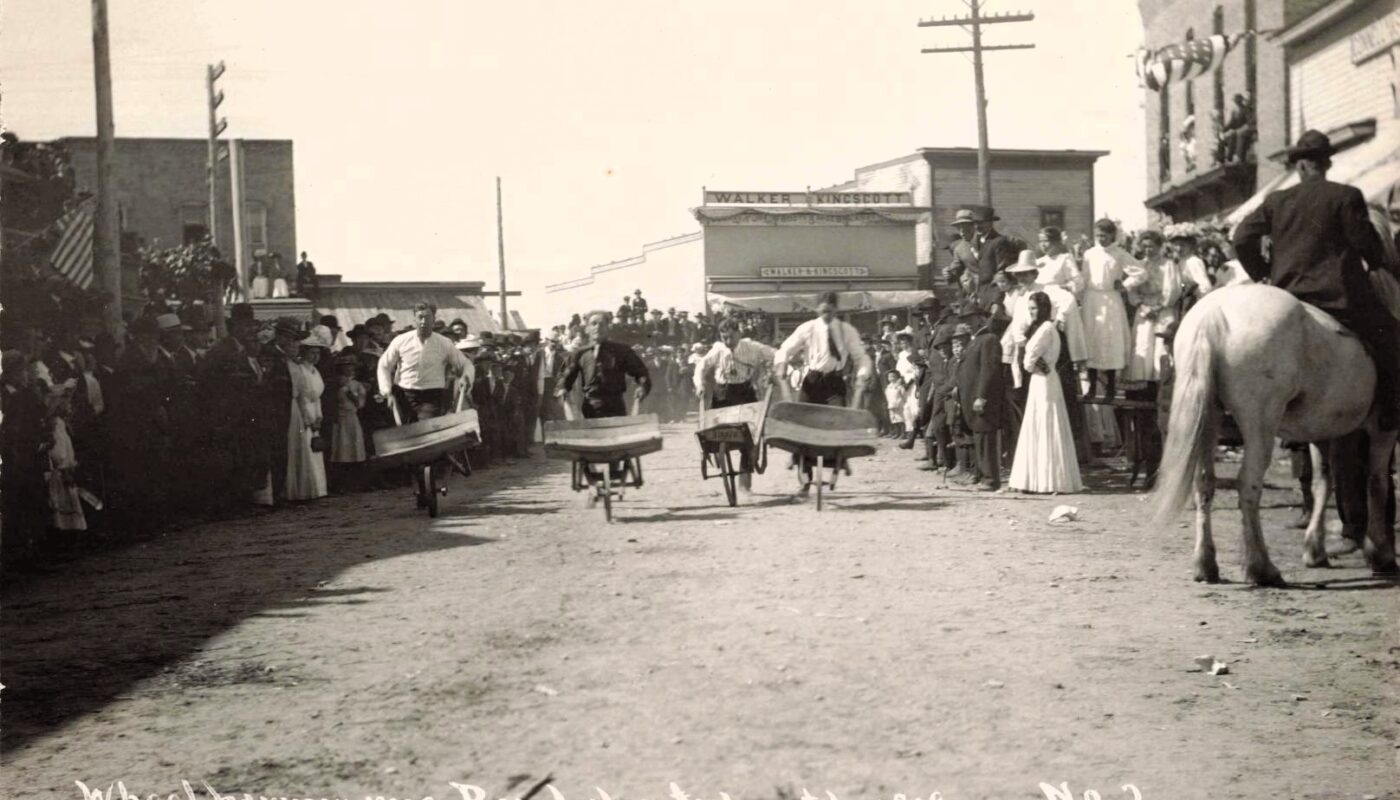
Small-town Michigan once marked the Fourth of July with full streets, brass bands, decorated wagons, horse races, church picnics, and packed grandstands. These early 1900s photos show small town Michigan 4th of July in towns across the state, from Fenton and Port Hope to Reed City, Battle Creek and Wolverine. It was more than a holiday. It was the day the whole town showed up.
Watch this Michigan Moments look at how Michigan celebrated the Fourth before the backyard grill took over.
When the Fourth Filled Main Street
In the early 1900s, the Fourth of July was one of the biggest public days of the year in small-town Michigan.
It was not limited to fireworks after dark. It was an all-day civic celebration. Main streets filled with families, flags, bunting, brass bands, horse teams, decorated wagons and, by the 1910s, early automobiles.
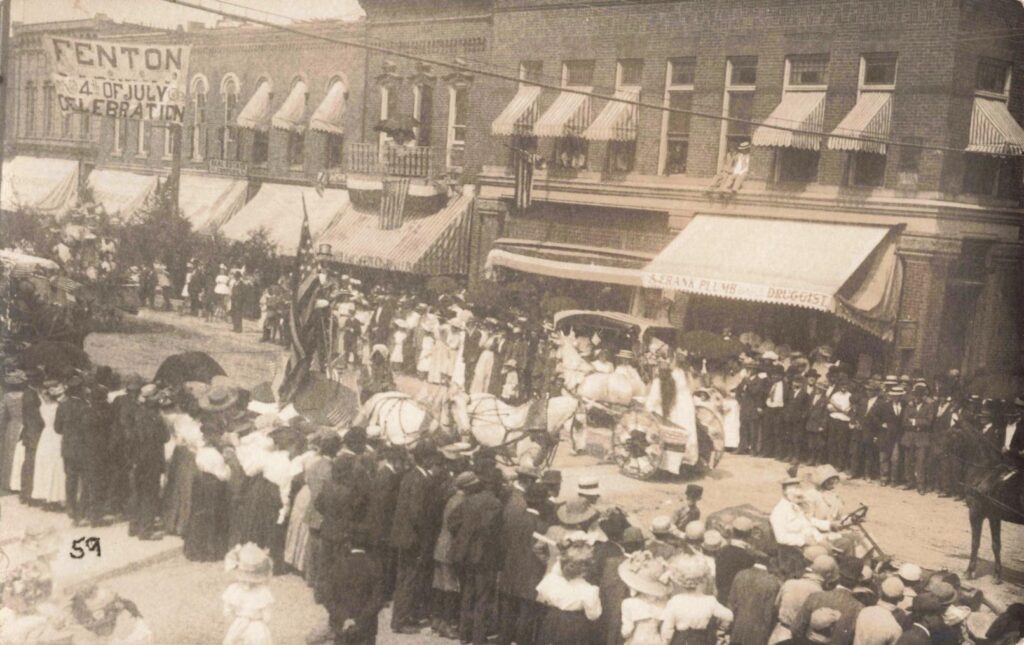
The photos tell the story. In Fenton, a large banner announced the Fourth of July celebration while crowds packed the business district. In Battle Creek, a long parade moved down a flag-lined street. In Port Hope, a band posed in the road in 1908, surrounded by townspeople in formal clothes. In New Lothrop, horse races drew spectators along a dusty country road.
The holiday was loud, crowded and public. It gave small towns a chance to show pride, order and local ambition.
Parades Were the Main Event
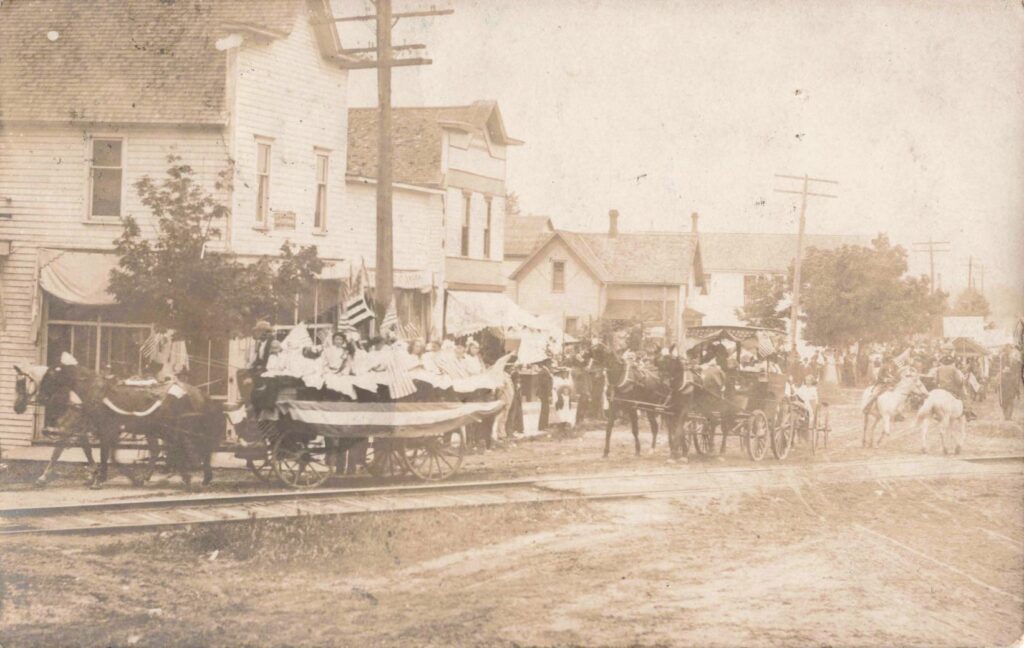
The parade was usually the center of the day.
In Beulah in 1908, a decorated wagon carried a group of women and children along a street lined with buildings, flags and onlookers. Horses pulled the wagon. The float was simple but carefully staged. It was meant to be seen.
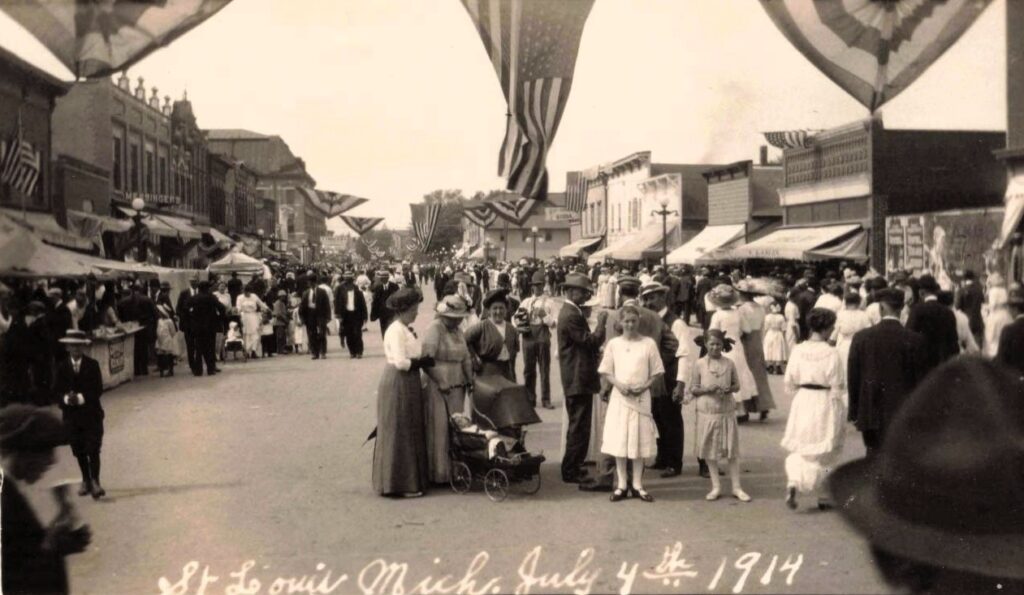
That pattern appears across the images. In Wolverine in 1907, a small parade moved through the village past storefronts and patriotic decorations. In Fenton, a horse-drawn float rolled through a dense crowd. In St. Louis in 1914, downtown streets were dressed with large flags while people gathered under awnings and open storefronts.
These were not professional productions. They were local events built by merchants, churches, clubs, schools and families. The result was a townwide performance.
Bands Gave the Day Its Sound
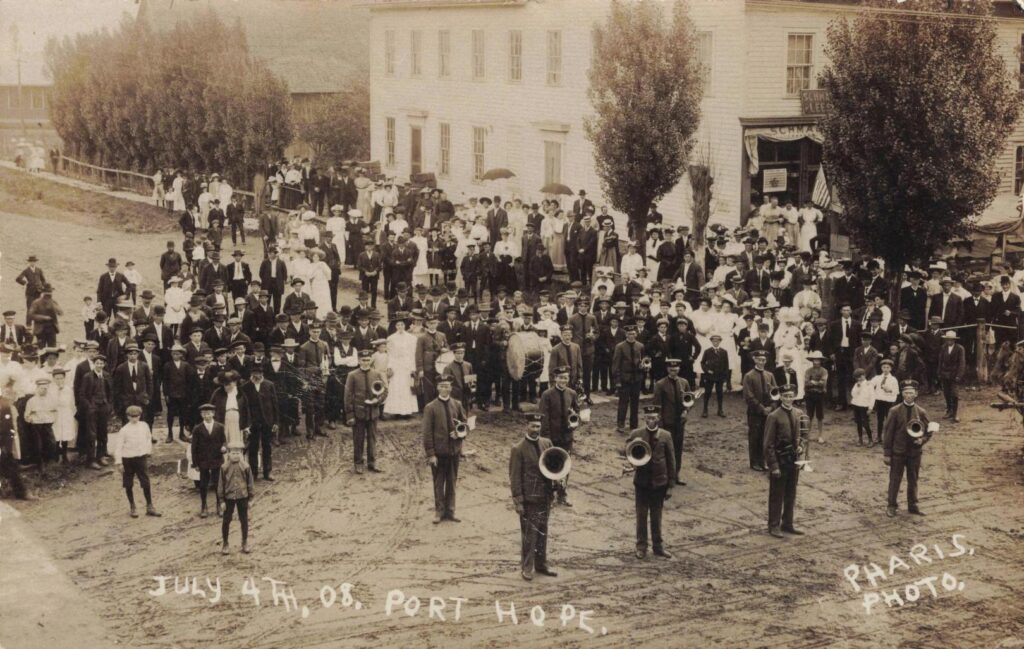
Brass bands were a major part of Michigan’s Fourth of July celebrations.
The Port Hope photo from 1908 shows a band standing in formation on a muddy street. The crowd behind them includes men in suits and hats, women in long dresses, and children in their best summer clothes.
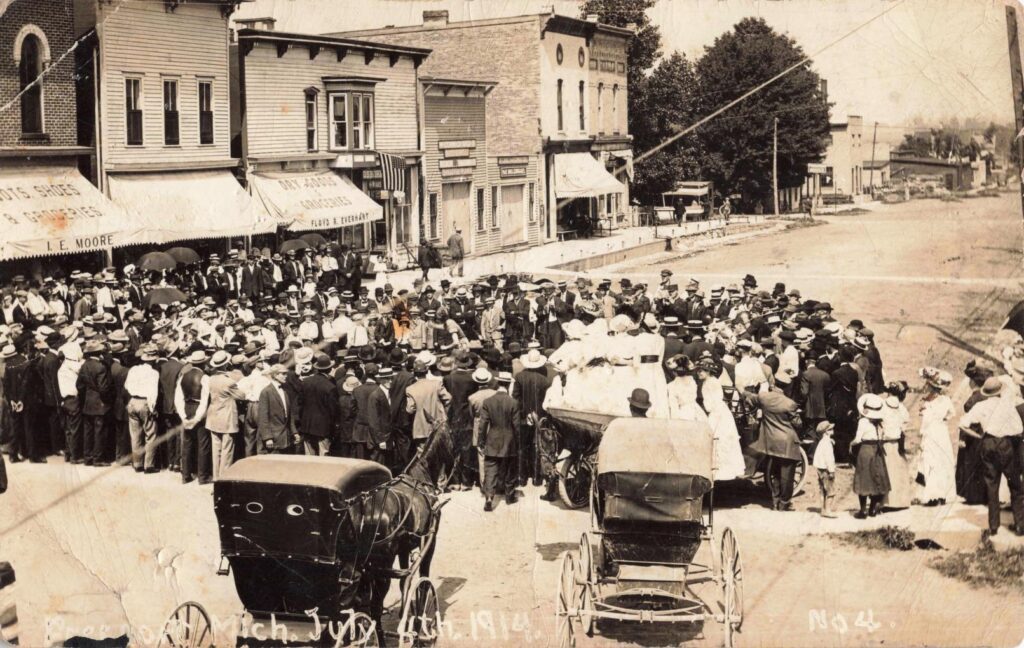
In Freeport in 1914, another band stands in the middle of the street while the crowd gathers close around. The photo suggests a formal public program. The band may have played before or after speeches, a march or a patriotic ceremony.
Music gave the day structure. It announced the parade. It drew the crowd. It helped turn a village street into a public square.
Speeches, Flags and Civic Pride
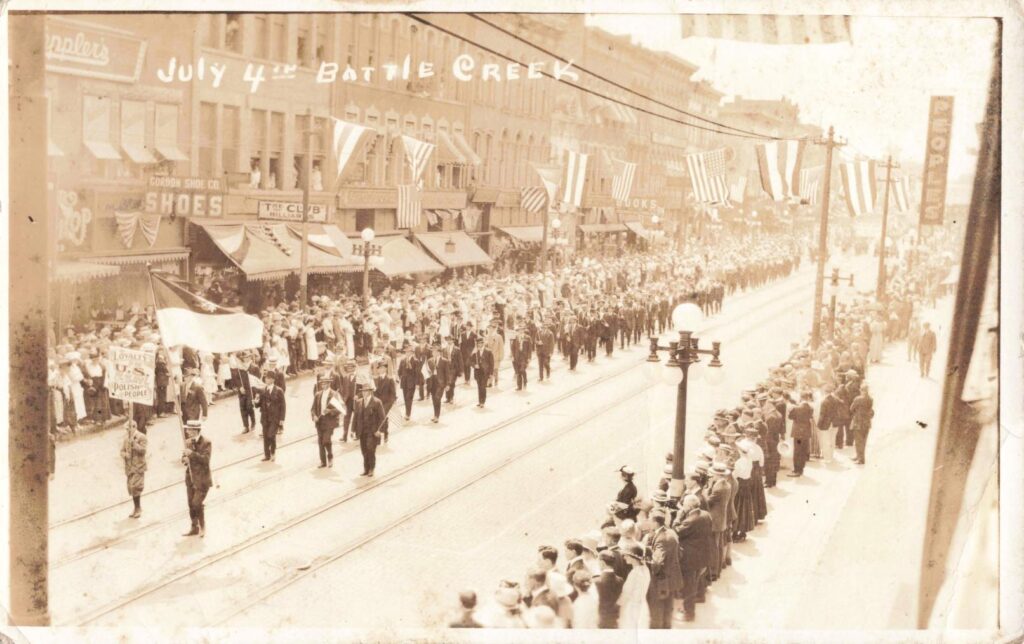
The Fourth of July was also a political and patriotic event.
Small towns often held public speeches, readings, and ceremonies. Local leaders, ministers, veterans or visiting speakers could address the crowd. The message was usually direct: the town was part of the nation, and the holiday was a public reminder of that connection.
The photos show flags everywhere. They hang from storefronts, wagons, booths, buildings, and boats. Some towns used large street banners. Others used bunting along windows and porches.
In Battle Creek in 1918, the image shows a formal parade under rows of flags. The date matters. The country was still in World War I. A Fourth of July parade that year carried more weight than usual. It was not only a holiday. It was a wartime public statement.
Horse Races Drew Big Crowds
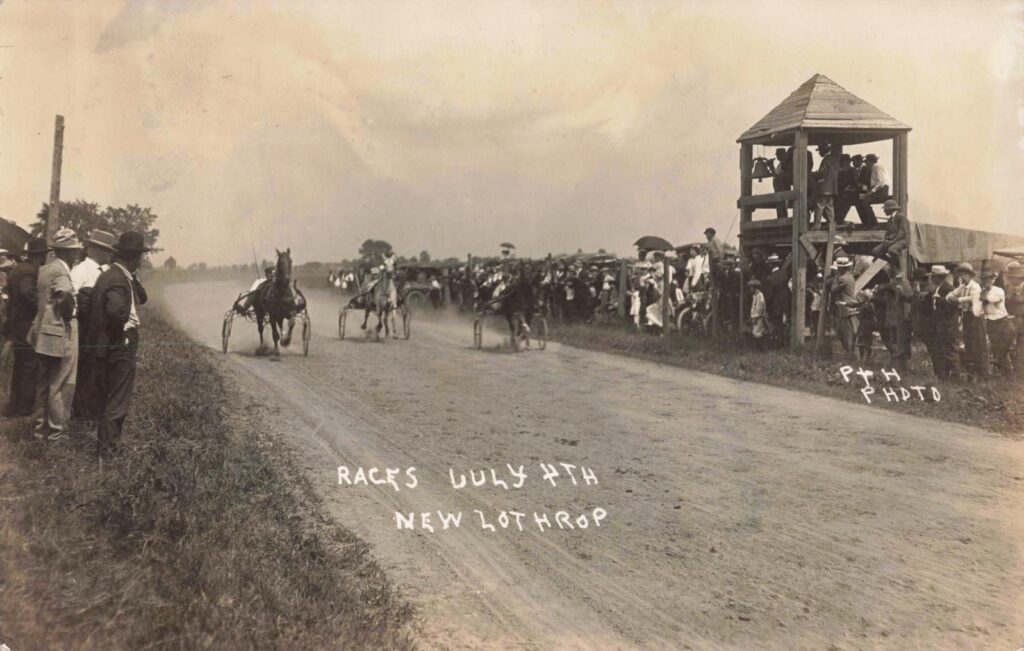
After the parade, the action often moved to fields, fairgrounds, or roads outside town.
The New Lothrop photo from 1914 shows harness racing on a dirt road. Spectators line both sides. A small viewing stand rises at the roadside. Horses kick up dust as drivers race in sulkies.
This was a common rural attraction. Horse racing was familiar, fast, and easy to stage where roads or fairgrounds were available. It gave the afternoon a competitive edge.
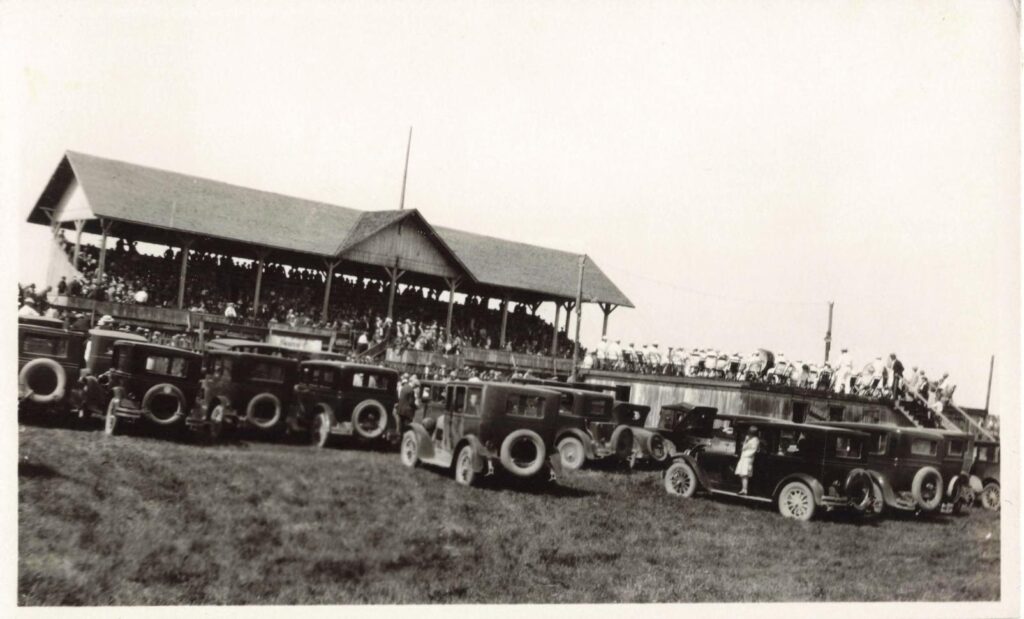
By the 1920s, cars were becoming more common at large gatherings. The North Branch photo from 1927 shows rows of automobiles parked near a packed grandstand. The event may have included races, a show, or another public program. By then, the automobile had changed how people traveled to town celebrations.
Church Picnics and Food Booths Fed the Crowd
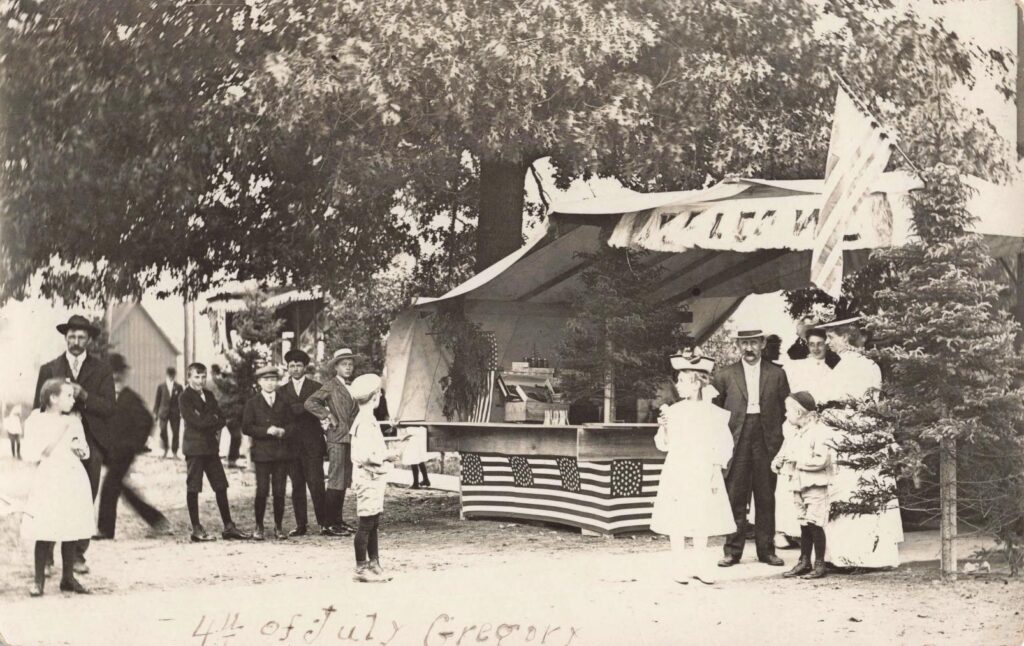
The Fourth also had a quieter side.
A 1908 photo from Gregory shows a flag-trimmed booth under trees. Children and adults stand nearby. The setting appears to be a church picnic or community food stand.
This was an important part of the day. Families needed meals, drinks and shade. Churches, women’s groups and local organizations often sold lemonade, ice cream, sandwiches, baked goods or other treats.
Food stands also raised money. A busy Fourth of July gave local groups a chance to support church work, civic projects or community causes.
Decorated Cars Marked a New Era
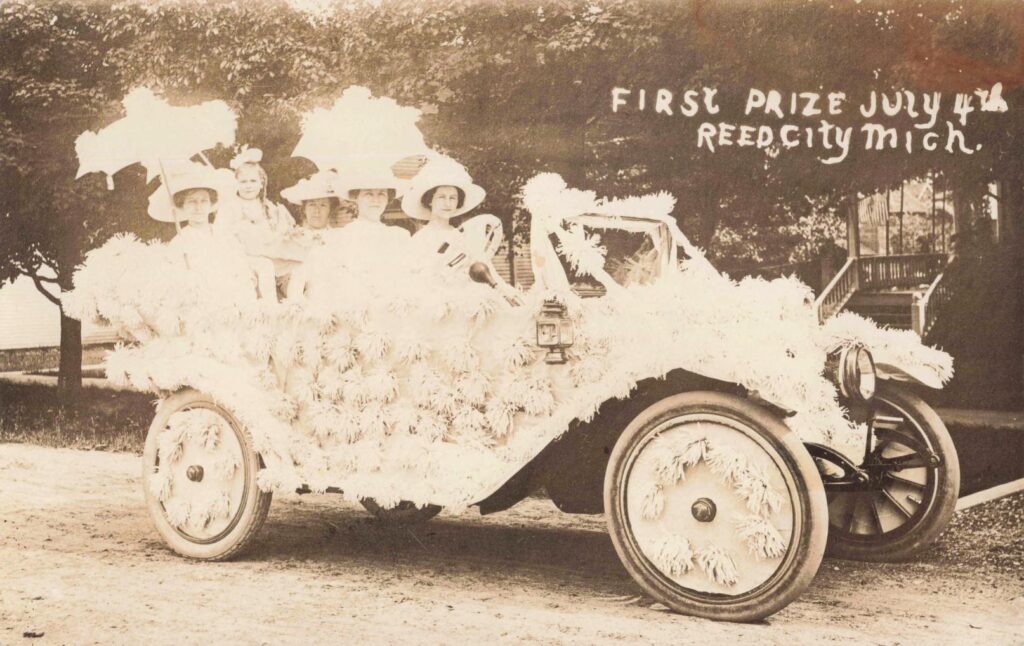
By the 1910s, automobiles began to change the look of the holiday.
The 1914 Reed City photo shows a decorated car labeled “First Prize.” The vehicle is covered in white trim, with women seated inside wearing large hats. The car was not just transportation. It was a parade entry.
That image captures a shift. Horse-drawn floats still appeared in many towns, but automobiles were becoming status symbols. A decorated car could show wealth, modern taste and community pride.
The Fourth of July became a stage for that change.
Waterfront Towns Used the Harbor
Not every Michigan celebration centered only on Main Street.
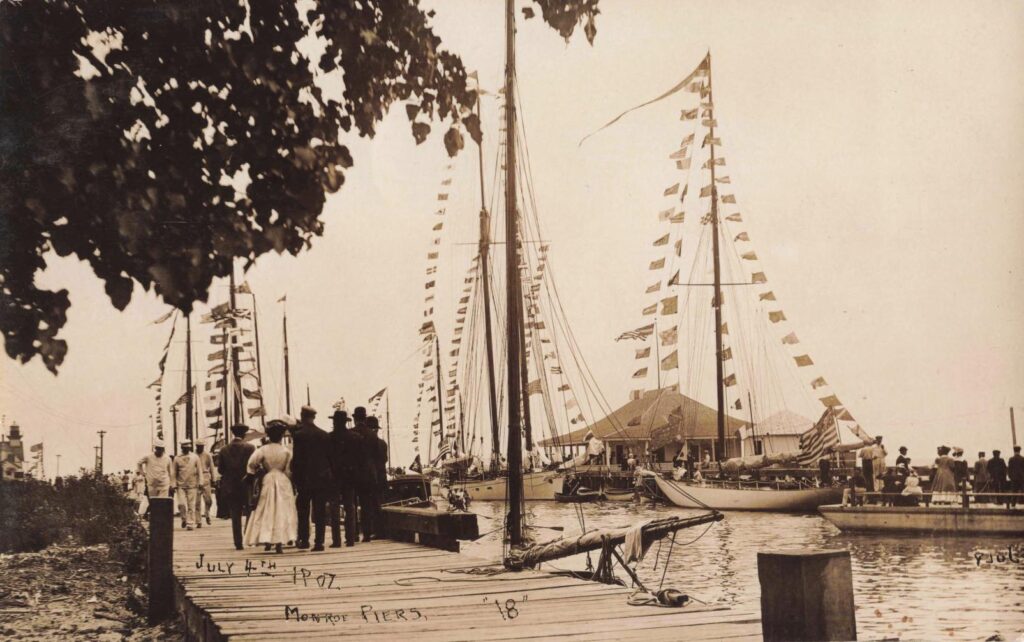
The Monroe piers photo from 1907 shows sailboats dressed with signal flags. People line the dock while boats crowd the harbor. In waterfront towns, the water became part of the celebration.
This made sense in a state shaped by lakes, rivers and shipping. Harbors offered open space, spectacle, and local identity. A decorated boat could do what a parade float did on land. It turned ordinary transportation into a public display.
The Whole Town Turned Out
These images show more than old clothes and dusty streets.
They show how small towns used the Fourth of July to define themselves. The holiday brought farmers, shopkeepers, church members, children, veterans, musicians, and local officials into the same public space.
The events were not casual. Towns decorated storefronts. Bands rehearsed. Wagons and cars were trimmed. Food booths were built. Parade routes were planned. People dressed for the occasion.
The Fourth of July gave every small town a chance to look larger than it was.
A Small Parade in Wolverine
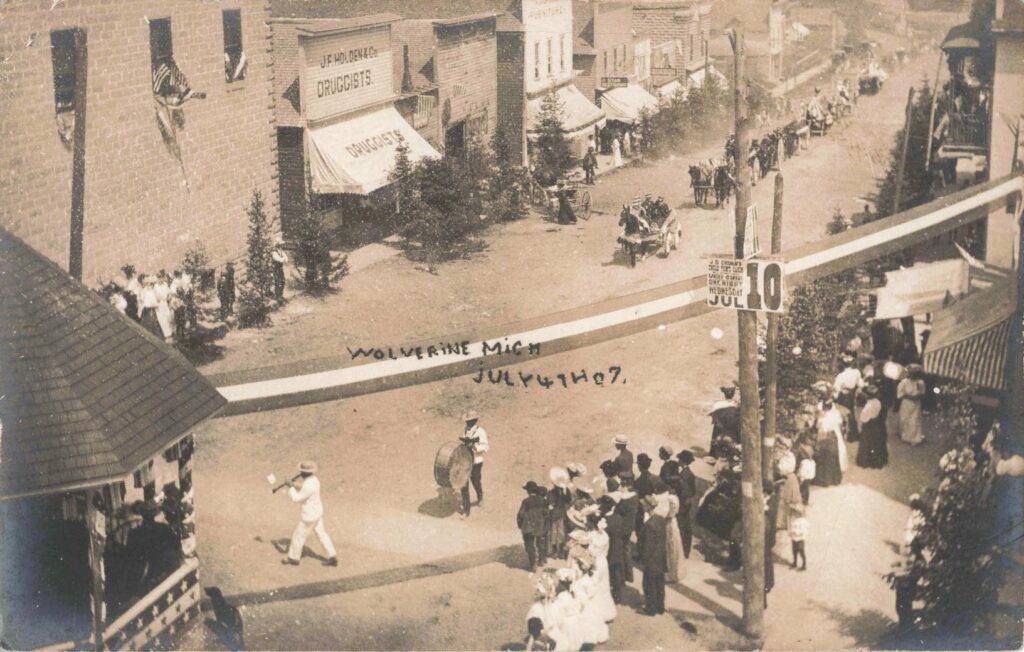
The 1907 Wolverine photo shows the smaller side of the holiday.
The crowd is not as dense as Battle Creek or Fenton. The buildings are modest. The parade is simple. But the same civic pattern is there: flags, music, storefronts, spectators, and a public gathering in the middle of town.
That is what makes the image useful. It shows that the Fourth of July was not only for larger cities. Villages used the day the same way. They brought people downtown and turned the street into the center of community life.
A Different Kind of Independence Day
Modern Fourth of July celebrations often center on cookouts, lake weekends, and fireworks shows. In the early 1900s, the holiday was more public and more formal.
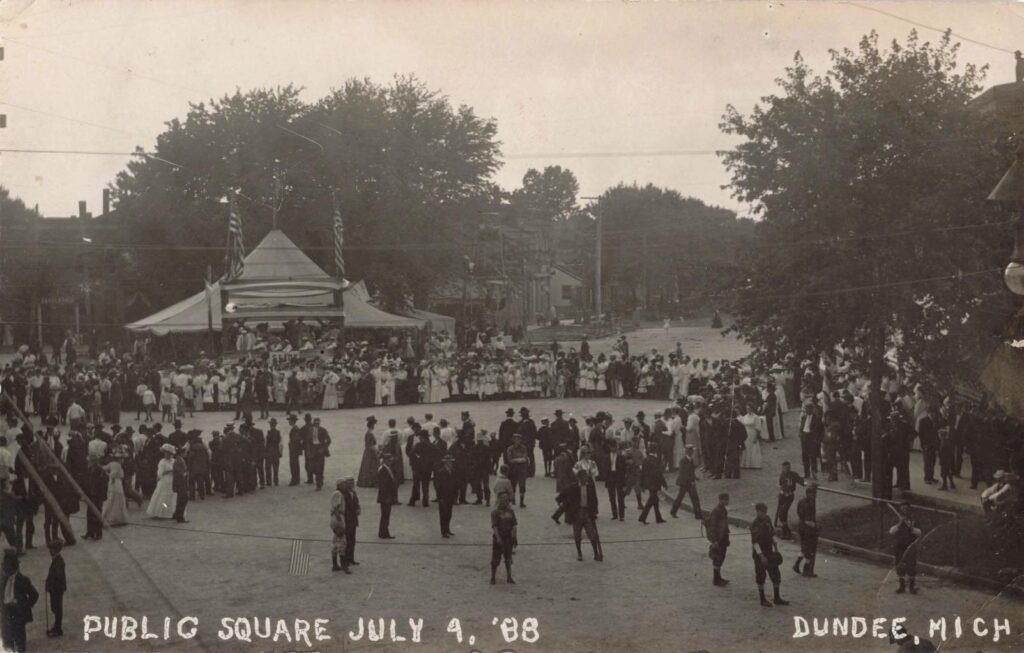
People came downtown. They stood in crowds. They watched speeches, bands, floats, and races. They bought food from church booths. They gathered near grandstands, piers, and village streets.
It was a celebration of country, but also of community.
For small-town Michigan, the Fourth of July was the day Main Street became the center of local life. The whole town turned out, dressed up, and stepped into the frame.