 by
by 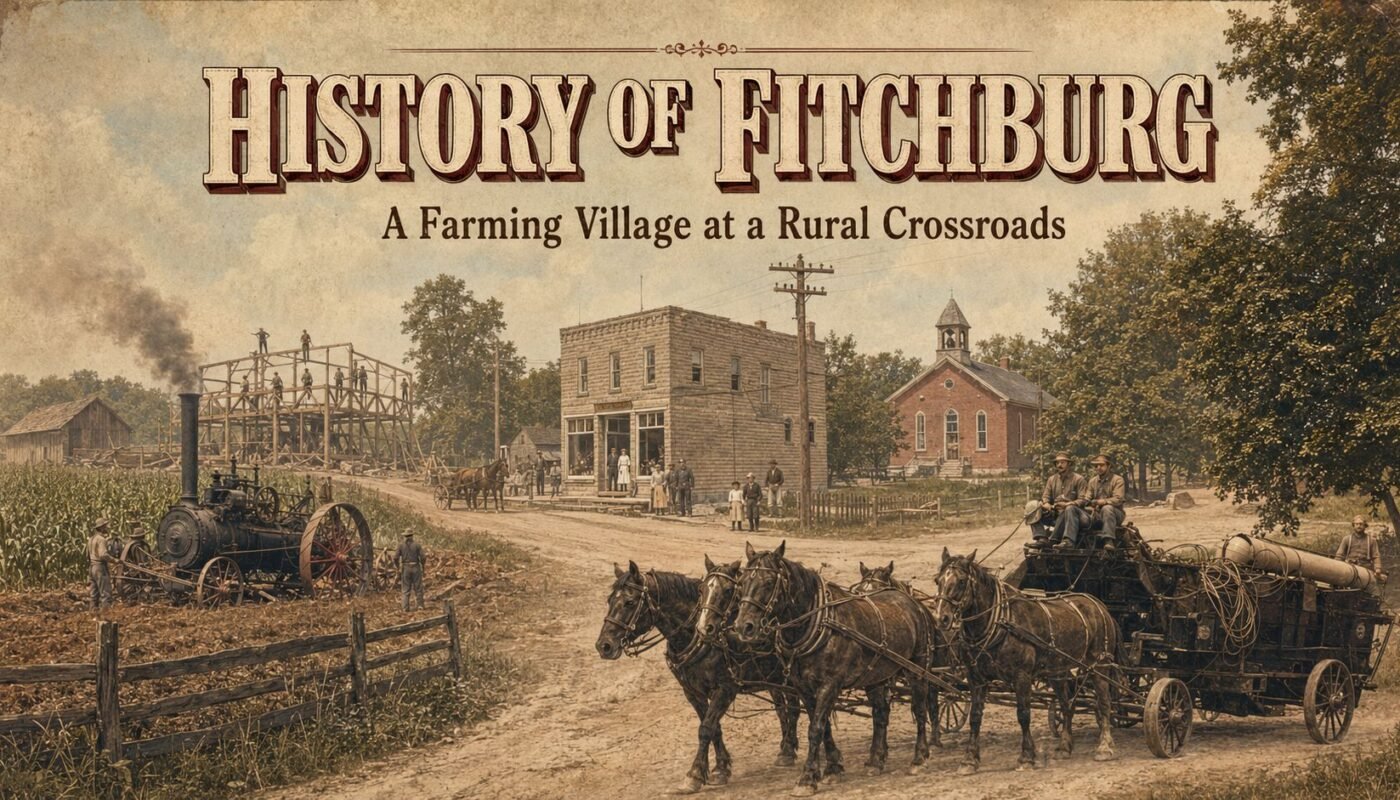
Fitchburg, Michigan, never became an incorporated city or a railroad town. It did become the working center of a productive farming district in southeastern Ingham County.
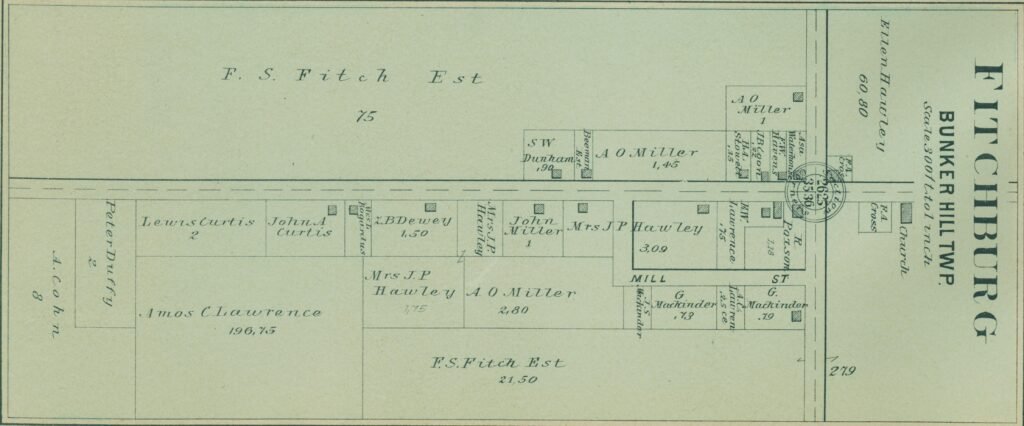
For several decades, the village had stores, blacksmiths, a wagon shop, a shoe shop, a hotel, a sawmill, a post office and a Methodist church. Its Main Street served farm families who lived miles from larger towns. By the early 1900s, the farms surrounding Fitchburg were adding orchard equipment, silos, portable mills and large threshing machines.
The History of Fitchburg Michigan is not a simple rise-and-fall account. The village grew quieter partly because the countryside became better connected and more efficient.
Bunkerhill Township History and the Fitch Family
Ferris S. Fitch arrived from Livingston County, New York, in June 1848. The site was midway between the Dexter-to-Lansing and Jackson-to-Lansing stage routes. His brother Selah B. Fitch moved from Stockbridge that fall. Their father, Hubbard Fitch, and another brother, Dorastus, later joined them.
Selah built a steam sawmill three or four years after his arrival. An inscription on a surviving card dates it to 1853. The mill produced boards for houses, barns, sheds, and fences. It gave the new settlement a reason to exist.
The Fitchburg Sawmill Starts a Village
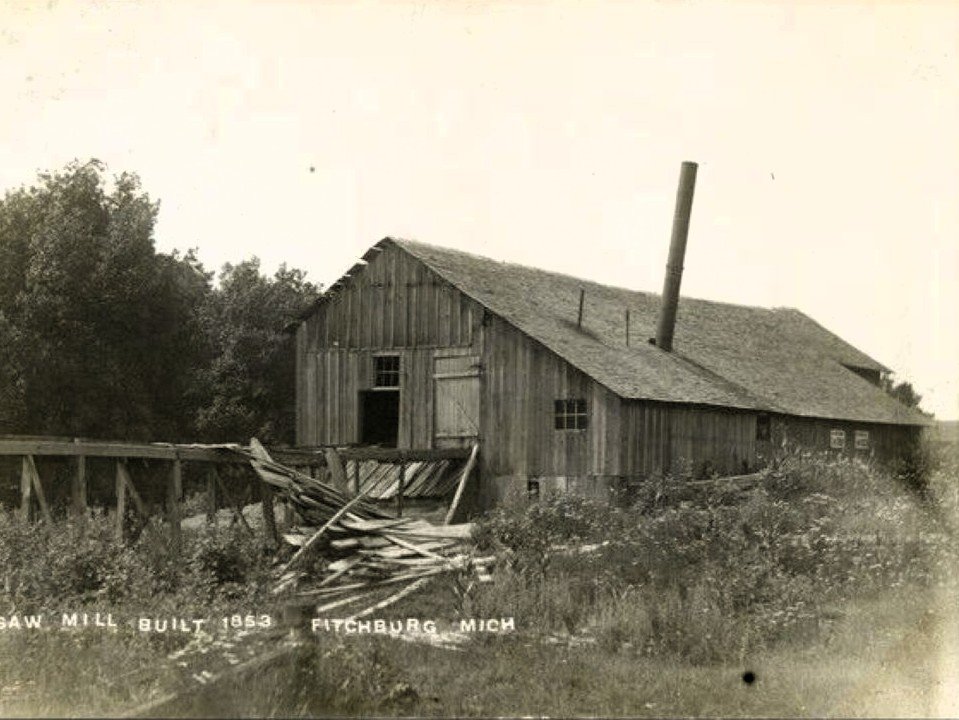
A Fitchburg post office opened about 1855, with Hubbard Fitch as postmaster. A directory later described a settlement of about 100 people, supported by a hotel, general store and sawmill. It also listed skilled workers, including a physician, carriage maker, boot and shoe maker, cabinet maker, gunsmith, cooper, blacksmiths and carpenters.
Fitchburg Michigan History Along Main Street
By 1880, Fitchburg had three stores, two blacksmith shops, a wagon shop, a shoe shop and a Methodist church. The business district remained compact. A family could collect mail, buy tools, repair a wagon and exchange local news in one trip.
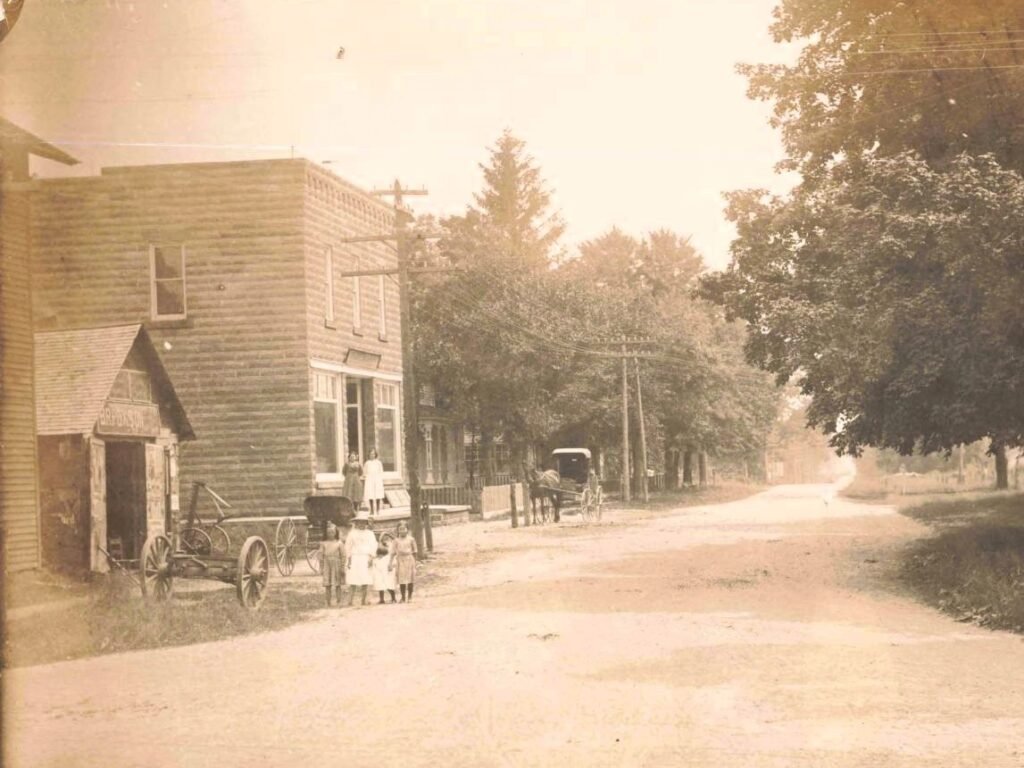
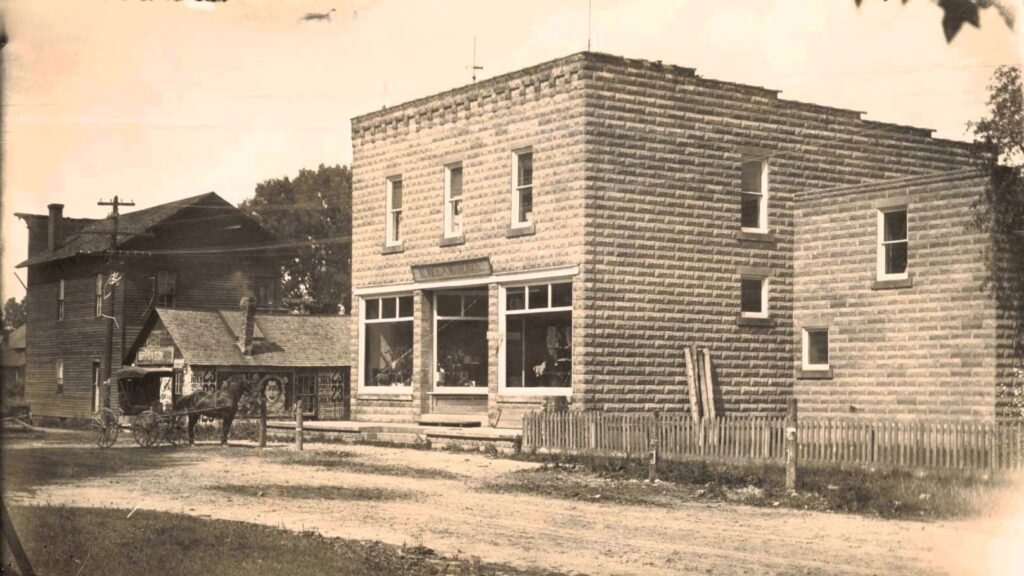
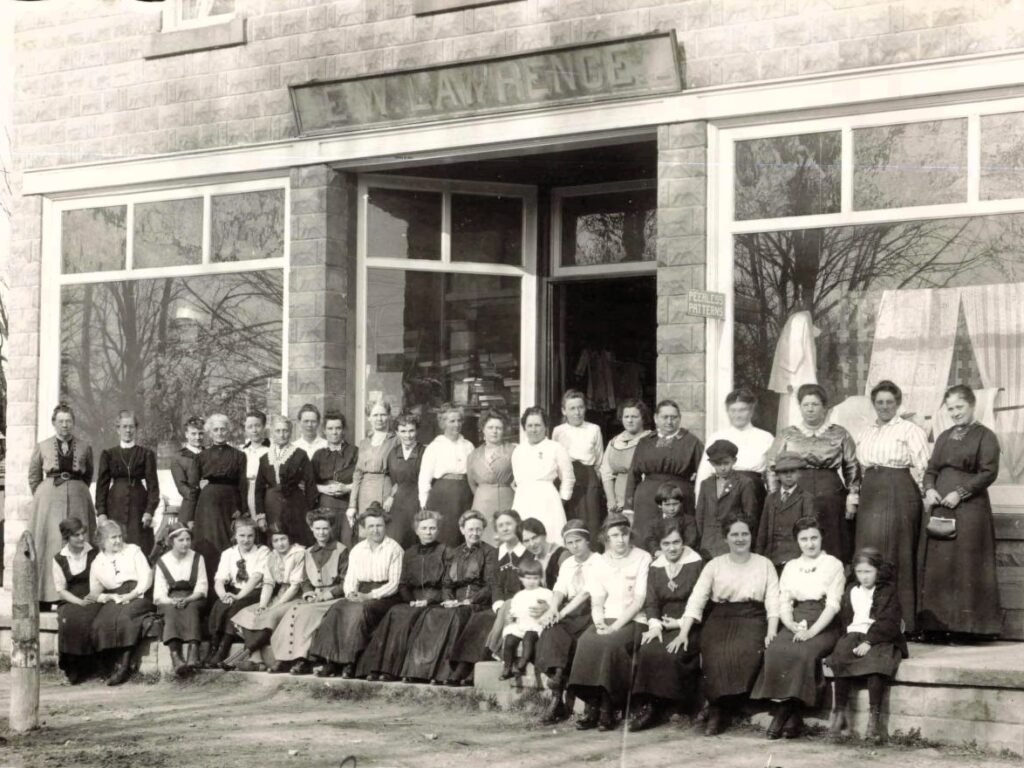
The Lawrence store became more than a retail building. It was a public meeting point. On April 28, 1916, members of the First Methodist Episcopal Aid Society gathered outside it. Goods filled the windows behind them.
A Brick Church Anchored Community Life
The Methodist Episcopal class formed in the 1850s and built a brick church in 1871. Tall arched windows and a square bell cupola gave the building a clear public role.
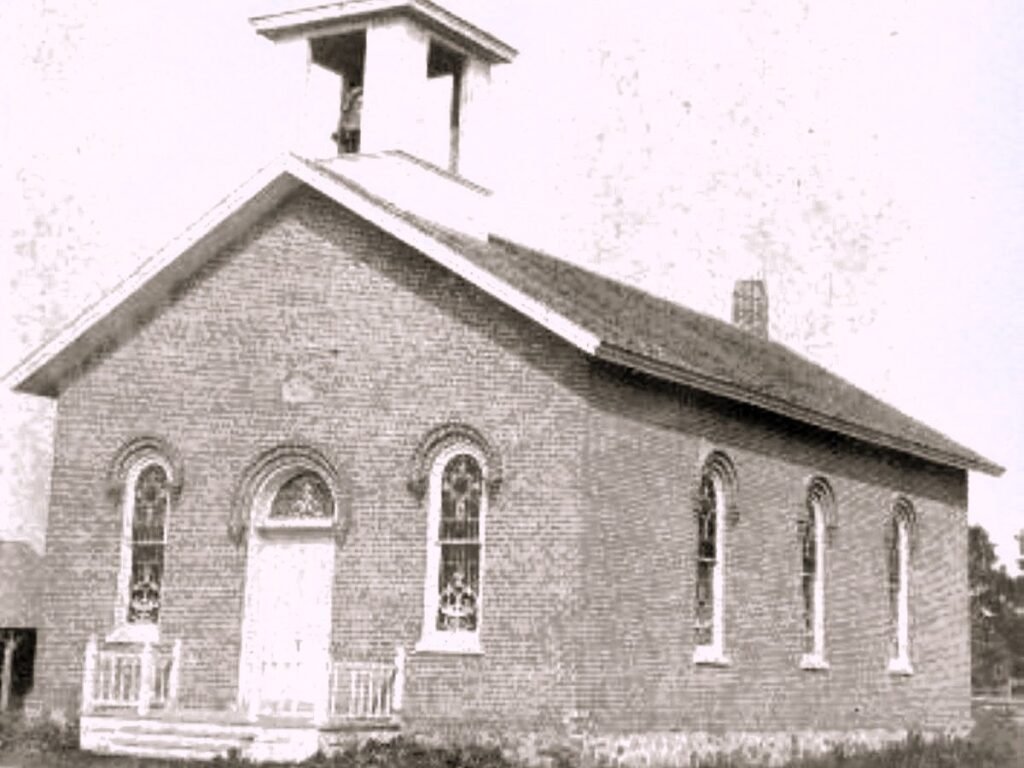
Church groups raised funds, prepared meals, helped families and organized social events. Local notices show that Fitchburg church services continued well into the 20th century.
Leece Farm Images Record Orchard and Lumber Work
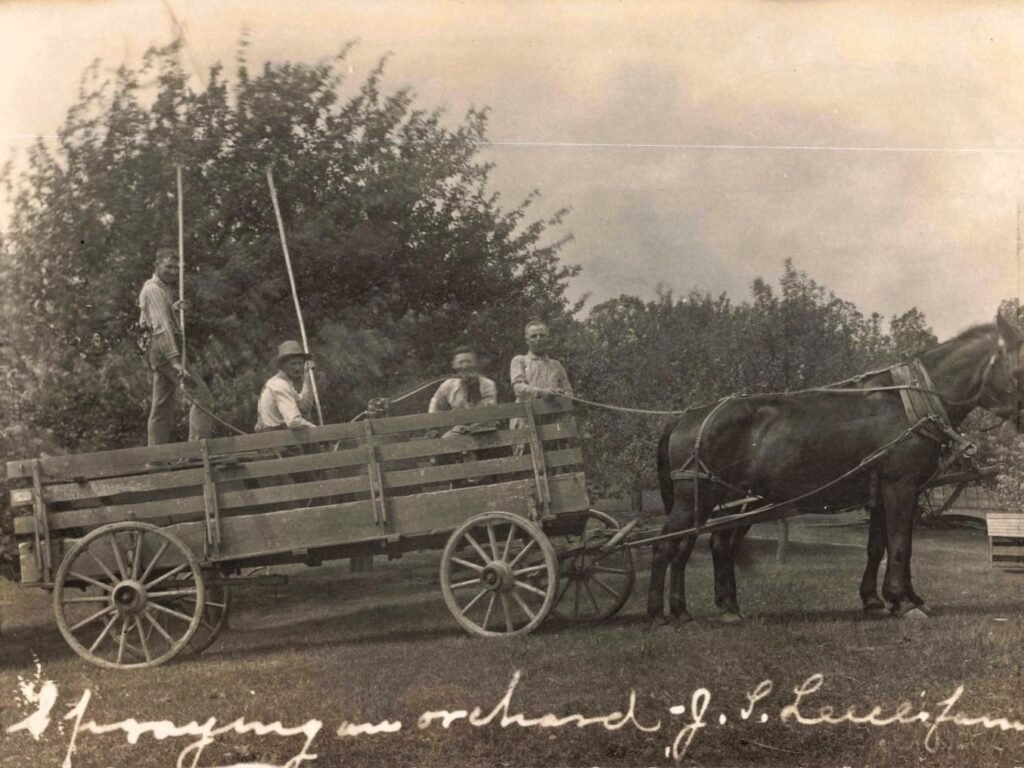
The History of Fitchburg Michigan is clearest in its farm scenes. On the Joseph Leece farm, workers used a horse-drawn spray wagon and long poles to treat fruit trees.
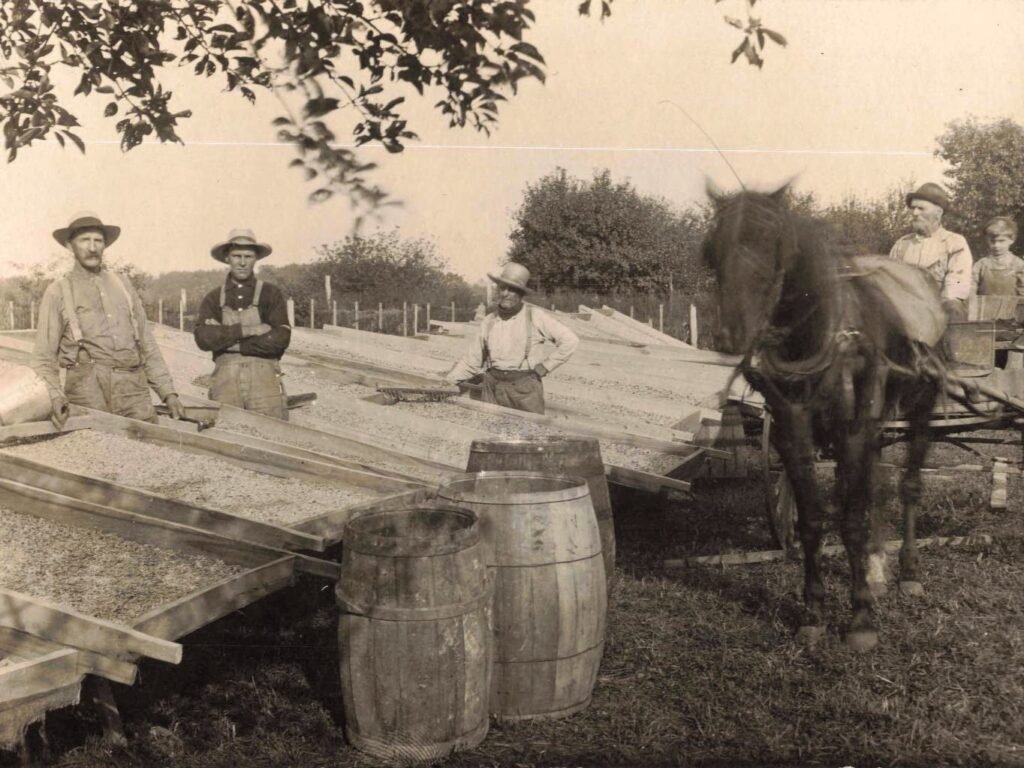
Another Leece farm scene shows workers beside long trays, barrels and a wagon. The exact crop or material cannot be identified with confidence. A responsible caption should leave it unnamed.
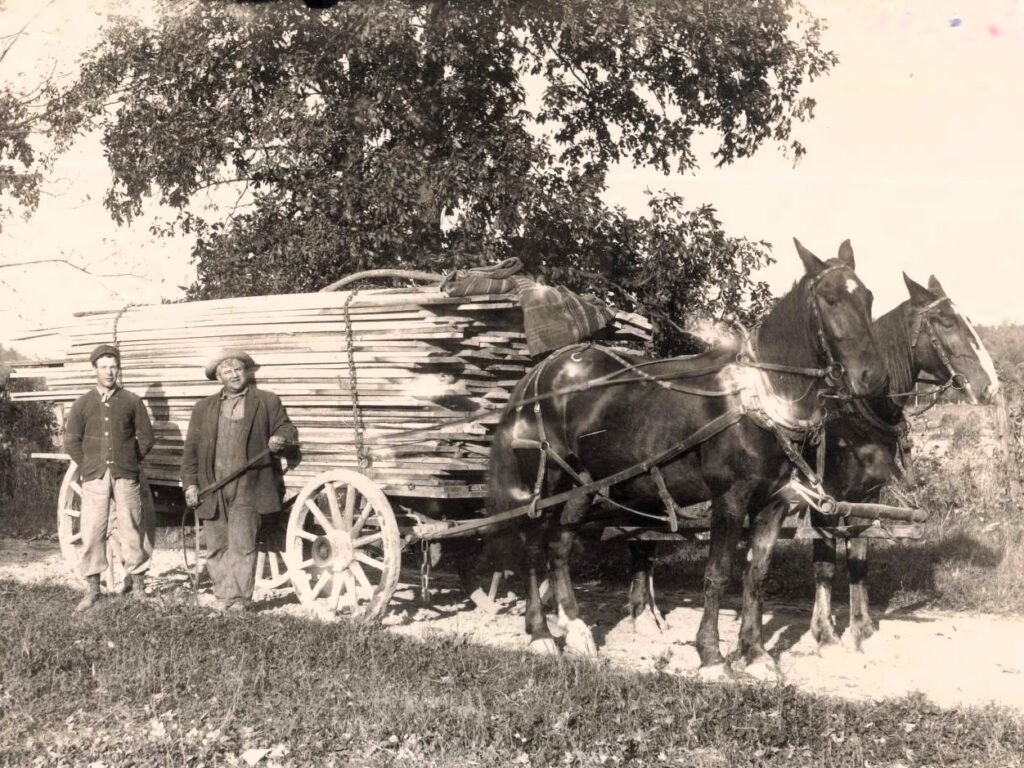
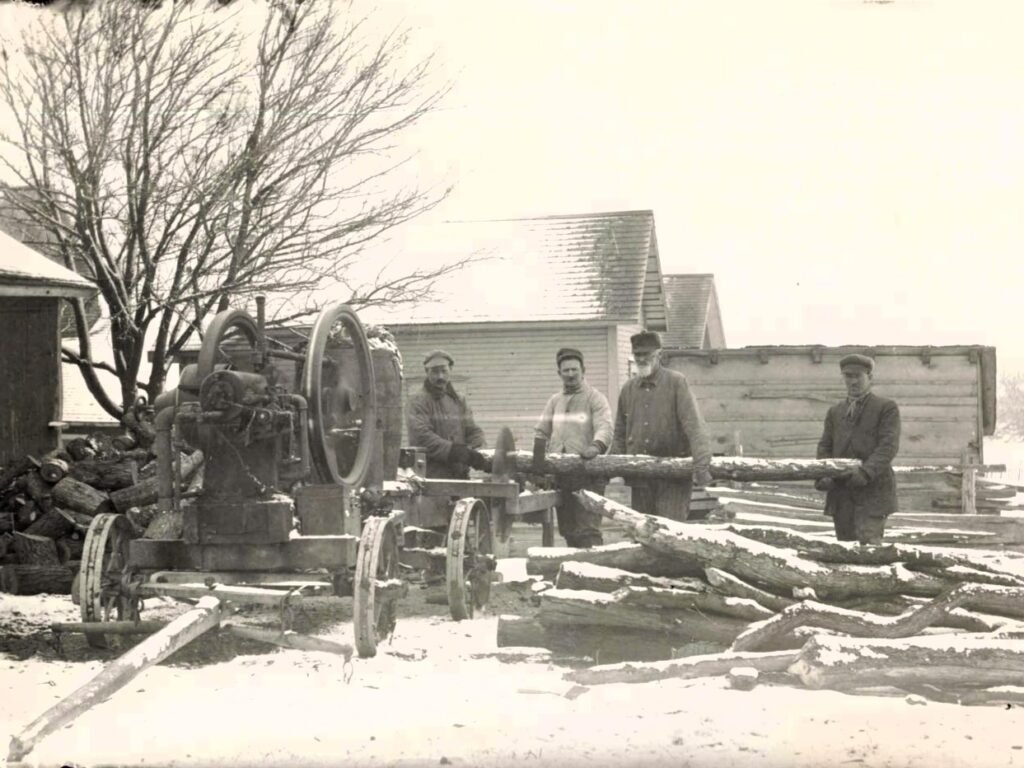
A third scene records an 8,670-pound load of sawn boards. The number written on the card may come from a farm record or scale weight, though its source is not stated.
The Parman Barn Required a Community
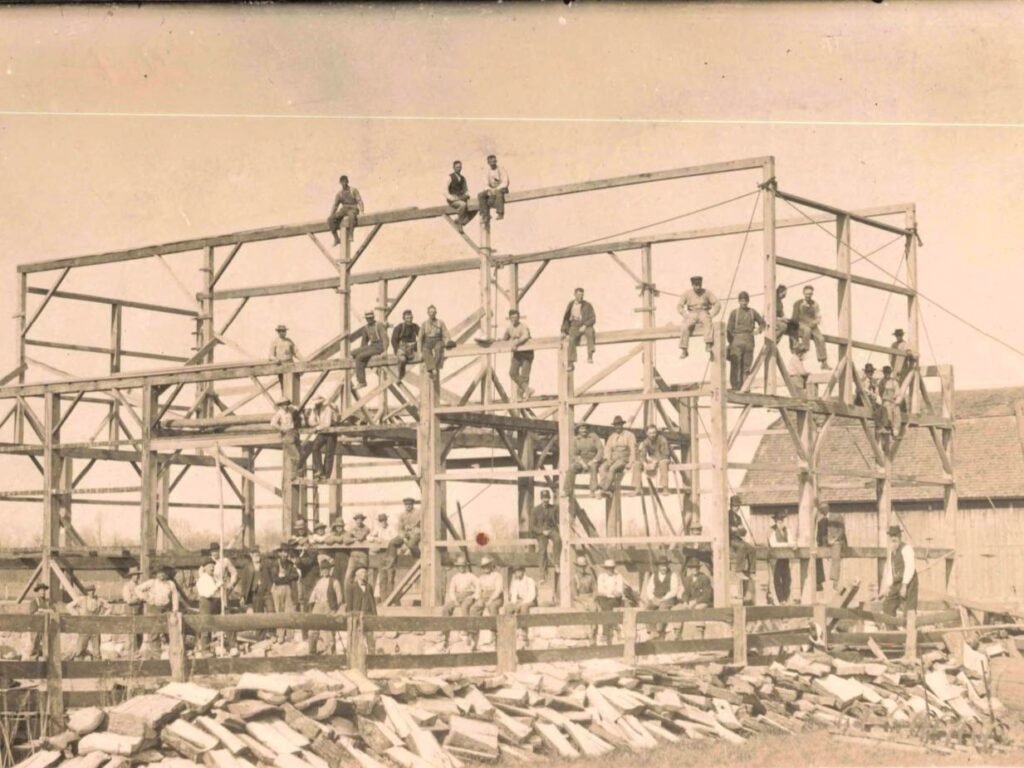
On May 6, 1911, dozens of neighbors raised a large timber barn for Bert and Maggie Parman. Men occupied nearly every level of the open frame. Heavy posts and beams had to be fitted, lifted and braced in a planned order.
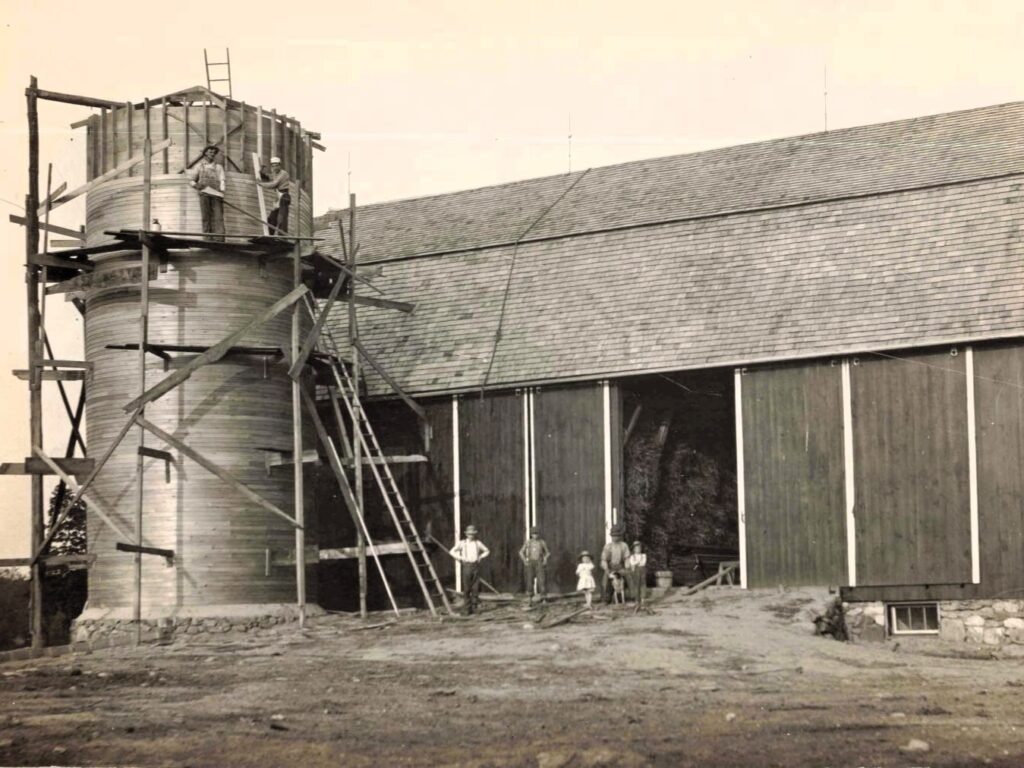
A separate view shows a completed barn and a round wood-stave silo under construction. The supplied date is 1910, which may refer only to the silo or to a different building sequence. It should not be forced into the 1911 barn chronology without more evidence.
Horses and Engines Worked Together
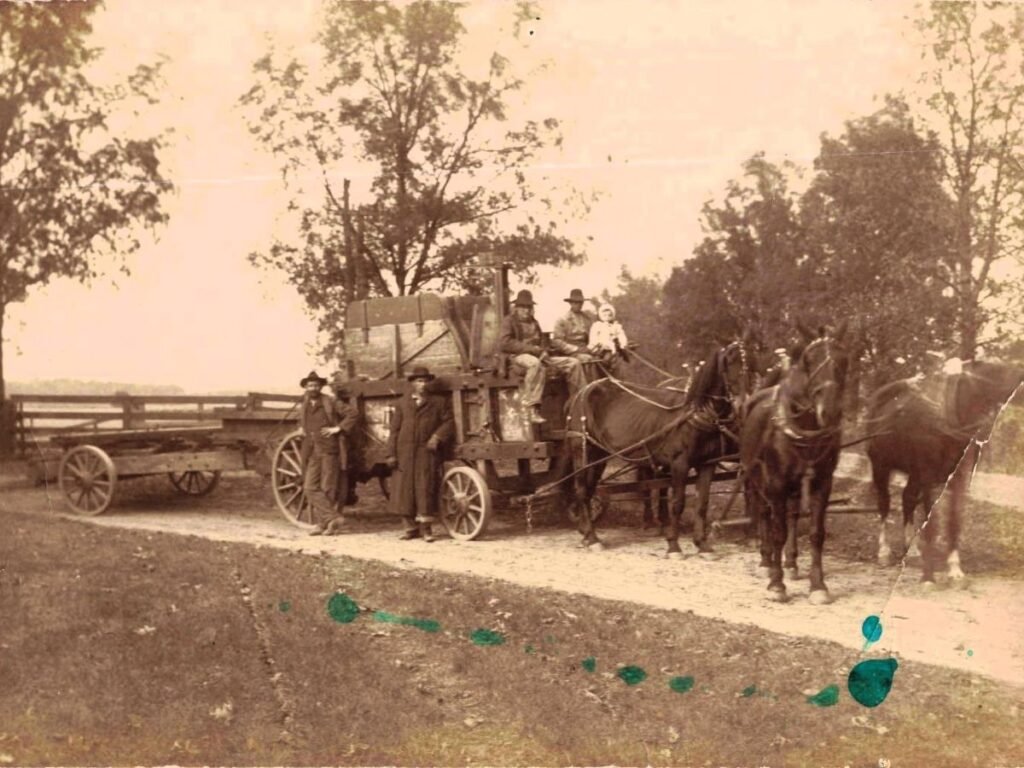
One of the strongest lessons in the History of Fitchburg Michigan is that farm modernization happened in layers. A large engine could power a separator, but horses still hauled water, wagons and machines.
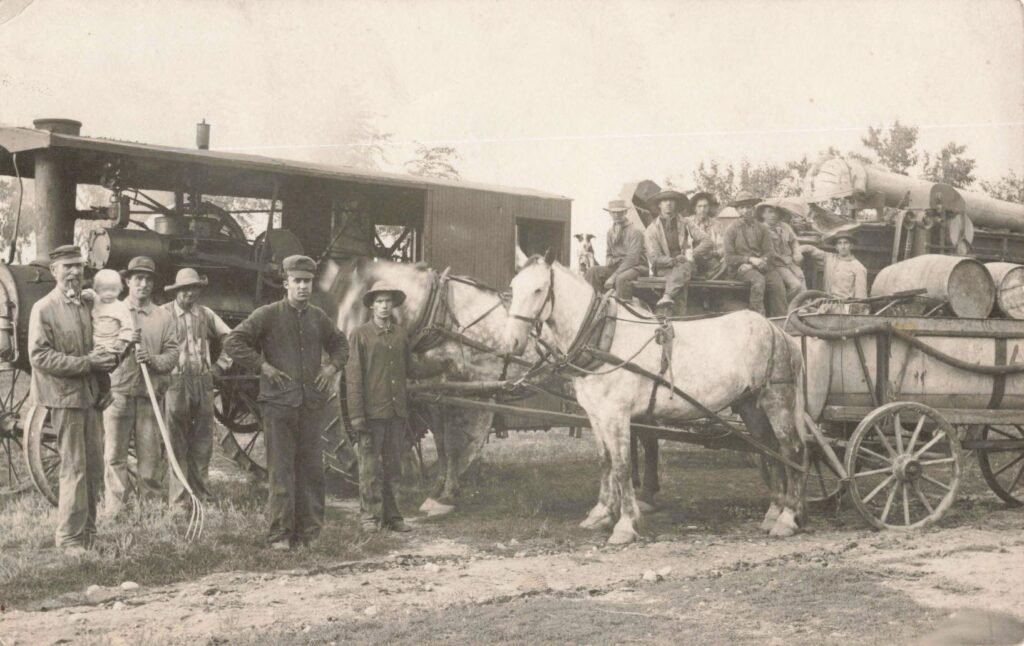
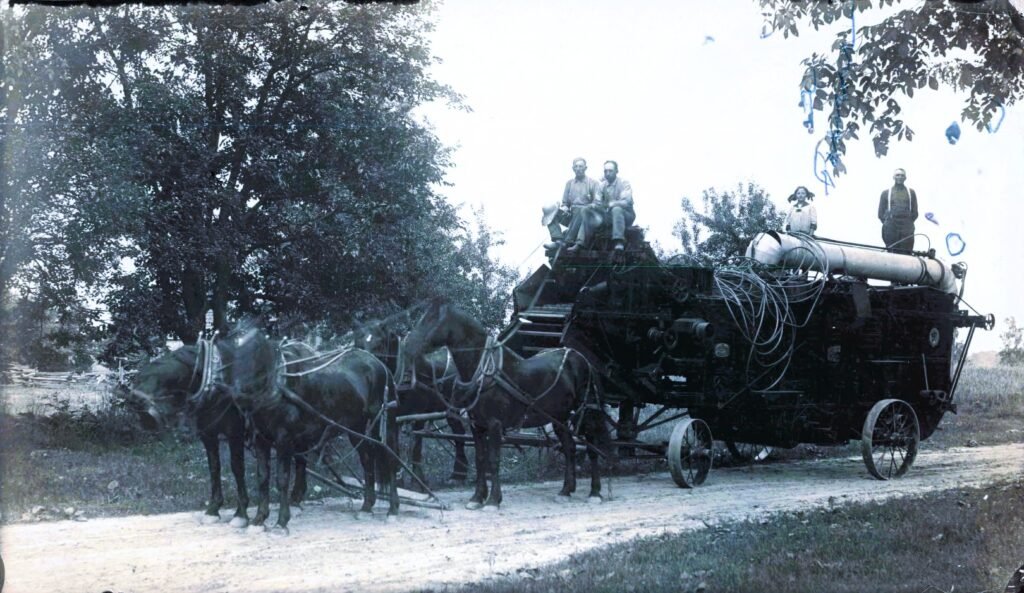
In July 1917, Parman’s threshing gang used a belt-powered separator near the barn and silo. The machine increased speed, but it demanded careful coordination among the engine operator, wagon drivers, bundle pitchers, feeders and grain handlers.
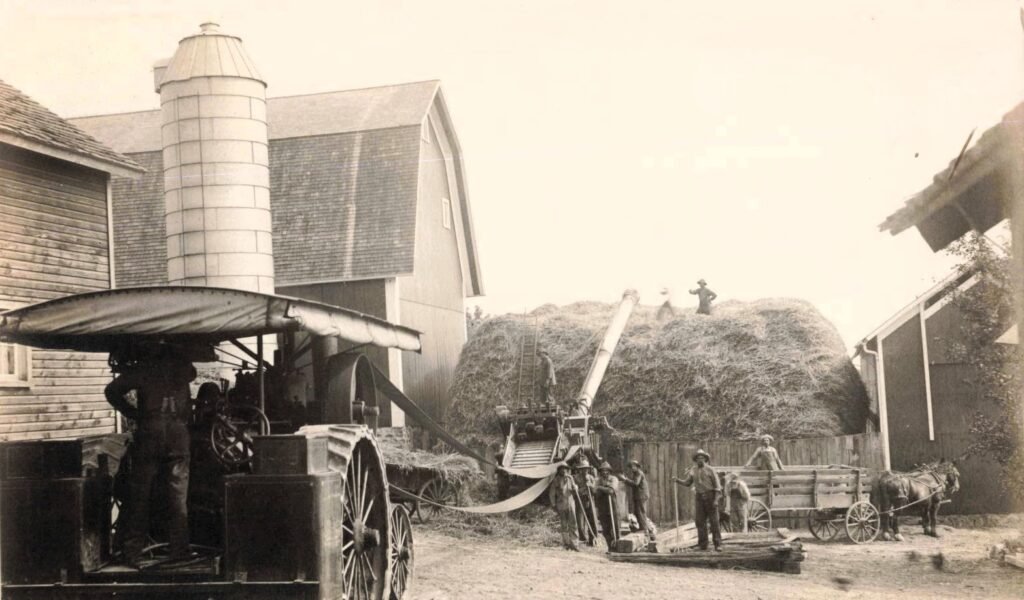
The surprising result was more group labor at first, not less. A threshing outfit traveled from farm to farm and drew many households into the same harvest schedule.
Schools and Weddings Completed Rural Life
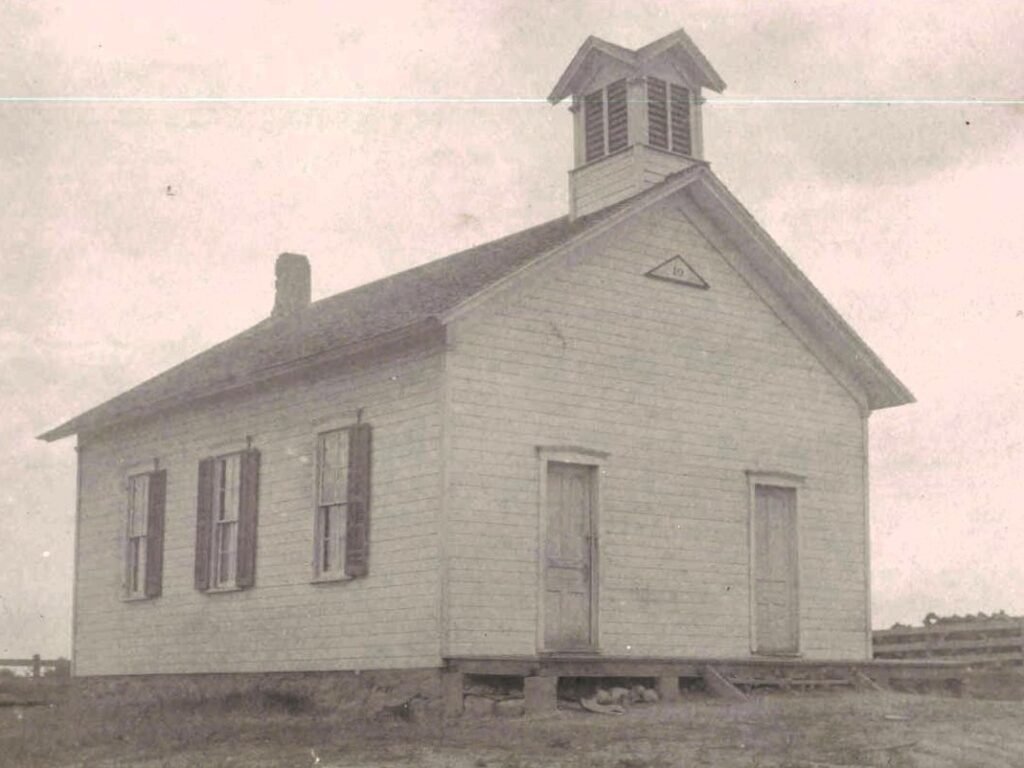
Stowell School served the countryside with a bell tower, two front doors and one main classroom. Newspaper notices show former teachers, pupils and district residents holding school reunions in the 1930s.
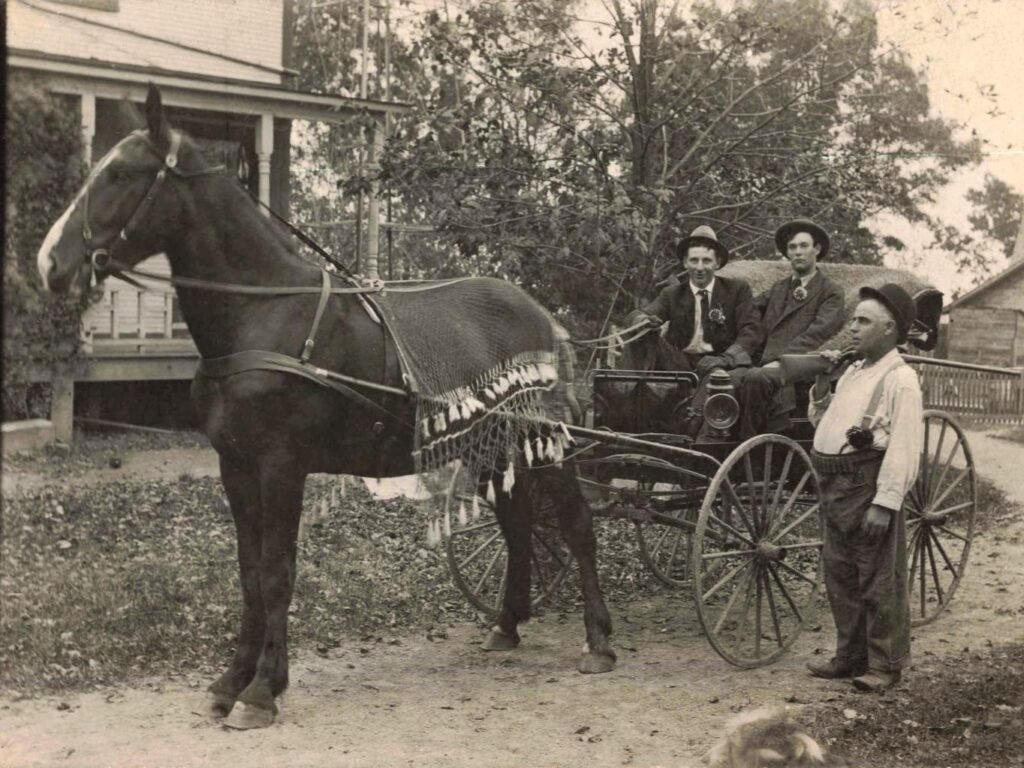
A decorated buggy records a wedding day associated by family notes with Albert Parman or the Joseph Leece farm. The precise identity remains uncertain.
A Small Village With Statewide Reach
The Fitch family produced an unusual number of public officials. Ferris S. Fitch served in the Michigan Legislature in the 1850s and ran for governor in 1878. He did not become governor, despite a claim repeated in later local accounts.
His son Charles C. Fitch served as Ingham County register of deeds and later as a state representative. Another son, Ferris S. Fitch Jr., became an educator, school administrator and newspaper editor. He served as Michigan superintendent of public instruction from 1890 to 1892.
Selah Fitch was also a noted mason. An Ingham County history credits him with building the county’s second courthouse in Mason, which served from 1858 to 1902.
Why Fitchburg Grew Quiet
Fitchburg remained unincorporated. Its post office closed, stores disappeared, and rural schools joined larger districts. Better roads and automobiles made Stockbridge, Leslie and Mason easier to reach.
The village’s decline did not mean its farms had failed. In many ways, the opposite was true. Portable mills, silos, spraying rigs and threshing outfits made farms more productive. Rural mail delivery and improved travel reduced the need for a separate post office, store and school at every crossroads.
That is the central point in the History of Fitchburg, Michigan. The village did its first job well. Its mill turned timber into buildings. Its shops supported farms. Its church and school created public life. When technology and transportation changed, those functions moved elsewhere. The crossroads grew quieter, but the community’s work remained in the farms and families around it.
Sources for the History of Fitchburg Michigan
Adams, Franc L., compiler. Pioneer History of Ingham County: Chapter VI, Bunkerhill. Ingham County Pioneer and Historical Society, Wynkoop Hallenbeck Crawford Company, 1923. Accessed 10 Aug. 2026.
Capital Area District Libraries. Lansing History Timeline. Local History Online, n.d. Accessed 10 Aug. 2026.
Durant, Samuel W. “Bunker Hill Township History.” History of Ingham and Eaton Counties, Michigan, D.W. Ensign & Co., 1880. Transcribed by MIGenWeb. Accessed 10 Aug. 2026.
Geo. A. Ogle & Co. Standard Atlas of Ingham County, Michigan. 1895. University of Michigan Library Digital Collections. Accessed 10 Aug. 2026.
Ingham County Historical Commission. A Michigan Sesquicentennial History of Ingham County. 1987. Accessed 10 Aug. 2026.
Michigan Legislature. “State Legislators, 1835-2023.” Michigan Manual, 2023. Accessed 10 Aug. 2026.
Stockbridge Community News. “Fitchburg Rings of History.” 15 Mar. 2019. Accessed 10 Aug. 2026.
University of Michigan Library. “Ingham County (39 Images).” David V. Tinder Collection of Michigan Image Records, William L. Clements Library. Accessed 10 Aug. 2026.
University of Michigan Library. “Bert & Maggie Parman Barn Finished, Silo Building, 1910.” David V. Tinder Collection of Michigan Image Records, William L. Clements Library. Accessed 10 Aug. 2026.