 by
by 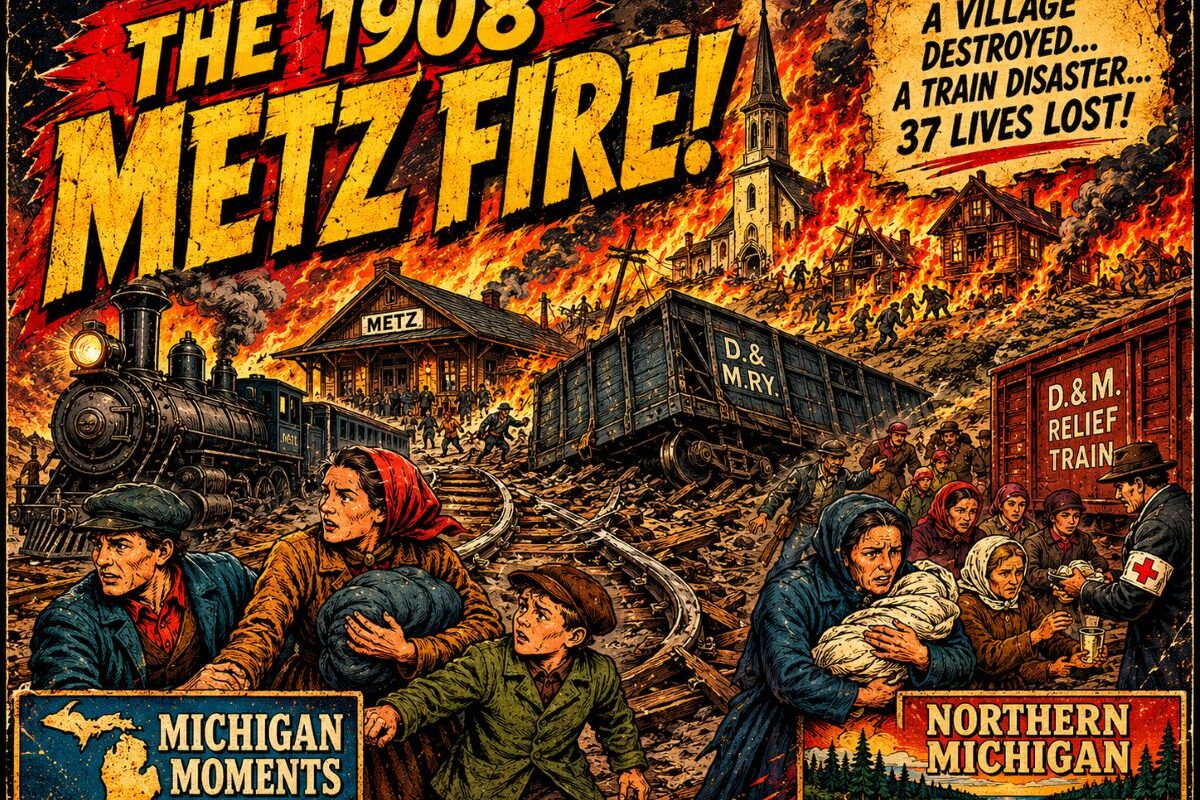
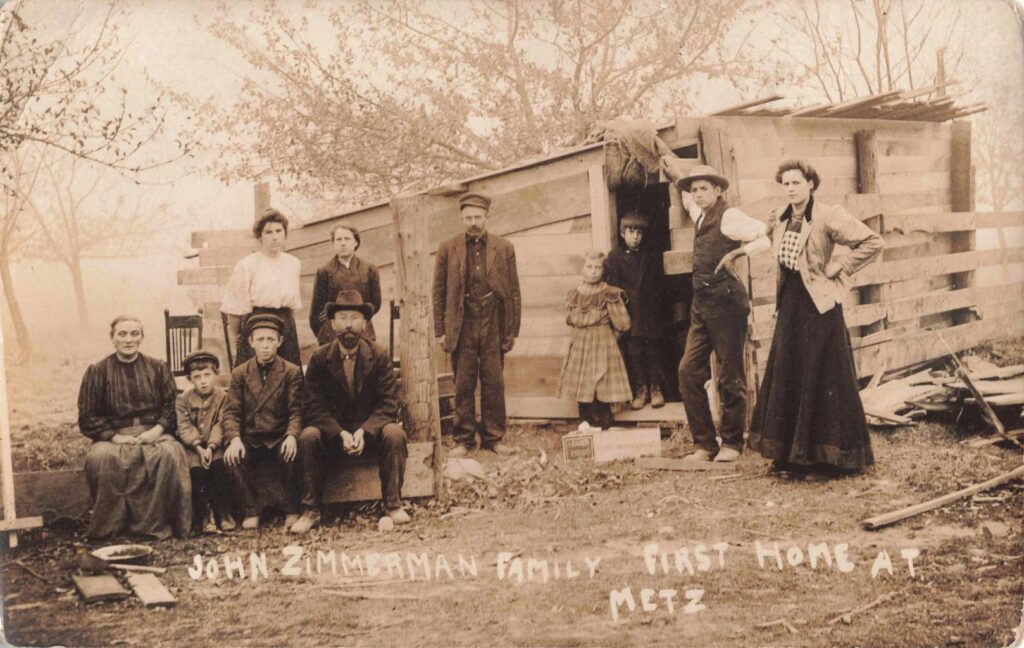
The History of The 1908 Metz Fire Michigan begins in a small Presque Isle County village that depended on farms, timber, and the Detroit & Mackinac Railway. Metz was not a large place. It was a working northern Michigan community with a depot, a parish, homes, barns, stores, and families trying to build a future in the cutover country.
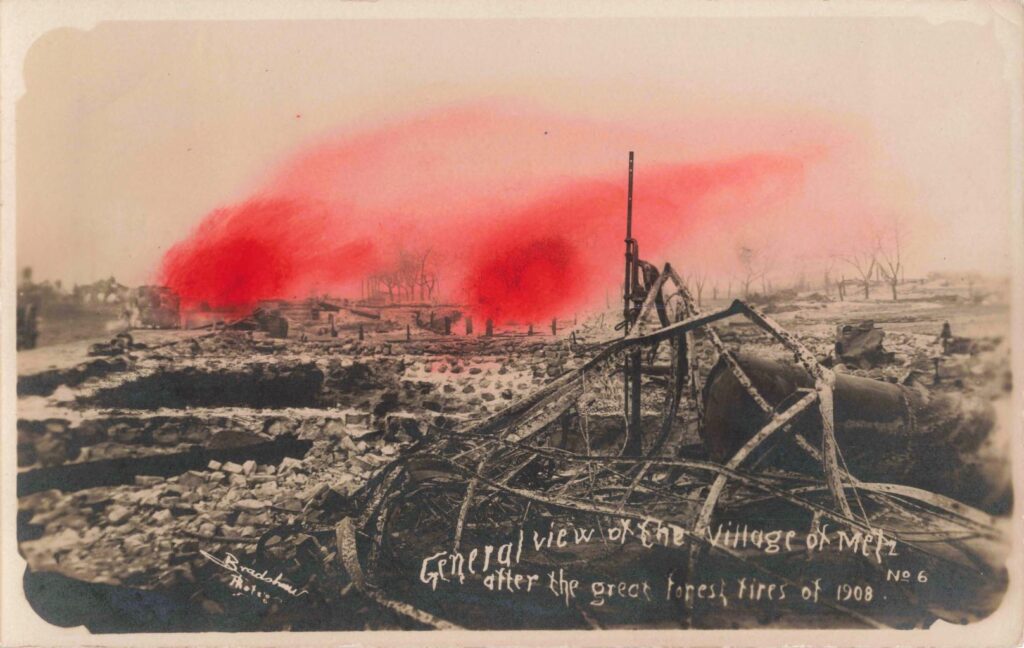
On Oct. 15, 1908, that future changed in hours.
A fire that began west of Millersburg swept across northeastern Lower Michigan under strong winds. By evening, Metz was in ruins. The disaster killed 37 people and left about 700 residents homeless, according to the Presque Isle County Historical Museum.
The story remains powerful because it was not only about a fire. It was about how a town built by the railroad tried to use that same railroad to escape.
Podcast – They Ran Like Mad: The 1908 Metz Fire and Northern Michigan’s Burning Year
Video – The 1908 Metz Fire in Metz, Michigan: The Railroad Escape That Turned Deadly
Metz Before the Fire
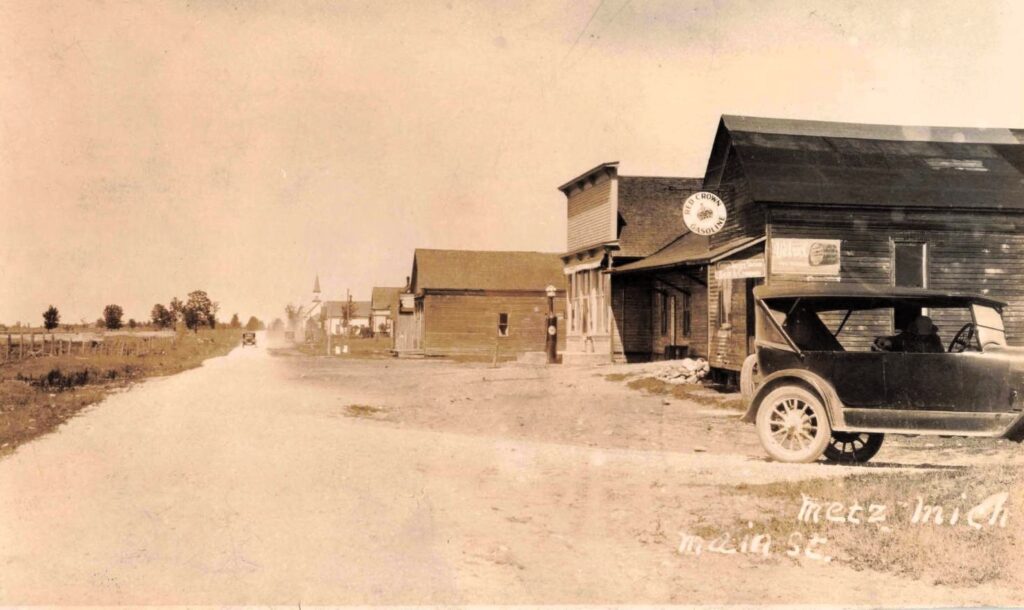
Metz was a small settlement in Presque Isle County. Its growth was tied to the Detroit & Mackinac Railway, which served the community and linked it to nearby towns and markets. MichiganRailroads.com notes that Metz was settled around 1879 and that railroad service helped define the station community.
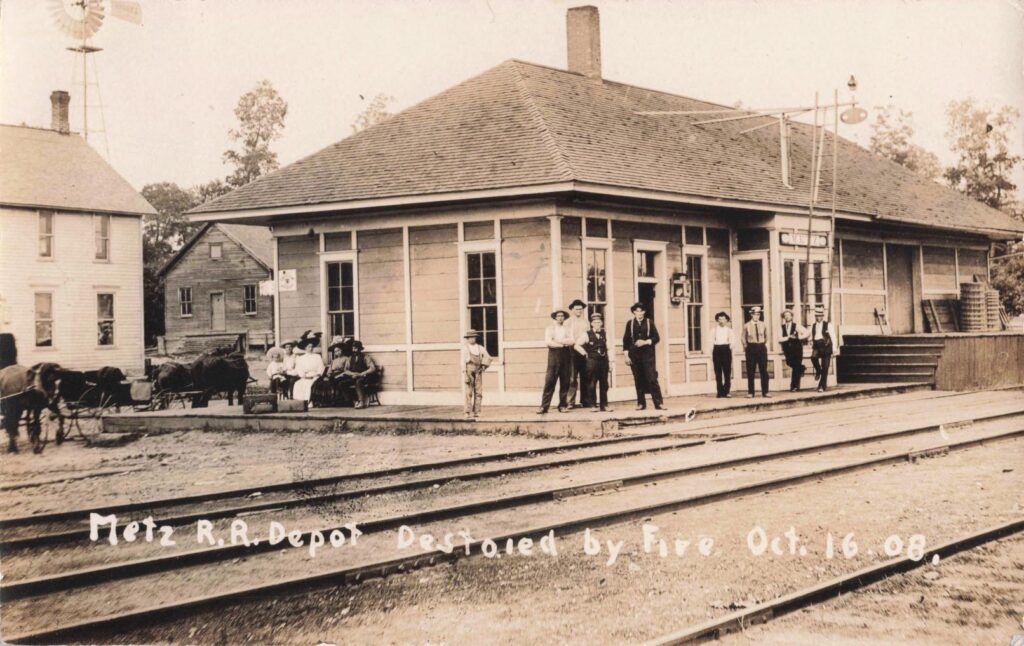
The depot brought freight, mail, passengers, supplies, and news. For a rural village, that connection was critical. It gave farmers and merchants a link to Alpena, Rogers City, and other points in northern Michigan.
Image Caption 2: St. Dominic’s parish in Metz, Michigan, before the fire, with church buildings standing on open ground.
Why the Fire Spread So Fast
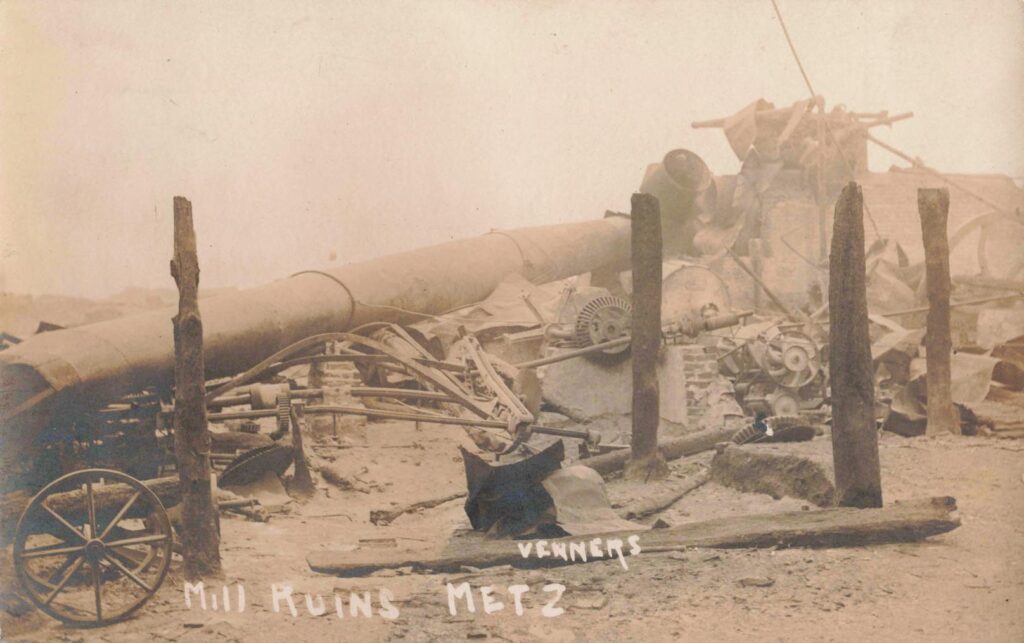
The History of The 1908 Metz Fire Michigan cannot be separated from the land around the village. Northern Michigan had been heavily logged. Logging left behind branches, bark, slabs, stumps, and dry debris. Farmers were also clearing land. Railroads ran through timber and brush. In dry weather, one spark could become a moving wall of fire.
The Metz Fire began west of Millersburg in the late morning of Oct. 15, 1908. High winds drove it toward Metz, Rogers City, Alpena, Grand Lake, and Lake Huron. The Presque Isle County Historical Museum reports that the fire burned far outside the village and threatened communities across the region.
Fire was not rare in Michigan at that time. What made this event different was speed. People had little time to plan. The fire moved faster than wagons, livestock, and families could respond.
The Relief Train and the Deadly Turn
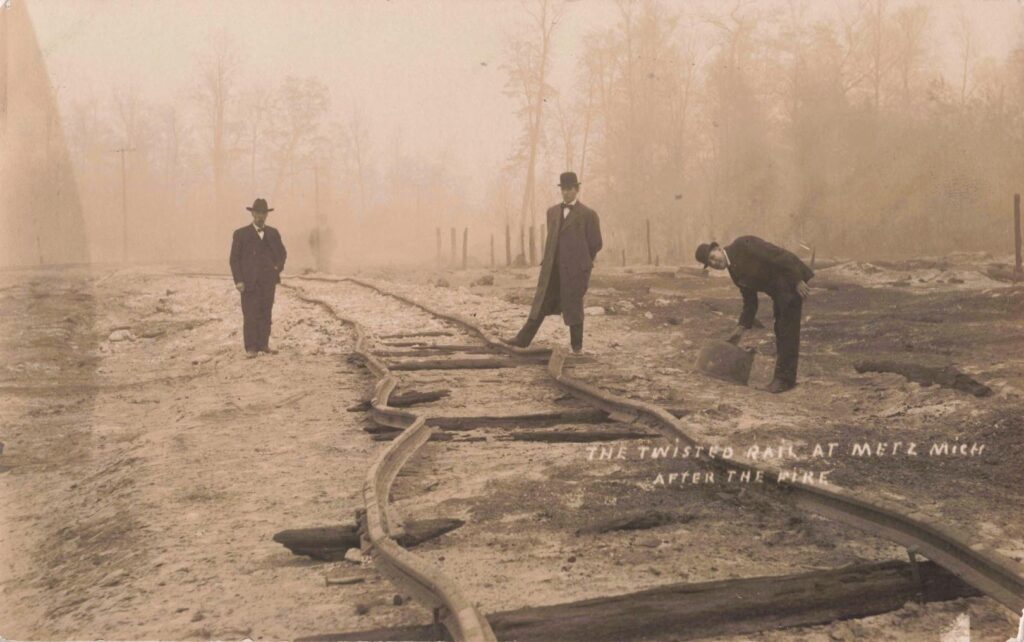
As the fire closed in, residents looked to the Detroit & Mackinac Railway for escape. A relief train was sent to Metz. Women and children boarded, many with only small bundles. The plan was to move them toward safety.
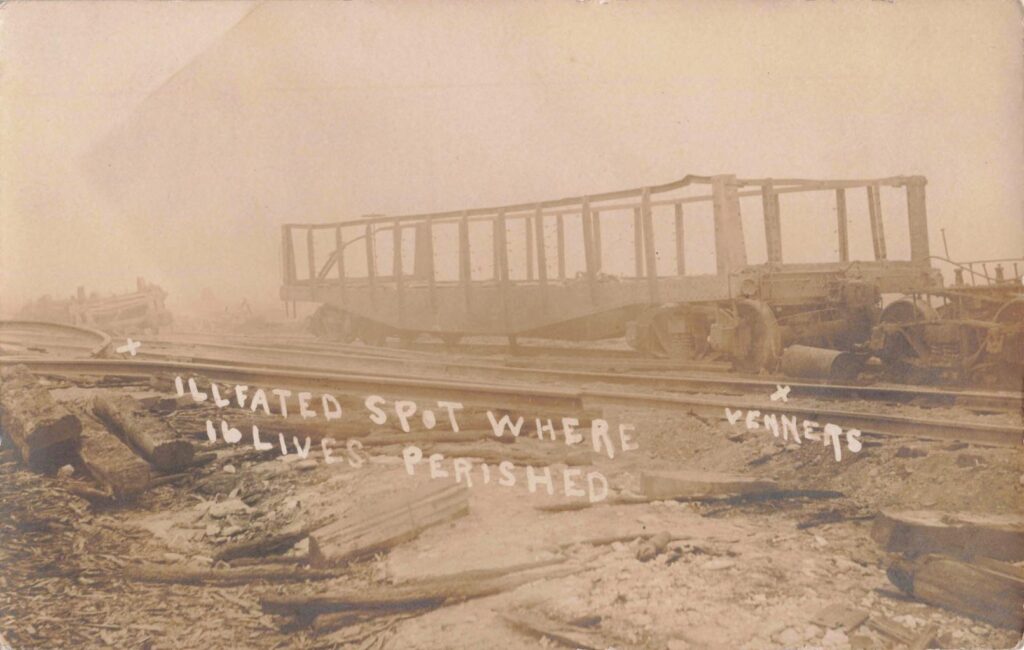
But the fire had already reached the railroad corridor.
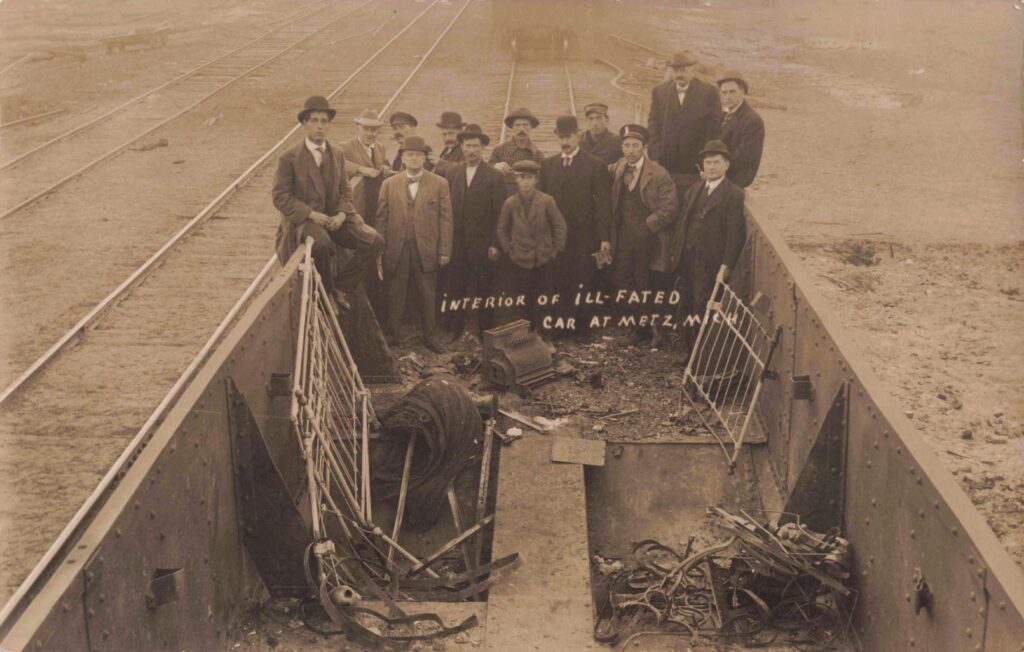
Near Nowicki’s Siding, intense heat damaged the rails. The train derailed. Some passengers escaped, but others were trapped. The Presque Isle County Historical Museum says 17 people, mostly women and young children, died in the derailed train car.
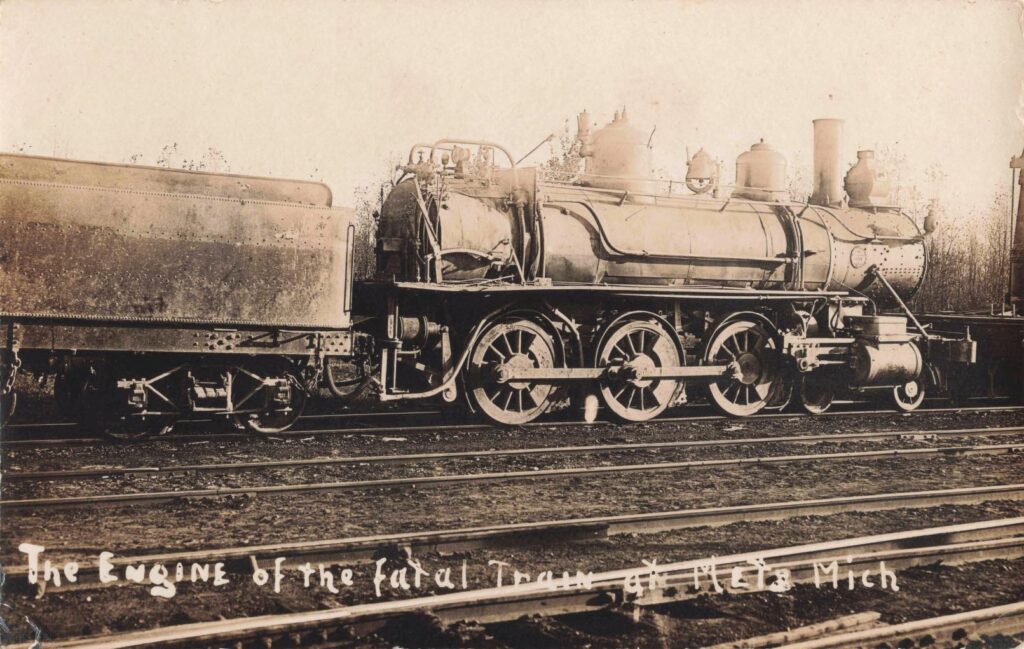
This is the counterintuitive heart of the Metz story: the railroad was both the town’s growth engine and its failed escape route.
A Village in Ruins
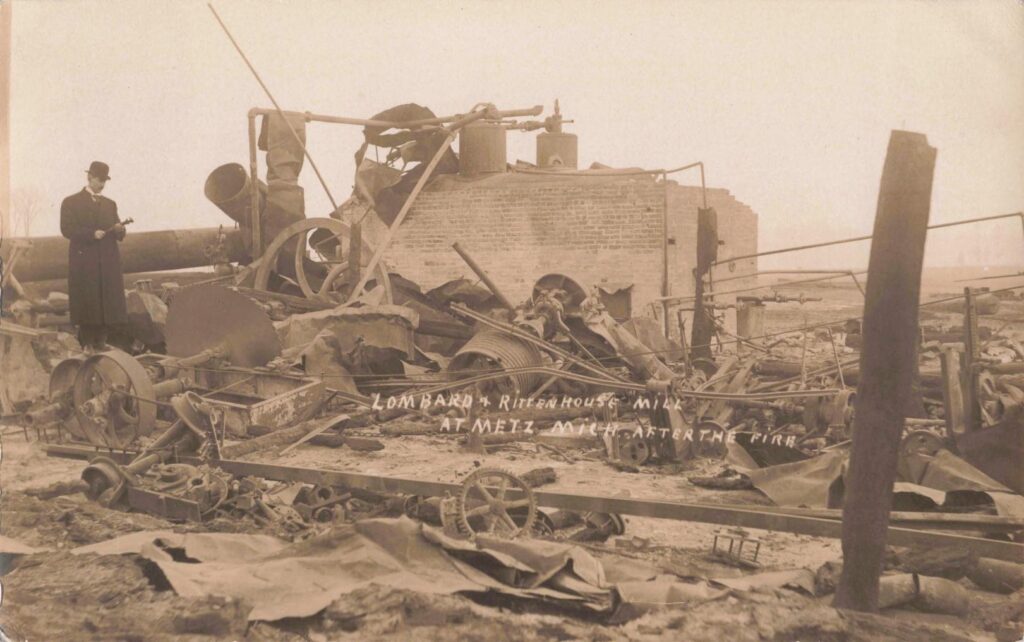
By the end of Oct. 15, Metz had been destroyed. Homes, businesses, farm buildings, and community landmarks were lost. The fire left about 134 families homeless, according to the Presque Isle County Historical Museum.
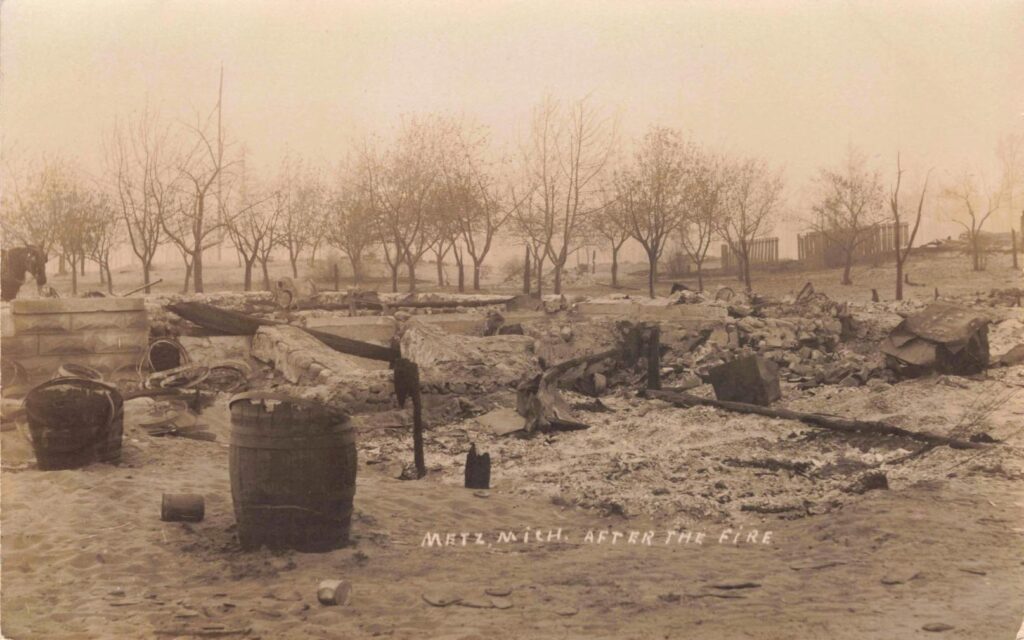
The disaster was not confined to buildings. It tore through family networks. Parents lost children. Children lost parents. Neighbors searched for neighbors. Survivors gathered in smoke and shock, trying to understand what remained.
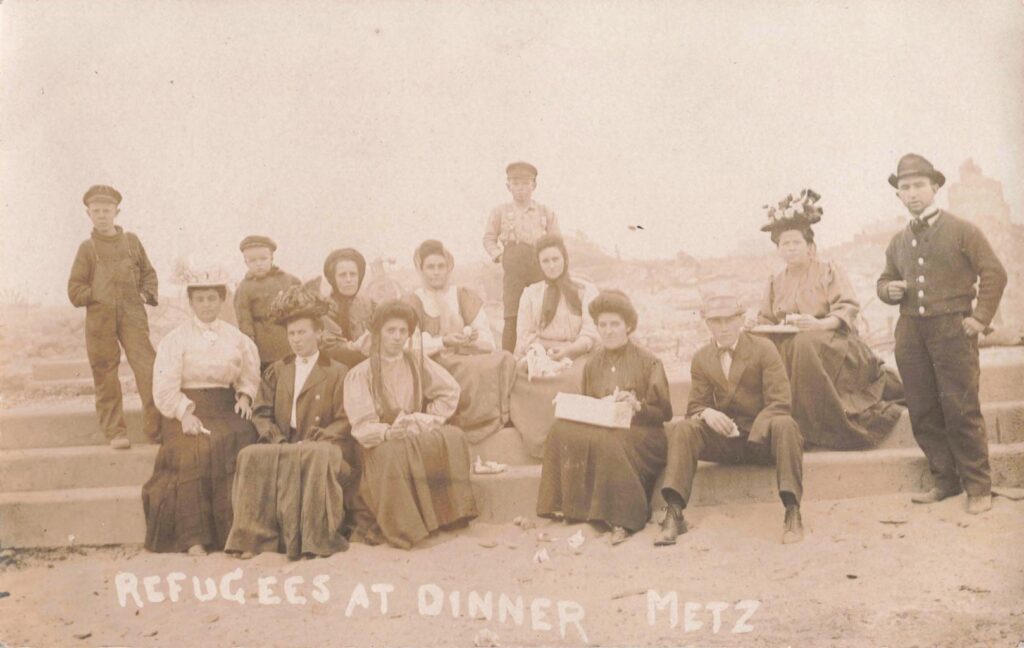
Relief Work After the Metz Fire
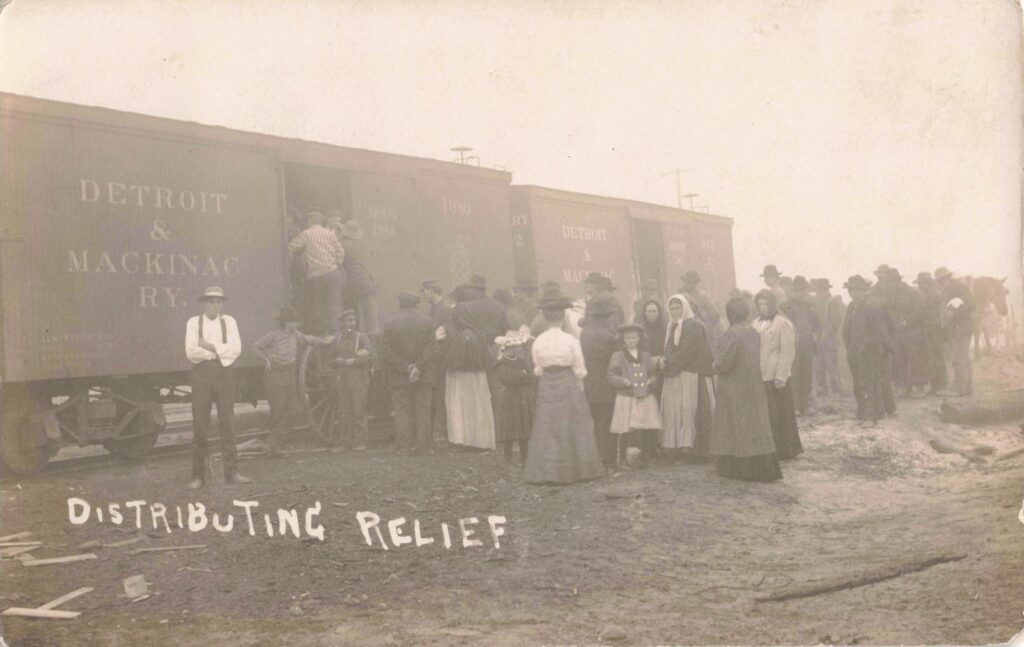
The History of the 1908 Metz Fire in Michigan also includes one of the most important relief efforts in early 20th-century northern Michigan. The timing was harsh. Mid-October meant cold weather was near. Families needed food, shelter, clothing, tools, and building materials.
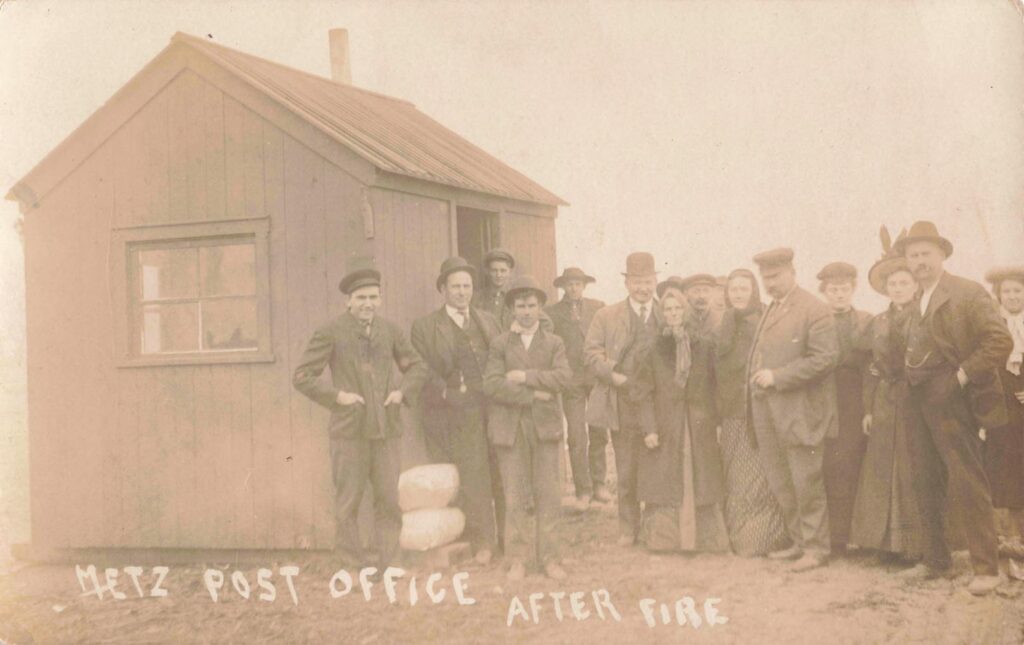
Relief came by rail, wagon, and community support. The Red Cross was involved. Historical accounts note that Ernest P. Bicknell, newly appointed as national director of Red Cross relief operations, helped oversee aid after the disaster, including temporary housing for families.
Relief work was direct and practical. Survivors needed a place to sleep. They needed stoves, blankets, lumber, flour, and clothing. They also needed burials and medical care.
Interactive Factoid : Other Major Michigan Fire Stories
Michigan’s fire history is larger than Metz. From the Thumb to Bay City, Oscoda, AuSable, Omer and Mendon, fire repeatedly tested small communities built near forests, mills, rail lines and wooden downtowns. The stories below offer a wider look at how fire shaped Michigan towns between the 1870s and the 1930s.
Other Michigan Fire Disasters Worth Reading
Michigan’s fire history did not end with the 1908 Metz Fire. Across the state, hotels, schools, villages, forests and rail towns faced fires that reshaped local memory and public safety.
Fraser House Fire — Bay City, 1907
The Fraser House fire left Bay City with a stark reminder of how quickly a downtown hotel disaster could unfold in the early 1900s. The aftermath showed the limits of fire protection in dense commercial districts.
Read: Aftermath of the Fraser House Fire, Bay City, Michigan, 1907
Omer, Michigan — Fire, Flood and Survival, 1866-1940
Omer’s early history was marked by repeated disaster, including fire and flood. The small city’s story shows how vulnerable river communities were before modern infrastructure and emergency response.
Read: History of Omer Michigan — Fire, Flood and a Small City That Endured Disaster
Parisville Fire — 1881
The 1881 Parisville Fire destroyed much of a Thumb-area community and became tied to stories of faith, loss and survival. It remains one of Michigan’s most dramatic small-town fire accounts.
Read: 1881 Parisville Fire — Devastating Blaze Destroyed a Town and Brought Miracles
Elkton School Fire — 1930
The Elkton School Fire brought fear to a Huron County town and left a lasting mark on local memory. School fires forced Michigan communities to rethink building safety, exits and emergency planning.
Read: The Elkton School Fire — The Dreadful 1930 Blaze That Changed a Michigan Town
Caseville Forest Fire — 1924
Caseville faced a serious forest fire threat in 1924 as flames pushed toward the Lake Huron shore. The story stands out because local residents and responders fought to protect a community that could have suffered far greater damage.
Read: Flashback — The Heroic Battle to Save Caseville, Michigan from a Raging Forest Fire
Oscoda and AuSable Fire — 1911
The 1911 fire that struck Oscoda and AuSable became one of northern Michigan’s most destructive community disasters. It showed how lumber towns near Lake Huron remained exposed to fire long after the peak logging years.
Great Fires of 1871 — The Burning Great Lakes
The Great Fires of 1871 burned across several Great Lakes states during the same period as the Chicago Fire. Michigan communities were part of a wider regional disaster driven by drought, wind and heavily cut timberland.
1881 Michigan Fire — The Thumb Changed Forever
The 1881 Michigan Fire devastated the Thumb and became one of the state’s defining wildfire disasters. It destroyed farms, homes and settlements across a region still shaped by logging, land clearing and dry weather.
Mendon Fire — 1916
The 1916 Mendon Fire left behind the story of a Michigan village that was never the same. It is a reminder that fire could erase a community’s business district, homes and future plans in a matter of hours.
Hinckley Fire — 1894
The 1894 Hinckley Fire happened in Minnesota, but its smoke and fear reached Michigan. The event remains relevant to Great Lakes fire history because it showed how regional weather, timber waste and drought could create disasters felt far from the burn zone.
Read: 1894 Hinckley Fire — When the Sky Went Black — Michigan’s Day of Smoke and Fear
Metz After 1908
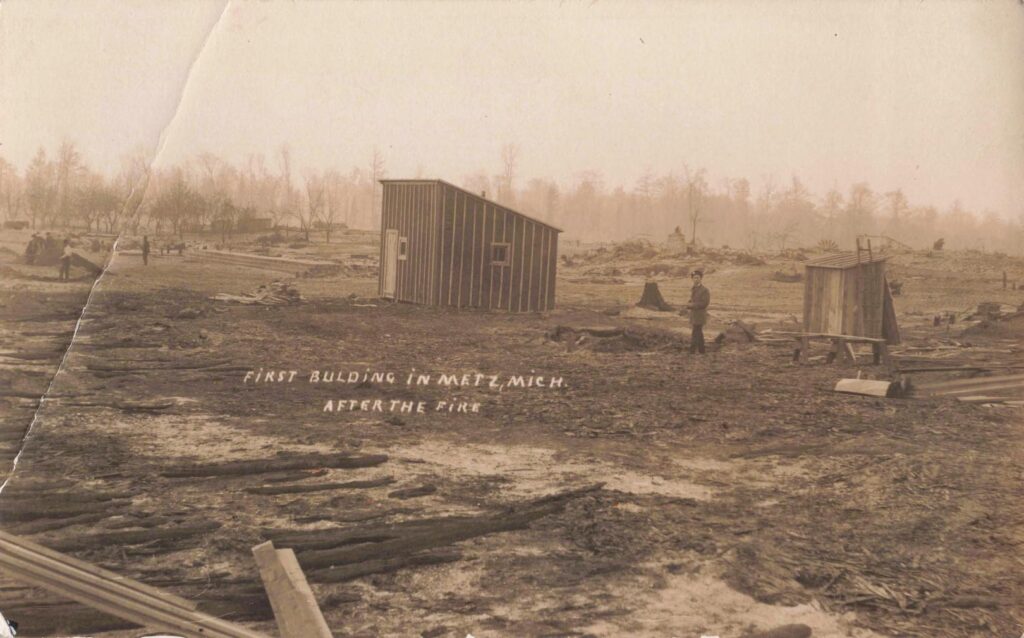
Metz did not fully return to its earlier form. The village survived in memory and local identity, but the fire changed its future. The depot, parish, roads, farms, and businesses had formed the frame of a working rural town. After the fire, many families faced the choice of rebuilding or leaving.
That is why the History of the 1908 Metz Fire in Michigan is more than a disaster account. It is a story about the end of one version of a town.
The lumber era had brought settlement and railroads into northern Michigan. It also left land in a dangerous condition. The fire showed the cost of cutover land, dry weather, wind, and limited firefighting systems.
Why The 1908 Metz Fire Still Holds Attention
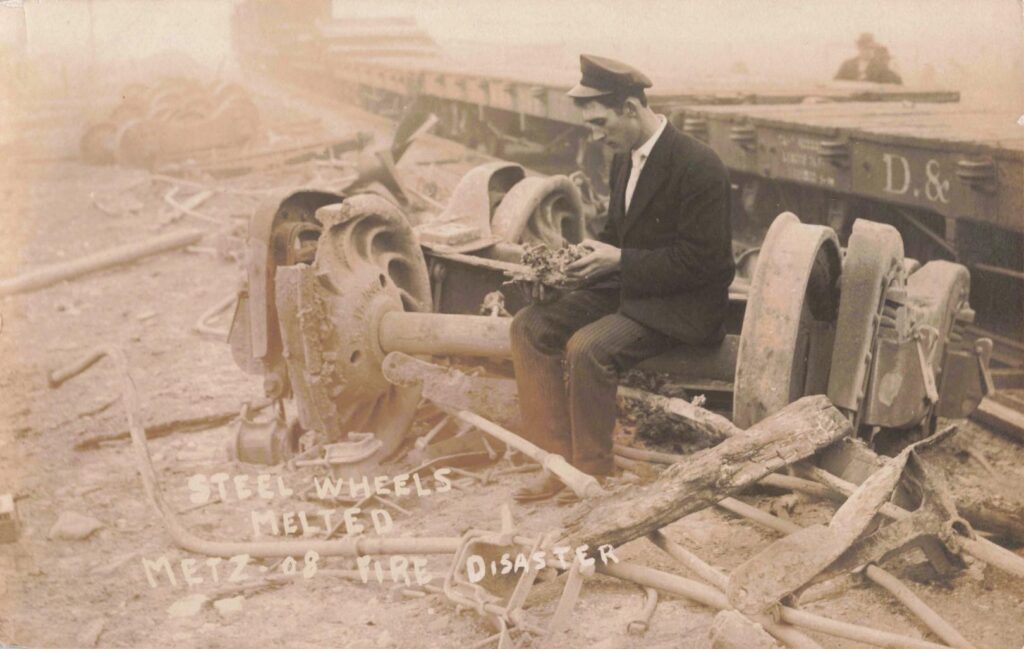
The Metz Fire is remembered because it was local, sudden, and deeply human. It struck a small village, not a large city. It involved ordinary families, not public figures. Its most memorable scene took place not in a distant forest, but along a railroad line where people were trying to survive.
The disaster also stands out because of its unusual railroad connection. In many Michigan towns, railroads meant progress. In Metz, the railroad meant progress, escape, and tragedy in the same story.
Today, the old RPPC views carry a quiet record. They show a town before the fire, a parish, a depot, twisted rails, ruined cars, relief lines, and people standing among what remained.
The History of the 1908 Metz Fire in Michigan is a reminder that small places can carry large stories. Metz was changed in a single day, but the story still belongs to Michigan’s broader history of logging, railroads, rural settlement, and fire.
Works Cited for the History of The 1908 Metz Fire