 by
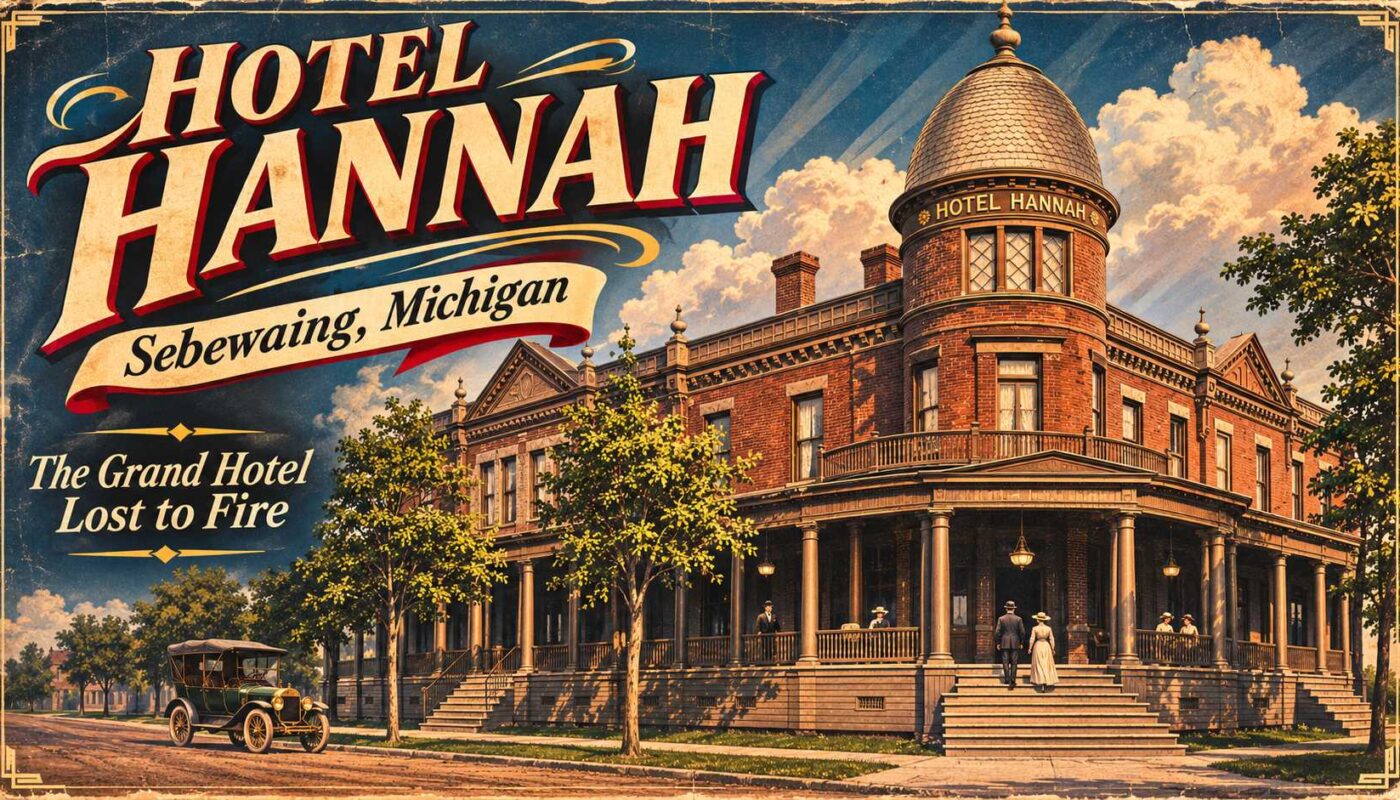
Historic postcards from around 1912 recall a remarkable Michigan hotel, its German-American community, and a building that served travelers for generations.
At first glance, the Hotel Hannah in Sebewaing, Michigan, looks like something that belongs in a much larger city. Its towering domed turret, handsome brick exterior, and sprawling veranda made it one of the most distinctive buildings in this small Huron County community.
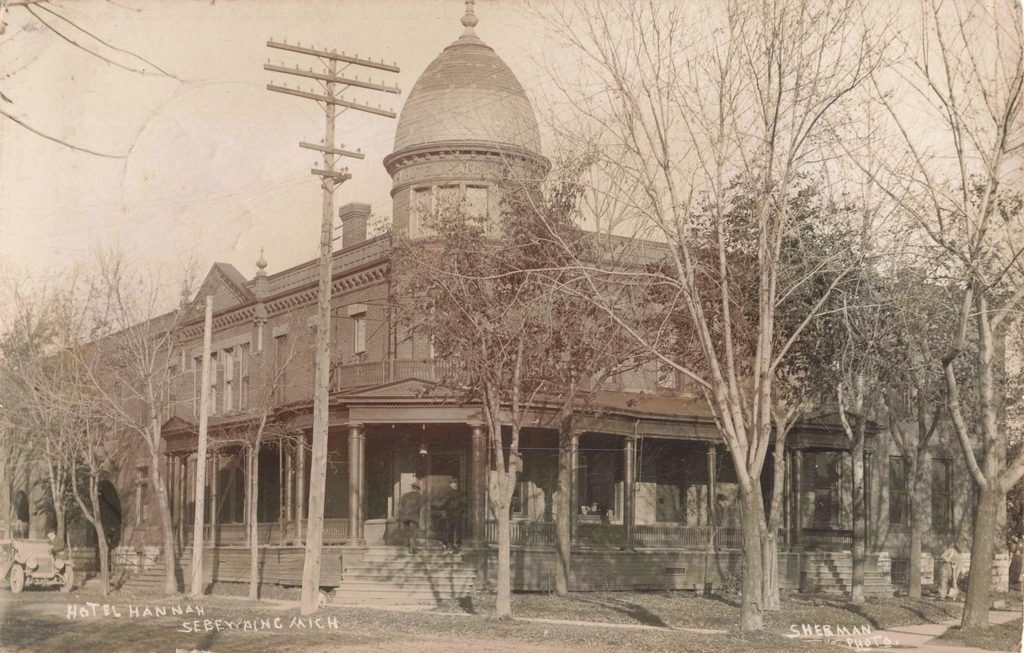
Two surviving real photo postcards, believed to date from around 1912, offer a remarkable look at the hotel during its early years. One even carries a handwritten message describing a visitor’s stay among Sebewaing’s German-American residents.
But the Hotel Hannah story reaches well beyond these photographs. Historical newspaper accounts trace the establishment to at least 1896, identify one of its early managers and provide a glimpse inside its bar during Prohibition.
The landmark survived for decades before a fire destroyed the vacant building in the early 1970s.
Hotel Hannah Was Already Welcoming Guests in 1896
A newspaper published March 18, 1896, provides one of the earliest documented references to Hotel Hannah.
The Clinton Republican, published in St. Johns, Michigan, reported that F.M. Milliken, formerly associated with the Steel Hotel, had become manager of the new Hotel Hannah in Sebewaing. This contemporary account establishes that Hotel Hannah was operating by March 1896. However, the precise construction and opening dates still require confirmation.
Two years later, the hotel appeared in an official Michigan tourism publication. The 1898 state directory Michigan, a Summer and Health Resort State listed three Sebewaing hotels: American House, Hotel Hannah and Union House. It also identified railroad and lake boat connections serving the community.
These records show that Sebewaing was prepared to receive travelers long before automobiles became common on village streets.
A Remarkable Building in a Small Michigan Town
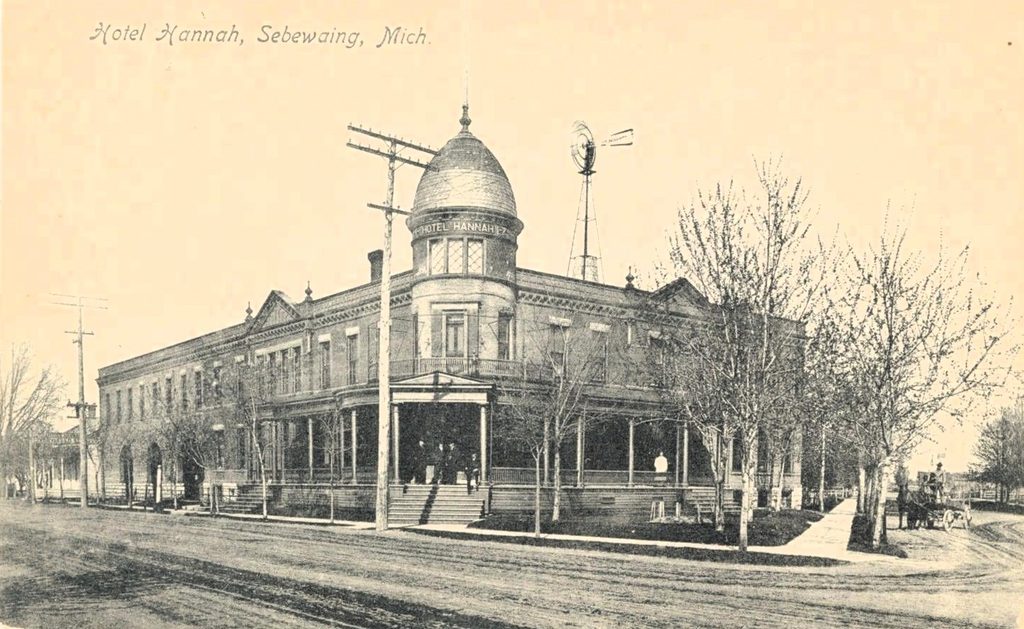
The two surviving postcards show why Hotel Hannah attracted attention.
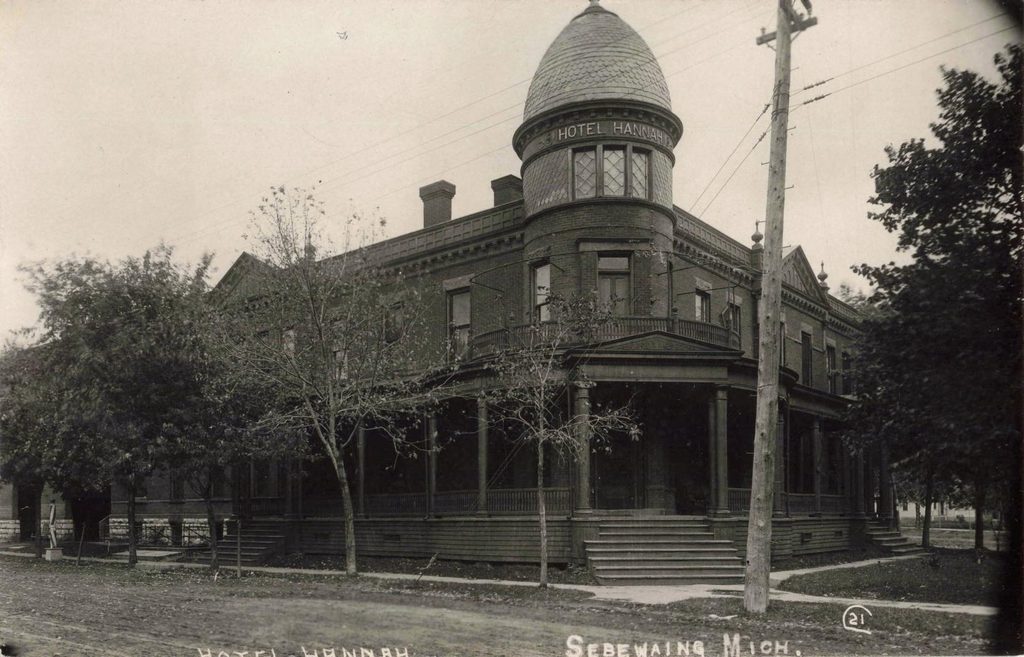
The building featured two principal stories, an elaborate brick facade, decorative cornices and a large turret crowned with a steep, rounded roof. A covered veranda extended along the street-facing sides, offering guests a place to sit outside.
The tower was especially striking. Diamond-patterned windowpanes and the prominent Hotel Hannah lettering gave the building a memorable appearance. Wide stairways led up to the veranda, while a second-floor balcony provided another outdoor space.
In one photograph, the leafless trees allow a clear view of the porch and the structure behind it. An early automobile sits at the edge of the street, offering a clue to the photograph’s period. The other postcard presents the turret more directly, with the hotel name clearly displayed near the roofline.
These images capture an important period in American travel. Horse-drawn transportation was giving way to automobiles, while small-town hotels continued serving the needs of business travelers, visiting families and seasonal guests.
A Postcard Message Reveals Sebewaing’s German Heritage
Perhaps the most personal detail survives on the back of one postcard.
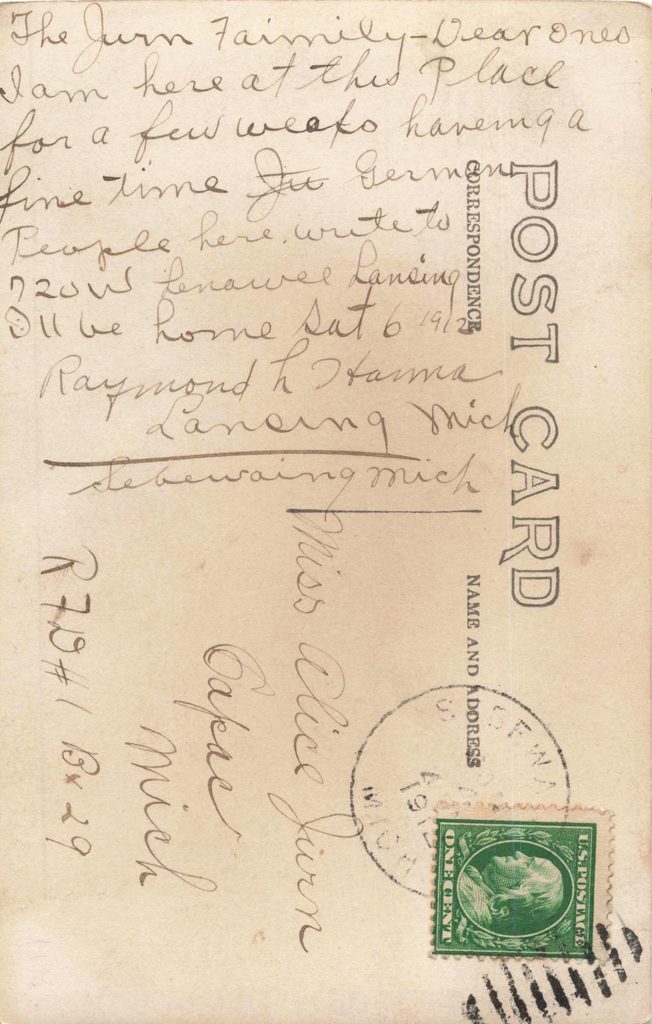
Addressed to the Jurn family, the message reads:
Dear Ones, I am here at this place for a few weeks – having a fine time. German People here.
The short note offers a glimpse of Sebewaing’s cultural identity in the early 20th century. Sebewaing was established in 1845 by the Rev. John J.F. Auch, a Lutheran minister who came to the area as a missionary. German settlers helped shape the community’s religious institutions, businesses and social customs.
The postcard writer clearly noticed the town’s German population. Although the sender’s identity and reason for staying remain unknown, the message suggests someone enjoying an extended visit. It also reminds us that postcards were more than souvenirs. They were an inexpensive way to send family news and tell loved ones about unfamiliar places.
For the unknown visitor, the grand hotel and its community were worth writing home about.
Source: Village of Sebewaing history
Sebewaing’s Agricultural Economy Supported the Hotel
By the early 1900s, Sebewaing had developed into an important agricultural and commercial center along Saginaw Bay.
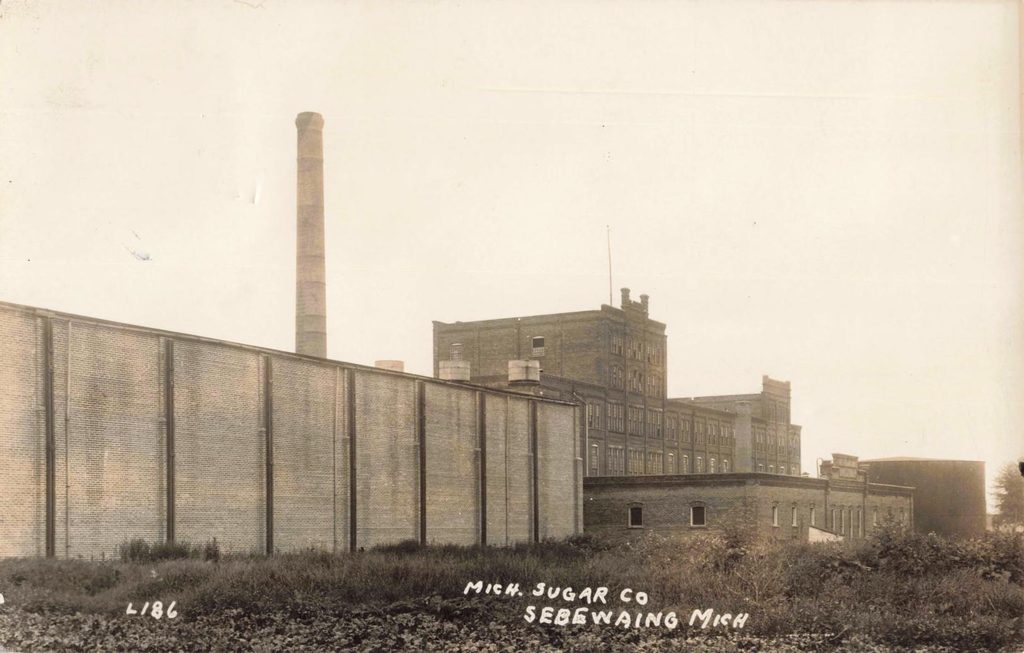
Farming, lumber production, grain handling, and manufacturing supported the local economy. Railroad connections helped move products to regional markets. Sugar beet processing became particularly important.
Construction of Sebewaing’s sugar factory began in September 1901. The plant started its first processing campaign in October 1902 and later became part of Michigan Sugar Co. The growing industry created work and brought more commercial activity to the village.
Hotels such as the Hannah provided lodging for people who needed to conduct business in the area. Traveling salesmen, visiting merchants, and people connected to local industries were among the customers such establishments sought to attract.
Inside Hotel Hannah During Prohibition
One of the most interesting surviving photographs shows the inside of Hotel Hannah rather than its elaborate exterior.
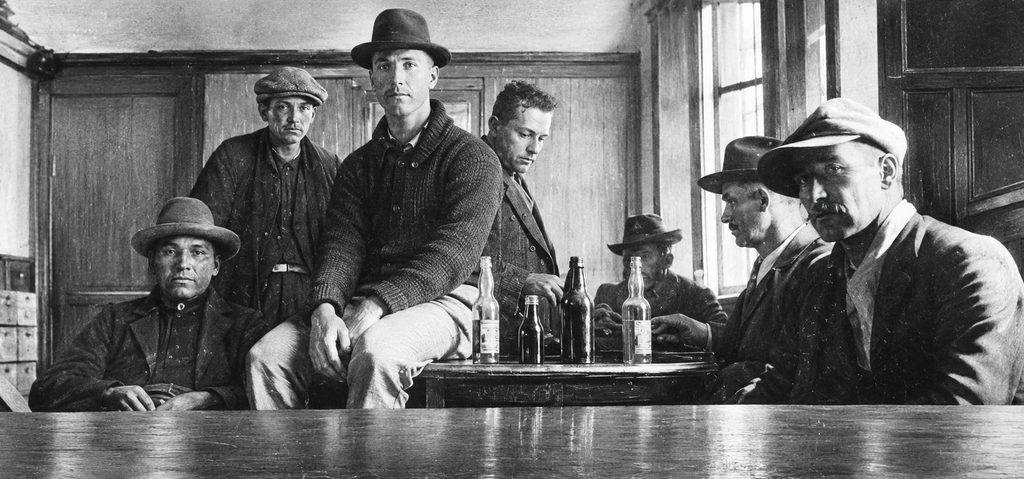
Pictured in the front row, from left: Arthur Gaeth, Jacob Sharpsteen and Owen “Doc” Pitcher. Standing behind them are Carl “Charley” Tredup, hotel owner Freddy Darens and Otto Muellerwieser. Seated at the far end is Jim DeBolt.
Jacob Sharpsteen of Sebewaing provided the photograph. This digitally restored version brings new clarity to a scene from Michigan’s Prohibition era.
Historical source: Newspaper photograph and Walt Rummel.
A picture dating to 1922 shows seven men gathered in the hotel’s barroom during Prohibition. The image appeared in the Jan. 24, 1995, edition of The Newsweekly and was supplied by Sebewaing resident Jacob Sharpsteen. According to the newspaper’s identification, those pictured included Arthur Gaeth, Jacob Sharpsteen, Owen “Doe” Pitcher, Carl “Charley” Tredup, hotel owner Freddy Barens, Otto Muellerweiss and Jim DeBolt.
The newspaper reported that Hotel Hannah served “near beer” during this period, when federal Prohibition restricted the sale of alcoholic beverages. The photograph offers something the exterior postcards cannot: a look at the people who used the building.
Pheasant Hunters Once Filled Hotel Hannah
Hotel Hannah later played a role in one of the Thumb’s most memorable sporting traditions.
During the 1930s and 1940s, pheasant hunting attracted large numbers of visitors to Michigan’s agricultural communities.
In an October 2005 Huron Daily Tribune article, longtime local journalist Walt Rummel recalled how hunters arrived in Sebewaing before opening day. They came in automobiles, searched for available lodging and crowded the town’s restaurants.
Rummel remembered that Hotel Hannah filled its guest rooms with hunters. Its dining room and bar were also crowded. Other establishments, including the Old Heidelberg Inn and the Log Cabin, benefited from the seasonal business. For hotel operators, the annual pheasant season was more than a sporting event. It meant customers, meals and overnight stays.
Fire Destroyed Hotel Hannah in the Early 1970s
Like many historic hotels, Hotel Hannah eventually outlived its original purpose. Its final years are less clearly documented than its earlier history.
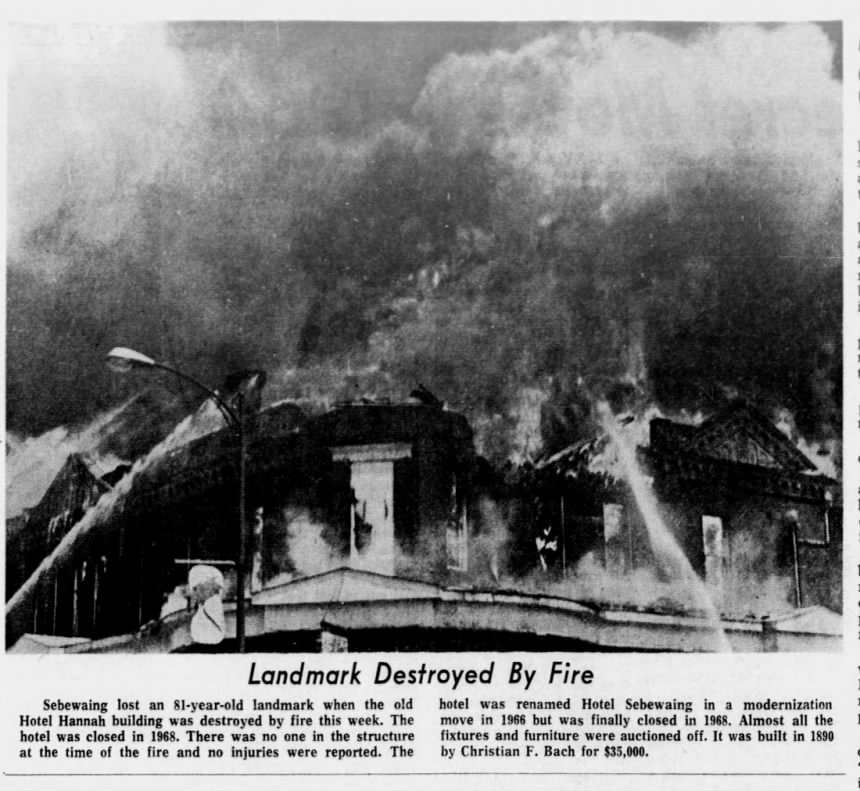
In a December 2015 interview with the Huron Daily Tribune, longtime Sebewaing barber Ken Schwartz recalled the building and its disappearance. Schwartz said Hotel Hannah burned sometime between 1970 and 1972. By then, the hotel had closed, and the building was vacant. He also remembered having a photograph of the burning structure, though he could not recall where he obtained it.
Remembering Hotel Hannah Through Vintage Postcards
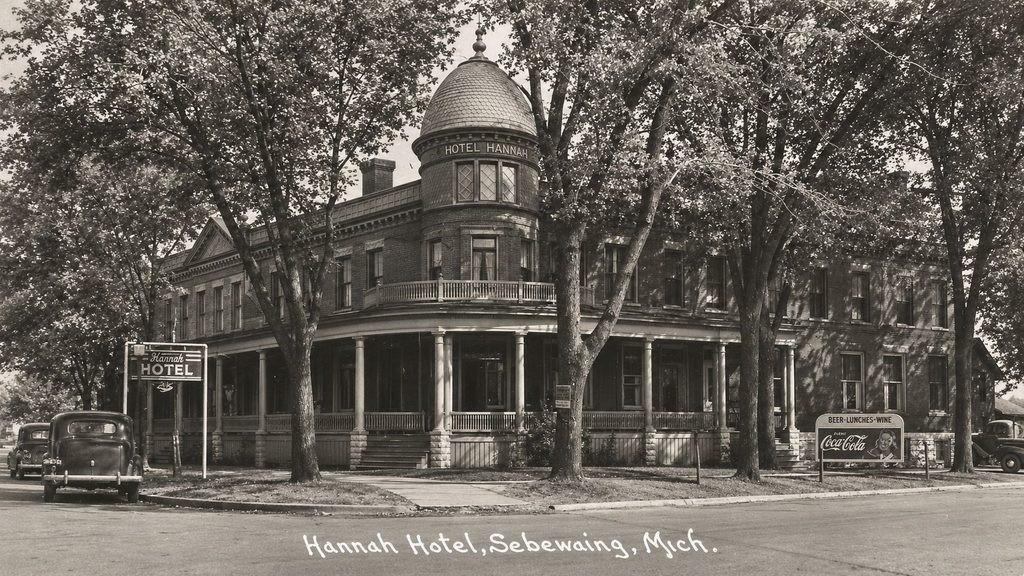
Today, Hotel Hannah survives in historical photographs, postcards, and the recollections of longtime residents. The circa-1912 images reveal the building’s architecture and its place in Sebewaing’s streetscape. Newspaper accounts add the names of people who managed, owned, and visited the establishment.
The handwritten postcard adds something even more personal. More than a century ago, someone staying in Sebewaing wanted family members to know they were having a good time among the town’s German-speaking residents.
It is a small message, but it connects the imposing hotel building to an ordinary person’s experience.
Do you remember Hotel Hannah in Sebewaing? Perhaps your family has a photograph of the building, its dining room or the fire that destroyed it. We would welcome additional pictures and memories that could help complete this chapter of Huron County history.
Works Cited for the Hotel Hannah Sebewaing
Harp, Rich. “Sebewaing Barber Shares Fond Memories of Town.” Huron Daily Tribune, 10 Dec. 2015.
Harrison, Don, uploader. “CEN Sebewaing MI Circa 1910 MINT CONDITION Historic Hotel Hannah Downtown Stores Old Car & Horse & Buggy Era Authentic PC Publishers Sample2.” Flickr, 9 Oct. 2013.
Harrison, Don, uploader. “CEN Sebewaing MI Circa 1910 MINT CONDITION Historic Hotel Hannah Downtown Stores Old Car & Horse & Buggy Era Authentic PC Publishers Sample3.” Flickr, 9 Oct. 2013.
Harrison, Don, uploader. “CEN Sebewaing MI RPPC 1930s Thumb Destination The HANNA HOTEL Beer Lunches Wine Signage Nice Coca Cola Sign Photographer Unknown Unsent6.” Flickr, 30 Dec. 2011.
Michigan State Board of Health. Michigan, a Summer and Health Resort State: A Directory of Michigan Summer Resorts, Mineral Springs and Sanitaria. Compiled by Roberts P. Hudson, Robert Smith Printing Co., 1898, p. 138. Google Books.
“Notice Concerning F. M. Milliken and Hotel Hannah.” The Clinton Republican, 18 Mar. 1896. Clinton County Archive Center.
Rummel, Walt. “When Pheasants Ruled the Thumb Roost.” Huron Daily Tribune, 19 Oct. 2005.
Rummel, Walt. “When the Old Hotel Was New.” The Newsweekly, 24 Jan. 1995, p. 23. Michigan State University Libraries.
Village of Sebewaing. “Sebewaing, MI – History.” Village of Sebewaing, accessed 12 Nov. 2026.
Original Historical Photographs
Hotel Hannah, Sebewaing, Mich. Real photo postcard, circa 1912. Photographer and publisher not confirmed. Historical postcard supplied for this article, catalog reference RPPC-047113.
Hotel Hannah, Sebewaing, Mich. Real photo postcard, circa 1912. Photographer and publisher not confirmed. Historical postcard supplied for this article, catalog reference RPPC-047115.