
 by
by 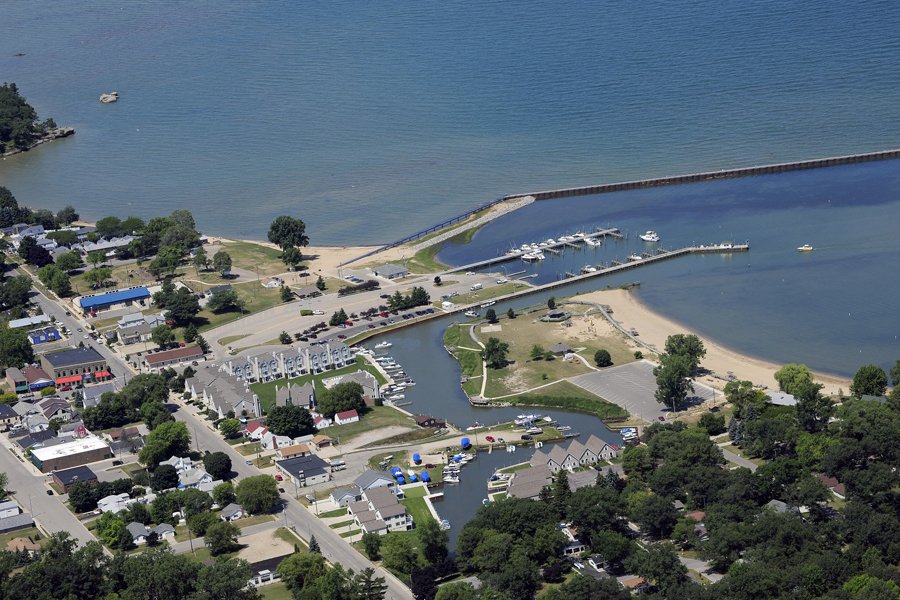
A trip to Port Austin, Michigan, requires a different mindset than a typical beach vacation. Located at the northernmost point of Huron County, where Lake Huron and Saginaw Bay meet, this village is a maritime crossroads shaped by dangerous reefs, a world-class grindstone industry, and the unpredictable nature of the Great Lakes. While images of the iconic Turnip Rock draw thousands of visitors, a successful trip depends less on sightseeing and more on understanding the logistics of navigating this historically significant and geographically unique area.
Planning a visit for 2026 demands practical knowledge that standard travel sites often omit. This includes preparing for limited cell service along the M-25 corridor, knowing where to park during the massive Saturday farmers market, and respecting the physical demands of its premier outdoor activities. This guide provides a professional journalist’s perspective on balancing Port Austin’s geology, history, and local commerce to help you navigate the tip of Michigan’s Thumb with confidence.
Geological Landmarks and Outdoor Recreation in Port Austin
The shoreline of Port Austin is defined by its dramatic rock formations and expansive sandy beaches, products of centuries of glacial movement and lake erosion. The area’s primary attractions are Turnip Rock and Port Crescent State Park, each offering distinct experiences but also requiring specific preparation. Navigating these natural sites safely and effectively is the first step in planning a trip.
Outdoor activities here are directly influenced by the temperament of Lake Huron. Weather conditions can change rapidly, shifting from calm and glassy to rough and dangerous within an hour. Visitors planning to kayak or spend time on the water must check marine forecasts and be prepared for last-minute changes to their itineraries. The physical requirements, particularly for the paddle to Turnip Rock, should not be underestimated.
Navigating the Trail to Turnip Rock
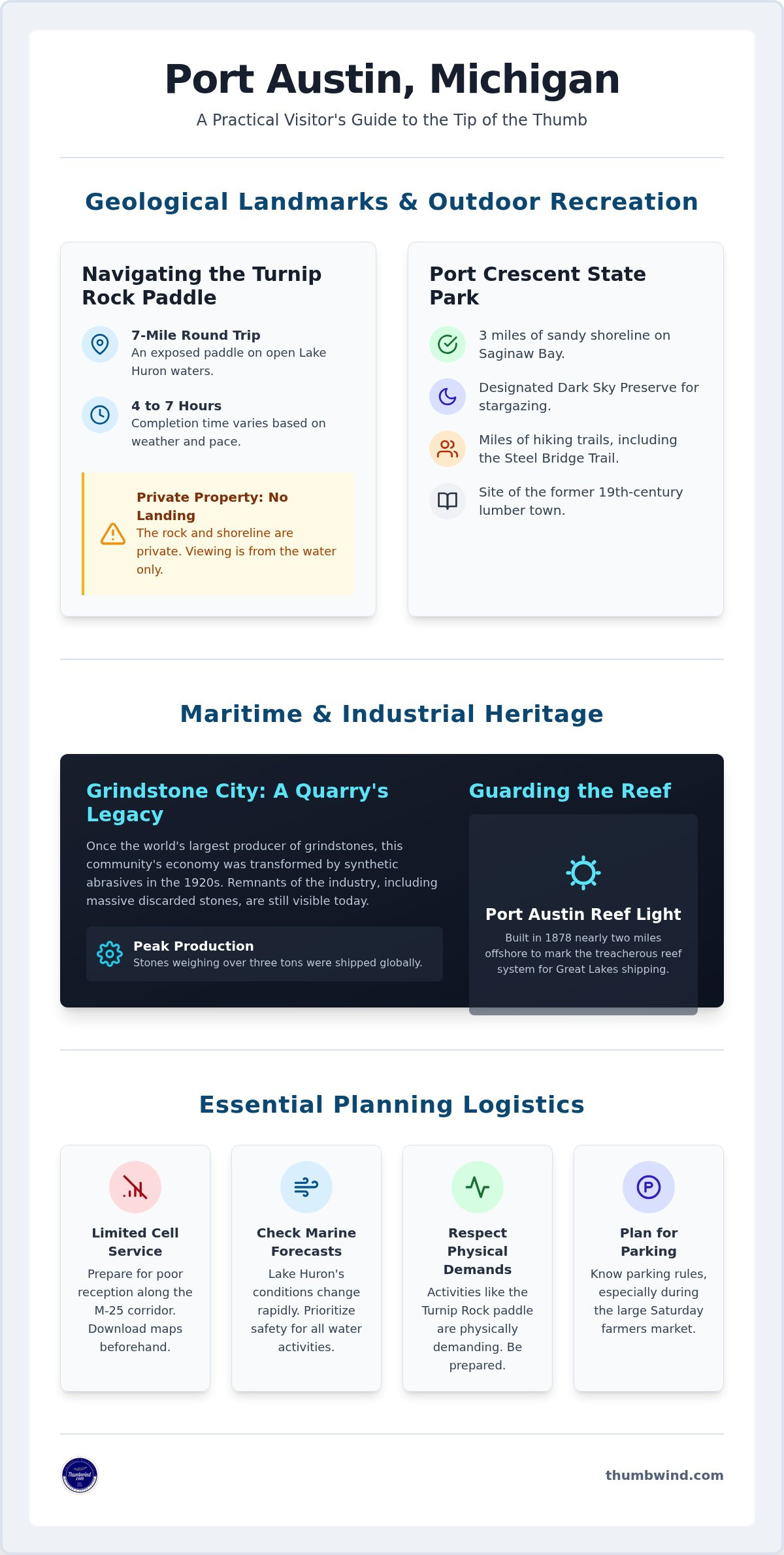
The journey to Turnip Rock is one of Michigan’s most famous paddling excursions, but it is not a casual trip. The route is an exposed, seven-mile round trip on Lake Huron that typically takes four to seven hours to complete. There are two primary launch points: the public beach at the Port Austin harbor or the public access site at Bird Creek Park. Both require a significant open-water paddle to reach the rock formation.
A critical point that many guides fail to mention is that Turnip Rock and the surrounding shoreline are on private property. You cannot land your kayak, get out, or picnic on the shore. The entire experience must be conducted from the water, making it essential to plan for a long time in your vessel. The unique shape of the rock is a result of softer limestone eroding away over the last century, leaving the more durable upper layer intact—a process that continues with every wave.
For those who prefer to stay on land, the geology of the area still offers plenty to see. The shoreline is known for its excellent rock hunting opportunities, with puddingstones, Petoskey stones, and Charlevoix stones often found along the coast. Several public access points and rock hunting beaches in Michigan provide an alternative for visitors not prepared for the long kayak trip.
Port Crescent State Park and the Steel Bridge Trail
Just west of the village, Port Crescent State Park protects three miles of sandy shoreline along Saginaw Bay. The park occupies the site of a former 19th-century lumber town, Port Crescent, which vanished after the timber was depleted and a fire destroyed the remaining structures. Today, it serves as a testament to the region’s cycle of resource extraction and conservation.
In addition to its expansive beach, the park offers several miles of hiking trails. A notable route is the Port Crescent Steel Bridge Trail, which offers views of the Pinnebog River and the surrounding dune ecosystem. The park is also one of Michigan’s designated Dark Sky Preserves, making it an exceptional location for stargazing and viewing the Milky Way. However, planning a night visit requires preparation; the park is very dark, and navigating the trails and beach without a reliable flashlight is difficult and not recommended.
Maritime History and Industrial Heritage
The identity of Port Austin is inseparable from its maritime and industrial past. Before it was a tourist destination, the tip of the Thumb was a perilous stretch of water for Great Lakes shipping and the site of a globally significant quarrying operation. Understanding this history provides essential context for the lighthouses, old buildings, and place names you will encounter during your visit.
The shallow, rocky reefs extending from the shoreline created a navigational nightmare for schooners and steamers carrying lumber, grain, and iron ore. Simultaneously, the quality of the sandstone in nearby Grindstone City fueled an industry that shaped the modern world. These two forces—maritime danger and industrial ambition—defined the region for nearly a century.
The Legacy of Grindstone City
A few miles east of Port Austin lies Grindstone City, a community whose name reflects its history as the former home of the world’s largest grindstone quarry. From the 1830s until the 1920s, the abrasive stones quarried from this shoreline were shipped across the globe, used for sharpening everything from farming tools to industrial machinery. At its peak, the industry produced massive grindstones, some weighing over three tons.
The industry collapsed abruptly after 1920 with the invention of synthetic abrasives like carborundum, which were cheaper and more durable. The quarries closed, and Grindstone City transitioned into the quiet resort community it is today, though remnants of its industrial past are still visible. Visitors can see enormous, discarded grindstones scattered throughout the town, particularly at the Grindstone Grill and Cottages, which preserves artifacts from the quarrying era. The town’s story is a powerful local example of how technological change can transform a regional economy, making it one of Michigan’s most interesting near-ghost towns.
Pointe aux Barques and the Reef Light
The waters off Port Austin are guarded by two historic lighthouses, both established to guide ships around the treacherous Pointe aux Barques reef system. The Port Austin Reef Light, built in 1878, stands on a man-made cribbing nearly two miles offshore. Its isolated location earned it the nickname “reef-born,” and it marks the shallow reef that extends north from the point.
Closer to shore is the Pointe aux Barques Lighthouse, one of the oldest active lights on the Great Lakes. The area was also home to the Pointe aux Barques life-saving station, a critical facility whose crews performed heroic rescues during the late 19th and early 20th centuries. Accessing the lighthouses varies; the Reef Light is best viewed from the water via boat tours or private vessel, while the Pointe aux Barques light station is accessible by land and features a museum detailing the region’s maritime history.
Local Commerce: Markets and Dining Logistics
Commerce in Port Austin is highly seasonal and centered around its harbor and main street. The village’s population swells during the summer months, placing significant strain on local infrastructure, from restaurants to parking lots. A successful visit, especially on a weekend, requires a strategic approach to shopping and dining.
Most establishments are small, family-owned businesses that operate from Memorial Day to Labor Day. While some remain open into the fall, it is important to verify hours of operation before visiting in the shoulder season. Visitors should also be aware that some smaller vendors and farm stands in rural Huron County operate on a cash-only basis, so carrying some cash is advisable.
The Port Austin Farmers Market Strategy
Every Saturday from May to October, the Port Austin Farmers Market transforms the village into a bustling hub that draws thousands of people. It is one of the largest open-air markets in Michigan, featuring over 150 vendors offering everything from local produce and baked goods to crafts and artwork. While the market is a highlight, it creates significant logistical challenges.
Parking near the harbor becomes nearly impossible after 9 a.m. The most effective strategy is to arrive early or utilize the outlying lots located a few blocks from the market and walk. This approach helps avoid the severe congestion that builds up along Lake Street. The market is an excellent place to find local specialties, including smoked Great Lakes whitefish, seasonal fruits and vegetables from Thumb-area farms, and maple syrup.
Dining and Staying at the Tip of the Thumb
Dining options in Port Austin range from casual diners and ice cream shops to restaurants offering fresh-caught lake fish. Like other aspects of local commerce, the dining scene is seasonal, and wait times can be long during holiday weekends and on Saturdays after the farmers market. Managing expectations for service speed is important, as kitchens are often small and serve a high volume of guests.
Lodging in the area primarily consists of cottages, cabin rentals, and a few traditional motels. The rise of short-term vacation rentals has increased options, but availability in July and August is scarce and should be booked well in advance for a 2026 trip. There are few chain hotels in the immediate vicinity, reflecting the area’s commitment to local, small-scale tourism.
Logistics and Trip Planning for Huron County
Successfully navigating Huron County depends on understanding its rural infrastructure. The region is served by two-lane highways, has inconsistent cellular coverage, and experiences dramatic shifts between its peak tourist season and the quiet off-season. Proper planning is essential to avoid minor frustrations that can detract from the experience.
The primary driving route is the M-25 scenic loop, which follows the shoreline around the Thumb. An alternative is the inland M-53 corridor, which is more direct but less scenic. Regardless of the route, visitors should be mindful of their environmental impact, particularly when visiting sensitive areas like Turnip Rock, by packing out all waste.
Transportation and Navigation
The most critical logistical challenge for modern travelers is the limited cell service. Coverage is particularly unreliable near the Port Crescent State Park dunes and along certain stretches of M-25. Relying solely on a phone for navigation is a mistake. Downloading offline maps or carrying a physical Michigan road atlas is a necessary precaution for anyone exploring the back roads of the county.
Seasonal Reality and Crowds
The experience of visiting Port Austin in July is vastly different from a visit in October. The high-summer season brings crowds, high energy, and the full operation of all businesses and attractions. In contrast, the “quiet season” after Labor Day offers a more tranquil experience, with fewer people and the added beauty of fall foliage, but many restaurants and shops will have reduced hours or be closed for the season.
Winter offers its own set of activities, though the village is very quiet. Port Crescent State Park has groomed trails for cross-country skiing, and the stark, frozen landscape provides a different kind of beauty. Before you depart, a final checklist should include sunscreen, insect repellent, dry bags for any water activities, and physical maps as a backup to your digital navigation.
For ongoing updates on regional travel and local history, subscribe to the Michigan Moments newsletter. It provides weekly insights that are useful for planning a trip to the Thumb and other areas of the state.
Frequently Asked Questions
How long does it take to kayak to Turnip Rock?
The kayak trip to Turnip Rock is a seven-mile round trip that typically takes between four and seven hours, depending on your paddling speed and the wind and wave conditions on Lake Huron. It is a physically demanding paddle on open water.
Is there a fee to visit Port Crescent State Park?
Yes, a Michigan Recreation Passport is required for vehicle entry into Port Crescent State Park. This can be purchased with your license plate registration or as a window sticker at the park entrance.
When is the Port Austin Farmers Market held in 2026?
The Port Austin Farmers Market typically runs every Saturday from late May through mid-October. For 2026, the expected hours are 9 a.m. to 1 p.m. It is always best to verify specific dates on the village’s official website closer to your visit.
Can you see the Northern Lights from Port Austin?
Yes, it is possible to see the Northern Lights (aurora borealis) from Port Austin, especially from the dark skies of Port Crescent State Park. Viewing requires a clear night, no light pollution, and strong solar activity. Sightings are rare but possible.
Are dogs allowed on the beaches in Port Austin?
Leashed dogs are allowed in designated areas of Port Crescent State Park, including a portion of the shoreline. However, they are generally not permitted on the main village beaches or at the Farmers Market. Always check local signage for specific rules.
What happens if the weather is too rough for kayaking?
If high winds or waves make kayaking on Lake Huron unsafe, rental companies will not allow kayaks to go out. It is critical to have an alternative plan, such as hiking at Port Crescent State Park, exploring Grindstone City, or visiting the Pointe aux Barques lighthouse museum.
Disclaimer
Information published on Thumbwind.com is provided for general informational purposes. While we make reasonable efforts to keep articles accurate and current, details such as prices, hours, regulations, access conditions, and other information may change without notice. Readers should verify important details with the appropriate business, agency or official source before making travel, financial or other decisions. Thumbwind.com is not responsible for the content, availability or practices of third-party websites linked from our articles.