 by
by 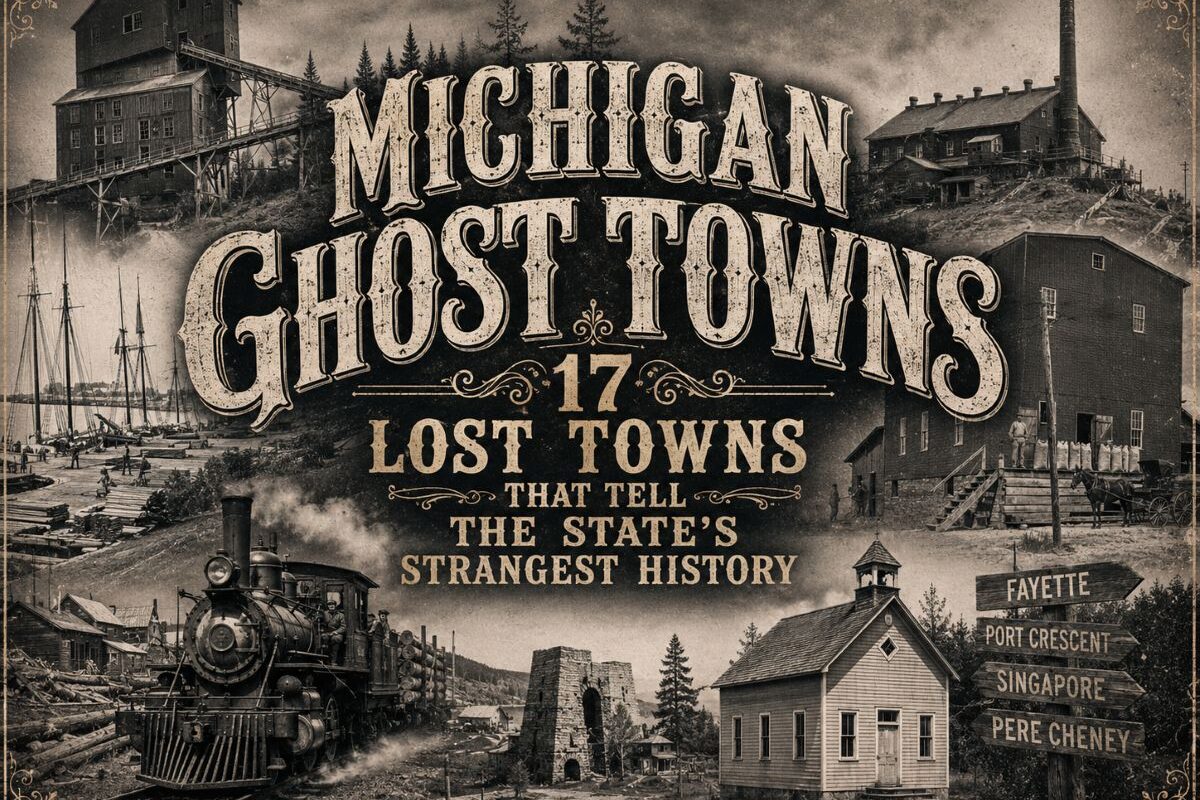
Michigan ghost towns are not just places with a cemetery, a broken foundation and a road sign that looks like it lost a fight with a snowplow.
They are the remains of bold plans. Some were built around lumber. Some were built around copper, iron, salt, gypsum or railroads. A few had hotels, schools, mills, docks, churches, stores, post offices and enough civic pride to believe the future was settled.
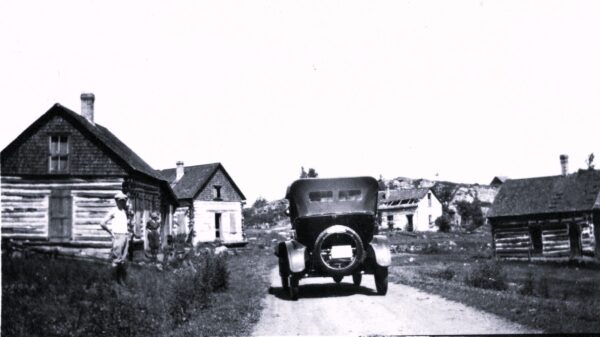
Then the future changed.
The timber ran out. The copper market collapsed. The railroad moved. Ships stopped calling. Fires burned through mill towns. Sand covered streets. In other places, a nearby town simply won the long fight for business, schools and mail service.
That is the story behind this episode of End of the Road in Michigan, which looks at some of Michigan’s little-known ghost towns and the forces that erased them.
Michigan Ghost Town Map
Why Michigan Has So Many Ghost Towns
Michigan’s ghost towns were often built on a single reason to exist.
That reason might have been a sawmill, a mine, a salt block, a dock, a railroad junction or a company payroll. When that one anchor failed, the town usually failed with it.
That does not make these places failures. It makes them warnings.
Many of these towns worked exactly as planned — until the plan no longer worked. Lumber towns cut the forests that kept them alive. Mining towns depended on metal prices they could not control. Railroad towns needed trains that could be rerouted. Port towns needed docks, ships and waterborne trade.
A town can look permanent when the mill is running. It can look very different when the whistle goes silent.
Fayette: The Iron Town That Refused To Fall Apart
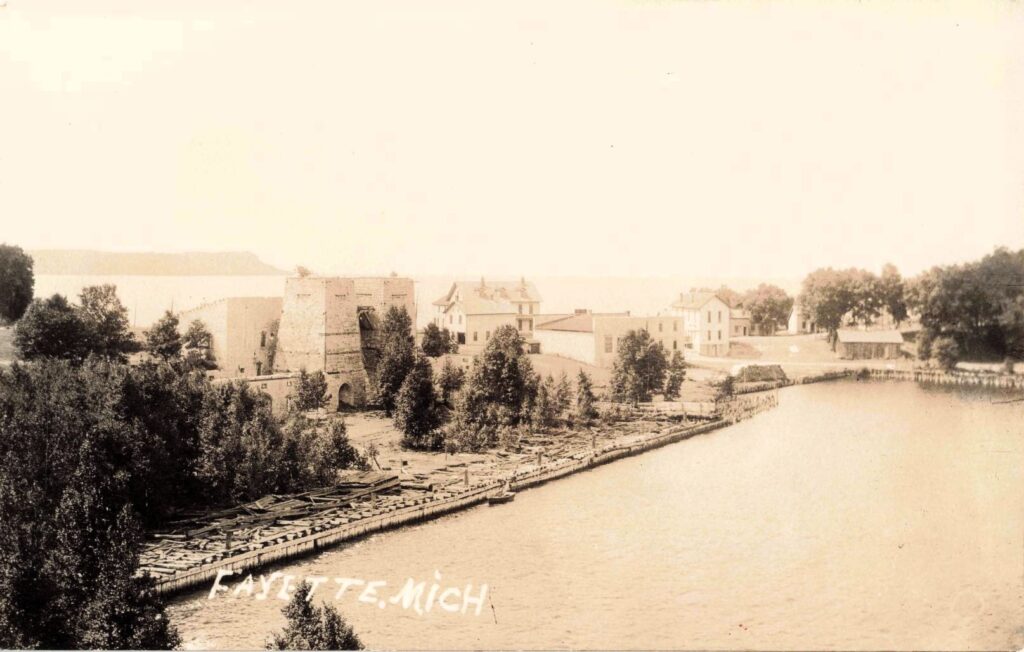
Fayette is one of Michigan’s best-known ghost towns because it still has buildings you can walk through.
Located on the Garden Peninsula in the Upper Peninsula, Fayette was founded in 1867 by the Jackson Iron Company. The town made charcoal pig iron using iron ore, limestone and hardwood charcoal. For more than two decades, it was a working industrial community with furnaces, docks, homes, stores and workers from several immigrant communities.
Then the iron market changed. Charcoal iron became less competitive. The company shut down operations in 1891. In many places, that would have been the end.
Fayette got lucky. The townsite later became a preserved state park. Today, Fayette Historic State Park gives visitors a rare look at a 19th-century industrial town that did not get stripped down, burned out or covered by weeds.
It is a ghost town with a visitor center, which is about as polite as a ghost town can get.
Port Crescent: The Thumb Town Under A State Park
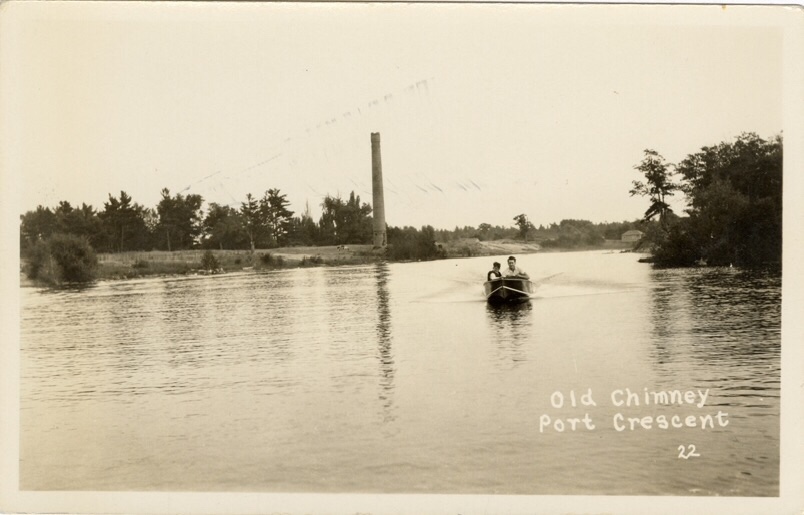
Port Crescent once stood near the mouth of the Pinnebog River, southwest of Port Austin. Today, Port Crescent State Park draws campers, hikers, paddlers and stargazers. In the 1800s, it was a busy Lake Huron lumber and salt town.
Walter Hume opened a trading post and hotel there in 1844. A sawmill followed in 1851. The settlement grew into a working port with sawmills, salt plants, a cooperage, a gristmill, a wagon shop, stores, hotels, blacksmiths, a post office, a telegraph office and a school.
A 1,300-foot well hit salt brine. The town used lumber waste to boil brine and produce salt. That was practical, profitable and very Michigan.
At its height, Port Crescent had more than 500 residents. Then the timber declined. Fires damaged the region’s lumber economy. Buildings were moved. The dock came down. By the 1890s, the old town had mostly disappeared.
Port Crescent did not get a dramatic goodbye. It became a park.
That may be the most Michigan ending possible: the town leaves, the campground arrives and someone eventually asks where the old chimney used to be.
New River: A Company Town Near Lake Huron
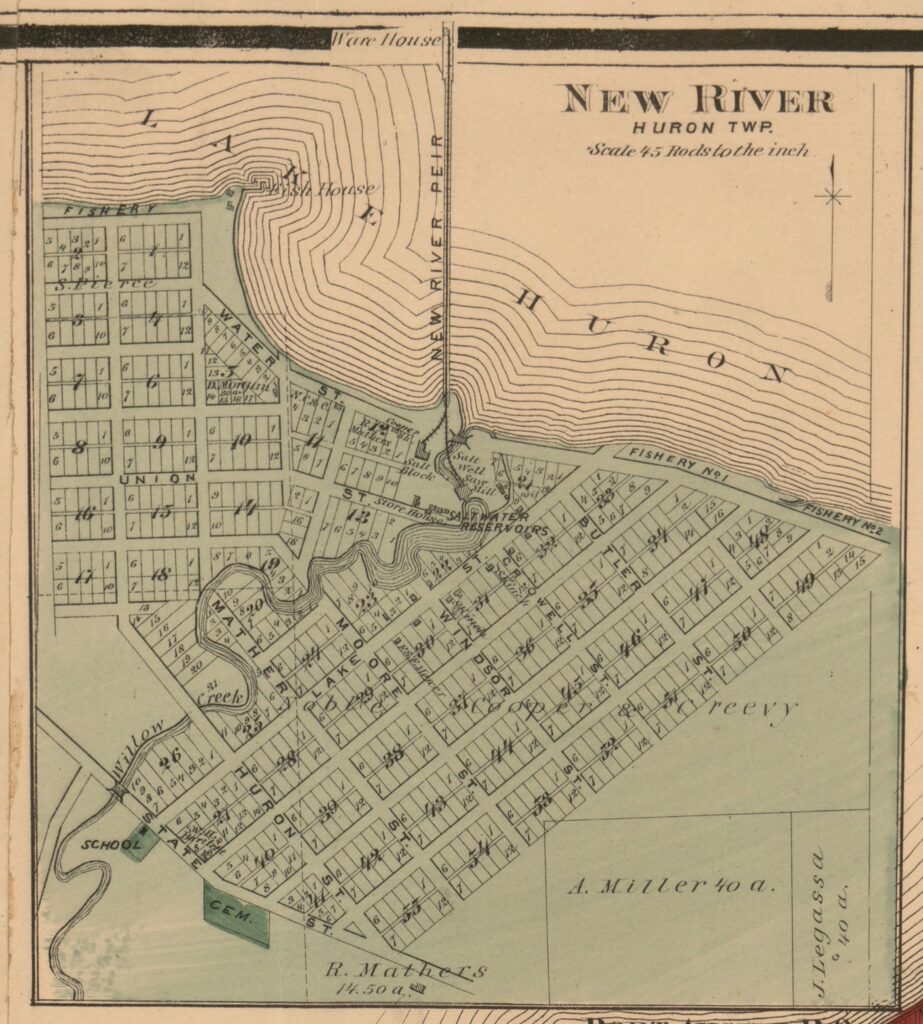
New River sat near the tip of Michigan’s Thumb, not far from Huron City and Port Austin. It began as a fishing site and became a small lumber and salt settlement with a dock, store, church, schoolhouse, cooper shop and worker housing.
A company owned much of the town. That meant the same operation controlled the jobs, housing, production and shipping. It also meant the town’s future depended heavily on that business.
New River’s salt works and lumber operations gave the place life, but they could not hold it. When timber declined and salt prices weakened, the town lost its reason to keep growing.
Today, cottage development has covered much of the former site. The cemetery and buried foundations are among the few traces of a place that once sent freight and passengers across Lake Huron.
Alabaster: The Ghost Gypsum Town
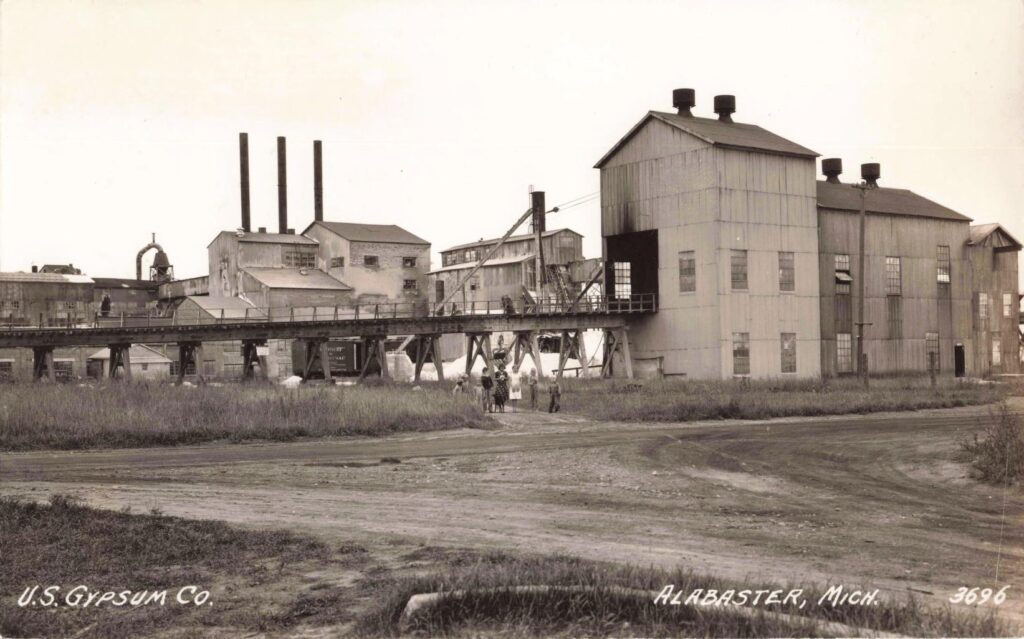
Alabaster, near Lake Huron in Iosco County, was built around gypsum.
The old company village grew around U.S. Gypsum operations, with quarry work, rail cars, a mill and a shipping system. Gypsum from Alabaster helped supply plaster and building materials far beyond the Lake Huron shore.
Alabaster is different from a fully abandoned ghost town. People still live in Alabaster Township, and the area remains part of Michigan’s industrial record. The ghost-town label applies to the former company village — the clustered place of worker homes, school, hotel, store, mill and post office that once supported the gypsum operation.
The old village faded as company-town life changed. The post office closed in 1962, marking a clear end to Alabaster’s former identity.
Berne: The Farm Hamlet Left Behind
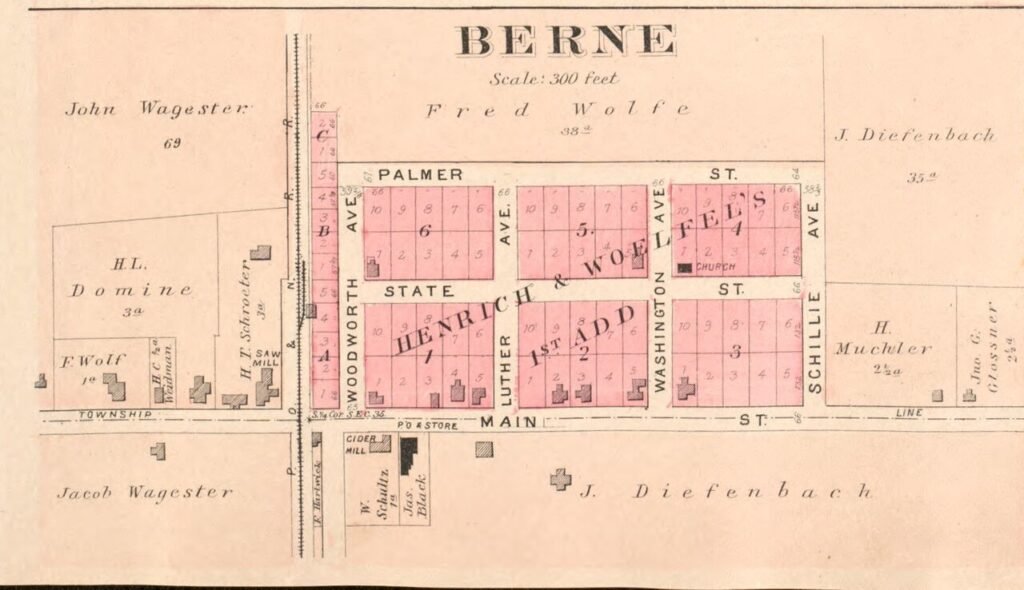
Not every ghost town had a blast furnace or a mine.
Berne, in Huron County, was a small farming hamlet in Winsor Township. It grew as a rural rail stop tied to farm families, churches, schools and small trade.
By 1900, Berne had the feel of a country crossroads: farms, a church, a general store and a modest community life shaped by crops, mail, church services and one-room schools.
Then nearby Pigeon gained importance. A stronger rail junction and growing commercial center pulled people and business away. Berne did not collapse in a fire or disappear beneath sand. It faded by being outmatched.
That is a common Michigan ghost-town story. Sometimes the town that survives is simply the town one mile closer to the tracks.
Linkville: The Railroad Stop That Lost Its Standing
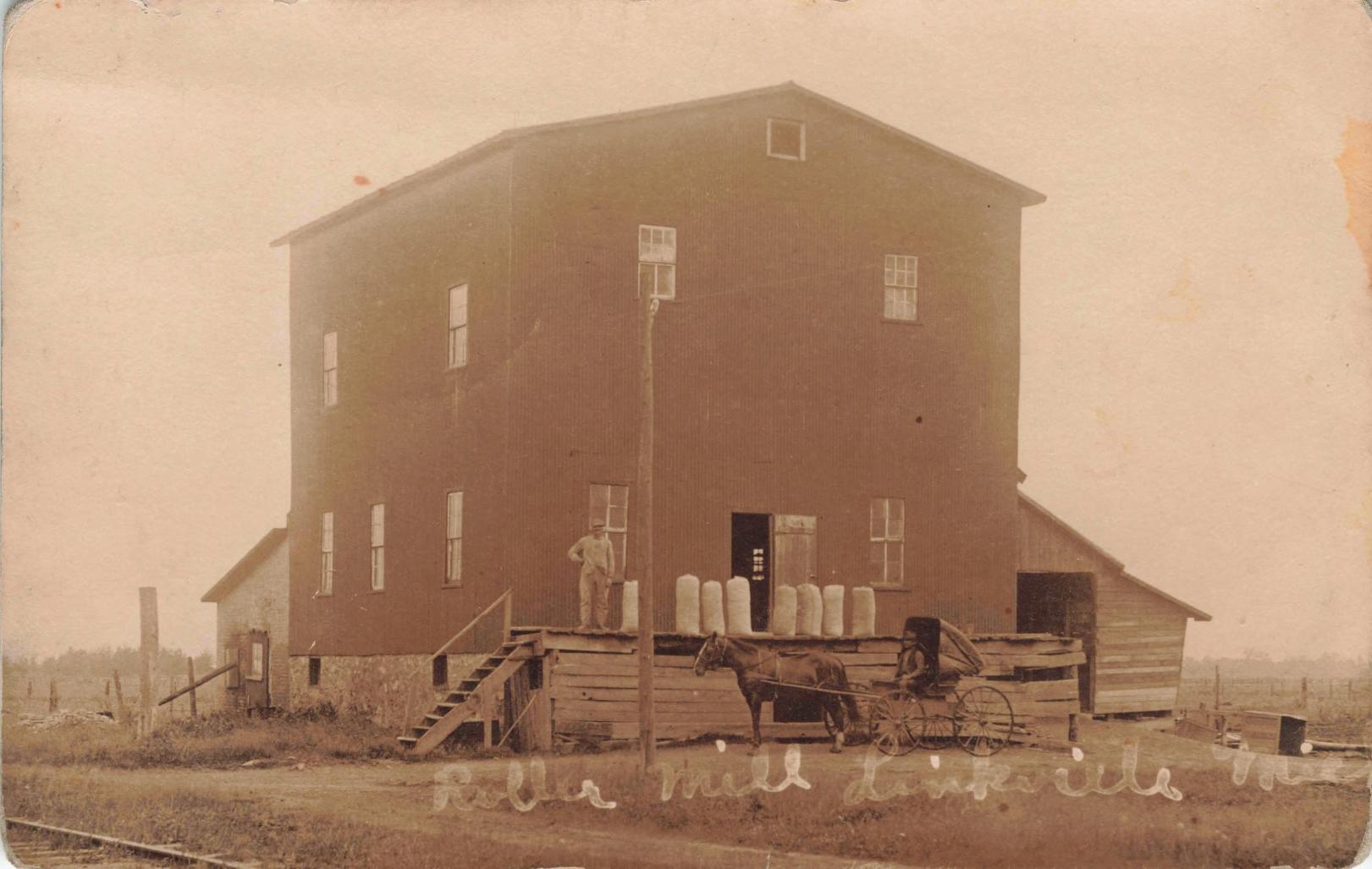
Linkville, also in Huron County, began under the name Kilkenny and later became Linkville. It served local farmers and rail traffic near the Pontiac, Oxford & Port Austin Railroad line.
The village had a post office, general store, depot, hotel or tavern, school and churches. It reached about 100 residents in the late 1890s.
But small railroad settlements were fragile. Linkville’s post office closed for good in 1913. After that, mail shifted to nearby towns and rural delivery. Once the post office, tavern and train stop lost their pull, Linkville’s independent role faded.
Today it is a reminder that a post office once meant more than mail. It meant identity.
Sigma: A Forgotten Interior Settlement
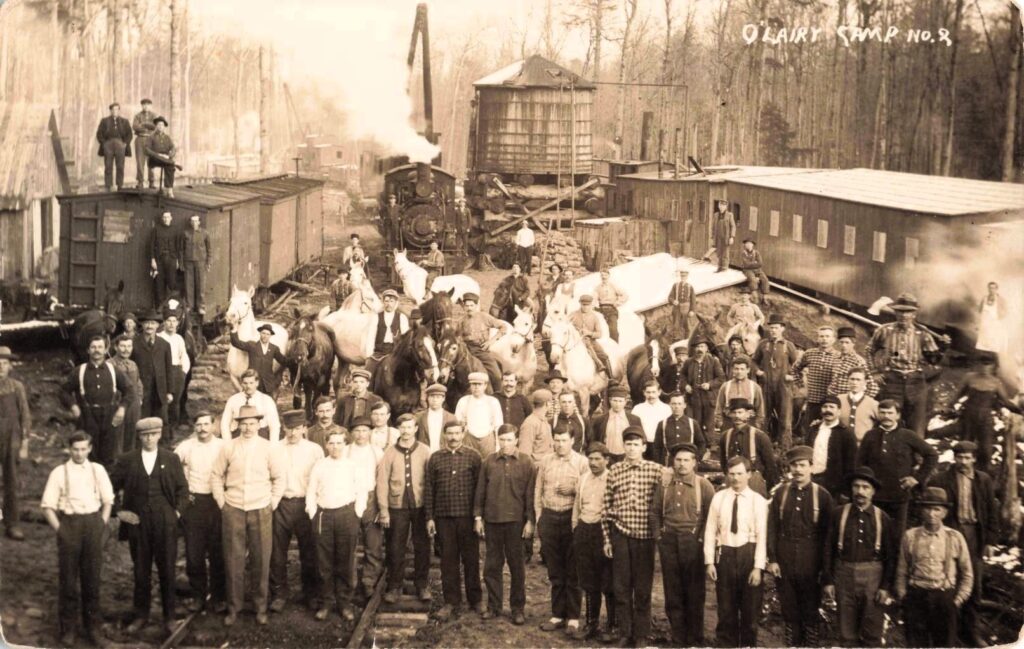
Sigma, in Kalkaska County, fits the inland Michigan ghost-town pattern. It was tied to logging, farming, roads and the slow formation of rural communities after the timber era.
Places like Sigma often left fewer dramatic ruins because their buildings were moved, reused, burned, dismantled or absorbed into farm country. These towns rarely get the fame of Fayette or Singapore, but they show how much of northern Michigan was shaped by short-lived settlements.
Sigma was not built to be famous. It was built to serve a local need. When that need changed, the town faded.
Freda: The Keweenaw’s Stamp Mill Ghost
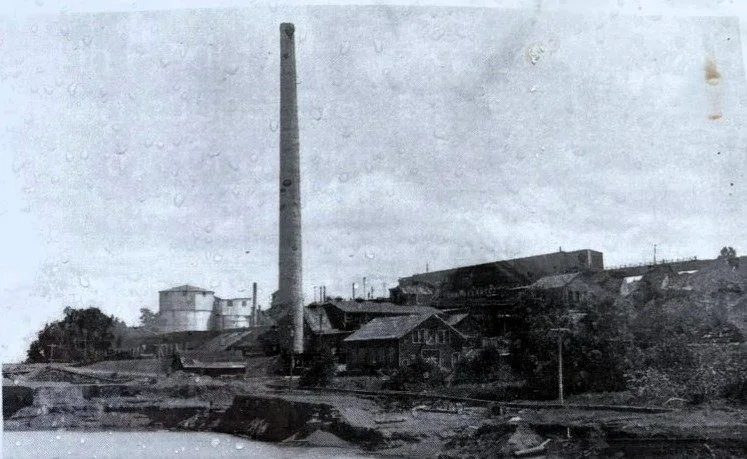
Freda, in the Keweenaw region, was tied to copper processing.
The town grew around the Champion Mill, where copper ore from the Copper Country was crushed and processed. It was a working industrial place with company housing and Lake Superior at its doorstep.
When copper production declined, Freda lost its main employer. Without the mill, the town had little chance. It remains one of the more atmospheric ghost-town sites in the Upper Peninsula, with industrial ruins and Lake Superior weather doing what they do best: making everything look older, colder and more serious.
Singapore: Michigan’s Town Buried By Sand
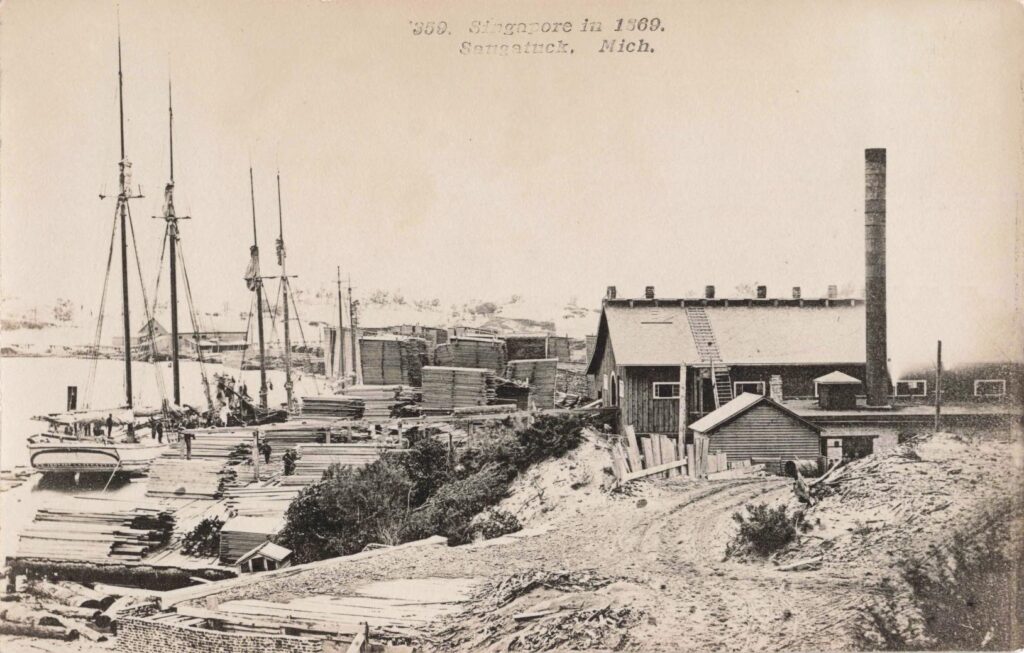
Singapore may be Michigan’s most dramatic ghost-town story.
Founded in 1836 near present-day Saugatuck and Douglas, Singapore was intended to become a major Lake Michigan port. It had mills, stores, hotels and shipping activity. Its lumber helped feed regional growth, especially after the fires of 1871 increased demand for building materials.
Then the town’s success turned against it.
The forests that protected Singapore from shifting sand were cut away. Without that cover, Lake Michigan dunes began moving in. By the late 1800s, sand was burying the town.
Michigan did not need lava to bury a settlement. It had dunes.
Today, Singapore is remembered as a lost town beneath the sand, a place where ambition met geology and geology won.
Port Oneida: A Preserved Farming And Port Community
Port Oneida, now part of Sleeping Bear Dunes National Lakeshore, began with fishing, forests, farms and Lake Michigan shipping.
Carsten Burfiend, a German immigrant, became one of the area’s early European residents. Thomas Kelderhouse later built a dock by 1862, and the community grew around cordwood, logging, a sawmill, a store, a blacksmith shop, a post office and farms.
By the 1890s, much of the land had been logged, and steamships were moving from wood to coal. Port Oneida’s early port economy declined. The community shifted toward farming, and today its historic farm district helps visitors understand how Lake Michigan settlements changed after the lumber years.
Port Oneida is not spooky. It is quieter than that. It feels like a place where someone left the chores unfinished.
Pere Cheney: The Ghost Town That Became A Legend
Pere Cheney, in Crawford County, began as a lumber town tied to George Cheney, a sawmill and railroad activity. It served as an early community in Crawford County and once had a depot, post office and local businesses.
The post office closed in 1912, and the town faded.
Then the legends took over.
Pere Cheney is now better known for cemetery stories, ghost tales and internet folklore than for its sawmill and railroad history. The cemetery is real. The town’s decline is real. The legends should be handled with care.
Still, there is no denying Pere Cheney’s strange place in Michigan history. It is one of those locations where the factual story is strong enough, but the folklore keeps barging in wearing muddy boots.
Old Victoria: A Copper Town With Cabins Still Standing
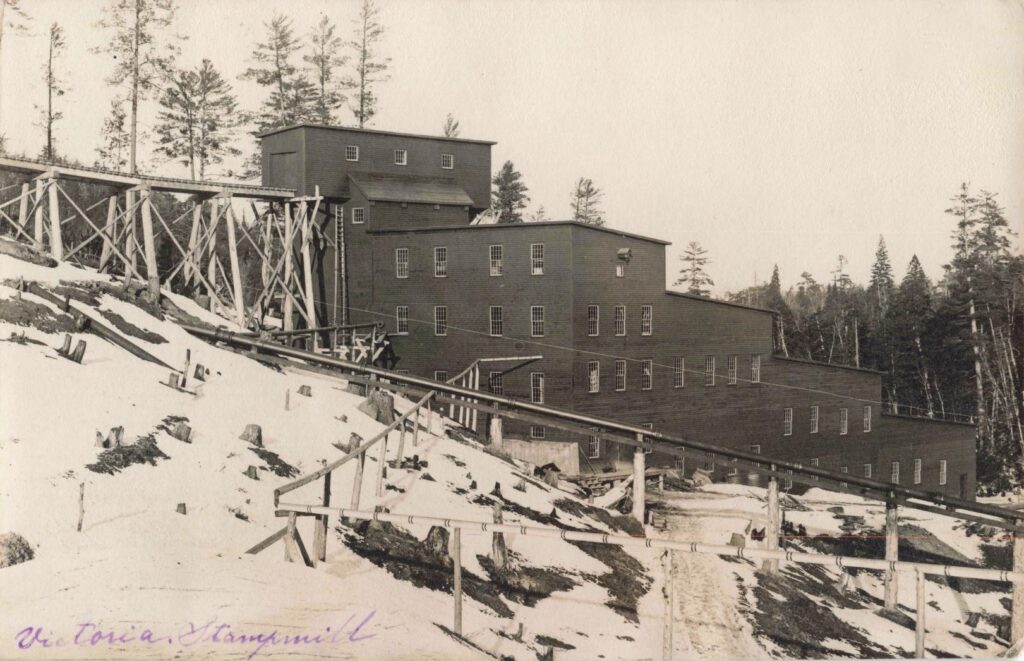
Old Victoria, in Ontonagon County, grew around the Victoria Mine, which operated on and off from the mid-1800s until 1921.
The mine village once had worker housing and the usual pieces of a copper community. After the mine closed, the village declined. In the 1970s, preservation efforts saved several old cabins, including boarding houses and a family home.
That makes Old Victoria unusual. Many ghost towns leave only a cemetery, an old grade or a few stones. Old Victoria still has buildings that help tell the story of mining families who lived near the work, followed the payroll and faced the boom-and-bust life of the Copper Country.
Nonesuch: The Mine With The Perfect Name
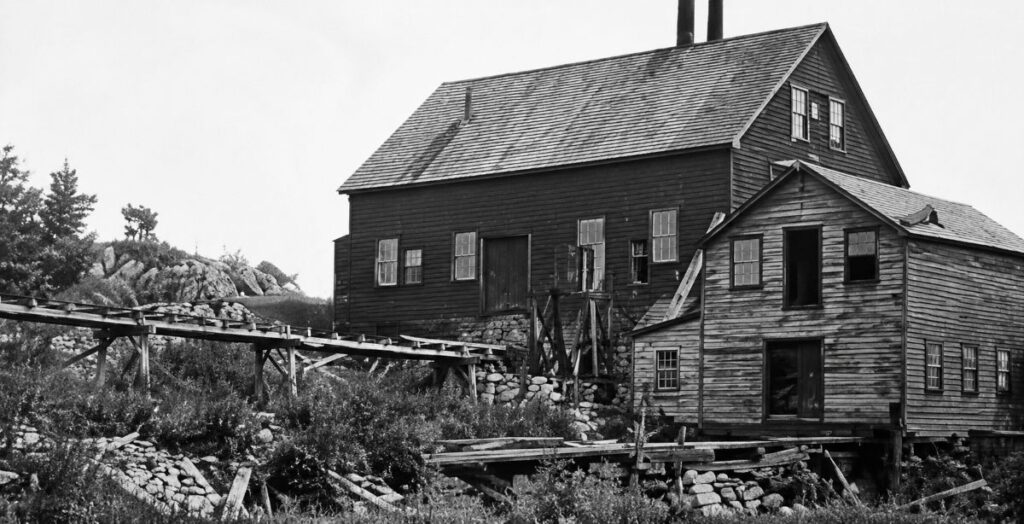
Nonesuch, near the Porcupine Mountains, may have the most fitting ghost-town name in Michigan.
The Nonesuch Mine had copper, but it was difficult to process. Fine copper in sandstone sounded promising until companies tried to separate it profitably with the technology of the time.
The mine opened and closed several times from 1867 to 1912. It had a post office, boarding house, school, stores, stage service and a small population during its peak years.
But the copper would not cooperate. There was value in the rock, but not enough value that could be recovered at a profit.
That is the cruelest kind of mining story: the metal is there, but the money is not.
Disco: The Best Name On Any Michigan Ghost-Town Map
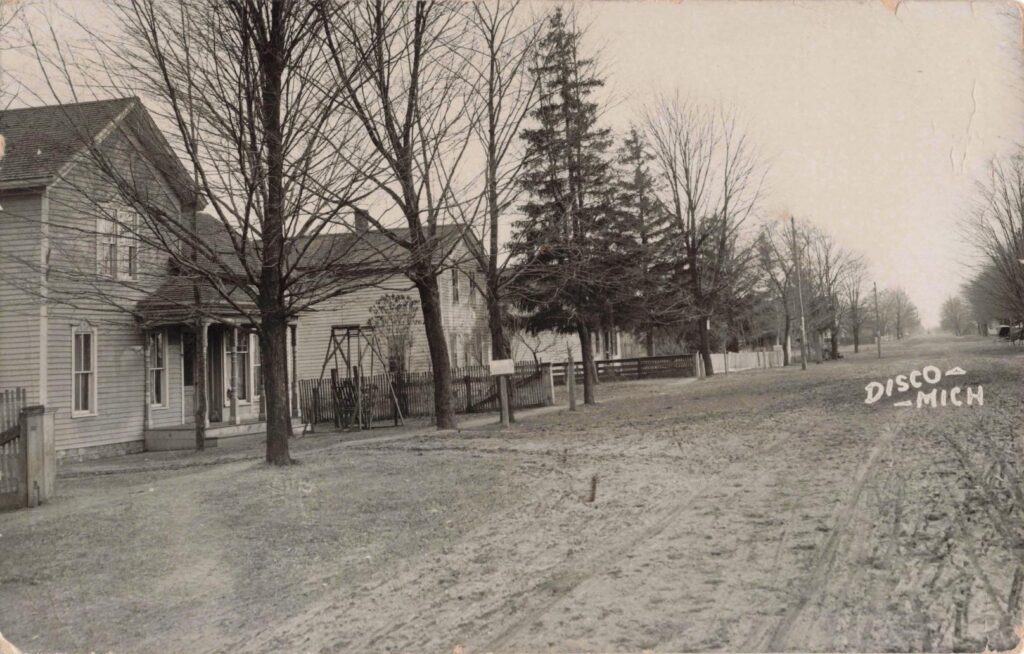
Disco, in what is now Shelby Township in Macomb County, was platted in 1849.
The name came long before 1970s dance floors, mirrored balls and relatives who should not have been encouraged at weddings. Disco had stores, blacksmith shops, wagon shops, mills, a hotel, a post office and the Disco Academy.
Its post office closed in 1906, and the village never incorporated. As nearby development grew, Disco faded into road names, old maps and local memory.
Many ghost towns leave behind tragedy. Disco left behind a punchline with historical value.
Aral, Edgewater, Good Harbor And Glen Haven
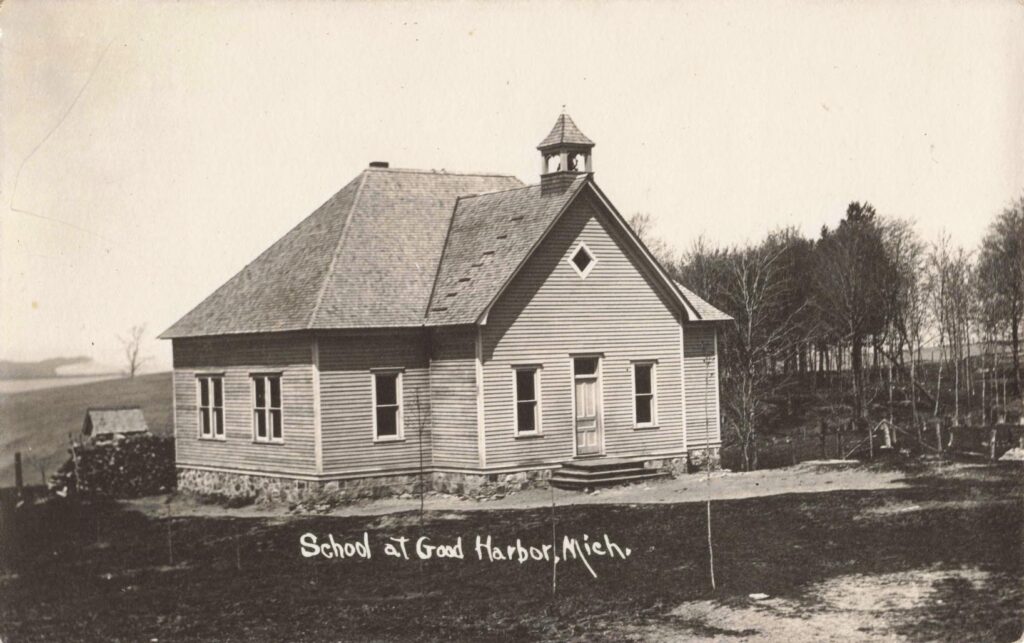
Sleeping Bear Dunes National Lakeshore includes several former logging settlements.
Aral, near Otter Creek, grew as a lumber town in the 1880s and reached about 200 residents. Its mill closed in 1911, and the town faded soon after.
Edgewater, near Platte Lake, used a small railroad to move lumber from mill to Lake Michigan. When the mill closed around 1900, buildings were taken apart and reused.
Good Harbor, north of Glen Arbor, had mills, a dock, stores and lumber shipments across Lake Michigan. As timber declined, the town’s role faded.
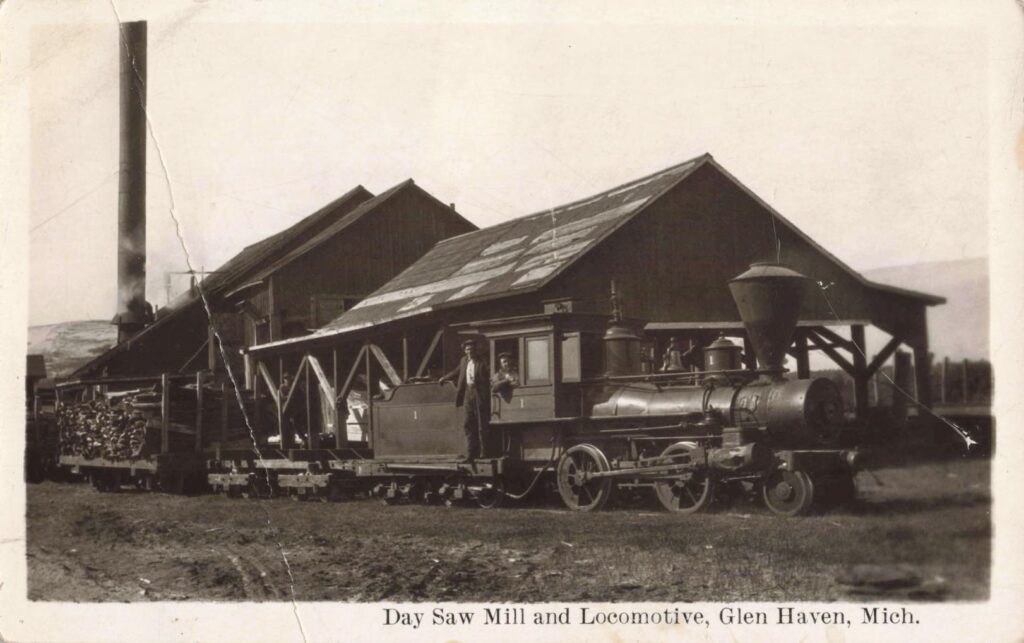
Glen Haven had better luck. It began as a Lake Michigan port and wooding stop for steamships, then shifted into other uses. Today, it is preserved within Sleeping Bear Dunes National Lakeshore.
Some ghost towns vanish. Others get interpretive signs and a blacksmith shop.
Central Mine And Clifton: Keweenaw Copper Towns
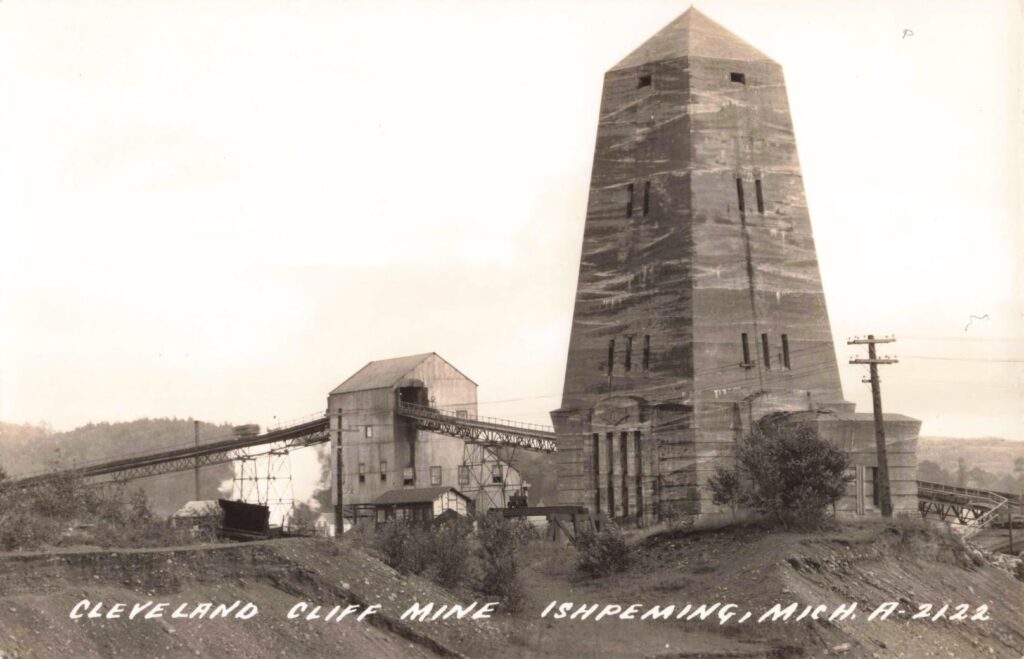
The Keweenaw Peninsula is full of places where copper built communities and then left them exposed.
Clifton grew around the Cliff Mine, one of Michigan’s early copper operations. When the mine declined, the town lost its purpose.
Central Mine was tied to another important copper operation. It once had homes, churches and a strong mining community. The mine closed in 1898, and the last permanent resident left in the 1950s.
Central’s church and remaining buildings still draw visitors. Like Old Victoria, it gives the Keweenaw a visible record of mining life after the payroll stopped.
What Michigan Ghost Towns Still Teach Us
Michigan ghost towns are not all the same.
Some were industrial company towns. Some were railroad stops. Some were farming hamlets. Some were lumber ports. Some were mining camps. Some are now state parks or national park sites. Others survive only in cemeteries, old plats, foundations or family records.
The people who lived in these places were not props in a ghost story. They were workers, parents, shopkeepers, teachers, ministers, miners, loggers, farmers, sailors and children. They built communities with the tools they had and the future they expected.
Then Michigan changed around them.
That is why Michigan ghost towns still matter. They show how the state was built, how fast opportunity could move and how much history can sit quietly behind a campground, a two-track road, a farm field or a shoreline trail.
Listen to the full episode of End of the Road in Michigan for the stories behind Michigan’s little-known ghost towns, from Fayette and Port Crescent to Singapore, Pere Cheney, Old Victoria, Nonesuch and Disco.
Images on this page may contain affiliate links in which we may receive a commission. See our affiliate disclosure for details.
Cited Sources for Michigan Ghost Towns
- “Ghost Towns in Michigan’s Thumb.” Thumbwind, 30 Apr. 2021.
- “Vanished Company Town: New River, Michigan.” Thumbwind, 15 Jan. 2021.
- “The History of Fayette, Michigan.” Thumbwind, 19 Dec. 2025.
- “History of Berne, Michigan.” Thumbwind, 25 Jan. 2026.
- “Linkville Michigan History, 1890–1930.” Thumbwind, 25 Jan. 2026.
- “History of Alabaster, Michigan.” Thumbwind, 11 June 2026.
- “History of the Ghost Town of Sigma, Michigan.” Thumbwind, 24 June 2026.
- “Freda Michigan History.” Michigan4You.
- “Michigan Ghost Town: A Dirt Road Downtown Near Michigamme Falls.” Michigan4You.
- “Ghost Towns.” National Park Service, Sleeping Bear Dunes National Lakeshore.
- “Port Oneida History.” National Park Service, Sleeping Bear Dunes National Lakeshore.
- “Fayette Historic State Park.” Michigan Department of Natural Resources.
- “Port Crescent State Park.” Michigan Department of Natural Resources.