 by
by 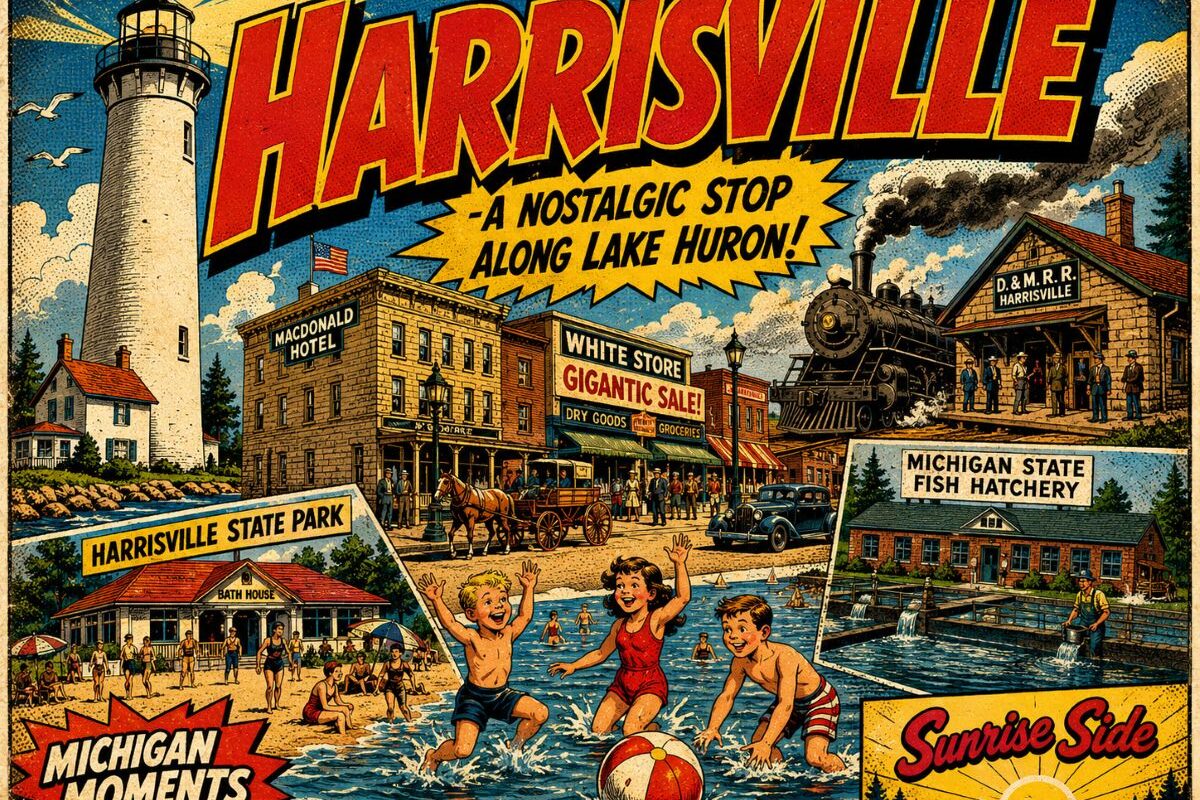
The History of Harrisville Michigan begins with a Lake Huron town shaped by timber, railroads, fishing, farming and summer travel. In the early 1900s, Harrisville was more than a quiet county seat on Michigan’s Sunrise Coast. It was a working town with a stone railroad depot, busy hotels, a milling company, roadside cabins, a state fish hatchery and a lighthouse watching over ships near Sturgeon Point.
These historic photos show a community in motion, where trains brought visitors, Main Street stores served local families, and the lake remained central to daily life.
Table of Contents
Watch – Harrisville 1900s: A Stroll Down Memory Lane
Main Street Landmarks: MacDonald Hotel and The White Store
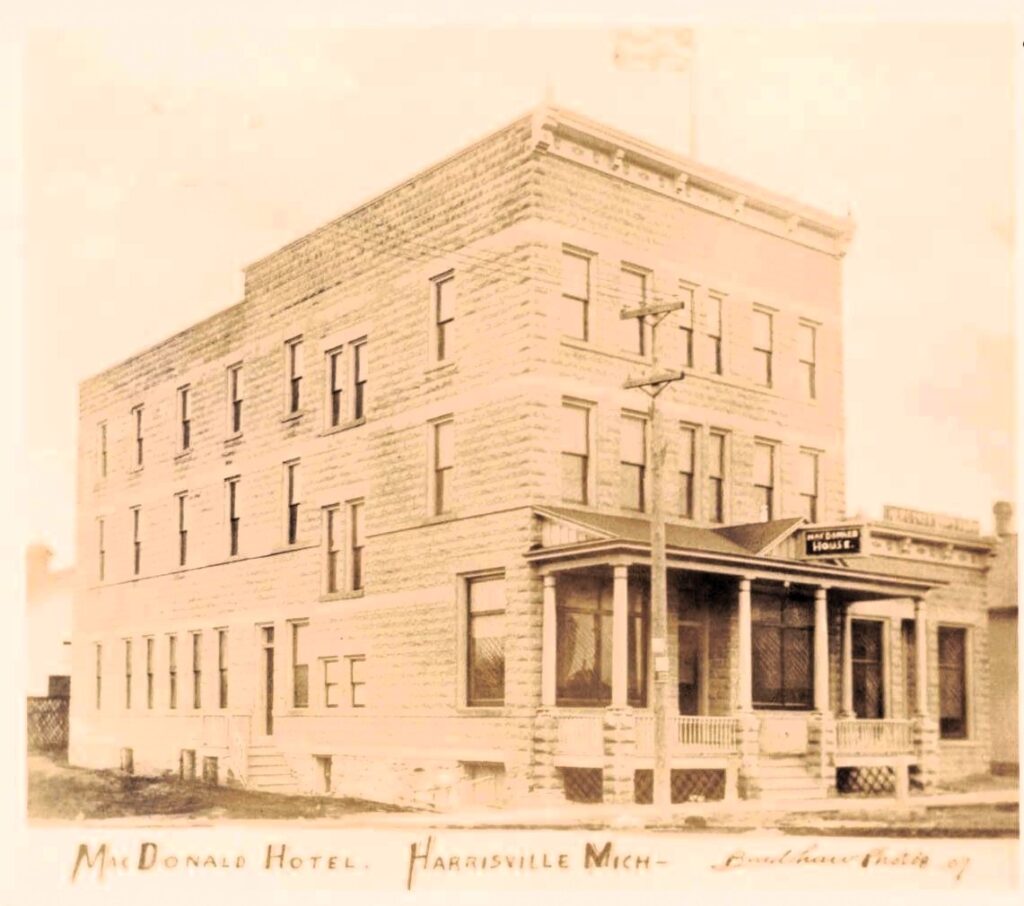
On the bustling corner of Main and Lake Street sat the MacDonald Hotel, originally established as the Alcona House Hotel in 1866. With its flag flapping atop the roof and a broad porch out front, this hotel welcomed lumber barons, lake captains, and locals alike. It was one of the few buildings to survive Harrisville’s early fires, and its cozy lamps glowed each evening as travelers found a warm meal and a soft bed inside.
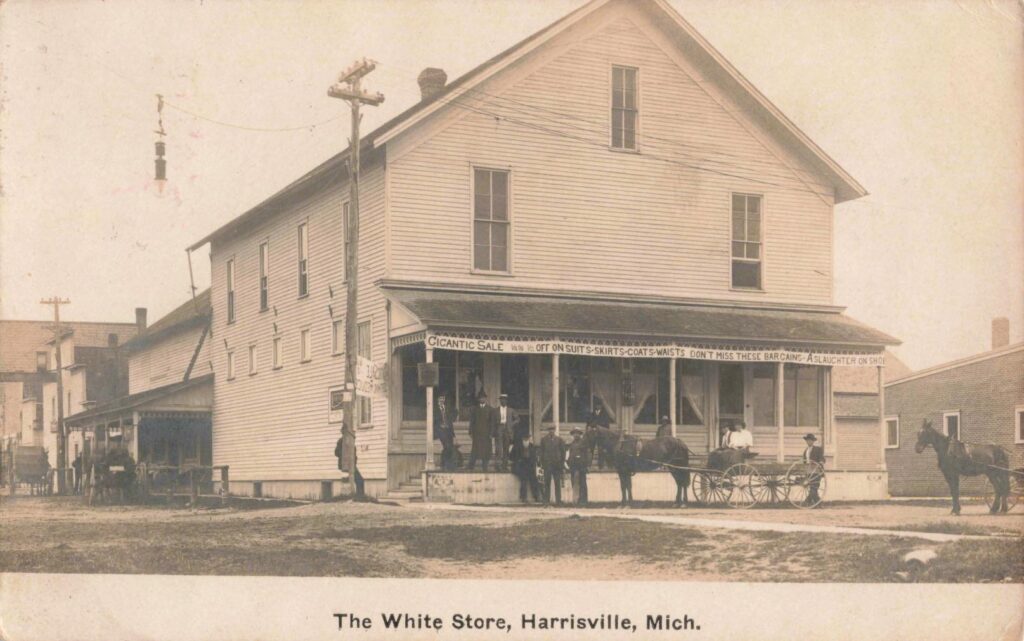
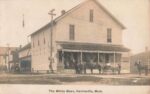
Just down the street, The White Store became a hub of daily life. This general store – later known as Pizer’s Variety – anchored the downtown with everything from dry goods to Sunday hats. In fact, it earned its nickname from its white-painted exterior and was originally known simply as “The White Store,” sitting right at the corner of Lake and Main.
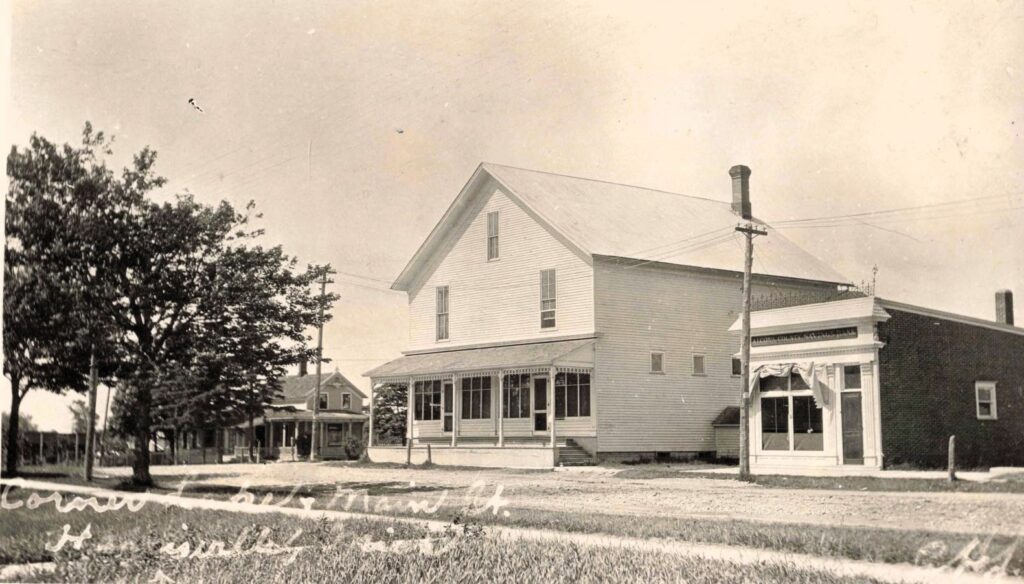
Horse-drawn wagons often lined the dirt road out front, and during a “Gigantic Sale” (as a banner once proclaimed across its porch), townsfolk hitched their horses and crowded in for bargains. These two landmarks – the stately hotel and the friendly general store – formed the heart of a small-town community where everyone felt at home.
All Aboard at the D&M Railroad Depot
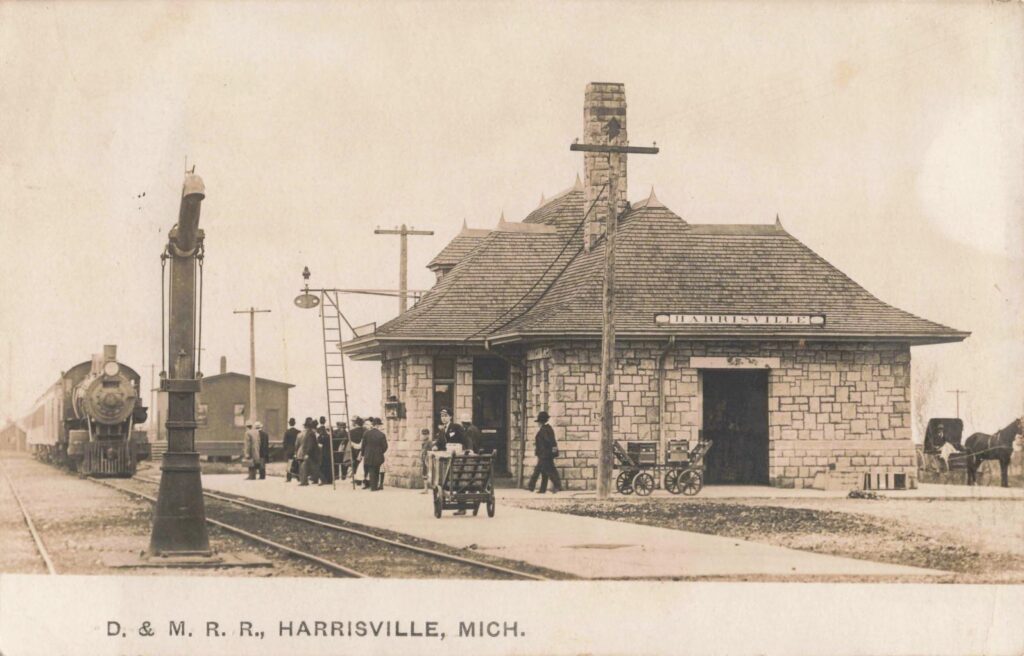
In the early 1900s, the rhythmic chuff of steam locomotives became part of Harrisville’s soundtrack. The Detroit & Mackinac Railroad (D&M) built a handsome cut-stone train depot here in 1901, one of only two stone stations on the line. Perched alongside the tracks near Dock Street, the depot saw its first scheduled passenger service in late 1901. Residents would gather when the train rolled in – a mix of daily commuters, excited tourists, and crates of goods all arriving in a cloud of steam.
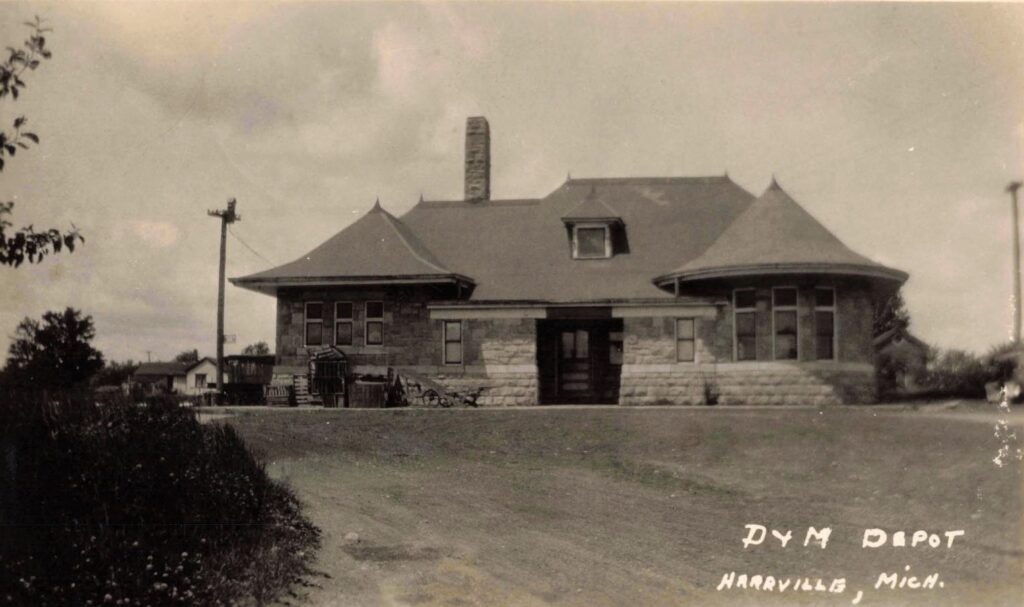
The building’s sturdy fieldstone walls gave it an air of pride and permanence, and a broad overhanging roof sheltered waiting passengers from sun or snow. On a summer morning, you might see fishermen with tackle boxes hopping off, or a family in Sunday best ready to journey south. This depot connected tiny Harrisville to the wider world: one could board here and ride the rail down to Bay City or Detroit, or north toward Alpena. The last scheduled D&M passenger train ran in 1951, but in our early-1900s memory the station is alive and bustling – a place of greetings and farewells, with the stationmaster’s lantern signaling and the train’s whistle echoing over Lake Huron.
Grinding Grain at the Harrisville Milling Company
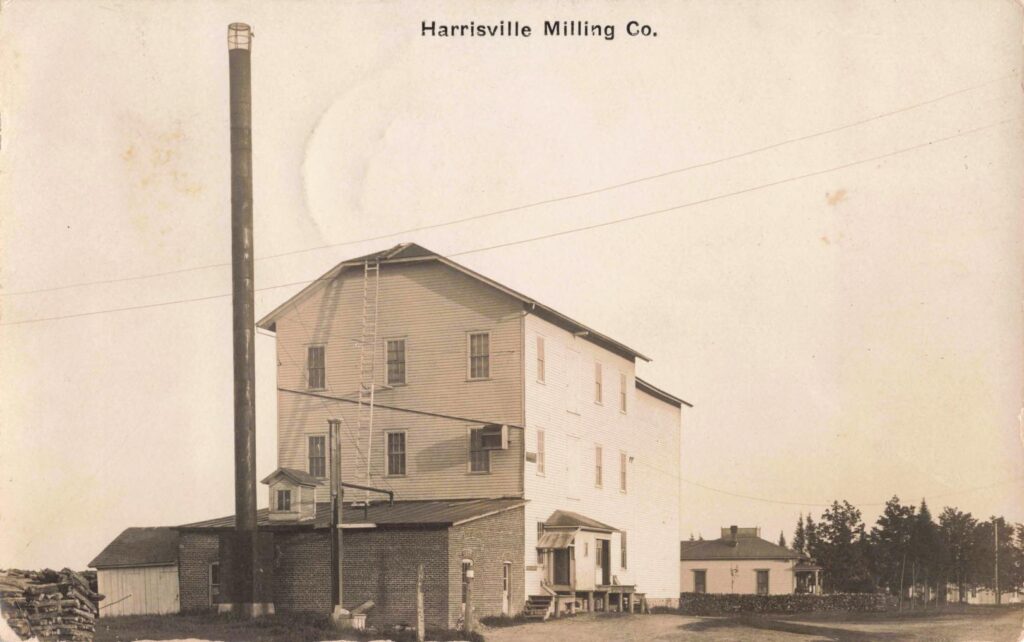
Just west of downtown near Mill Pond stood the Harrisville Milling Co., the old grist mill that kept local pantries filled and barns stocked. By the turn of the century, this mill – with its prominent boiler house and sky-high smokestack – was a pillar of the community’s agricultural life. Farmers from the surrounding countryside would bring wagonloads of corn, wheat, or buckwheat to be ground into flour and feed. Neighbors often caught up on news while waiting for their grain, chatting over the steady rumble of millstones and the hiss of steam powering the equipment.
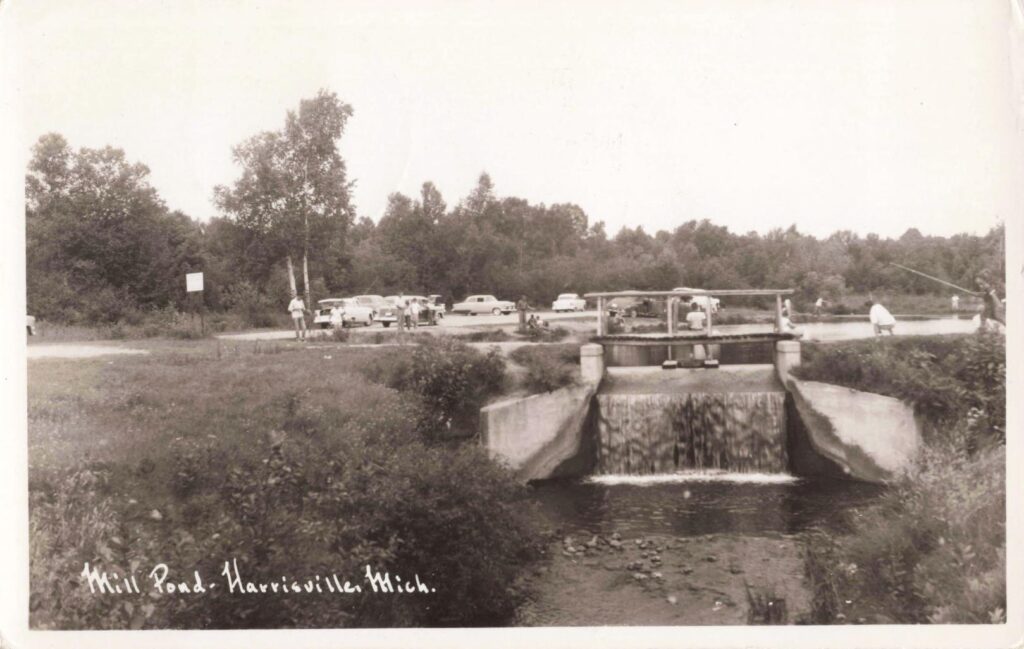
The Mill Pond adjacent to the mill was originally created by damming a creek, providing water power in earlier days and a scenic spot where children might fish for trout. In the crisp fall air, the scent of freshly ground grain and woodsmoke from the mill’s furnace drifted through town. The Harrisville Milling Company operated through these early decades, adapting from water power to steam and later gasoline engines, until its closure in the mid-1900s. Its memory lives on as a symbol of hard work and self-sufficiency – a place where the “daily bread” of a growing town was literally milled and bagged for the community.
Greenbush Inn: A Lakeside Retreat South of Harrisville
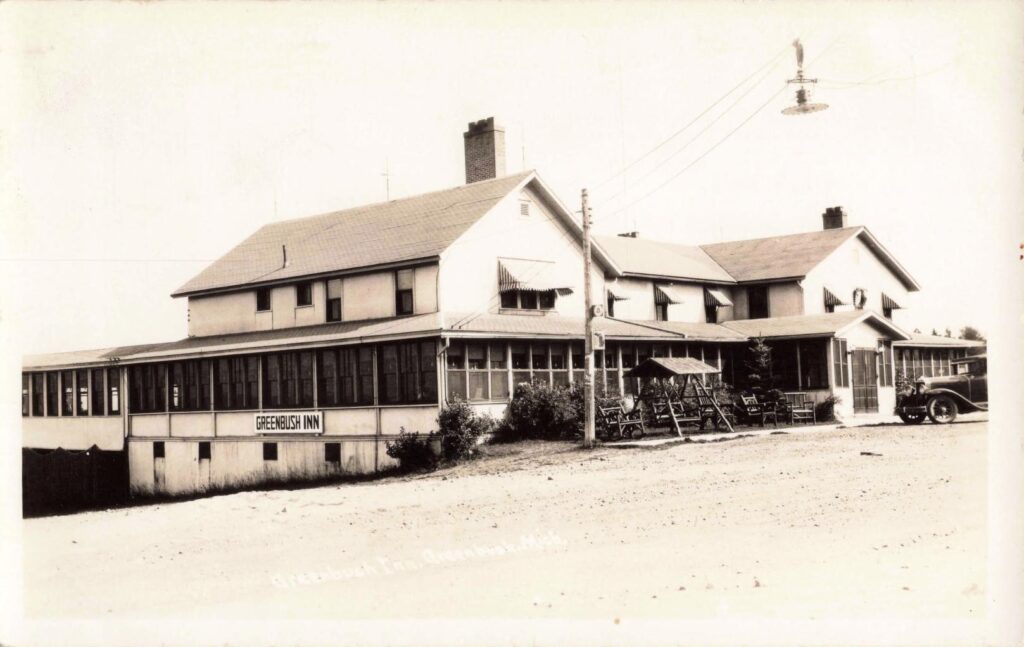
. A few miles down the shore from Harrisville, the Greenbush Inn offered a touch of elegance and leisure to residents and vacationers alike. Opened officially on June 22, 1925 by owner Carl E. Schmidt, this sprawling lakeside resort quickly became a landmark of hospitality. The inn’s early offerings were humble – just three guest rooms and a family-style dining room – but its popularity demanded rapid expansion.
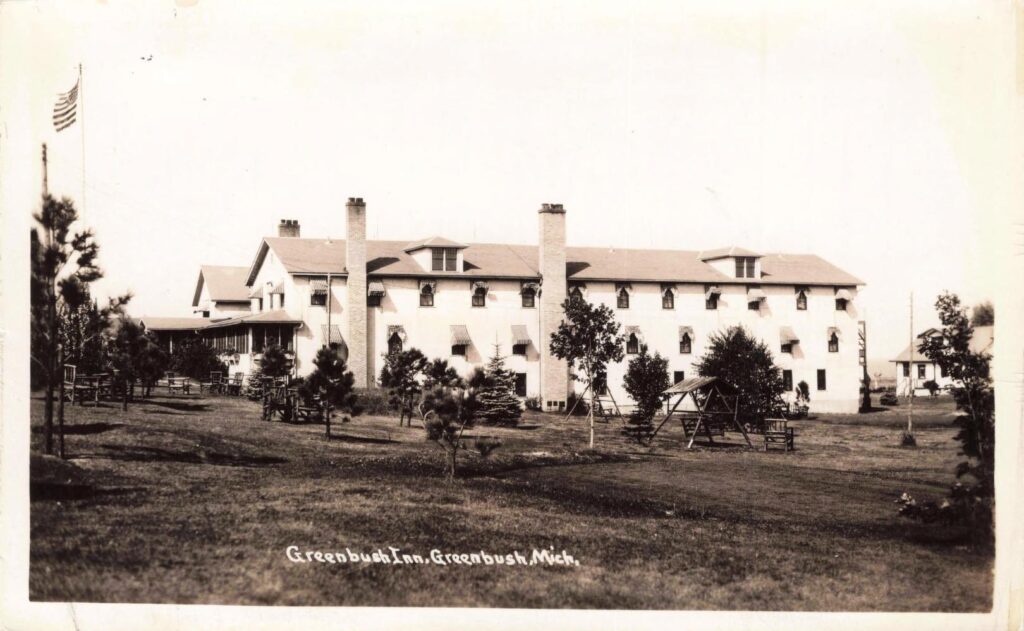
By the end of 1925, an entire new wing was added, boasting 17 modern guest rooms (each with hot and cold running water, quite a luxury at the time) and an enlarged 42×32-foot dining hall with seating for 140 guests. A massive stone fireplace in the lounge cast a warm glow on guests gathering for supper or swapping stories in the evenings. At the Greenbush Inn, urbanites from Detroit or elsewhere could step off the train or motor up the new highway US-23 and find fresh lake breezes, boating and fishing, and hearty home-cooked meals waiting for them.
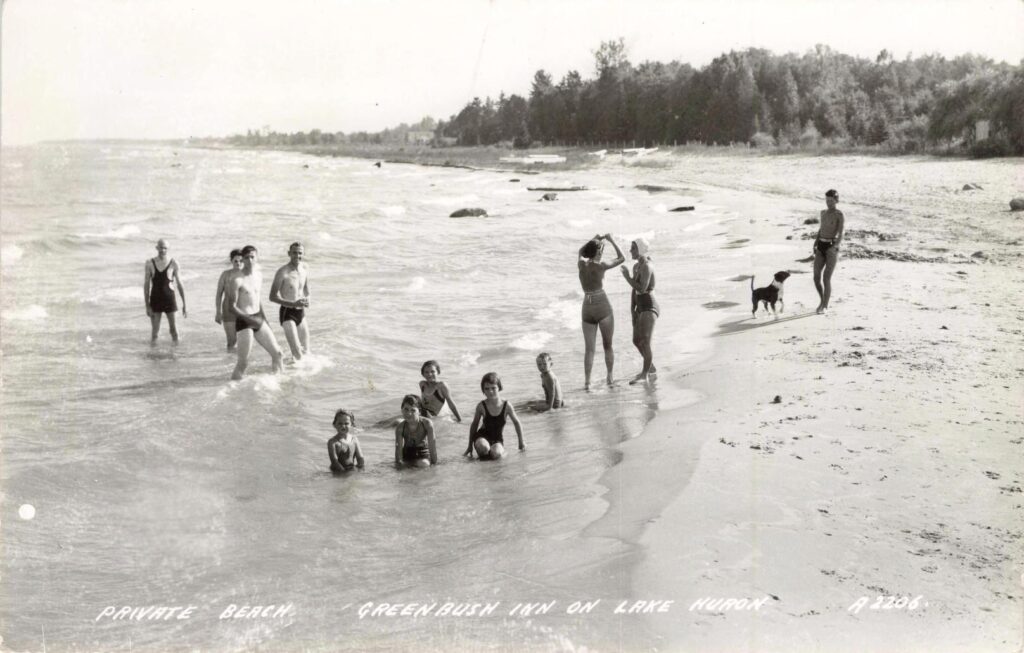
The broad lawn sloping toward Lake Huron often had children playing on a wooden swing set and couples strolling under the shade of pines. For over forty years, the inn stood as a beloved getaway on the “Sunrise Side.” Though the Greenbush Inn’s story ended when a fire tragically destroyed it in 1968, in our nostalgic tableau it remains forever a scene of summer laughter, clinking dinner china, and the smell of lake air mixed with pine.
Roadside Refuge at Warner’s Place
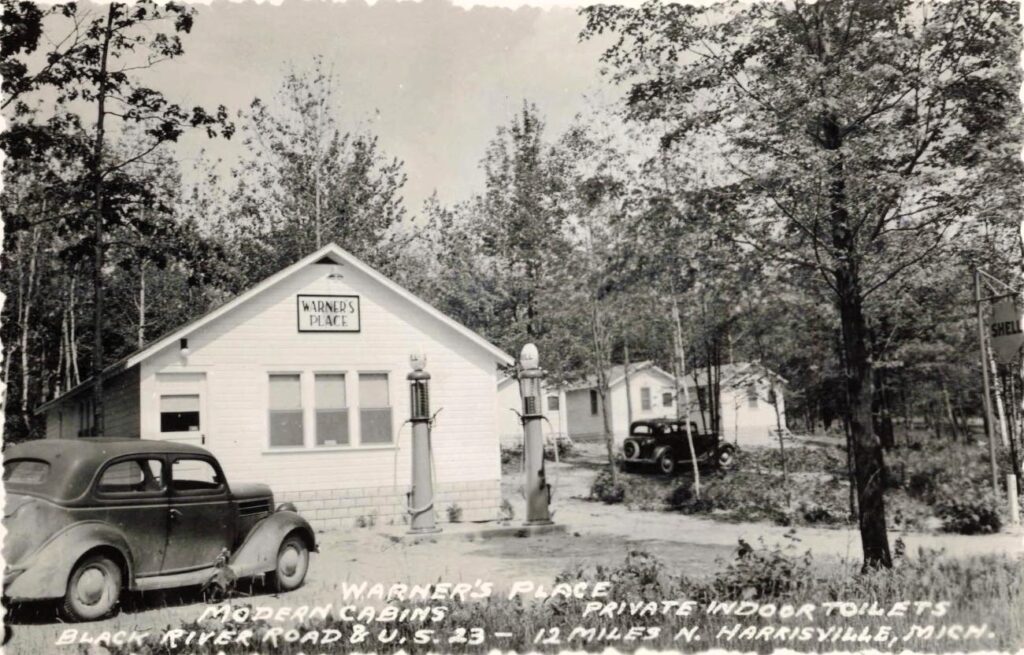
As automobiles began to transform travel in the 1920s and 30s, little cabin colonies popped up along Michigan’s highways. Warner’s Place was Harrisville’s own slice of this new “auto tourist” era, located about 12 miles north of town at the junction of Black River Road and US-23. By 1938, Frank and Annie Warner had set up modern cabins with private indoor toilets – a big selling point at the time – to entice road-trippers cruising up the Lake Huron shore.
The vintage photograph shows a neat white office building with a Warner’s Place sign under the gable, a couple of gasoline pumps out front (a Shell gas logo visible amid the trees), and a few early automobiles parked on the gravel drive. Travelers could fill their tank, rent a cozy cabin for the night, and enjoy the simple pleasures of the north woods – crackling campfires and crickets chirping under starry skies.
The Warner family promised “good fishing and lots of peace & quietness,” as one postcard cheerfully advertised. Indeed, nearby streams and forests provided ample fishing and hunting for vacationers looking to catch their dinner or simply unwind. With its birch and pine trees swaying gently around the cabins, Warner’s Place offered a friendly welcome and a good night’s rest to generations of travelers, embodying the warmth and entrepreneurship of small-town Michigan along the burgeoning “Sunrise Side” tourist route.
Streams of Life: The Michigan State Fish Hatchery
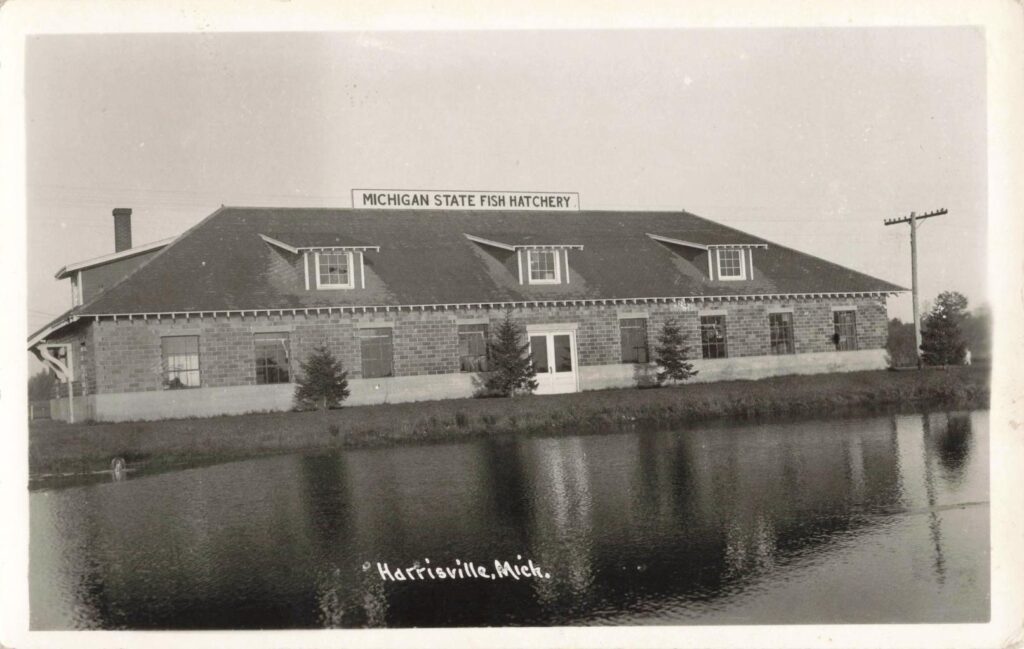
Tucked by a series of tranquil ponds on Harrisville’s outskirts was the Michigan State Fish Hatchery, a proud example of early conservation efforts. Established in the early 20th century, the hatchery’s mission was to breed and raise fish – especially trout – to stock the lakes and rivers of northeast Michigan. The long, single-story brick hatchery building had a clean, practical design with a dormered roof and a big sign proudly labeling it “Michigan State Fish Hatchery” across the front gable. Just beyond its doors lay rows of hatchery ponds reflecting the sky, where thousands of fingerling trout darted in the clear water.
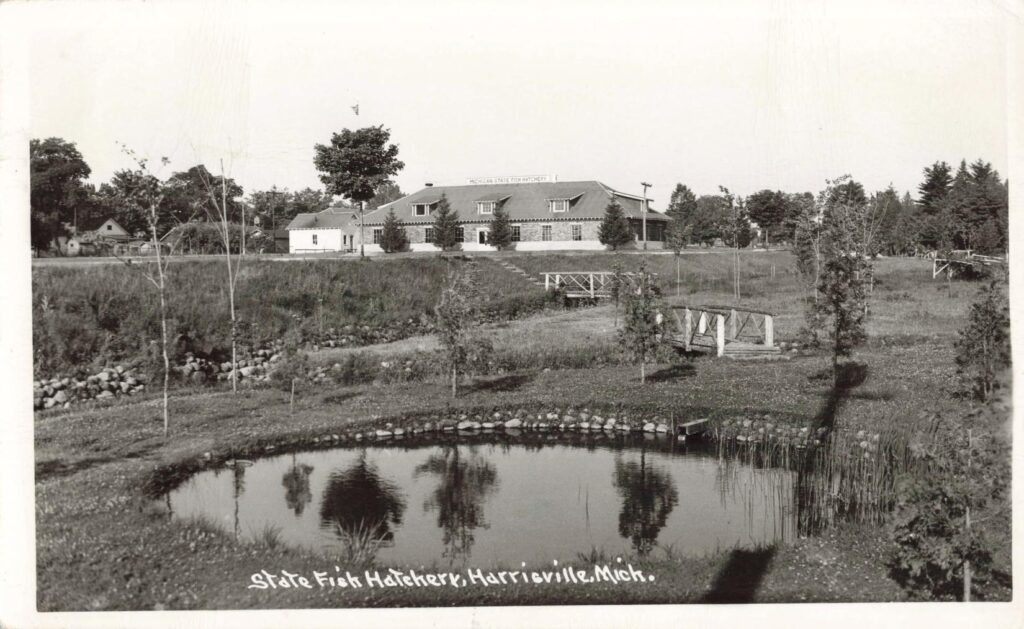
Local children were known to hop on their bicycles and ride over to peek at the baby fish, pressing their noses against the wire screens as hatchery workers in high boots waded through the ponds at feeding time. Inside the building, troughs and tanks held fish fry in various stages of growth, tended carefully by state conservation staff. The hatchery not only supplied stock for sport fishing – ensuring that anglers around the region could enjoy bountiful catches – but also became an educational attraction.
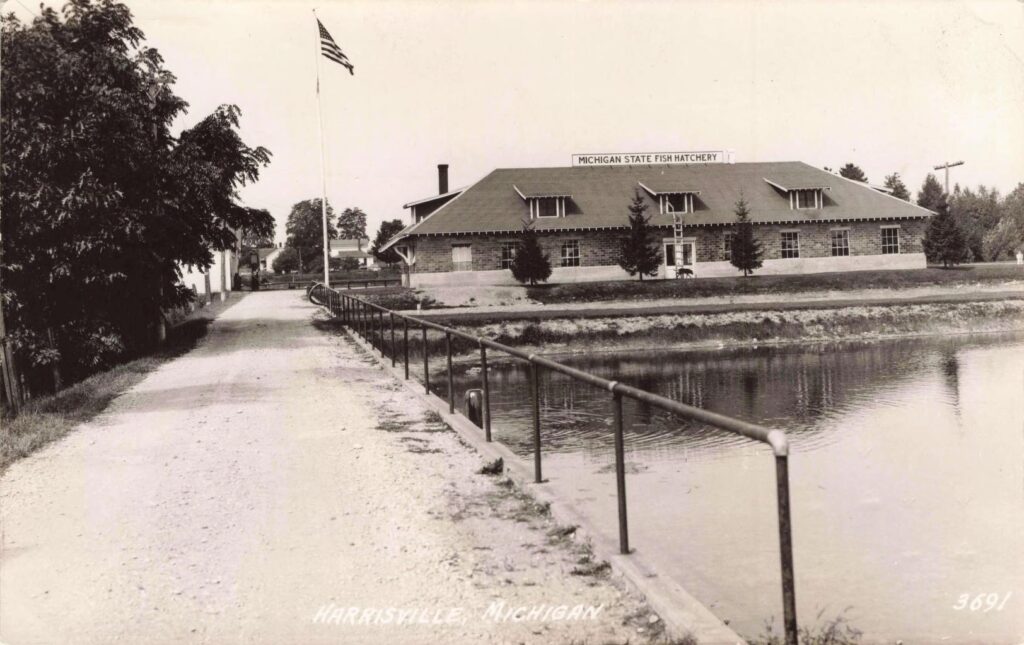
Families might stop by on a weekend to see the “fish farm” and learn how tiny eggs turn into jumpable trout ready for release. For Harrisville, the state fish hatchery was a point of pride: a place where science and nature met, quietly supporting both the local economy and the cherished outdoor traditions of Michigan’s “Sunrise Coast”.
Sturgeon Point Lighthouse: Guiding Light on Lake Huron
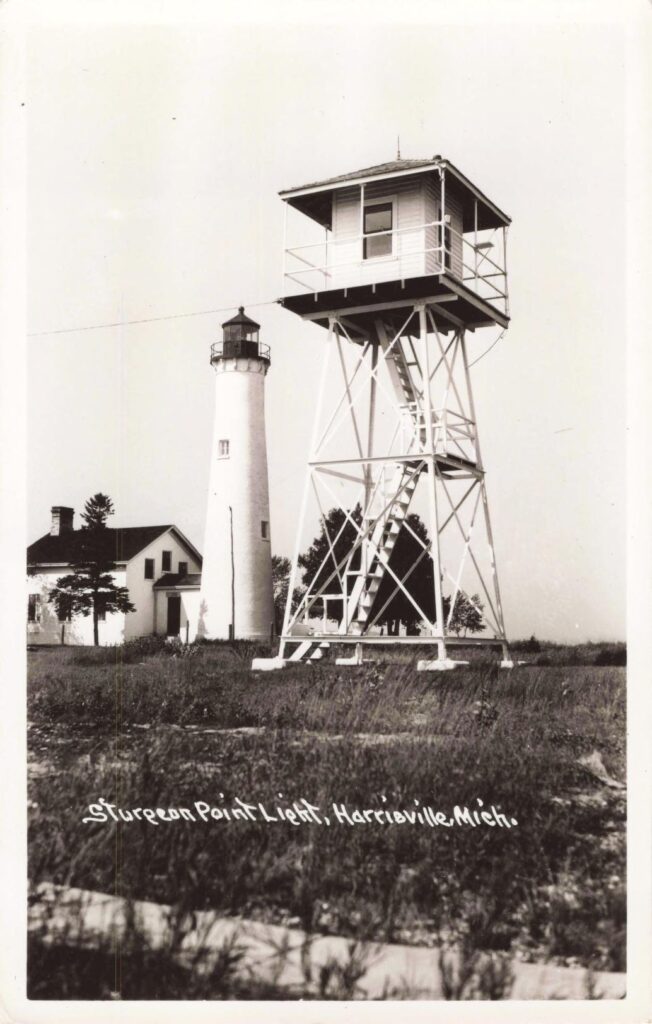
A short drive up the shoreline leads to Sturgeon Point Lighthouse, one of the most iconic sights near Harrisville. First lit in 1870, this lighthouse was established to ward mariners off a treacherous reef that extends 1.5 miles into Lake Huron. The lighthouse is a gleaming white brick tower, about 70 feet tall, built in a Cape Cod style common to Great Lakes lights of its era. In the early 1900s, its 3½-order Fresnel lens flashed a beacon that could be seen for miles by ships hauling lumber, stone, or iron on the Great Lakes. Keepers and their families lived in the attached dwelling, braving brutal winters and fierce lake storms to keep that light burning bright.
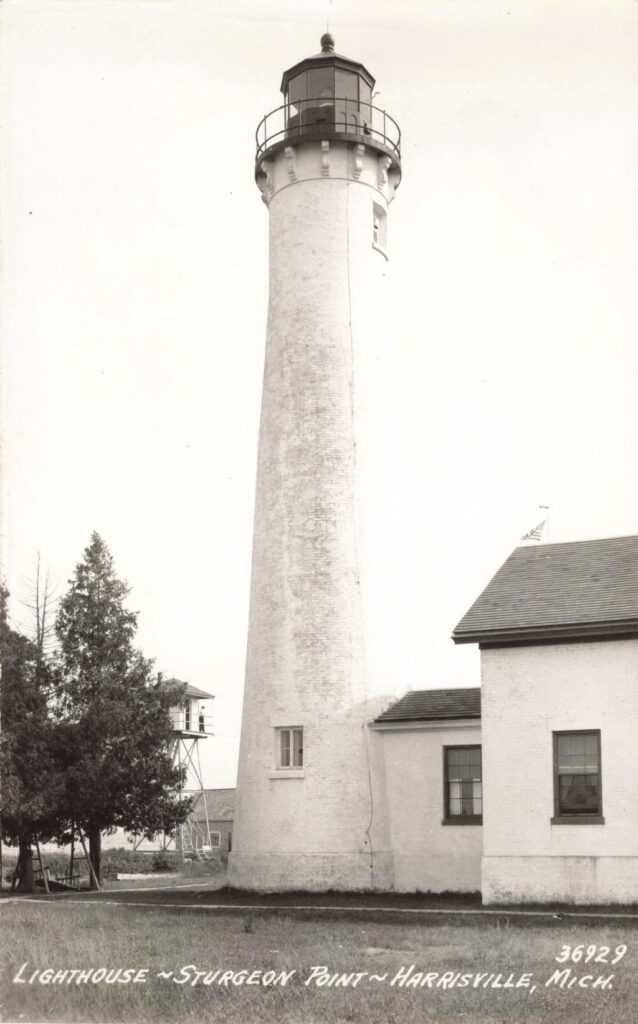
Villagers from Harrisville would sometimes make the trip to Sturgeon Point for a Sunday picnic, especially when the lake was calm – the children excited to climb the narrow spiral stairs of the lighthouse during occasional public visiting days. On stormy autumn nights, residents took comfort seeing the lighthouse beam on the northern horizon, sweeping across the dark waters in steadfast reassurance. Today, Sturgeon Point Light is preserved as a museum, but in our reminiscence of the early 1900s it’s an active guardian, its warm lamp cutting through fog and darkness. It stands not only as a navigational aid but as a symbol of Harrisville’s connection to Lake Huron, guiding sailors and fishermen safely along the rocky coast.
Summer Days at Harrisville State Park
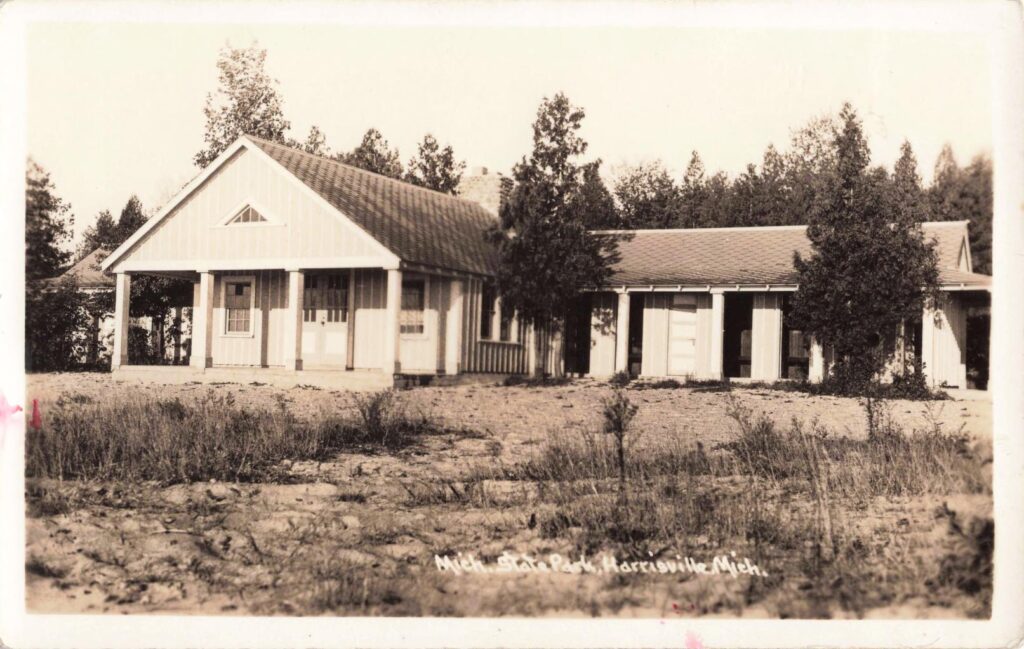
By the 1920s, Harrisville found itself home to one of Michigan’s earliest state parks – Harrisville State Park, established in 1921. Locals were understandably proud to have 107 acres of lakeside pine forest and sandy beach set aside for public enjoyment. A quaint bath house was built near the shore so that ladies and gentlemen could change into their woolen bathing suits. On warm summer afternoons, the sound of laughter and splashings of Lake Huron carried up from the park’s beach. Families spread picnic blankets under the cedar and pine trees while kids dashed in and out of the clear, shallow waters.
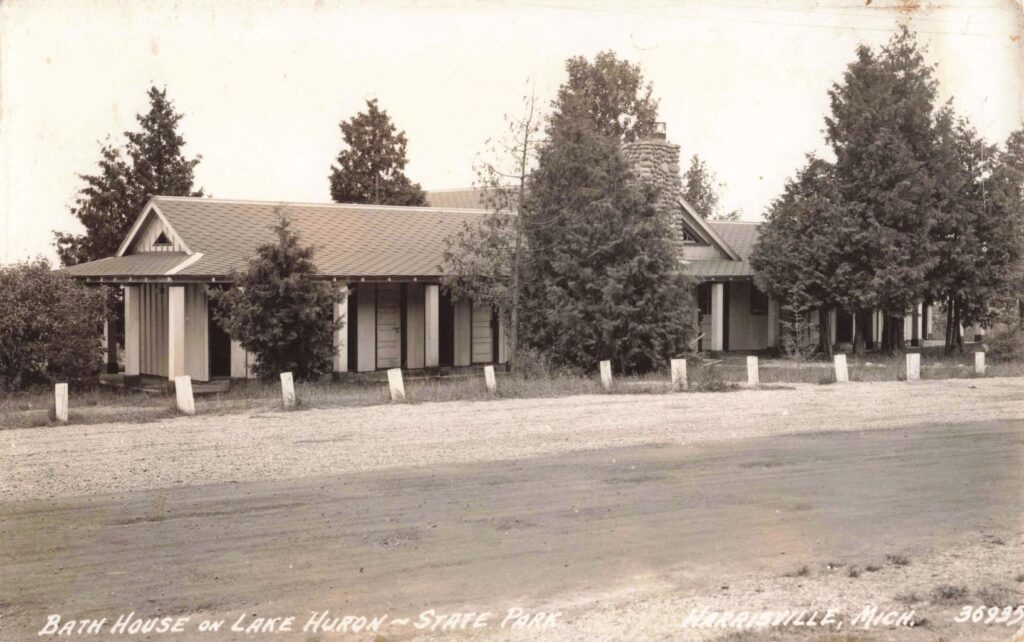
The bath house itself was a simple structure of wood and stone, divided into “Ladies” and “Men’s” dressing rooms, offering a bit of privacy as swimmers struggled out of their street clothes and into modest swimwear. Outside, you might find a refreshment stand selling ice-cold lemonade and hot dogs, especially in later years as the park amenities grew.
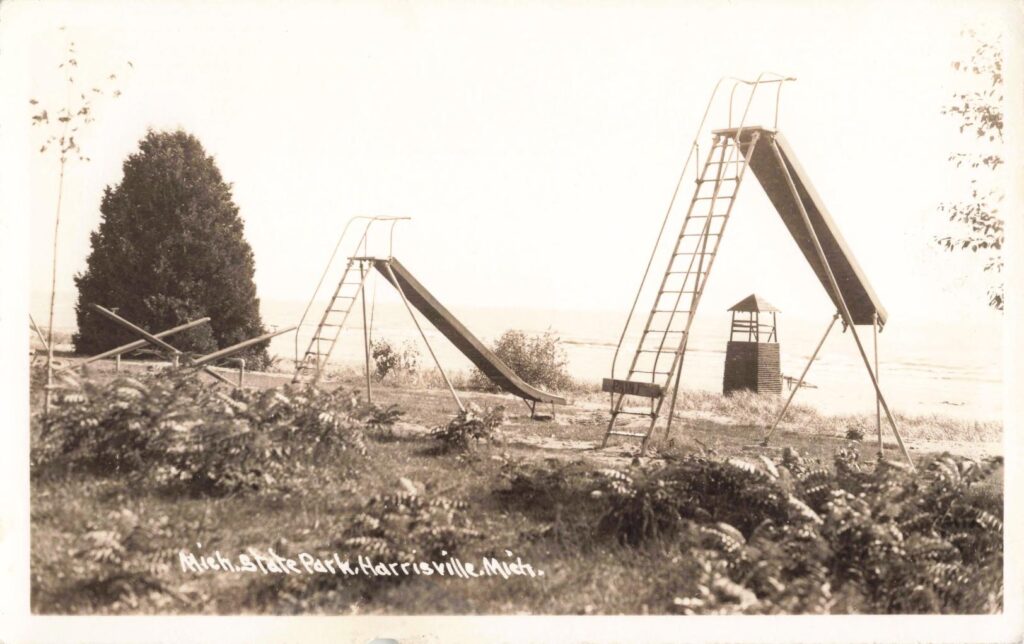
A ball field and picnic pavilion were added, and trails wound through the wooded dunes for those inclined to take a nature stroll. Many a Harrisville youngster learned to swim at this very beach, and many a traveler pulled off US-23 to rest here, finding a welcome respite in the cool shade by the lake. The state park’s creation was a forward-thinking move – preserving a slice of Harrisville’s beautiful shoreline for generations to come. It remains a beloved spot where memories of innocent summers and simple pleasures linger, as constant as the soft roar of Huron’s waves on the sand.
Final Thought About The History of Harrisville Michigan
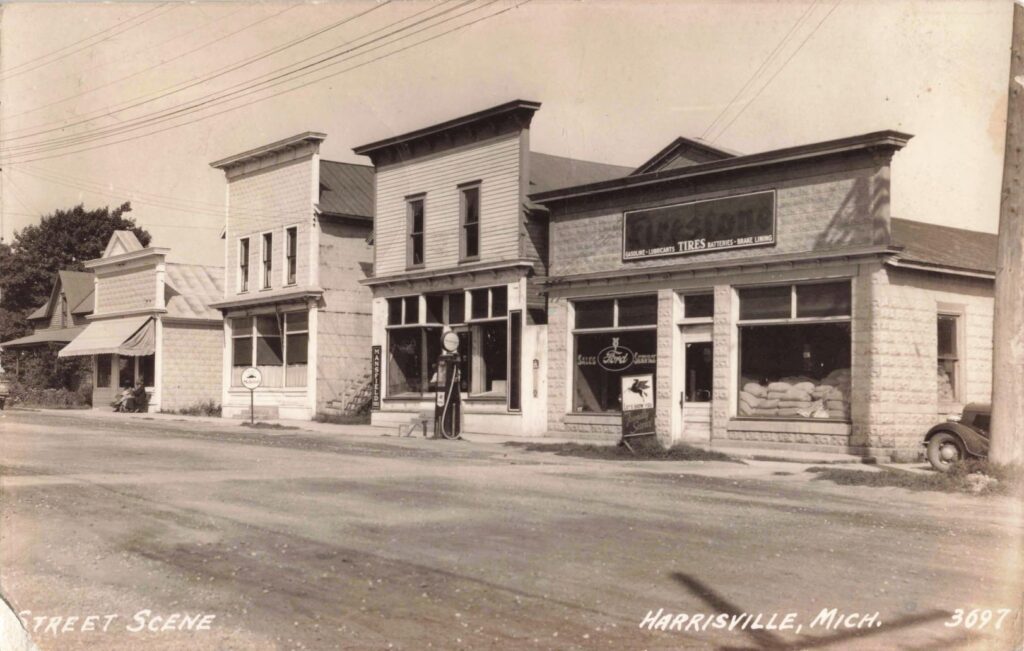
These photos matter because they show Harrisville Michigan history through real places. The depot, hotel, store, mill, hatchery, park, cabins and lighthouse all tell a piece of the same story.
Harrisville was small, but it was never still. It worked, traded, hosted, shipped, milled, fished and welcomed visitors. Its history is the story of many Michigan lake towns that balanced hard work with summer dreams.
For anyone studying Harrisville Michigan history, these images offer a sharp look at a town shaped by Lake Huron, rail lines, Main Street business and the steady pull of home.
Watch Michigan Moments Episodes of Nearby Towns
More Historic Video Stops Near Harrisville
Harrisville sits along a Lake Huron corridor shaped by resort travel, military aviation, roadside cabins, Main Street business and small-town memory. These nearby Michigan Moments videos add more context to the Harrisville story, from Oscoda resort life to Wurtsmith Air Force Base and the MacDonald House.
Oscoda’s Van Ettan Lake Lodge, circa 1920s
A quick look at resort-era Oscoda, when inland lakes, lodge stays and northern Michigan vacations helped define the Sunrise Side.
Watch on YouTubeWurtsmith AFB Flight Line, 1960s
A short view of the Cold War-era flight line at Wurtsmith Air Force Base, once one of northeast Michigan’s major military sites.
Watch on YouTubeMacDonald House Harrisville Michigan 1907–1922
A closer look at one of Harrisville’s best-known historic buildings, tied to early tourism, Main Street life and Lake Huron travel.
Watch on YouTubeAir Show at Wurtsmith
A fast-moving glimpse of aviation history near Oscoda, where Wurtsmith brought military aircraft, service members and air shows to the region.
Watch on YouTubeFAQs About Harrisville Michigan
Where is Harrisville, Michigan?
Harrisville is a small Lake Huron community in Alcona County, on Michigan’s Sunrise Side. It sits along U.S. 23 between Oscoda and Alpena and serves as the county seat.
What is Harrisville, Michigan, known for?
Harrisville is known for its Lake Huron shoreline, Harrisville State Park, Sturgeon Point Lighthouse, historic downtown buildings and early ties to rail travel, milling, fishing and tourism.
Why is Sturgeon Point Lighthouse important to Harrisville history?
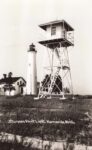
Sturgeon Point Lighthouse helped guide ships along Lake Huron and warned mariners about the reef near Sturgeon Point. It remains one of the best-known historic sites near Harrisville.
What do old Harrisville photos show about the town?
Vintage Harrisville photos show a working lake town with hotels, stores, a railroad depot, a milling company, a fish hatchery, roadside cabins and public beach life. They show how railroads, roads and Lake Huron shaped daily life.
Sources Cited for the History of Harrisville Michigan
- Alcona Historical Society. “Sturgeon Point Lighthouse and Museum” . Alcona Historical Society, accessed 12 June 2026.
- Alcona Historical Society. “About the Alcona Historical Society” . Alcona Historical Society, accessed 12 June 2026.
- Alcona Historical Society. “Harrisville” . Alcona Historical Society, accessed 12 June 2026.
- City of Harrisville. “Harrisville” . City of Harrisville, accessed 12 June 2026.
- City of Harrisville. “Harrisville State Park” . City of Harrisville, accessed 12 June 2026.
- Greenbush Township. “History” . Greenbush Township, accessed 12 June 2026.
- Harrisville Depot. “History” . Harrisville Depot, accessed 12 June 2026.
- Historical Marker Database. “Harrisville” . HMdb.org, accessed 12 June 2026.
- Michigan Architectural Foundation. “The Gateway to History: Historic Harrisville Train Depot Receives 2025 MAF Evans Graham Preservation Award” . Michigan Architectural Foundation, 31 May 2025, accessed 12 June 2026.
- Michigan Department of Natural Resources. “Harrisville State Park” . Michigan.gov, accessed 12 June 2026.
- Michigan Department of Natural Resources. “Sturgeon Point State Park” . Michigan.gov, accessed 12 June 2026.
- Michigan Economic Development Corporation. “Sturgeon Point Lighthouse” . Pure Michigan, accessed 12 June 2026.
- Michigan Economic Development Corporation. “Harrisville, MI” . Pure Michigan, accessed 12 June 2026.
- MichiganRailroads.com. “Harrisville, MI” . MichiganRailroads.com, accessed 12 June 2026.
- Sunrise Coast Tourism. “Harrisville Depot” . U.S. 23 Heritage Route, accessed 12 June 2026.
- Sunrise Coast Tourism. “Harrisville State Park Campground” . U.S. 23 Heritage Route, accessed 12 June 2026.
- Sunrise Coast Tourism. “Sturgeon Point Lighthouse” . U.S. 23 Heritage Route, accessed 12 June 2026.
- U.S. Army Corps of Engineers. “Alcona County Great Lakes Sports Fishing Facilities Study” . GovInfo, 1982, accessed 12 June 2026.