 by
by 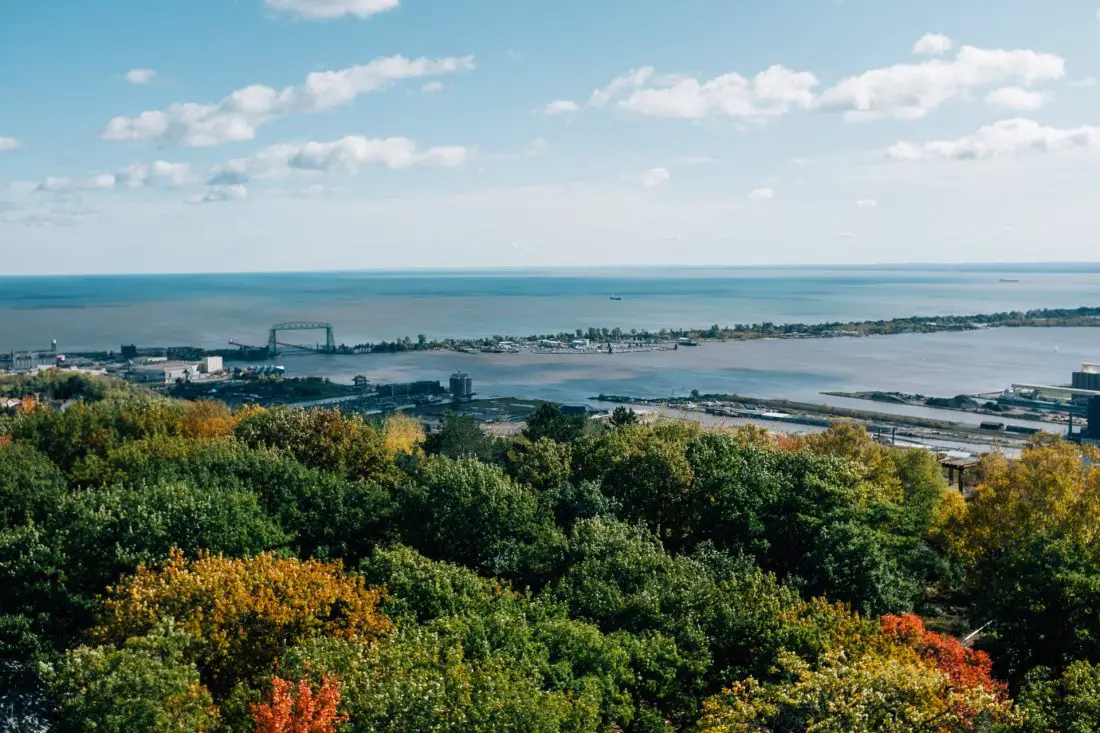
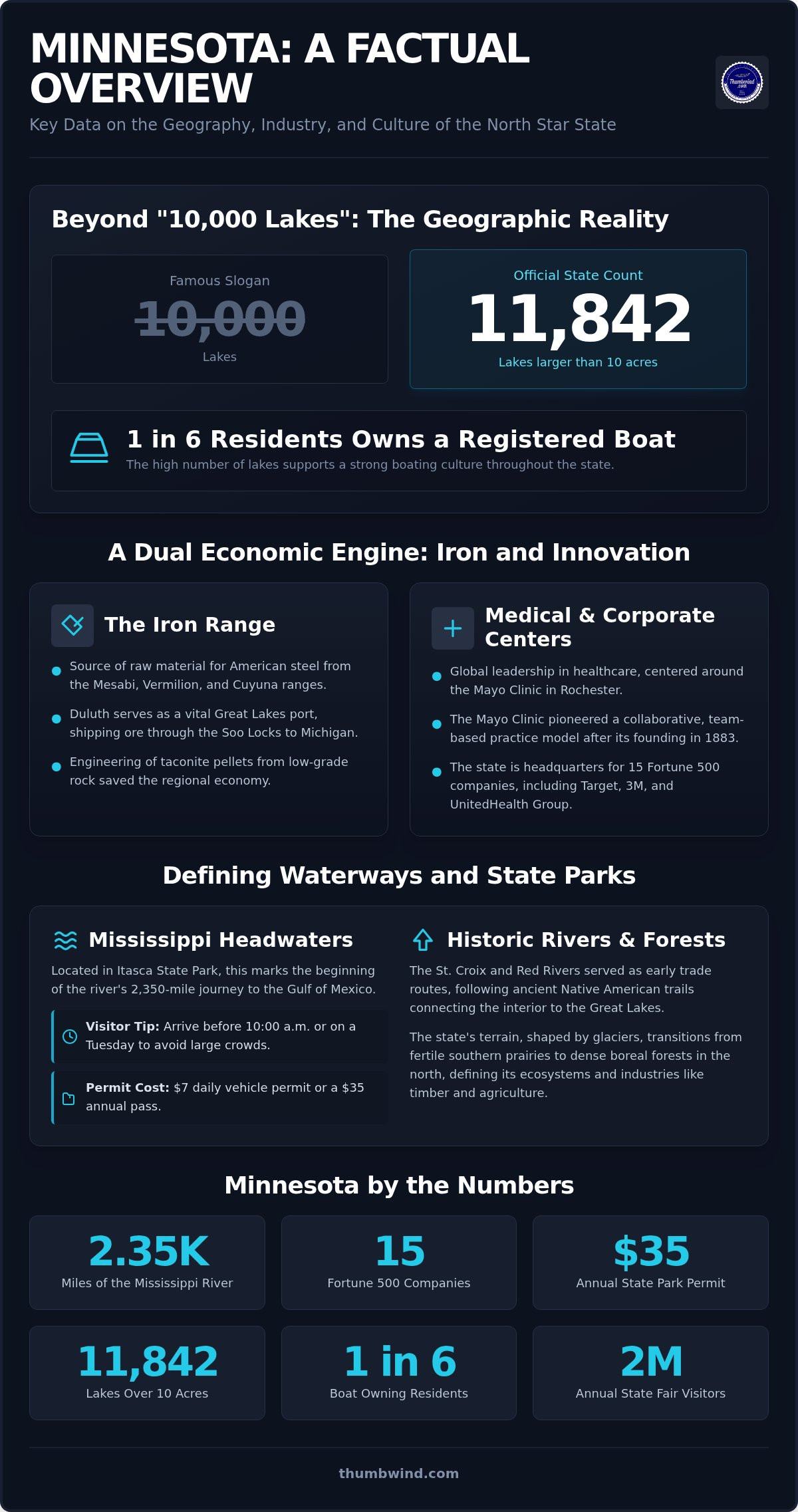
In the northern reaches of the Great Lakes region, Minnesota claims the title of “Land of 10,000 Lakes,” but the state actually contains 11,842 bodies of water larger than 10 acres. This massive volume of water creates a culture where one in every six residents owns a registered boat. While tourism brochures often focus on shopping malls, the real identity of the North Star State sits in its industrial ports and deep forests. We recognize that many descriptions of the Upper Midwest blend together, making it hard to distinguish the specific culture of Minnesota from neighboring Wisconsin.
Across the Iron Range and into the Twin Cities, this guide provides a clear look at what is minnesota known for by skipping the vague travel slogans. You will learn about the major industries, including the iron ore trade that mirrors Michigan’s own mining history, and the cultural norms that define the region. We look at the practical details that matter, from the $35 annual state park permits to the traditions that bring 2 million people to the state fair each year. This is a factual overview of the geography, food, and industry that characterize the state.
Key Takeaways
- Learn why the “Land of 10,000 Lakes” label is technically an undercount of the state’s 11,842 documented bodies of water.
- Understand what is minnesota known for regarding its industrial history, including the Iron Range that feeds Great Lakes maritime trade through the Soo Locks.
- Identify the major cultural landmarks and legendary musicians that established the Twin Cities as a national hub for the arts and retail.
- Get practical advice for navigating the North Shore and managing the extreme temperature swings common in the region.
- See how Minnesota’s maritime connection to Lake Superior creates shared economic and cultural ties with Michigan’s own coastal communities.
More Than 10,000 Lakes and the Mississippi Headwaters
Minnesota’s famous nickname actually understates the reality of its geography. While the license plates claim 10,000 lakes, the State of Minnesota officially contains 11,842 bodies of water larger than 10 acres. This abundance of freshwater defines the state’s identity and its maritime connection to Michigan via Lake Superior. Determining what is minnesota known for starts with this vast network of inland seas and glacial basins.
To better understand what is minnesota known for, watch this helpful video:
Beyond the standing water, the state’s boundaries rely heavily on moving currents. The St. Croix and Red Rivers helped establish early trade routes and followed ancient Native American Indian trails that connected the interior to the Great Lakes. These waterways served as the primary highways for early residents long before paved roads existed.
The Glacial Legacy of the Terrain
The Laurentide Ice Sheet shaped the region during the last ice age, carving deep basins into the earth. As the ice retreated, it left behind a varied terrain that transitions from the flat, fertile prairies of the south to the dense boreal forests of the north. This geological shift creates distinct ecosystems that dictate everything from local agriculture to the timber industry.
Itasca State Park and the Mississippi Flow
Itasca State Park holds the headwaters of the Mississippi River, marking the start of a 2,350-mile path to the Gulf of Mexico. Visitors often walk across the river where it is only knee-deep and a few yards wide. Summer weekends bring heavy crowds to the stepping stones, so arriving before 10:00 a.m. or visiting on a Tuesday provides a much quieter experience. Entry requires a $7 daily vehicle permit or a $35 annual pass.
The Iron Range and Global Medical Innovation
Minnesota’s industrial identity is forged in the red dirt of the north. For over a century, the Mesabi, Vermilion, and Cuyuna Iron Ranges have provided the raw material for American steel. This mining activity turned Duluth into a vital Great Lakes port. Ships loaded with ore travel through the Soo Locks to reach Michigan’s steel mills, creating a shared economic backbone between the two states.
While industry dominates the north, the south is defined by global leadership in healthcare. Rochester, once a quiet prairie town, became a destination for medical patients from every corner of the earth. When people ask what is minnesota known for, the answer often balances this heavy industrial grit with precise scientific advancement. The state currently hosts 15 Fortune 500 companies, including retail giant Target, innovation leader 3M, and UnitedHealth Group.
Taconite and the Industrial Backbone
As high-grade natural ore began to dwindle in the mid-20th century, Minnesota engineers developed taconite pellets. This process turned low-grade rock into a uniform, shippable product that saved the regional economy. Today, massive open-pit mines like the Hull-Rust-Mahoning Mine in Hibbing remain active. These operations are so large they are visible from space; they serve as a physical record of the state’s role in building the nation’s infrastructure.
The Mayo Clinic’s Rochester Roots
The Mayo Clinic began not as a corporate project, but as a response to a disaster. Following a devastating tornado in 1883, the Mayo family partnered with the Sisters of Saint Francis to open a hospital. They pioneered an integrated clinical practice model where doctors work as a team rather than as competitors. This collaborative approach is a core part of what is minnesota known for today, attracting world leaders and complex cases to a city of just over 121,000 people.
If you’re interested in how these industrial connections shaped our region, you might enjoy reading about other significant events in Michigan history that mirror these developments.
Cultural Landmarks: From Retail Giants to ‘Minnesota Nice’
Minnesota’s cultural identity balances massive commercial scale with deeply reserved social norms. While the northern woods offer quiet, the Twin Cities metro area serves as the creative engine of the state. When visitors ask what is minnesota known for, the conversation usually turns to the iconic Paul Bunyan statues in Bemidji or the “Spoonbridge and Cherry” sculpture at the Minneapolis Sculpture Garden. These landmarks represent a state that values both its folklore and its modern artistic contributions.
The Retail Giant in Bloomington
The Mall of America in Bloomington remains the largest shopping and entertainment complex in the United States. With over 500 stores and an indoor theme park, it functions as a major regional transit hub with its own dedicated light rail station. One significant draw for visitors from Wisconsin and Michigan is the state tax code. Minnesota does not charge sales tax on clothing or shoes. This policy makes the mall a frequent destination for seasonal shopping trips despite the heavy crowds and complex parking ramps.
Social Etiquette and the Arts Scene
The term “Minnesota Nice” describes a specific social etiquette rooted in the state’s Nordic heritage. It is a combination of outward politeness and a reserved, sometimes passive-aggressive, distance. This cultural quirk often surprises outsiders who expect the bluntness of the East Coast or the overt warmth of the South. It is a culture of hospitality that maintains a firm boundary between neighbors and strangers.
Despite this reserved nature, the state has produced some of the most expressive voices in American history. It is the birthplace of Prince, Bob Dylan, and F. Scott Fitzgerald. The arts scene centers on long-standing institutions like the Guthrie Theater and the First Avenue music club. These venues provide a platform for local talent that often reaches a global audience. Understanding what is minnesota known for requires looking past the politeness to see the grit of its creative community.
If you enjoy learning about the unique character of Great Lakes states, check out our collection of Michigan moments for more regional stories and historical insights.
Practical Realities of Climate and Regional Travel
Minnesota’s climate is defined by its continental location, far from the moderating influence of the oceans. Winters frequently see temperatures drop below -20°F, while summers bring high humidity and heat. This volatility is a major part of what is minnesota known for, requiring residents to adapt their lifestyles to the season. Understanding these weather patterns provides a clearer picture of the state beyond the mild summer months.
Surviving the Upper Midwest Winter
In the Twin Cities, an extensive network of enclosed pedestrian bridges called Skyways allows commuters to navigate downtown without stepping outside. These climate-controlled paths connect dozens of blocks in Minneapolis and St. Paul. Despite the cold, outdoor life continues through ice fishing and pond hockey, which serve as essential social activities during the long freeze. These traditions turn a harsh environment into a communal experience.
Travelers heading north often compare the rugged scenery of the Lake Superior shoreline to Michigan’s Upper Peninsula. The North Shore drive is another major factor in what is minnesota known for, offering rocky cliffs and dense forests alongside developed amenities like full-service resorts. Cell service remains notoriously unreliable in these northern forests; carrying physical maps and emergency supplies is a basic safety requirement when leaving the main highways.
Logistics for the North Shore and Boundary Waters
The Boundary Waters Canoe Area Wilderness (BWCAW) spans over 1,000,000 acres of car-free territory. Access is strictly regulated through a permit system, and groups should book their entry points months in advance to secure a spot. This remote area requires a high level of self-sufficiency as motorized vehicles are prohibited in most sections.
Closer to Duluth, state parks like Gooseberry Falls experience significant parking challenges during peak fall foliage. Lots often reach capacity by mid-morning on October weekends, forcing visitors to use overflow areas or wait for spaces to open. If you are planning a trip to the region, checking live regional webcams can help you gauge the current weather conditions before you set out.
Preparing for Your Next Great Lakes Journey
Minnesota offers more than just shopping malls and fishing spots. Its identity is built on a foundation of industrial grit and scientific leadership. From the iron ore that moves through the Soo Locks to the collaborative medical practices in Rochester, the state’s impact reaches far beyond its borders. Understanding what is minnesota known for requires looking at these practical realities alongside its famous freshwater geography and the unique social etiquette of the region.
Reliable information makes traveling through the Upper Midwest safer and more rewarding. We focus on the specific facts that help you navigate the region’s history and seasonal challenges. If you are tracking the headwaters of the Mississippi or preparing for the isolation of the Boundary Waters, knowing the logistics is essential. Our team provides independent Michigan-based journalism with a focus on accuracy and utility.
We provide expert coverage of Great Lakes history and culture that connects our shared maritime heritage. Read more regional history and travel guides at Thumbwind to prepare for your next trip through our neighboring states. Safe travels as you head north to the land of 11,842 lakes.
Frequently Asked Questions
Is Minnesota really the coldest state in the US?
Minnesota is not the coldest state in the country; that title belongs to Alaska. However, it frequently records the lowest temperatures in the contiguous United States. International Falls often sees winter lows below -20°F. This extreme climate is a major part of what is minnesota known for, as residents have built infrastructure like the Twin Cities’ skyway systems to handle the deep freeze.
What is the difference between Minneapolis and St. Paul?
Minneapolis and St. Paul are known as the Twin Cities, but they have distinct personalities. Minneapolis is the larger city, characterized by glass skyscrapers and a dense theater district. St. Paul serves as the state capital and feels more traditional. It features European-style street layouts and historical architecture, such as the Summit Avenue mansions and the Cathedral of Saint Paul.
Can you actually see the Northern Lights in Minnesota?
You can see the Northern Lights in Minnesota, particularly in the northern third of the state. Dark sky areas like the Boundary Waters Canoe Area Wilderness and Cook County provide the best viewing opportunities. While solar activity must be high for the lights to be visible, the lack of light pollution in these remote forests makes them a reliable location for observers during the winter months.
What food is Minnesota most famous for?
Minnesota is famous for several regional staples, including tater tot hotdish and the “Juicy Lucy” burger. The hotdish is a baked casserole typically made with ground beef, canned soup, and vegetables. Additionally, walleye is the state fish and a common menu item at local restaurants. Wild rice, which grows naturally in the state’s shallow lakes, is another dietary staple deeply connected to the region’s heritage.
How many lakes does Minnesota actually have compared to Michigan?
Minnesota officially has 11,842 lakes that are larger than 10 acres in size. While Michigan also claims over 11,000 inland lakes, the two states measure them using different size thresholds. Michigan has significantly more total water surface area and coastline because it borders four of the five Great Lakes. Understanding these numbers helps clarify what is minnesota known for when compared to its neighbors in the Great Lakes basin.
Disclaimer
Information published on Thumbwind.com is provided for general informational purposes. While we make reasonable efforts to keep articles accurate and current, details such as prices, hours, regulations, access conditions, and other information may change without notice. Readers should verify important details with the appropriate business, agency or official source before making travel, financial or other decisions. Thumbwind.com is not responsible for the content, availability or practices of third-party websites linked from our articles.