 by
by 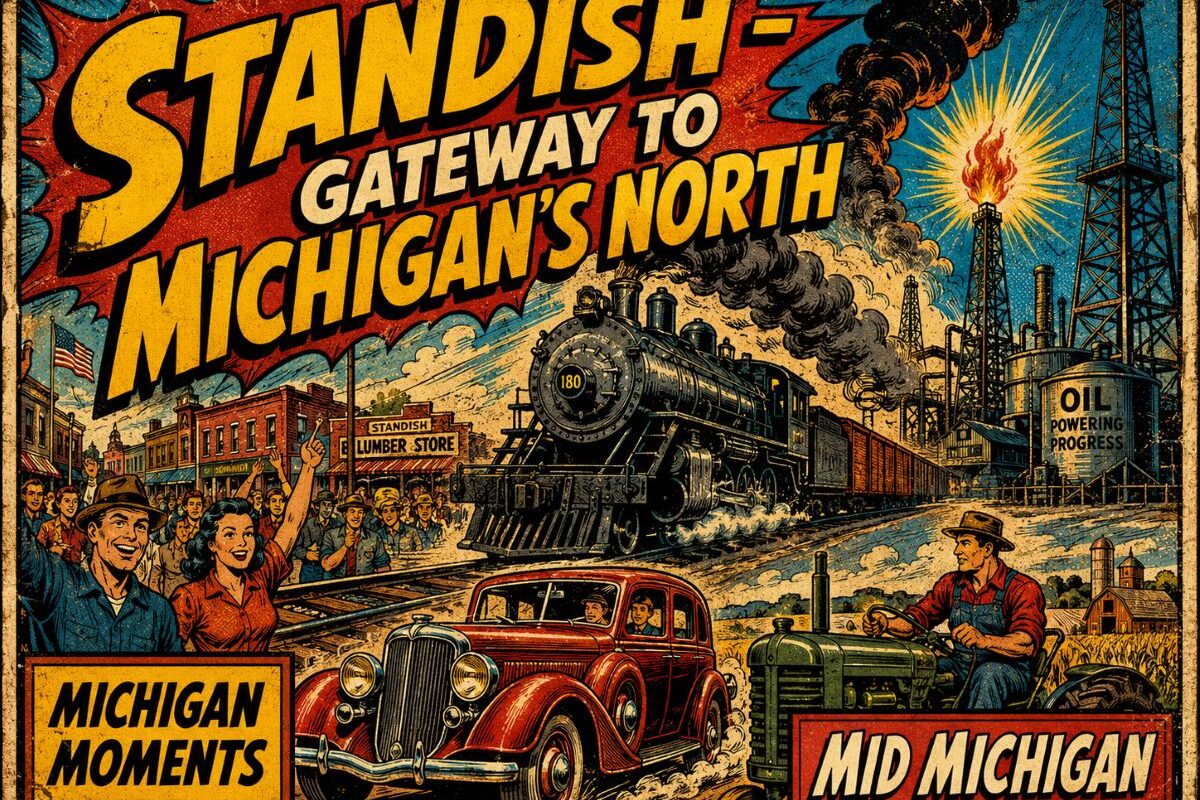
The History of Standish Michigan is more than a timeline of railroads, stores and city records. It is the story of a small Arenac County town that moved from timber to trains, from farm wagons to U.S. 23, and from quiet storefronts to oil wells.
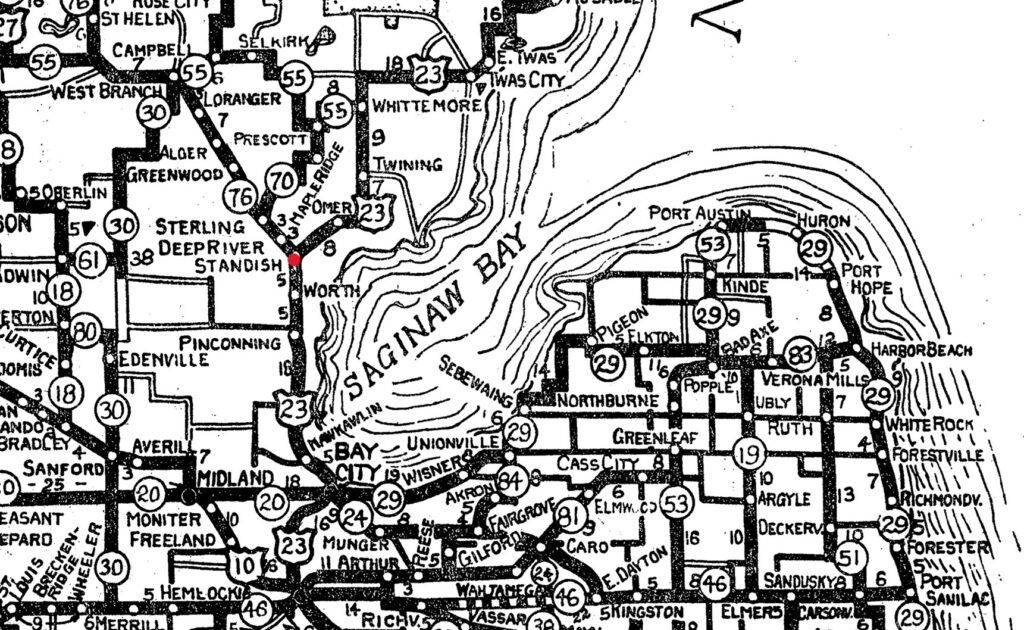
The town was platted in 1871 by John D. Standish. It was briefly recorded as Granton before the Legislature changed the name back to Standish. That same year, the railroad reached the area, linking the young settlement to Bay City and the northern rail corridor. Standish became a village in 1893 and a city in 1903.
The History of Standish Michigan is not the story of one industry. It is the story of a town that kept shifting with the economy. First came sawmills. Then came trains. Then farms, dairy, cars, roadside inns and oil.
Table of Contents
Watch – Standish, Michigan: The Farm-Stone Depot and the Road North
Standish – A Town Born Beside the Railroad
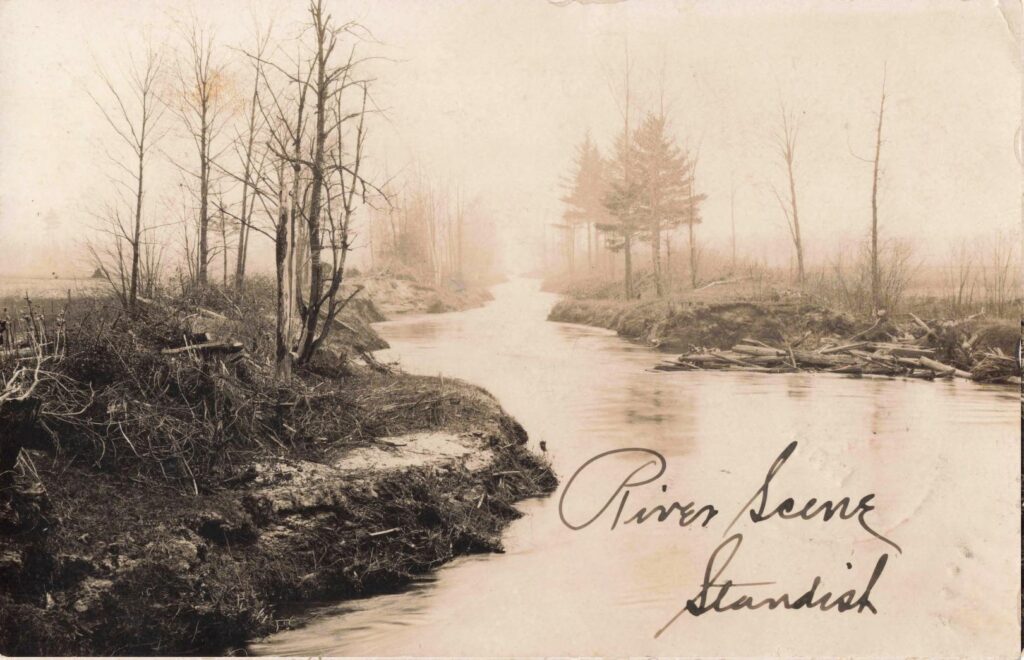
Before the railroad, Standish was reached by stage from Pine River. Travel was slow, and weather often controlled movement. The railroad changed everything.
The first passenger coach arrived in Standish on July 4, 1871, attached to a construction train. By the mid-1880s, rail business had grown sharply, and eight passenger trains were stopping in town each day.
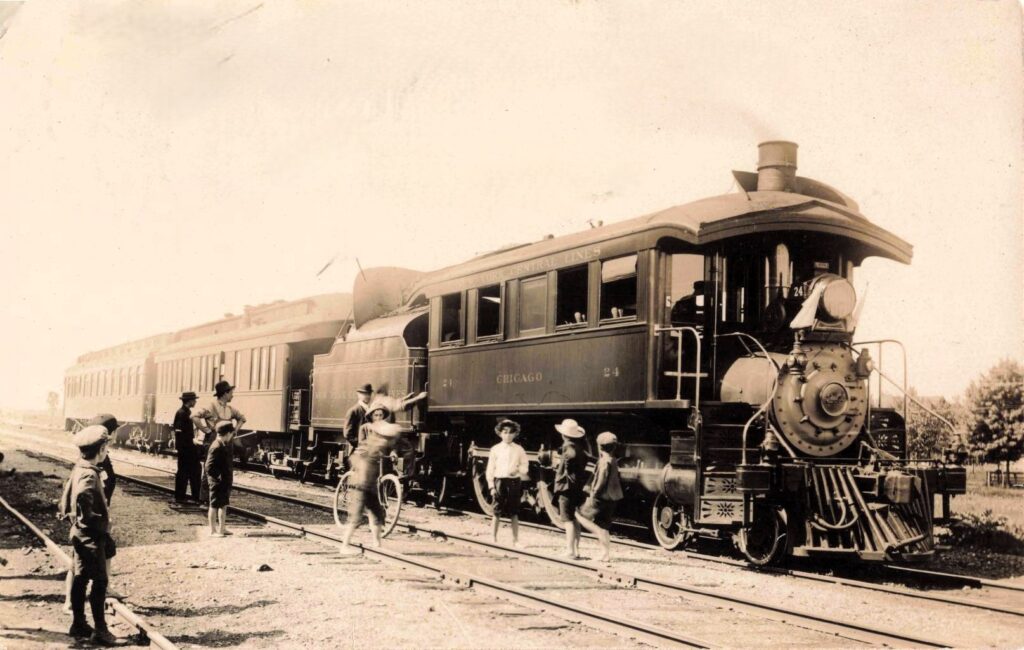
The first depot was wood. By the late 1880s, it was wearing out. Michigan Central agreed to build a new one, but local residents had to provide the stone. Farmers hauled fieldstones from nearby farms. The result was the Michigan Central depot, completed in 1889.
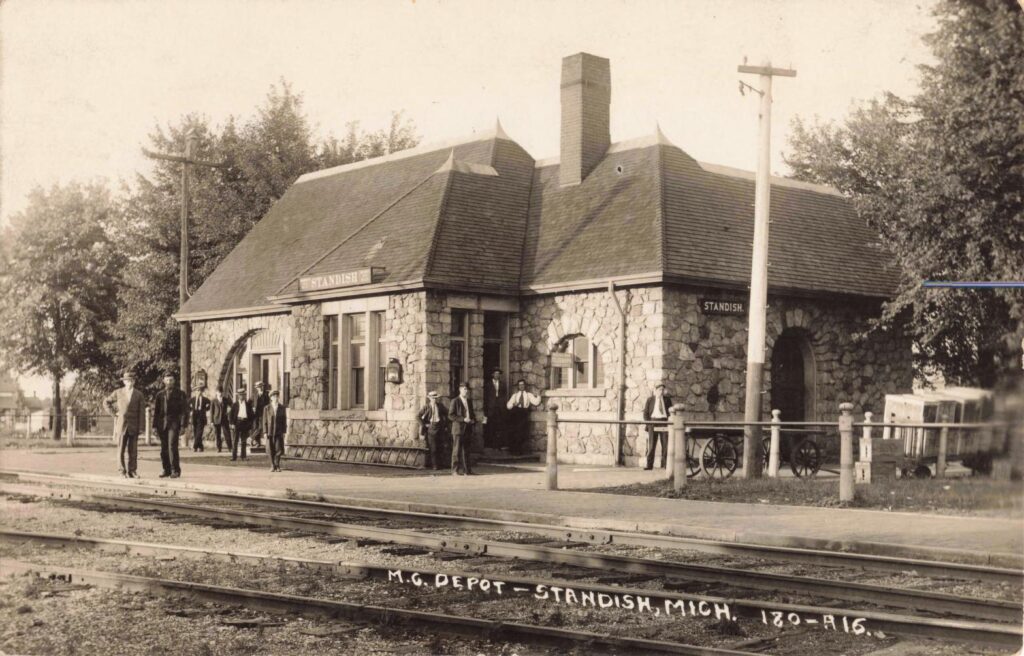
That fact gives Standish one of its best historical details. Its finest railroad building was made from fieldstone gathered by local farmers. The depot was not just a railroad project. It was a community project.
Today, the depot serves as the Standish Historic Depot and Welcome Center and is listed on the National Register of Historic Places.
Why is Standish called Standish?
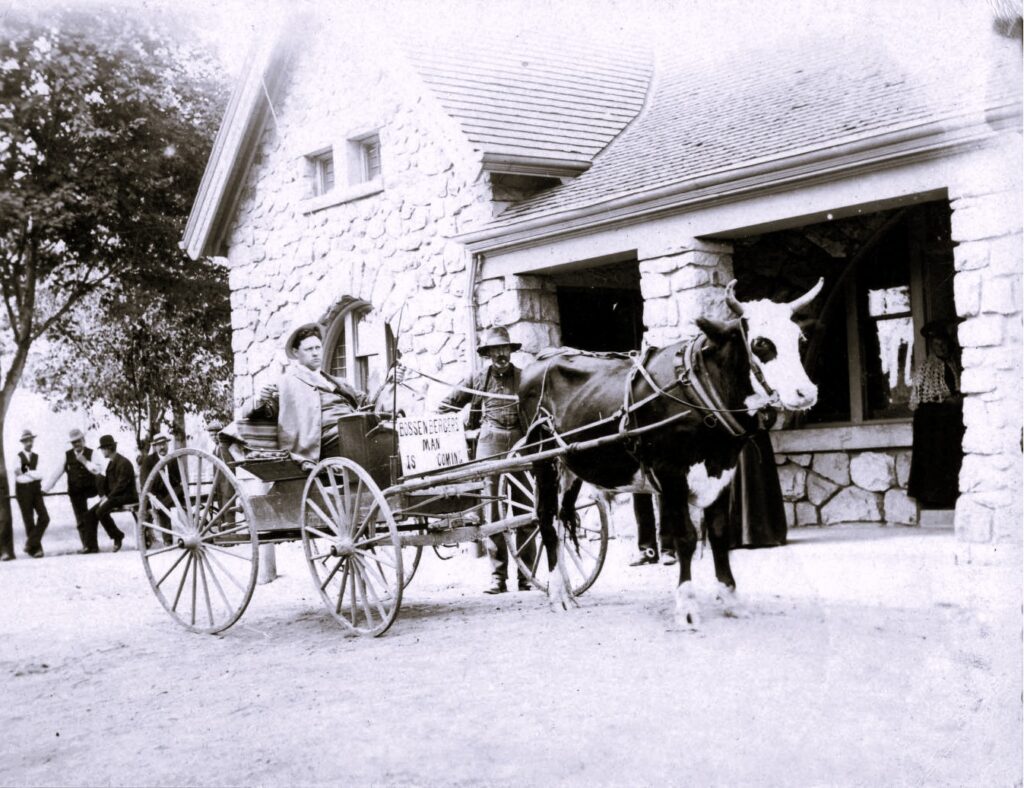
Standish, Michigan is named after John D. Standish, a Detroit businessman and lumber dealer. In 1871, he platted the community, owned all the surrounding land, and established the town’s first business—a sawmill. John D. Standish was a descendant of Captain Myles Standish, the famous military commander of the Plymouth Colony.
The Main Street in Standish Had the Goods
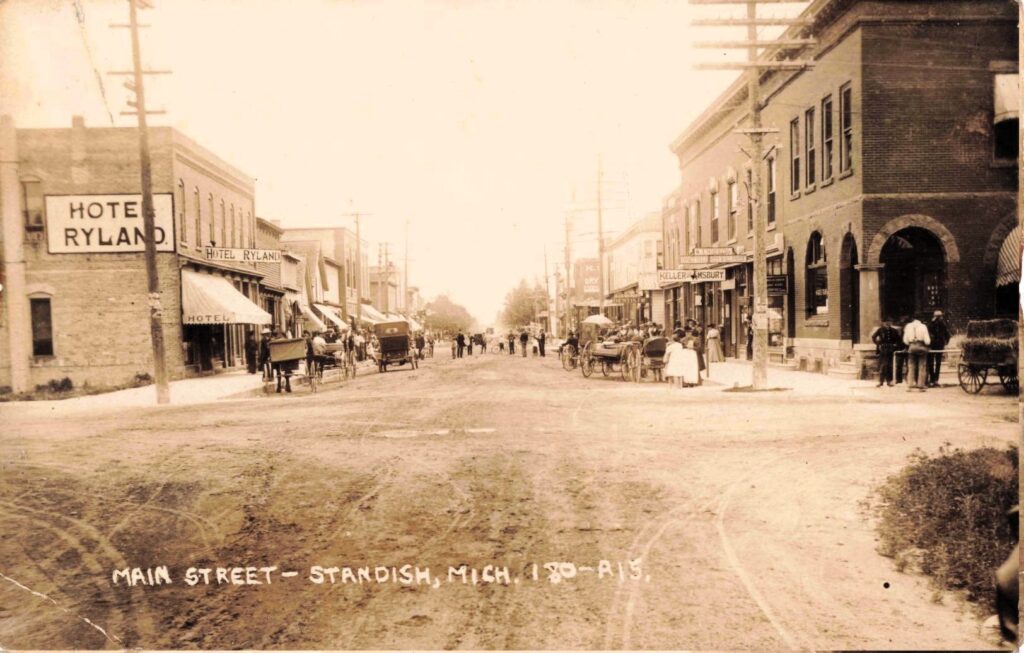
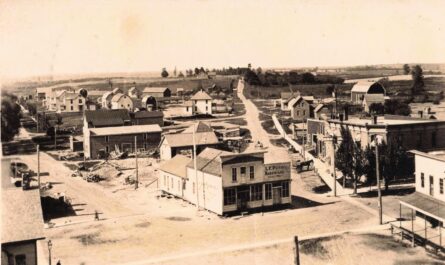
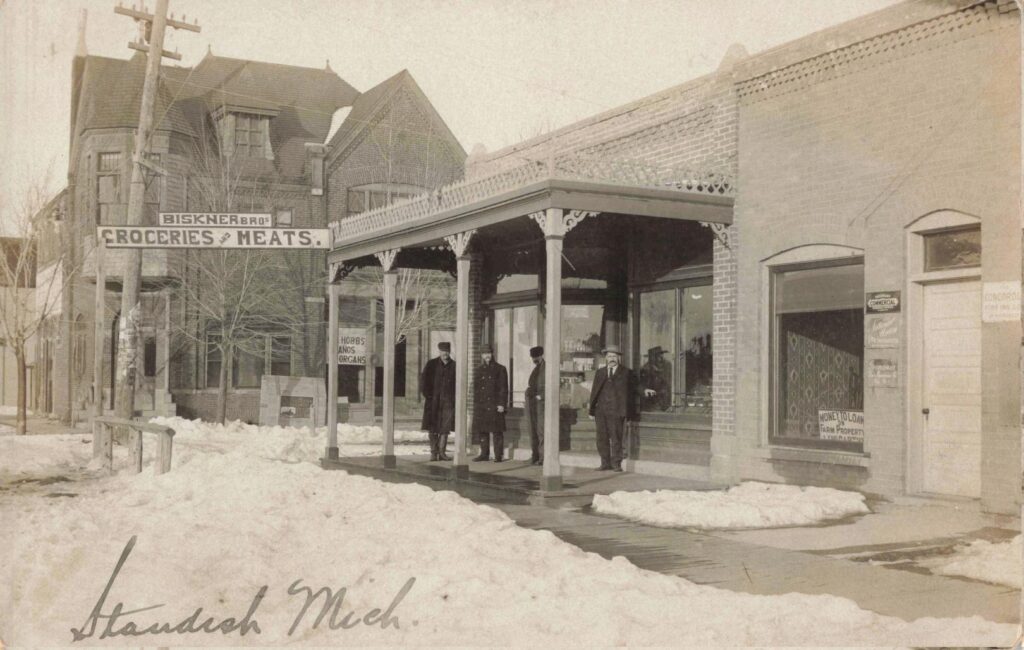
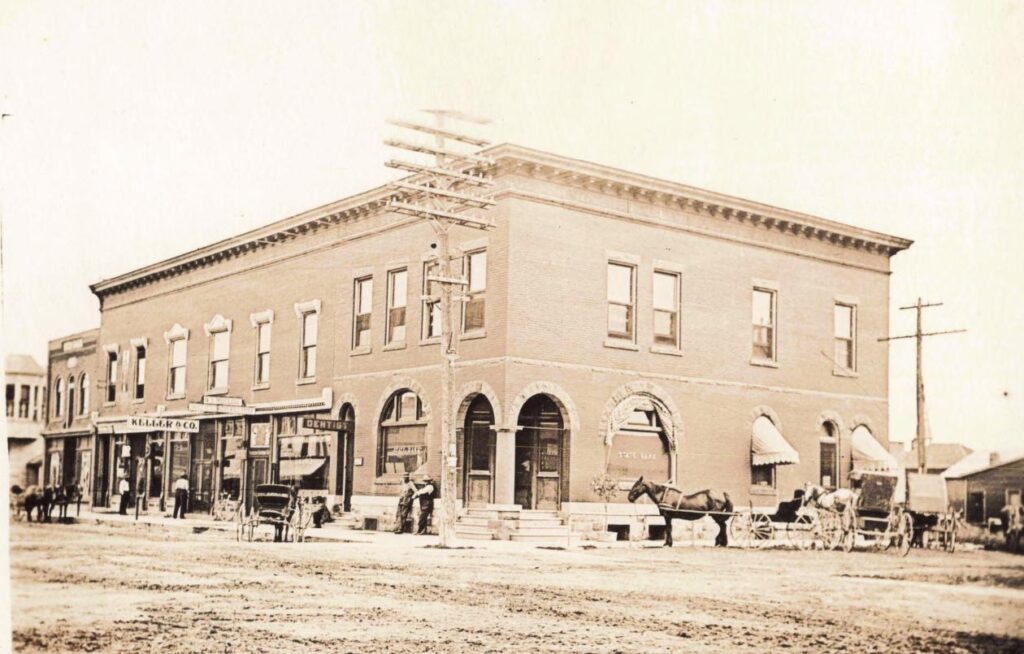
The early Main Street views of Standish show a practical town with big ambitions. Hotel Ryland served travelers. Keller & Amsbury sold goods. Hardware stores supplied farms and builders. Grocers handled meat and household staples. Drugstores sold medicine, soda and lunches.
A 1912 local history lists a wide range of businesses: grocers, dry goods stores, hardware dealers, druggists, jewelers, shoe stores, agricultural implement dealers, lawyers, doctors and dentists.
This was the normal machinery of a county-seat town. Farmers came in to buy parts, sell crops, pay bills and get news. Town residents shopped, banked and gathered there. Main Street was a market, message board and social club all at once.
History of Standish Michigan: From Sawmills to Farm Markets
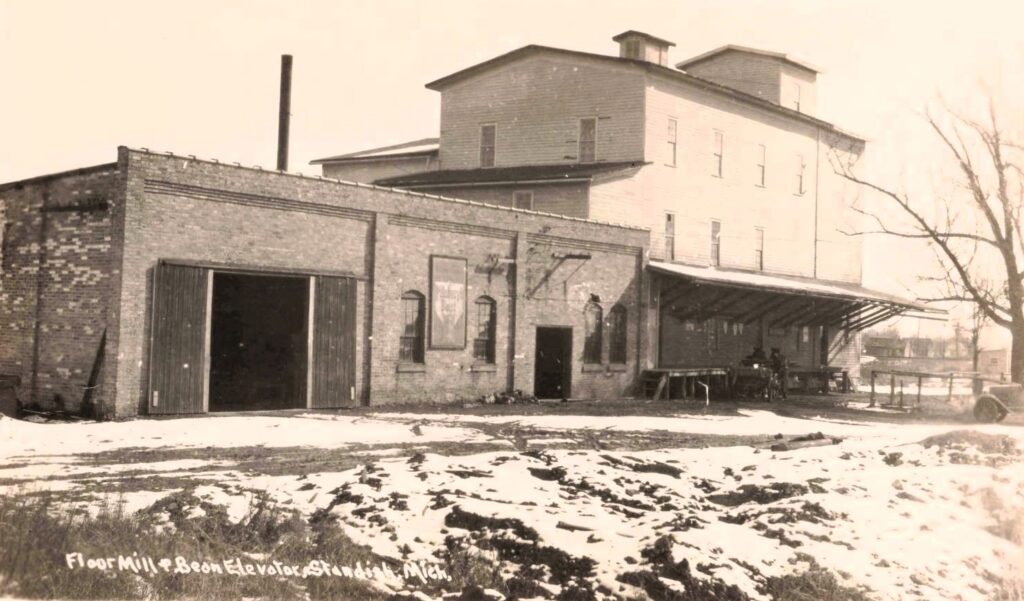
The first industry in Standish was John D. Standish’s sawmill. That fits the larger Michigan story. Timber opened many northern and mid-Michigan communities. Mills cut the pine. Railroads carried lumber to market. Towns formed around that flow of money and labor.
But timber did not last forever.
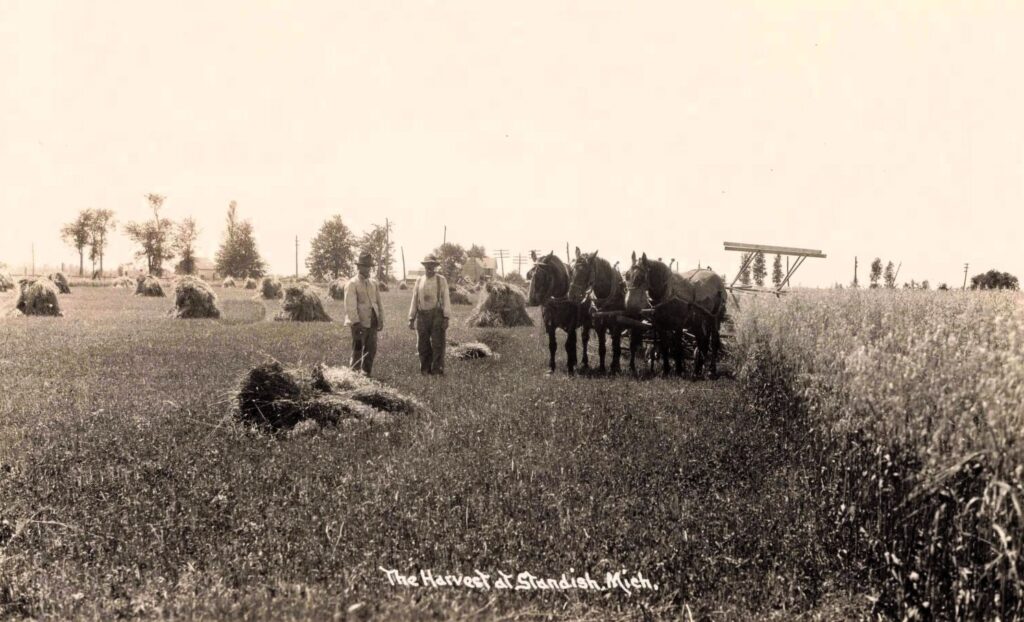
As land was cleared, farming took a larger role. Standish became a service town for grain, beans, milk and livestock. The flouring mill was built in 1889. A grain elevator came in the 1890s. A bean elevator followed in 1902.
The bean elevator is important. Beans were a serious Michigan crop, and elevators connected local growers to wider markets. A farm could produce. The railroad could move the crop. Standish sat between those two points.
Milk, Factories and Daily Work in 1900s Standish
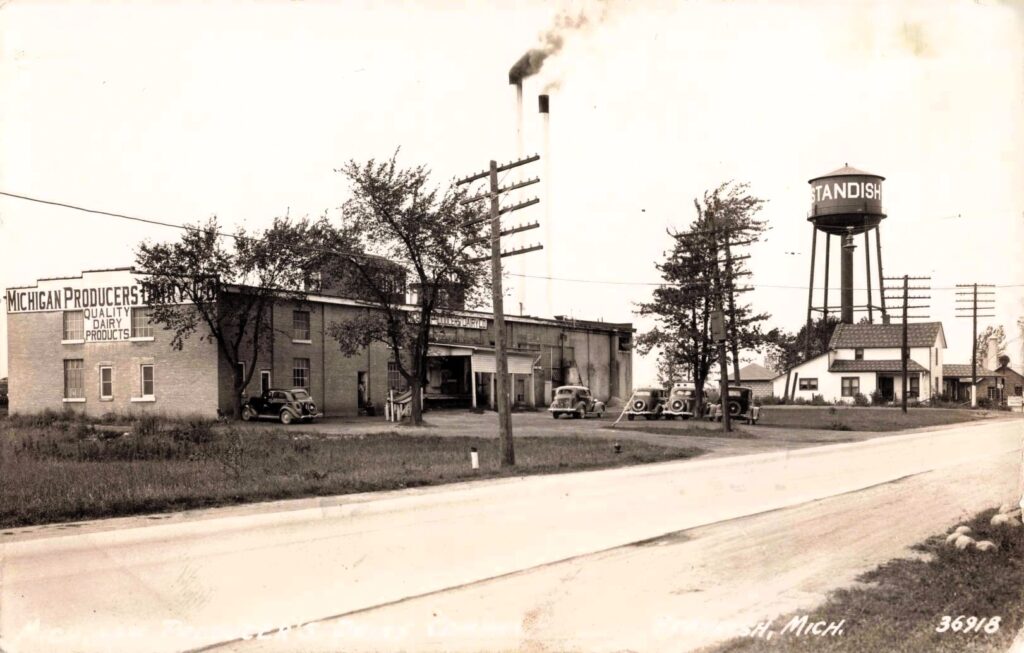
Standish also had a strong dairy trade. The local dried milk factory was taking in more than 22,000 pounds of whole milk daily during the summer of 1911. That single number says a lot. It points to dairy farms, regular cream checks, rail shipping and factory labor.
The town also had woodworking operations, a foundry, machine work, cigar making, brick and tile production, and shops tied to farming. This was not a tourist town pretending to be busy. It was a working town with a broad local economy.
Churches, Schools and Civic Life
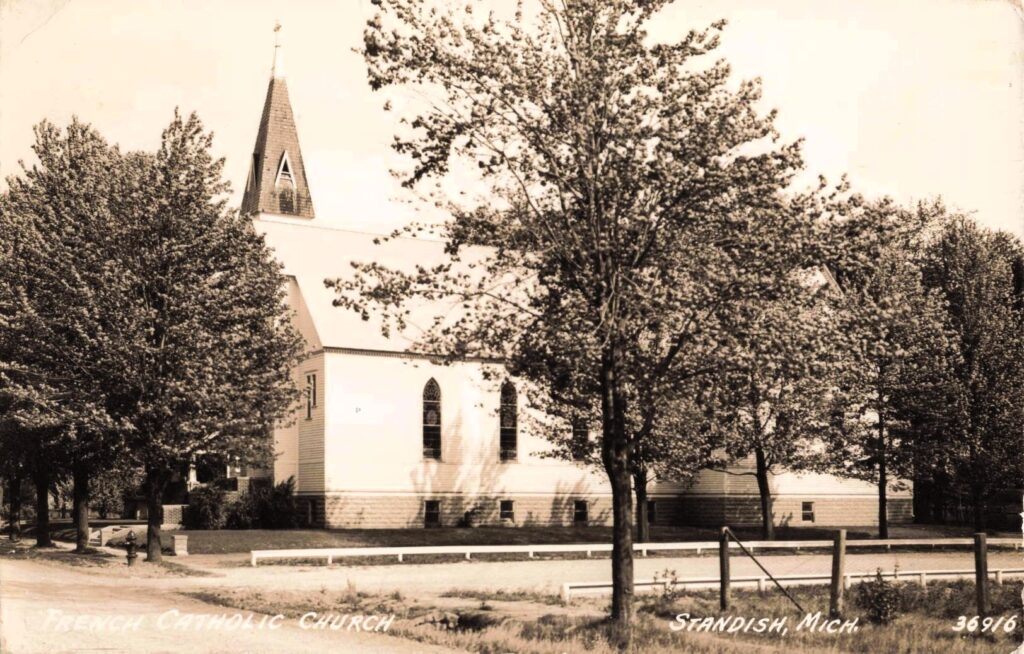
Standish had the institutions of a serious small city. The first school was built in 1871. Catholic, Congregational and Methodist churches followed. Fraternal groups also became part of town life, including Odd Fellows, Masons, Eastern Star, Woodmen, Gleaners and others.
These organizations shaped the rhythm of early Standish. They hosted meetings, raised money, supported families and gave people a public role in the community.
The Automobile Changed Standish – The Road North
The railroad made Standish. The automobile changed it.
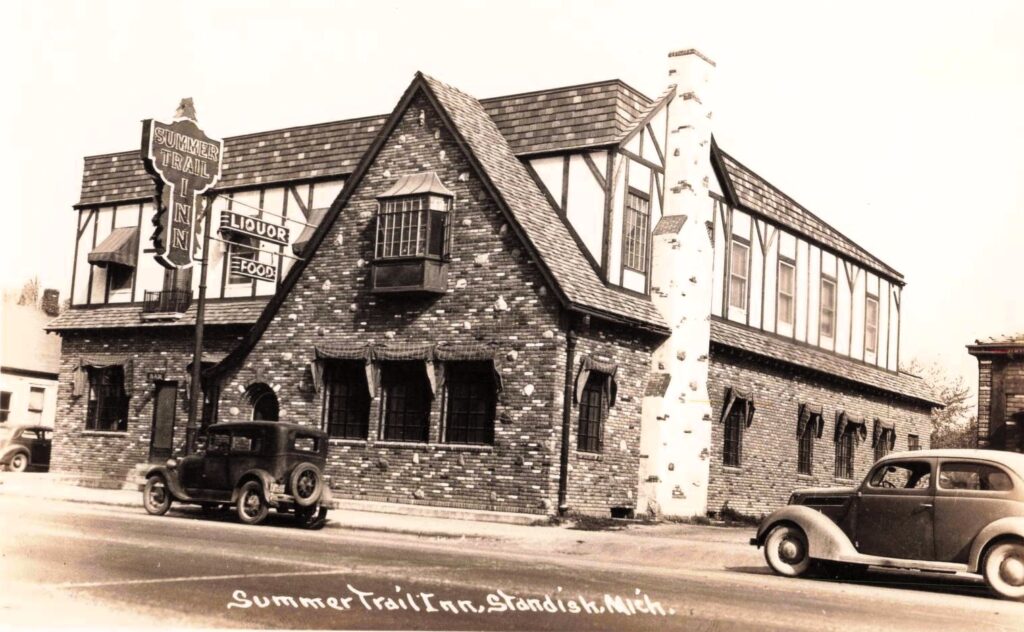
That is the counterintuitive turn in the history of Standish Michigan. The depot symbolized progress in 1889. By the 1920s and 1930s, the road in front of town was becoming just as important as the tracks.
The depot’s own history shows the change. In the 1880s, eight passenger trains stopped daily. By 1929, that number had fallen to four. Trucks and cars were taking business from the railroads.
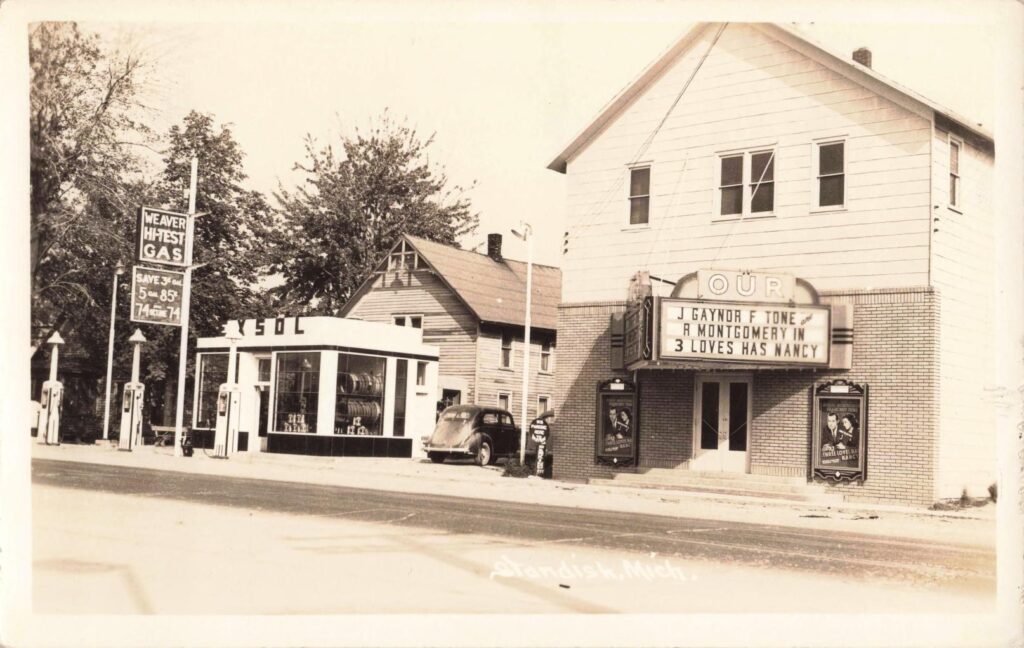
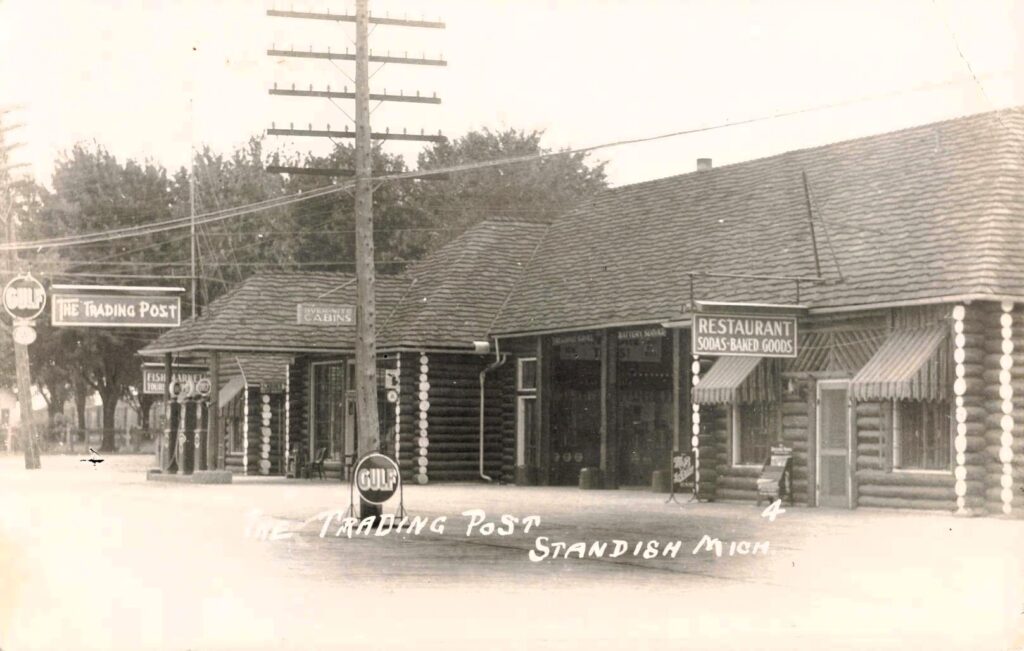
U.S. 23 gave Standish a new audience. Motorists heading north needed gas, food, repairs and rooms. Businesses such as The Trading Post, Weaver’s gas station and Summer Trail Inn served that new travel economy. Opened in 1931, the Trading Post capitalized on the booming traffic of the newly paved US-23. Later on, the Summer Trail Inn was established in the late 1930s, this locally famous roadside destination became an Arenac County staple, well-known to vacationers and locals alike for it’s southern fried chicken.
The original log building of The Trading Post was destroyed by fire in 1972. All of the tourist establishments in standish suffered when I-75 bypassed the town in 1973.
The result was not a sudden break with the past. It was a gradual shift. A railroad town became a highway town while still keeping its railroad identity.
Oil Added a New Chapter
We can’t talk about the history of Standish Michigan without talking about oil. Oil also became part of the Arenac County story. The Deep River Field became a major Michigan oil field. Central Michigan University’s Clarke Historical Library notes that the field was found in 1944 and ultimately produced more than 27 million barrels of oil. A county timeline also notes that Deep River was Michigan’s top oil-producing field in late 1938.
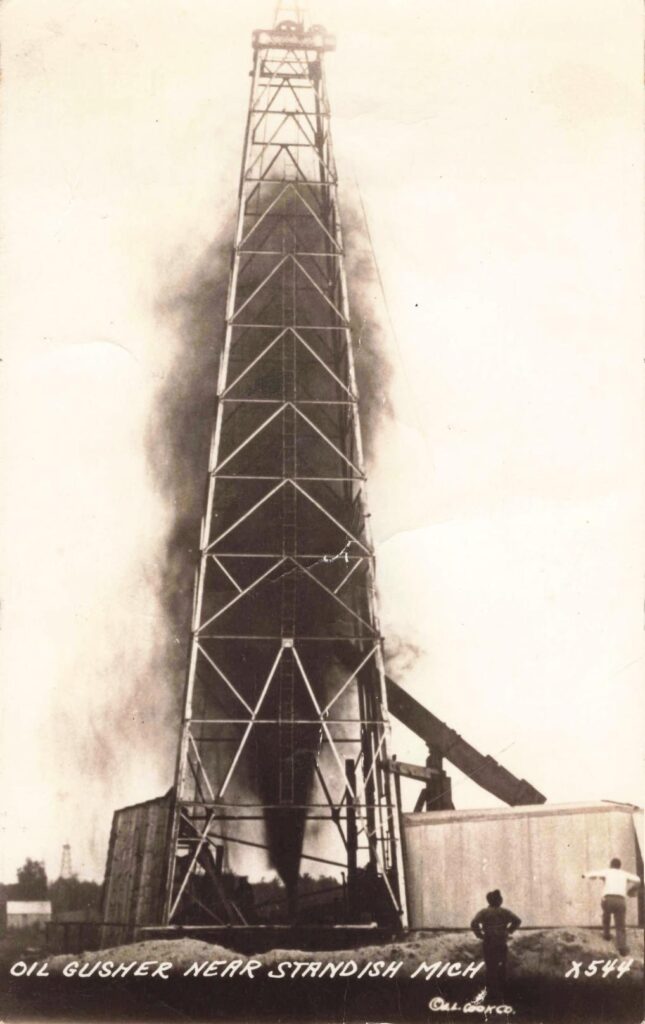
For Standish, oil meant leases, drilling crews, tank traffic and speculation. It did not replace farming or highway trade. It added another layer to an already mixed economy.
The Stone Depot Still Carries the Story
The old Michigan Central depot remains the most powerful landmark in the History of Standish Michigan. It represents railroads, farm labor, local pride and civic design.
The depot was completed in 1889. It was built in a Richardsonian Romanesque style and used fieldstone supplied by local farmers. The building later served different uses, but its form remained intact enough to support historic recognition.
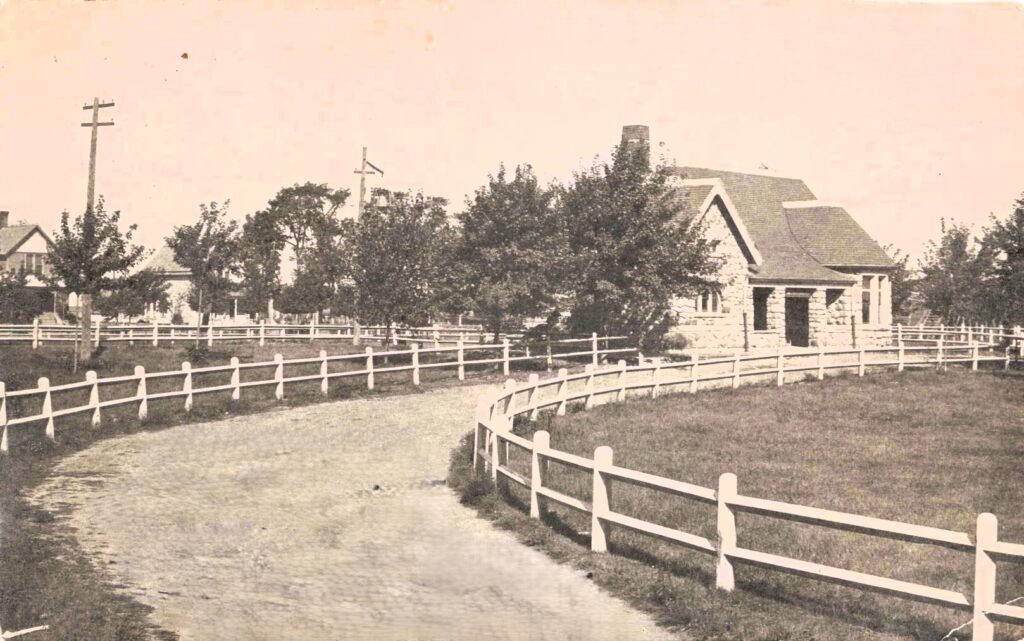
Today, the Standish Historic Depot Welcome Center thrives as a community hub and the official southern gateway to the scenic US 23 Heritage Route. Fully restored to its 1889 Richardsonian Romanesque glory, the volunteer-run landmark welcomes modern travelers with free regional maps, local travel guides, and Wi-Fi. Visitors can step back in time by exploring the indoor railroad museum—filled with local artifacts and vintage memorabilia. Visitors can also explore the historic rail cars permanently parked on the tracks outside.
Beyond serving as an informative rest stop, the depot grounds actively bring the community together, hosting a bustling weekly summer farmers market, lively outdoor concerts at the replica bandstand, and the popular annual Standish Depot Days festival.
Lighthearted Fun and Sport in Standish
Not every story abou the history of Standish Michigan was about rail schedules, bank ledgers or factory smoke. The town also knew how to have a little fun.
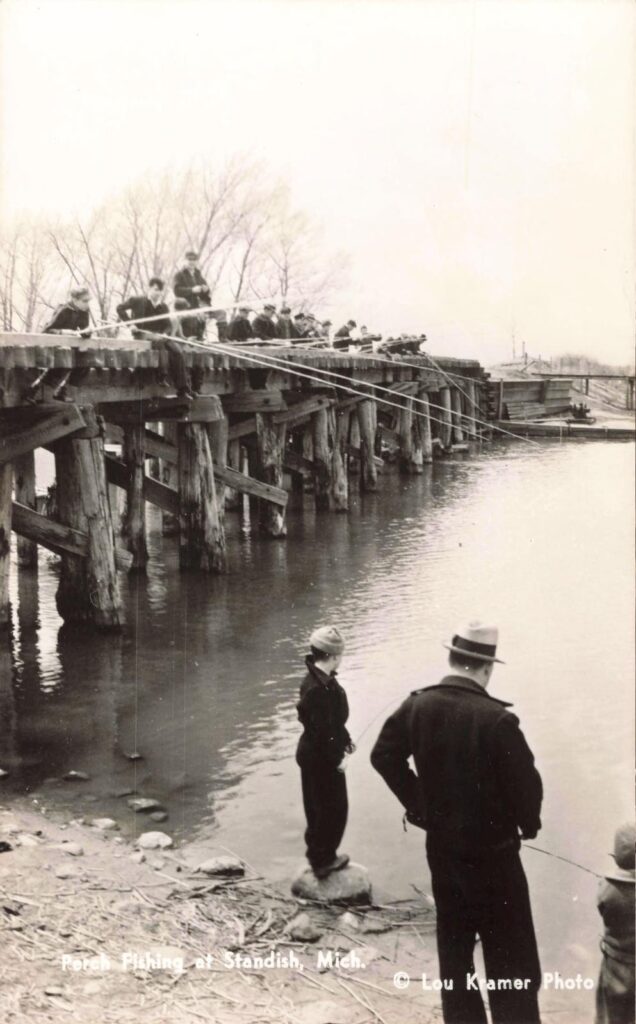
One image, “Perch Fishing at Standish, Mich.”, shows a line of anglers gathered along a wooden dock, their cane poles reaching out over quiet water. Men in dark coats and hats crowd the pier, while others fish from shore. It is a simple scene, but it says a lot. Fishing was not just a pastime. It was a social event. People came to talk, compete, pass the time and maybe bring home supper. In a farm and railroad town, a day by the water was a break from chores, trains and Main Street business.
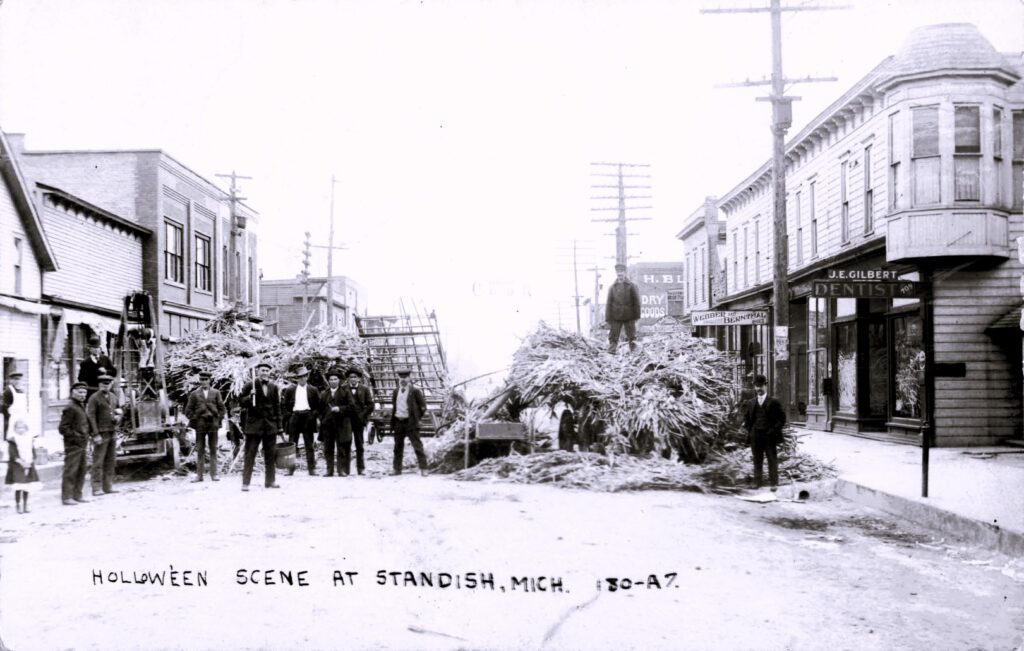
Another image shows a very different kind of community sport. The caption reads “Halloween Scene at Standish, Mich.” On Main Street, a group of men stands near what appears to be a large pile of cornstalks, brush or farm debris dragged into the road. A wagon frame or wooden structure sits in the middle of the mess. Storefronts line both sides of the street, including signs for dry goods, a dentist and other businesses.
This was almost certainly a Halloween prank, the kind common in small Midwestern towns in the early 1900s. Young people often marked the night by tipping outhouses, moving wagons, blocking streets, hauling gates away or stacking whatever they could find in public view. It was mischief, but usually with a wink. The next morning, the town had a cleanup job — and a story.
Why Standish Still Deserves Attention
The History of Standish Michigan is useful because it shows how many small Michigan towns really worked. They were not frozen in one period. They adapted.
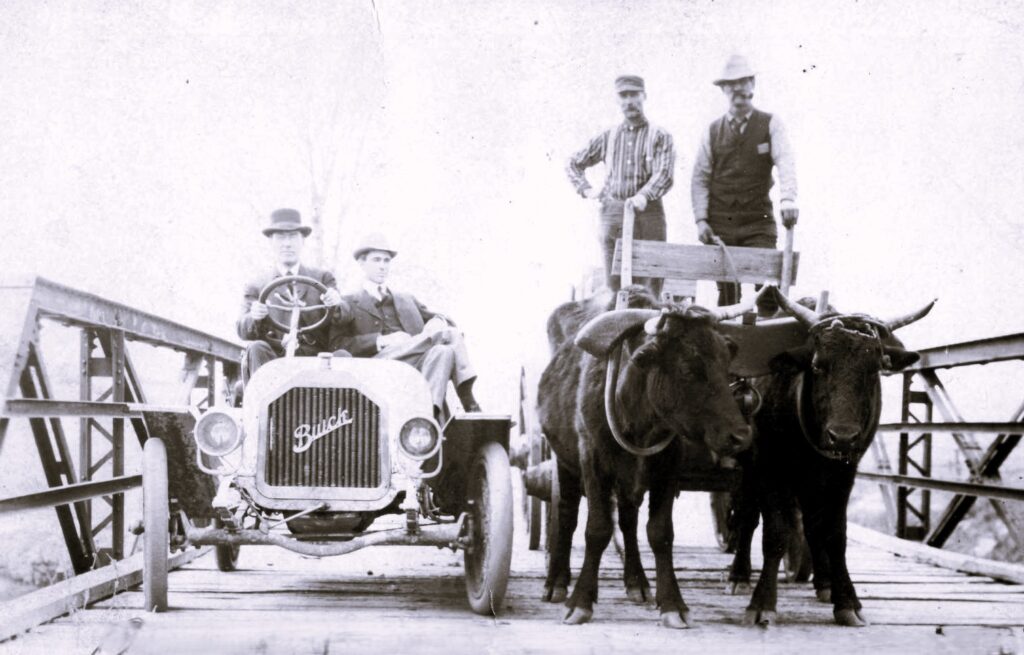
Standish was a sawmill town, a railroad town, a farm-market town, a dairy town, a highway stop and part of an oil-producing county. Main Street changed from horses to automobiles. The depot changed from transportation hub to historic site. The economy changed from logs to crops to motorists and petroleum.
That is the value of Standish’s story. It gives us a clear view of Mid Michigan’s transition from the 1870s into the 1940s.
Standish was not built by one event. It was built by a series of practical decisions: lay out the town, grant the rail right-of-way, haul the stones, build the mills, process the milk, serve the traveler and keep going when the next economy arrived.
In the end, Standish tells a familiar Michigan story in a very local way. The town moved from timber to trains, from farms to highways, and from fieldstone walls to oil fields. The old depot still stands because it was built well, but also because it still says something true about the place.
Standish was built by people who knew how to use what they had.
Works Cited for the History of Standish Michigan
“Timeline Arenac County 1831 >.” Arenac County Historical Society.
“History of Michigan’s Oil and Natural Gas Industry.” Clarke Historical Library, Central Michigan University.
“History.” Standish Historic Depot & Welcome Center.
“Scrapbook — History — Arenac County, Michigan.” MIGenWeb.
“Timeline.” City of Standish.
“Standish Historic Depot.” Sunrise Coast Pure Michigan Byway.