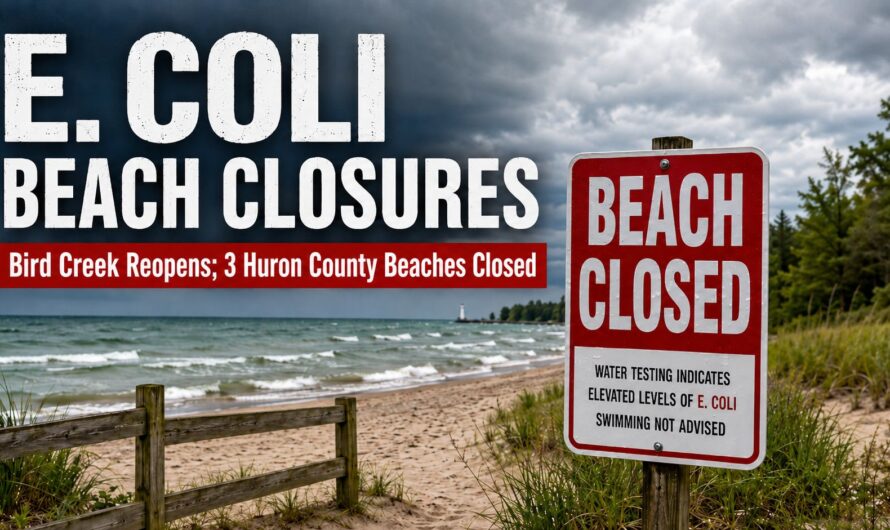
Three Huron County Beaches Remain Closed After High E. Coli Readings
Bird Creek Bathing Beach has reopened, but three Huron County beaches remain closed after E. coli tests exceeded state safety standards.

News History & Fun in Michigan
Huron County is located at the tip of the “thumb” area of Michigan. It is surrounded on three sides by water – Saginaw Bay and Lake Huron. The county has a land area of 824 square miles bordered by an irregular shore, 93 miles long.
Huron County ranks as one of the top agricultural counties in Michigan. Major crops grown in the county are corn, navy beans, sugar beets, wheat, alfalfa, oats, and barley. Major agricultural enterprises include dairy, livestock, and poultry production.
Because of the natural beauty and ideal topography and sandy beaches, it’s an ideal setting for the tourism industry.
?The shoreline offers numerous opportunities for vacationers. With two state parks – Sleeper State Park and Port Crescent State Park. Two roadside parks – Jenks Park and Brown Park. Also, the County maintains nine county parks along the shoreline.
Bird Creek Bathing Beach has reopened, but three Huron County beaches remain closed after E. coli tests exceeded state safety standards.
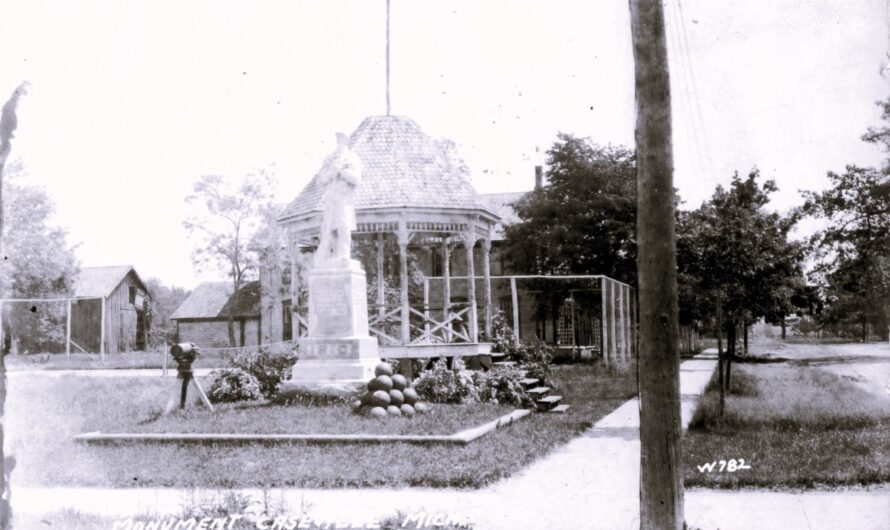
In the late 1800s, Caseville’s salt wells produced up to 50,000 barrels annually, a massive output that fueled the rapid growth of this Saginaw Bay…
The Harbor Beach Maritime Festival returns July 8-12, 2026, with five days of music, contests, food, family activities and waterfront events at Judge James H. Lincoln Memorial Park.
Thumb Brewery will release Collin’s Mild Ale on July 2 in Caseville during a benefit for the Huron County Nature Center. The event includes samples, raffle items, commemorative cups and wildlife education.
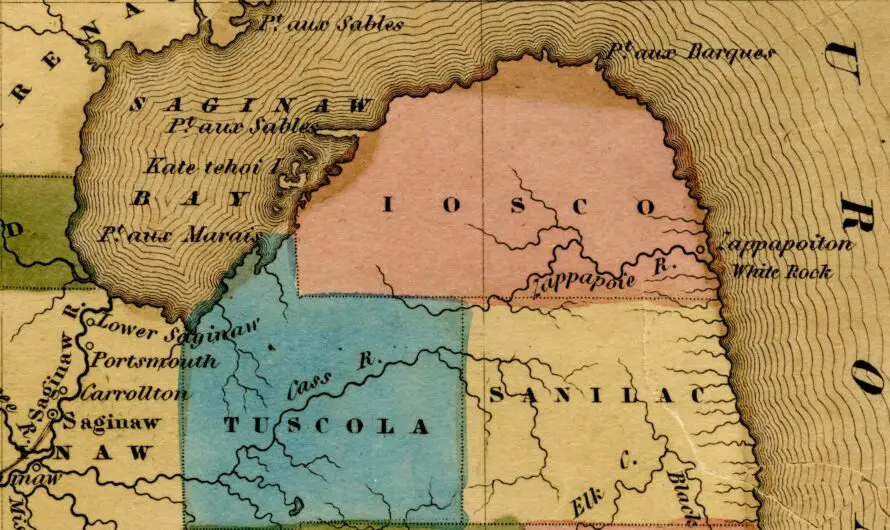
An 1842 map marked “Zappapoiton” and “Zappapoie River” at present-day White Rock. The stream is now Elm Creek. This piece explains the labels, the location, and why the names disappeared.
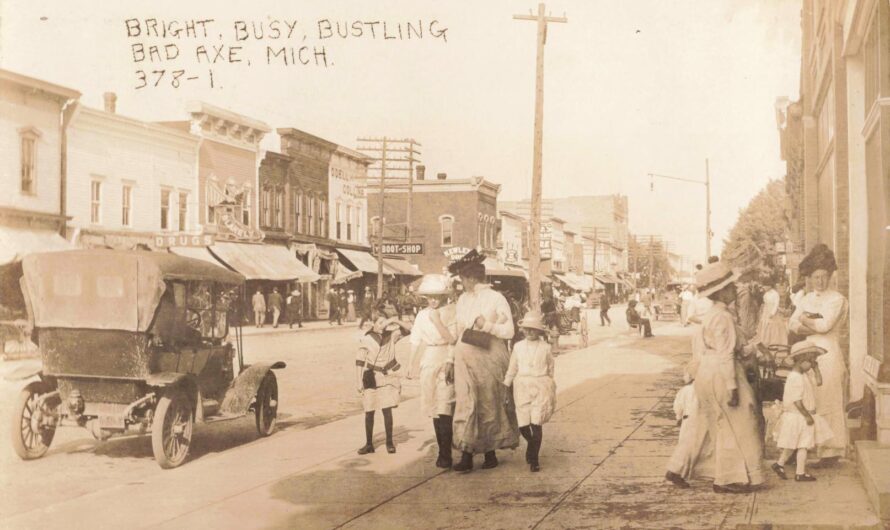
Bad Axe grew from a rough lumber settlement into the center of Michigan’s Thumb. This Michigan Moments feature looks at the railroad era, downtown businesses, fairs, farming, and local legends.
Linkville, a small unincorporated village in Michigan, thrived between 1890 and 1930 as a farming community and key railroad stop. However, post office closures and improved transportation led to its decline, leaving St. Paul Lutheran Church as its enduring landmark.
Berne, Michigan was a quiet farming hamlet in 1900. This report covers daily life—farming, schoolhouses, church gatherings—and the families who helped build this rural Thumb-area village.
White Rock once helped define a treaty boundary, then tried to become a Lake Huron resort with hotels and a ballroom. Fires, winters and shifting travel routes changed it—but the story still holds.
In 1911, A. Hirshberg & Son turned a Thumb crossroads into a shopping hub. A postcard shows buggies, brick storefronts and new cloaks on display in Pigeon, Michigan, capturing a village department store at its peak as the automobile age approached.