 by
by 
Michigan plank roads helped wagons cross muddy ground and reach markets during the 1800s. Private companies collected tolls, but rotting boards, repair bills, and expanding railroads weakened the business.
Michigan once charged travelers to drive across wooden roads. Private companies laid boards over prepared roadbeds, giving horse-drawn wagons a firmer surface than mud. For farmers hauling goods, a dependable road could make the difference between reaching a market and getting stuck.
The attraction was easy to understand. Timber offered a practical way to improve travel, and tolls promised investors income. The difficulty came later, when weather and traffic damaged the boards, and companies faced continuing repair bills.
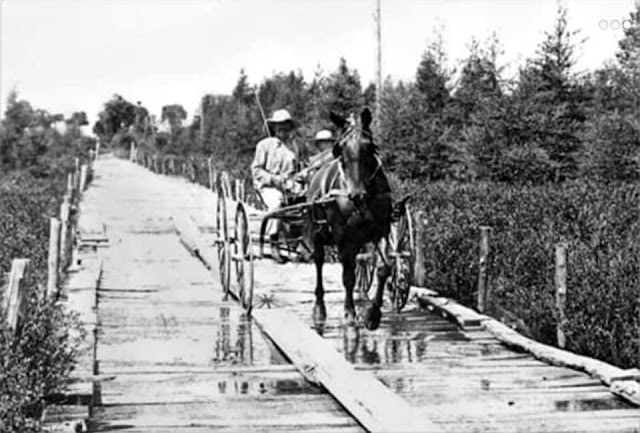
These plank boards were laid across the road on log foundations in various lengths, but most were eight feet long. The roadways were built for wagons and were at least 12 feet wide. These Michigan plank roads were broader in downtown areas.
Table of Contents
Why Michigan Turned to Wooden Toll Roads
While the first plank road was constructed in New York, the first corporation chartered to build a plank road was formed in Michigan in 1837. The Detroit, Plymouth, and Ann Arbor Turnpike Corporation, also known as the Timber Road Company, was chartered by the Michigan House of Representatives on March 20, 1837.
Michigan’s growing communities needed reliable connections with commercial centers. Farmers and manufacturers supported plank roads because poor travel conditions made moving goods difficult. Private investment offered a way to improve those connections when public road funding fell short.
Over 200 plank road companies were founded in Michigan throughout the 1800s, with licenses granted to build and operate approximately 5,800 miles of plank roads. Some were 220 miles long, from Zilwaukee to Mackinaw City via Traverse City. One was barely one mile long and was located in Sault Saint Marie, Michigan’s Upper Peninsula.
How a Plank Road Worked
A plank road used sawn boards laid across supporting timbers called stringers. The stringers ran along the direction of travel, while the boards formed the driving surface. This construction differed from a corduroy road, which used logs laid across difficult ground.
Drainage mattered as much as the wood. Workers dug roadside ditches to carry water away and reduce mud around the roadbed. A well-built surface could improve wagon travel, but it still required regular maintenance. Companies could proceed under its requirements without obtaining a separate special charter for each road. The law established construction requirements and regulated tolls, helping turn road building into a private business opportunity.
Michigan’s Hundreds of Miles of Indian Trails Made Today’s Highways Possible

The United States Government dispatched surveyors from the East to Michigan in 1812. Settlers were given their first opportunity to begin farming. The settlers’ desire for opportunity drove them westward from Detroit across Michigan. They took the Indian trails. The settlers were warned that the area ahead of them was worthless swampland as they progressed. The settlers’ aspirations faded with time, yet they persisted. The ladies drove the teams while the men walked. The 80-mile trek took the settlers three weeks to reach homesteads in western Michigan from Detroit.
In the mid-nineteenth century, the Grand River Trail was expanded into a plank road, which served as the foundation for one of the first state trunkline roads, M-16, in the early twentieth century. Later, M-126 was replaced by M-104, and the roadway was realigned.
Plank Roads Helped Communities Reach the Railroad
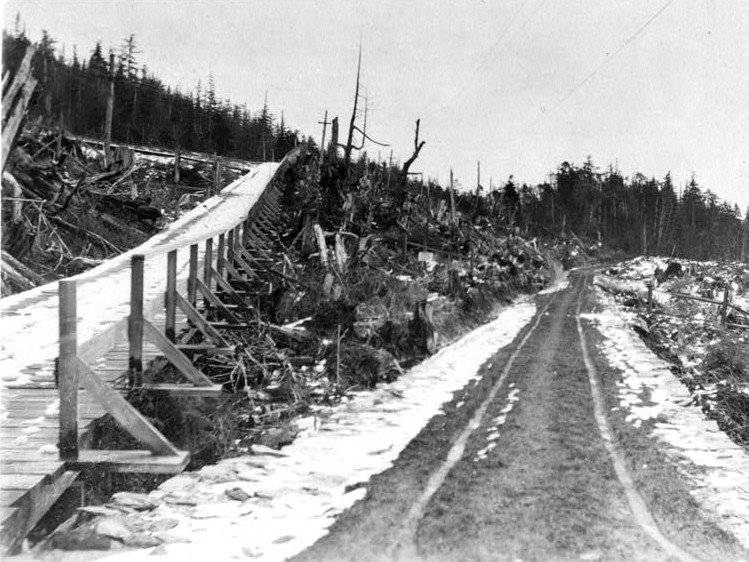
Some plank roads helped people reach trains. Around Kalamazoo, farmers and timber businesses needed connections with the Michigan Central Railroad. Wooden roads offered an alternative to building expensive railroad branches into every surrounding community.
Kalamazoo’s plank roads linked the city with Three Rivers and Grand Rapids. Those connections helped move goods toward rail service and larger markets. Later railroad expansion also gave travelers and shippers alternatives to deteriorating wooden roads.
A New Road Was Worth Celebrating
The opening of a dependable road could become a community event. The Federal Highway Administration describes a July 1852 celebration for the Lansing–Howell Plank Road. Its account says people could hear the approaching stagecoach from a mile away before the crowd welcomed its arrival.
The celebration helps explain the appeal of wooden highways. A firmer surface promised easier movement of people and agricultural goods. The challenge was keeping that improvement in working condition after the opening festivities ended.
Ann Arbor Turnpike Corporation
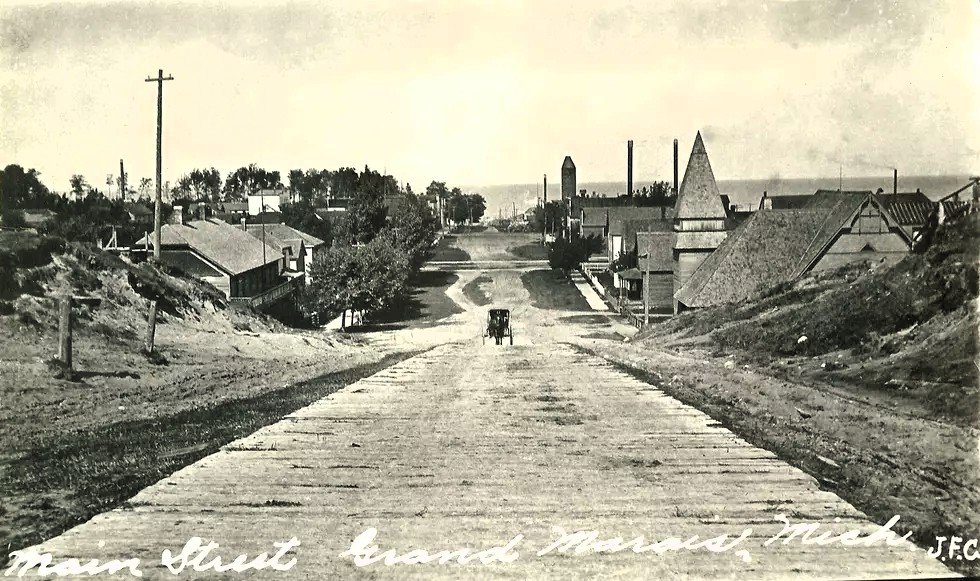
The Detroit, Plymouth, and Ann Arbor Turnpike Corporation was among the first to be chartered. It was chartered (with an extraordinary sum of $100,000 in its day) to create a “wooden road built of excellent, well-hewn timber” from Detroit in Wayne County to Ann Arbor in Washtenaw County. Later, in 1844, the state approved the construction of plank roads between Detroit and Port Huron, and between Sylvania, Ohio, and Blissfield, Michigan. The Corunna and Northampton and the Marshall and Union City Plank Road companies were granted charters in 1846.
Depending on the weather and topography, constructing a plank road cost anywhere from several hundred to several thousand dollars per mile. The construction process involved digging trenches on each side of the plank road to drain water and avoid mud from collecting under and over the boards as part of the upkeep. As a result, wagons filled with goods and agricultural products, along with the animals hauling them, were not delayed or halted by mud and could enjoy a hazard-free trip once they reached a plank road. Planks were also used to build bridges. Even now, you can come upon a wooden bridge, comparable to an ancient plank bridge, on your travels.
Plank roads remained popular far into the twentieth century, when the first motorists, straining to navigate muddy roads and rough gravel roads in their Model Ts, were all too pleased to have a flat surface on which to travel. A great deal of pomp was typically associated with the inauguration of a plank road, just as it is now when a new section of roadway is finished. In July 1852, residents assembled in Lansing, Michigan, to commemorate the inauguration of the Lansing-Howell Plank Road. The stagecoach carrying the ceremony’s keynote speaker could be heard arriving from a mile away as it drove along the new plank road. The crowd began applauding as the stagecoach approached. Finally, they had a path they could rely on.
The plank road, like many other inventions, was a forward-thinking concept that significantly improved local transport. After a few years, though, the planks began to twist and rot away. Repair costs, additional timber, gravel, toll structures, staff, and management all played a role. Stone was used to compensate for the planks’ deterioration, resulting in a slower and bumpier ride.
Plank Roads in Saginaw
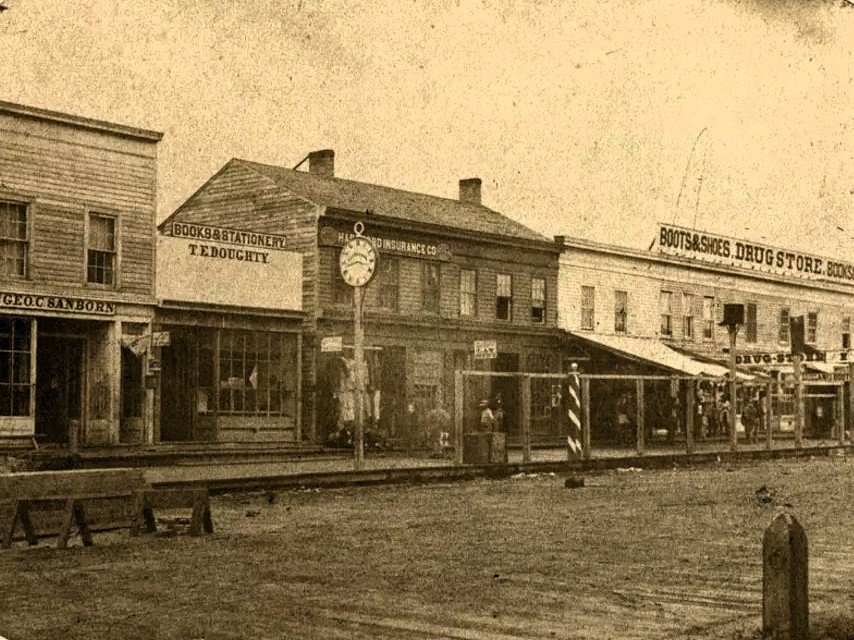
Plank roads faded into obscurity, with several still lying dormant and forgotten beneath today’s concrete roadways. Then, in April 2010, a 159-year-old relic was discovered by Saginaw’s city engineering staff. In terms of Saginaw history, it is “the pot of gold at the end of the rainbow.” Crews discovered another portion of one of the community’s original highways, a plank road that ran from Saginaw to Flint beginning in 1851, at the intersection of E. Genesee and Baum. In the 1800s, early Saginaw residents erected the double-decker stacks to counteract the region’s marshy environment. The empty space between the stacks allowed air to travel, making the highway more stable in the bayou-like environment.
The pioneers and early settlers were very proficient engineers. Highway workers uncovered plank road fragments while working on a multi-million-dollar East Genesee restoration project. Because of the terrain, this was not simple to create. One has to envision what it was like to build the plank road along what is now Michigan’s part of the Dixie Highway. Workers had to chop down and mill “thousands of trees” during construction.
The Rise and Fall Of Michigan Governor Epaphroditus Ransom Due to Michigan Plank Roads
 |
| Epaphroditus Ransom |
Epaphroditus Ransom arrived in the Michigan Territory with his family on November 14, 1834, after a month-long journey by riverboat and stagecoach. He and his wife settled in Bronson, Michigan (the residents eventually renamed the settlement Kalamazoo) and immediately applied for admission to the bar. Ransom traveled extensively on horseback throughout western Michigan as a lawyer, practicing his profession and earning many political connections. He would go on to become Michigan’s 7th governor and Chief Justice of the Michigan Supreme Court. On January 3, 1848, he was inaugurated in Lansing, Michigan’s newly constructed state capital.
Among his significant successes during his governorship was the development of privately maintained plank roadways. These linked rapidly developing cities, including Grand Rapids, Saginaw, Lansing, Kalamazoo, and Detroit.
Michigan Plank Roads Law Under Governor Ranson
 |
| Michigan in 1841 |
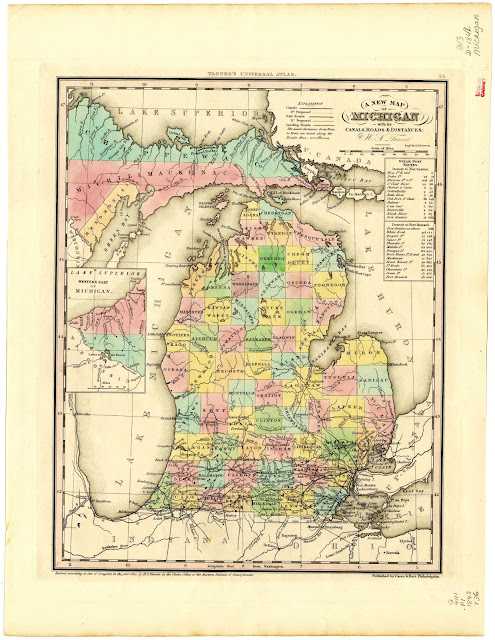
In 1848, the Michigan State Legislature passed a comprehensive Plank Road Bill. Ranson quickly signed the bill into law. A legislative charter was no longer necessary to build and administer a plank road. According to the new regulation, any business may operate a plank road as long as it meets specific standards, such as being two to four rods wide, with 16 feet of it in a good, smooth, permanent road well-drained by ditches on either side. In addition, a minimum of eight feet of road was to be covered with three-inch-thick boards. The legislation also stipulated that no grade should exceed 1 out of 10 and that business charters should be valid for 60 years.
Ransom and his son sold the family property and made significant investments in plank road companies after his term as governor. However, they lost everything after the Panic of 1855 and when plank roads gave way to the ever-expanding railways.
What Did a Stagecoach Trip Cost?
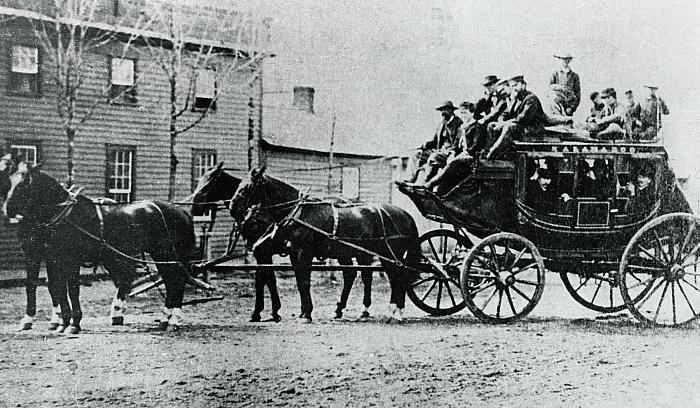
A Grand Rapids Public Library collection guide records a $2.50 passenger fare for the 48-mile coach trip to Kalamazoo. That figure paid for transportation aboard the coach. It should not be confused with the toll charged for using the road.
The distinction matters when comparing historical travel costs. A passenger bought a ride, while a road company collected money for access to its route. The two charges paid for different services.
Mid Michigan Had Its Growth Due to Plank Roads
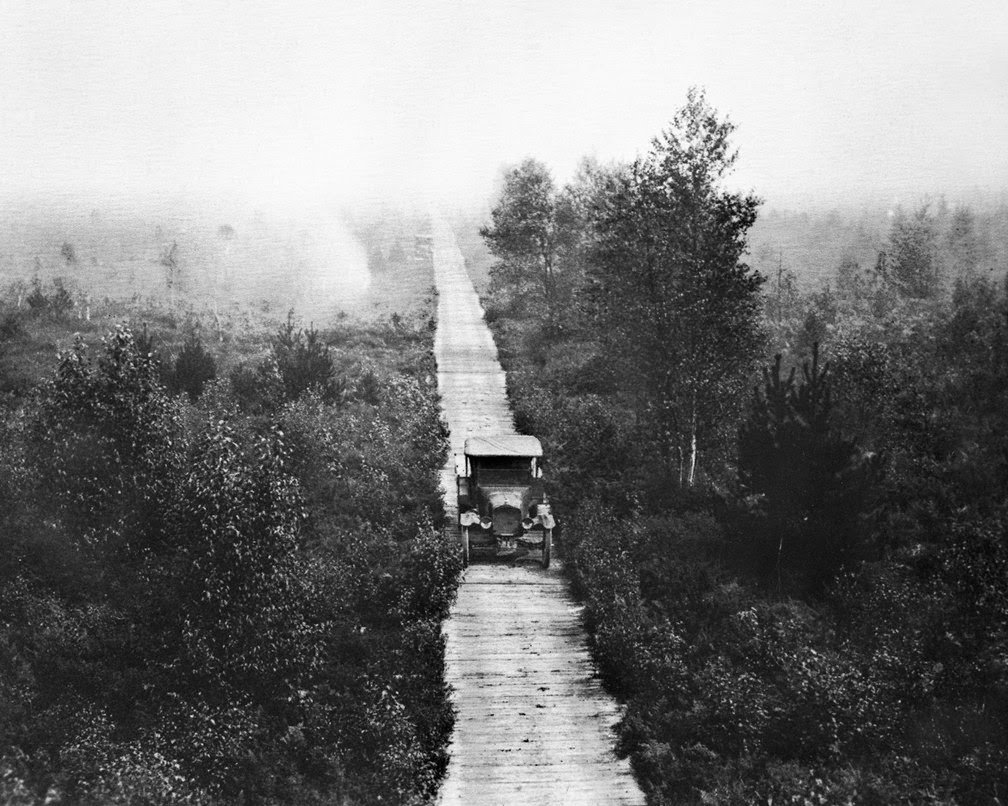
The original Grand River Avenue corridor walk was an Indigenous trail, a footpath used by the Aboriginal inhabitants. The earliest European immigrants in the region used this path, which they widened in some places to allow carts to pass. Grand River Avenue in Detroit is one of five primary streets designed by Judge Augustus Woodward in 1805 that stretched from Center Detroit in different circumferential directions; (along with Woodward, Michigan, Gratiot, and Jefferson) Grand River Avenue stretches northwest from the city’s downtown
Early Plank Roads Created Michigan’s Pre-Tourist Hotels and Inns
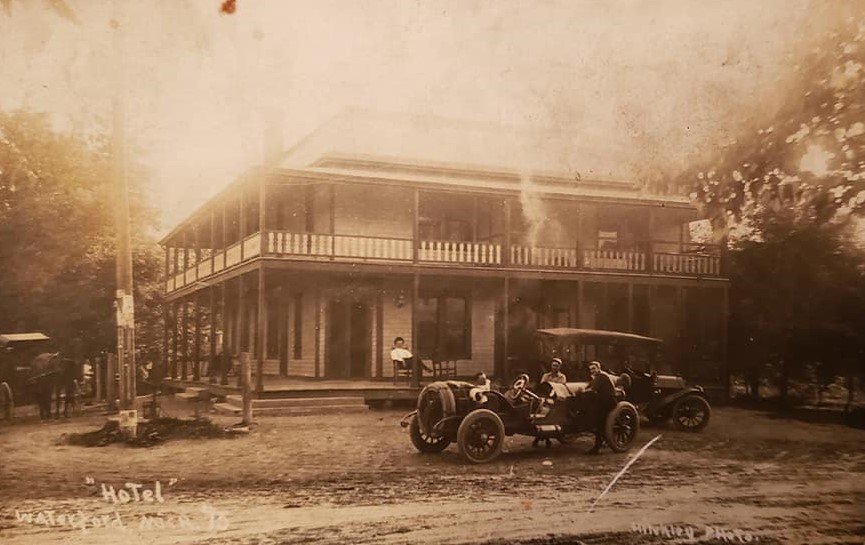
The first inns and hotels in Michigan catered to settlers and labourers rather than tourists. As people travelled west to experience what Michigan had to offer in terms of its harbours, rivers, forests, and agriculture, modest inns were established in major population centres. These inns were generally situated along water transit routes or, following the introduction of stage travel, along the three principal trails that crossed southern Michigan in the early nineteenth century: the Chicago Road, the Territorial Road, and the Grand River Trail.
Because of the limited distance a horse, wagon, or stage could travel in a single day, it was common for inns to be placed close to one another. Between 1820 and 1840, these inns were often built of wood. They were typically small, with a few sleeping chambers and a taproom with a big hearth where meals might be prepared and served.
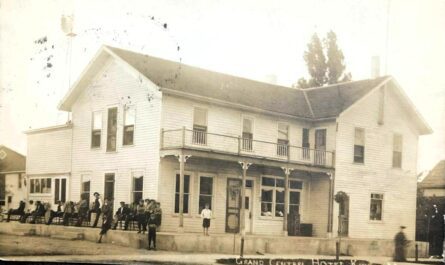
A Michigan historical marker denotes one such inn. “Peter Seitz, a German immigrant, erected a home on the North Custer plank toll road in 1856 as a residence and stagecoach inn. Stagecoaches were formerly hauled by teams of up to four horses. The plank roads were constructed with wooden planks to facilitate driving during the “muddy season.”
The inn was a favorite meeting place for residents and stagecoach travelers alike. The package includes a hotel, dinner, drink, and entertainment. Dances and other social and community gatherings were held in the second-floor ballroom. Residents in this area began the planning that led to the building of St. Matthew’s Lutheran Church in 1860. These inns were widespread in the little towns and villages along the early plank highways.
The structure was utilized as an inn until it was converted into a single-family residence around the turn of the century.
The Gratiot Plank Road Company
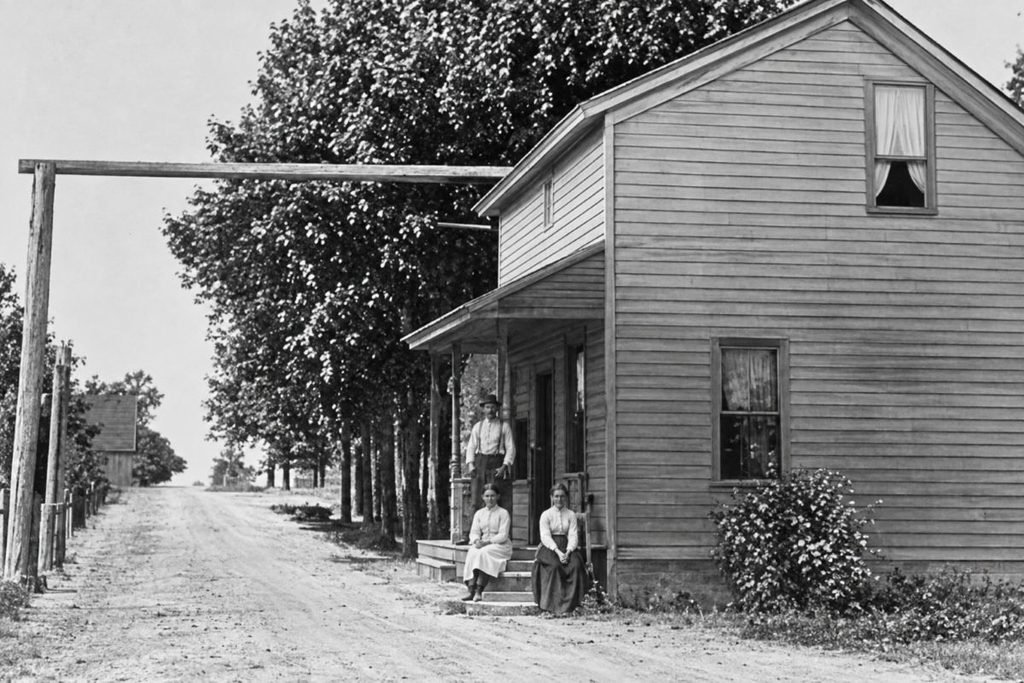
The Gratiot Plank Road Company was founded in 1868 by Ammi Wright and William Glasby, with Wright serving as president and Glasby as a contractor. The Michigan state government hired them to construct a 32-mile-long plank road of excellent, well-hewn timber, three inches thick, to connect Saginaw and St. Louis. Farmers, merchants, and a stagecoach line traveled daily on the route that ultimately became M-46 between Saginaw and St. Louis by 1870.
A photograph of the plank road, dated 1860, was found in the Saginaw Public Library archives. This is Genesee Street, according to the sign. It appears to be from an old western movie set rather than a tiny hamlet in Michigan. Norman Little created the first plank road from Saginaw to Flint, paving the way for Saginaw’s prosperity.
Plank Roads and the Birth of Motor Vehicle Travel
Stage lines traversed terrain that was frequently made up of plank roads, making stage riding extremely rough. The roadbed was likewise alternately dusty and muddy. By 1904, Tuscola County had only a few stage lines left, and they served locations with no railroad connections. The speed and comfort of the train finally put an end to the stagecoach industry. Railroads were faster, and their fares were less expensive.
Grand River Avenue Opens, First Paved Road Across State
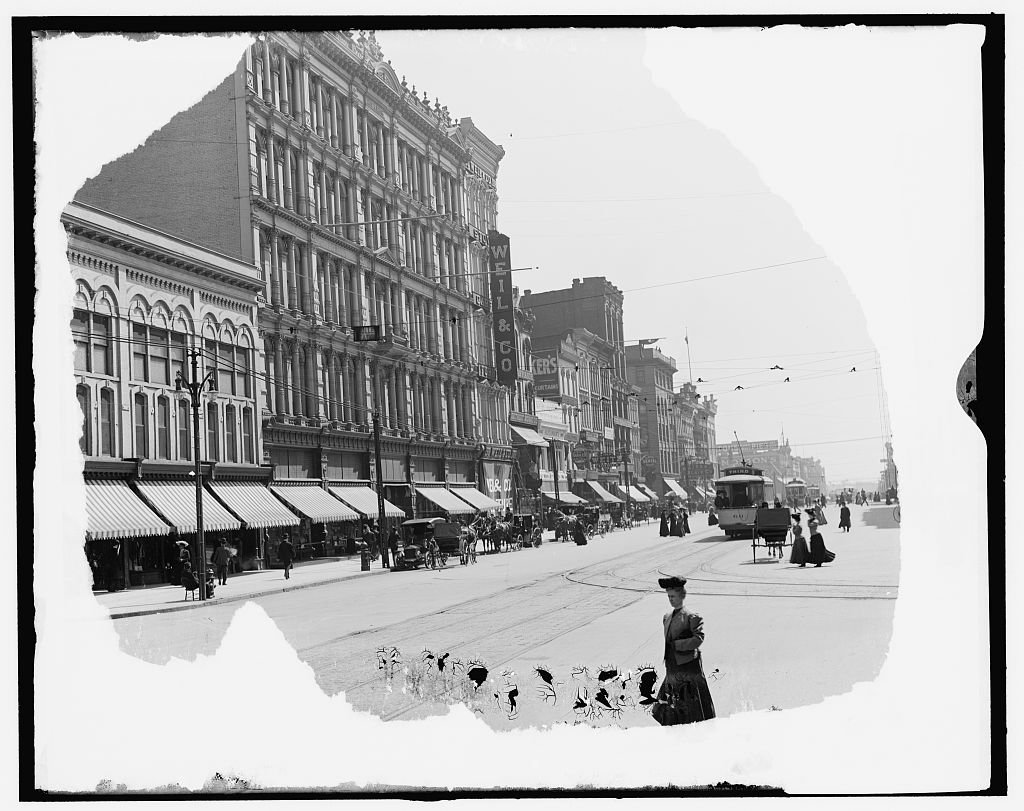
Fast forward 70 years to 1926, when US Highway 16 was one of the main routes in Michigan before the post-World War II development of freeways. Before the United States Numbered Highway System was established in 1926, the highway was classified as a state highway with the designation M-16.
Grand River Avenue’s current course runs northwest to southeast across the Lower Peninsula, from Grand Rapids to Detroit. Between 1955 and 1965, US-16 used other routes between Muskegon and Grand Rapids, then Grand River Avenue via Lansing to Detroit. US 16 was upgraded from older roads to modern highways in the years leading up to the formation of the Interstate Highway System. It was later classified as an Interstate. When the highway gap near Lansing was closed up, the state’s US 16 designation was discontinued. East of Grand Rapids, the highway was only known as Interstate 96 (I-96), and west of the city, it was known as Interstate 196 (I-196).
Why Michigan Plank Roads Failed
Wooden road surfaces demanded repeated repairs. Boards warped, splintered, and rotted, while traffic continued to wear them down. Companies needed enough toll income to maintain the road and keep the business operating.
Railroad expansion added another problem. Around Kalamazoo, new rail connections reduced the appeal of investing in worn-out plank roads. Some routes survived as transportation corridors long after their wooden surfaces had become impractical.
Works Cited
Longfellow, Rickie. “Plank Roads.” Federal Highway Administration, U.S. Department of Transportation, 27 June 2017. Accessed 16 Sept. 2026.
“Our History.” Village of Webberville.
“Plank Road Boom.” Wikipedia, Wikimedia Foundation. Accessed 16 Sept. 2026.
RR668ADMIN_8_539527_7.pdf. Michigan Department of Transportation.
Schuld, Matthew. “Plank Roads.” Kalamazoo Public Library, 2009. Accessed 16 Sept. 2026.