 by
by 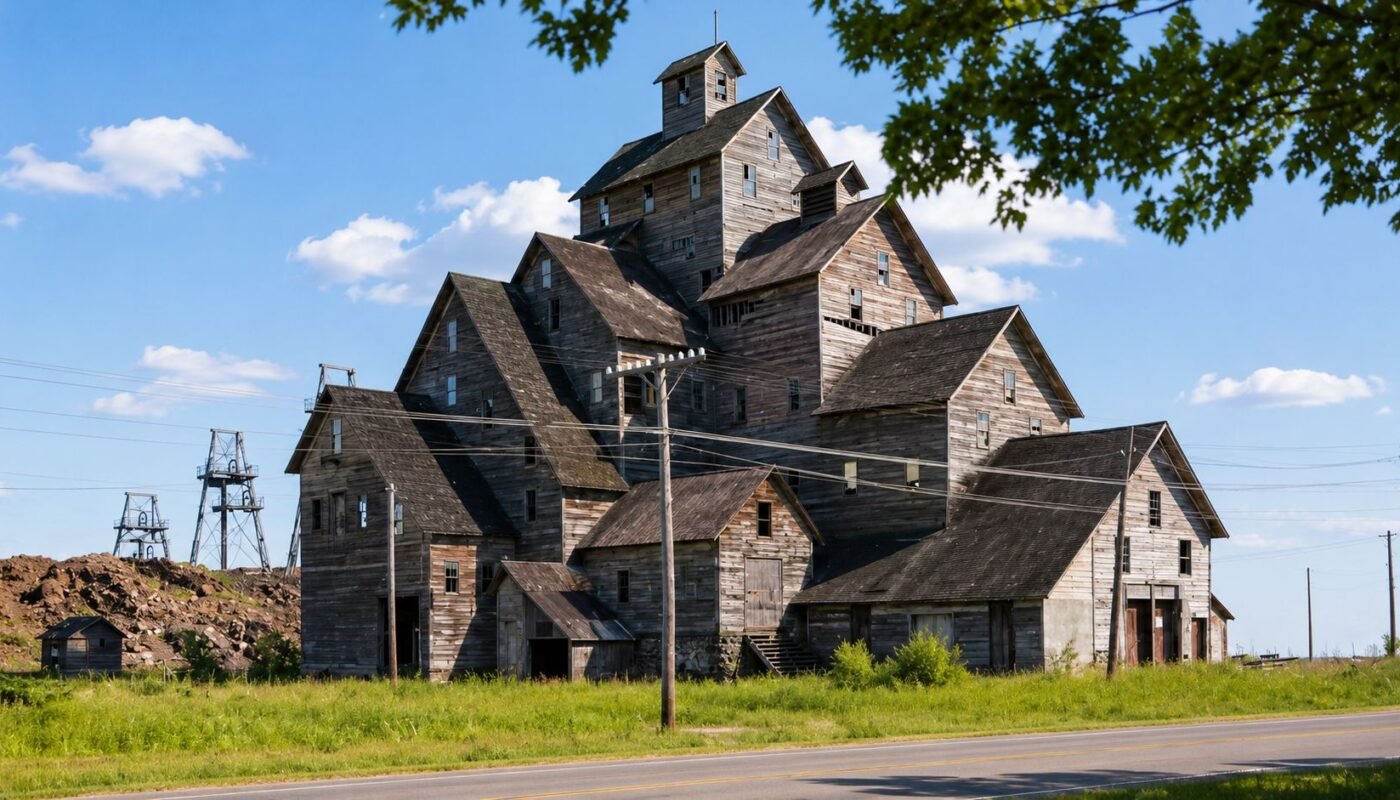
High above Hancock, Michigan, the surviving buildings of the Quincy Mine mark one of the most important industrial sites in the state. For decades, miners followed veins of native copper deeper beneath the Keweenaw Peninsula while engineers built larger machines to haul men and rock back to the surface. The mine became famous for its long record of profits, but its success rested on difficult work performed thousands of feet underground.
The History of the Quincy Mine Michigan is often told through impressive numbers. The No. 2 shaft eventually stretched more than 9,000 feet along its incline, while the company employed more than 1,000 workers during its peak years. Yet the more revealing story is found in the men who drilled the rock, repaired underground tracks, rode crowded man-cars and carried their dinner pails into the mine each day.
Table of Contents
Watch: Quincy Mine Michigan: Old Reliable, the World’s Largest Hoist and the 1913 Copper Strike
History of the Quincy Mine Michigan Began With the Pewabic Lode
The Quincy Mining Company was organized in 1846, during the first great copper rush on Michigan’s Keweenaw Peninsula. Early operations struggled until miners reached the rich Pewabic Lode during the 1850s. That find changed the company’s fortunes and helped turn Quincy into one of the most successful copper producers in the Lake Superior district.
By the late 1800s, Quincy had grown well beyond a single mine shaft. The company acquired neighboring properties, added new shafts, and developed a production system that stretched from Quincy Hill to Torch Lake and the Portage Canal. Its steady record of dividends earned the company the nickname “Old Reliable.”
Quincy’s dividend streak became one of the longest in American mining history, running from 1868 through 1920. That record made the company famous among investors, but underground conditions were far less predictable. Rock falls, machinery, explosives, fires, and deep shafts made mining dangerous even during ordinary shifts.
Immigrant Workers Built Quincy’s Copper Empire
By 1905, Quincy employed roughly 1,400 people. Many were immigrants or children of immigrants, including Cornish, Finnish, Italian, Croatian, Slovenian, German, and Irish workers. These communities helped shape the culture of Hancock and the rest of Michigan’s Copper Country.
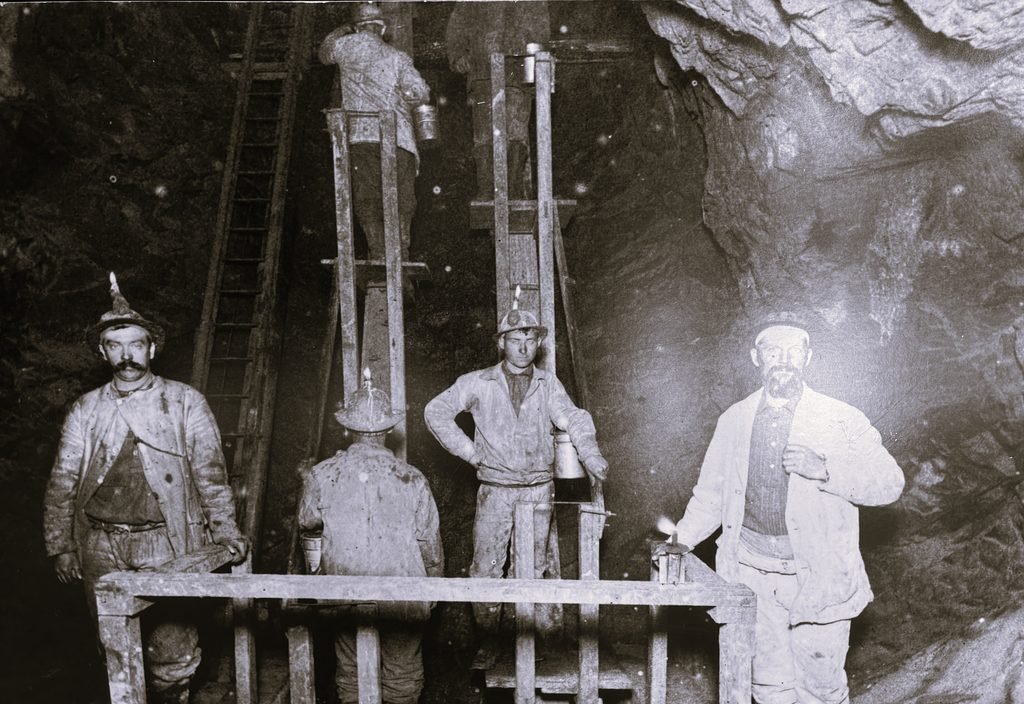
Jobs were often divided by skill, experience, and ethnicity. Cornish miners arrived with generations of hard-rock mining expertise and often held skilled drilling or supervisory roles. Newer arrivals often began as trammers, muckers, rockhouse laborers, or workers assigned to other physically demanding jobs.
Italian immigrant Joseph Cottini offers one example of how a worker could enter Quincy near the bottom of the employment ladder. He began as a trammer, moving broken rock underground, and later sought better positions as he gained experience and improved his English. His story reflects the larger immigrant experience that defined much of the Keweenaw mining workforce.
A Commute That Continued Underground
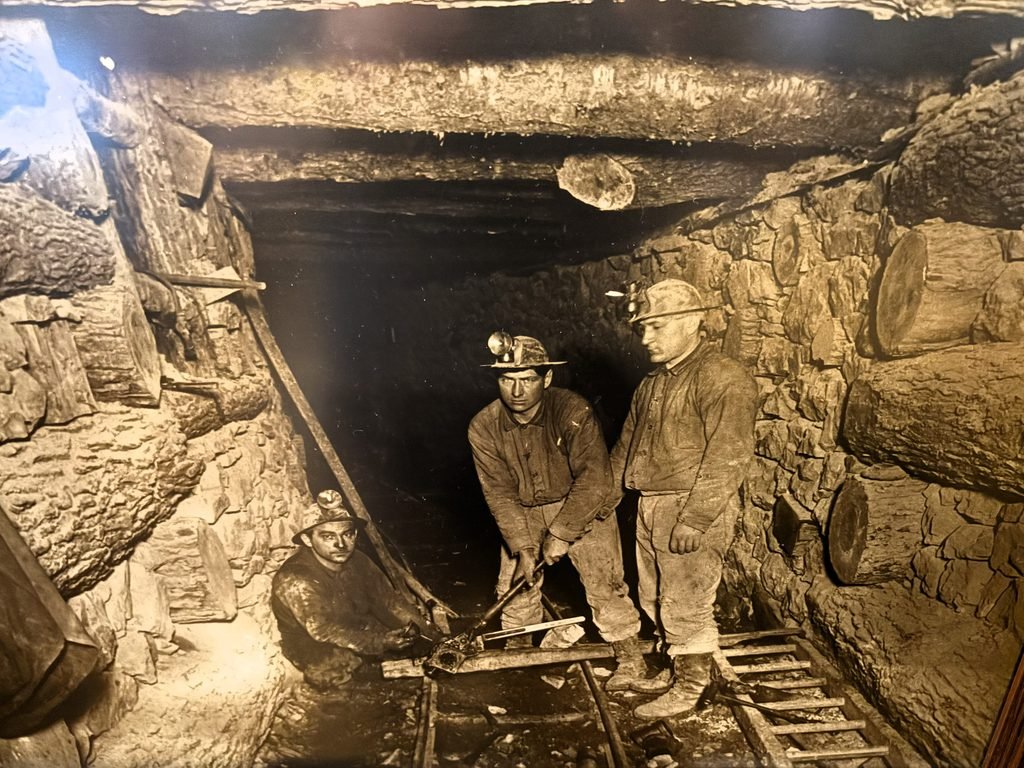
Getting to work at Quincy did not end when a miner reached the shaft house. Men climbed inclined man-cars aboard and descended deep into the earth before reaching the level assigned for their shift. The ride grew longer as the mine expanded downward.
Quincy’s No. 2 shaft eventually extended about 9,240 feet along its incline and reached more than 6,200 feet below the surface. The mine was divided into levels connected by drifts, crosscuts, rails, and work areas carved through the rock. By the early 20th century, Quincy had created an underground industrial network beneath the hills above Hancock.
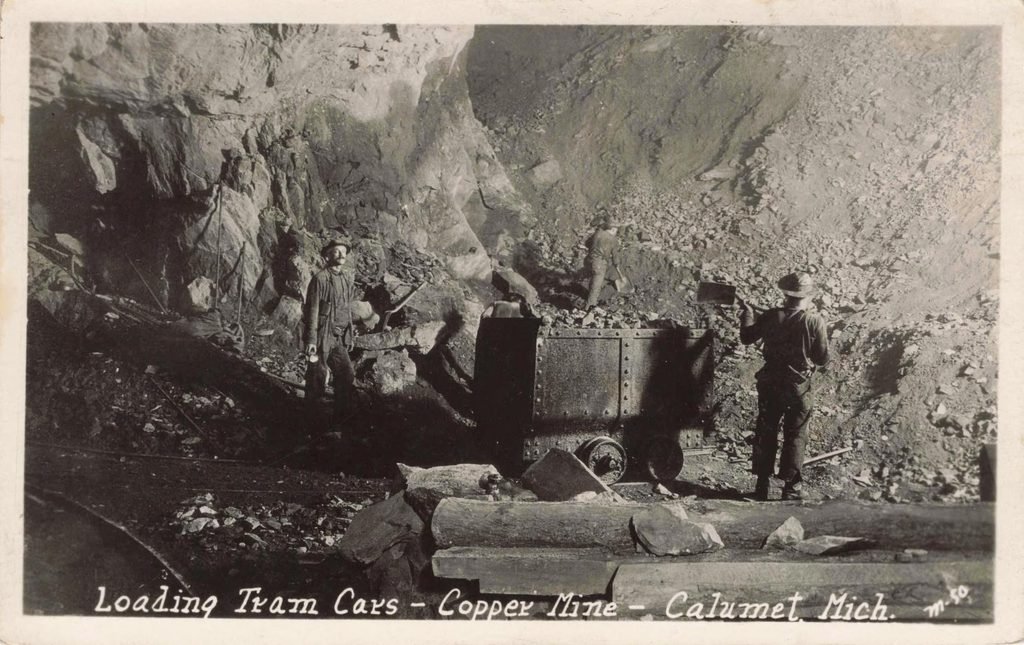
The company introduced electric haulage underground in 1901. Small locomotives and steel cars moved broken rock toward the hoisting shaft, while maintenance crews kept tracks, switches, and other equipment working. These jobs were essential because every ton of copper-bearing rock first had to reach the shaft before it could begin the long trip upward.
Native Copper Made the Keweenaw Different
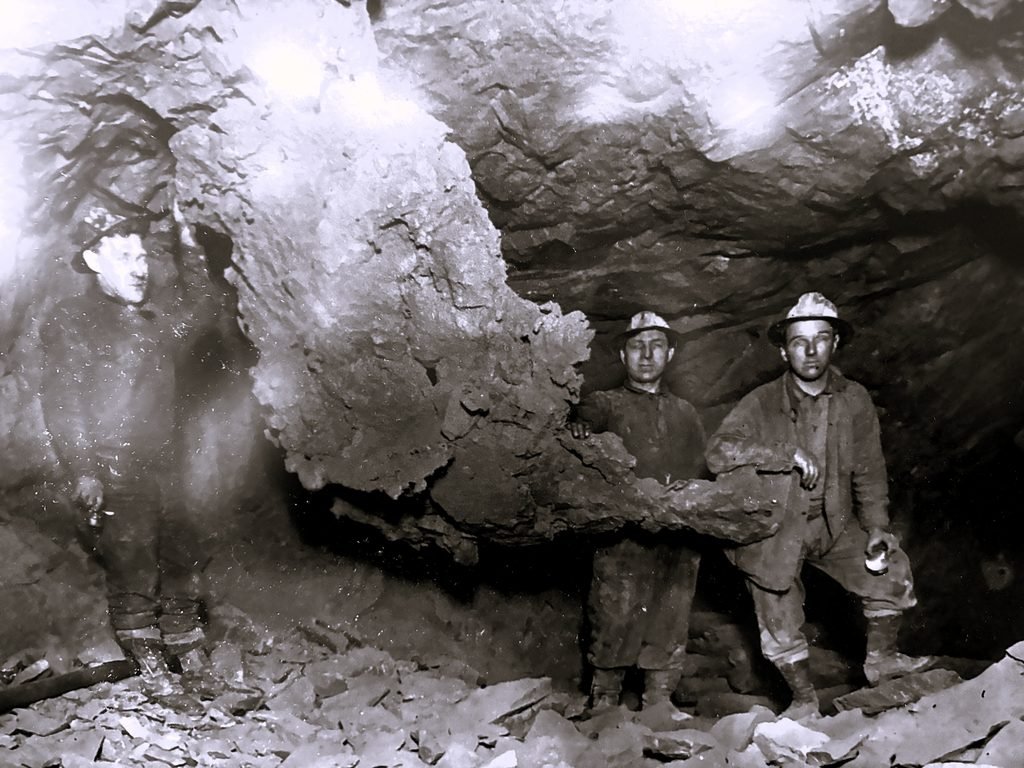
One of the most striking images from the Quincy-era mining record shows workers standing beside a massive piece of copper-bearing material underground. The object should not be called an ingot unless documentation proves it had already been processed. It is more accurately described as a large mass of native copper or copper-rich rock.
That distinction points to one of the most unusual features of Michigan copper mining. Keweenaw miners often encountered copper in a native metallic state rather than only in chemically bound ores. Some masses were so large that crews had to cut them underground before they could be transported.
This native copper helped make the Lake Superior district famous. It also created unusual problems for miners, who had to drill, blast, cut, and move material that could be far heavier and tougher than ordinary waste rock. The underground images show just how physical this work could be.
Quincy Controlled the Journey From Mine to Smelter
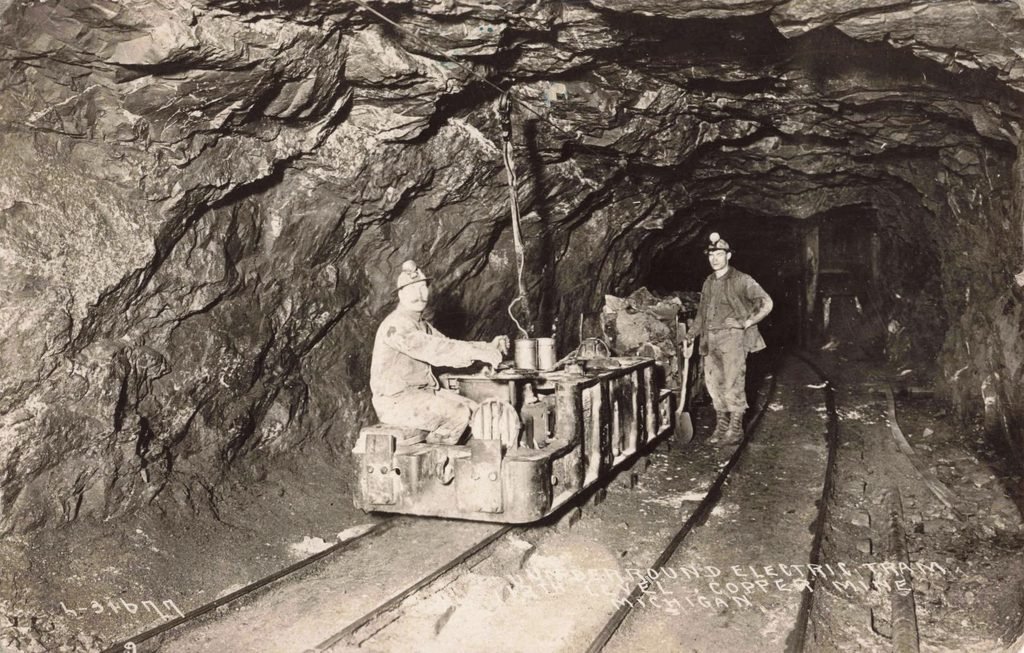
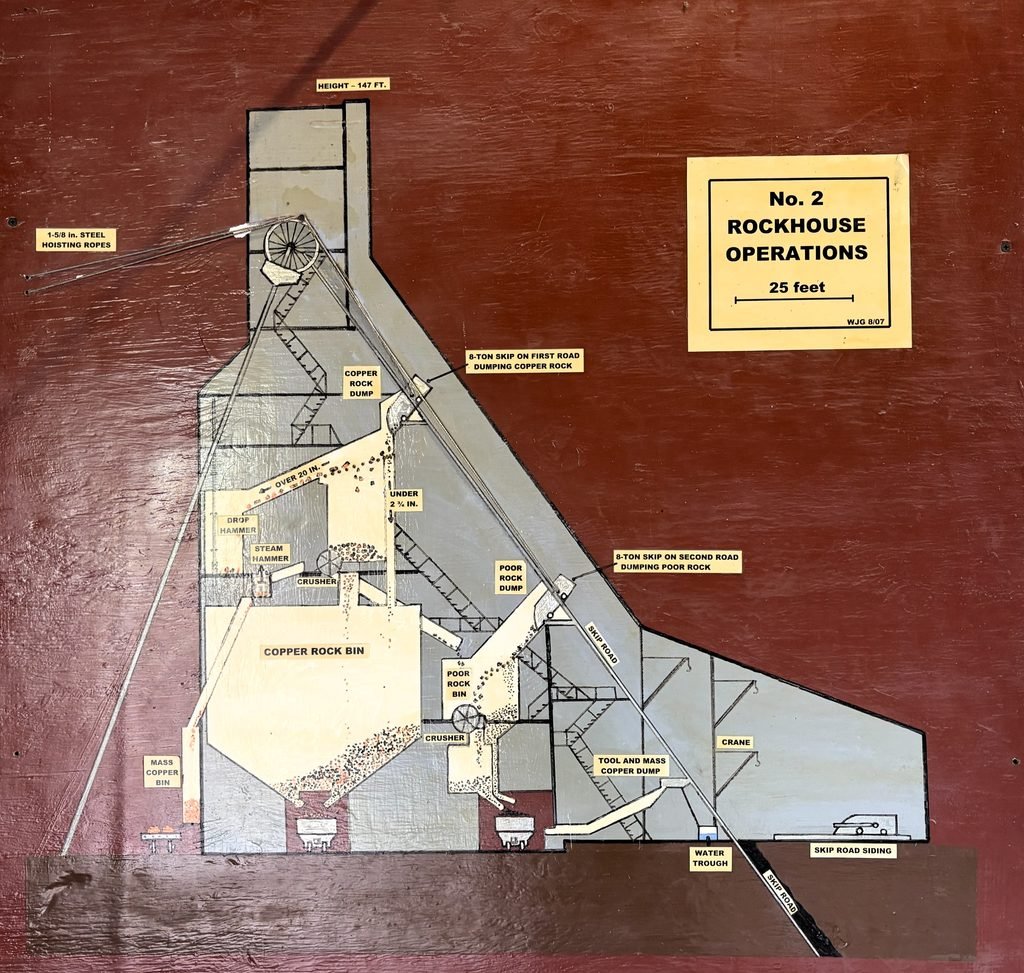
Copper did not become a finished product upon reaching the surface. Rock first passed through the shaft-rockhouse, where it could be crushed and sorted before being loaded for transport. Quincy then sent material to its stamp mills, where machinery pulverized the rock and separated much of the waste.
The company later moved its major milling operation to Torch Lake, where there was room for large industrial facilities and access to water. Concentrated copper then traveled to the Quincy Smelting Works on the Portage Canal. Furnaces there refined the material, producing copper that could be shipped to manufacturers.
This system gave Quincy control over a large share of the production process. Mining, crushing, rail transport, milling, and smelting operated as parts of one coordinated business. Few surviving historic mining sites still show so many parts of that industrial chain.
The No. 2 Shaft-Rockhouse Became a Keweenaw Landmark
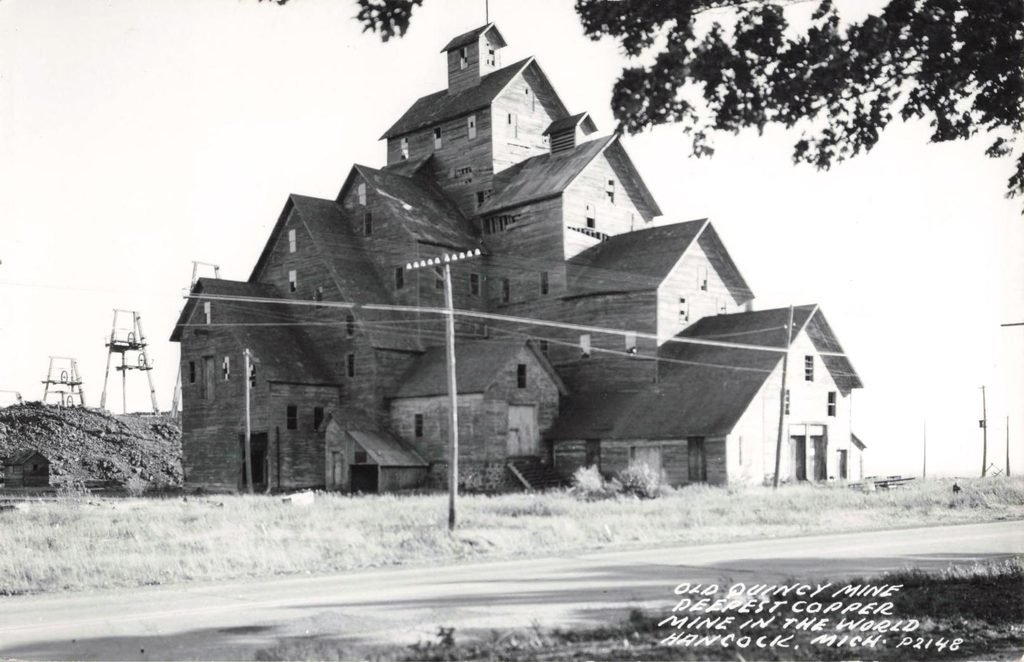
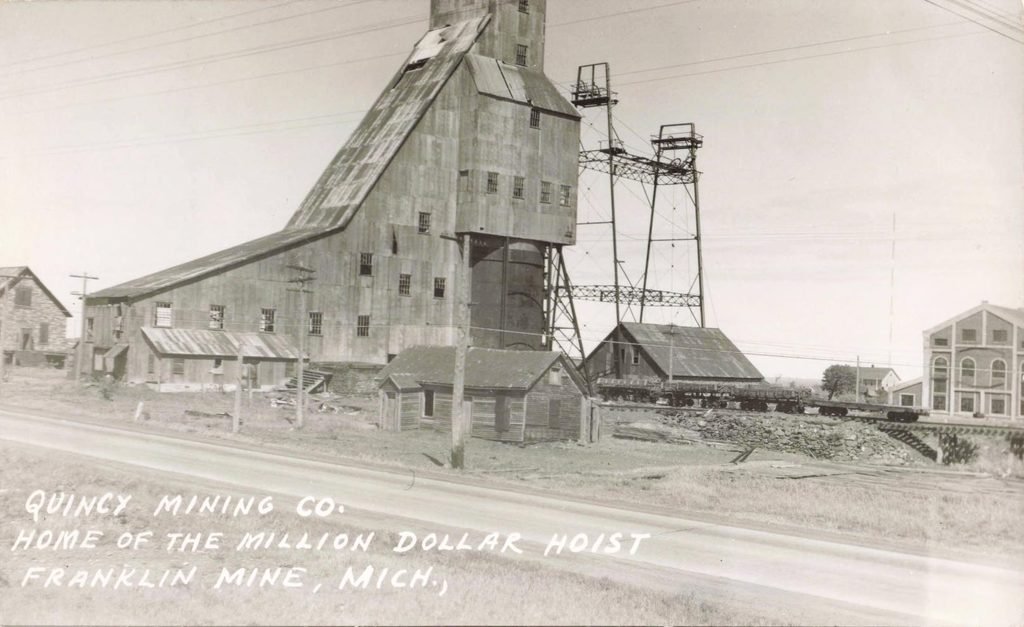
In 1908, Quincy completed the No. 2 shaft-rockhouse, one of the most recognizable industrial structures in the Upper Peninsula. The tall building combined hoisting, crushing, and storage functions in a compact vertical design. Its position above Hancock made it a visible symbol of the mining company’s reach.
The building stood directly over one of the deepest shafts in American mining. As Quincy followed copper farther underground, the cost of raising men and rock increased sharply. Engineers responded with larger equipment, faster hoisting systems and more efficient steam machinery.
The problem was simple but difficult to solve. A loaded skip had to travel more than a mile through an inclined shaft before reaching daylight. Every minute spent hauling rock was part of the cost of producing copper.
Quincy Built the World’s Largest Steam Mine Hoist
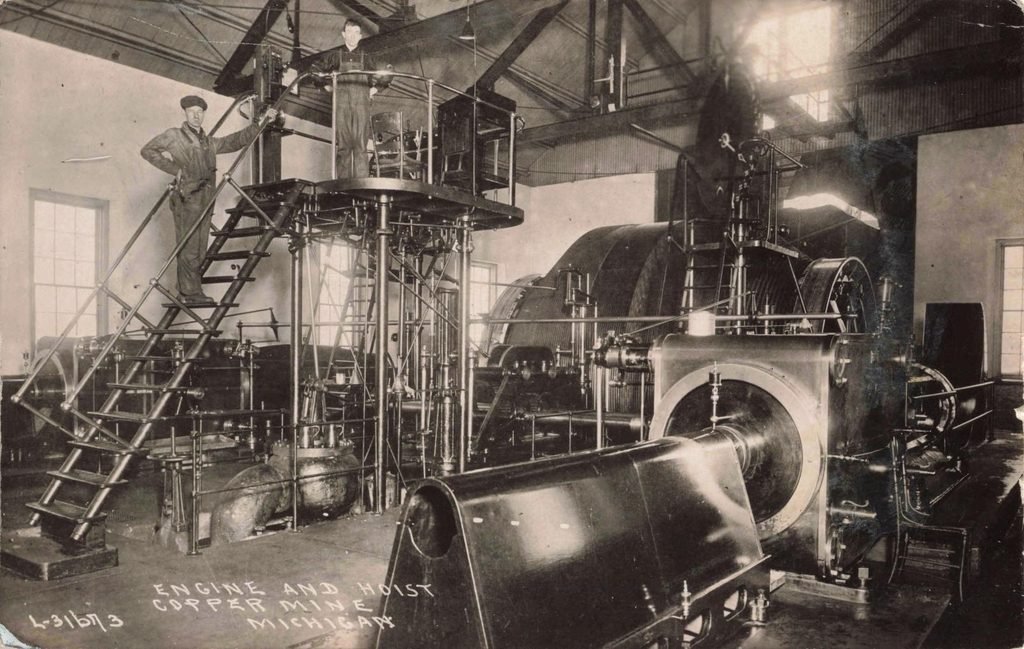
Quincy ordered a massive new hoisting engine from the Nordberg Manufacturing Co. in 1917. A new hoist house followed in 1918, and the company spent more than $300,000 on the building alone. It featured brick-faced reinforced concrete, a green glazed-tile roof, white interior tile and brass railings.
The building was unusually ornate for an industrial structure. Quincy clearly wanted visitors, investors and engineers to understand that this was not merely another piece of mining equipment. It was meant to display the company’s confidence in engineering.
The Nordberg hoist entered service in 1920. Its winding drum measured about 30 feet across, its engines developed roughly 2,500 horsepower, and it could raise a skip carrying 10 tons of rock at speeds reported near 36 mph. The system quickly cut fuel costs compared with the older hoist.
More Keweenaw Stories From Thumbwind
From deep copper shafts and abandoned mining settlements to northern lights, hickory golf and a drive to the end of U.S. 41, these stories offer more ways to understand Michigan’s remarkable Keweenaw Peninsula.
Where Is the Lowest Point in Michigan?
Michigan’s lowest geographic point is one thing. Its deepest working places are another. This story heads underground to Quincy Mine and considers just how far Michigan miners once traveled beneath the surface.
Read the story ? Lost TownsMichigan Ghost Towns: 18 Lost Towns That Tell the State’s Strangest History
Mines closed, timber vanished and railroads changed course. Meet Michigan communities that once had stores, schools and payrolls before the economic reason for their existence disappeared.
Read the story ? Night SkyIsaac Diener Photography: Obsessed With the Keweenaw Peninsula Night Sky
Hancock photographer Isaac Diener keeps his camera ready for northern lights, thunderstorms, sunrises and dramatic skies over Copper Harbor, Eagle Harbor and the Houghton-Hancock area.
Read the story ? Living HistoryThe Keweenaw Mountain Lodge Golf Course Has Banned Your Fancy Clubs
Michigan’s northernmost golf course now requires wooden-shafted hickory clubs and walking. Its roots reach to the Great Depression, when unemployed copper miners helped build the resort with federal relief funds.
Read the story ? Travel GuideMichigan Upper Peninsula Ghost Towns: A Travel Map and Historical Guide
Follow the remains of copper, iron and timber communities across the U.P., including Central Mine, Freda, Delaware and other sites where Michigan’s industrial era can still be read in roads, ruins and surviving buildings.
Read the guide ? Historic SitesMichigan Ghost Towns: A Guide to the State’s Abandoned Industrial Settlements
A practical guide to former mining, lumber and iron settlements, with an emphasis on places that still offer visible remains and legal public access. Central Mine and the Copper Country receive special attention.
Read the guide ? Road TripKeweenaw Peninsula Michigan Road Trip Fun
Head north through Houghton and Hancock toward Copper Harbor, with stops tied to mining history, Lake Superior, the Bishop Baraga shrine and old Copper Country communities. It is a useful companion for anyone planning a drive through the Keweenaw.
Take the road trip ?The Great Quincy Irony Came in 1920
The timing of the Nordberg hoist is one of the most interesting parts of the History of the Quincy Mine Michigan. The largest steam mine hoist in the world began operating at almost the same moment Quincy’s long dividend streak ended. The company had just installed its most ambitious machine while the economics of Michigan copper were turning against deep underground mining.
Western copper mines were becoming stronger competitors because many could operate on a much larger scale and at lower cost. Quincy’s engineers could make hoisting faster and more efficient, but they could not control the market price of copper. The great hoist therefore became both a technical achievement and a sign of how hard Quincy was working to preserve its position.
The 1913 Copper Strike Challenged Company Control
Technological change had already caused serious tension before the hoist was built. In 1913, miners across the Copper Country objected to wages, working hours, safety conditions, and the growing use of one-man pneumatic drills. A drilling job that had once required two men could increasingly be performed by one worker.
Management viewed the new drill as an efficiency gain. Many miners saw fewer jobs and greater danger underground, where a worker operating alone had no partner nearby if something went wrong. The machine became one of the symbols of the bitter Copper Country strike of 1913-14.
On July 23, 1913, thousands of workers walked out with support from the Western Federation of Miners. The dispute drew in company guards, public officials, the Michigan National Guard, and entire immigrant communities. Quincy, like the other large mine companies, refused to recognize the union.
Italian Hall Became the Strike’s Darkest Moment
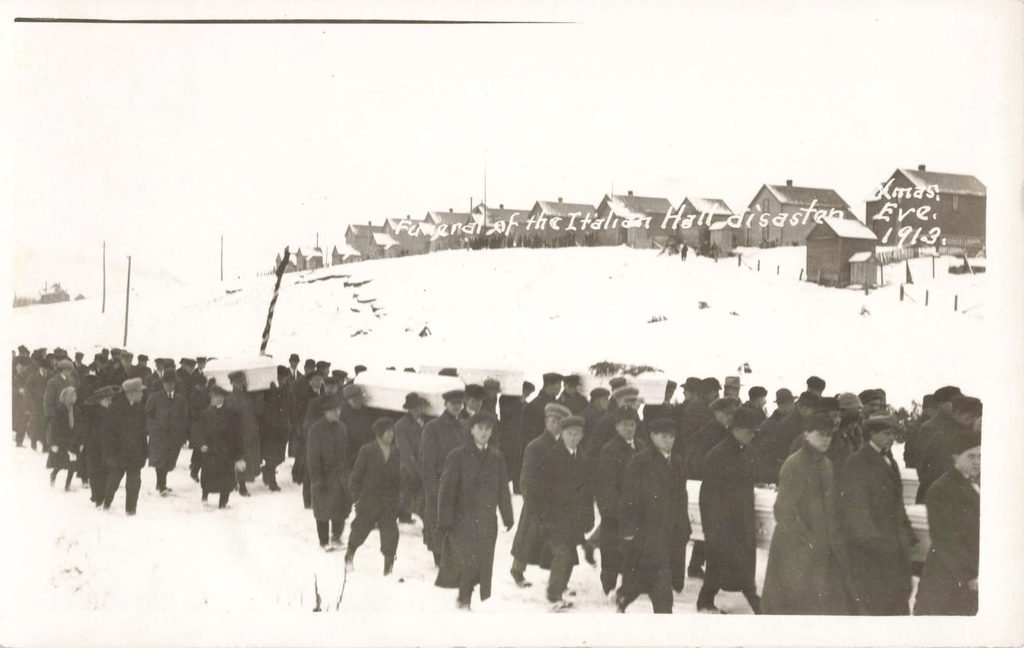
The labor dispute reached its most painful point on Christmas Eve 1913. Families of striking miners were attending a holiday gathering at Italian Hall in Calumet when someone falsely shouted that there was a fire. A rush toward the stairway followed.
The current National Park Service account lists 73 deaths, including 59 children. The identity and motive of the person who gave the false alarm have never been proved with certainty. The disaster became one of the defining events of Michigan labor history.
The strike continued until April 1914, when workers voted to return. The mining companies had largely prevailed; union recognition did not come, and the one-man drill remained. Thousands of workers and family members later left the Copper Country, with some heading toward industrial jobs in Detroit and other cities.
Seven Men Died in the No. 2 Shaft in 1927
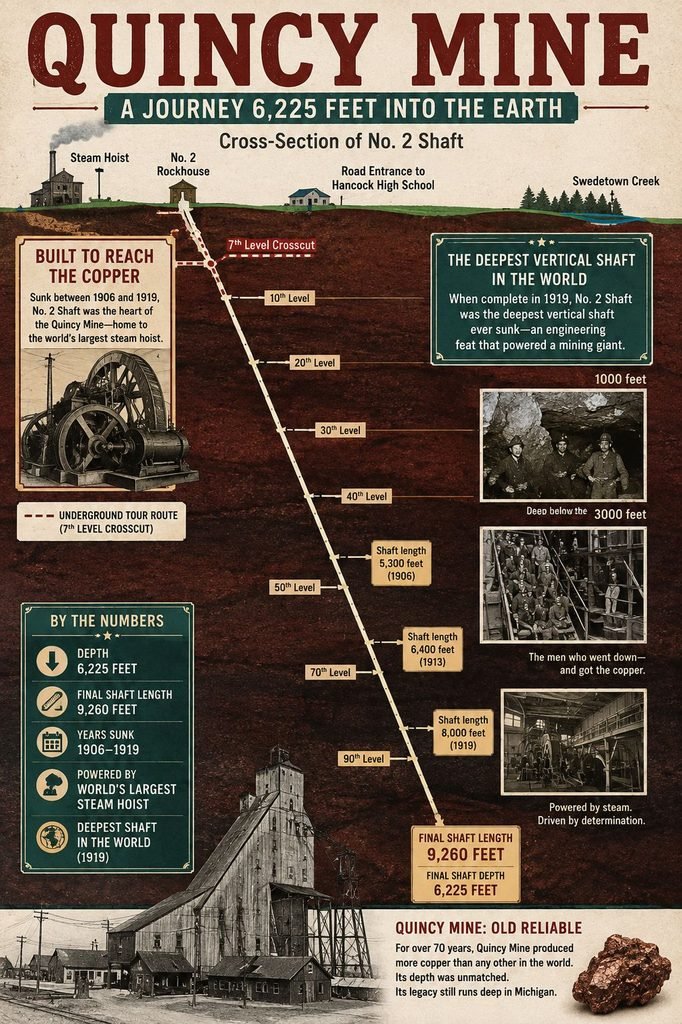
Deep mining remained dangerous even after the labor conflict faded. In 1927, a serious fire damaged part of the No. 2 shaft, forcing repair crews to work far below the surface. On Oct. 29, seven men were killed during that work when an air blast and falling rock struck the shaft.
The accident occurred thousands of feet underground. It showed that even Quincy’s sophisticated machinery could not eliminate the inherent risks of working in unstable rock at extreme depths. Each deeper level brought new engineering challenges and new hazards.
For workers and their families, an accident can change a life in a few seconds. Oral histories from Copper Country families describe relatives working in different parts of the same mine and sometimes not knowing for hours that a father, brother, or son had been injured. Such accounts give human scale to the enormous underground operation.
The Great Depression Finally Stopped Old Reliable
By the late 1920s, Quincy faced falling copper prices and increasingly expensive deep mining. The Great Depression made the situation worse as industrial demand weakened. In 1931, the company suspended major underground production.
Quincy later returned to mining as copper prices improved, and World War II brought renewed demand. Mining finally ended in 1945, though other company operations continued afterward. The old era of deep Keweenaw copper mining, however, was effectively finished.
History of the Quincy Mine Michigan Remains Visible Today
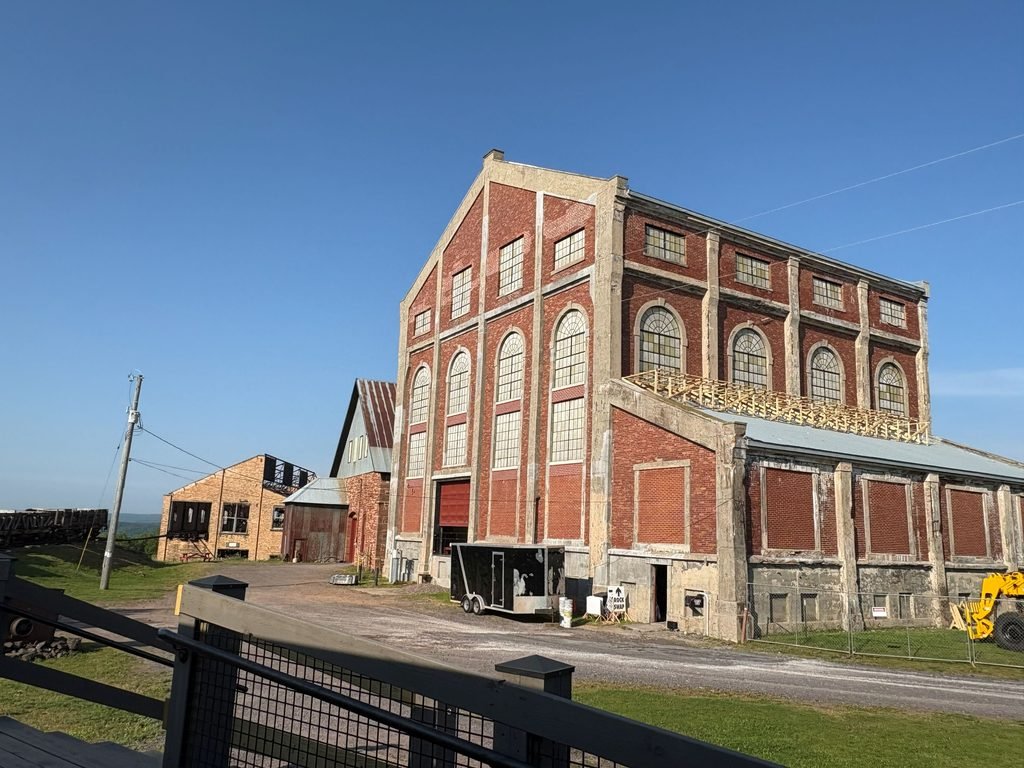
Much of the History of the Quincy Mine Michigan can still be seen on Quincy Hill. The No. 2 shaft-rockhouse survives, along with the 1918 hoist house and its enormous Nordberg engine. The Quincy Smelting Works also remains along the Portage Canal.
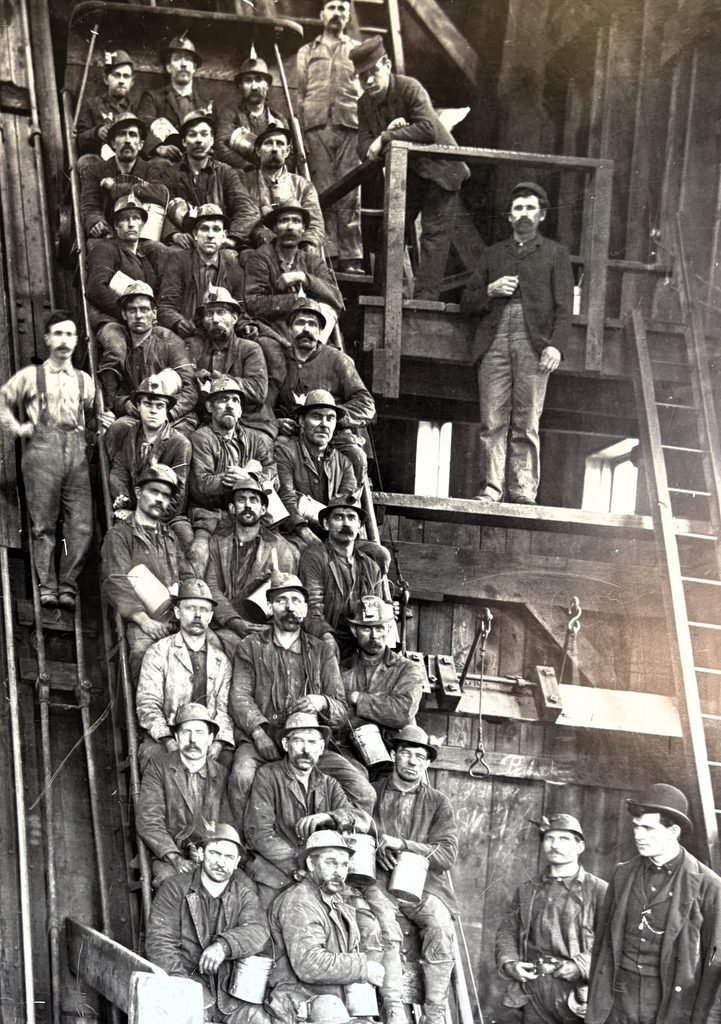
Visitors today can tour the mine site, see the hoisting equipment and enter part of the underground workings. The size of the machinery is impressive, but the workers’ images tell the other half of the story. Their helmets, dinner pails, dirty clothing and crowded man-cars show the daily human effort behind Old Reliable.
Quincy became famous for copper, dividends, and engineering records. Its deeper significance comes from the people who kept the system operating through strikes, accidents, economic swings, and constant technological change. The machines made Quincy famous, but the miners made Quincy work.
Works Cited For The History of the Quincy Mine