 by
by 
In May 1763, British soldiers inside Fort Detroit looked beyond the wooden walls and saw a region slipping from their control.
Britain had defeated France and claimed its forts across the Great Lakes. British officers treated that victory as a transfer of authority. The Odawa, Ojibwe, Potawatomi, Wyandot, and other Native nations had accepted no such transfer.
An Indigenous coalition soon surrounded Detroit. Other forces struck British posts across the interior. Fort Michilimackinac fell during a carefully planned stickball game. Fort St. Joseph was captured. British supply routes became killing grounds.
The conflict became known as Pontiac’s War, after the Odawa leader who helped organize the campaign around Detroit. Yet it was never Pontiac’s fight alone. It was a broad defense of Native sovereignty led by many communities with their own leaders and aims.
The war exposed Britain’s weak hold over Michigan. It also forced the empire to reverse policies that had treated Native nations as defeated subjects. What followed included siege, disease, negotiation and a royal promise that colonial settlers would quickly begin to break.
Pontiac’s War (1763–1766) was a coordinated Indigenous campaign to force policy changes after Britain took former French lands. In the Great Lakes, Odawa, Ojibwe, Potawatomi, Wyandot, and allies overran small British posts, held Detroit under siege for months, and seized Fort Michilimackinac using a staged lacrosse game. The fighting and costs pushed London to issue the Royal Proclamation of 1763, which halted settler expansion on paper and restored diplomatic practices the British had cut.
Table of Contents
The Aftermath of the Seven Years’ War – Why Pontiac’s War Began
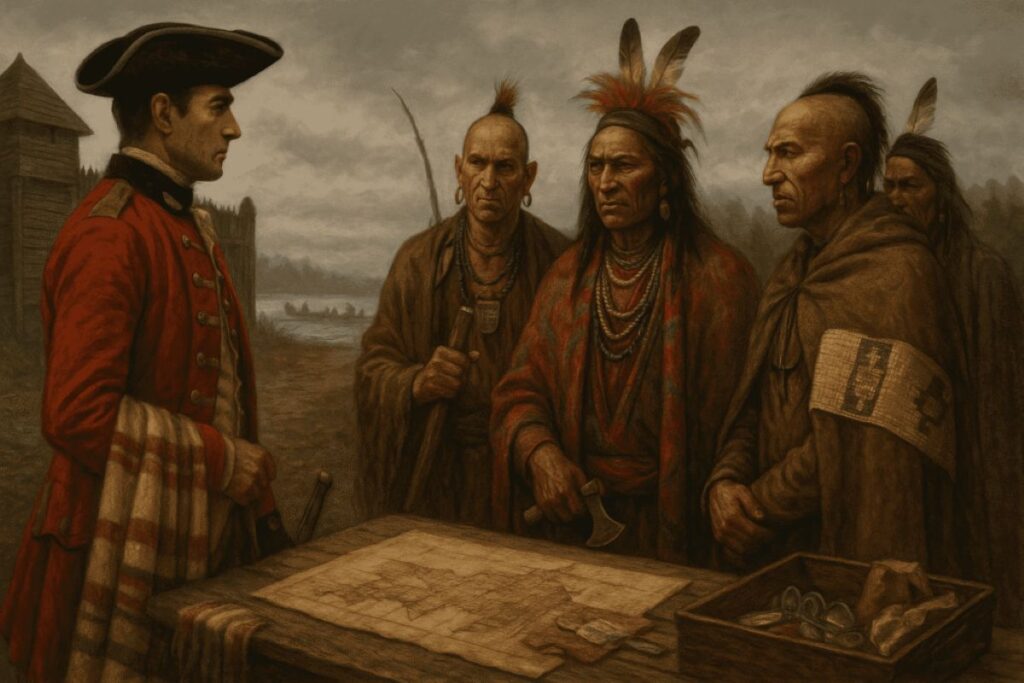
Britain’s victory in the Seven Years’ War left Native nations dealing with new officials who ended gift-giving and restricted trade in powder and lead. Settlers moved toward the Ohio Country as garrisons took over French posts. Many Indigenous leaders saw an existential threat. The Delaware prophet Neolin urged spiritual renewal and unity. His message and rising pressure set the stage for war.
Pontiac’s War did not begin with a single insult or one leader’s command. It grew from a sharp change in power after Britain defeated France in the Seven Years’ War.
The 1763 Treaty of Paris gave Britain control over Canada and French claims east of the Mississippi River. British officials treated the agreement as a transfer of territory and political authority. The Native nations of the Great Lakes and Ohio Country saw the matter differently. They had not surrendered their homelands to France, so France could not simply give those lands to Britain.
That disagreement sat at the heart of the conflict. Britain believed it had acquired an empire. The Odawa, Ojibwe, Potawatomi, Wyandot, Lenape, Shawnee, Seneca and other nations still viewed themselves as independent peoples with control over their own communities and territory.
British Officers Treated Native Nations as Defeated Subjects
Relations between Native nations and France had never been free of tension. Still, French officials generally understood that influence in the Great Lakes depended on trade, diplomacy and personal alliances.
French commanders met Native leaders in councils. They exchanged gifts and used trade to renew political relationships. These gifts were not simple handouts. They carried diplomatic meaning. Accepting and returning gifts affirmed that each side had obligations to the other.
British commander-in-chief Jeffrey Amherst did not accept that system. He regarded diplomatic presents as wasteful and believed Britain’s victory meant Native nations would have to accept British authority. Amherst reduced gift-giving and placed tighter controls on trade in guns, ammunition and gunpowder.
British officials saw these measures as cost-cutting and security policies. Native communities saw them as evidence that Britain no longer considered them allies.
The restrictions also threatened daily life. Ammunition was needed for hunting, feeding families and producing furs for trade. Limiting powder and shot was not merely a military precaution. It affected food supplies and local economies while raising fears that Britain intended to disarm Native communities before taking greater control of their lands.
Sir William Johnson, Britain’s superintendent of Indian affairs, warned Amherst that reducing presents and restricting ammunition could provoke serious resistance. Amherst largely ignored those warnings.
British Forts Became Symbols of Occupation
After the French withdrawal, British troops moved into former French posts at Detroit, Michilimackinac, Sandusky, St. Joseph and other strategic locations. The forts controlled waterways, trade routes and access to the interior.
Native communities had long lived beside European trading posts, but the British presence carried a different tone. Many British officers acted as though the surrounding nations had been conquered along with France.
The red-coated garrisons did not hold enough troops to control the region by force. Yet their commanders often spoke and behaved as if British authority reached far beyond the fort walls. That assumption offended Native leaders who had never accepted British rule.
Fort Detroit became a central source of tension. It stood along a vital waterway connecting Lake Erie with the upper Great Lakes. Whoever controlled Detroit could influence trade, travel and military movement across much of the region.
To Pontiac and his allies, the British flag above the fort was not merely a change in ownership. It represented an expanding claim over their homeland.
Settlers Were Moving Toward Native Lands
The end of the war removed France as a barrier to British colonial expansion. Settlers and land speculators looked west across the Appalachian Mountains toward the Ohio Valley.
Many moved onto Native land without a treaty or recognized land cession. British authorities struggled to control them, while colonial governments and wealthy investors pressed for access to western territory. The State Department’s historical account notes that Anglo-American settlers crossed the mountains even though Native nations had not ceded the land.
Native leaders had reason to fear that forts would be followed by farms, roads and permanent settlements. They had already seen that process unfold farther east.
The conflict was therefore about more than trade goods or diplomatic customs. It concerned who would control the land and whether Native nations would remain politically independent.
Neolin Called for Spiritual and Political Renewal
At the same time, a Lenape religious leader named Neolin was spreading a message of cultural renewal.
Neolin taught that Native suffering had grown from dependence on Europeans and the abandonment of older customs. He urged Native people to reject alcohol, reduce their reliance on European goods and return to the teachings of their ancestors. He also called for the removal of the British from Native lands.
His message joined religion with politics. Resistance was not only a fight over forts and trade. It was also a struggle to restore social order and Native control over the future.
Pontiac drew upon Neolin’s teachings when speaking to allied leaders near Detroit in April 1763. Yet Pontiac did not command every nation involved in the war. Native communities acted for their own reasons, under their own leaders and according to local conditions.
The uprising spread because many nations had reached similar conclusions at roughly the same time. British policies threatened their economies. British officers dismissed their diplomatic standing. British settlers threatened their land. British forts suggested that occupation would become permanent.
A War to Defend Sovereignty
Calling the conflict “Pontiac’s Rebellion” can create the mistaken impression that Native nations rose against a government they had previously accepted.
They had not accepted British sovereignty.
From an Indigenous standpoint, this was not a revolt against lawful authority. It was a coordinated defense of homelands, political independence and established diplomatic rights.
The opening attacks of May 1763 were the result of years of mounting pressure. Native forces struck Fort Detroit and other British posts because peaceful warnings had failed, because the old system of alliances had collapsed and because Britain appeared determined to rule without Native consent.
Britain had defeated France.
It had not defeated the Native nations of the Great Lakes.
Indigenous Leadership and Aims – Pontiac Calls a Council Near Detroit
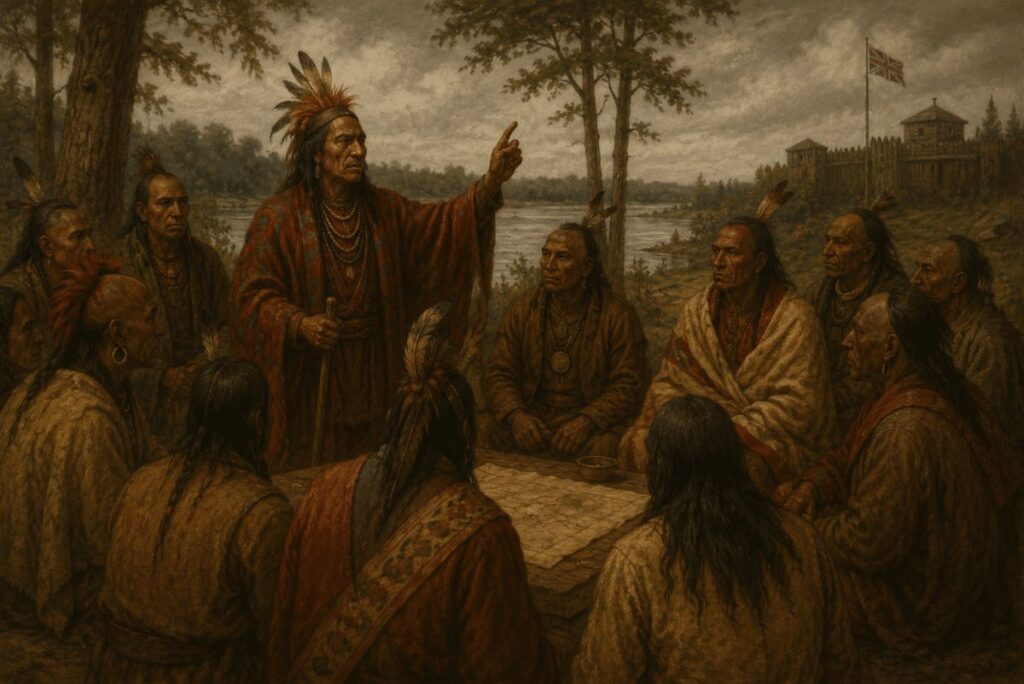
On April 27, 1763, Pontiac called Native leaders and warriors to a council along the Ecorse River, about 10 miles southwest of Fort Detroit. The meeting brought together representatives of the Odawa, Potawatomi and Wyandot communities around Detroit. Some accounts also connect Ojibwe leaders and visitors from nations farther south and east to the growing resistance movement.
The location offered privacy. The wooded river corridor stood away from the British garrison but remained close to the Native villages and travel routes surrounding Detroit. Local tradition identifies the council site with present-day Council Point Park in Lincoln Park. The Lincoln Park Historical Society states that the council was held on the “fifteenth of the moon,” corresponding to April 27 on the British calendar.
The gathering was not a meeting of subjects plotting against an accepted government. It was a diplomatic council among independent nations considering how to respond to an expanding British military presence.
Pontiac, whose Odawa name is often written as Obwaandi’eyaag, did not rule the nations represented there. Native leadership generally depended upon persuasion, reputation, and agreement. A leader could propose a course of action, but other chiefs and communities retained the right to accept, reject or modify it.
That distinction matters. Later histories sometimes portrayed Pontiac as the commander of a tightly controlled Indigenous empire. The evidence suggests a looser, more complex coalition. Pontiac held substantial influence around Detroit, but attacks elsewhere were often organized by local leaders responding to their own grievances. Historian Richard Middleton argues that Pontiac’s importance grew from his experience, speaking ability and regional connections rather than authority over every participating nation.
Neolin’s Message Becomes a Call to Action
Pontiac used the council to link immediate political grievances to the teachings of Neolin, a Lenape prophet whose message had spread throughout the Ohio Country and the Great Lakes.
Neolin taught that Native people had become too dependent on European goods and practices. He called for a return to older customs, an end to destructive alcohol use, and the removal of outsiders who threatened Native lands. His message gave spiritual force to resistance against the British.
Pontiac presented the struggle as more than a dispute over trade. British occupation threatened Native independence, while Neolin’s teachings offered a moral reason to resist it.
A surviving account attributes to Pontiac a retelling of the Master of Life’s instructions. In that account, the land had been made for Native people, and those who had entered to disturb it were to be driven out.
The passage is valuable, but it requires caution. No Indigenous recorder produced a word-for-word transcript of Pontiac’s address. The version commonly printed today passed through French-speaking observers and later historical collections. It should be treated as a reconstructed account of Pontiac’s message, not a verified verbatim speech.
The Plan to Take Fort Detroit
The council centered on Fort Detroit.
Pontiac proposed that warriors enter the fort under the accepted form of a diplomatic visit. Once inside, they would attack the British garrison before the soldiers could organize a defense. The plan relied on surprise because the fort’s palisade and cannon made a direct assault costly.
Pontiac’s selection of Detroit was strategic. The fort stood on the river connecting Lake Erie with Lake St. Clair and the upper Great Lakes. It controlled a major route for military movement, shipping and the fur trade. Removing the British from Detroit would isolate other posts and send a clear message that British rule in the interior had been rejected.
The council did not instantly create every attack that followed. Resistance had been building across a broad region, and leaders outside Detroit made their own decisions. Still, the Ecorse River meeting helped turn shared anger into coordinated action around one of Britain’s most important western forts.
Pontiac later entered Fort Detroit with about 50 Odawa men on May 1, apparently to study the defenses and the size of the garrison. He returned on May 7 with a larger group prepared to carry out the plan. Major Henry Gladwin had received a warning, though the identity of the person who alerted him remains disputed. When Pontiac entered, British soldiers stood armed and ready. The gates remained under close guard.
The surprise attack was abandoned.
Pontiac left the fort without revealing the full plan. Within days, the effort to seize Detroit became a siege.
A Coalition, Not a Single Commander
The council near Detroit became one of the defining moments of Pontiac’s War, but its meaning extends beyond Pontiac himself.
The gathering showed that Native nations could coordinate across political and cultural boundaries without surrendering their independence. Odawa, Potawatomi, Wyandot and Ojibwe communities had their own leaders and interests. They joined Pontiac because British policies presented a common threat.
Their coalition was flexible rather than centralized. That structure helped the resistance spread quickly. It also meant Pontiac could not order every community to remain in the war once local needs changed.
Within weeks of the council, Native forces attacked British posts across the Great Lakes and Ohio Country. Forts at Sandusky, St. Joseph, Miami and Michilimackinac fell. Detroit did not.
Yet the failed surprise attack did not make the council a failure. It marked the moment when British officials learned that their occupation of the Great Lakes rested on far weaker foundations than they had assumed.
Britain had raised its flag over Fort Detroit.
The nations meeting beside the Ecorse River had not agreed that the flag gave Britain the right to rule them.
The Failed Plan to Capture Fort Detroit and Five Months Under Siege
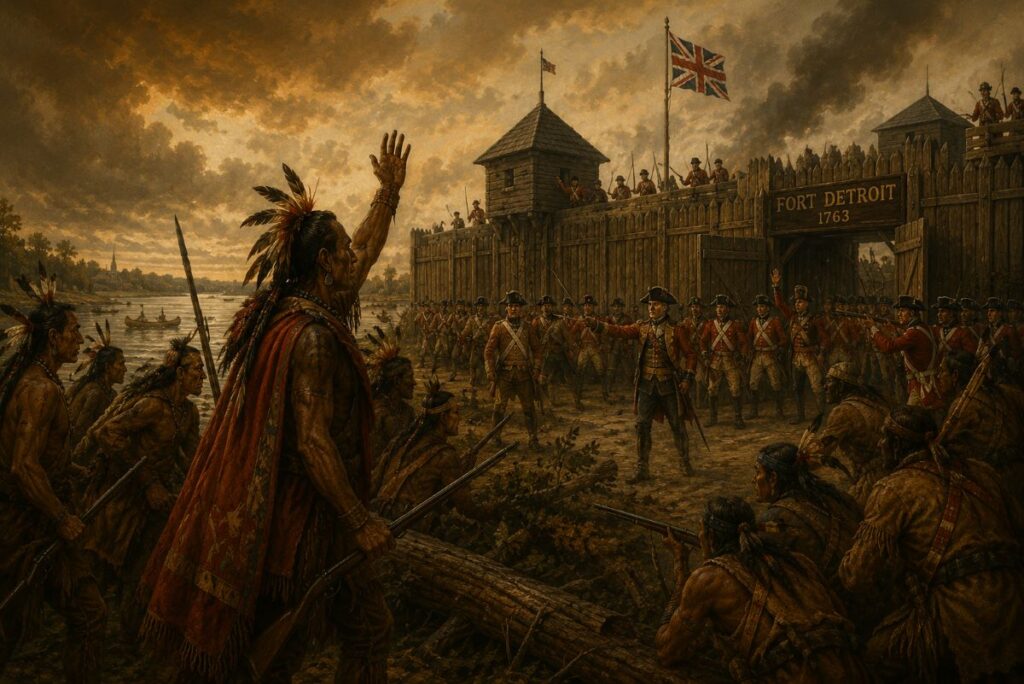
On May 7, 1763, Pontiac entered Fort Detroit with roughly 300 Native men. Many carried weapons concealed beneath blankets or clothing.
The plan depended on surprise.
Pontiac and his followers would enter under the accepted form of a diplomatic council. Once inside, they would attack Maj. Henry Gladwin and the British garrison before the soldiers could reach their weapons or close the gates.
The attack never began.
An informant had warned Gladwin. The source of that warning remains uncertain, despite later stories naming several possible individuals. Gladwin doubled the guard, armed the garrison and placed officers around the parade ground. When Pontiac saw British soldiers prepared for combat, he understood that the plan had been exposed. He completed the council without giving the signal to attack.
Fort Detroit had escaped a sudden capture.
It had not escaped war.
A Fort at the Center of the Great Lakes
Fort Detroit was one of Britain’s most important posts in the interior. It stood along the Detroit River, the narrow passage connecting Lake Erie with Lake St. Clair and the upper Great Lakes.
The fort protected a French colonial settlement, trading houses and farms extending along both sides of the river. Its position allowed Britain to move troops and supplies between the eastern colonies, Michilimackinac and posts farther west.
The garrison itself was small. Gladwin commanded about 120 regular soldiers, along with traders and civilians who could assist in a defense. The fort’s wooden walls and cannon gave the British a major advantage, but only if the soldiers remained behind the palisade.
Pontiac understood that a direct assault would be costly. After the failed council, his coalition changed tactics.
The gates closed. Warriors took positions outside the fort. Travel along the river became dangerous.
The siege of Detroit had begun.
The Coalition Surrounding Detroit
Pontiac did not conduct the siege alone. Odawa warriors from his community were joined by Potawatomi, Wyandot and Ojibwe forces. One contemporary account placed the combined force at about 870 warriors, although numbers shifted as groups arrived, departed or returned to their villages.
These communities had agreed on a common target, but they did not form a single army under permanent central command. Each nation retained its own leaders and made its own decisions.
Pontiac’s influence was considerable. His authority still depended on persuasion, alliances and continued support.
That structure shaped the siege. It allowed several Native nations to cooperate against the British, but it also made a long campaign difficult to sustain. Warriors had family responsibilities, seasonal hunting needs and political obligations within their own communities.
The siege was therefore not a fixed ring of troops surrounding a European city. It was a fluid contest fought along roads, farms, riverbanks and wooded approaches to the fort.
Pontiac Tries Again
Two days after the failed May 7 plan, Pontiac returned and asked to enter the fort with a smaller group. Gladwin refused to admit him unless he came with only a few attendants.
Fighting soon followed.
Native warriors attacked British soldiers and settlers caught outside the walls. They seized livestock, interrupted communications and prevented the garrison from freely using the surrounding countryside.
Pontiac also attempted to gain support from the French-speaking residents around Detroit. Some French settlers sympathized with the Native cause or provided food and information. Others remained neutral. A number eventually assisted the British garrison.
Their position was difficult.
France had lost Canada, but official word of the final peace had traveled slowly. Rumors circulated that French troops might return and reclaim the region. Pontiac used those hopes to strengthen his coalition and persuade supporters that Britain’s control would be temporary.
The French government had no intention of returning.
That fact would take months to become undeniable.
The Battle for Supplies
Fort Detroit could not survive without food, gunpowder and reinforcements.
Pontiac’s forces tried to isolate the post by controlling routes along the river and attacking British vessels. Canoes allowed Native warriors to move quickly, watch the shoreline and strike landing parties.
The British relied on armed boats to carry supplies from Lake Erie. Those vessels faced gunfire from concealed positions and the constant danger of ambush.
In late May, Lt. Abraham Cuyler led a British force toward Detroit. Native warriors surprised his camp near Point Pelee on Lake Erie. Many of his soldiers were killed or captured, although Cuyler and a small group escaped. The defeat prevented most of the expected reinforcements from reaching the fort and raised Pontiac’s standing across the region.
Native attacks elsewhere added to the pressure. British posts at Sandusky, St. Joseph, Miami and Michilimackinac fell in rapid succession. By early summer, Detroit was one of the few major British positions in the western Great Lakes still holding out.
Each captured fort strengthened the belief that Detroit might be next.
Life Behind the Palisade
Inside Fort Detroit, the siege became a test of food, discipline and patience.
Soldiers slept in their uniforms and remained ready for attack. Guards watched the walls day and night. Civilians crowded into protected spaces as reports arrived of killings and captures outside the fort.
Fresh provisions became difficult to obtain. The garrison depended on stored food and whatever could be brought safely by boat. The surrounding farms could not be worked normally while warriors controlled much of the nearby ground.
The British also feared betrayal from within. French residents moved between Native communities and the settlement, making it difficult for Gladwin to determine whom to trust.
Pontiac faced his own supply problems. A long siege required food for hundreds of warriors and their families. Unlike a standing European army, the coalition had no permanent military supply system. Its members depended on nearby villages, hunting, and assistance from local French residents.
Time worked against both sides.
Captives, Diplomacy and Divisions
The siege included more than gunfire.
Both sides used councils, messengers, threats and negotiations. Pontiac demanded that the British abandon Detroit. Gladwin refused.
Captives became bargaining tools. Some British soldiers and traders taken elsewhere were brought to Detroit. Native leaders also attempted to arrange exchanges or use prisoners to influence the garrison.
The violence sometimes strained the coalition.
According to the Dictionary of Canadian Biography, the torture and killing of prisoners by some Odawa warriors angered Potawatomi participants. Wyandot leaders also opened separate discussions with Gladwin. These disagreements weakened Pontiac’s ability to keep all members committed to the same course.
The disputes show that Native nations did not share identical goals or standards of warfare. Some wanted the fort destroyed. Others sought better trade terms, renewed diplomacy or a negotiated British withdrawal.
Their common opposition to British policies did not erase differences among them.
Reinforcements Reach Detroit
In July, a British relief force finally reached Detroit.
Capt. James Dalyell arrived with about 260 soldiers and urged Gladwin to approve an attack on Pontiac’s nearby encampment. Gladwin reportedly favored caution, but Dalyell pushed for immediate action.
Before dawn on July 31, the British column marched out of the fort toward Parent’s Creek, about 2 miles northeast of Detroit.
Pontiac’s forces were waiting.
Native warriors intercepted the British advance and opened fire from protected positions. The British struggled to identify targets in the darkness and confusion. Dalyell was killed while attempting to assist wounded soldiers. The survivors retreated toward the fort under continued attack.
The clash became known as the Battle of Bloody Run. Parent’s Creek later acquired that name through accounts claiming its water had been stained by the fighting. The creek’s remaining visible section now passes through Elmwood Cemetery.
Bloody Run was one of Pontiac’s clearest military victories during the siege. The coalition had stopped a major British attempt to break its position and had forced trained troops back behind the fort walls.
Yet the victory did not open the gates.
Fort Detroit remained standing.
Why Pontiac Could Not Take the Fort
Pontiac’s coalition controlled much of the surrounding area, but it lacked the heavy artillery needed to destroy the palisade or silence the British cannon.
A storming attack would have exposed warriors to concentrated musket fire. The original surprise plan had been designed to avoid that disadvantage. Once Gladwin learned of the plot, the most practical opportunity to capture the fort was gone.
Starving the garrison also proved difficult. British vessels continued to bring some supplies through Lake Erie and the Detroit River. Native forces could harass those boats but could not maintain a complete naval blockade.
Pontiac also could not force the French residents to join the war as a unified group. Some helped his cause, but others sold provisions to the British or served with the garrison.
Most importantly, the coalition could not remain together indefinitely.
By autumn, hunting season approached. Families needed food for winter. Warriors who had spent months near Detroit began returning home. Some participants had already opened separate talks with the British.
A coalition formed by consent could also dissolve by consent.
France Ends Pontiac’s Last Hope
Pontiac continued to hope that France would reject its defeat and send troops back into the Great Lakes.
On Oct. 29, a messenger arrived from Fort de Chartres in the Illinois Country. He carried confirmation that France and Britain had made peace. French officials urged Native communities to end the fighting and advised French residents to accept British rule or move west of the Mississippi.
The news removed one of Pontiac’s strongest arguments for continuing the siege.
Britain was not merely occupying Detroit while waiting for another French attack. France had formally surrendered its claims and would provide no army.
On Oct. 31, Pontiac sent a message to Gladwin accepting the French request for peace and stating that his young men had buried their hatchets.
Citizen Potawatomi Nation records the siege as lasting from May until Oct. 31, 1763.
Pontiac withdrew without capturing the fort.
A British Survival, Not a Clear Victory
The failure to take Fort Detroit gave Britain an important military success. Gladwin’s garrison had survived five months of isolation, ambush and uncertainty.
Yet the British had little reason to celebrate without qualification.
Pontiac’s coalition had restricted movement around Detroit, destroyed relief forces and demonstrated that British authority ended near the reach of the fort’s cannon. Across the region, Native forces had captured most of Britain’s smaller western posts.
Detroit remained British because its defenders received warning, stayed behind strong walls and maintained access to the river. It did not survive because Native resistance had been crushed.
Pontiac’s forces withdrew because the coalition was losing unity, winter was approaching and French support would not come. The British had held the fort, but they had not settled the larger dispute over land, diplomacy and Native independence.
The siege showed that Britain could occupy Detroit.
It could not yet claim secure control over the Great Lakes.
The Day Michilimackinac Fell – A Shock On the British Frontier
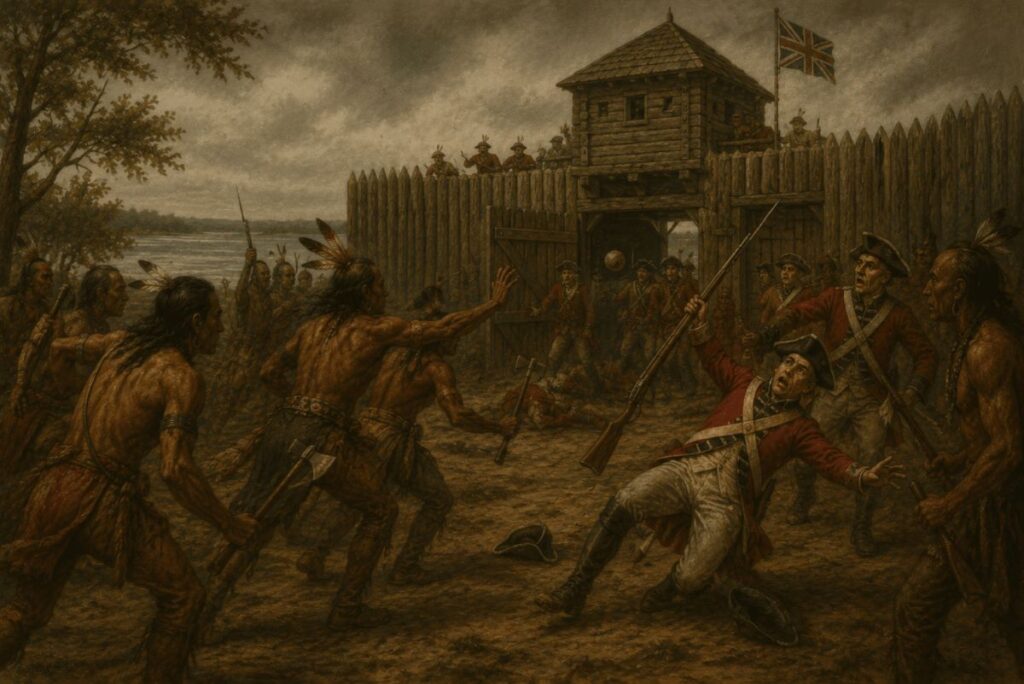
On June 2, 1763, Fort Michilimackinac appeared calm.
The wooden fort stood at the Straits of Mackinac, near the present-day village of Mackinaw City. It guarded the narrow waterway linking Lakes Michigan and Huron and served as a major supply and trading post for the upper Great Lakes fur trade. France had built the fort in 1715. British troops took control in 1761 after the fall of New France.
The soldiers had inherited a busy community rather than an isolated military outpost. French Canadian and Métis families remained nearby. Traders moved through the post. Odawa and Ojibwe communities had longstanding political, economic and family ties to the Straits.
British rule disturbed that network. The new officers reduced diplomatic gifts and treated Native nations less like allies and more like defeated subjects. Historian Keith Widder describes the British occupation as a disruptive new layer of authority imposed on a diverse borderland community.
By the spring of 1763, opposition to British control had spread across the Great Lakes. At Michilimackinac, local Ojibwe leaders did not wait for Pontiac to give them direct orders. They planned their own attack based on local grievances and regional alliances.
A Game Outside the Fort
The attack began with a ball game known in Anishinaabe communities as baaga’adowewin, often rendered in historical accounts as baggataway and later compared with lacrosse.
The game was not merely entertainment. It could demand stamina, speed and physical force. Matches drew large crowds and sometimes carried ceremonial, diplomatic or community meaning.
On that June day, Ojibwe and Sauk players gathered outside the fort. British soldiers came to watch. The open game gave the attackers what a direct assault could not: access to the fort without cannon fire or musket volleys.
Accounts differ on some details, but the central plan is well established. During the match, the ball was driven near or through the open gate. Players rushed after it. Native women nearby had concealed weapons beneath blankets or clothing and passed them to the warriors. The players became an assault force before the British garrison could organize a defense.
The strategy depended on British confidence. Soldiers had heard warnings that trouble might be coming, but the fort’s commander, Capt. George Etherington, did not take sufficient precautions. The gates remained accessible, and many soldiers were away from their weapons.
The attack was swift.
Alexander Henry Watches the Fort Collapse
Much of the surviving description comes from Alexander Henry, a British fur trader living at Michilimackinac. Henry later published his account in Travels and Adventures in Canada and the Indian Territories.
His memoir is a major primary source, but it must be read carefully. Henry wrote from the viewpoint of a frightened British survivor, and he published his account decades after the event. His descriptions preserve important details while also reflecting the fear, assumptions and prejudices of his time.
Henry was inside his house when he heard the sounds of violence. Looking outside, he saw warriors attacking British soldiers and traders. He fled to the home of a French Canadian neighbor and attempted to hide.
His survival soon depended on Wawatam, an Ojibwe man who had previously adopted Henry as a brother. Wawatam had reportedly warned him to leave before the attack. When Henry failed to do so, Wawatam later intervened and claimed him through their kinship relationship. That act helped save Henry from death.
Their relationship complicates any simple account of the event as Native people against Europeans. Michilimackinac was a community linked by trade, marriage, adoption and personal obligation. Some French residents helped British traders hide. Some Native people protected captives. Others participated in the attack.
The battle lines were political, but the people living around the fort were connected in ways the British military did not fully understand.
The British Garrison Is Overrun
The Ojibwe attackers quickly took control of the fort.
More than 15 British soldiers were killed, according to accounts summarized by Interlochen Public Radio and Mackinac historians. Other soldiers and traders were captured. Captain Etherington and Lt. William Lesly survived but became prisoners.
The French and Métis residents were generally spared. This was not an indiscriminate attack on everyone inside the walls. The main targets were the British soldiers, officers and traders associated with the new regime.
That distinction reflected the attackers’ political purpose. The assault was intended to remove British authority from the Straits, not destroy the established local community.
Pontiac was not present at Michilimackinac. Nor is there firm evidence that he planned the operation. The attack belonged to local Ojibwe leadership and its allies. It occurred within the wider war against Britain, but it shows why the conflict cannot be reduced to one man commanding a unified army.
Native nations shared grievances and sometimes coordinated their efforts. They still acted through their own councils, leaders and local decisions.
Odawa Intervention Changes the Outcome
The seizure of the fort did not end the political struggle at the Straits.
Odawa communities in the region had their own views of the attack and their own relationships with the British, French and Ojibwe. After the capture, Odawa leaders intervened and took custody of some British prisoners. The transfer may have protected the captives, but it also reflected competition over authority and diplomacy in the region.
Minweweh, also known in historical records as Minavavana, was an influential Ojibwe leader associated with the Straits. Two years earlier, he had warned Alexander Henry that Britain’s defeat of France did not mean Native nations had accepted British sovereignty.
His reported message was direct: the British had defeated the French, but they had not conquered the Indigenous peoples of the Great Lakes.
The fall of Michilimackinac proved his point.
The fort had cannons, palisades, and trained soldiers. Yet British control depended on cooperation from the people surrounding it. Once that cooperation disappeared, the post became vulnerable.
A Fort Held for Nearly a Year
The British did not immediately retake Michilimackinac. Native forces controlled the post and the surrounding region for much of the next year.
In 1764, Indigenous leaders returned the fort to Britain after negotiations and renewed diplomatic arrangements. The British resumed control aboard the schooner Gladwin.
Their return did not erase the lesson of June 2.
The attack demonstrated that British forts were not secure islands of imperial power. They survived only when supported by trade, diplomacy and local consent. Military occupation without those relationships could collapse within minutes.
The British later decided that the mainland fort was too exposed. During the American Revolution, they moved the post to the stronger heights of Mackinac Island. Buildings were dismantled and transported across the water or winter ice. What remained at the old site was burned in 1781.
More Than a Lacrosse Story
The capture of Fort Michilimackinac is often reduced to a dramatic anecdote about a lacrosse ball flying through an open gate.
The tactic deserves attention. It was bold and carefully timed.
But the game was only the final move in a much larger conflict.
The fort fell because British authorities misunderstood Native diplomacy. They assumed France’s military defeat had transferred control of the Great Lakes to Britain. Local Ojibwe leaders rejected that claim. They used a familiar public event to overcome a better-armed garrison and remove the British from one of the region’s most important posts.
The day Michilimackinac fell was not a sporting event that suddenly turned violent.
It was a planned strike against an occupying power—and one of the clearest Indigenous victories of Pontiac’s War.
British Forts Across Michigan Are Taken – Table
| Fort | Present location | Nation or coalition involved | Result |
|---|---|---|---|
| Fort Detroit | Detroit | Odawa and allied nations | Besieged but not captured |
| Fort Michilimackinac | Mackinaw City | Ojibwe with allied support | Captured |
| Fort St. Joseph | Niles | Potawatomi | Captured |
| Fort Miami | Fort Wayne area | Miami | Captured |
| Fort Sandusky | Ohio | Wyandot | Captured |
Smallpox at Fort Pitt
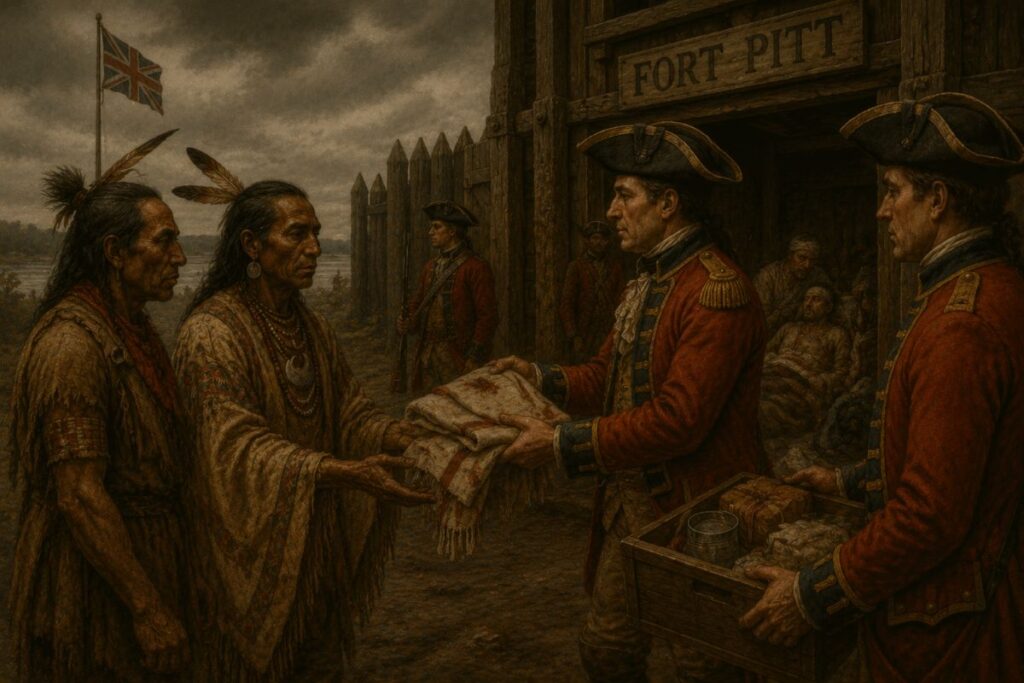
The siege of Fort Pitt produced one of the most disturbing episodes of Pontiac’s War.
By June 1763, Lenape, Shawnee and Mingo forces were pressing the British post at the forks of the Ohio River, where Pittsburgh now stands. Soldiers, traders and settlers crowded behind the fort’s walls as Native warriors fired from surrounding ground and tried to cut the post off from relief. Smallpox had already broken out inside the garrison, and the British established a hospital beneath the drawbridge in an effort to isolate the sick.
That outbreak gave several men inside the fort an idea.
A Gift Intended to Spread Disease
On June 24, two Lenape representatives, Turtleheart and Mamaltee, met with Capt. Simeon Ecuyer and trader Alexander McKee outside Fort Pitt. The Lenape men urged the British to abandon the post. Ecuyer refused and warned that reinforcements were coming.
The visitors then asked for provisions to carry home. The British supplied food and other goods. Hidden among those items were two blankets and a handkerchief taken from the smallpox hospital. William Trent, a trader and militia officer at the fort, recorded the exchange in his journal and stated that he hoped the contaminated articles would have the intended effect.
The documentary record therefore establishes two points with unusual clarity: British personnel at Fort Pitt deliberately gave hospital materials to Lenape representatives, and at least some of the men involved intended to spread smallpox.
An invoice later submitted by Trent’s company sought reimbursement for the blankets and handkerchiefs taken from the hospital. The expense was eventually approved by British authorities.
Amherst and Bouquet Discuss the Same Tactic
The Fort Pitt exchange occurred before Britain’s senior commanders discussed using smallpox in their surviving correspondence.
On July 7, Gen. Jeffery Amherst asked Col. Henry Bouquet whether smallpox could be sent among the Native nations fighting Britain. Bouquet replied that he would try to infect them through blankets that might fall into their hands. Amherst then approved the idea and encouraged Bouquet to use that method along with other measures against Native forces.
The timing is important.
Amherst did not order the June 24 exchange at Fort Pitt. The contaminated items had already been handed over by the time Amherst and Bouquet wrote about the tactic. Historian Philip Ranlet concluded that the Fort Pitt attempt arose locally and was separate from the later discussion between the two senior officers.
That distinction does not make the incident less serious. It shows that the idea of using disease was not limited to one commander. Men at the fort acted on it independently, while officers higher in the British chain of command later endorsed the same approach.
Could Smallpox Spread Through Blankets?
Smallpox usually spread through close contact with an infected person, particularly through respiratory droplets and material from sores. It could also spread through contaminated clothing or bedding. The virus could remain active on fabric under some conditions, making transmission through hospital linens medically possible.
Whether the Fort Pitt blankets actually infected anyone is much harder to determine.
The condition of the cloth is unknown. Historians do not know how long the blankets had been outside the hospital, how they were wrapped or whether the Lenape representatives kept them. Those details would have affected whether the virus remained infectious.
There is also evidence that smallpox was already circulating among Native communities in the Ohio Country before June 24. A later account placed the beginning of an outbreak in the spring of 1763, before the contaminated articles left Fort Pitt.
Turtleheart and Mamaltee were reported alive about a month after receiving the items. William Trent’s journal did not record either man becoming sick, nor did he later claim that his plan had succeeded. Ranlet argued that the available evidence points toward failure, though the surviving record cannot settle the matter with complete certainty.
Intention Is Clear; Results Are Not
The strongest historical conclusion is also the most careful one.
British personnel at Fort Pitt attempted to use smallpox as a weapon. Amherst and Bouquet separately discussed and approved the same tactic. The evidence does not prove that the Fort Pitt blankets caused the later outbreak among Lenape, Shawnee or Mingo communities. Smallpox was already present in the region, and historians cannot trace individual infections back to the hospital materials with confidence.
That uncertainty should not be confused with doubt about intent.
The Fort Pitt documents record a deliberate attempt to expose Native people to a deadly disease. They also show how British officers spoke about Indigenous opponents during the war. Amherst’s correspondence called for methods aimed not simply at defeating warriors in battle, but at destroying entire Native communities.
Disease as Part of Colonial Warfare
Smallpox had devastated Native communities across North America long before Pontiac’s War. Indigenous populations often faced severe losses because the disease arrived through trade, travel, military movement and settlement.
At Fort Pitt, however, disease was not merely an accidental consequence of contact.
It became a proposed military tool.
The episode reveals the extreme measures some British officials were willing to consider as they struggled to hold the interior. Fort Pitt’s defenders could not easily pursue Native warriors beyond the walls. Contaminated bedding appeared to offer a way to strike families and villages that British soldiers could not reach.
The attempt did not end the siege. Native forces continued fighting, and Fort Pitt remained under pressure until Bouquet’s relief column fought through at the Battle of Bushy Run in August.
The contaminated blankets remain one of the best-documented attempts at biological warfare in colonial North America. The available evidence supports a firm statement about what British personnel tried to do.
It does not support a firm claim about how many people, if any, they infected.
The Royal Proclamation Was a Promise Britain Could Not Keep
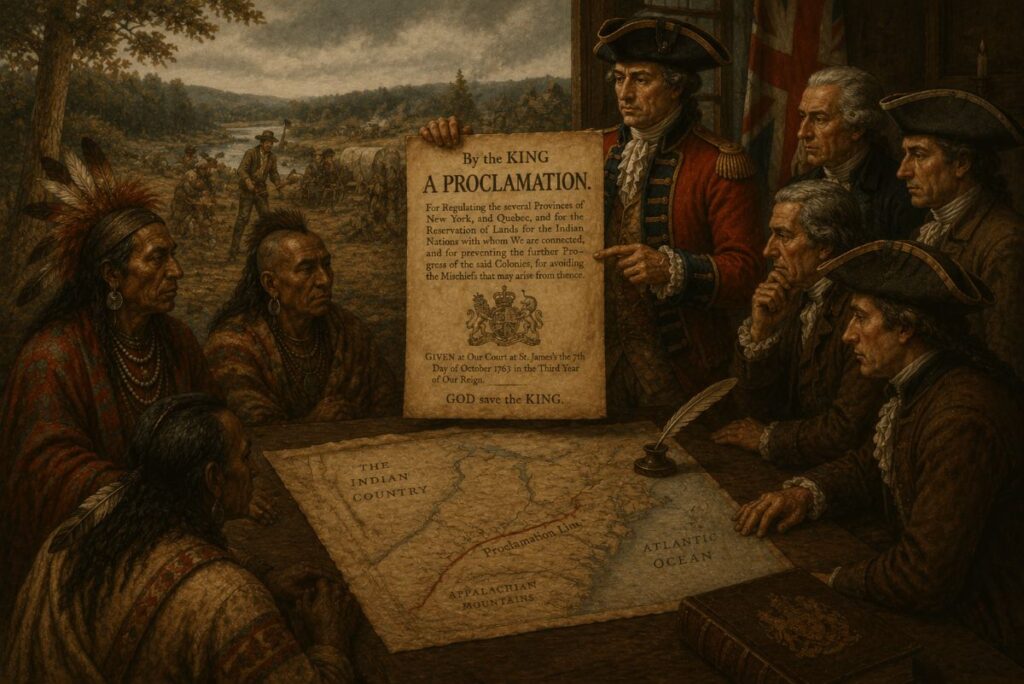
On Oct. 7, 1763, King George III issued a sweeping order meant to impose control on Britain’s newly enlarged North American empire.
The Royal Proclamation of 1763 created new colonial governments, regulated western trade and restricted settlement beyond the Appalachian Mountains. It also addressed the crisis exposed by Pontiac’s War: Britain had claimed a vast interior that it could not govern without the cooperation of Native nations.
The proclamation declared that Indigenous peoples should not be disturbed on lands that had not been ceded to or purchased by the Crown. It barred colonial governors from granting those lands and prohibited private buyers from purchasing Native territory directly. Future land cessions were supposed to take place through Crown officials at public councils with the Native nations involved.
On paper, the order marked a sharp break from the assumptions that had helped cause the war. Britain was admitting that military victory over France did not automatically erase Indigenous land rights.
Yet the promise contained a contradiction.
The Crown recognized that Native nations possessed their lands, while also placing those lands within Britain’s claimed dominions. The proclamation offered protection, but it did not recognize Native nations as entirely outside British authority. Indigenous legal scholars and historians continue to debate whether the document affirmed Native sovereignty or created a colonial system for controlling how Indigenous land could be transferred.
The War Forced Britain to Change Course
Pontiac’s War was already underway when the proclamation was issued. Native forces had captured several western forts, surrounded Detroit and Fort Pitt, disrupted trade and driven many settlers east.
British officials now understood that unregulated settlement could lead to another costly war. The Appalachian boundary was intended to separate colonial settlements from the Native-controlled interior while Britain restored trade and negotiated peace. The proclamation was therefore more than a gesture of goodwill. It was an emergency measure designed to reduce violence and stabilize imperial rule.
The order covered the Great Lakes and Ohio Country, including the region that would become Michigan. Those lands remained outside the established colonies and were reserved from unauthorized settlement.
For the Odawa, Ojibwe, Potawatomi, Wyandot and other nations involved in the war, the proclamation appeared to confirm a central demand: British settlers could not simply occupy Native homelands because France had surrendered its claims.
It was not a military victory, but it was proof that armed resistance had forced Britain to reconsider its policies.
A Boundary Drawn Without Native Consent
The proclamation is often described as setting aside western land for Native peoples. That description requires qualification.
King George issued the order without Indigenous nations participating in its drafting. The Crown drew a boundary across Native homelands and announced rules for future land transactions through its own authority. Neither colonial settlers nor Native governments had formally agreed to the line before it was proclaimed.
The order also treated the Appalachian boundary as an administrative barrier, not necessarily a permanent national border. British officials expected that parts of the line could move west after new agreements and land purchases. The policy sought to regulate expansion rather than end it.
This distinction is critical.
The proclamation did not promise that all western lands would remain Indigenous territory forever. It promised that settlement would proceed through Crown-controlled negotiations instead of private purchases, illegal occupation or unilateral colonial grants.
That system could offer some protection. It could also make the British Crown the only legal gatekeeper through which Native lands entered colonial possession.
Colonists Refused to Stay East
The proclamation quickly angered colonists who believed victory over France had opened the West.
Land speculators had invested heavily in western claims. Veterans had been promised acreage for military service. Settlers were already moving across the mountains into the Ohio Valley and other Native territories.
Many colonists ignored the boundary. Some remained on western land despite orders to leave. Others continued to cross the mountains, expecting that political pressure would eventually force Britain to recognize their claims. Colonial governments also had limited ability—and sometimes limited interest—in removing settlers from contested territory.
Prominent figures had personal interests in western expansion. George Washington, for example, pursued western land claims despite the proclamation’s restrictions. Such men did not see the boundary as a lasting settlement. They regarded it as an obstacle that could be overturned through lobbying, negotiation or continued occupation.
Britain had issued an order from London.
It did not have enough soldiers, money or political support to enforce that order across thousands of miles of forests, rivers and mountain passes.
Britain Soon Moved the Line
Within five years, the Crown began negotiating new boundaries.
At the 1768 Treaty of Fort Stanwix, British officials and representatives of the Haudenosaunee Confederacy established a new line that opened large areas south of the Ohio River and in western Pennsylvania to colonial claims. The agreement extended legal settlement far beyond parts of the original Proclamation Line.
The treaty was controversial because some of the lands Britain sought were also occupied or claimed by the Shawnee, Lenape, Cherokee and other nations that did not accept Haudenosaunee authority to surrender them. The Shawnee opposed the agreement and continued to challenge colonial settlement in the Ohio Valley.
Other treaties with Cherokee leaders shifted the southern boundary as well. Step by step, the supposedly protected interior became available for colonial settlement through Crown-approved agreements.
Britain had not abandoned the proclamation’s basic process. It was using that process to move the boundary west.
A Promise Undermined From the Start
The Royal Proclamation did change British policy. It rejected private land purchases, recognized that unceded Native lands could not lawfully be occupied and required the Crown to negotiate before opening territory.
Those principles became important in later treaty relations and remain legally important in Canada. The Canadian government describes the proclamation as a foundational document in relations between First Nations and the Crown.
But for Native nations west of the Appalachians, the immediate promise proved weak.
Settlers kept coming. Colonial governments pressed for more land. British officials negotiated new cessions. The boundary moved before the generation that fought Pontiac’s War had passed away.
The proclamation also could not resolve the central dispute between the two sides. Native nations viewed their homelands as the basis of their political independence. Britain viewed those same lands as part of an empire whose settlement could be managed, delayed and eventually expanded.
The Crown promised that Indigenous people would not be disturbed on lands they had not ceded.
It could not restrain the settlers determined to take those lands—and it did not permanently resist them.
Pontiac’s War had forced Britain to draw a line.
Colonial expansion soon began pushing that line west.
Timeline of Key Events (1763–1765)
- April 27, 1763 — Council near Detroit: Leaders agree on coordinated strikes.
- May 7, 1763 — Fort Detroit: A planned surprise entry fails; a five-month siege follows.
- May–June 1763 — Outposts fall: Sandusky, St. Joseph, Miami, Ouiatenon, Venango, Le Boeuf, Presque Isle are taken; garrisons are killed or captured.
- June 2, 1763 — Fort Michilimackinac: Ojibwe players use a lacrosse match as a ruse to storm the fort; the post falls the same day.
- June–July 1763 — Fort Pitt siege: British officers discussed—and at least attempted—the use of smallpox-infected items against emissaries; disease was already present, and the exact effect remains debated.
- Aug. 5–6, 1763 — Battle of Bushy Run: Col. Henry Bouquet breaks the attacks and reopens the route to Fort Pitt.
- Oct. 7, 1763 — Royal Proclamation: Crown bars settlement west of the Appalachians and formalizes controlled land purchases.
- 1764 — British expeditions: Bradstreet on the lakes; Bouquet into the Ohio Country secures releases of captives and peace terms.
- July 1765 — Detroit peace council: Hostilities wind down in the Great Lakes.
- July 1766 — Oswego: Pontiac signs a formal peace with Sir William Johnson.
Pontiac’s Death Near Cahokia
The war that bore Pontiac’s name officially ended with peace councils and renewed diplomacy. Yet the man who helped unite the Great Lakes nations would not live long enough to see whether that peace could endure.
On April 20, 1769, Pontiac traveled to the French village of Cahokia, a small settlement on the east bank of the Mississippi River in what is now southwestern Illinois. Once an important French trading community, Cahokia had become part of Britain’s newly acquired territory after the Seven Years’ War. French residents, British officials, Native traders and warriors from many nations crossed paths there each day.
Pontiac arrived not as a military commander, but as a respected leader still trying to preserve his influence among the Native nations of the Illinois Country. Four years had passed since the peace council at Detroit, yet tensions remained. Alliances had shifted, old rivalries resurfaced and British officials quietly worked to prevent another broad Indigenous coalition from forming.
A Murder in a French Village
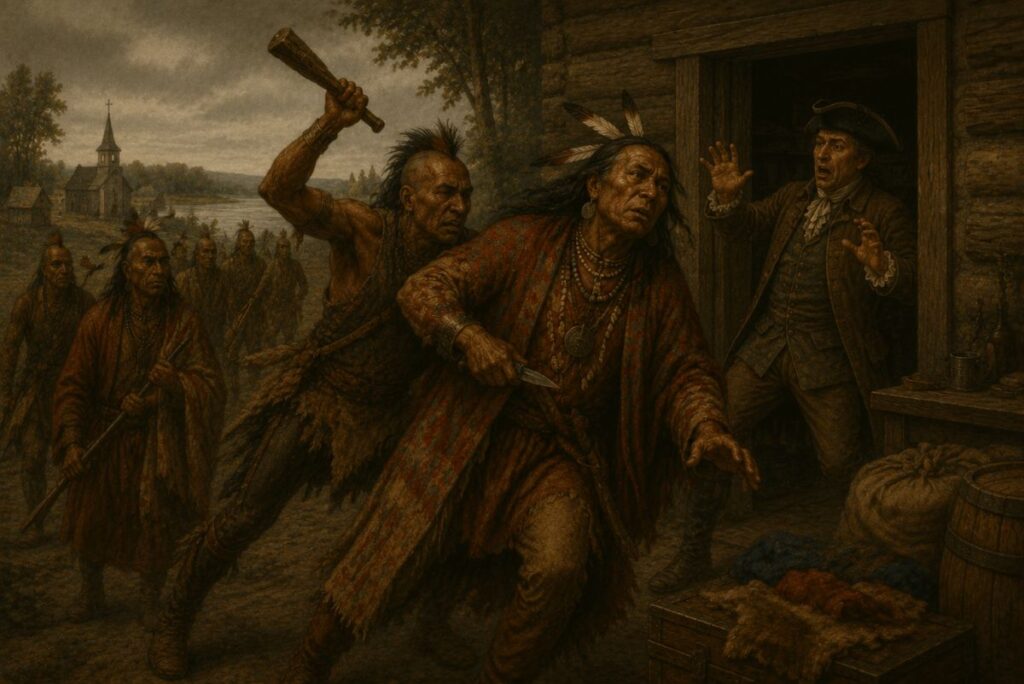
On that spring day, Pontiac entered the home of a French trader identified in most accounts as William Williamson. As he left, he was attacked from behind by a Peoria man known in English sources as Black Dog, although some early records do not identify the killer by name.
The attack was sudden.
Black Dog struck Pontiac with a war club before stabbing him. The Odawa leader died from his wounds, ending one of the most influential Native careers of the eighteenth century. Contemporary British records confirm Pontiac’s death, but they reveal remarkably little about what motivated the killer.
Why Was Pontiac Killed?
That question has challenged historians for more than two centuries.
Nineteenth-century writers often claimed the murder had been arranged by British officials who feared Pontiac might once again unite the tribes. It is an appealing story, but no surviving British document has been found ordering or paying for his assassination.
Most modern historians reject the claim that Britain orchestrated the killing.
Richard White, Gregory Evans Dowd and Richard Middleton instead point to the complicated political rivalries that existed among Native nations after Pontiac’s War. Pontiac’s influence had declined after 1766. His efforts to rebuild a broad alliance were not welcomed by every community, particularly among some Illinois Confederation villages that had their own political interests. Personal disputes, local politics and intertribal tensions provide more convincing explanations than a British conspiracy. (Dictionary of Canadian Biography)
That does not mean British officials mourned his death.
Many regarded Pontiac as the most dangerous Native leader they had faced west of the Appalachians. His removal eliminated a man capable of bringing together nations that often disagreed with one another.
The Story of Revenge
Pontiac’s death quickly gave rise to another dramatic story.
According to a long-standing tradition, the Odawa, Ojibwe and Potawatomi launched a devastating campaign of revenge against the Illinois Confederation, nearly destroying the Peoria and several related communities.
The story became popular in nineteenth-century histories and local folklore. Francis Parkman repeated versions of it in The Conspiracy of Pontiac, helping establish it as accepted history.
Modern scholarship, however, paints a more complicated picture.
Historians now believe the revenge narrative was exaggerated over time. Violence certainly followed Pontiac’s death, and warfare among Native nations continued in the Illinois Country during the following years. But there is little evidence that a single coordinated campaign nearly exterminated the Illinois Confederation solely because of Pontiac’s murder.
The people of Illinois were already facing severe challenges. Decades of warfare, epidemic disease, shrinking populations, and pressure from multiple neighboring nations had weakened their communities long before 1769. Pontiac’s assassination became one event within a much larger period of regional instability rather than the sole cause of their decline.
The Mystery of Pontiac’s Burial
Pontiac’s final resting place remains uncertain.
Most historians believe he was buried somewhere near Cahokia shortly after his death. No contemporary description identifies the exact location, and no marked grave has ever been verified.
During the nineteenth century, several communities claimed to possess Pontiac’s remains. One popular tradition held that his body rested beneath what later became the Southern Hotel in St. Louis. Another claimed his bones had been reinterred elsewhere during construction projects. None of these stories has been supported by archaeological or documentary evidence.
Michigan has its own traditions.
Over the years, stories have circulated that loyal followers secretly carried Pontiac’s body north and buried him somewhere in the Great Lakes, perhaps along the Pine River or another secluded location known only to trusted members of his nation.
Those stories are part of regional folklore.
No historical record places Pontiac’s body back in Michigan, and no archaeological evidence supports such claims. Still, the persistence of these traditions reflects the respect many people continued to hold for the Odawa leader. Communities often preserve legends when they believe an important figure deserves to rest among his own people.
A Legacy Greater Than One Man
Pontiac’s death marked the end of one remarkable life, but not the end of Indigenous resistance.
His greatest achievement was not the siege of Detroit or the capture of British forts. It was proving that independent Native nations could cooperate against a common threat while maintaining their own leadership and identity.
Leaders who followed—including Little Turtle, Blue Jacket and Tecumseh—would confront many of the same challenges. They inherited a world in which Britain, and later the United States, continued pressing westward. They also inherited Pontiac’s example: that diplomacy, spiritual renewal and military cooperation could alter the course of history, even if only for a time.
Today, historians no longer view Pontiac simply as the architect of a failed rebellion.
He is increasingly recognized as one of the most important Indigenous statesmen of eighteenth-century North America—a leader whose efforts forced the British Empire to change its policies and acknowledge, however briefly, that the First Peoples of the Great Lakes remained nations that could not simply be conquered.
His grave may be lost to history.
His influence is not.
Legacy and memory
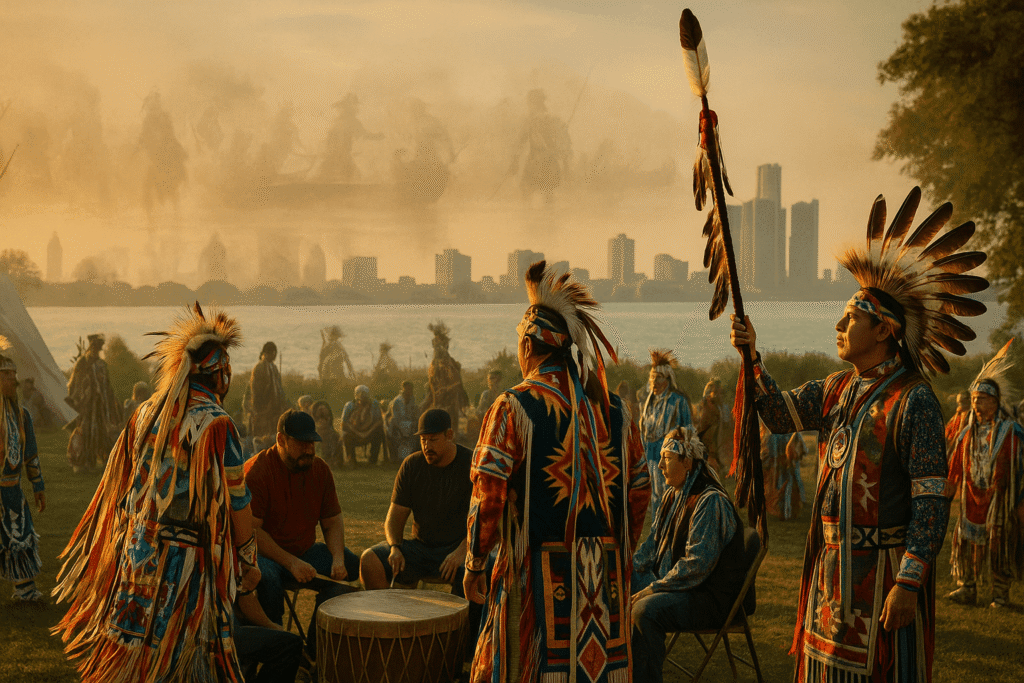
For many Native communities, this was a justified defense of homelands. The campaign showed that a pan-tribal coalition could compel an empire to change course. Later confederacies—Blue Jacket and Little Turtle in the 1790s, Tecumseh and Tenskwatawa in 1811—echoed lessons from 1763. Sites at Detroit, Pittsburgh, and Mackinac interpret the conflict today with broader perspectives than earlier narratives.
Images on this page may contain affiliate links in which we may receive a commission. See our affiliate disclosure for details.
FAQs – Pontiac’s War in Michigan – Rebellion against the British
Was Pontiac the sole commander?
No. He was a crucial organizer around Detroit, but many leaders acted independently across the region.
Did smallpox blankets decide the siege of Fort Pitt?
British officers discussed and attempted to spread smallpox via items given during a parley. Disease was present in the region already; historians debate the specific impact. The siege ended after the British victory at Bushy Run.
What changed after the war?
Britain restored gift-giving and regulated trade and drew the Proclamation Line to limit settlement. Enforcement was weak, but the policy shift was significant.
Sources: Why Pontiac’s War Began
- Gasparro, Joseph D. “‘The Desired Effect’: Pontiac’s Rebellion and the Native American Struggle to Survive in Britain’s North American Conquest.” The Gettysburg Historical Journal, vol. 6, 2007. Accessed 13 July 2026.
- Middleton, Richard. “Pontiac: Local Warrior or Pan-Indian Leader?” Michigan Historical Review, vol. 32, no. 2, 2006, pp. 1-32. Accessed 13 July 2026.
- Office of the Historian. “Proclamation Line of 1763, Quebec Act of 1774 and Westward Expansion.” U.S. Department of State. Accessed 13 July 2026.
- “The Master of Life.” Teaching American History, Ashbrook Center. Accessed 13 July 2026.
- Chevrette, Louis. “Pontiac (Pontiak, Ponteack, Pontiague, Pondiac, Pondiak, Pondiag) (Obwandiyag).” Dictionary of Canadian Biography, vol. 3, University of Toronto and Université Laval, 1974. Accessed 13 July 2026.
Sources: Pontiac Calls a Council Near Detroit
- Middleton, Richard. “Pontiac: Local Warrior or Pan-Indian Leader?” Michigan Historical Review, vol. 32, no. 2, 2006, pp. 1-32. Accessed 13 July 2026.
- Chevrette, Louis. “Pontiac (Pontiak, Ponteack, Pontiague, Pondiac, Pondiak, Pondiag) (Obwandiyag).” Dictionary of Canadian Biography, vol. 3, University of Toronto and Université Laval, 1974. Accessed 13 July 2026.
- Lincoln Park Historical Museum. “250th Anniversary Commemoration of the Chief Pontiac War Council.” Lincoln Park Historical Society, 26 Apr. 2013. Accessed 13 July 2026.
- “Pontiac Calls for War, 1763.” The American Yawp Reader. Accessed 13 July 2026.
- “The Master of Life.” Teaching American History, Ashbrook Center. Accessed 13 July 2026.
Sources: Pontiac Calls a Council Near Detroit
- Middleton, Richard. “Pontiac: Local Warrior or Pan-Indian Leader?” Michigan Historical Review, vol. 32, no. 2, 2006, pp. 1-32. Accessed 13 July 2026.
- Chevrette, Louis. “Pontiac (Pontiak, Ponteack, Pontiague, Pondiac, Pondiak, Pondiag) (Obwandiyag).” Dictionary of Canadian Biography, vol. 3, University of Toronto and Université Laval, 1974. Accessed 13 July 2026.
- Lincoln Park Historical Museum. “250th Anniversary Commemoration of the Chief Pontiac War Council.” Lincoln Park Historical Society, 26 Apr. 2013. Accessed 13 July 2026.
- “Pontiac Calls for War, 1763.” The American Yawp Reader. Accessed 13 July 2026.
- “The Master of Life.” Teaching American History, Ashbrook Center. Accessed 13 July 2026.
Sources: The Failed Plan to Capture Fort Detroit and Five Months Under Siege
- Chevrette, Louis. “Pontiac (Pontiak, Ponteack, Pontiague, Pondiac, Pondiak, Pondiag) (Obwandiyag).” Dictionary of Canadian Biography, vol. 3, University of Toronto and Université Laval, 1974. Accessed 13 July 2026.
- “Gladwin (Gladwyn), Henry.” Dictionary of Canadian Biography, vol. 4, University of Toronto and Université Laval, 1979. Accessed 13 July 2026.
- Middleton, Richard. “Pontiac: Local Warrior or Pan-Indian Leader?” Michigan Historical Review, vol. 32, no. 2, 2006, pp. 1-32. Accessed 13 July 2026.
- National Park Service. “Native American History in Detroit.” U.S. Department of the Interior, 30 Aug. 2020. Accessed 13 July 2026.
- Citizen Potawatomi Nation. “Oct. 31 Marks Anniversary of the End of the Siege of Fort Detroit.” Citizen Potawatomi Nation, 30 Oct. 2020. Accessed 13 July 2026.
- Dowd, Gregory Evans. “The French King Wakes Up in Detroit: ‘Pontiac’s War’ in Rumor and History.” Ethnohistory, vol. 37, no. 3, 1990, pp. 254-278. JSTOR. Accessed 13 July 2026.
- Gasparro, Joseph D. “‘The Desired Effect’: Pontiac’s Rebellion and the Native American Struggle to Survive in Britain’s North American Conquest.” The Gettysburg Historical Journal, vol. 6, 2007. Accessed 13 July 2026.
Sources: The Day Michilimackinac Fell
- Mackinac State Historic Parks. “Colonial Michilimackinac History.” Mackinac State Historic Parks. Accessed 13 July 2026.
- Mackinac State Historic Parks. “Captain George Etherington: Michilimackinac’s Unfortunate Commander.” Mackinac State Historic Parks. Accessed 13 July 2026.
- Armour, David A. “Wawatam.” Dictionary of Canadian Biography, vol. 3, University of Toronto and Université Laval, 1974. Accessed 13 July 2026.
- Armour, David A. “Henry, Alexander.” Dictionary of Canadian Biography, vol. 5, University of Toronto and Université Laval, 1983. Accessed 13 July 2026.
- Widder, Keith R. “Beyond Pontiac’s Shadow: Michilimackinac and the Anglo-Indian War of 1763.” Mackinac State Historic Parks. Accessed 13 July 2026.
- “Minweweh (Menehwehna, Minavavana, Ninãkon).” Dictionary of Canadian Biography, vol. 3, University of Toronto and Université Laval, 1974. Accessed 13 July 2026.
Sources: Smallpox at Fort Pitt
- Ranlet, Philip. “The British, the Indians, and Smallpox: What Actually Happened at Fort Pitt in 1763?” Pennsylvania History: A Journal of Mid-Atlantic Studies, vol. 67, no. 3, 2000, pp. 427-441. Accessed 13 July 2026.
- Ranlet, Philip. “The British, the Indians, and Smallpox: What Actually Happened at Fort Pitt in 1763?” JSTOR, 2000. Accessed 13 July 2026.
- Hibbard, Alicea. “Investigating the Smallpox Blanket Controversy.” American Society for Microbiology, 15 Nov. 2023. Accessed 13 July 2026.
- Colonial Williamsburg Foundation. “Colonial Germ Warfare.” Colonial Williamsburg Journal, spring 2004. Accessed 13 July 2026.
- D’Errico, Peter. “Jeffery Amherst and Smallpox Blankets.” University of Massachusetts Amherst. Accessed 13 July 2026.
- Gasparro, Joseph D. “‘The Desired Effect’: Pontiac’s Rebellion and the Native American Struggle to Survive in Britain’s North American Conquest.” The Gettysburg Historical Journal, vol. 6, 2007. Accessed 13 July 2026.
Sources: The Royal Proclamation Was a Promise Britain Could Not Keep
- George III. “The Royal Proclamation, October 7, 1763.” The Avalon Project, Lillian Goldman Law Library, Yale Law School. Accessed 13 July 2026.
- Office of the Historian. “Proclamation Line of 1763, Quebec Act of 1774 and Westward Expansion.” U.S. Department of State. Accessed 13 July 2026.
- National Park Service. “1768 Boundary Line Treaty of Fort Stanwix.” U.S. Department of the Interior. Accessed 13 July 2026.
- George Washington’s Mount Vernon. “Proclamation Line of 1763.” George Washington’s Mount Vernon. Accessed 13 July 2026.
- University of British Columbia. “Royal Proclamation, 1763.” Indigenous Foundations. Accessed 13 July 2026.
- Chevrette, Louis. “Pontiac (Pontiak, Ponteack, Pontiague, Pondiac, Pondiak, Pondiag) (Obwandiyag).” Dictionary of Canadian Biography, vol. 3, University of Toronto and Université Laval, 1974. Accessed 13 July 2026.
Sources: Pontiac’s Death Near Cahokia
- Chevrette, Louis. “Pontiac (Pontiak, Ponteack, Pontiague, Pondiac, Pondiak, Pondiag) (Obwandiyag).” Dictionary of Canadian Biography, vol. 3, University of Toronto and Université Laval, 1974. Accessed 13 July 2026.
- Middleton, Richard. “Pontiac: Local Warrior or Pan-Indian Leader?” Michigan Historical Review, vol. 32, no. 2, 2006, pp. 1-32. Accessed 13 July 2026.
- Middleton, Richard. “Pontiac’s War: Its Causes, Course, and Consequences.” Routledge, 2007. Google Books. Accessed 13 July 2026.
- University of Michigan Library. “Obwandiyag, Also Known as Pontiac.” Great Native American Chiefs, University of Michigan Library. Accessed 13 July 2026.
- Dowd, Gregory Evans. “The French King Wakes Up in Detroit: ‘Pontiac’s War’ in Rumor and History.” Ethnohistory, vol. 37, no. 3, 1990, pp. 254-278. JSTOR. Accessed 13 July 2026.
Editorial note: No verified contemporary record identifies Pontiac’s exact burial site. Claims that his remains were buried beneath a later St. Louis building or secretly returned to Michigan should be identified as tradition or folklore rather than established fact.