 by
by 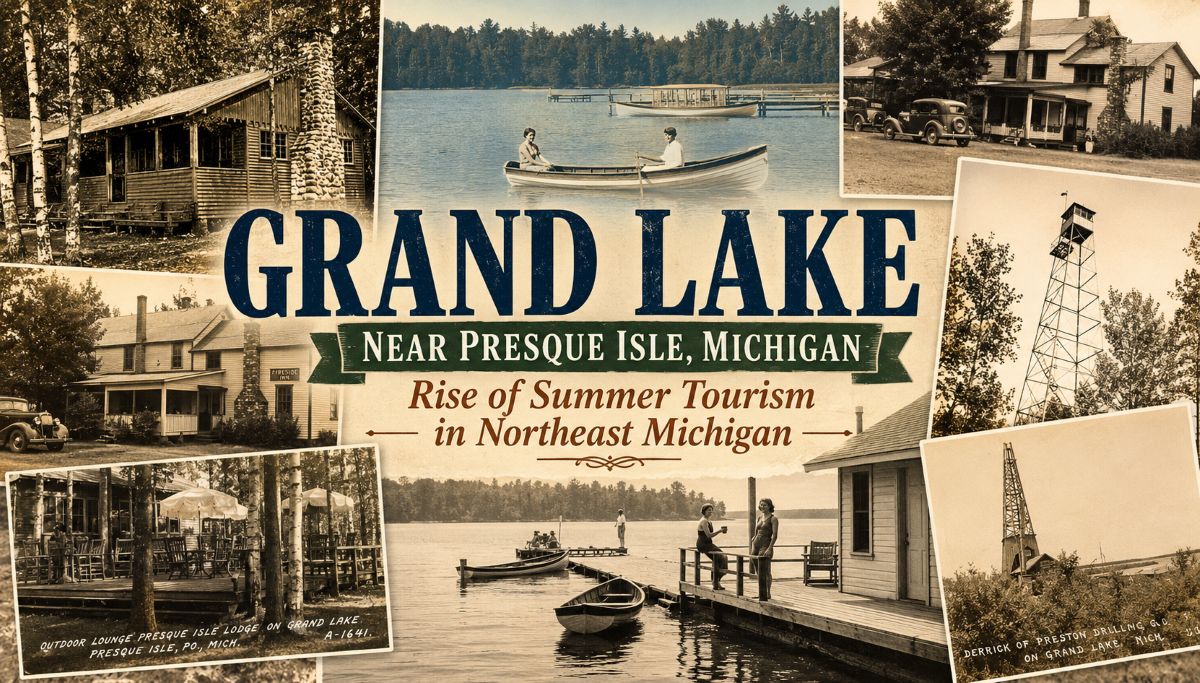
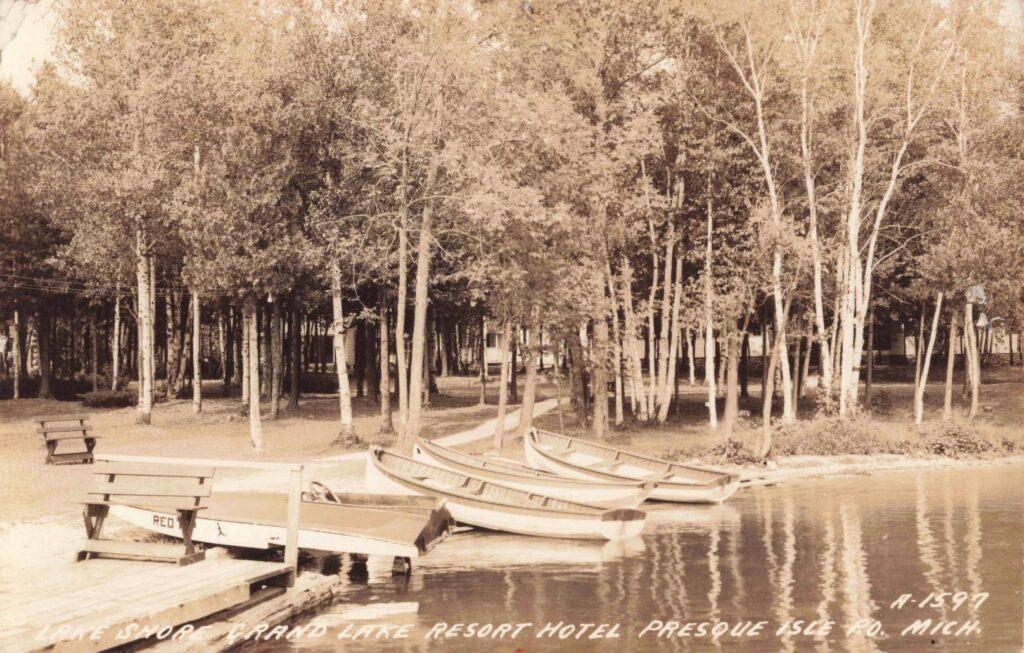
Grand Lake near Presque Isle, Michigan, was once valued for timber, cordwood, and access to Lake Huron shipping. By the early 20th century, hotel owners were selling a different resource: time beside clear water. Grand Lake history weaves together the lumbering era and the tourism boom Michigan experienced in the early 1900s.
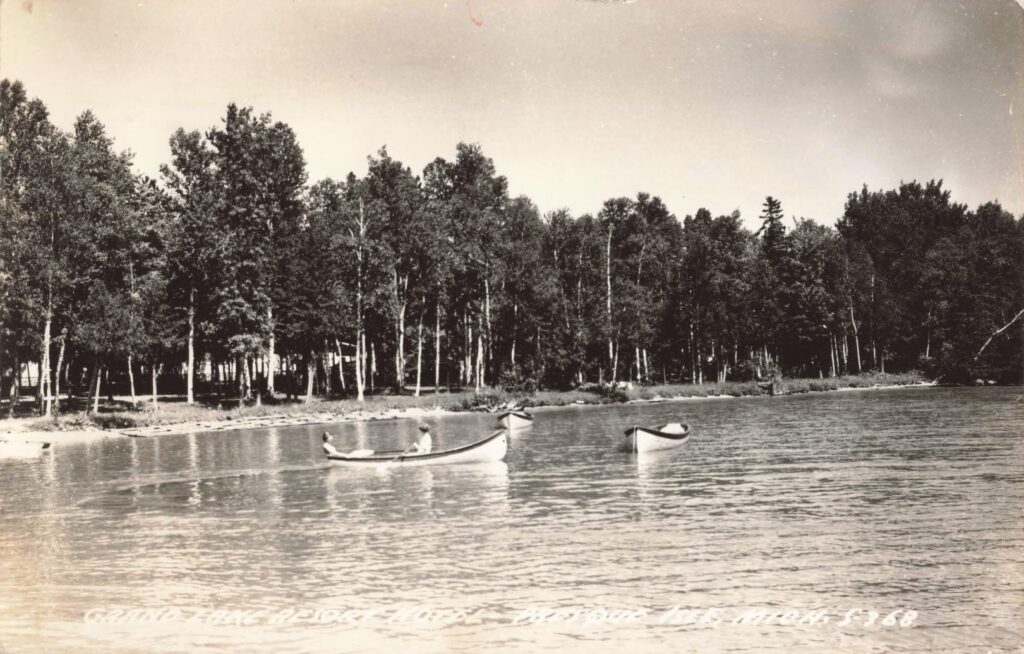
The Grand Lake history near Presque Isle, Michigan, is tied to logging, maritime travel, the 1908 Metz Fire, and the rise of automobile tourism. Early inns and hotels turned the lake into one of Northeast Michigan’s best-known summer communities.
Grand Lake covers about 5,660 acres and reaches a maximum depth of about 25 feet. Its islands, shallow bays, and long shoreline provided favorable conditions for fishing and small-boat operations. The southern end of the lake is about 15 miles north of Alpena.
Watch – Grand Lake Near Presque Isle, Michigan: How Resorts Replaced the Lumber Camps
Before the Resorts, Grand Lake Supported Timber and Steamships
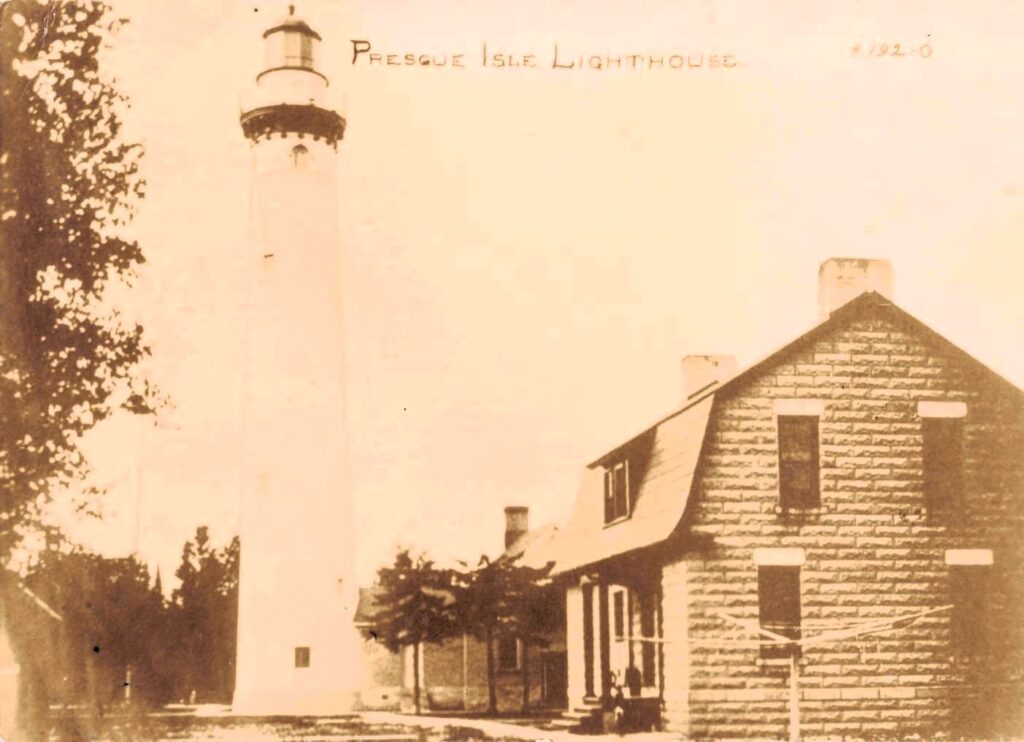
Presque Isle Harbor was a practical shelter for vessels traveling along Lake Huron. Frederick Burnham settled in the area during the 1840s and developed a business supplying cordwood to early steamships. The Burnham family acquired large timber holdings, operated a mercantile business and moved wood to the harbor landing. Burnham also served as the first postmaster.
John and Elizabeth Kauffman filed a 149-acre homestead claim in 1862. John Kauffman worked as a lumberman and later served in local government. The surviving Kauffman cabin, generally dated to about 1880, remains an important link to the first permanent settlement near Grand Lake.
Two Lake Huron lights also shaped local life. The Old Presque Isle Lighthouse was built in 1840. The New Presque Isle Lighthouse followed in 1870. The harbor and its lights gave the Grand Lake area a stronger maritime connection than many inland resort communities.
The 1908 Metz Fire Reached Grand Lake
On Oct. 15, 1908, fire swept across Presque Isle County. Strong winds pushed flames through cutover timber, dry brush, and rural settlements.
The village of Metz was destroyed. The Presque Isle County Historical Museum reports that 37 people died and about 700 were left homeless. A Michigan State University summary gives a death toll of 42. The fire reportedly jumped Grand Lake before burning out near Lake Huron.
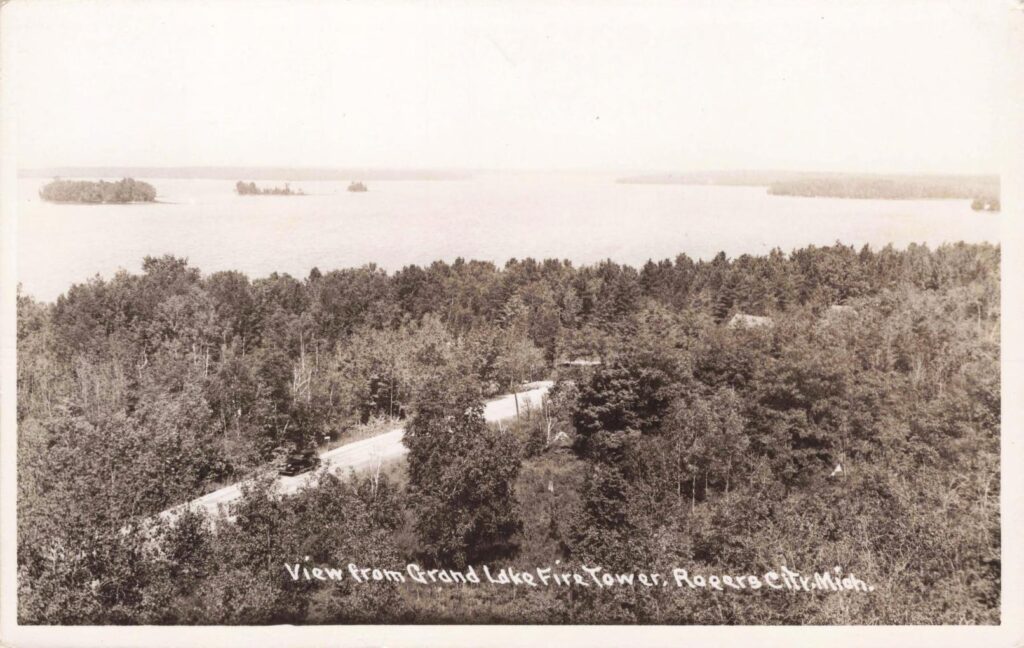
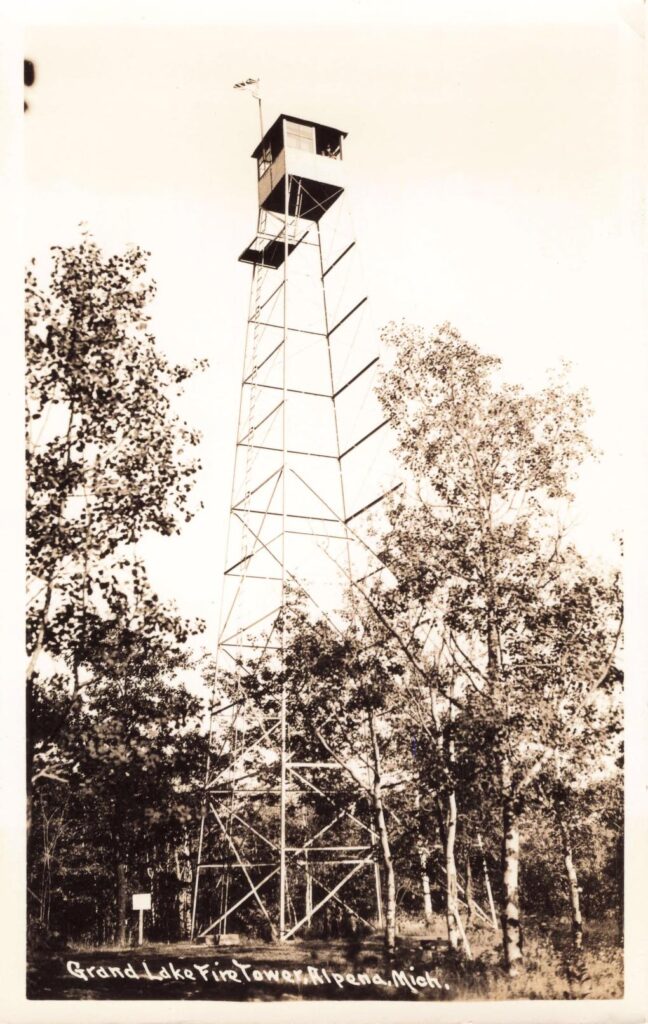
The disaster encouraged stronger forest-fire prevention. The steel Grand Lake fire tower seen in the historical collection represented a new approach. A watcher placed high above the trees could identify smoke while a fire was still small.
History of Grand Lake Near Presque Isle, Michigan Resorts
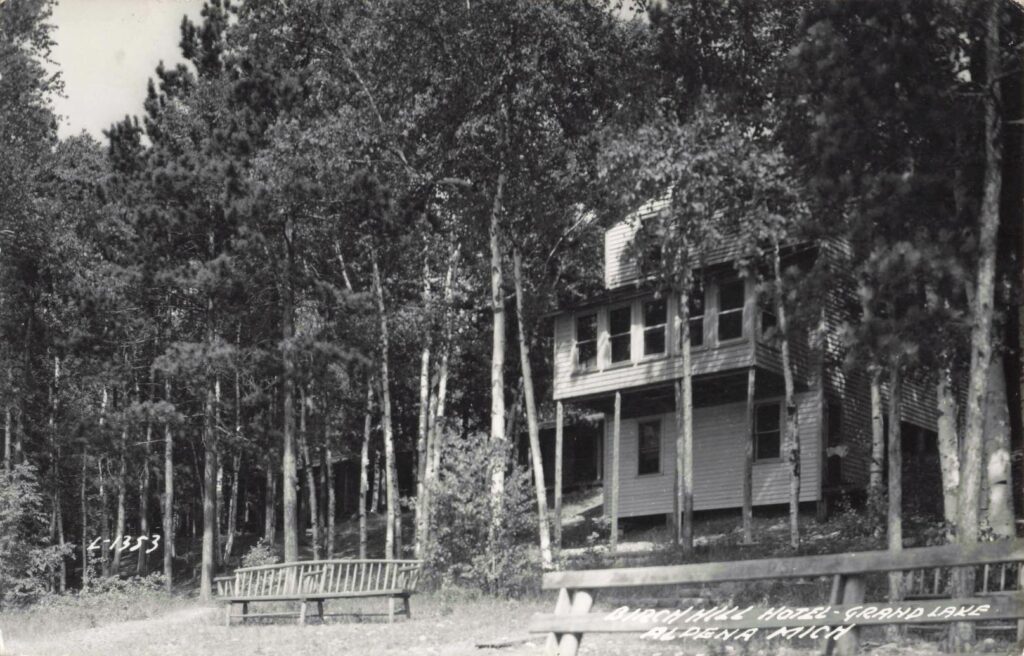
Tourists had already begun arriving before the Metz Fire. Hunters and fishermen came first. Hotels soon followed.
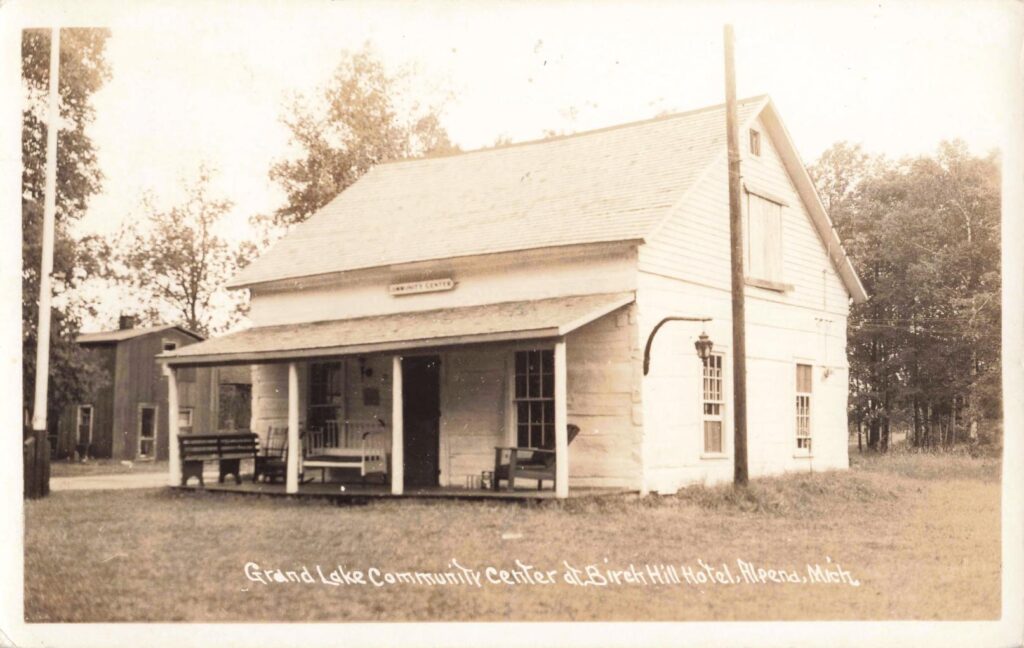
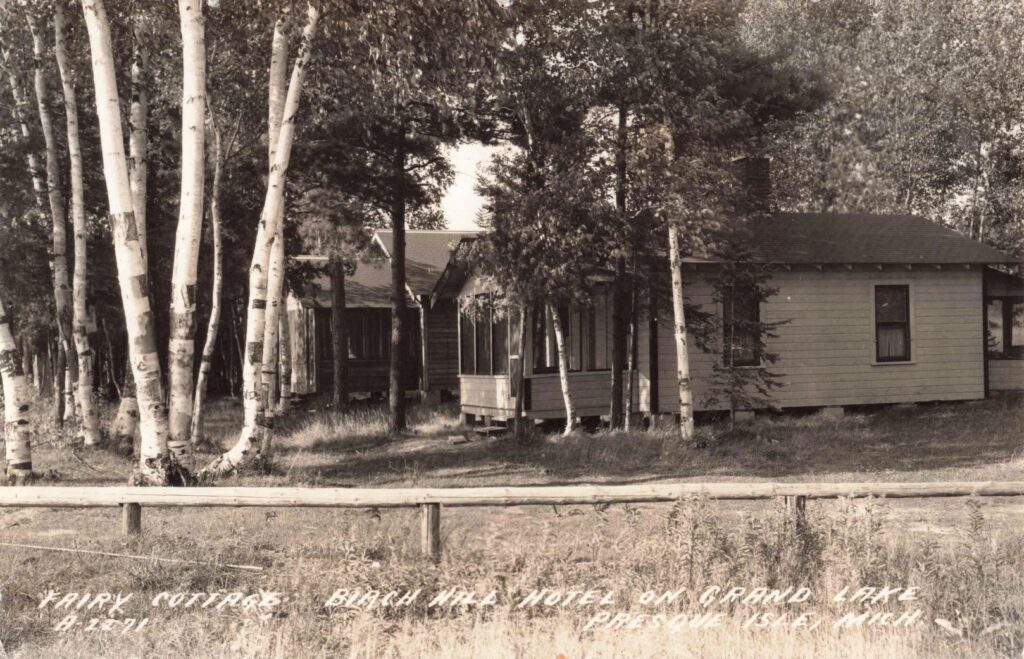
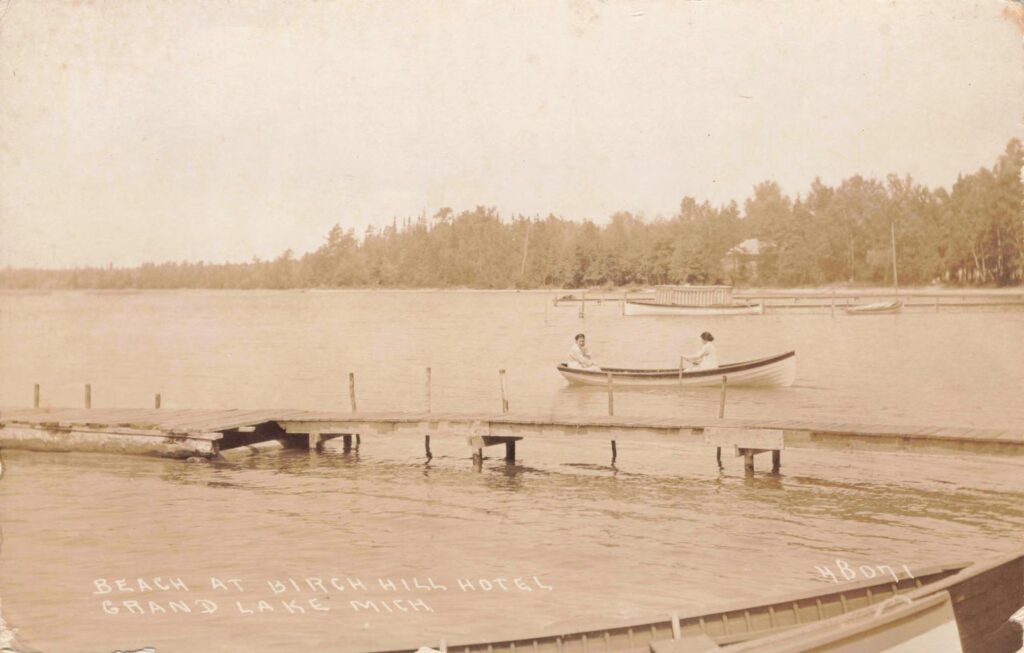
Birch Hill Hotel was built during the late 1890s and opened in 1901. The resort included a main hotel, cottages, a community building, a beach, and a long dock. It operated during the years when visitors often remained for several weeks rather than a weekend.
Fireside Inn was constructed in 1908 and began receiving steady guests by the summer of 1909. Early accommodations were simple, but the food and fishing earned repeat business. George Kauffman recalled personally recruiting motorists in Alpena and offering free lodging if they were dissatisfied.
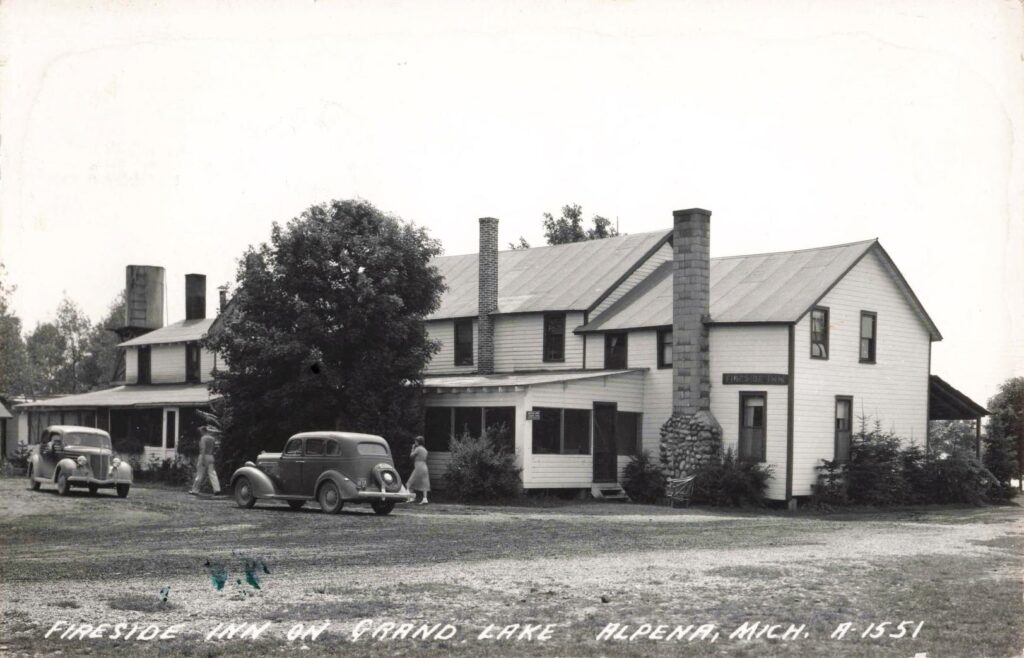
That account shows how automobile travel changed tourism. A hotelkeeper could meet travelers in Alpena and lead their car to Grand Lake. The region remained quiet, but it was no longer unreachable.
Grand Lake Hotel and the Cottage System
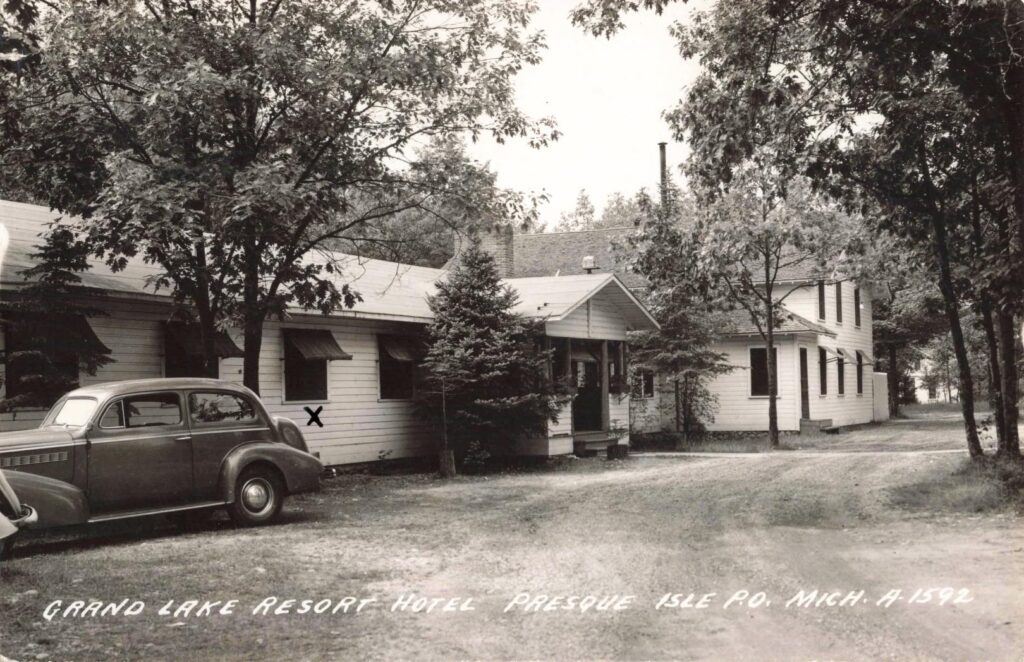
Lansing businessman Bliss Stebbins began constructing the Grand Lake Hotel in 1911. It opened in 1912.
The main building contained guest rooms, baths, a lobby, kitchen, and dining room. Smaller cabins were scattered around the property. They carried names such as Eagle’s Nest, Wolf’s Den and Bear’s Den. Guests staying in cabins usually ate in the main dining room.
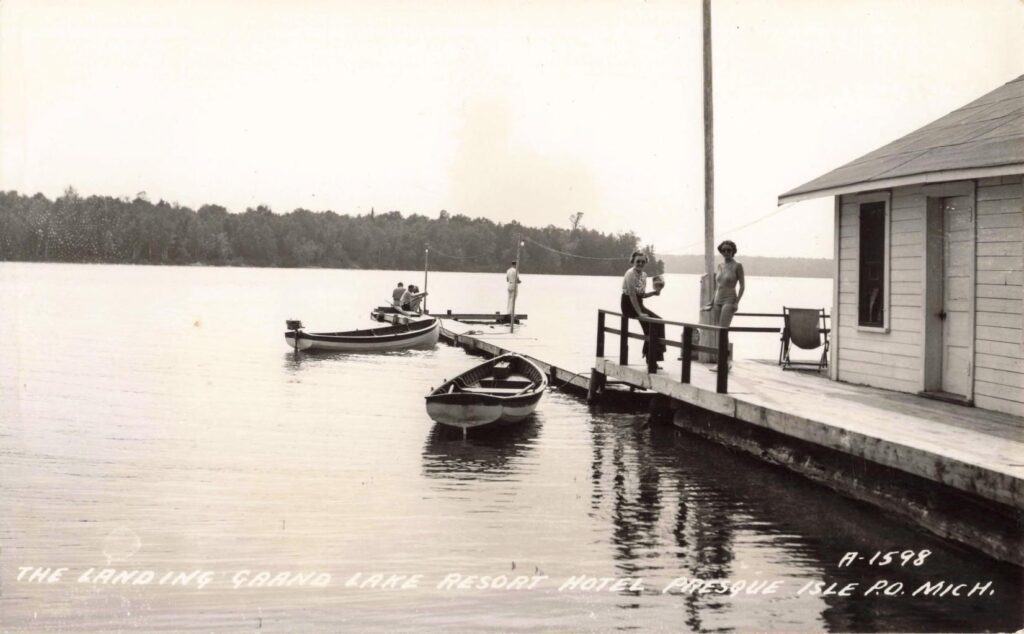
Stebbins also purchased the Old Presque Isle Lighthouse property at a tax sale. He planned to use it as a private picnic area for hotel guests. The arrangement linked the region’s maritime history directly to its growing vacation business.
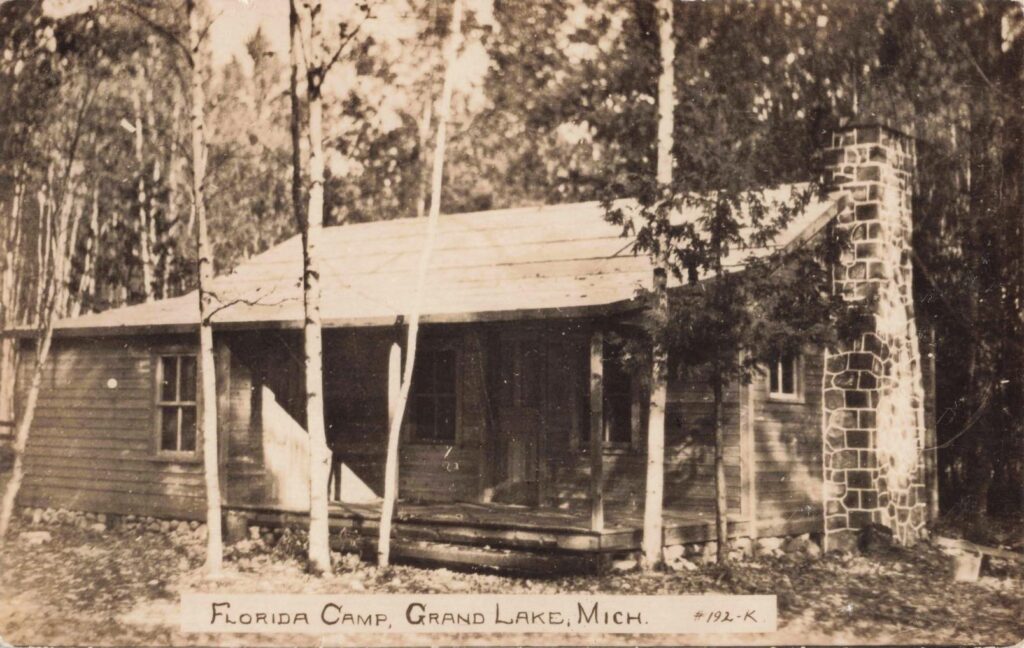
Presque Isle Lodge Combined Tourism and Furniture Design
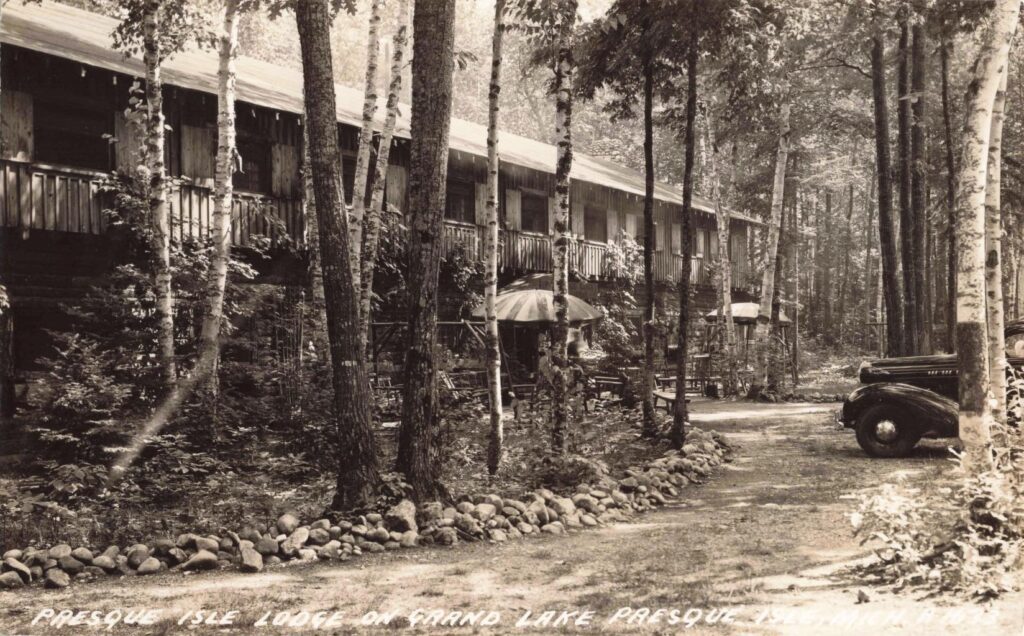
Newell A. Eddy Jr. built Presque Isle Lodge in 1920. It was the fourth large hotel or resort in the area, following Birch Hill, Fireside Inn and Grand Lake Hotel.
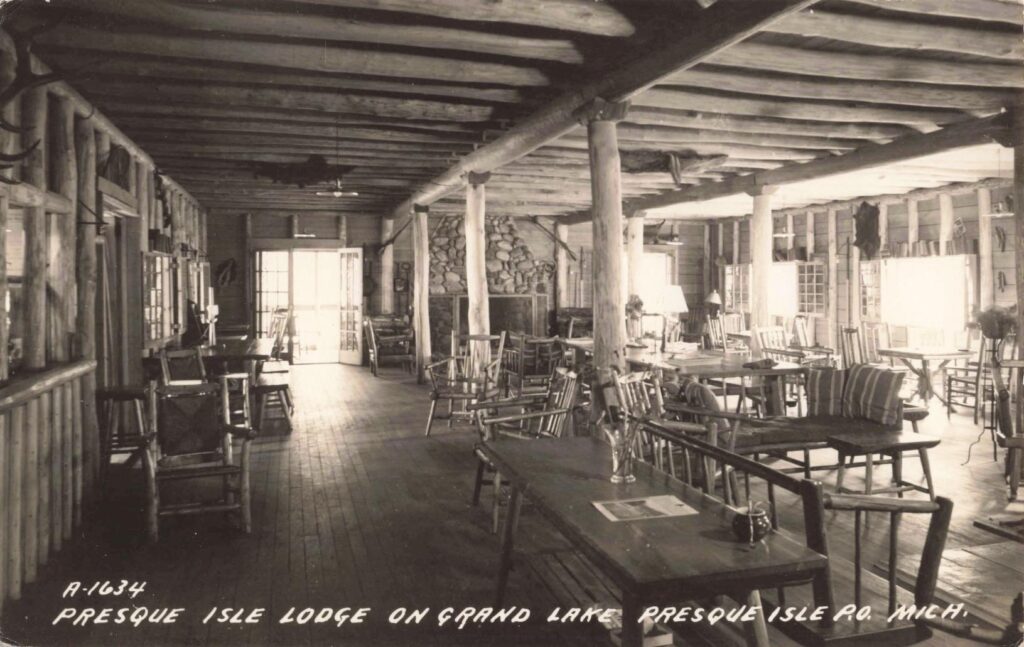
The lodge had a rustic design with heavy woodwork, log supports, and a large stone fireplace. Eddy wanted furnishings that fit the building. He and local workers began producing chairs, tables, and other pieces at the lodge.
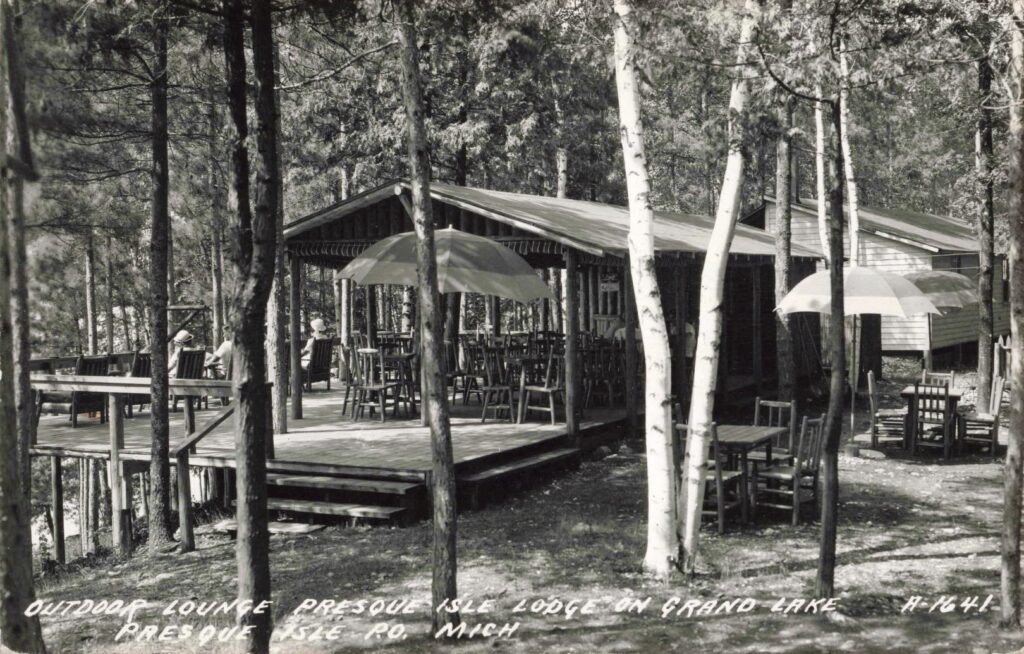
Those early pieces became part of Habitant Shops. The work later moved toward larger-scale production, but the lodge retained a major collection of the earliest handmade furniture. This is a unique part of the Grand Lake history near Presque Isle, Michigan. The hotel did not merely display northern lodge style. It helped create and market it.
Presque Isle Lodge was added to the National Register of Historic Places on Feb. 1, 2008.
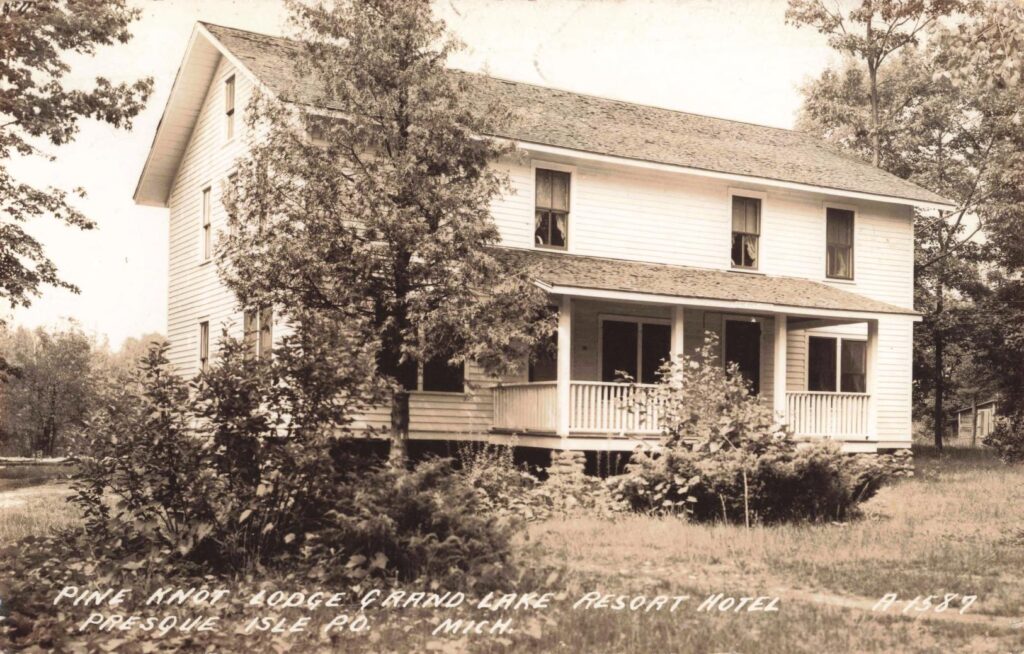
The Unexpected Drilling Derrick
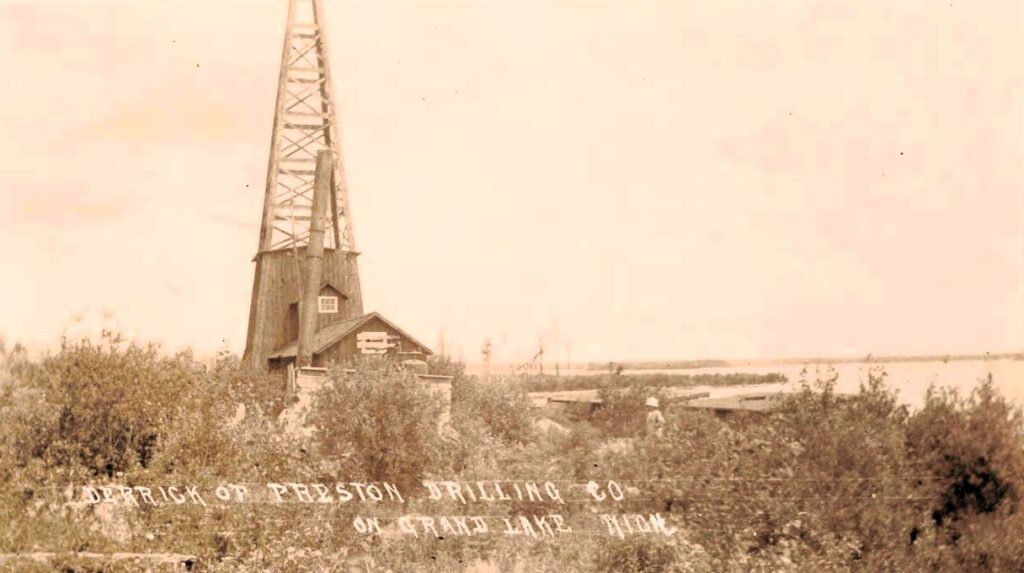
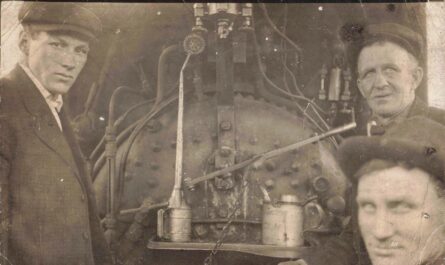
One attached card records a Preston Drilling Company derrick near Grand Lake. The exact outcome of that drilling effort is unclear, and the image does not prove that a productive oil field was established.
Its importance comes from the contrast.
Hotels were promoting clean water, fishing, and wooded isolation while investors were still testing the ground for commercial resources. Tourism did not replace the old economy overnight. The two uses briefly occupied the same area.
Roads Made Remoteness Profitable
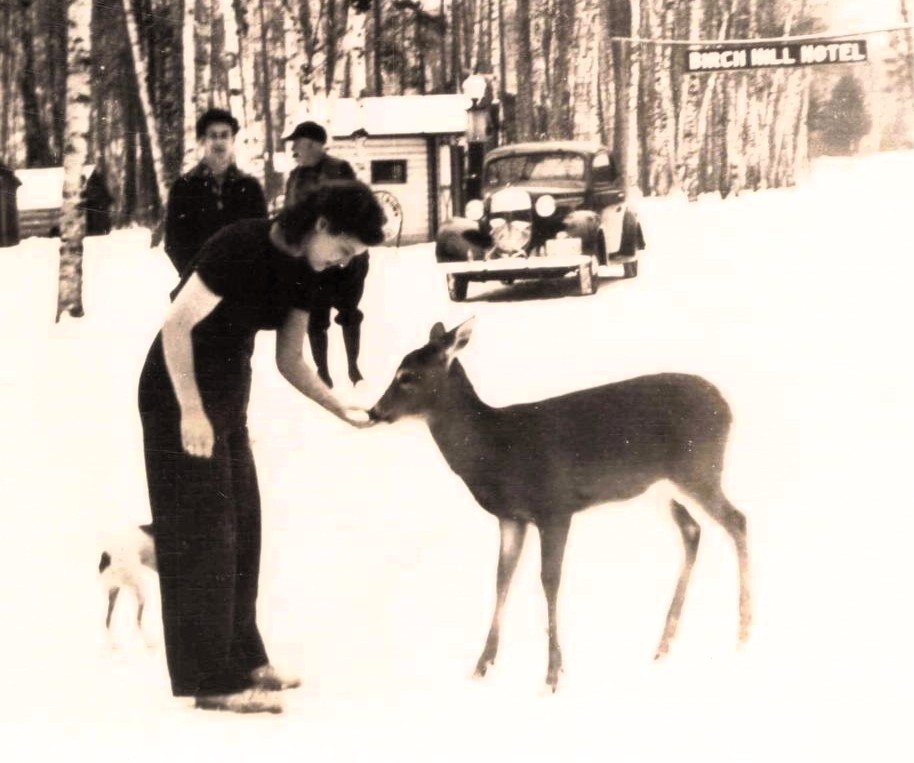
The strongest force behind Grand Lake tourism may have been the automobile.
Construction of the road that became U.S. 23 improved access during the 1910s. Families could travel with luggage and fishing equipment without depending on a lake steamer.
The change produced a surprising result. Better roads did not reduce Grand Lake’s feeling of isolation. They made that isolation marketable.
Visitors could drive into the woods, park beside a lodge and spend a week centered on meals, boating and the waterfront. At Fireside Inn, a dinner bell eventually became part of the routine. It could be heard across the lake, calling boaters back to shore.
Why Grand Lake’s Resort History Is Important
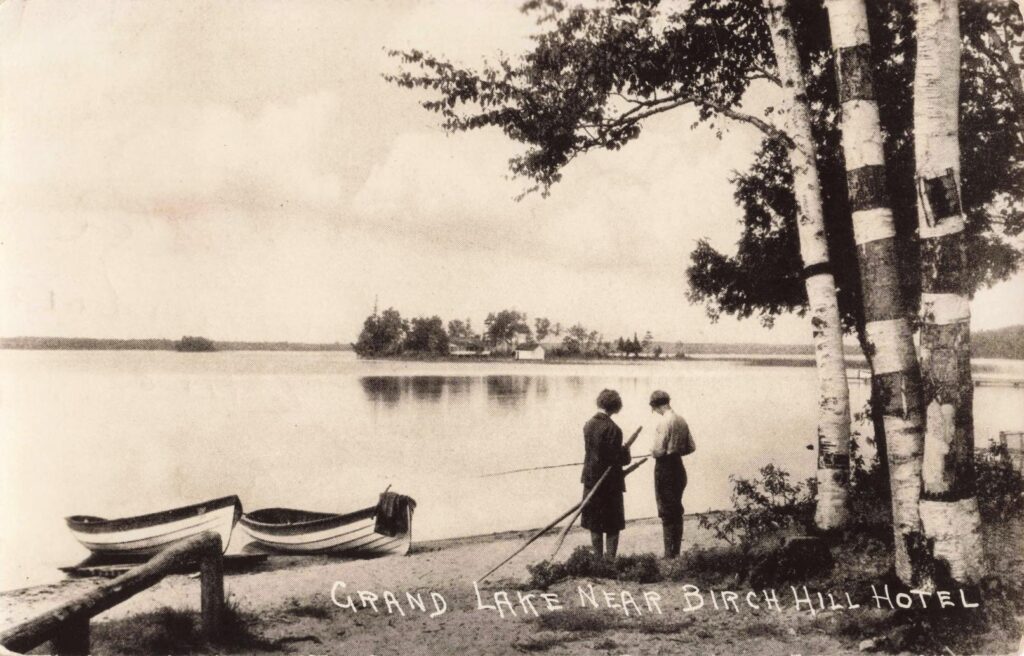
The Grand Lake history near Presque Isle, Michigan, shows how Northeast Michigan adjusted after the lumber era.
The shore was no longer judged only by the timber that could be cut. Its quiet bays, islands and wooded roads became valuable in their own right. Hotels created a seasonal community based on repeat visitors, shared meals, and time outdoors.
Some early buildings were removed or divided into private residences. Others remained in use. Fireside Inn and Presque Isle Lodge carried much of the early resort character into later years.
Grand Lake’s great historical shift was simple. The region moved from selling what could be taken from the shore to selling the experience of staying there.
Works Cited For Grand Lake History