 by
by 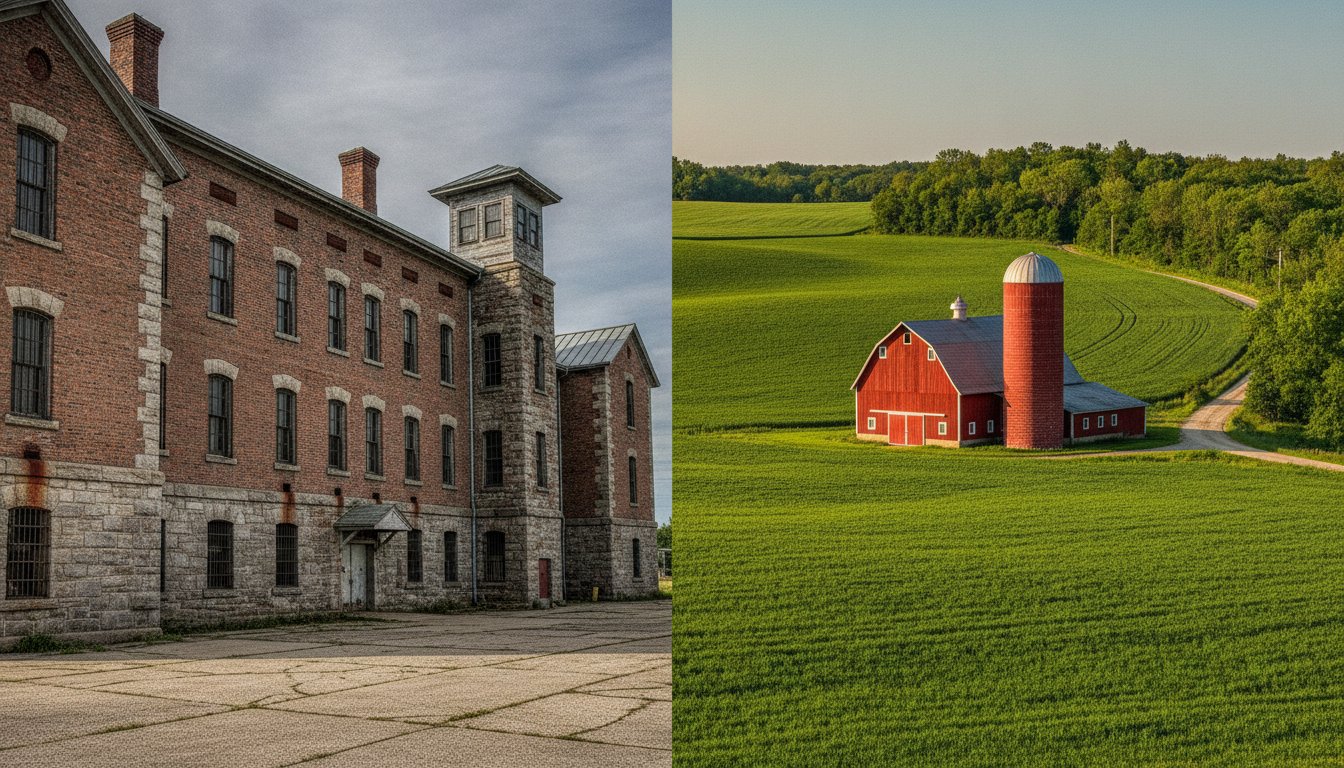
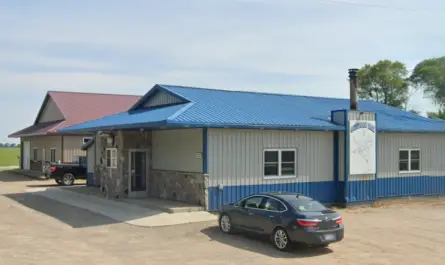
If you search a Michigan road map for the prison-heavy landscape of Kingstown, Michigan, you will likely end up in a quiet farming community in Tuscola County that looks nothing like the television show. The gritty world of the McLusky family exists in a fictional composite, yet many viewers still travel to the Thumb expecting to see the towering walls of a maximum-security penitentiary. It’s a common point of confusion for fans of the Paramount+ series who mistake the fictional Kingstown for the real village of Kingston.
You likely recognize the bleak, industrial atmosphere that defines the series, but finding that specific spot on a map is more complicated than a simple GPS search. This article clarifies the geography behind the drama by separating the fictional setting from the actual village of Kingston. We will look at the real Michigan prison towns that provided the show’s DNA and identify the specific filming locations used to bring the series to life.
Key Takeaways
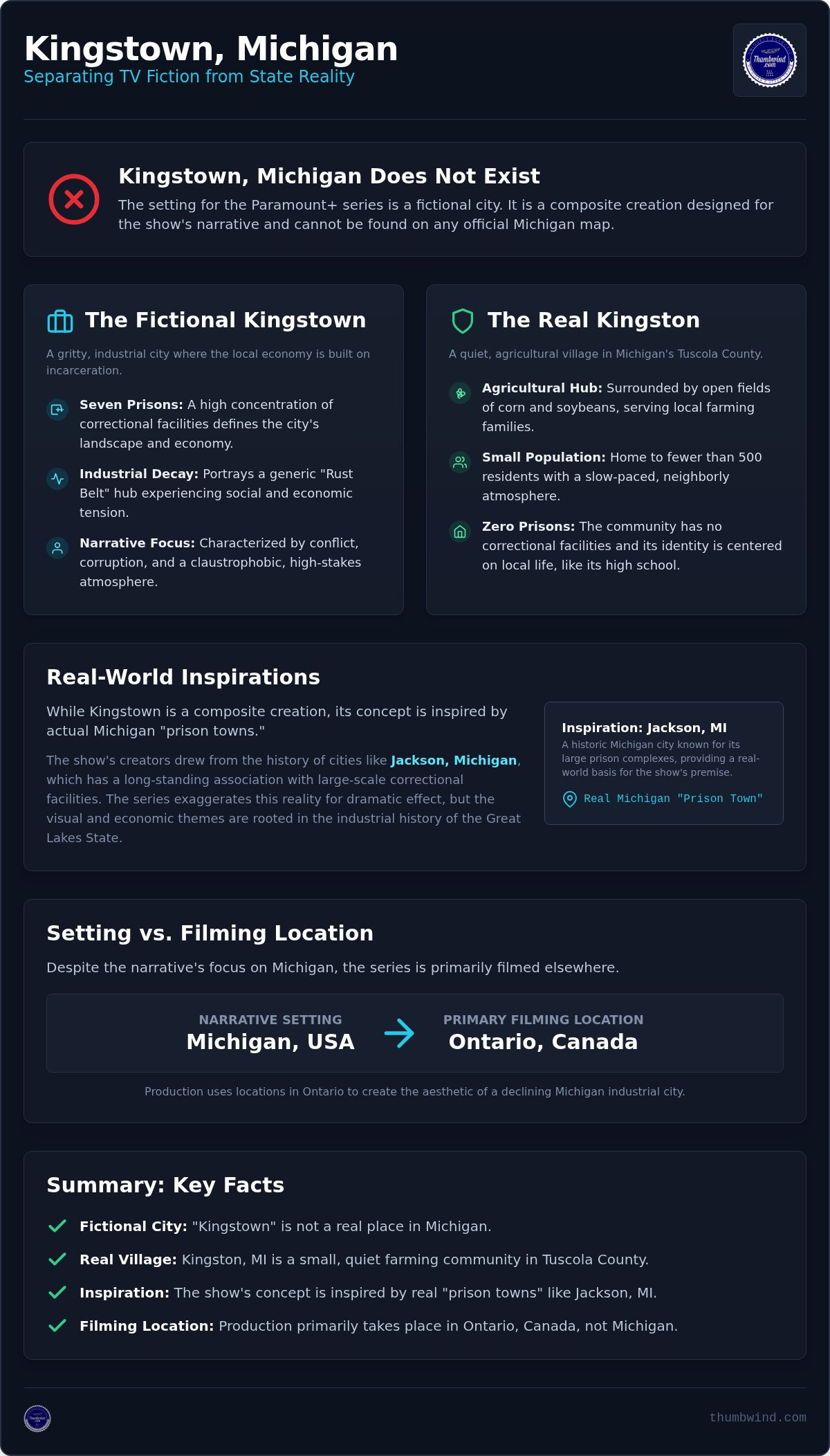
- Confirm that kingstown michigan is a fictional city created for television and does not exist as a physical municipality in the state.
- Distinguish the show’s gritty atmosphere from the actual village of Kingston, a quiet agricultural community in Tuscola County.
- Identify the real Michigan “prison towns,” such as Jackson, that provided the historical and industrial inspiration for the series.
- Understand why the production films primarily in Ontario, Canada, despite the show’s narrative focus on the Great Lakes State.
The Myth of Kingstown: Is the Mayor of Kingstown City Real?
On any official Michigan road map, the prison-heavy landscape of kingstown michigan is conspicuously absent. The city is a fictional creation of Taylor Sheridan and Hugh Dillon for the Paramount+ series, designed to serve as a dark reflection of industrial decline. Within this narrative world, the city houses seven prisons within a small radius, creating a local economy built entirely on incarceration. This concept mirrors the struggles of some real-world industrial centers while exaggerating the scale for dramatic effect to provide a claustrophobic, high-stakes setting.
While the show presents a convincing portrait of urban decay, no such municipality exists in the state’s records. The creators designed Kingstown to represent a generic “Rust Belt” hub, focusing on the social and economic tensions found in cities left behind by the decline of manufacturing. There’s no Mayor McLusky in real Michigan history, and the specific geography shown on screen is a carefully crafted illusion rather than a physical destination you can visit.
Fictional Geography vs. State Reality
Across the state’s storied industrial landscape, the show’s creators found the visual inspiration they needed for their gritty aesthetic. Michigan was likely chosen as the backdrop because of its historical association with large-scale industrial and correctional facilities. However, the layout of the fictional city doesn’t correspond to any specific Michigan municipality. While the series captures the texture of older cities, including their brick architecture and weathered industrial sites, the search for the real kingstown michigan usually ends in the realization that it’s a narrative tool rather than a real place.
Why the Confusion Persists
In the digital age, the phonetic similarity between the fictional city and a real village often fuels public confusion. Many fans turn to social media or fan wikis that treat the show’s setting as a real geographic location, leading to travel inquiries and misplaced expectations. This phenomenon is a classic example of how modern storytelling can create Michigan Moments where regional folklore and television fiction become entangled. For residents of the actual Thumb region, correcting these misconceptions has become a routine task as they explain the difference between the televised myth and the grounded reality of their local geography.
Kingston, Michigan: The Real Village in Tuscola County
Located at the intersection of M-46 and Kingston Road, the real village of Kingston sits firmly within the agricultural heart of Tuscola County. This community serves as a vital hub for local farming families, offering a landscape of open fields and quiet residential streets. It stands in stark opposition to the chaotic, prison-centric world of kingstown michigan seen on television. While the fictional city thrives on conflict and concrete, the real village remains a testament to the Thumb’s enduring rural character. Drivers traveling through this part of the state often find themselves surrounded by vast acres of corn and soybeans, a far cry from the urban decay portrayed on screen.
A Brief History of Kingston
The village officially incorporated in 1893, growing out of the region’s early lumber and railroad industries. During its formative years, the community functioned as a critical stop for moving timber and goods through the Thumb. You can see how the region’s footprint began to take shape by examining this 1837 Michigan map, which predates the village’s official founding. Historic landmarks like the Kingston State Bank building still reflect the sturdy architecture of that era, reminding residents of the village’s roots in regional trade and civic stability. The town’s early growth was mirrored by many other small settlements that relied on the rail lines to connect them to larger markets in Saginaw or Detroit.
Life in the Real Kingston Today
Today, Kingston is home to fewer than 500 residents who value a slow-paced, neighborly atmosphere. The community’s identity centers on local institutions like the Kingston High School Cardinals rather than the sprawling correctional facilities depicted in the media. There are no prisons here, nor are there the high-rise industrial complexes seen in the show. The local economy revolves around the seasonal rhythms of planting and harvest. If you’re interested in exploring other authentic areas of the state, you might enjoy our guide to Michigan roadside attractions. Life in this corner of Tuscola County remains grounded in tradition, far removed from the sensationalized drama of the fictional kingstown michigan.
Real-World Inspirations: Michigan’s Actual Prison Towns
While the kingstown michigan of television is a composite creation, the concept of a community built around high-security walls is a historical reality for several Michigan cities. The show’s portrayal of a local economy dependent on the penal system isn’t entirely far-fetched. In the real world, the prison-industrial complex has shaped the growth and identity of specific regions in the state for over a century. These cities often face the same social and economic tensions depicted in the series, where the line between the facility and the surrounding neighborhood becomes blurred by shared industry and state payrolls.
For those who find themselves on the wrong side of that line, navigating the state’s rigorous justice system requires a dedicated legal team like the Law Office of Kevin Bessant & Associates, which specializes in defending serious felony and misdemeanor charges.
Jackson: The Original Prison City
Jackson stands as the most prominent example of a Michigan city defined by its correctional history. The Michigan State Penitentiary opened there in 1838, eventually growing into what was once the largest walled prison in the world. For generations, Jackson functioned as a company town for the Department of Corrections. This early focus on the penal system is recognized as one of the 45 significant events in Michigan history that established the state’s legal and industrial infrastructure. Today, the city remains a central hub for state corrections, though its economy has diversified far beyond the prison gates.
Ionia and the Concentration of Facilities
Ionia is another city where multiple facilities dominate the local landscape. It hosts several state institutions, including the Michigan Reformatory, which has operated since the late 19th century. In communities like Ionia, the correctional system provides stable employment that can sustain a city when other manufacturing jobs disappear. This economic dependence is a central theme in the fictional kingstown michigan, reflecting the difficult choices local leaders make when their primary industry is incarceration. These prison hubs sit in central and western Michigan, hundreds of miles away from the quiet agricultural fields of the real Kingston in Tuscola County.
Understanding the deep roots of industry and civic life in the Great Lakes State helps separate televised drama from documented records. You can watch our Michigan history videos to see the real stories behind the state’s development.
Filming Locations and the Search for Kingstown
While the script places the high-stakes action in kingstown michigan, the production cameras rarely crossed the state line. During the show’s first season, the crew utilized the historic, limestone architecture of Kingston, Ontario. This choice was practical; the city is home to the Kingston Penitentiary, a now-closed facility that provided the necessary scale for the show’s prison scenes. The phonetic overlap between Kingston, Ontario, and the fictional Michigan setting is the primary reason many viewers remain convinced the town is a real place they can visit on a weekend drive.
For later seasons, the production moved to Pittsburgh and Erie, Pennsylvania. These cities offer the specific “steel-town” grit and weathered industrial buildings that represent the struggling Midwestern aesthetic. The “Kingstown” skyline you see on screen is often a digital composite of several different cities, layered with smoke and gray filters to create a sense of perpetual gloom. This creative layering successfully mimics the texture of Michigan’s industrial corridors without actually using them as a primary filming site.
Why Michigan Wasn’t Used for Filming
The decision to film outside of Michigan usually comes down to financial incentives and existing infrastructure. Ontario and Pennsylvania currently offer more competitive film tax credits than Michigan, making them more attractive for multi-million dollar television budgets. Production teams can easily recreate the Michigan look by scouting locations in Pittsburgh that feature similar brick warehouses and aging factory sites. While the story is rooted in the Great Lakes State, the physical reality of the show is a patchwork of locations across North America chosen for their budget-friendly benefits and visual drama.
Visiting the Real Michigan Locations
If you want to see the authentic architecture that inspired the show’s aesthetic, you don’t have to look far in the Thumb region. You can visit landmarks like the Michigan Central Railroad Depot in Vassar, which sits just a short drive from the real village of Kingston. This site offers a genuine look at the state’s rail history and industrial roots. For those who want to see what the actual landscape of Tuscola County looks like today, we recommend checking our live regional webcams. These views show a quiet, agricultural world that stands in stark contrast to the fictionalized version of kingstown michigan presented on your television screen.
Exploring the True Story Behind the Screen
Television often takes liberties with geography to serve a dramatic narrative. While the fictional world of kingstown michigan captures a specific type of industrial struggle, it doesn’t reflect the daily life of the actual residents in Tuscola County. The real village of Kingston remains a quiet farming community, far removed from the high-security walls and urban conflict seen on the screen. Understanding these differences preserves the local heritage of our small towns while acknowledging the real history of Michigan’s actual industrial hubs.
Since 2009, Thumbwind has served as an independent digital media outlet dedicated to Michigan regional tourism and history. We provide a grounded perspective on the events and places that shape our state, ensuring that local heritage isn’t lost to television myths. You can explore more Michigan history and regional news at Thumbwind to find the authentic stories that define the Great Lakes State. Take some time to look past the fictional scripts and see the real people and places that make our communities unique.
Frequently Asked Questions
Is Kingstown, Michigan a real place you can visit?
No, the city of Kingstown is a fictional creation and does not exist as a physical municipality in the state. While the show uses the Great Lakes State as its primary setting, the city is a narrative invention designed to represent a generic industrial hub. You won’t find it in the Thumb or any other region on an official state map.
Where is the TV show Mayor of Kingstown actually filmed?
The production team filmed the first season primarily in Kingston, Ontario, using its historic penitentiary for authentic visuals. For later seasons, the show moved production to Pittsburgh and Erie, Pennsylvania. These locations provide the gritty, industrial architecture that creators need to simulate a struggling Midwestern environment without filming in Michigan itself.
What is the real population of Kingston, Michigan?
The real village of Kingston in Tuscola County has a population of approximately 411 residents according to the 2020 census. This small, agricultural community is far smaller than the sprawling urban center depicted in the fictional world of kingstown michigan. Its identity is rooted in local farming rather than the large-scale correctional industry shown on television.
Which Michigan city has the most prisons?
Ionia is generally considered the state’s central prison hub because it houses several major correctional facilities within its city limits. These include the Ionia Correctional Facility, the Michigan Reformatory, and the Bellamy Creek Correctional Facility. While Jackson has a longer history with the penal system, Ionia maintains a high concentration of active institutions that dominate the local economy.
Is the prison in Mayor of Kingstown a real working prison?
The primary prison used in the first season is the Kingston Penitentiary in Ontario, which closed in 2013 and now serves as a museum. It’s not a working prison today, though it remains open for public tours. Production in later seasons used various industrial sites and sets to mimic the interior of a maximum-security facility without using an active correctional center.
Why did the creators of Mayor of Kingstown choose Michigan as a setting?
Creators Taylor Sheridan and Hugh Dillon chose the state because its history of industrial decline and real-world prison towns provided a perfect backdrop for the show’s themes. The “Rust Belt” aesthetic found in many Michigan cities offers a visual language of weathered brick and aging factories. This environment helps ground the fictional kingstown michigan in a recognizable, though exaggerated, reality.
Disclaimer
Information published on Thumbwind.com is provided for general informational purposes. While we make reasonable efforts to keep articles accurate and current, details such as prices, hours, regulations, access conditions, and other information may change without notice. Readers should verify important details with the appropriate business, agency or official source before making travel, financial or other decisions. Thumbwind.com is not responsible for the content, availability or practices of third-party websites linked from our articles.