 by
by 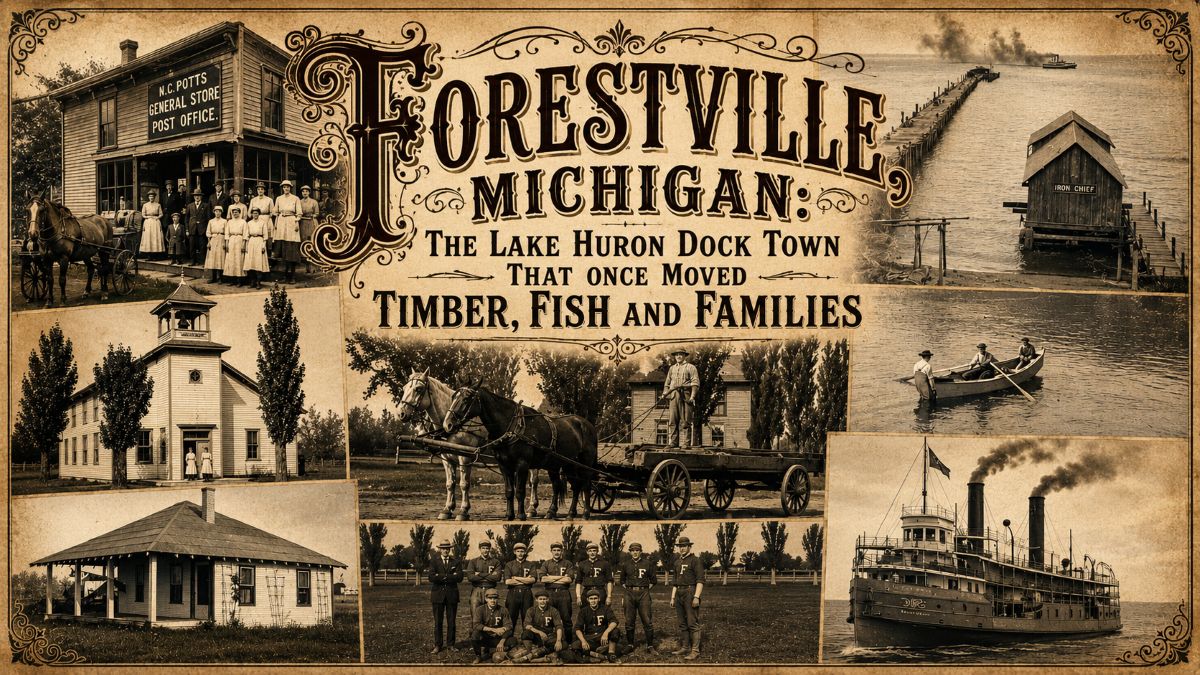
The History of Forestville, Michigan, is the story of a once-busy Lake Huron port that rose from the timber trade before fading into a quiet village. Historic photographs and postcards preserve scenes of long docks stretching into the lake, sawmills, general stores, ships loading lumber, and residents who built a community along Michigan’s eastern shoreline. This collection looks back at Forestville’s growth from the late 1800s through the early 1900s, highlighting the businesses, people, and events that shaped the village and the forces that changed it. Whether you have family ties to the area or simply enjoy Michigan history, these images provide a window into a community that played an important role in the Thumb’s early development.
A Small Village Built on Timber and Water
Forestville, Michigan, began as a Lake Huron shore settlement shaped by timber, shipping and the demands of frontier trade.
The village traces its early settlement to Alva Kelley, who bought land in the area in 1853. Captain E.B. Ward built the first sawmill in 1854. Forestville’s name came from the heavily wooded country around it. By 1895, the village was formally incorporated.
That early story followed a familiar Thumb pattern. Dense timber drew mill operators. Lake Huron offered a route to market. Once the timber was cut, farms, stores, churches, and schools followed. Forestville was never a large place, but in the 1860s, it had the pieces of a working village.
An 1863 state gazetteer described Forestville as a post village in Sanilac County, located on Lake Huron, 27 miles north of Lexington. At the time, it had a Methodist church, three general stores, a hotel, a steam sawmill, a school, and about 300 residents.
The Dock Was Forestville’s Front Door
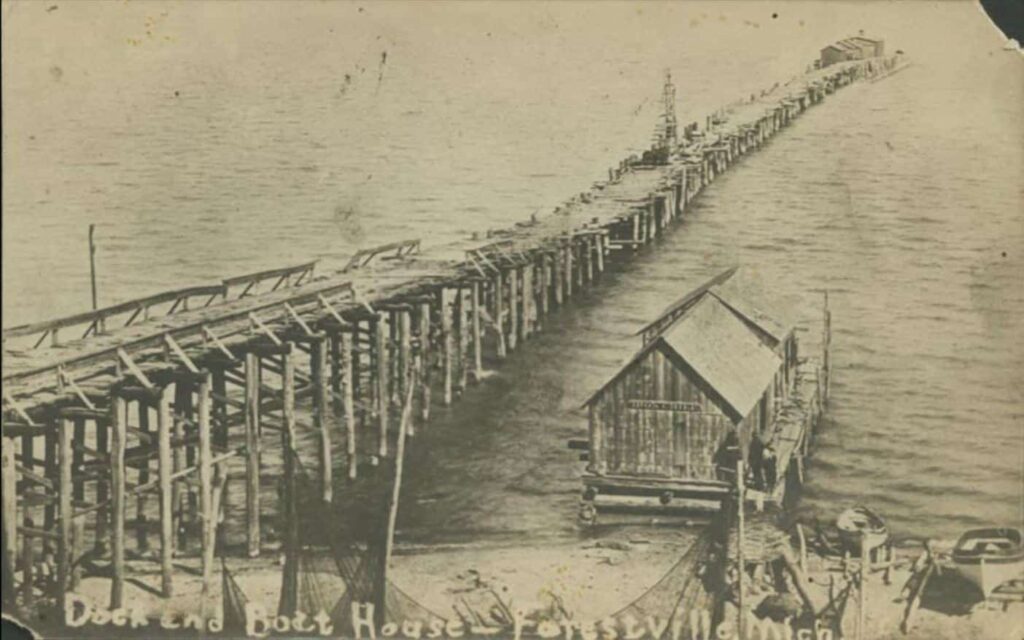
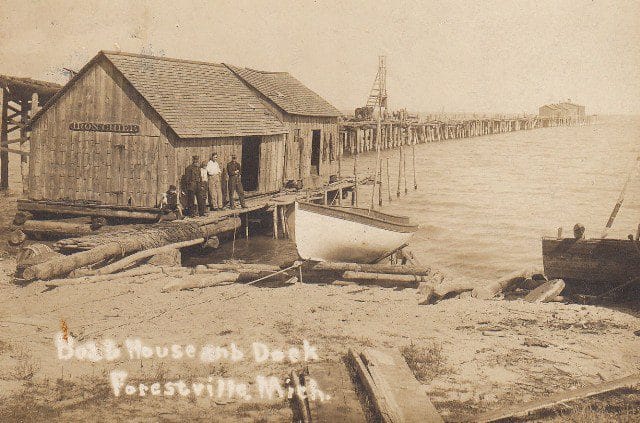
Forestville’s most important structure was not a courthouse, factory, or rail depot. It was the dock. The dock was also a mooring and maintenance spot for the freighter The Iron Chief, which sank in Lake Huron in 1904.
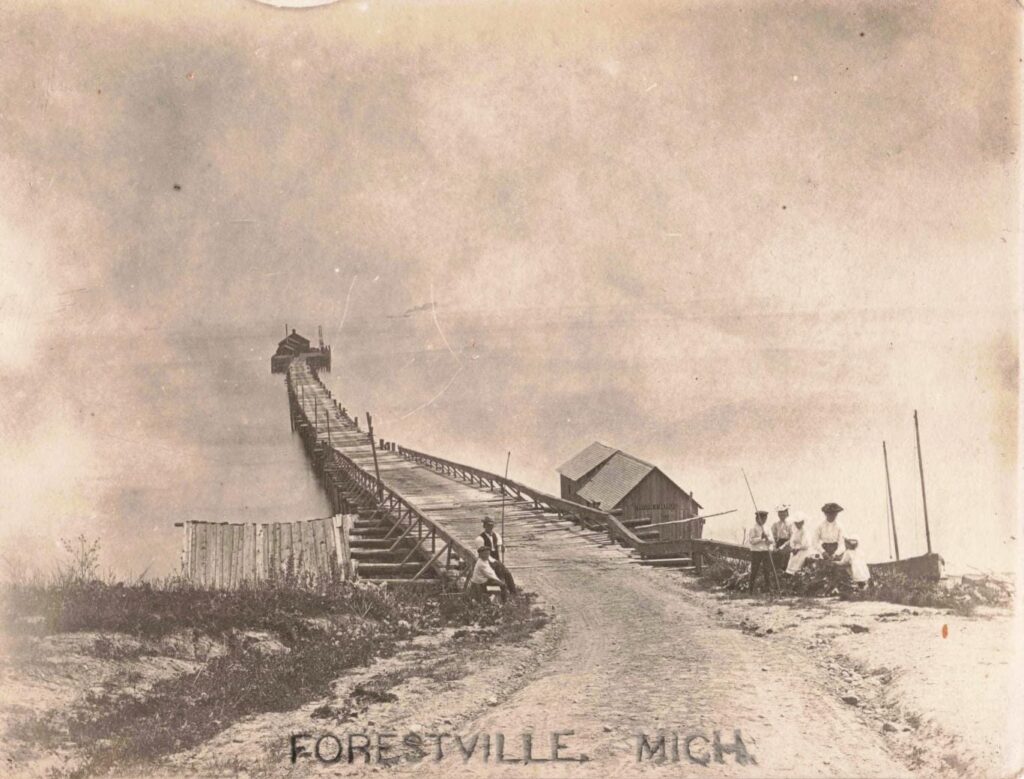
The long wooden pier pushed out into Lake Huron because the nearshore water was too shallow for larger vessels. Wagons, workers, and passengers could move goods and supplies out to steamers that could not safely come close to shore.
In the lumber era, the dock helped move timber, shingles, posts, fuel wood and farm goods. It also brought in supplies, mail and visitors. A dock town lived by arrivals and departures. When a boat came in, people went down to watch.
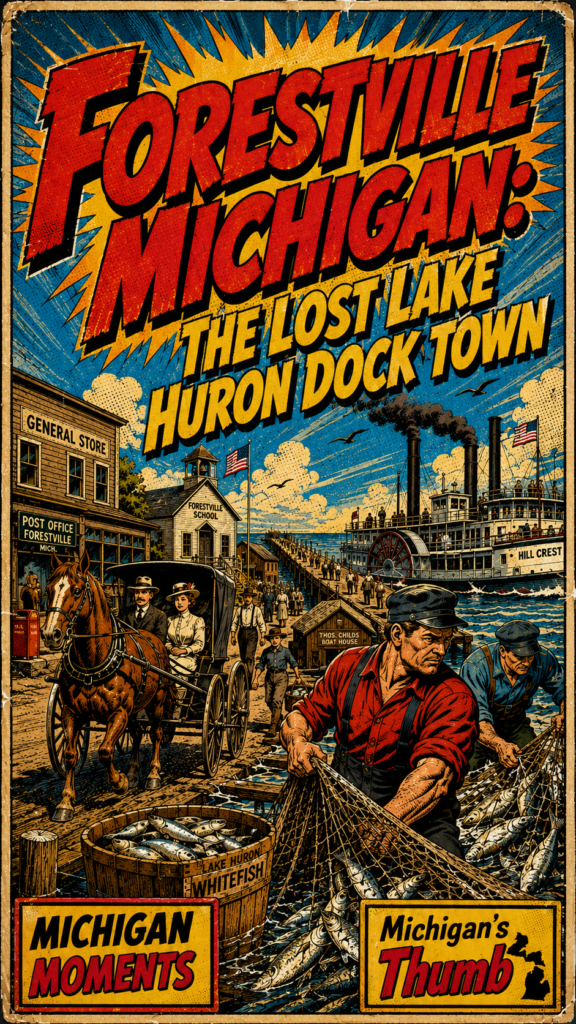
This Michigan Moments short looks at Forestville as one of Lake Huron’s former dock towns.
The dock also served a social role. It was a fishing pier, a waiting place and a lookout. Children, travelers and working men all used the same planked path over the water.
Storms, Ice and the Cost of a Lake Huron Landing
A wooden dock on Lake Huron was never safe from damage. Storms, ice and shifting water battered the structure. Local histories describe repeated damage to the Forestville docks in the 19th century. A major storm in 1885 reportedly swept away much of the dock system.
That loss mattered. A dock gave a shore town access to trade. Without it, freight had to move by slower or costlier routes. For Forestville, the decline of the dock marked the start of a long shift from busy lake port to small rural village.
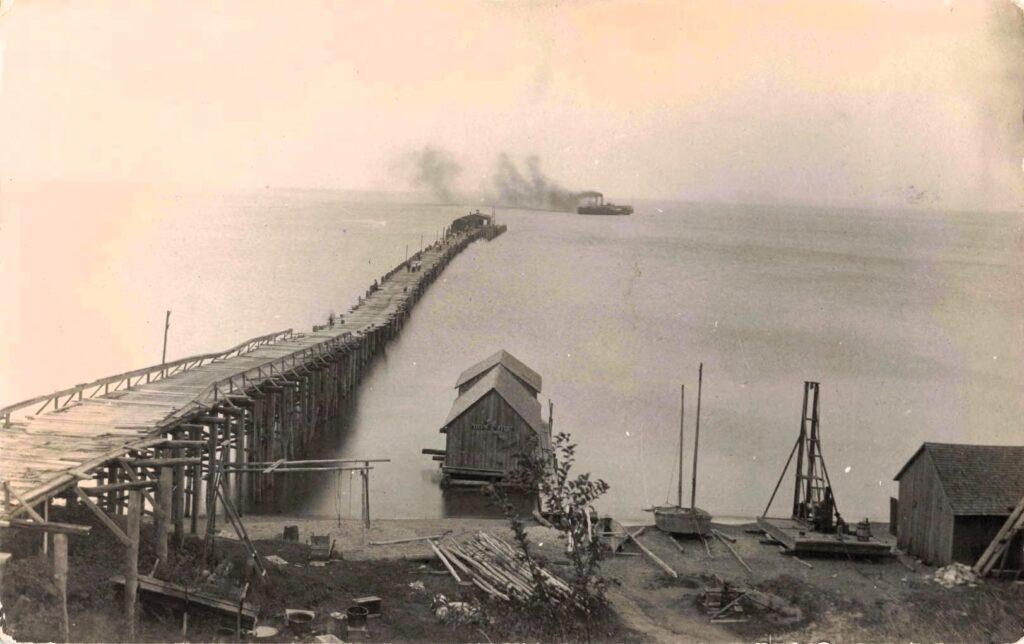
But a dock on an exposed Great Lakes shoreline was never secure. The same Library of Congress-linked Forestville history preserves the blunt local memory that the storm of 1885 “swept away the dock,” and “without a dock Forestville was nothing.” Another summary of the same dock history says winter gales in 1885 carried away most of both docks, and only the north dock was fully rebuilt. Whether one calls that line harsh or honest, it explains the town’s later trajectory better than a page of statistics could. Forestville could survive a lot. It could not easily replace the loss of its lake outlet.
Fire Rewrote the Thumb
Forestville’s history also sits inside the wider fire history of Michigan’s Thumb.
The Great Michigan Fire of 1871 burned across wide sections of the state, including the Thumb. Ten years later, the 1881 Thumb Fire burned more than 1 million acres across Sanilac, Huron, Tuscola and Lapeer counties. It killed hundreds, destroyed homes and barns, and left thousands needing aid.
Forestville’s location on Lake Huron gave residents one advantage in fire country: water. But that did not make life safe. Fires in cutover timber regions moved fast because logging left dry branches, stumps and waste wood behind. Drought and wind turned that material into fuel.
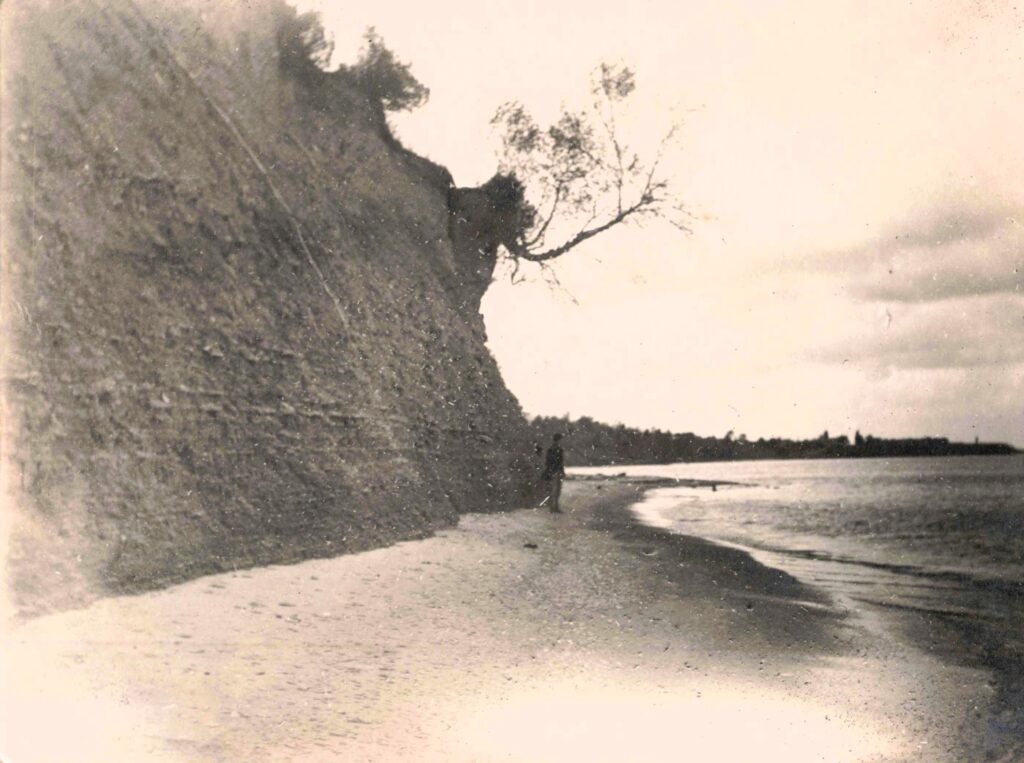
The fires changed the Thumb. They pushed communities to rebuild, reorganize and rethink settlement on land stripped by logging. In Forestville, the fires were part of a broader cycle: build, burn, rebuild, then adapt as the timber economy faded.
Stores, Mail and Village Life
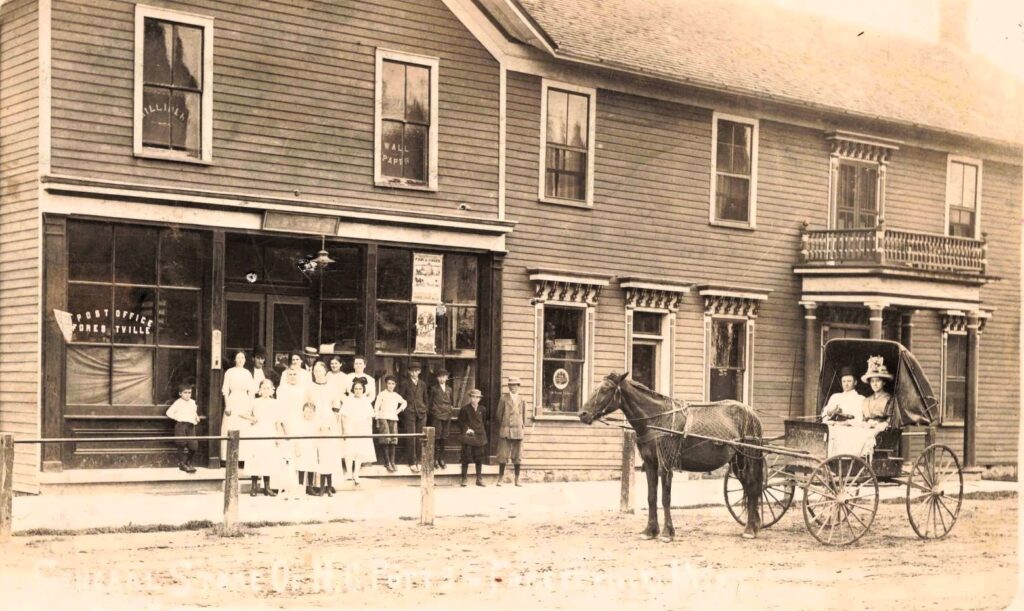
The best street photo in the set shows the N.C. Potts general store and post office. It is more than a storefront. It is a civic portrait.
Women and children stand outside. Men linger near the entrance. A horse and carriage wait at the curb. The post office sign in the window signals Forestville’s connection to the outside world.
In a town this size, the general store did several jobs. It sold goods. It moved mail. It carried news. It gave farmers, fishermen and families a reason to come into town.
This video focuses on the Forestville post office and store scene, with details from the early 1900s postcard view.
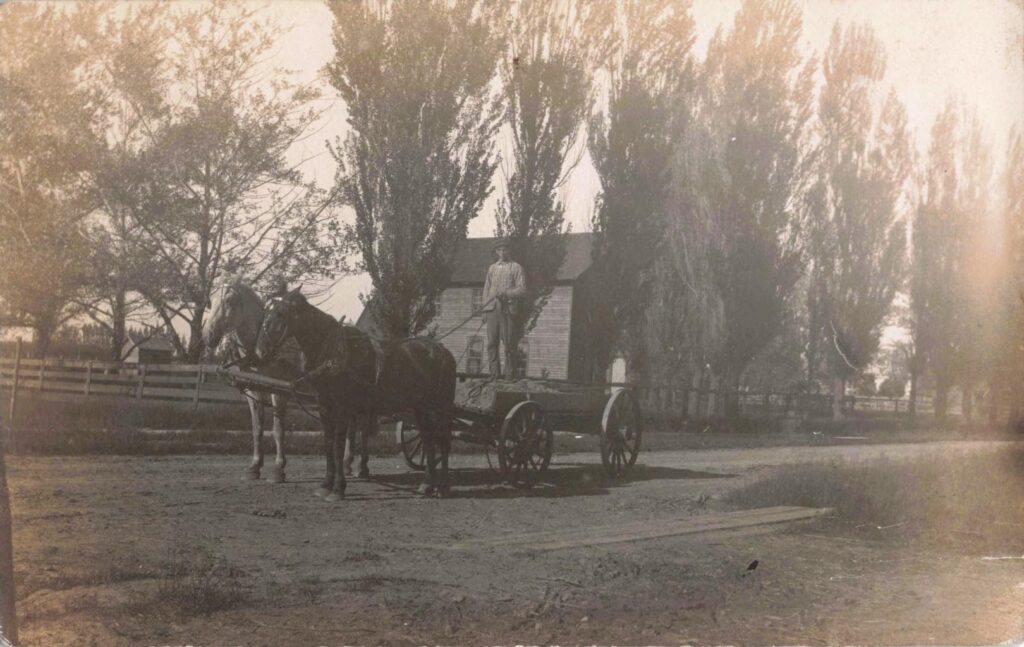
School Bells and Baseball Uniforms
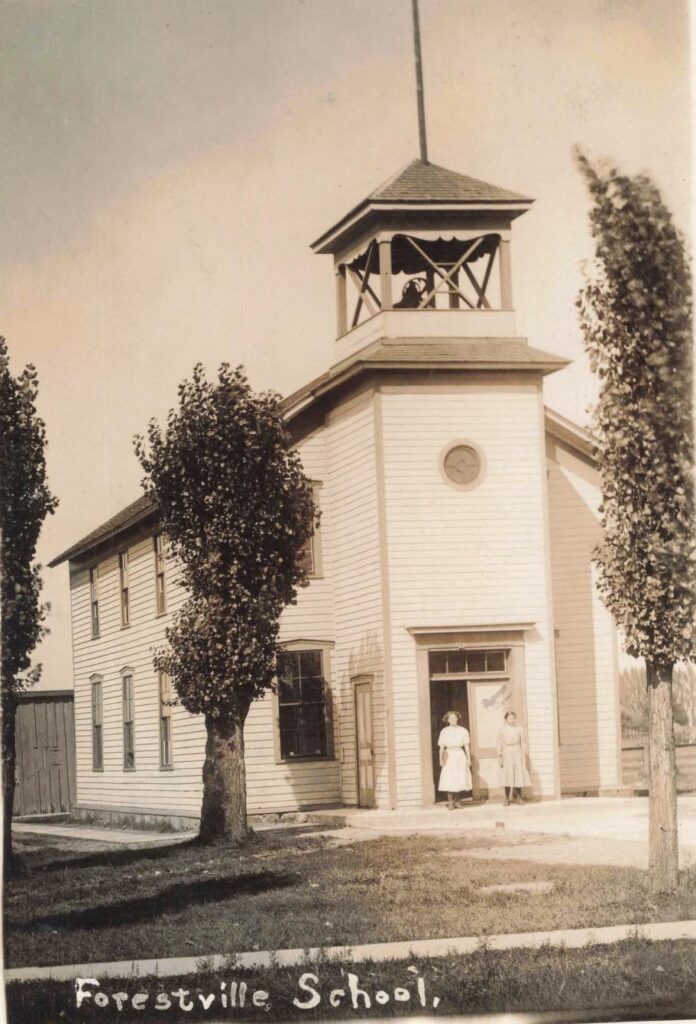
The school photo shows a two-story frame building with a bell tower. Two women stand near the entrance. The image is formal and calm, but the school would have been one of the busiest places in town.
Children from families tied to farming, fishing, stores and dock work passed through its doors. In small villages, the schoolhouse often served more than students. It could host programs, meetings and public events.
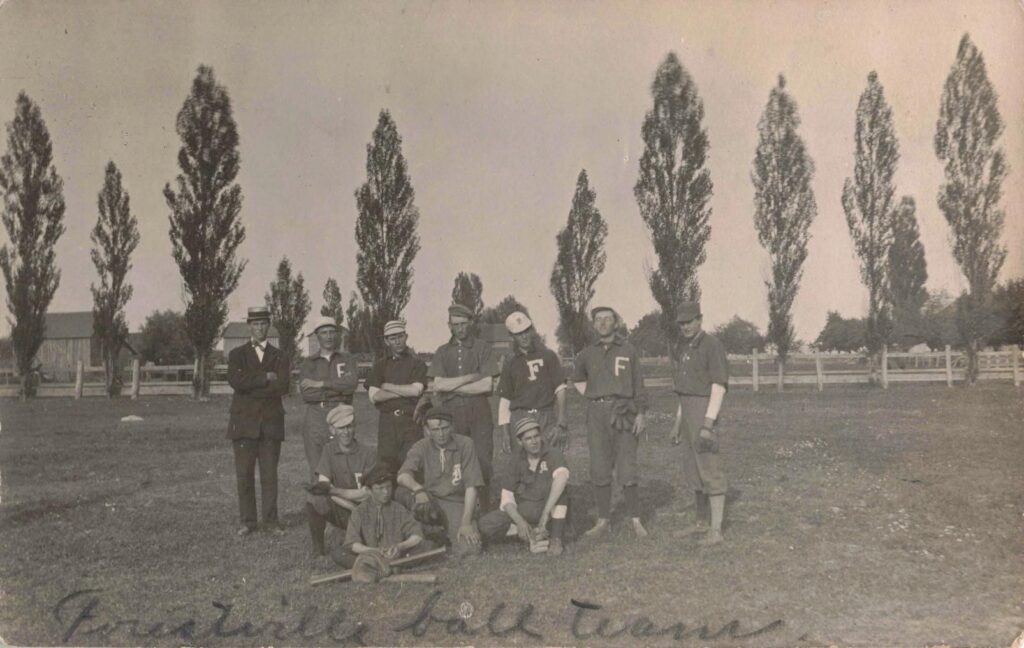
The baseball team photo gives Forestville another human face. The players stand with arms crossed. Their uniforms carry a large “F.” Some men look stern. Others look tired from a long day or a hard game.
Baseball mattered in towns like Forestville. It gave young men a stage. It gave families a gathering point. It gave neighboring villages a reason to compete without leaving the county.
Cottages, Fishing and the Shoreline
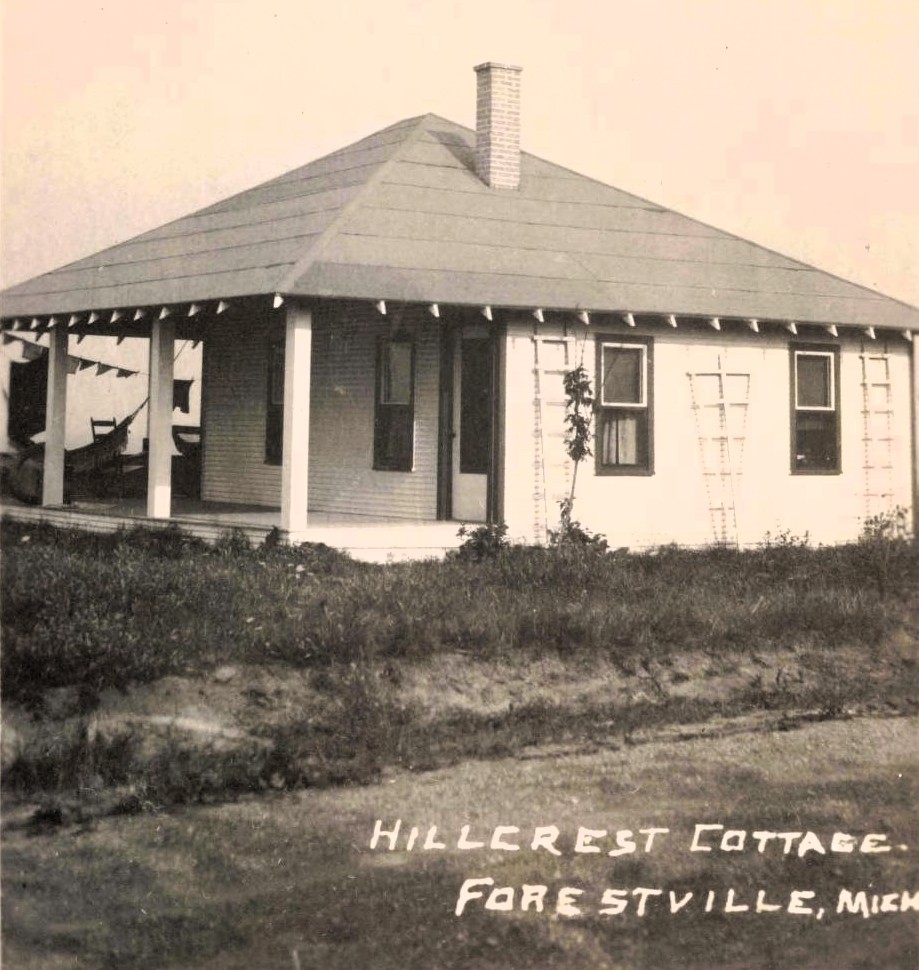
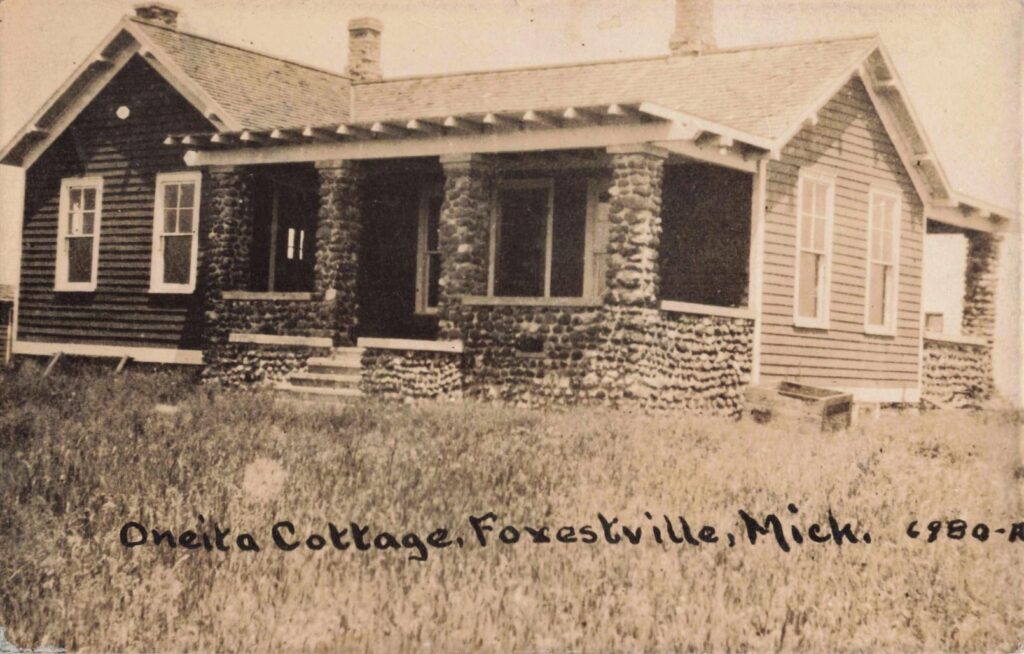
By the early 1900s, Forestville was not only a place of work. It was also a shoreline community. The Hillcrest Cottage postcard shows a modest but comfortable summer place with a broad roof, porch and open yard.
Cottage life became part of many Lake Huron towns after the lumber era weakened. Visitors wanted fresh air, lake views and time away from larger towns. Local residents could rent cottages, sell goods and guide visitors to fishing spots.
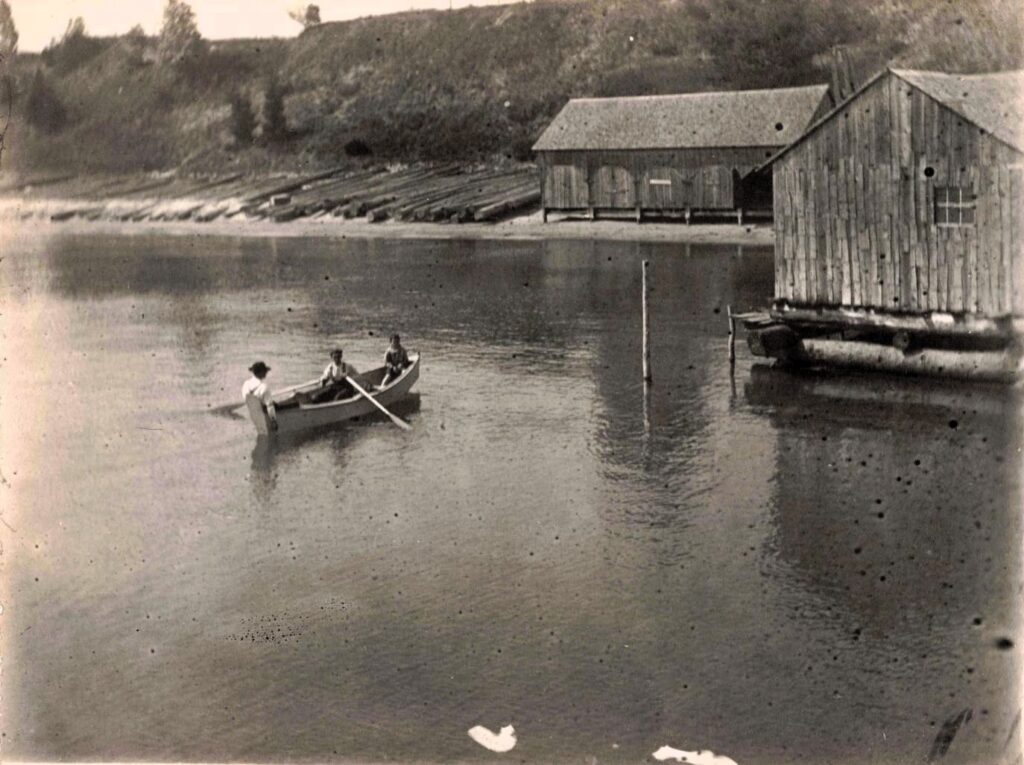
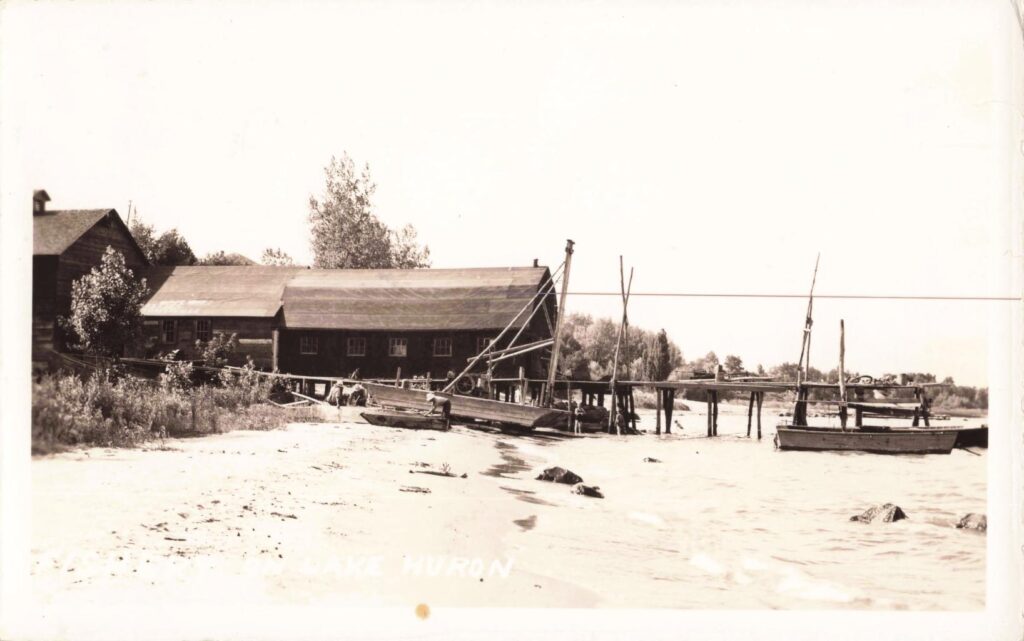
Fishing helped carry the village into the 20th century. Local fishermen worked nearshore waters for perch, whitefish and other Lake Huron species. Fish houses, small boats and shoreline sheds became part of the working waterfront.
The Auto Era Arrives
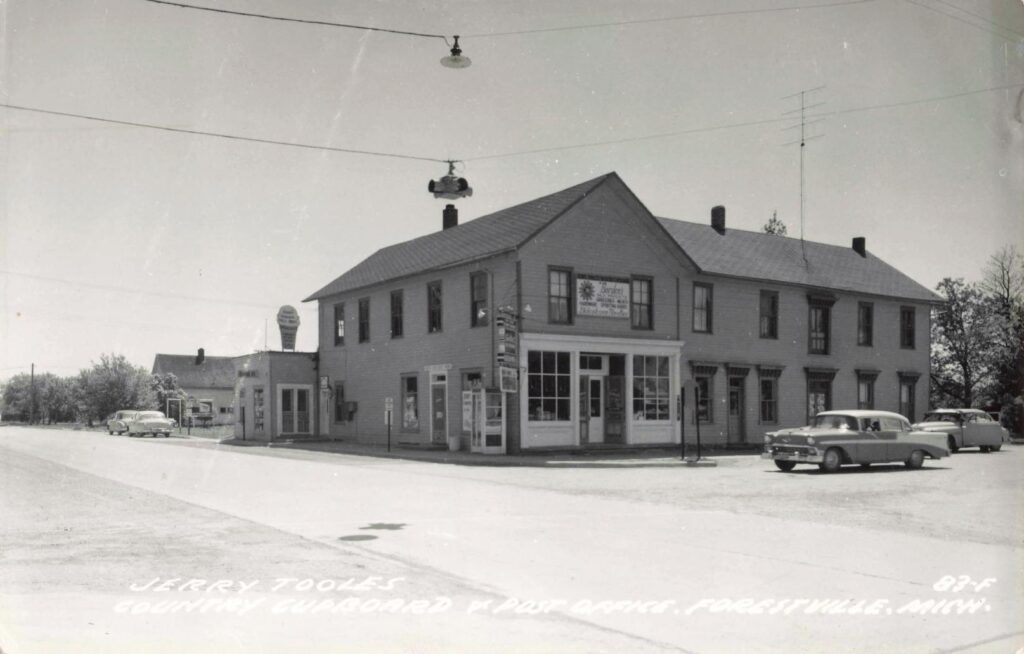
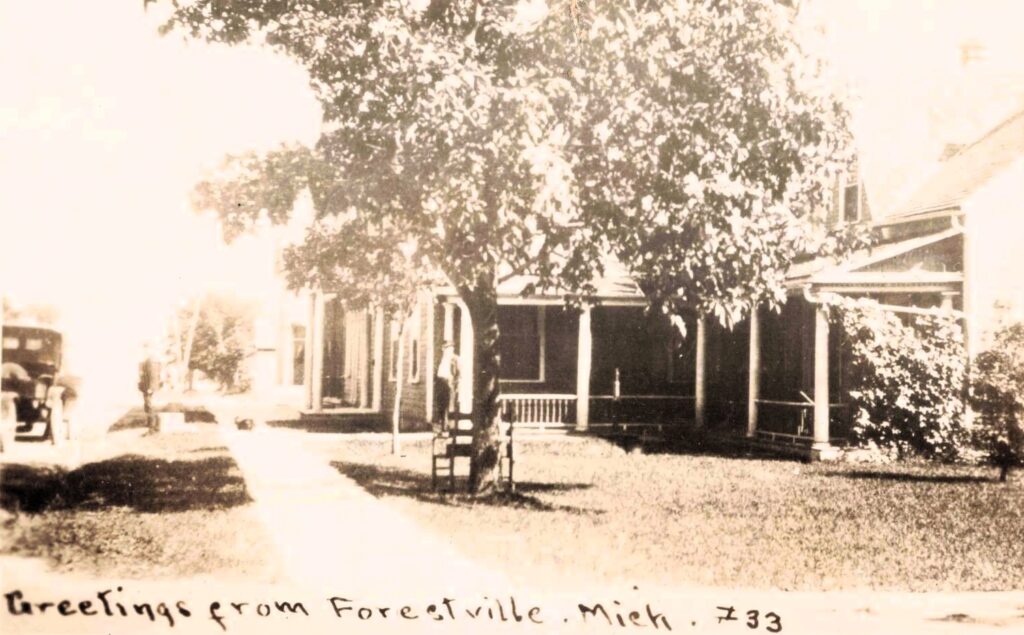
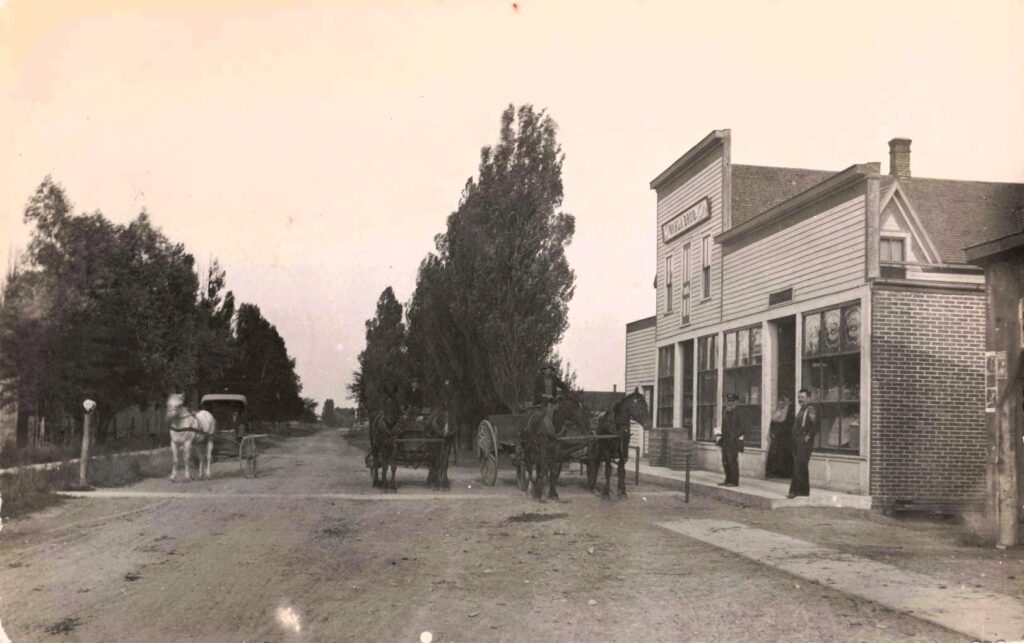
One image in the collection appears to fall after 1940 because of the automobiles shown on the street. It still belongs in the story as an epilogue.
The cars show what changed. The old dock economy had faded. Roads mattered more. Stores still served the village, but the traffic was no longer tied mainly to ships and wagons.
By 1940, A Smaller Village With A Long Memory
By the time Forestville reached 1940, it was no longer the kind of place the 1863 gazetteer had described with a mill, hotel, and three stores serving a population of 300. A Census Bureau table shows Forestville village had 156 people in 1940. That number matters because it captures what the photos suggest. The village did not vanish. It shrank into a quieter shore settlement shaped by farming, local trade, and lake life after the big lumber-and-dock era had passed.
Still, the village remained.
That is what makes these photographs valuable. They show Forestville before it was reduced to a small dot on M-25. They show the dock that made the town useful, the store that held daily life together, the school that trained its children, the baseball team that gave it pride, and the Lake Huron shore that kept drawing people back.
The history of Forestville, Michigan, is not about a town fading out; it is about change. A timber town became a dock town. A dock town became a fishing and farm village. A village built for shipping became a quiet Lake Huron community.
The photographs make the point better than any map. Forestville once had a working front door that stretched far into Lake Huron. For a time, the whole town seemed to stand on that dock.
Forestville, Michigan FAQs
Where is Forestville, Michigan?
Forestville is a small village in Sanilac County on the Lake Huron shore in Michigan’s Thumb. It is located within Delaware Township and sits along the M-25 corridor.
Why was Forestville important in the 1800s?
Forestville became important because of timber, sawmilling and lake shipping. Its long wooden dock allowed steamers and schooners to reach deeper water offshore, making the village useful for moving lumber, farm goods, mail and supplies.
What happened to the Forestville dock?
The dock was damaged many times by Lake Huron storms and ice. Local histories describe major storm damage in the late 1800s, including heavy losses in 1885. As the lumber trade declined and land transportation improved, the dock lost much of its original role.
What do the old Forestville photos show?
The photos show Forestville’s dock, boathouses, general store, post office, school, baseball team, cottages, shoreline and street life. Together, they show a small working village tied closely to Lake Huron.
Was Forestville affected by Michigan’s great fires?
Yes. Forestville was part of the Thumb region affected by major fire events in 1871 and 1881. These fires reshaped settlement, farming and rebuilding across Sanilac County and nearby counties.
Cited Sources for the History of Forestville Michigan
- “Village of Forestville.” Village of Forestville, Sanilac County, Michigan, accessed 28 June 2026.
- “Village of Forestville Parks and Recreation Master Plan 2022–2026.” Village of Forestville, 2022.
- “Village of Forestville Master Plan Draft.” Village of Forestville, 4 Aug. 2022.
- Clark, Charles F. “Michigan State Gazetteer and Business Directory for 1863–4.” Library of Congress, 1863.
- “Standard Atlas of Sanilac County, Michigan.” Geo. A. Ogle & Co., 1904. Internet Archive.
- “David V. Tinder Collection of Michigan Photography.” William L. Clements Library, University of Michigan, accessed 28 June 2026.
- “David V. Tinder Collection of Michigan Photography.” University of Michigan Library Digital Collections, accessed 28 June 2026.
- “The Huge Forestville Dock and the Iron Chief Boat House.” Michigan4You, 25 Apr. 2025.
- “Forest Fires in Michigan.” Michigan State University Department of Geography, accessed 28 June 2026.
- “Sixteenth Census of the United States: 1940, Population, Volume I.” United States Census Bureau, 1940.
- “Forestville MI Post Office & Store c.1910.” YouTube, Michigan Moments.
- “History of Forestville — Michigan’s Lost Dock Town.” YouTube Shorts, Michigan Moments.