 by
by 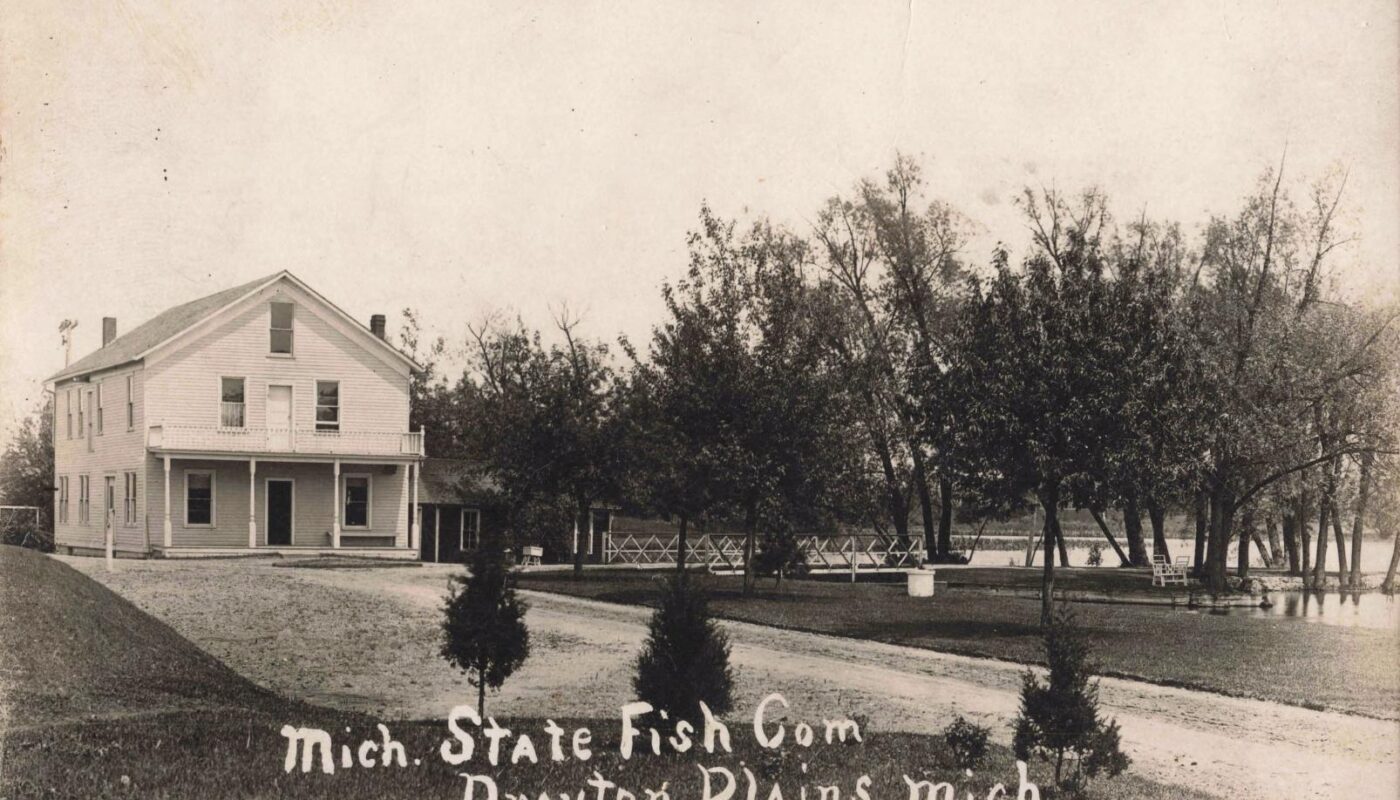
A 1918 postcard labeled “State Bass Ponds, Drayton Plains, Mich.” looks peaceful at first. A broad pond fills the frame. A low spillway cuts across the foreground. Two small figures stand on a wooden platform, while farm buildings and tidy paths sit beyond the water. This scene was part of the Drayton Plains Station in the early 1900s.
But this was not just a scenic pond in Oakland County. It was a fish factory.
A Hatchery in a Growing State
By the early 1900s, Michigan was learning a hard lesson: lakes and streams were not endless. Logging, dams, heavy fishing and changing land use had taken a toll on fish habitat. The Michigan Department of Natural Resources says the state began operating hatcheries in 1873, after fish numbers and habitat quality were already in trouble. Hatcheries became a key tool for raising fish and stocking public waters.
That’s when Drayton Plains became part of the hatchery system. Waterford Township says the Michigan Department of Natural Resources established an 82-acre fish hatchery on the site in 1904. The Waterford Historical Society’s walking tour gives a slightly different operating range, saying the Drayton Plains Fish Hatchery ran from 1901 to 1964. Rather than force those dates to agree, the safe reading is simple: by 1918, this was an established state fish hatchery site.
Managed Nature, Not Wilderness
The postcard gives away the system. The dam, pond edges and platform all point to controlled water. This was not a wild pond left alone. It was managed, measured and used.
A hatchery is where fish eggs are hatched and young fish are raised, mostly to stock lakes, streams and ponds, according to the Michigan DNR. Modern hatchery work still uses ponds, egg collection stations and transport systems to move fish where managers want them.
In Drayton Plains, that work tied a small Oakland County community to a statewide project. Fish did not simply appear in lakes. People moved water, handled young fish and made choices about which waters should be stocked.
The 1918 Moment
The year 1918 was not quiet. World War I was ending. The flu pandemic was spreading. Michigan towns were changing fast as cars, better roads and new public systems reshaped daily life.
Yet this postcard pauses on a different kind of public work: conservation by production. The old idea was practical and confident. If fish were being taken out, the state could raise more and put them back.
That idea helped fishing, but it also deserves a careful look. Early fish management often focused on human use. Stocking could support anglers and local recreation, but lakes and streams are more complicated than numbers in a pond. The postcard is calm, but the history behind it is busy with questions Michigan still asks: Who manages water? For whom? And what counts as repair?
What the Site Became
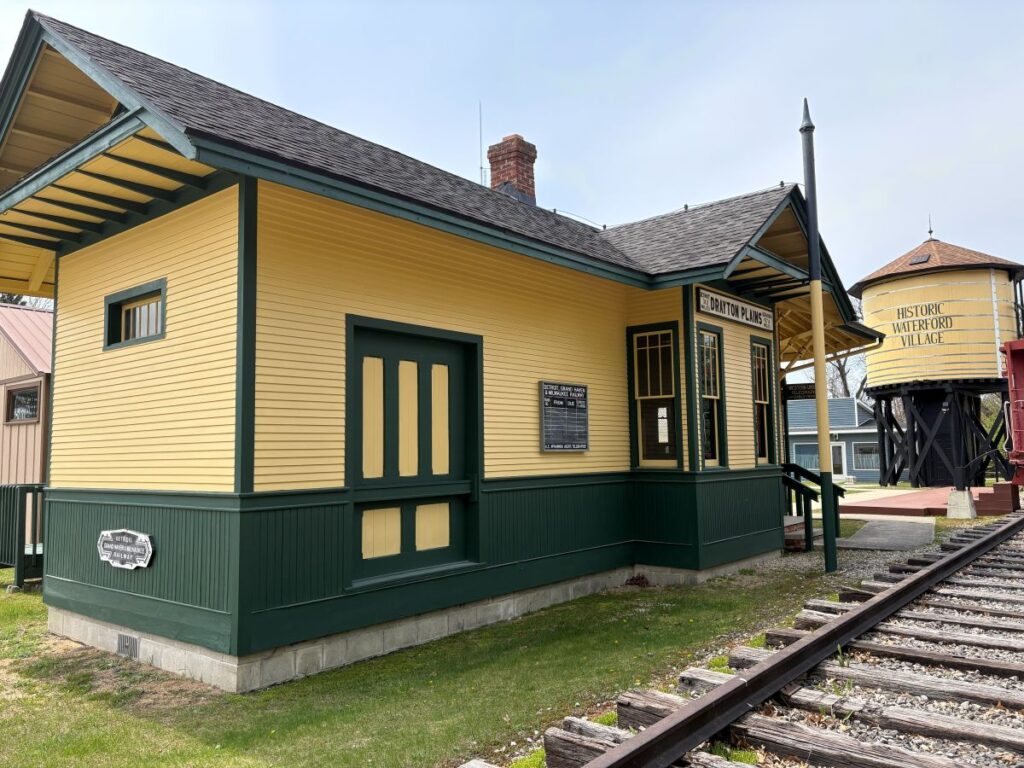
Today, the old hatchery site is still part of public life. The Drayton Plains Nature Center covers 138 acres, follows the Clinton River as it passes under Hatchery Road and includes about 4 miles of trails through habitats such as white pine forest, woodland prairie and southern wet meadow. Waterford Township says the nature center opened in 1967, the township acquired it in 2006, and the DNR Fisheries Division still uses two ponds to rear walleye for stocking.
Across Hatchery Road, Fish Hatchery Park now includes the Waterford Historical Society’s renovated historic village, office and museum, plus a boardwalk, canoe docks, fishing, picnic shelters and restrooms.
Cited Sources
Waterford Township, Drayton Plains Nature Center.
Waterford Historical Society, Waterford Historic Village walking tour.
Michigan DNR, “Hatcheries & Weirs.”
Michigan DNR, “One Hundred and Fifty Years of Michigan Fish Hatcheries.”
Waterford Township, Fish Hatchery Park facilities page.