 by
by 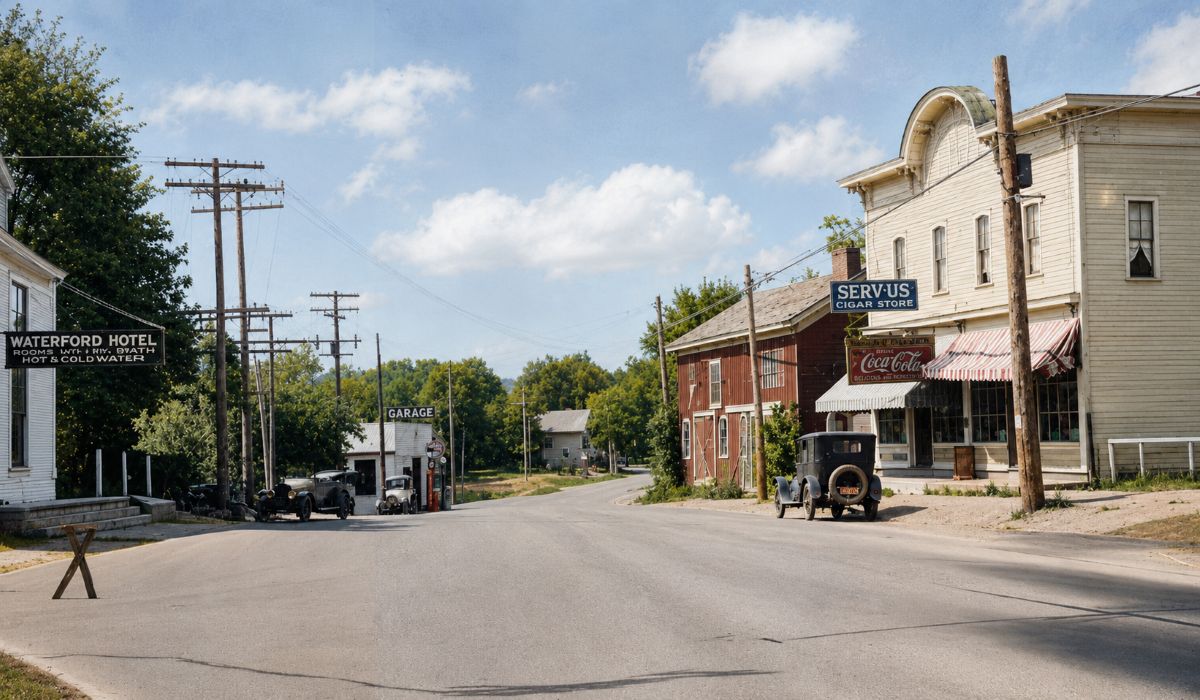
In the old real photo postcards of Waterford and Drayton Plains, the past does not look staged. It looks busy.
The History of Waterford Michigan is best understood through its old mills, rail depots, lake cottages and village streets. The attached postcards of Waterford and nearby Drayton Plains show a community shaped by the Clinton River, the Grand Trunk Western Railway, early auto travel, local stores, schools and summer resort life in Oakland County.
A dam churns on the Clinton River. A mill rises over the water with a plain sign advertising beans, grain, seed, hay and straw. A horse waits outside a post office and store. A theater marquee in Drayton Plains offers Olsen and Johnson’s “Hellzapoppin’” and the wartime film “Target for Tonight.” A Grand Trunk Western depot sits in the snow, years after the trains that shaped the town had lost much of their power over daily life.
Together, these images show a corner of Oakland County before suburban growth remade it. Waterford and Drayton Plains were not bedroom communities then. They were working villages built around water, roads, rail lines, farms, summer visitors and local trade.
The Settlement Began Along Water and Trails
Waterford’s name was no accident. Early accounts describe a township full of lakes, streams, marshes and river crossings. The Clinton River ran through the area, and the old Saginaw Trail connected Detroit with the country to the north.
Major Oliver Williams settled near Silver Lake in 1818 and 1819, creating one of Oakland County’s earliest farm settlements. Alpheus Williams and Archibald Phillips settled where the Saginaw Trail crossed the Clinton River, near today’s Dixie Highway and Andersonville Road. There, they built a dam and sawmill, using water power to turn a frontier stop into a working community.
The Waterford Historical Society notes that the first house in Waterford Village was built by Alpheus Williams on the north bank of the river. Phillips built nearby. The first school classes in Oakland County were held in Oliver Williams’ sheep barn in 1821, with seven students. A log schoolhouse followed the next year.
These were small beginnings, but they were not random. Waterford had water power, road access and land that could be farmed. That was enough to draw families who were willing to build in a place still far from Detroit’s established comforts.
Drayton Plains Took Its Name From a Mill
Drayton Plains developed a few miles away, also along the old Saginaw Trail. Early settlers arrived in the 1820s. Daniel Windiate, an English immigrant from Berkshire, became one of the central figures in the village’s identity.
Windiate and his son-in-law, Thomas Whitfield, built a dam in 1835 and a mill in 1836. Windiate named the mill “Drayton,” after his English home. Over time, the surrounding settlement became known as Drayton Plains.
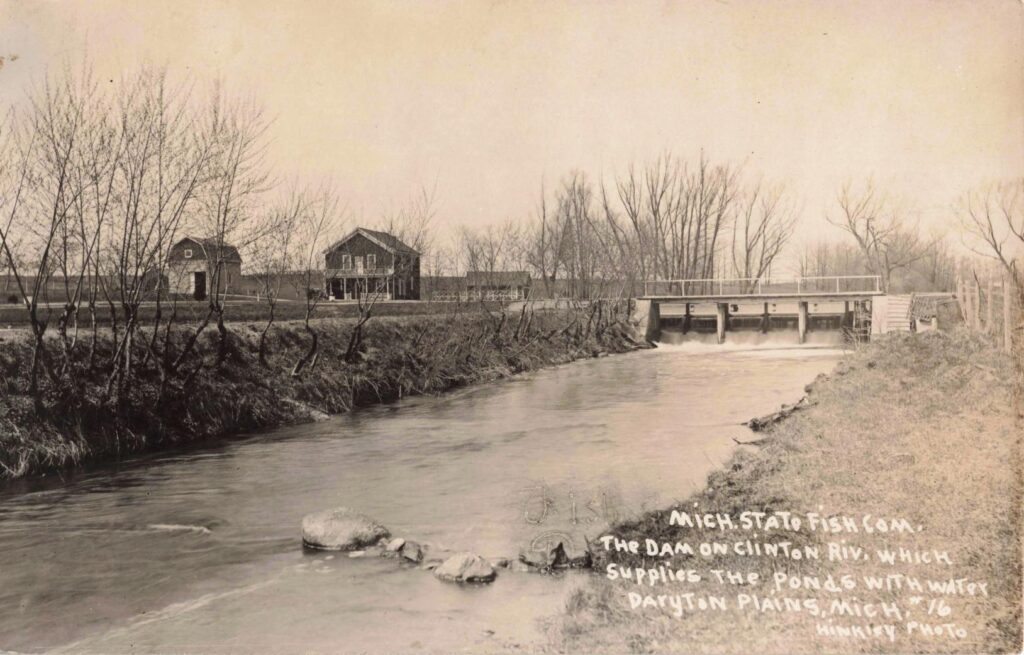
The photo of the dam on the Clinton River is more than a quiet rural scene. It shows the machinery behind the village economy. The water supply helped power mills, supported fish hatchery ponds and made the area a practical place for business. In the postcard view, the dam sends water into the river channel while farm buildings stand nearby. It is a plain image, but it explains why people settled there.
The Fish Hatchery Put Drayton Plains on the State Map
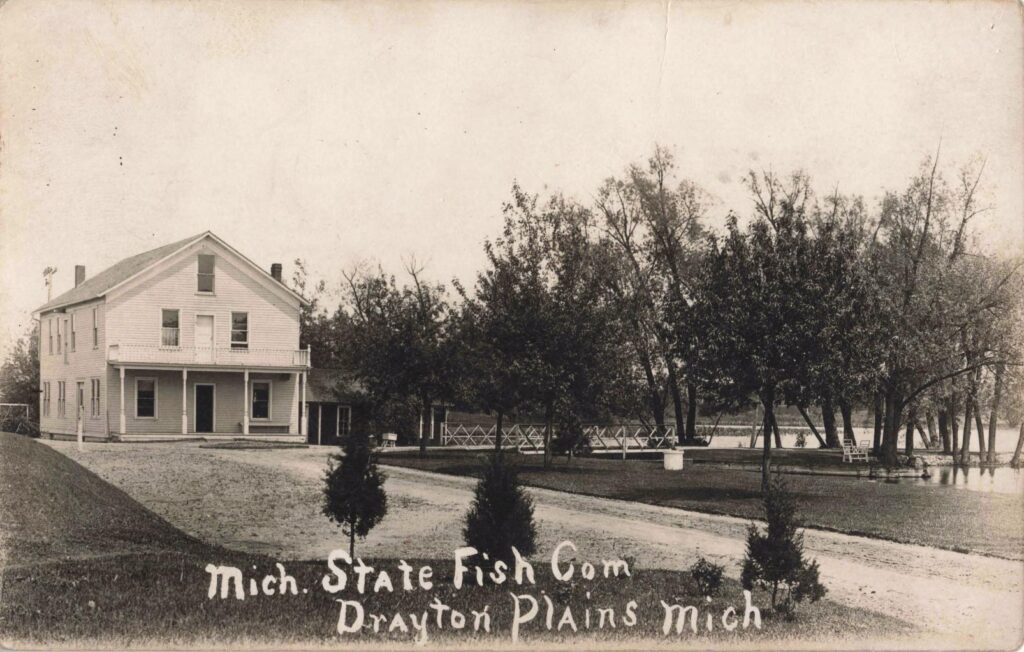
One of the strongest images in this set shows the Michigan State Fish Commission site at Drayton Plains. A large house stands near trees and water, with the postcard label identifying it as the fish commission property.
The state opened the Drayton Plains Station in 1903 on land tied to the old mill site. The Waterford Historical Society says the state purchased property that included a power dam, mill building, residence and 18 acres. The station raised bass fingerlings for Michigan waters.
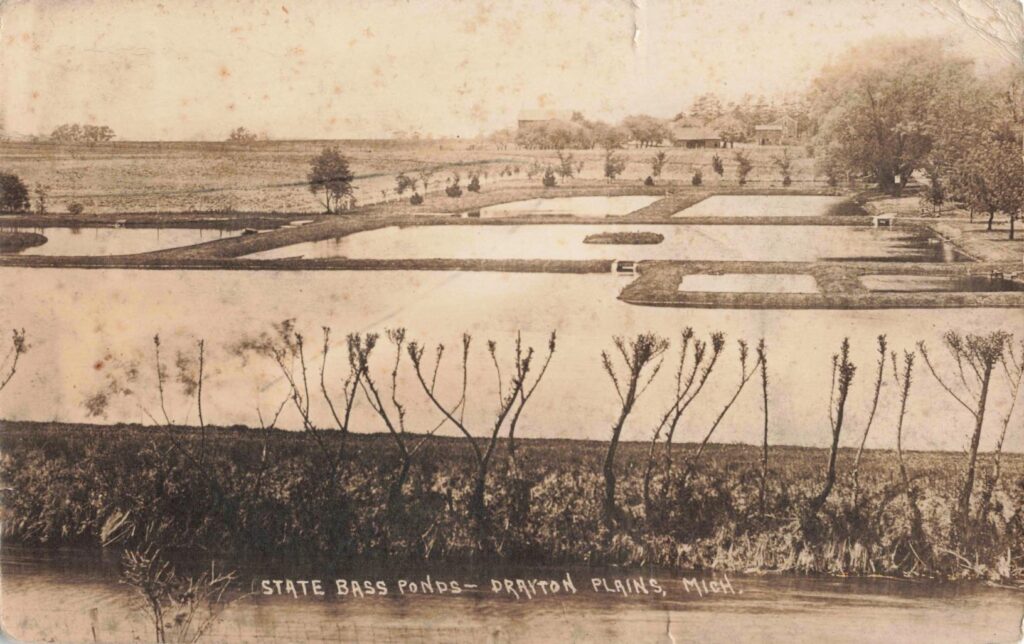
That work fits a larger story. By the early 1900s, Michigan was beginning to treat fish as a resource that could be managed, not just taken. Hatcheries reflected a new public concern: lakes and rivers could not be endlessly used without care.
The hatchery later became known as the Drayton Plains State Fish Hatchery. It operated until 1962. The grounds later became part of the Drayton Plains Nature Center and Fish Hatchery Park. The old postcards show the site when fish culture was both practical science and state policy.
Mills, Stores and the Business of Daily Life
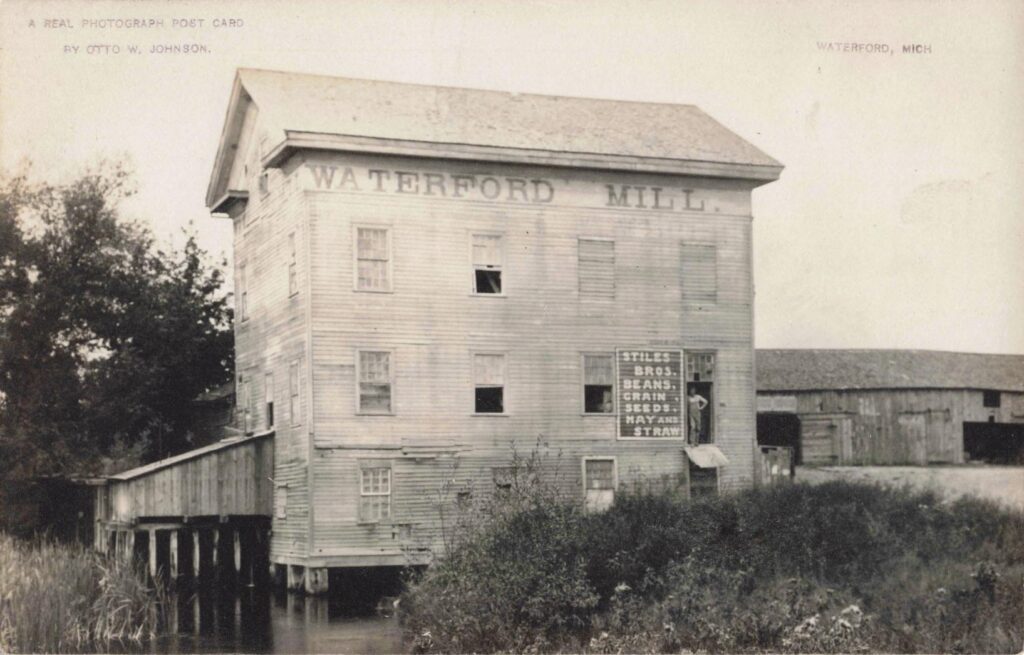
The Waterford Mill may be the most direct image of the old economy. The large wooden building sits beside the water, marked “Waterford Mill.” A sign on the side lists “Stiles Bros.” and the goods handled there: beans, grain, seed, hay and straw.
That list is a business ledger in five words. This was farm country. Local mills did not merely grind grain. They connected farmers to markets and supplies. They handled feed, seed and staple crops. They gave rural families a reason to come into town.
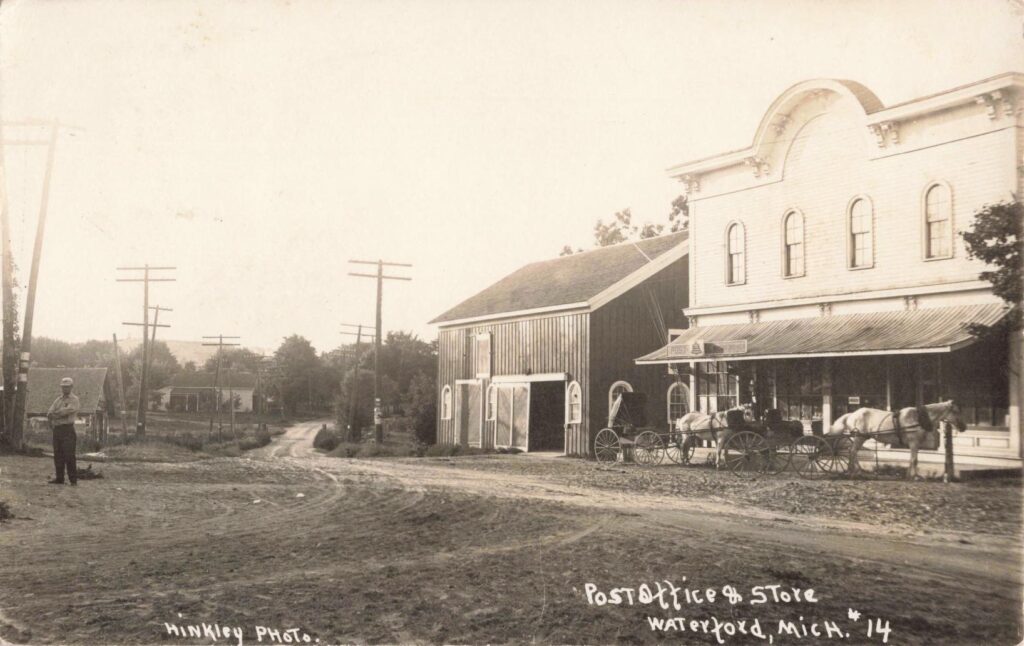
Another postcard shows the post office and store in Waterford. A horse and buggy wait outside. Crates and signs sit near the porch. The building is plain, but its role was not. General stores carried goods, handled news and often served as social centers. A person could buy flour, check mail, hear a rumor, settle an account and learn who was ill or newly married.
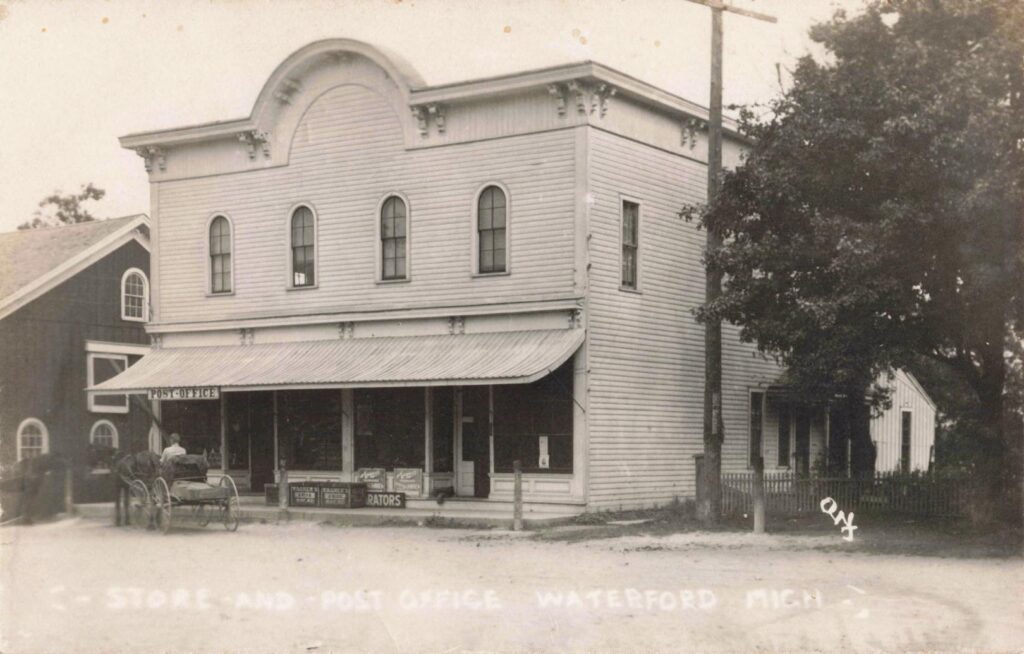
A separate photo shows the Waterford General Store that was later re-erected at Greenfield Village in Dearborn. The postcard caption dates it to 1854, but The Henry Ford’s current research places the store building at 1856-57 and says it was moved to Greenfield Village in 1927-28. That correction matters. Postcards are valuable, but their captions are not always perfect records. The image still shows how much value Henry Ford placed on the old Waterford store as a symbol of American village life.
Railroads Turned Lakes Into Resorts
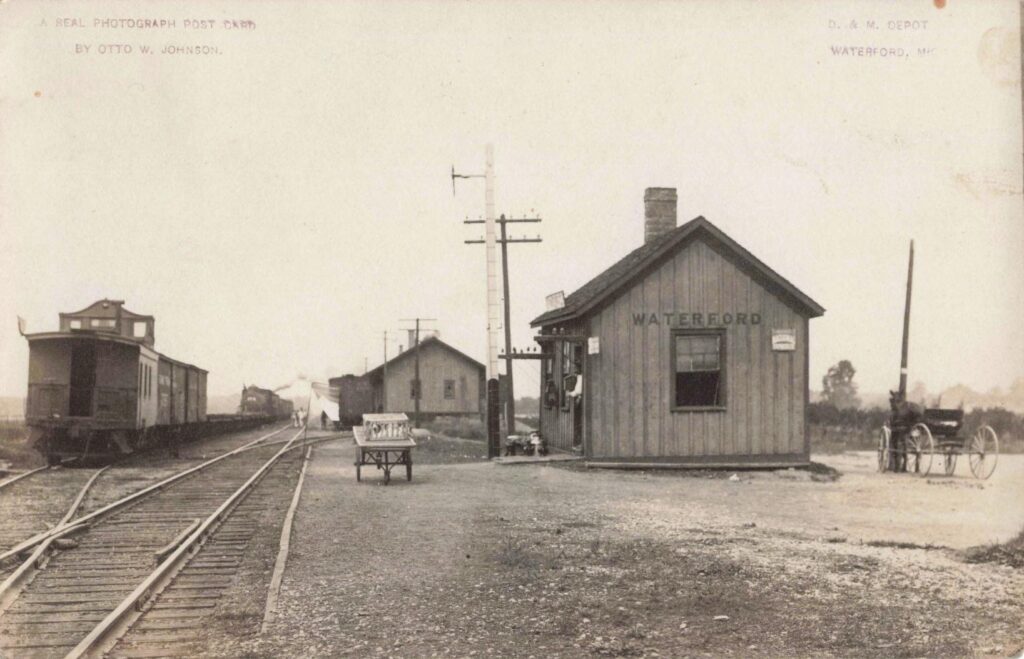
The railroad changed Waterford and Drayton Plains. The Waterford Township timeline says rail service eventually passed through the township with stations at Drayton Plains, Waterford and Windiate Park. It made Waterford’s lakes easier to reach for people from Detroit and other cities.
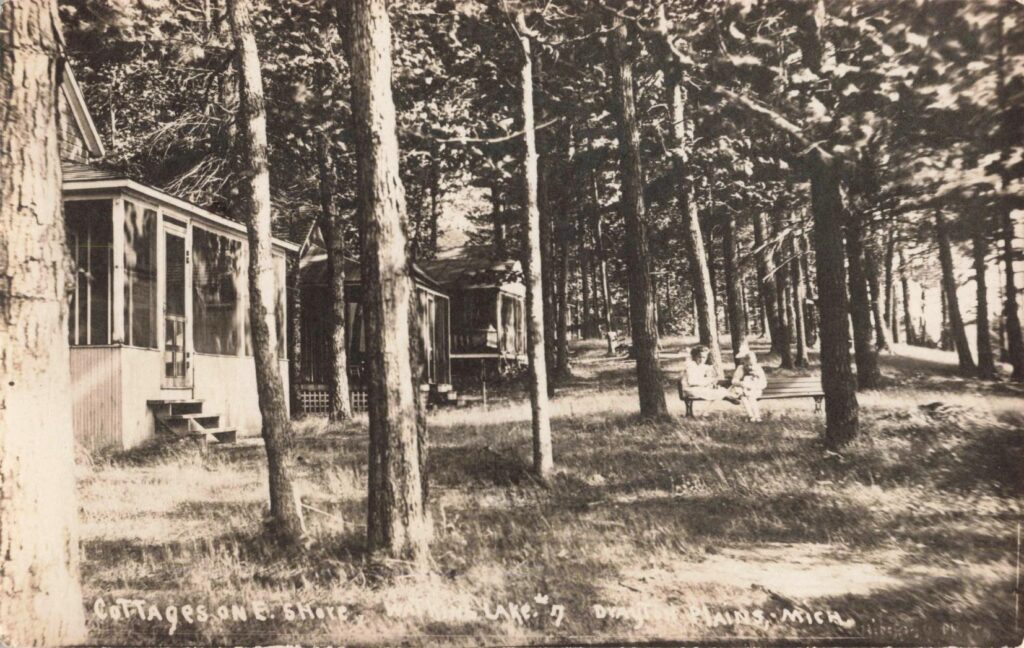
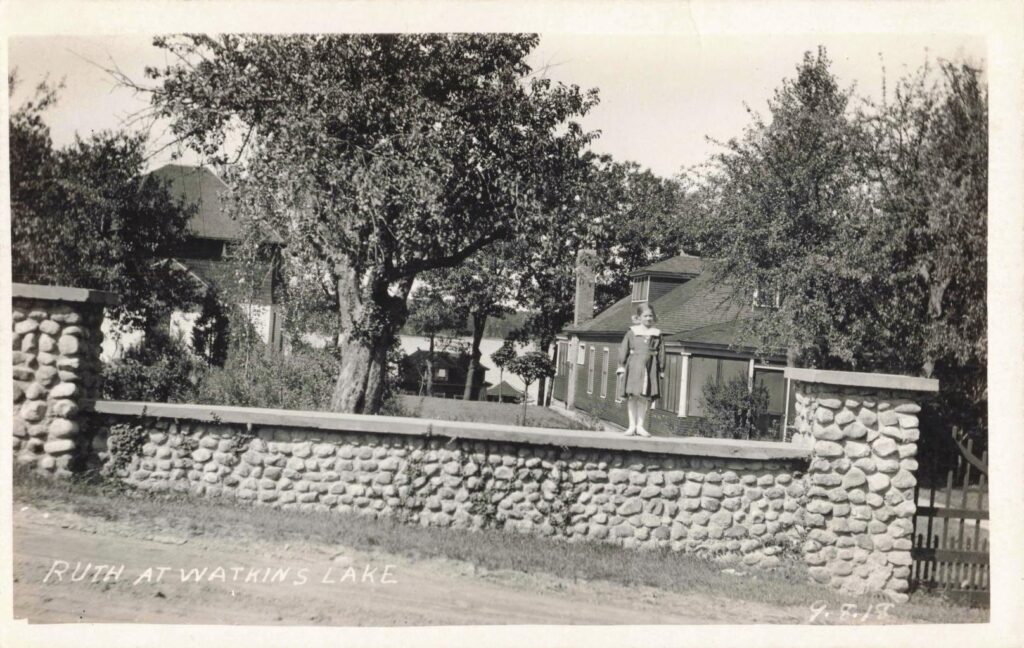
That helps explain the resort and cottage photos. One image shows cottages on the east shore of Watkins Lake. A few people sit in the shade, nearly swallowed by the tall trees. Another shows “boys’ cottages” at Watkins Lake, with small boats and simple shoreline buildings. These were not grand hotels. They were summer places meant for fresh air, fishing, boating and relief from city heat.
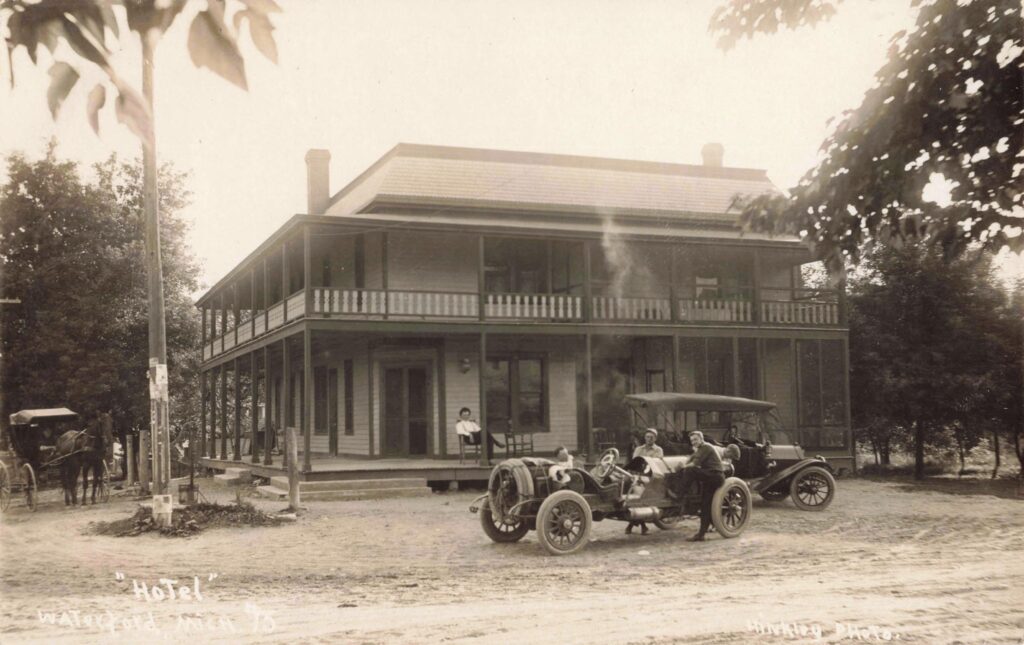
The Waterford Hotel image shows a wide porch, early automobiles and a horse-drawn vehicle nearby. It captures a short period when old and new travel overlapped. Guests could still arrive by horse, but the automobile was coming fast.
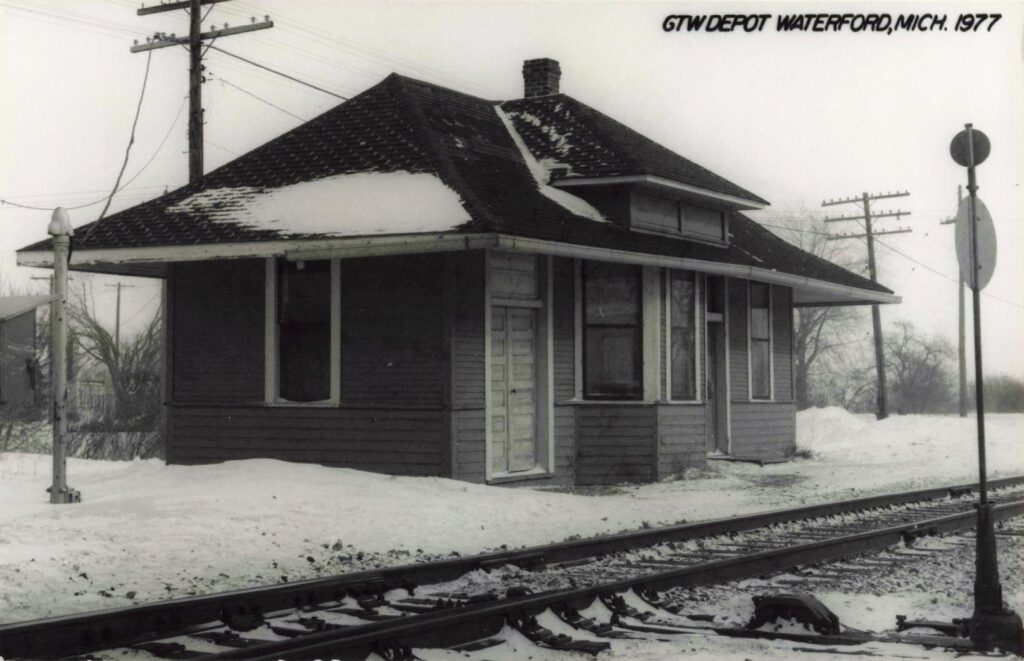
A later image of the Grand Trunk Western depot, dated 1977, gives the story a harder ending. By then, the depot stands quiet in winter. It no longer appears to be the town’s gateway. But its presence confirms how important the railroad had been. The tracks once carried people, freight, mail, summer visitors and the materials that built homes and businesses.
Schools, Churches and the Look of Permanence
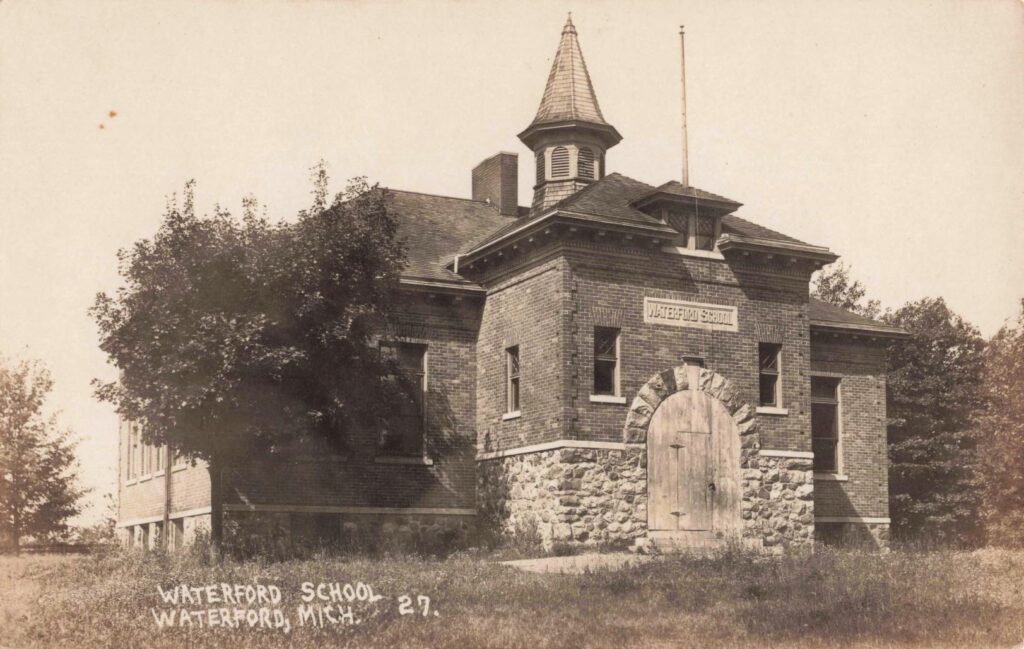
The Waterford School postcard shows a brick building with a stone base, arched doorway and small tower. It does not look temporary. It looks like a community trying to announce that it had settled in for good.
Early Waterford school history began in barns and log buildings, but by the late 1800s and early 1900s, the village had more formal school structures. The photo fits that era of civic ambition. Schools marked a shift from settlement to community.
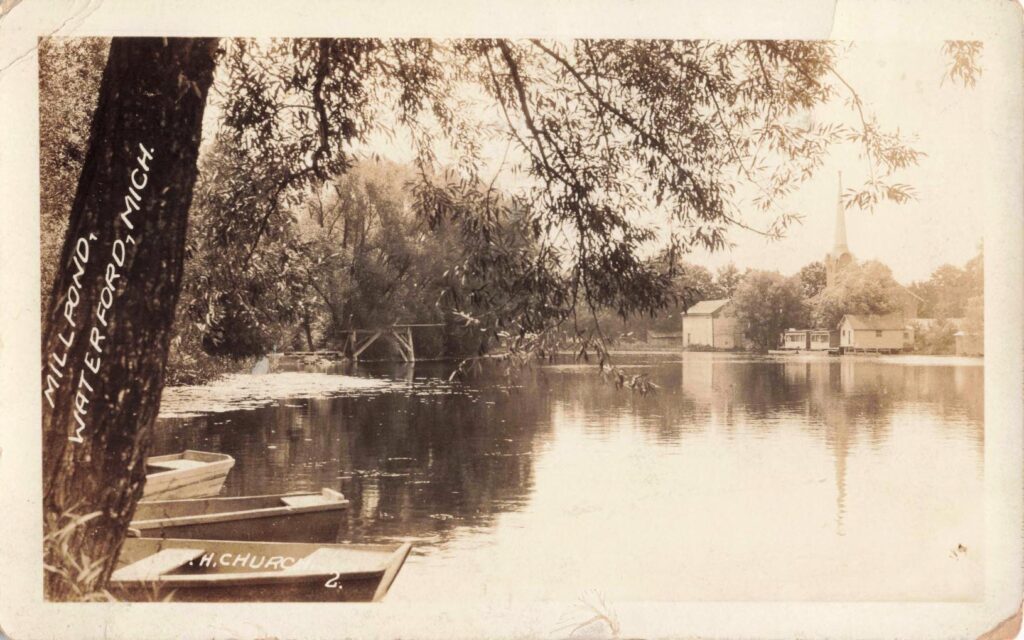
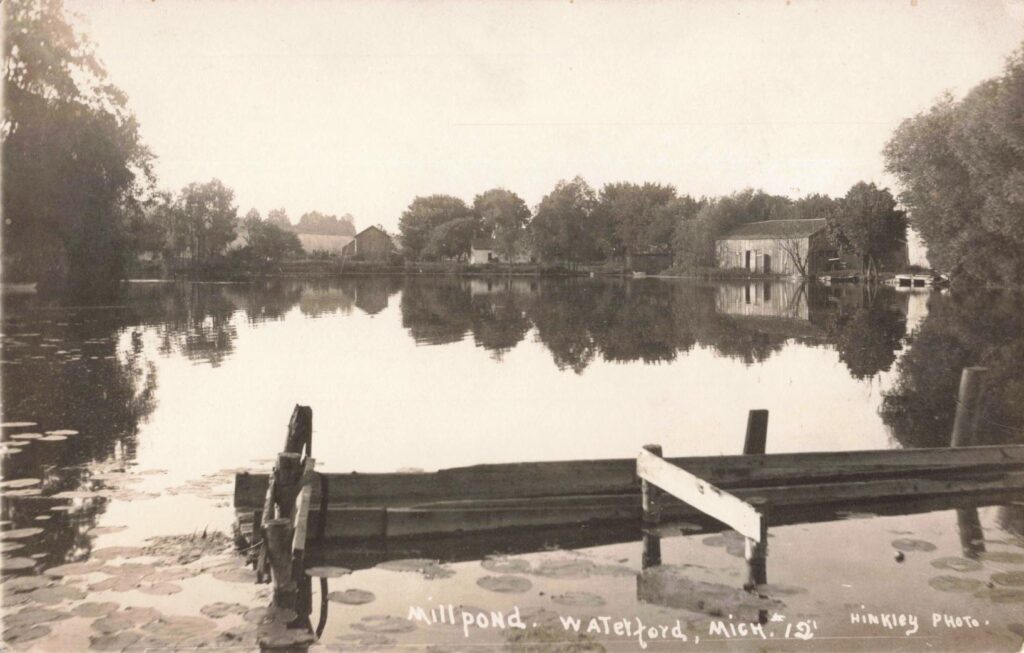
The millpond photos with a church steeple tell a similar story. Water, faith and commerce shared the same small geography. A church near a pond was not just a pleasant view. It showed the structure of town life: work during the week, worship on Sunday and local business in between.
The Old Mill Tavern and the Rise of Roadside Waterford
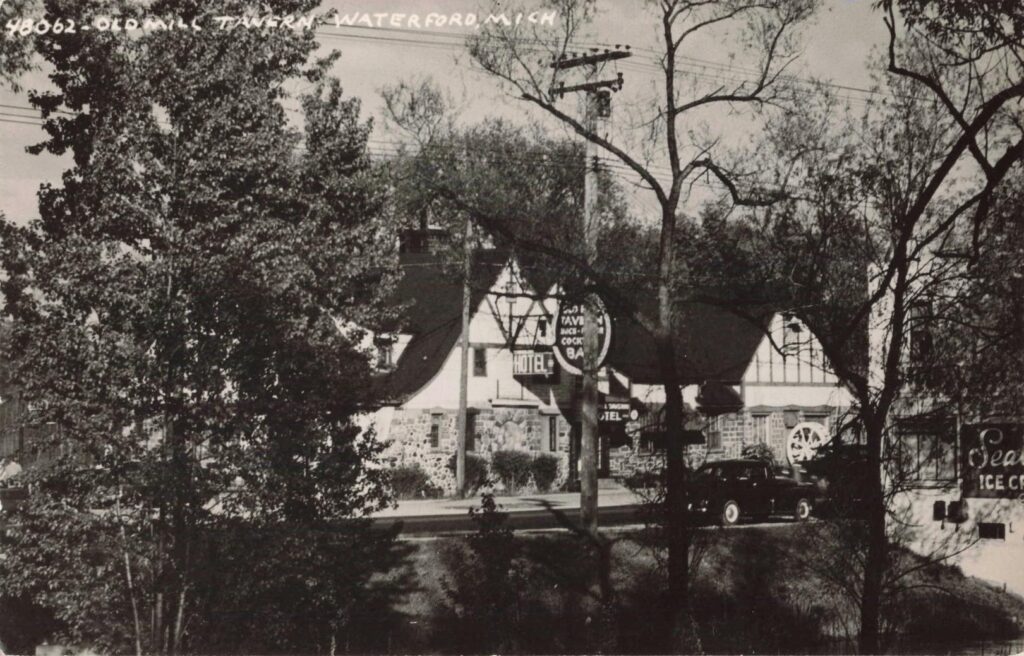
By the 1920s, Waterford was changing again. The Old Mill Tavern photo shows a Tudor-style building partly screened by trees. Cars are visible near the road. Signs advertise food and drink. This was no longer just a farm village or railroad stop. It was becoming a roadside destination.
The Waterford Historical Society’s newsletter says Louis Dorman built the Old Mill Tavern Hotel after leasing the Waterford Hotel in 1922. The same account says Waterford was known as a resort destination in the 1920s, with four trains a day coming from Detroit. Travelers came for weekends, meals and lodging.
The Old Mill later became one of Waterford’s best-known restaurants. It burned in 1982. That loss explains why the postcard matters. It preserves not only the building, but also an era when dinner out was an event, roads were improving and Waterford’s lake-country appeal was being sold to motorists.
Drayton Theatre and a Town Looking Outward
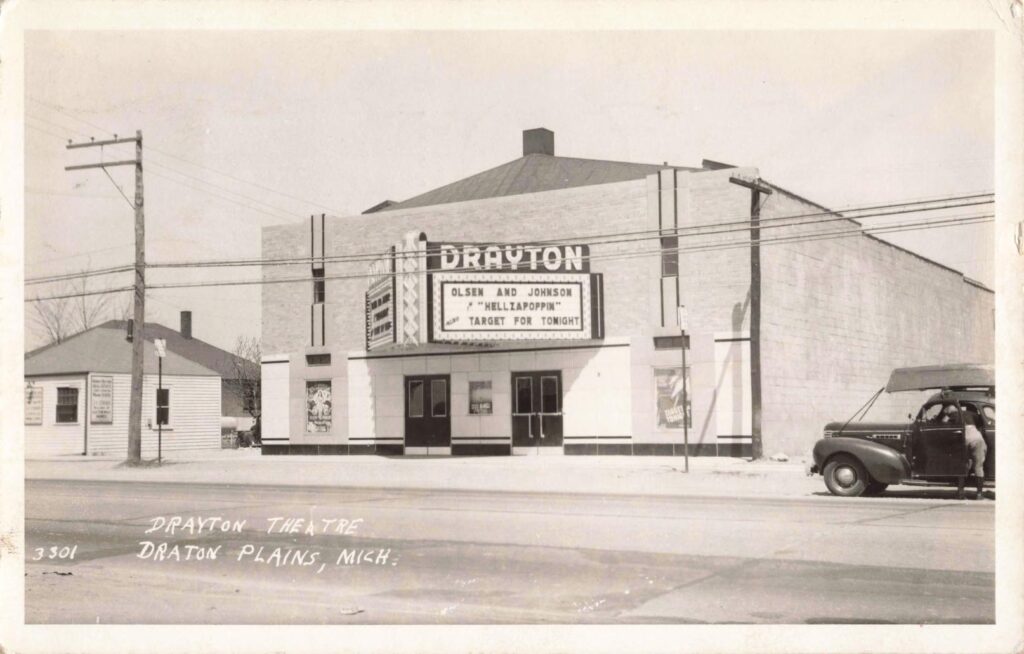
The Drayton Theatre image belongs to a later period, likely the early 1940s based on the films on the marquee. It shows a small-town movie house with a clean modern front, power lines overhead and a car parked at the curb.
The marquee is striking. “Hellzapoppin’” brought broad comedy. “Target for Tonight” brought wartime aviation drama. In one frame, Drayton Plains looks connected to national mood and world events. The theater was entertainment, but it was also a window beyond Oakland County.
For a community that had begun with dams, mills and farm wagons, the theater shows how much had changed. Movies, automobiles, paved roads and war news had entered the daily routine.
What These Photos Tell Us
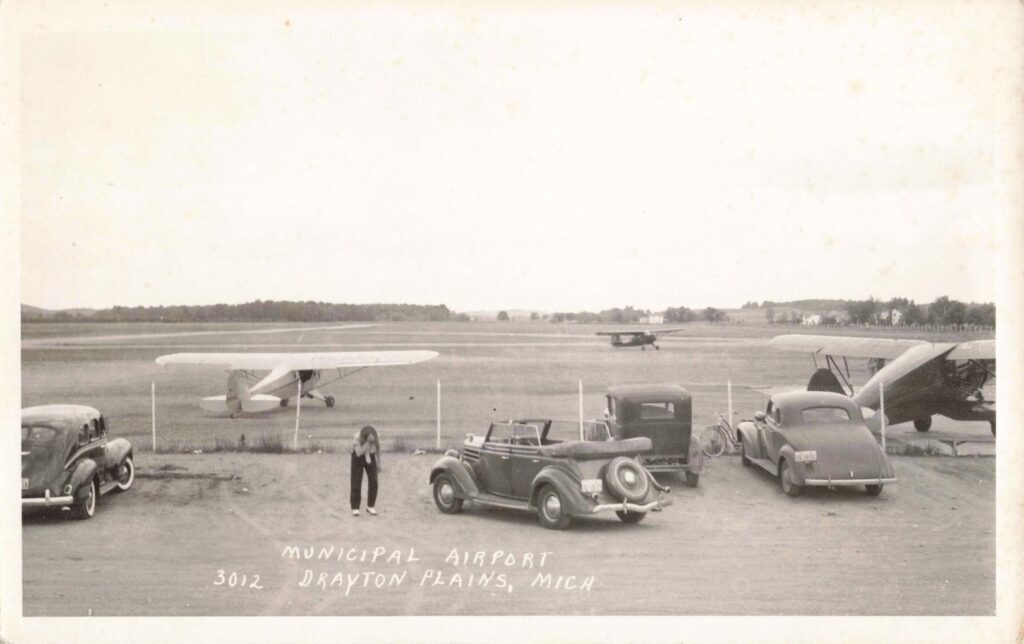
The attached postcards do not show a single version of Waterford and Drayton Plains. They show several towns layered on top of one another.
There is the pioneer village along the Clinton River. There is the mill town serving farms. There is the railroad resort community with lakeside cottages and hotels. There is the roadside town with taverns, theaters and cars. There is also the later community looking back at depots, mills and landmarks that were already fading.
That is why these photos work so well together. They show how Waterford and Drayton Plains moved from frontier settlement to rural business center, then to lake retreat, then to suburban Oakland County. The transformation was not sudden. It happened through rails, roads, schools, dams, mills, stores and weekend visitors.
The old postcards caught the change in progress. A horse stands outside a store. A car waits by the theater. A depot sits in snow. A mill rests over moving water.
That was Waterford and Drayton Plains before the modern map took over.
Images on this page may contain affiliate links in which we may receive a commission. See our affiliate disclosure for details.
Works Cited for the History of Waterford and Drayton Plains Michigan
Braden, Donna R. “History of the J.R. Jones General Store.” The Henry Ford, 25 Oct. 2019.
“Village of Drayton Plains.” History of Oakland County, Michigan.
“History of Waterford Township.” MIGenWeb: Oakland County, Michigan.
“Detroit and Milwaukee Railroad.” MichiganRailroads.com.
“History.” Waterford Historical Society.
“Museums.” Waterford Historical Society.
“Waterford Historical Society Newsbill, Volume 17, Number 1.” Waterford Historical Society, Mar.-May 2012.
“Waterford Township Historical Timeline.” Waterford Township, Michigan.