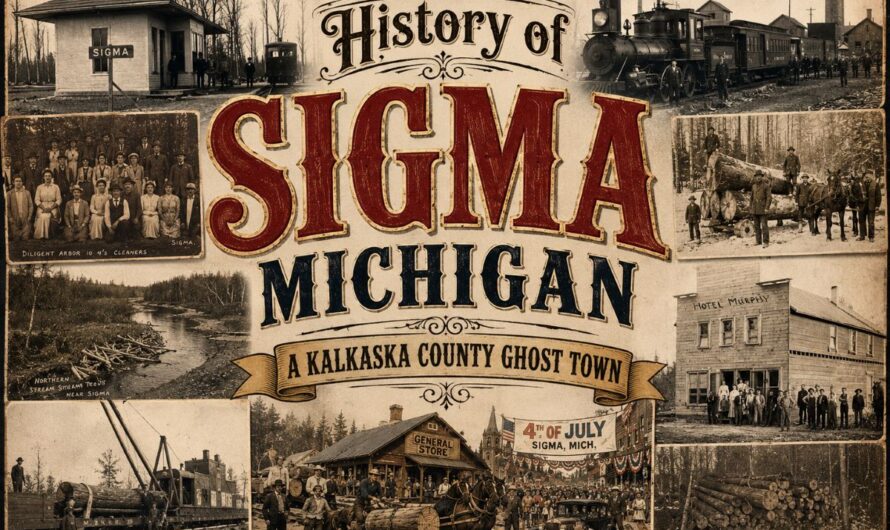
Forgotten History of the Ghost Town of Sigma Michigan (1910 – 1925)
Sigma, Michigan, rose around 1910 as a railroad lumber town in Kalkaska County. Its depot, camps, shops and holiday crowds show a brief boom built on timber and rail service.

News History & Fun in Michigan
Sigma, Michigan, rose around 1910 as a railroad lumber town in Kalkaska County. Its depot, camps, shops and holiday crowds show a brief boom built on timber and rail service.
The History of Leslie Michigan reveals a town shaped by transportation change. Railroads, interurban lines, and automobiles each played a role. While many communities declined after these shifts, Leslie adapted, maintaining its structure, economy, and identity through steady change.
Arcadia’s Pere Marquette docks once linked steamers, rail lines, lumber yards and furniture shipments. The small Manistee County harbor became a busy transfer point where Great Lakes commerce met village life in the early 1900s, before roads and trucks changed how the town moved goods.
Thumb Brewery will release Collin’s Mild Ale on July 2 in Caseville during a benefit for the Huron County Nature Center. The event includes samples, raffle items, commemorative cups and wildlife education.
The Traverse Regional History Center is taking a different approach to preserving local history. Rather than focusing on artifact collections, the organization is building a regional resource dedicated to storytelling, education, and digital engagement.
Concord, Michigan grew from waterpower, rail service and farm trade. This story follows its old mill, Michigan Central depot, Main Street, schools, baseball team and rural roots to show how one Jackson County village kept its identity through change.
Crystal Falls Michigan rose on iron ore, railroads, and hydroelectric power. These rare photos and stories reveal how the Upper Peninsula town survived boom years, deadly mine collapses, the Great Depression, and WWII.
Acme, Michigan, began as a creek-powered mill town east of Traverse City, then shifted to farms, schoolhouses, roadside diners and resort travel. Its story shows how a Grand Traverse Bay community changed without losing its old outline.
The history of Lake Ann Michigan centers on timber, railroads and fire. In 1897, flames destroyed nine blocks, left 75 families homeless and killed an elderly resident trying to save valuables. The disaster changed a promising lumber village into something smaller.
Hillman, Michigan, grew from Brush Creek into a village shaped by timber, railroads, farms, fire and Lake Avalon. Its story includes department stores, hotels, grain elevators, service stations, resort cottages and a late-arriving railroad that changed the town, but did not define it.