 by
by 
Lake Ann, Michigan, looks quiet today. It sits in Benzie County’s Almira Township, west of Traverse City, close to lakes, woods and roads that carry vacation traffic through northwest Lower Michigan.
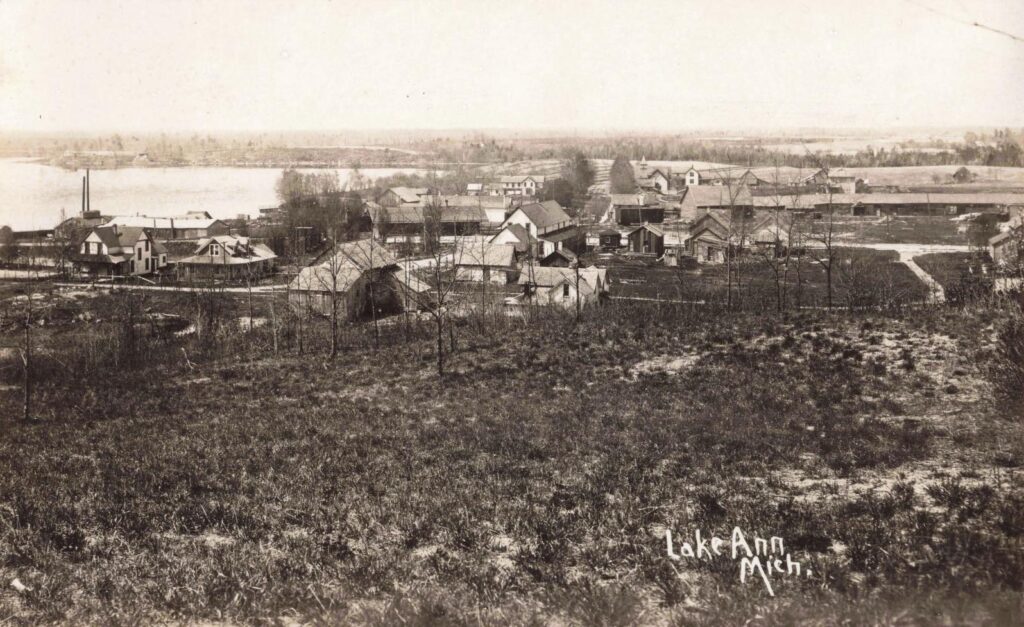
But the History of Lake Ann Michigan is not only a resort story. It is a lumber story. It is a railroad story. It is also a fire story.
In the late 1800s, Lake Ann was a fast-growing village with mills, hotels, stores, workers and a depot on the Manistee & Northeastern Railroad. It had the makings of a larger inland town. Then three major fires changed its path.
That is the counterintuitive part. The fires damaged Lake Ann, but they also helped shape the village people know today.
A Village Named for Ann Wheelock
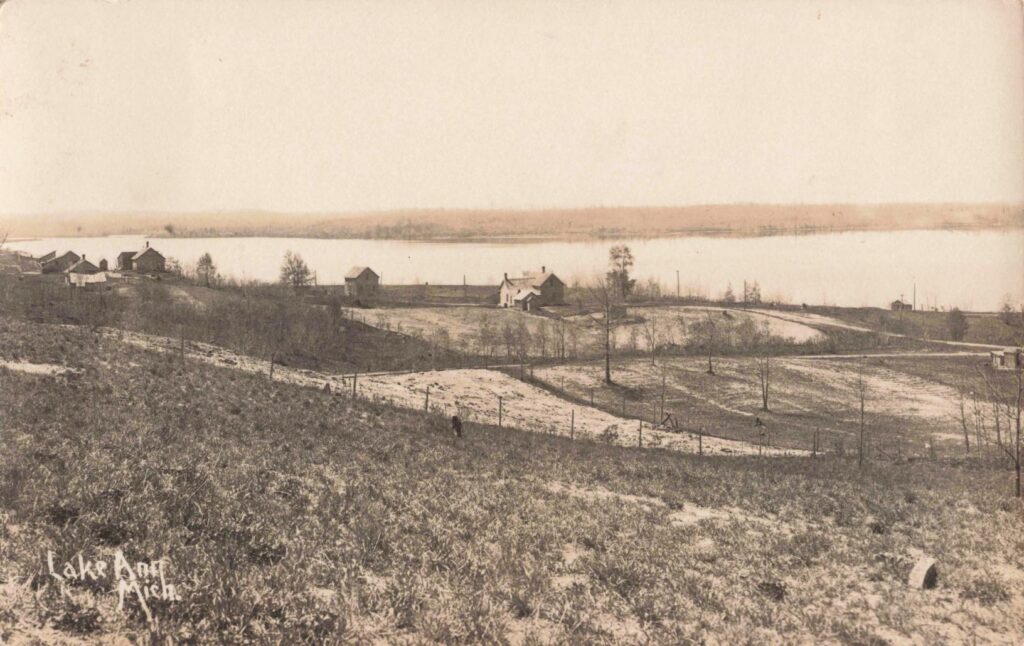
The story begins with Addison P. Wheelock, one of the early settlers tied to Almira Township and Lake Ann. Ann Lake was named for Wheelock’s wife, Ann McBride Wheelock. The village later took its name from the lake.
That simple naming detail gives Lake Ann a personal origin. Many Michigan towns were named for investors, railroad men, officials or distant places. Lake Ann’s name came from a family connection.
In the 1860s, this part of Benzie County was still being settled. Timber drew people in. The work was hard, but the opportunity was clear. The forests could be cut. The logs could be milled. The lumber could be shipped.
The History of Lake Ann Michigan starts with that practical fact: trees built the town before tourists ever arrived.
The Railroad Arrives and the Town Grows
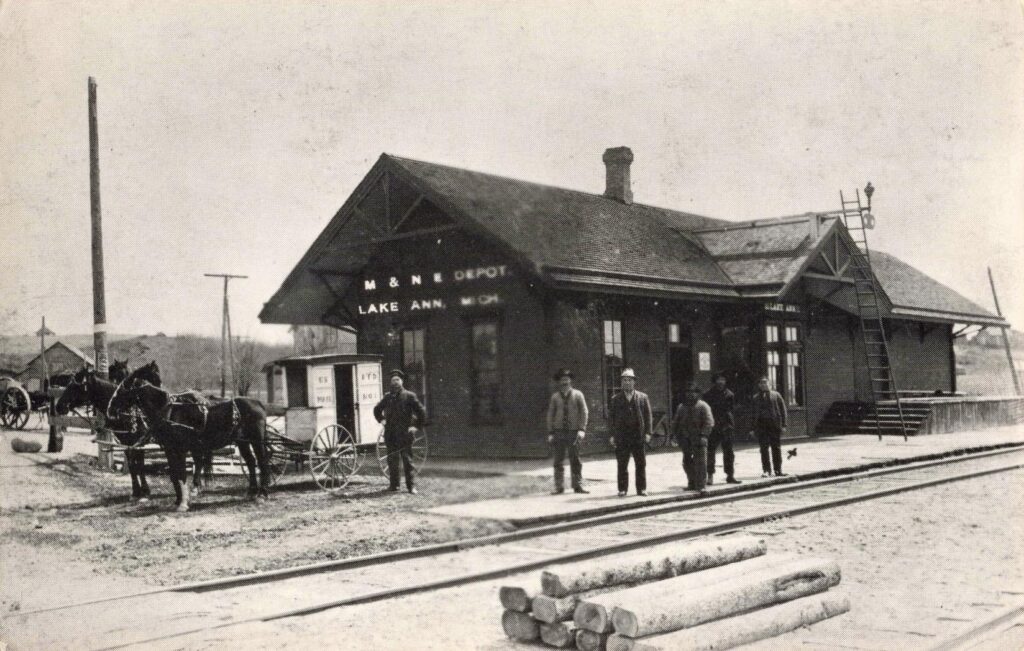
Lake Ann’s big change came in 1892, when the Manistee & Northeastern Railroad reached the area. The line ran through eastern Almira Township and helped turn Lake Ann into a busy village.
Railroads made lumber towns work. They carried logs, finished lumber, mail, tools, food, passengers and news. The depot became one of the village’s most important buildings.
By 1897, Lake Ann had grown quickly. Local histories report more than 800 residents and more than 100 buildings. The village had a general store, restaurant, hotel, drug store, meat market, saloon, livery barn and depot.
That is hard to square with the small village of today. But it is central to the History of Lake Ann Michigan. This was not just a lakeside settlement. It was a working town with real momentum.
Habbeler’s Mill and the Fire of 1897 That Changed Lake Ann
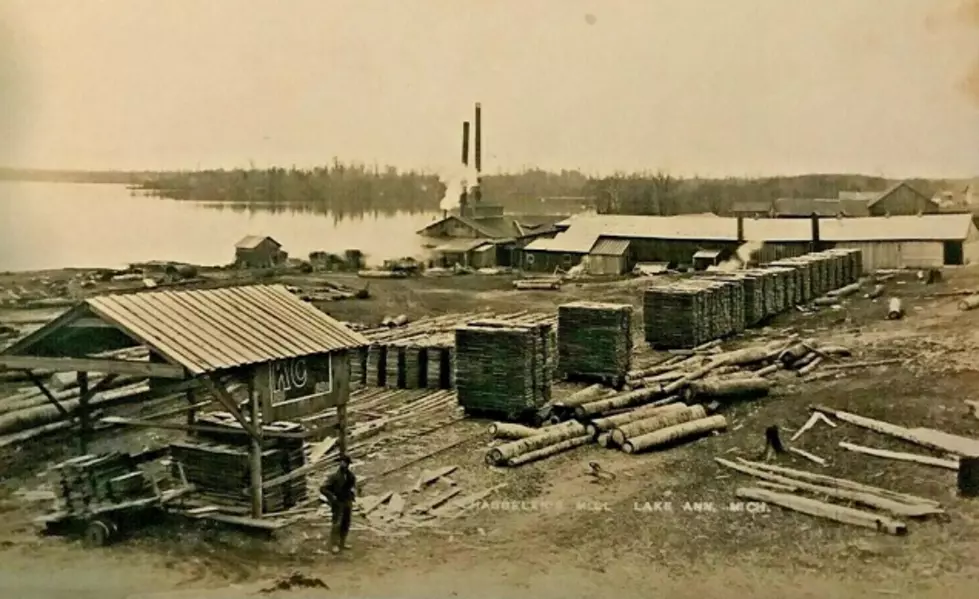
The defining break in the History of Lake Ann Michigan came on Saturday, July 3, 1897.
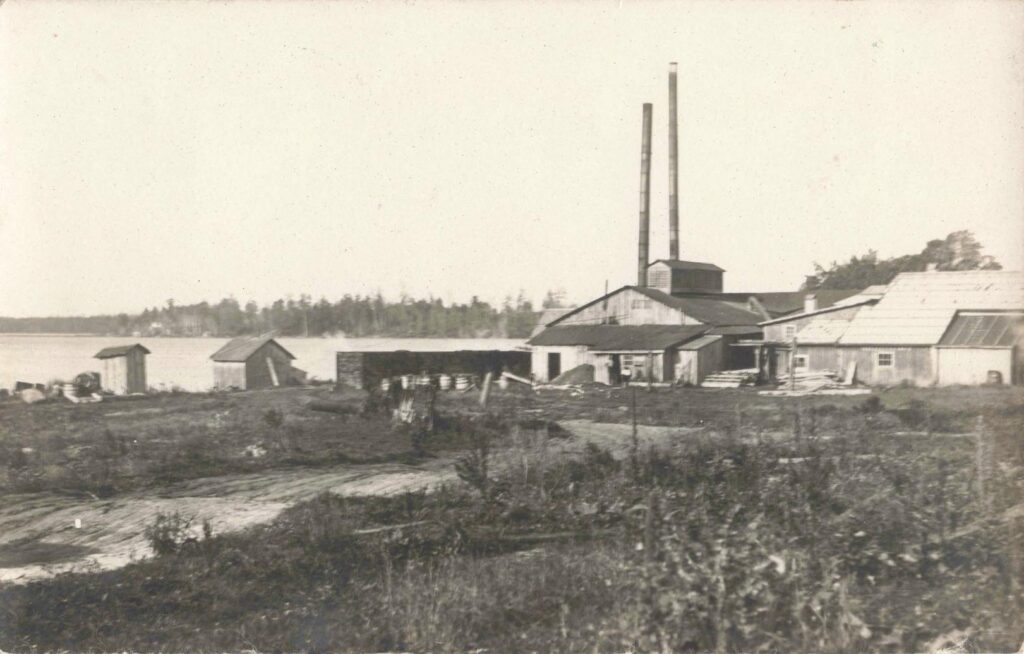
A report in The Saginaw Courier-Herald said the fire began in William Habbler’s mill. Driven northeast by a strong wind, the flames swept through the business district until, as the paper put it, not a store was left standing in a village of 800 people.
The damage was severe. The burned district covered nine blocks. Seventy-five families were left homeless. Mrs. Masters, an 80-year-old resident, died while trying to save valuables from her house. The estimated loss reached $125,000.
The fire destroyed the sawmill, store, factory, cooperage sheds, warehouses and piles of lumber. It also damaged or destroyed the Manistee & Northeastern Railroad property, Burnett & Putnam’s general store, George E. Coleman’s drug store, Martin Stae’s saloon, the Park Hotel, the Huelmantel general store, Lake’s livery and many homes.
Traverse City firemen arrived with a steam engine and helped save a grist mill, another sawmill, several dwellings, a hoop factory and a large amount of lumber. Relief trains came from Traverse City carrying bread, tea, coffee and other supplies for the people left without homes.
The article noted a painful irony. Lake Ann had a good waterworks system. But the town was built mostly of wood. With dry conditions and a hard wind, the village had little chance once the flames spread.
That is the turning point in Lake Ann’s story. It had been a rising lumber town. After the fire, it had to decide whether to rebuild at the same scale or become something smaller.
Two More Fires Reinforce the Lesson
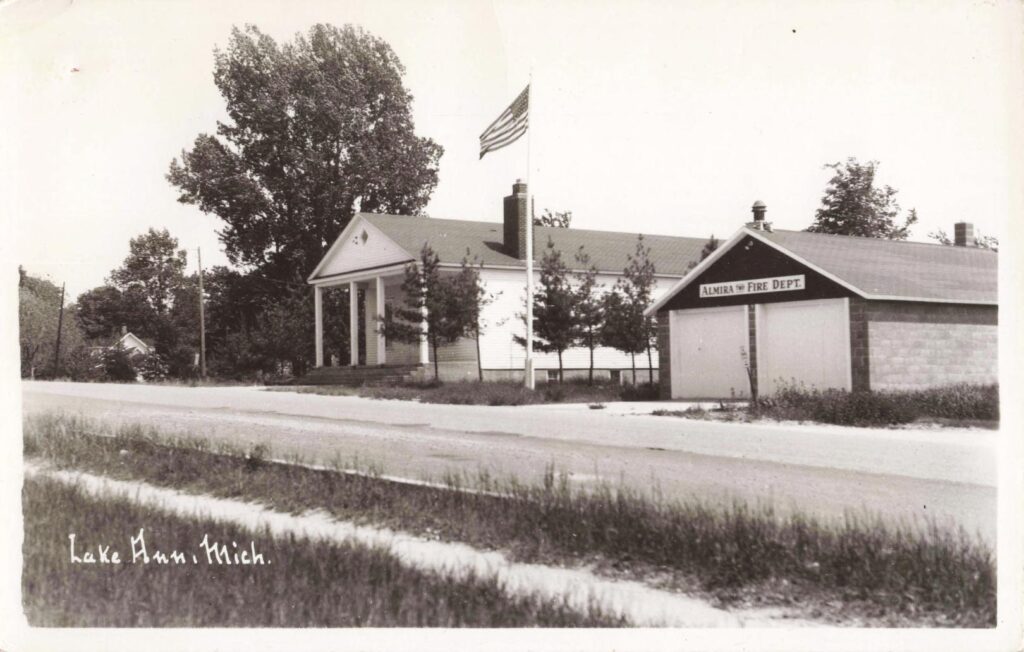
Lake Ann suffered two later fires, in 1902 and 1918. These fires again damaged the village business district and deepened the divide between the boomtown past and the smaller village that followed.
Fire was a common threat in Michigan lumber towns. Wooden buildings, stacked lumber, sawdust, sparks, dry weather and wind could turn one accident into a townwide disaster.
Lake Ann’s civic buildings make more sense against that background. The Almira Fire Department view is not just a street scene. It is part of the village’s memory. A community that had burned three times had reason to take fire seriously.
Stores, Hotels and the Everyday Village
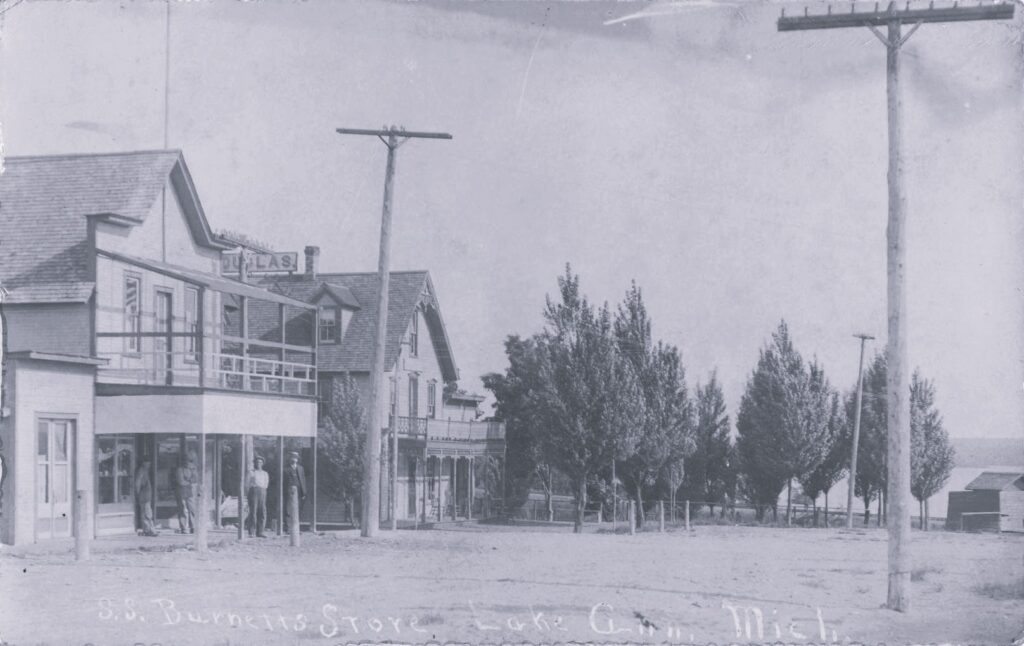
The attached views of Lake Ann’s stores and hotels show the ordinary life that continued after the lumber boom faded.
Burnett’s store stood in the village business area. A general store offered groceries, supplies, tools, hardware, conversation and credit. In a rural town, a store was more than a place to shop. It was a local information center.
The hotel and store views show a town serving different groups at once. Lumber workers needed food, lodging and supplies. Railroad passengers needed rooms. Farmers came in for goods. Summer guests later arrived for the lake.
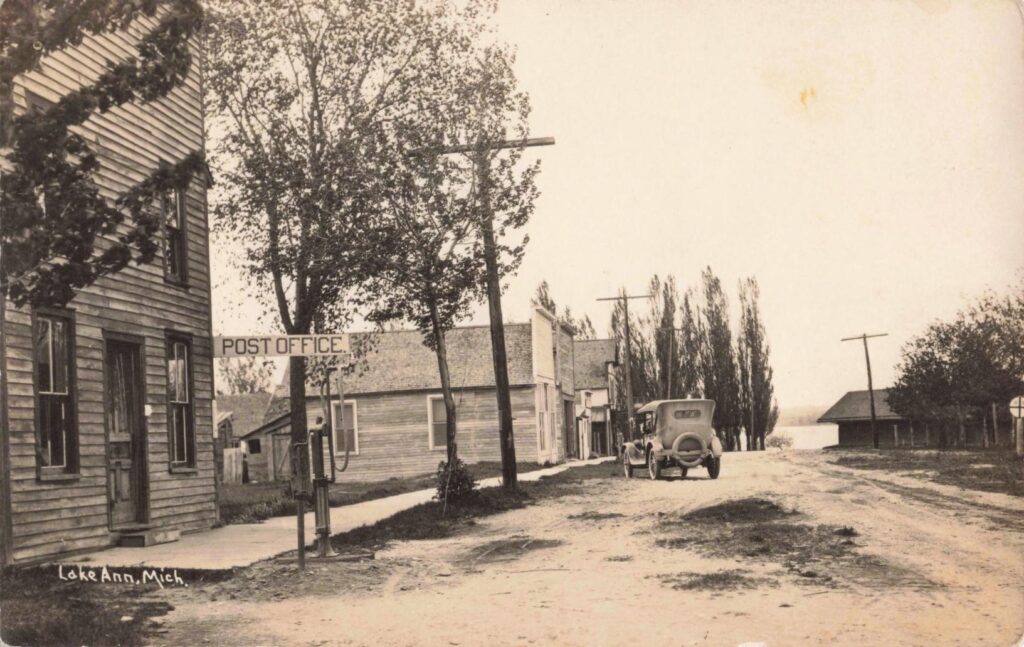
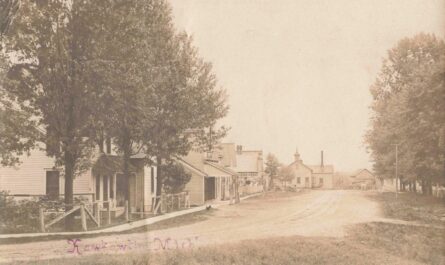
The post office view adds another layer. The sign hangs near a dirt street. A gas pump stands close by. An early automobile sits near the road. The lake appears beyond the buildings.
This image marks a transition. The railroad still counted, but cars were beginning to change northern Michigan travel. Visitors could reach towns in new ways. Roads would slowly take business away from rails.
From Lumber to Lake Resorts
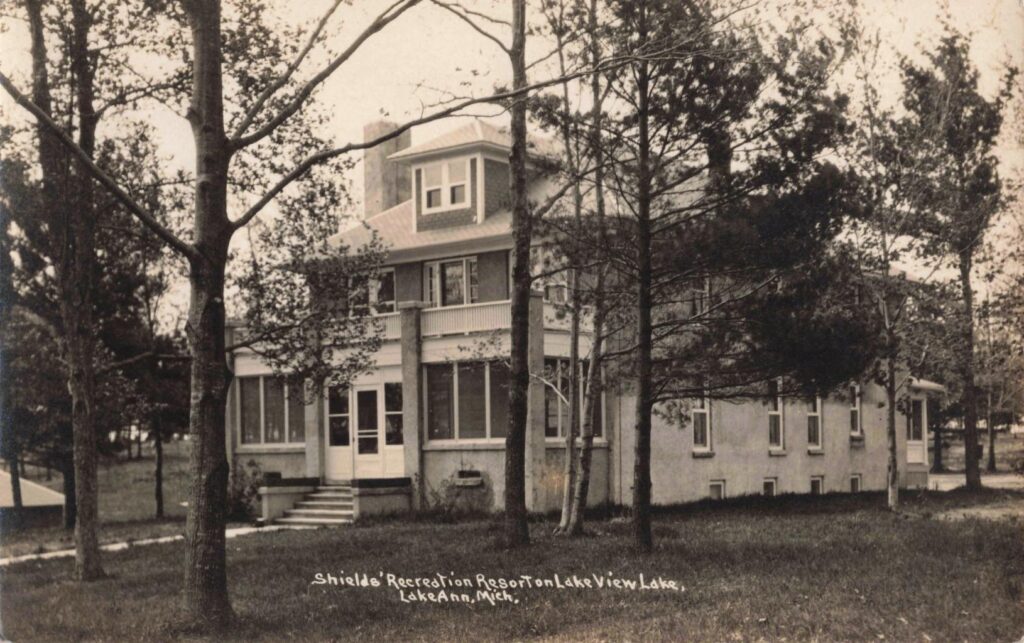
The resort images show the next chapter in the History of Lake Ann Michigan.
Once the lumber boom slowed, the lake became more important as a place for rest and recreation. Resorts, cottages and vacation homes began to define the village in a new way.
Shields’ Recreation Resort and Dohm’s Resort show that Lake Ann was no longer only a working lumber village. It was becoming a place where families came for shade, water and quiet days.
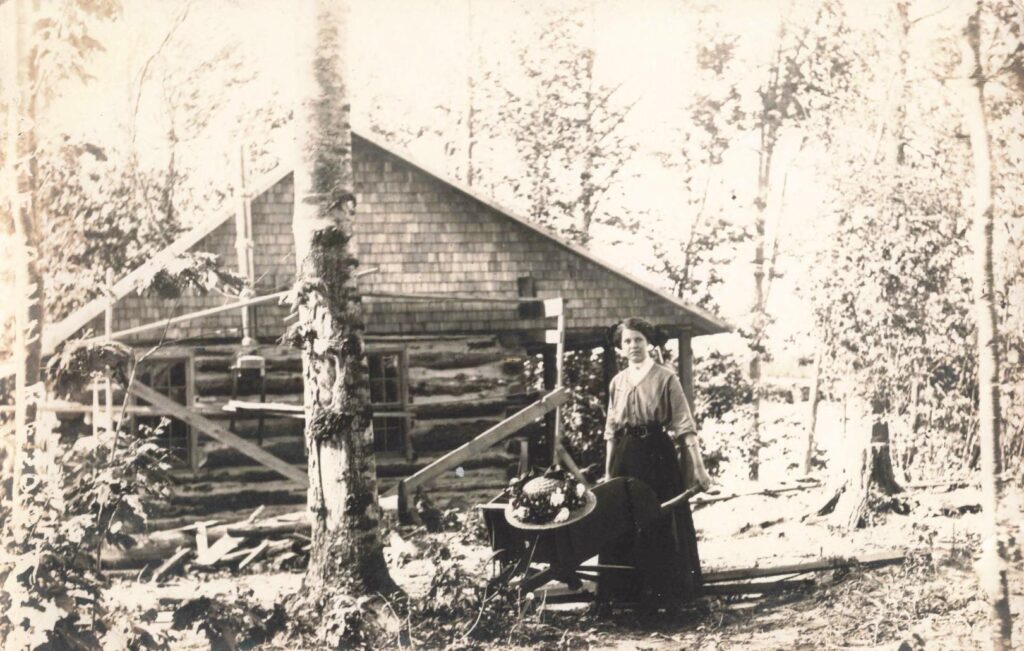
The cottage images are modest. That is part of their value. Lake Ann’s resort era was not about grand hotels and elite travel. It was about practical northern Michigan vacations. Families came for screened porches, lake breezes, fishing, walking and time away from city streets.
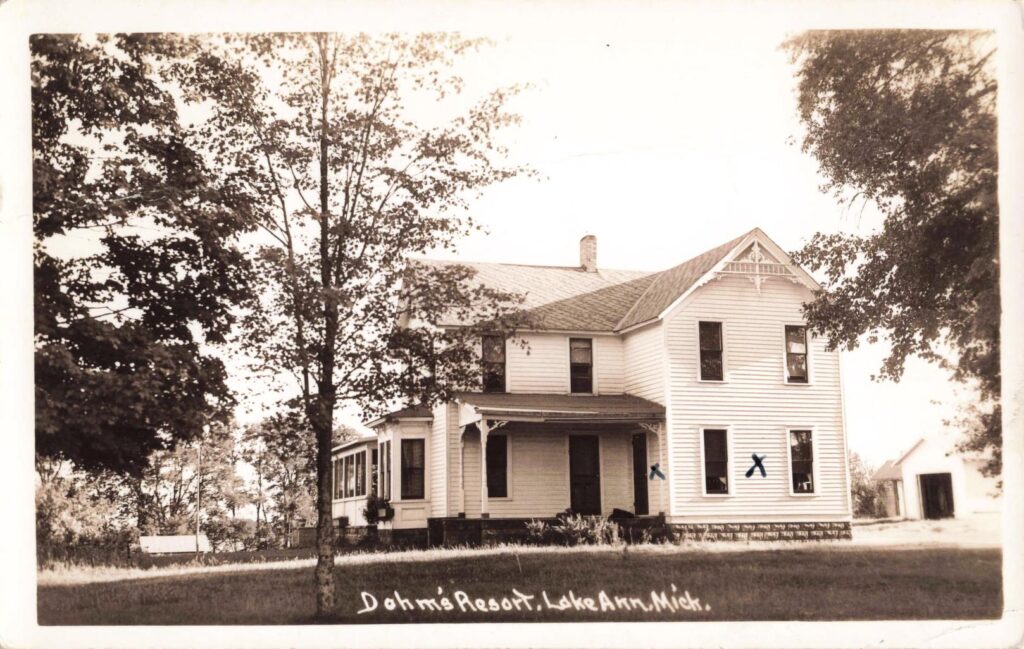
The resort shift did not erase the lumber past. It reused the same advantages: the lake, open land, roads, former railroad access and a village center that could serve visitors.
Children, Bridges and the Softer Side of Town Life
One of the most engaging views shows two boys near a narrow bridge over water. It is not a mill scene. It is not a depot scene. It is a quieter record of childhood.
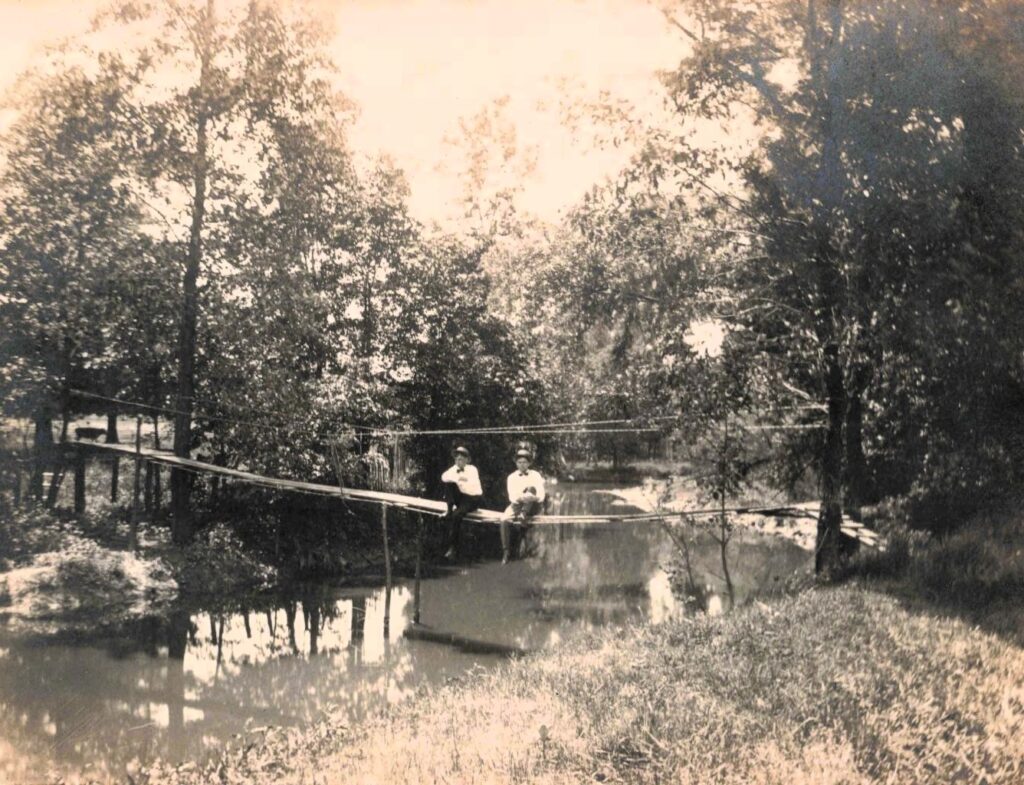
This kind of view helps complete the town’s story. Lake Ann was not only fires, sawmills and commerce. It was also children near water, families in cottages, men outside stores and people gathering at the community hall.
The community hall image shows formal civic ambition. It has columns, steps and a clean public presence.
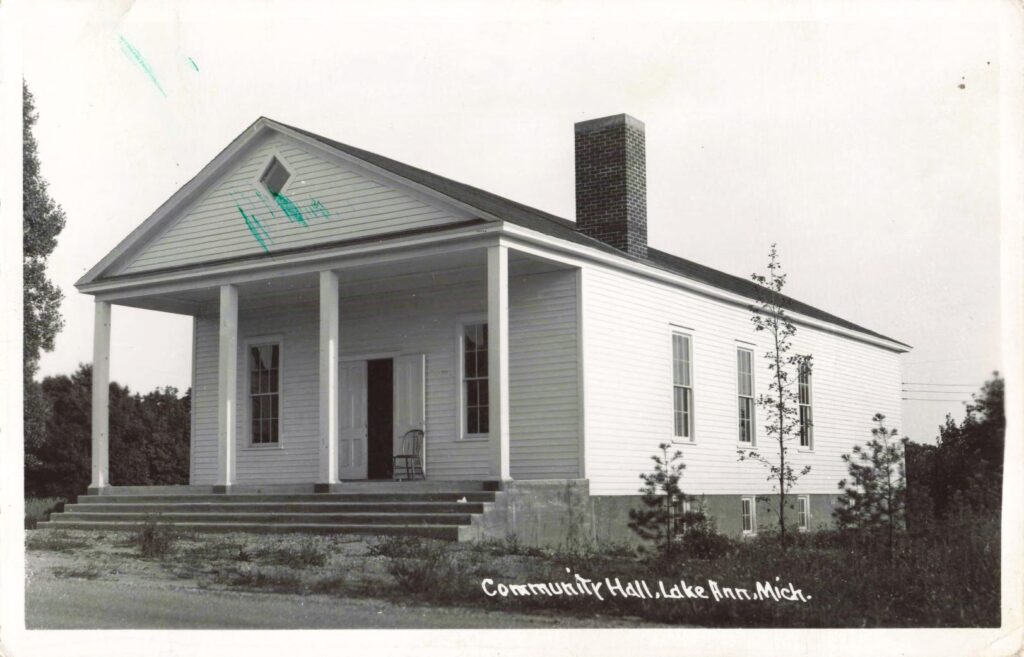
A town with a hall had public life. It had meetings, celebrations, votes and debates. After disasters, those spaces helped people decide what came next.
Lake Ann Camp and the Later Chapter
Lake Ann Camp was founded in 1948 on the grounds of a former resort and golf course. It became a Christian youth camp and retreat center, adding another layer to the village’s long recreation story.
The camp fits the town’s pattern. Land once shaped by timber and resort use found a new purpose. Young people came for organized camp life, group activities and time in northern Michigan.
That later use helps explain why Lake Ann continued to be known by people far outside its small population.
Lake Ann Today
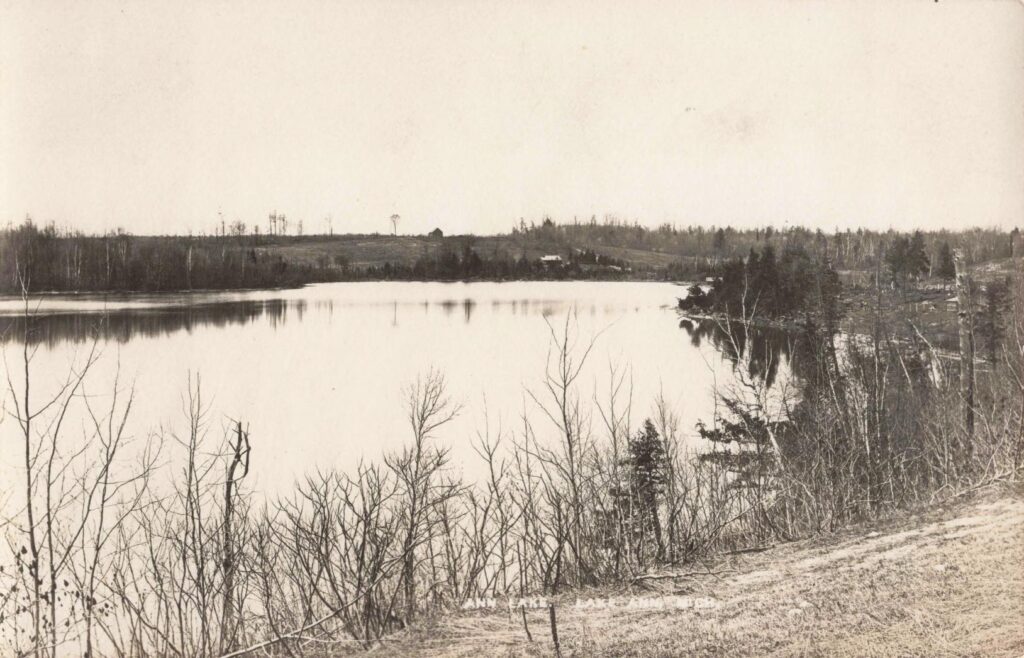
Lake Ann remains small. The 2020 census counted 273 residents in the village. It is located in northeastern Benzie County, within Almira Township, west of Traverse City.
Its size can be misleading. The History of Lake Ann Michigan includes settlement, lumber, railroads, hotels, sawmills, fires, resorts, camps and civic rebuilding. The village did not become a large city. That may be its most interesting fact. It had the early ingredients: rail access, industry, water, population and business growth. Fire changed the outcome.
What remains is a compact village with a layered past. Lake Ann began with timber. It grew with rail. It was scarred by fire. It found a new identity beside the water.
Sources Cited for the History of Lake Ann Michigan