 by
by 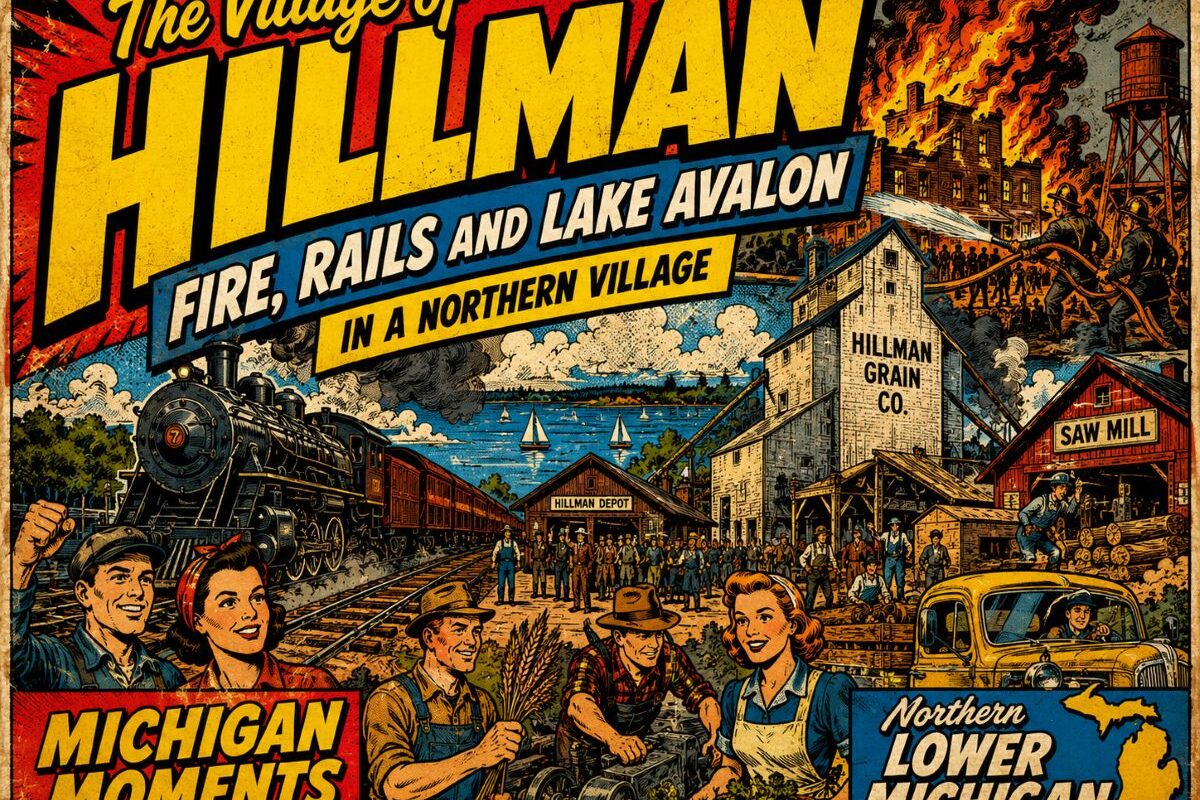
The History of Hillman Michigan begins with a name that still fits the place: Brush Creek.
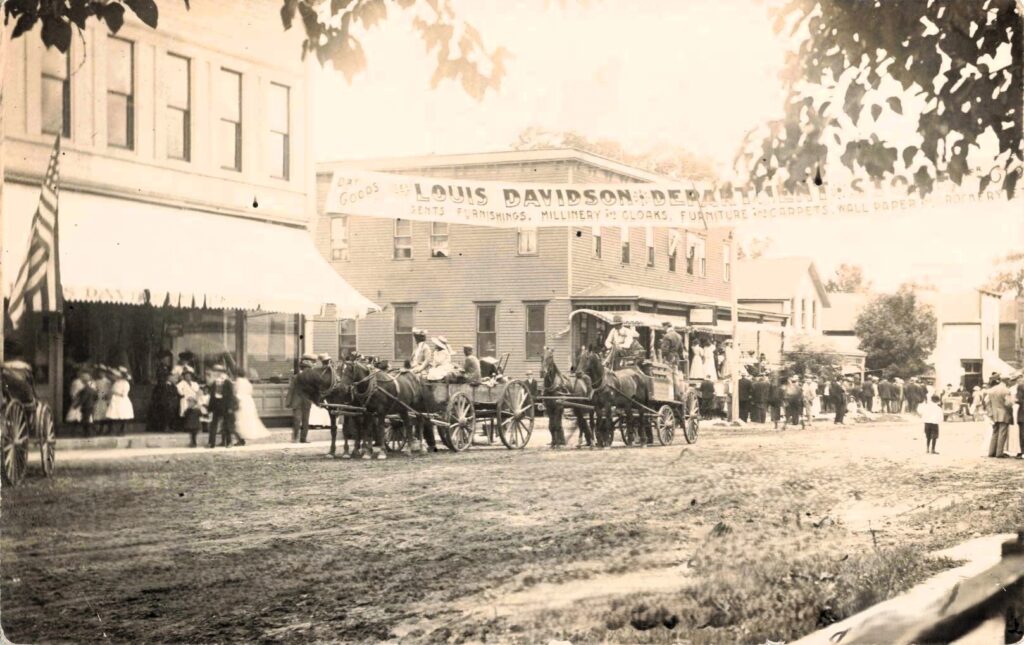
Before Hillman became a village, this part of northeast Michigan was known for timber, water, rough roads and scattered settlement. The town site grew near Brush Creek and the Thunder Bay River. That location gave early settlers waterpower, travel routes and a reason to build mills and stores.
Hillman became an incorporated village in 1891. It had already served as an early county center for Montmorency County, before Atlanta became county seat in 1893. That early public role gave Hillman a larger place in county history than its size might suggest.
Table of Contents
Watch – Hillman Michigan – Fire, Railroads and Lake Avalon Shaped This Small Town
History of Hillman Michigan Starts at Brush Creek
Brush Creek was not just a name. It was the reason people gathered there. The waterway met the Thunder Bay River, and the village grew around that crossing.
An early historical account named Francis Holmes as one of the first permanent settlers in what became Hillman Township, arriving around 1874 or 1875. Before that, the area had lumber camps, but camps were not towns. A town needed families, trade, churches, roads and schools.
By the early 1900s, Hillman had a bank, several general stores, churches and mills. It also had an electric light and power plant that supported small industry.
A Timber Town That Had to Change
Like many Northern Lower Michigan communities, Hillman rose during the timber era. Montmorency County had pine and hardwoods, and lumber companies cut heavily in the late 1800s. Logs and lumber moved by rail, rivers and Great Lakes shipping routes.
But timber towns faced a hard question. What came next?
Hillman’s answer was practical. The village leaned on farming, mills, retail, local services and later tourism. That mix helped it avoid becoming only a memory after the big cutting years ended.
The Railroad Came Late — and That Is the Surprise
The most surprising part of Hillman’s story is the timing of the railroad.
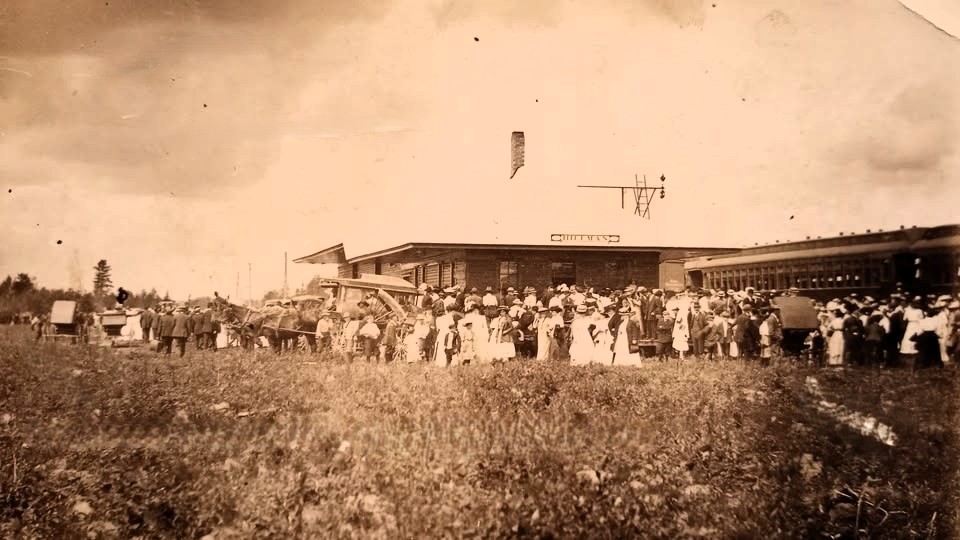
The Detroit & Mackinac Hillman branch was built in 1908 and 1909 from the Alpena area to Hillman. Many viewers may assume the line was built during the peak of the pine boom. It was not. Railroad history records say the old pine lumber era was largely over by 1908.
The branch had several jobs. It helped serve shale hauling for the Huron Portland Cement Co. near Alpena. It also reached farming country, gravel sources and remaining timber interests. Hillman became the end of the branch. Rail service lasted only about 20 years, and the line was pulled back to Emerson in 1929.
Fire and the Rebuilding of Main Street
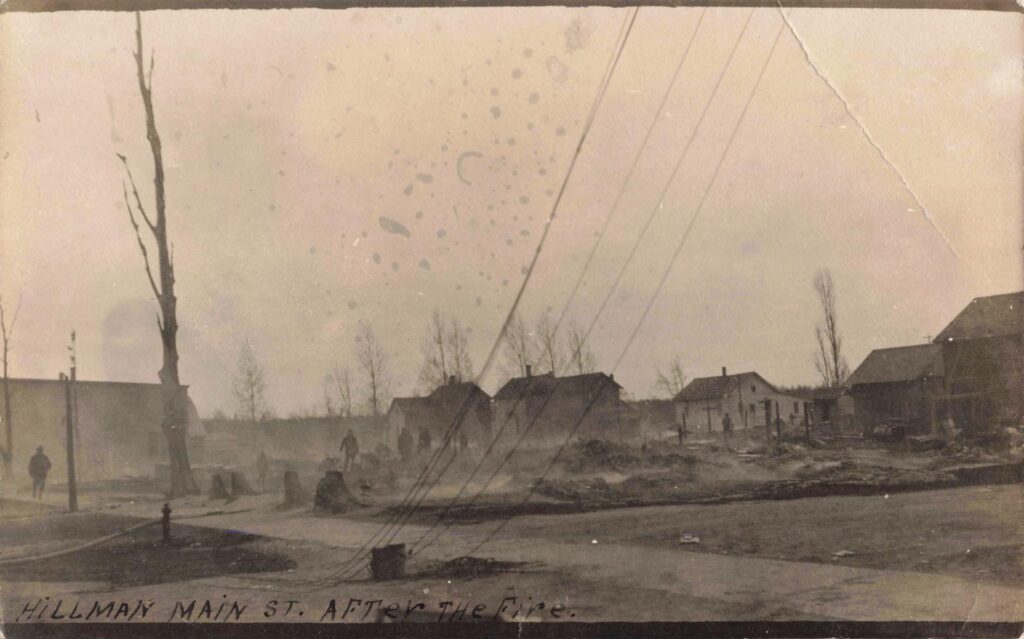
Fire was a constant threat in early northern Michigan towns. Wooden buildings, sawdust, heating stoves, dry woods and close storefronts made every business block vulnerable.
Hillman suffered several serious fires in its early years. Railroad records note that the most destructive regional fire damage came in 1908 in surrounding forests.
The image labeled “Hillman Main St. After The Fire” shows how harsh such losses were. Buildings were gone. Smoke or haze hung near the ground. Stumps, wires and debris marked a town forced to start over.
Hotels, Stores and the Public Life of Hillman
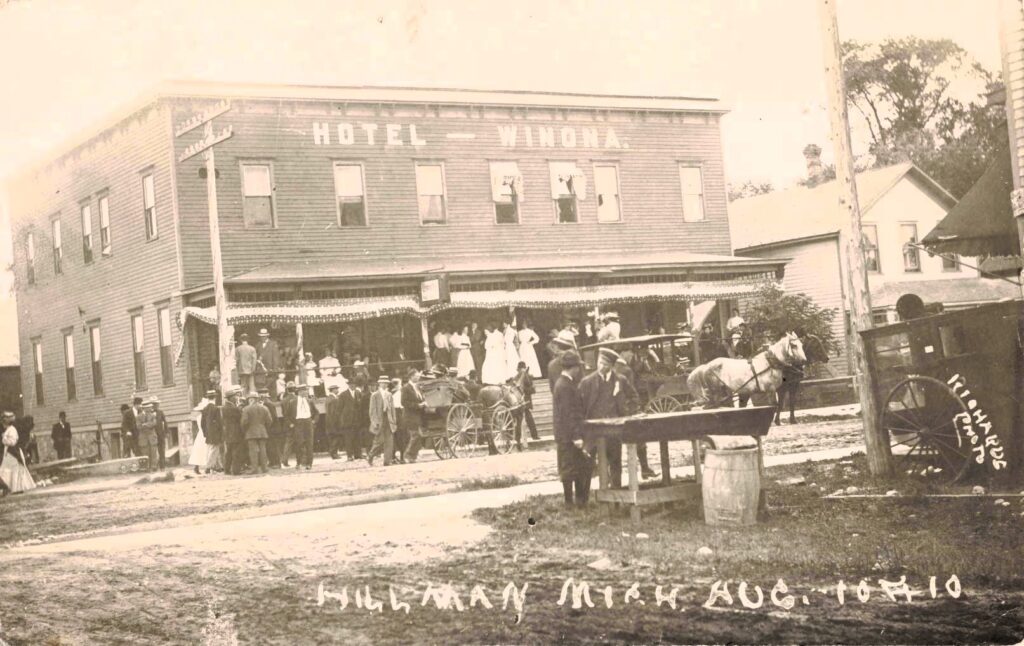
A village hotel was more than lodging. It was a front porch for the town.
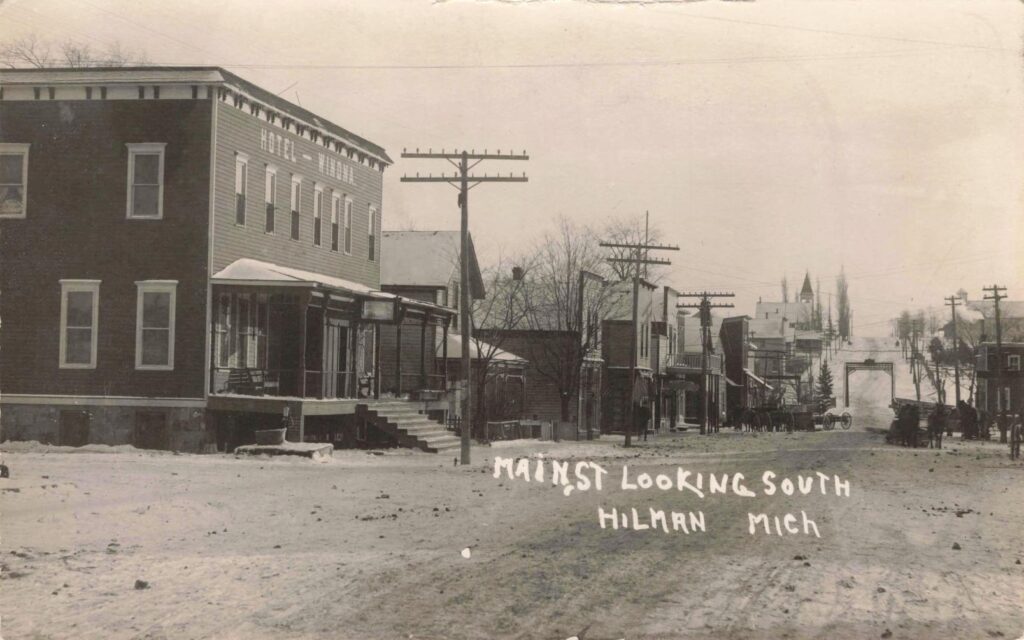
The Winona Hotel stood in Hillman during the horse-and-wagon age. Travelers, merchants and local residents used hotels as gathering places. A person could get a meal, hear the news, meet a driver or wait for the next leg of a trip.
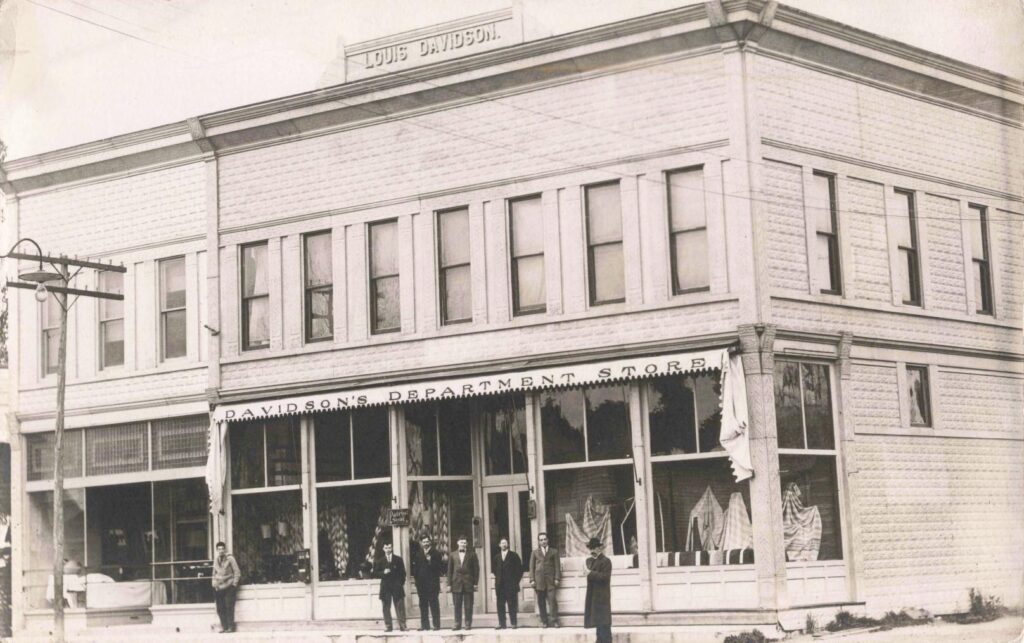
Davidson’s Department Store played a similar role. In a small village, a large store was a public institution. It sold goods, extended trust, moved gossip and connected farm families to town life.
Automobiles Changed Hillman Again
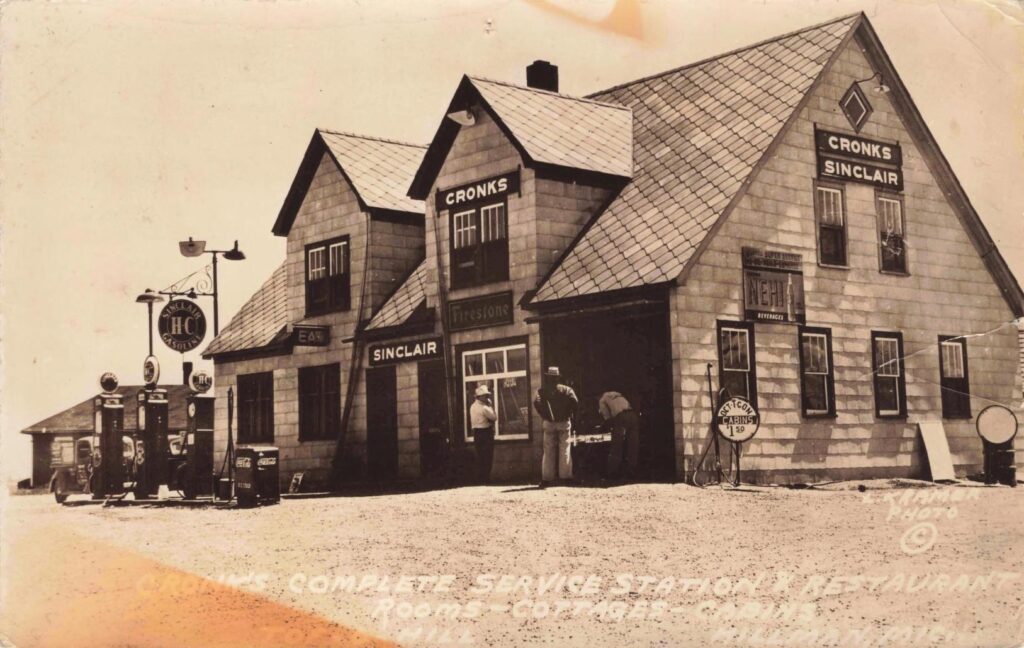
By the 1910s and 1920s, automobiles were changing Hillman’s streets and economy. Cars shortened the distance between town, farms, lakes and Alpena. They also created new business models.
Cronk’s service station is a strong example. It offered Sinclair gas, tires, meals, rooms, cottages and cabins. That mix shows the rise of the roadside stop. Travelers needed fuel, food, repairs and a reason to pull in.
The bear cub attraction shown at Cronk’s station is uncomfortable to modern eyes, but it is historically useful. It shows how roadside businesses used spectacle to stop traffic. In the early auto age, curiosity could sell gasoline.
Lake Avalon and the Resort Years
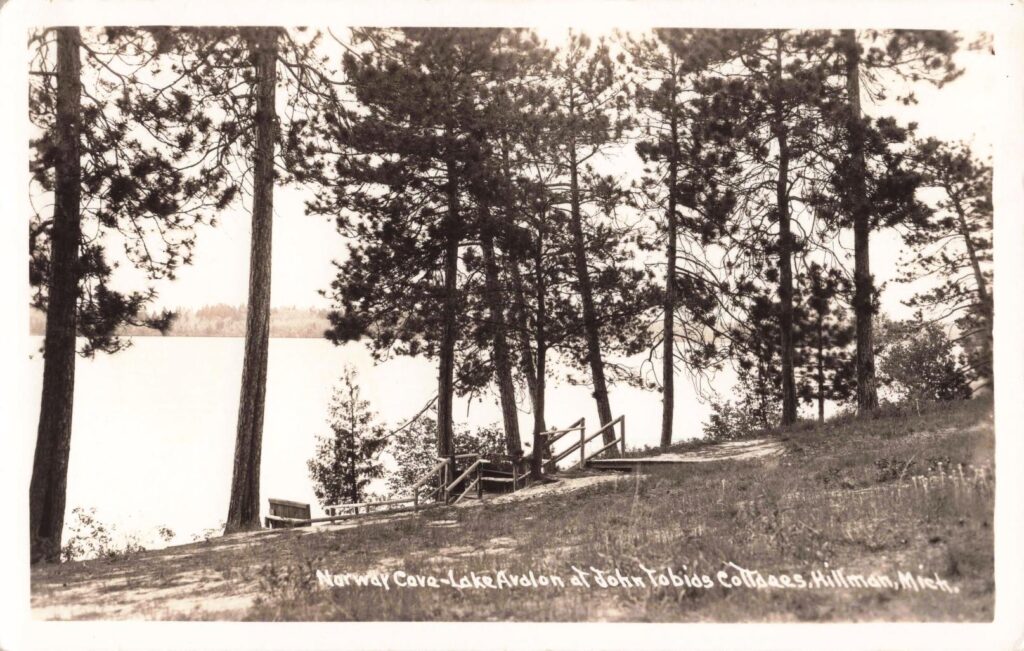
The History of Hillman Michigan is not only about Main Street. It is also about the lakes.
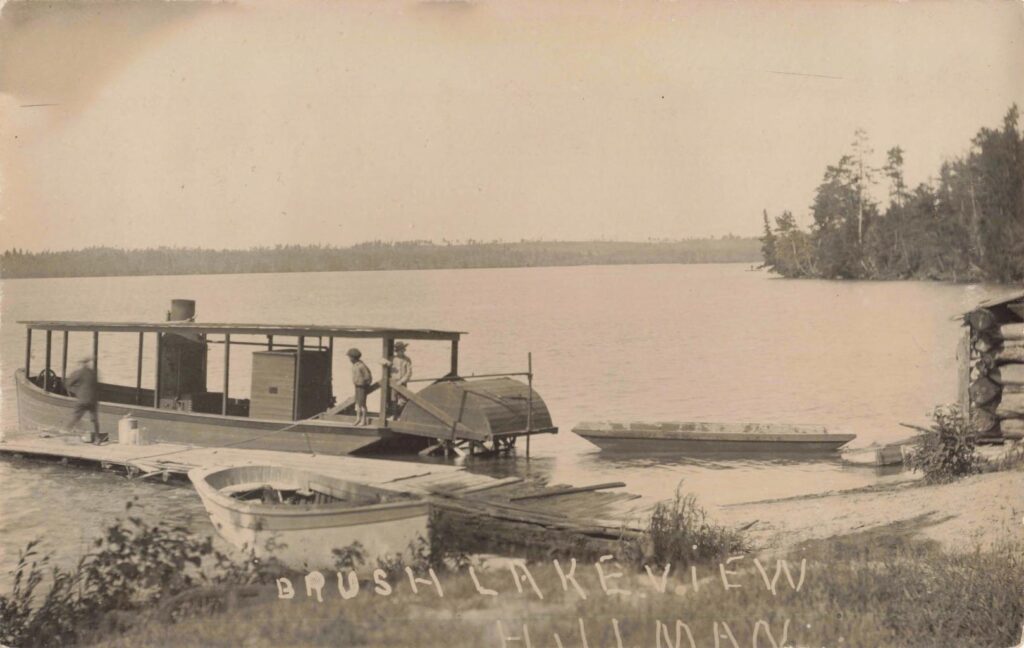
Avalon Lake, formerly Brush Lake, sits about five miles northwest of Hillman. State fishery records describe it as a natural glacial lake of 372 acres, with early fish surveys dating to the 1920s. The Civilian Conservation Corps made a lake-bottom map in 1935.
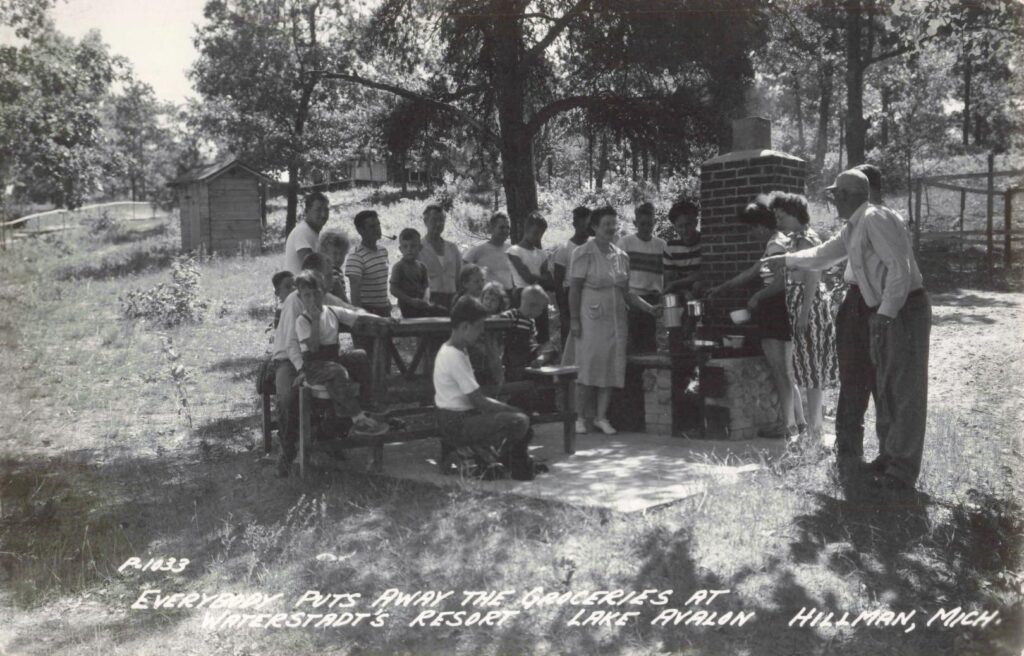
Lake Avalon drew anglers, cottagers, families and resort visitors. The postcard views of Brush Lake, Norway Cove and resort cookouts show a softer side of Hillman’s economy. Work built the village, but water helped keep people returning.
The Hoop Shop and the Wood-Product Economy
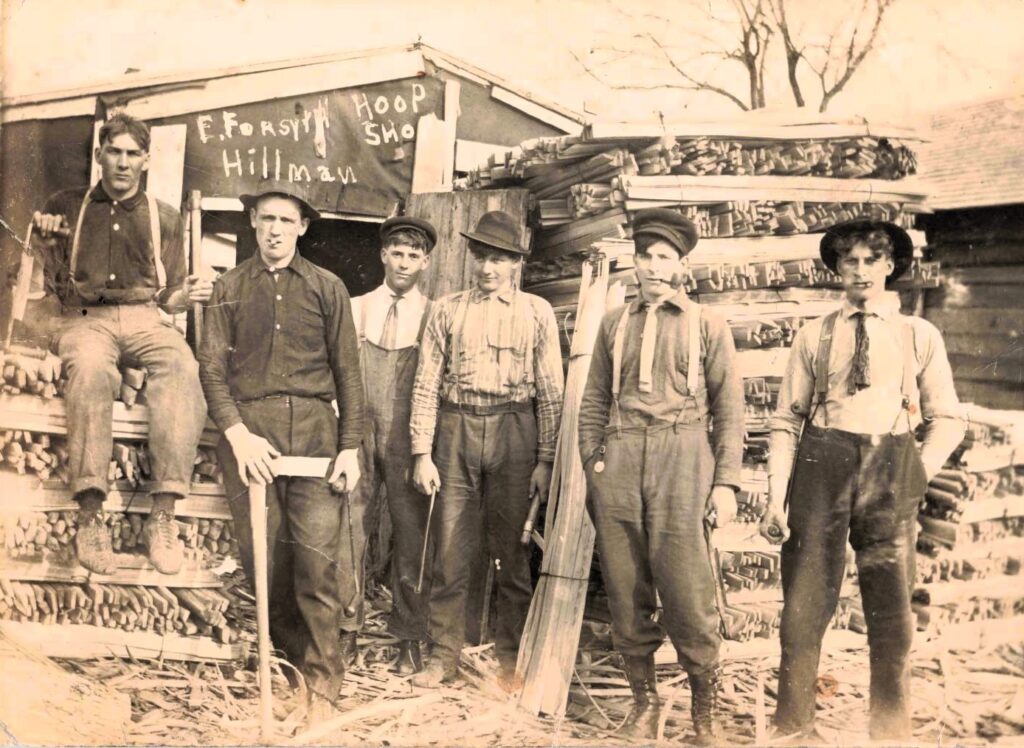
The E. Forsyth Hoop Shop view adds another layer to Hillman’s story. The workers stand among cut wood stock, tools and stacked material. The scene suggests a smaller wood-product trade after the first logging rush.
This is important. Timber did not vanish from Hillman’s economy all at once. It changed. Instead of only big camps and river drives, local wood work could include hoops, staves, cut stock and other products. The labor remained hard, but the scale was different.
Why Hillman Still Holds Attention
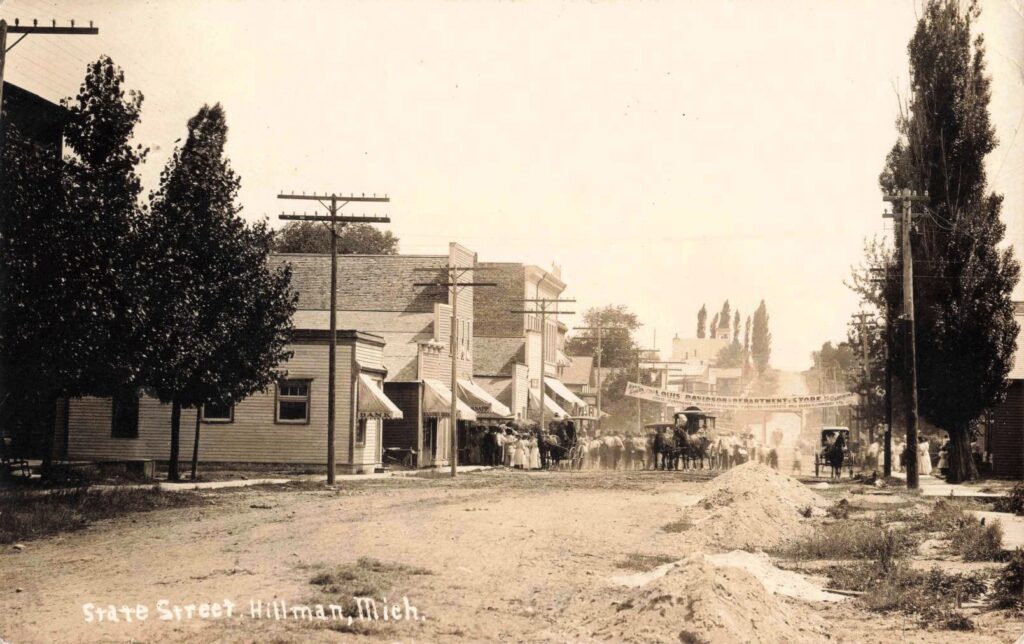
The History of Hillman Michigan is important because it contains several northern Michigan stories in one place.
Hillman was a county seat, then it was not. It had a railroad, then lost it. It rose with timber, then turned to farms, stores, lake trade and roadside travel. It endured fires and still kept a main street.
That is the unique historical aspect of Hillman. It layered many eras into one small village.
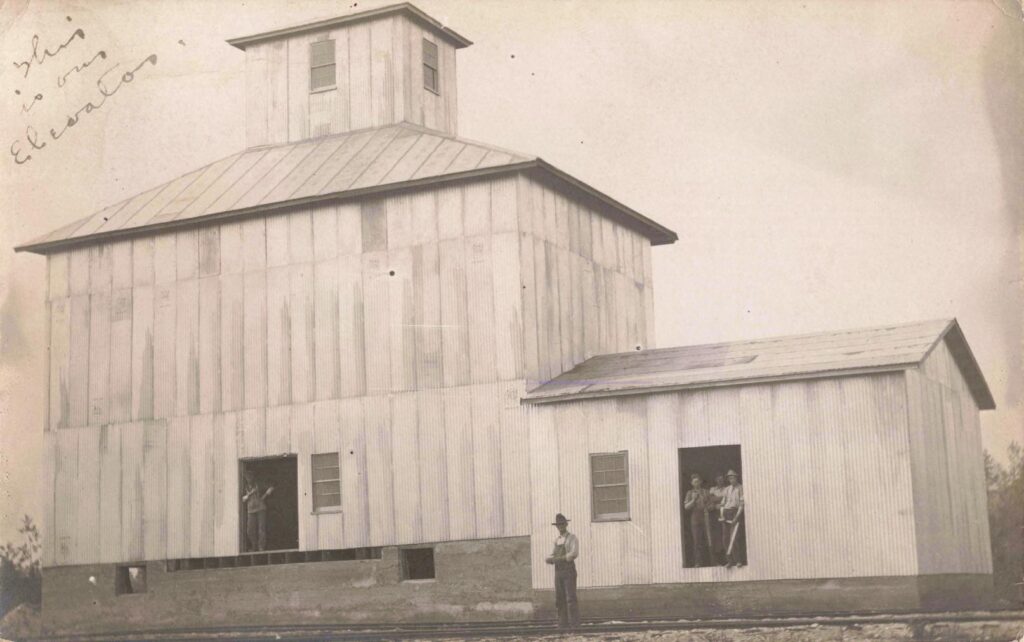
A person can read Hillman’s past through its streets: the store, the hotel, the depot, the elevator, the service station, the cottage road and the lake landing. Each one tells part of the same story.
History of Hillman Michigan in One Northern Village
The History of Hillman Michigan is not built around one famous resident or one dramatic event. Its power is in the complete small-town record.
Hillman began at Brush Creek. It grew with timber. It became a village. It served county life. It welcomed the train. It rebuilt after fire. It adapted to cars. It sent travelers toward Avalon Lake.
That is why Hillman remains a strong subject for Michigan Moments. It shows how a small Northern Lower Michigan town kept changing while still feeling like itself.
Works Cited fof the History of Hillman Michigan
“Brush Creek Mill.” Visit Alpena.
Cwalinski, Tim A. “Avalon Lake, Montmorency County: Status of the Fishery Resource Report.” Michigan Department of Natural Resources and Environment, 2011; renumbered 2024.
“Hillman, MI.” MichiganRailroads.com.
“Hillman Branch — Detroit & Mackinac Railway.” MichiganRailroads.com.
“History.” County of Montmorency.
“Village of Hillman.” Genealogy Trails: Montmorency County, Michigan.
“History of Montmorency County.” Genealogy Trails: Montmorency County, Michigan.