 by
by 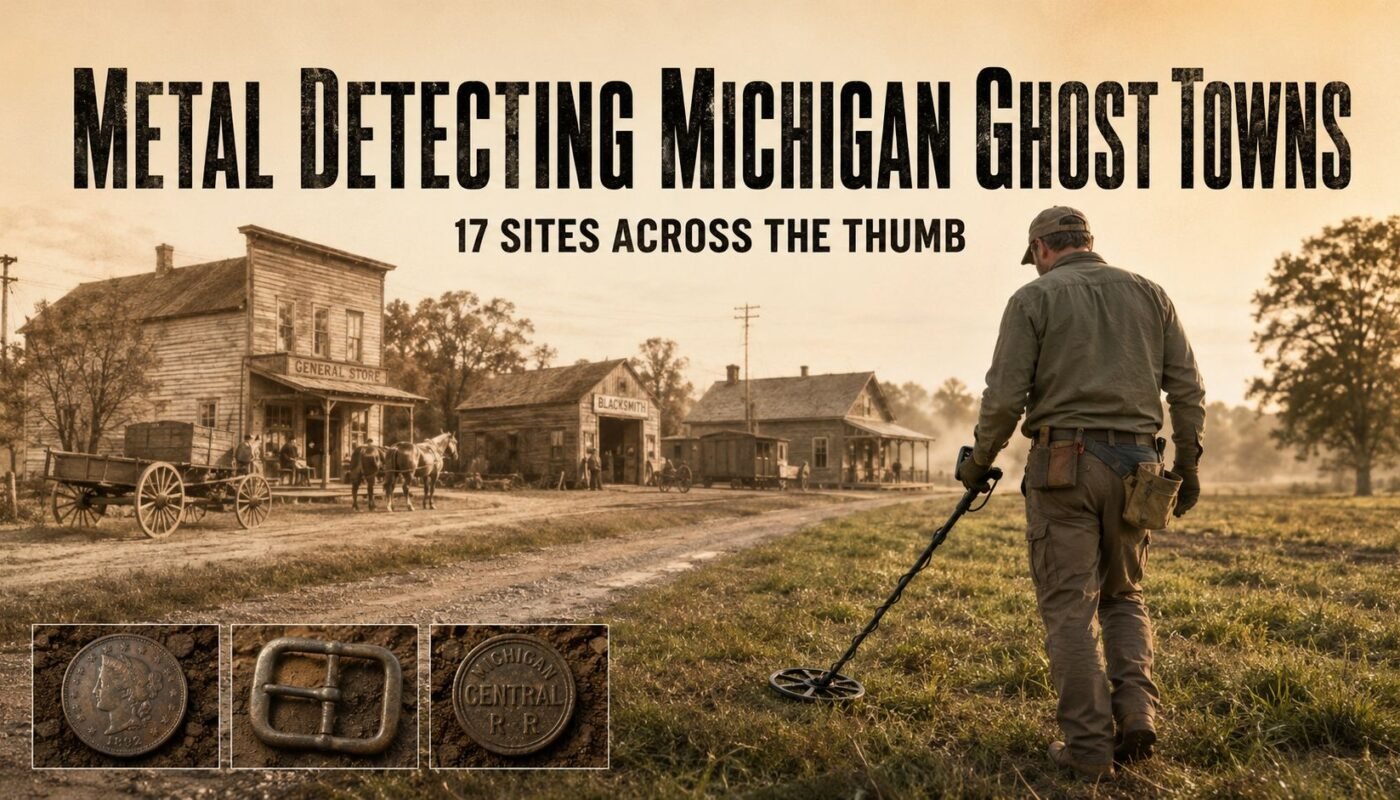
Metal detecting Michigan ghost towns starts with historical maps, parcel records and written landowner permission.
An old metal-detecting guide marks 17 “ghost” communities in Michigan’s Thumb. The list includes four sites in Huron County, 10 in Sanilac County, and three in Tuscola County. Some are a little more than road crossings. Others still have houses, churches, active rail lines, or state facilities.
That distinction matters. A dot in a guidebook is not an invitation to enter land or start digging. Most of these sites are on private property. Road shoulders, former railroad corridors, church lots, and school grounds should not be assumed to be public. Written permission from the current owner is the safest standard.
The possible finds below are based on documented mills, stores, post offices, depots, hotels, blacksmith shops, and homes. They are not reports of known buried objects. In farm country, detectorists should expect far more fence wire, aluminum, nails, modern ammunition casings, and broken machinery than old coins.
Table of Contents – Metal Detecting Michigan Ghost Towns
Map of Ghost Towns in Huron, Sanilac and Tuscola Counties
Michigan Metal Detecting Rules Come First
Michigan regulates detecting on state land. The Michigan Department of Natural Resources allows it only in parks or park areas listed as open. Recovered items must be checked by park staff. Historic or Indigenous artifacts must be left where found, and the state may retain other historic property. The State Historic Preservation Office says archaeological work on state land requires a permit and warns that removing an object from its soil layer destroys information about the site.
- Get written permission and agree in advance on who keeps any finds.
- Check the tax parcel map. Never assume a road edge or unused rail bed is public.
- Stay off active railroad property and state institutional land.
- Never detect in a cemetery, burial ground or protected historic or archaeological site.
- Use small recovery tools, replace every plug, and remove modern trash.
- Leave a potentially important artifact in place. Photograph it, mark the location, and contact the owner and a local museum or state archaeologist.
Huron County Ghost Towns
Glencoe: A Short-Lived Farm Crossroads
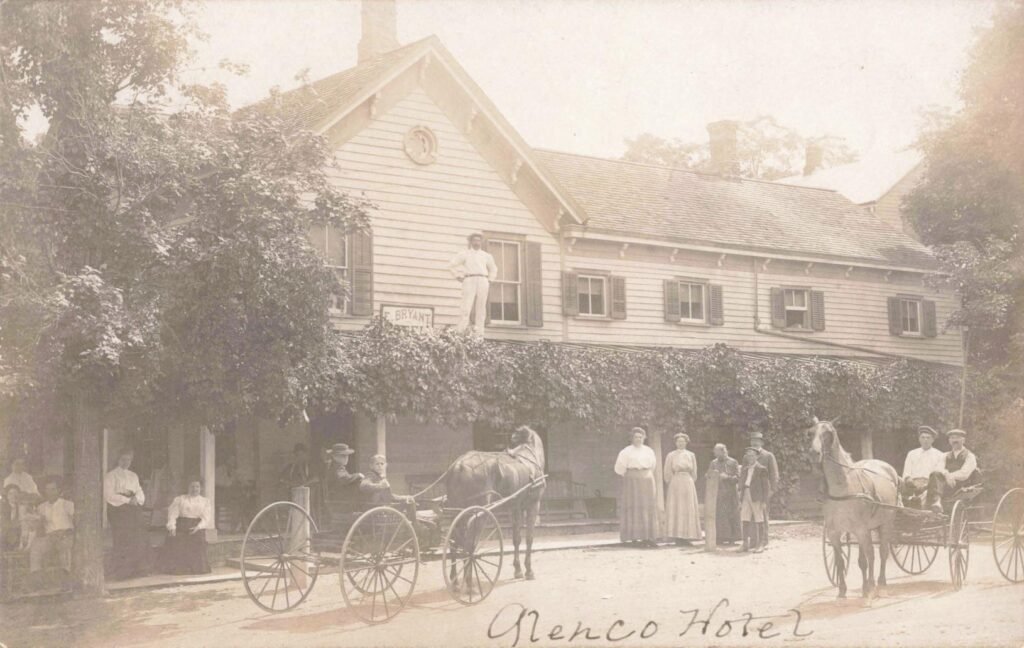
The guide places Glencoe at the intersection of Verona and Day roads, west of Port Hope. The Huron County Economic Development Corp. reports that its post office operated from 1901 to 1914. A surviving 1907 postcard identifies the E. Bryant Hotel, also called the Glencoe Hotel. Local accounts also place a hall and a church near the crossing.
Glencoe appears to have served farmers and travelers during a brief window in the early 1900s. It never had the long commercial run that larger Thumb villages did.
What may turn up with permission: Early cents and nickels, clothing buttons, suspender clips, harness buckles, wagon hardware, keys, lock parts, and hotel or store utensils. Expect heavy contamination from nails, farm wire, and later roadside debris.
Helena: Store, Depot and Church
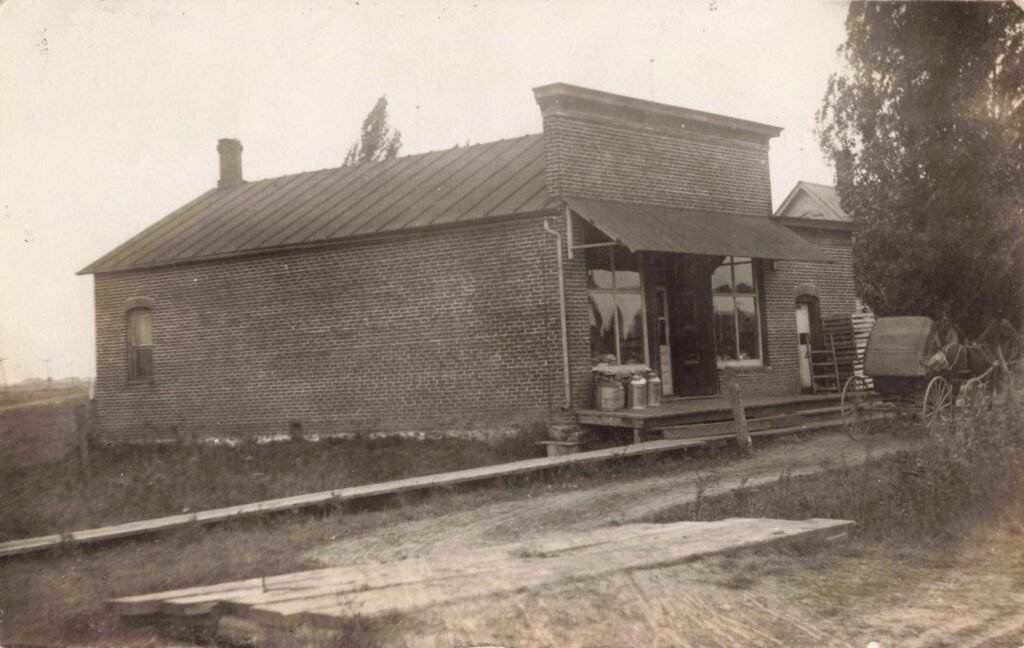
Helena grew up around a railroad stop and general store southwest of Harbor Beach. The post office opened in 1887 and closed in 1906. Historical directories identify G. Horton as a railroad agent, and the store also handled depot and postal business. A brick general store followed in 1912. St. Anthony of Padua Catholic Church remains an active place of worship. Thumbwind’s Helena history gives a fuller account.
What may turn up with permission: Coins, buttons, small keys, postal hardware, railroad lead seals, brass tags, harness fittings, and general-store metal. The former rail corridor and church property require separate permission. The churchyard and any burial area are off-limits.
Linkville: The Thumb’s Strongest Mill-and-Rail Candidate
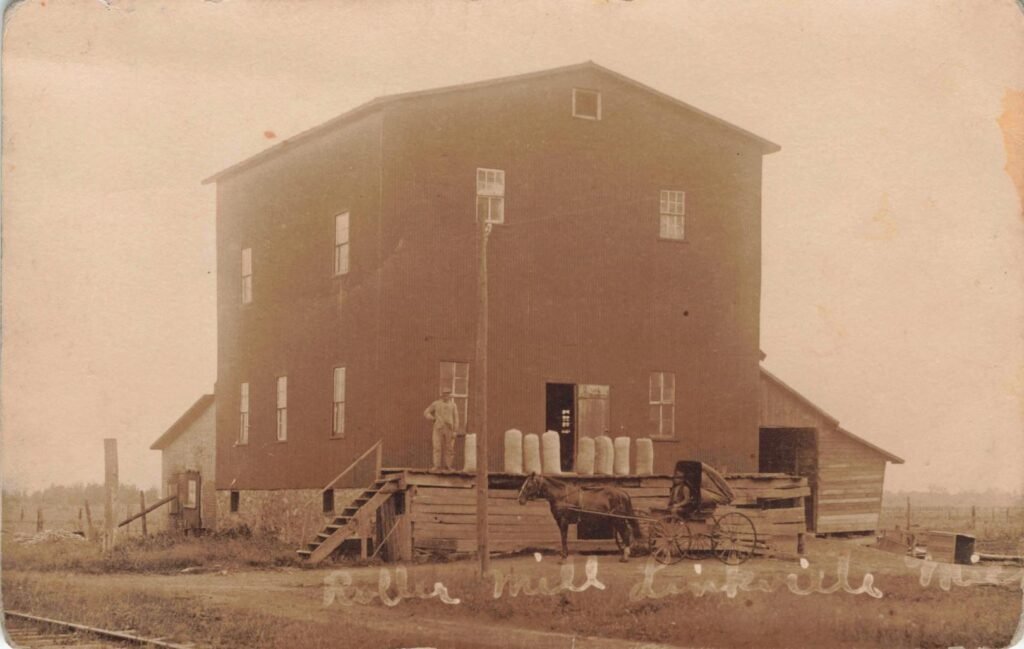
Linkville began about 1870 as Kilkenny. A post office opened in 1879, later reopened and renamed Linkville in 1893. The village stood along the Pontiac, Oxford & Port Austin Railroad near present-day Kilmanagh Road. At its peak, it had a depot, a roller mill, a general store, a hotel or tavern, a school, and two churches. Its post office closed in 1913. Thumbwind’s Linkville history includes a 1904 plat and images of the mill.
What may turn up with permission: Mill fasteners, scale pieces, brass fittings, rail seals, freight hardware, coins, trade tokens, pocketknife parts, buttons and harness gear. Large iron targets may be mill or railroad debris, or modern scrap. The nearby cemetery is not a detecting site.
Parisville: A Polish Farm Community Hit by Fire
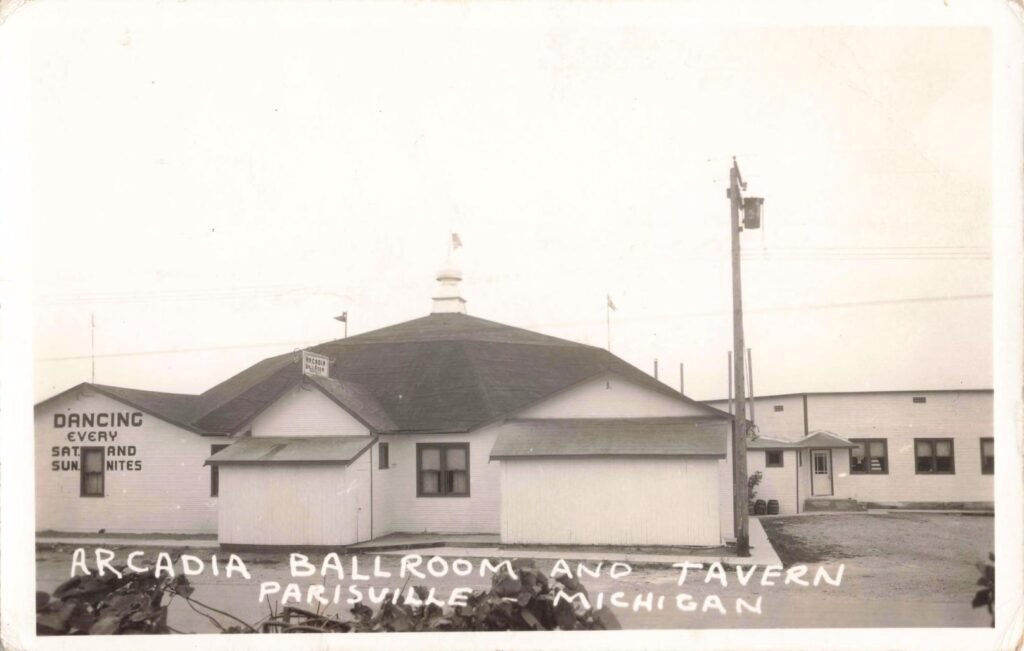
Parisville was settled in the 1850s and became one of Michigan’s earliest Polish American communities. Its name was adopted by settlers who had lived in Paris, Ontario. The Parisville post office opened in 1873. The community endured the Thumb fires of 1871 and 1881, then continued as a Catholic farm settlement. St. Mary Catholic Church and a small group of homes remain, so Parisville is not abandoned in the ordinary sense.
What may turn up with permission: Household buttons, buckles, thimbles, farm hardware, harness parts, early coins, and fire-damaged metal on old home lots. Warped utensils, melted alloys, and stove fragments may point to a burn layer. Church grounds and burial areas should not be searched.
Sanilac County Ghost Towns
Cash: A Village the Railroad Passed By
Cash took its name from Edward Cash, who arrived in 1851 and hosted the 1868 meeting that organized Watertown Township. David Fowles built saw and shingle mills there in 1882. A store and post office followed in 1883. The village survived the 1881 fire, but the post office closed in 1905. When a railroad reached nearby Watertown in 1912, Cash lost much of its commercial role. The Village of Cash historical marker summarizes the rise and decline.
What may turn up with permission: Store coins, buttons, furniture fittings, stove parts, sawmill iron, logging-chain links, harness gear and wagon hardware. Elk Creek and old mill foundations may hold archaeological value, so significant items should remain in place for review.
Charleston: A Town Burned in 1881
Charleston was founded around 1864 under the name Cato. Its post office opened as Charleston in December 1872. The Thumb Fire of September 1881 destroyed all 21 buildings in the settlement. Residents rebuilt, and the 1906 Standard Atlas of Sanilac County still included a separate plat of Charleston. Today, the former village is a rural crossroads east of Minden City.
What may turn up with permission: Square nails, stove iron, household hardware, buckles, coins and fire-altered metal. A concentrated layer of burned objects could be an intact 1881 deposit, not a casual collection of loose targets. Stop digging and report such a layer rather than stripping it of context.
Cumber: Blacksmith Country
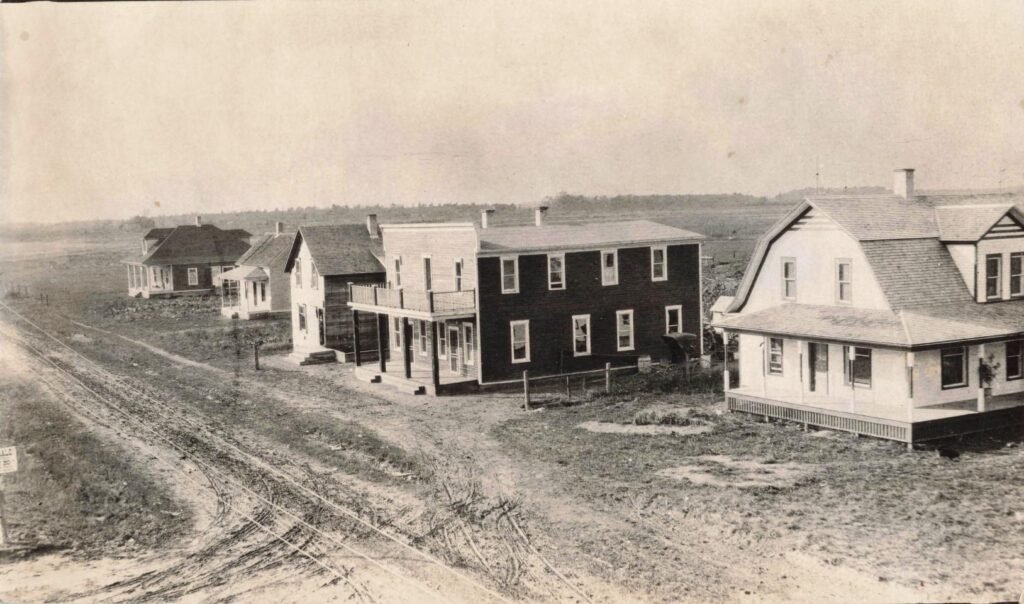
Cumber formed at Cumber and Wheeler roads in Austin Township. T.M. Bradshaw opened a blacksmith shop in 1869, and the post office followed in June 1874. Farms and a few homes remain in the area.
What may turn up with permission: Horseshoes, ox shoes, harness rings, wagon clips, broken files, tool fragments, square nails, copper cents, and buttons. A blacksmith lot can produce hundreds of iron signals for every small personal item, so careful target mapping may be more useful than digging every tone.
Elmer: A Highway Crossroads With Postal Roots
Walter Hyslop became the first recorded settler in the Elmer area in January 1866. Elmer Township was organized in 1870, and a post office served the community from 1876 to 1906. The old center sits near the M-19 and M-46 crossing west of Sandusky. Railroad histories also list Elmer as a station.
What may turn up with permission: Roadside coins, buttons, postal hardware, harness buckles, wagon fittings, brass farm-machine plates and railroad freight seals. Modern highway construction may have removed or deeply buried older surfaces.
New Greenleaf: A Postal Crossroads
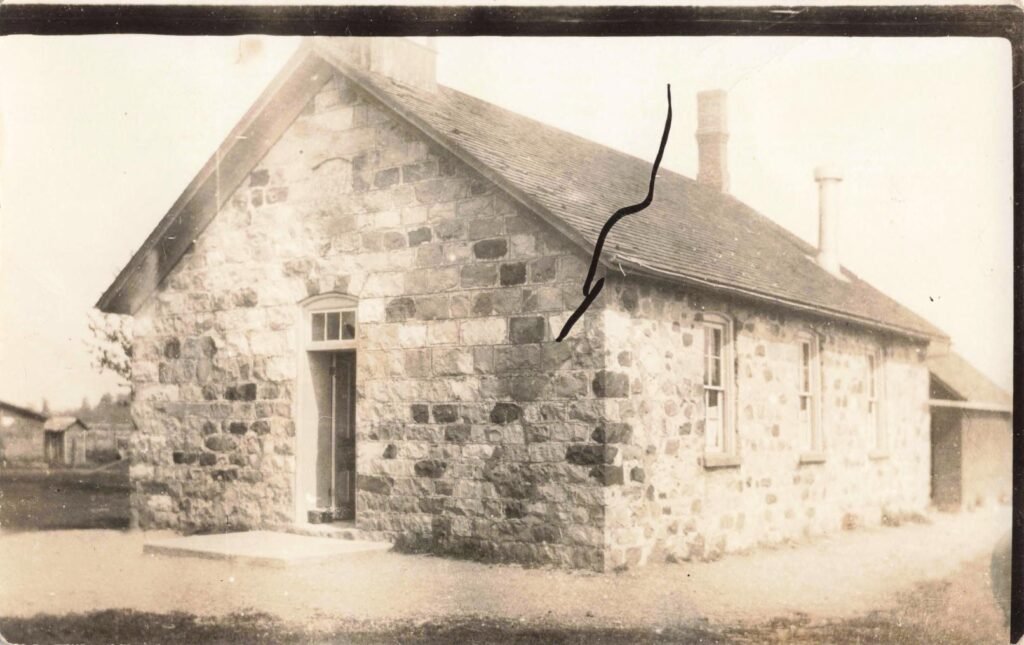
New Greenleaf stood at Bay City-Forestville and Hadley roads. A post office called Greenleaf opened there in 1886 and closed in 1906. The separate name “New Greenleaf” distinguished the crossroads from other Greenleaf locations shown on later maps. The record points to a rural mail and farm-service center rather than a large village.
What may turn up with permission: Cents, buttons, keys, harness fittings, small farm-tool parts and household hardware from former postal or residential lots. Because the business record is thin, expectations should remain modest.
Speaker: A Post Office Beside a Burial-Ground Warning
The guide places Speaker at the intersection of West Fremont Road and M-19, south of Peck. A surviving 1879 postal cover confirms that Speaker had an operating post office by that year, and the 1906 Sanilac atlas included a separate village plat. The community remained small and never matched nearby Peck or Melvin as a trade center.
What may turn up with permission: Postal hardware, coins, buttons, keys, harness buckles, and household metal. The historic Speaker Township Cemetery lies nearby. Its grounds, margins, and access lane must be treated as entirely off-limits.
Tyre: Stores, Doctors, Drugs and a Railroad
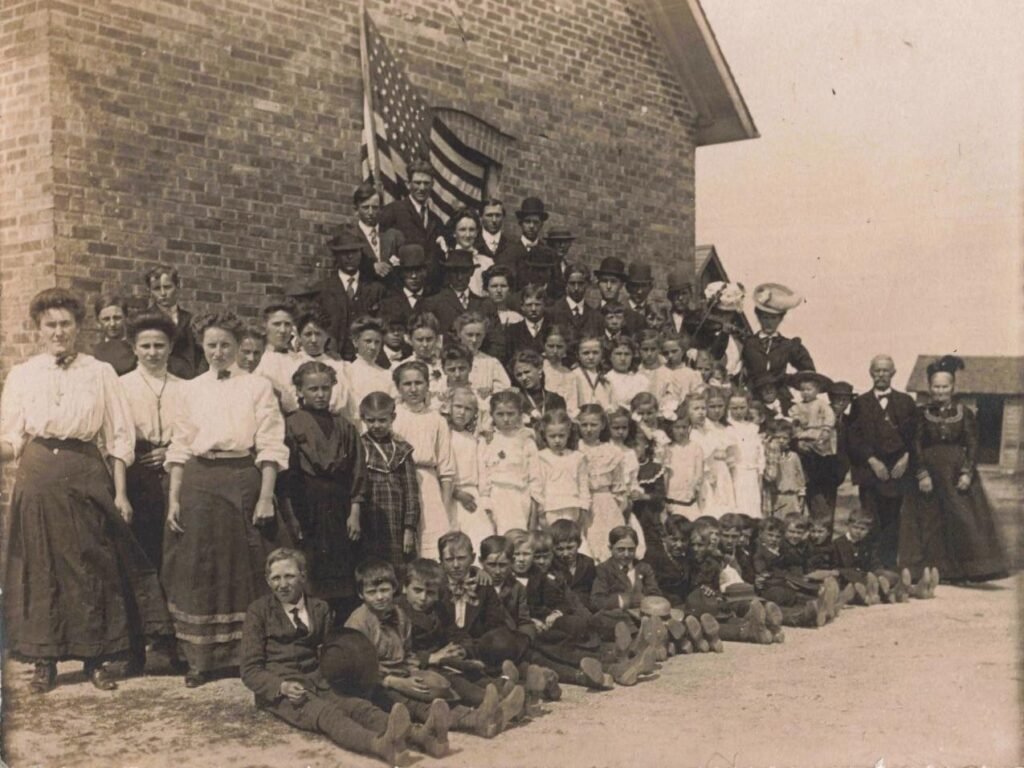
Tyre was founded in 1857 by Alex Soule, John Getty and others. The Soule family chose the biblical name because of the area’s stony ground. A post office operated from 1863 to 1881, reopened later that year and continued until 1964. Tyre became a Pere Marquette Railway station and a major farm-shipping point. Historical accounts credit the community at its height with five general stores, seven doctors and three drugstores.
What may turn up with permission: Coins, store tokens, brass scale weights, small medical or pharmacy fittings, railroad seals, livestock tags, harness hardware and freight-related metal. Tyre has one of the broadest documented activity patterns on this list. That does not make the rail line or nearby private lots open to the public.
Valley Center: From Becket to a Rail Station
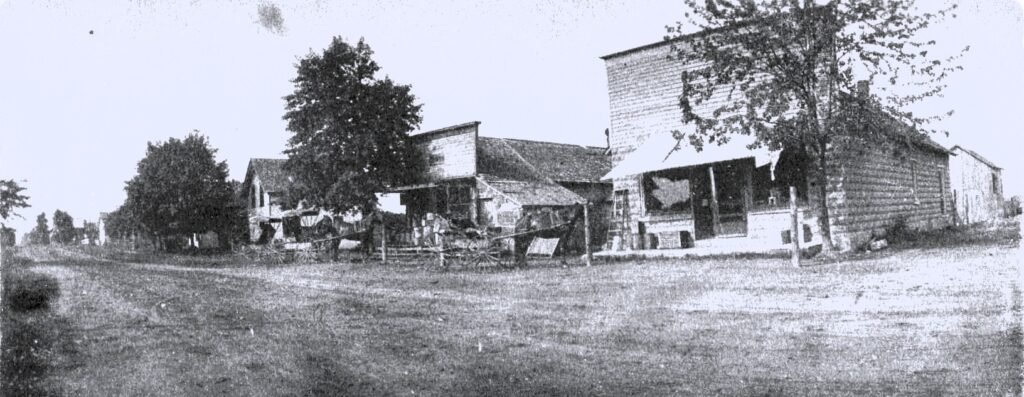
Frank LaCass settled near the future Valley Center in 1854. A post office opened in 1857 under the name Becket, after John Beckett, the first postmaster. The name changed to Valley Center in 1882. The village sat on the Pere Marquette line between Saginaw and Port Huron, and a county biography identifies a local merchant as a grain broker and station agent. The post office closed in 1940.
What may turn up with permission: Railroad lead seals, baggage hardware, brass tags, coins, grain-scale pieces, livestock tags and harness fittings. A church and homes remain in the area, and Valley Center Cemetery is located away from the main crossing. All occupied and religious property requires express approval, while cemetery land is off limits.
Watertown: Mills, Store and a Late Railroad Boost
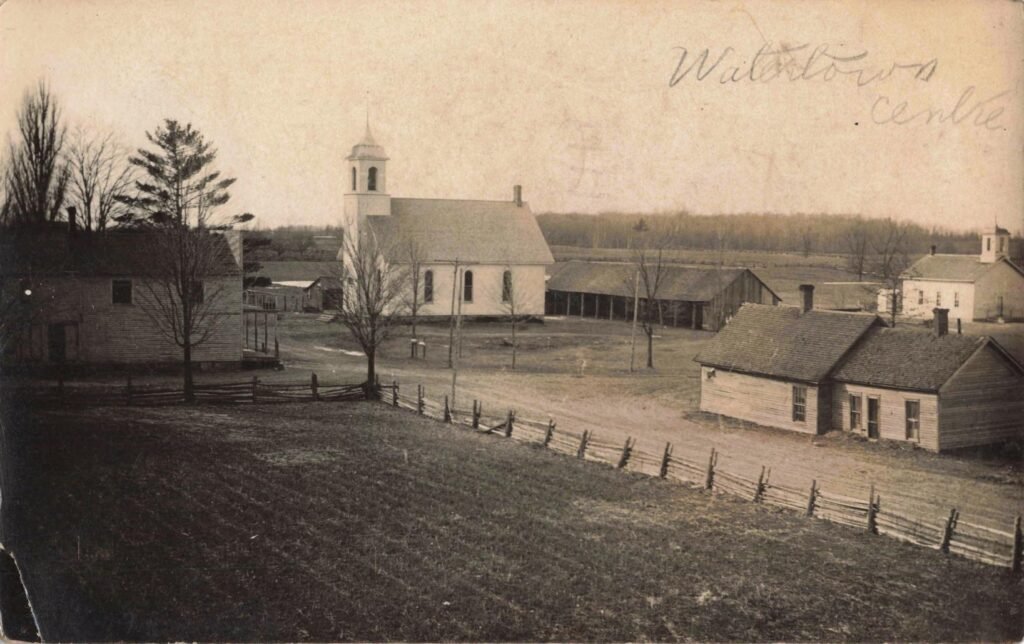
Watertown’s first school opened in 1867. John Gimmel built a mill in 1882, and William Tomelson opened a store in 1883. The post office operated from 1895 to 1905. A railroad station later shifted trade from nearby Cash toward Watertown.
What may turn up with permission: Sawmill fasteners, store coins, buttons, harness gear, school-related clothing fasteners, railroad seals, and freight hardware. Former school, mill, and rail sites may now be privately owned or altered by later work.
Wickware: Post Office, Blacksmith and Church
Wickware developed at Cass City and Leslie roads in Greenleaf Township. Its post office opened in 1882 under postmaster Albert Wickware. George Cutting opened the township’s first blacksmith shop in 1881, and another shop began operating at Wickware in 1883. A Presbyterian church was also built in 1883.
What may turn up with permission: Horseshoes, chain links, wagon hardware, broken tools, harness buckles, coins, buttons and household metal. Blacksmith waste can be dense, and the church lot should not be entered without direct approval.
Tuscola County Ghost Towns
Ellington: A Lumber Crossroads That Lost Its Market
Simeon Botsford built the first house at Ellington Corners. About 1864, Darius H. Gould opened a general merchandise store that became the village’s commercial core. Ellington prospered while lumbering remained active along the Cass River. By the early 1880s, the county history counted two stores, seven or eight houses, a Methodist Episcopal church and twice-daily stage mail. The post office continued until 1905, but timber depletion and stronger nearby markets steadily reduced trade.
What may turn up with permission: Stage and wagon hardware, harness buckles, store coins, trade tokens, buttons, pocketknife parts and postal locks or keys. The old commercial frontage offers a better historical case than random field acreage.
Elmwood: A Postal Stop With a Thin Record
Elmwood stood along present-day M-81 at Elmwood Road, on the line between Elmwood and Ellington townships. Its post office opened in 1862, closed and reopened twice, then ended service in 1905. Unlike nearby Gagetown, the crossroads did not grow into a large rail and business center.
What may turn up with permission: Postal and house-lot items such as coins, buttons, keys, harness fittings and wagon hardware. The limited business record makes Elmwood a lower-confidence site than Linkville, Tyre or Wahjamega’s early mill district.
Wahjamega: Important History, but Not a Detecting Destination
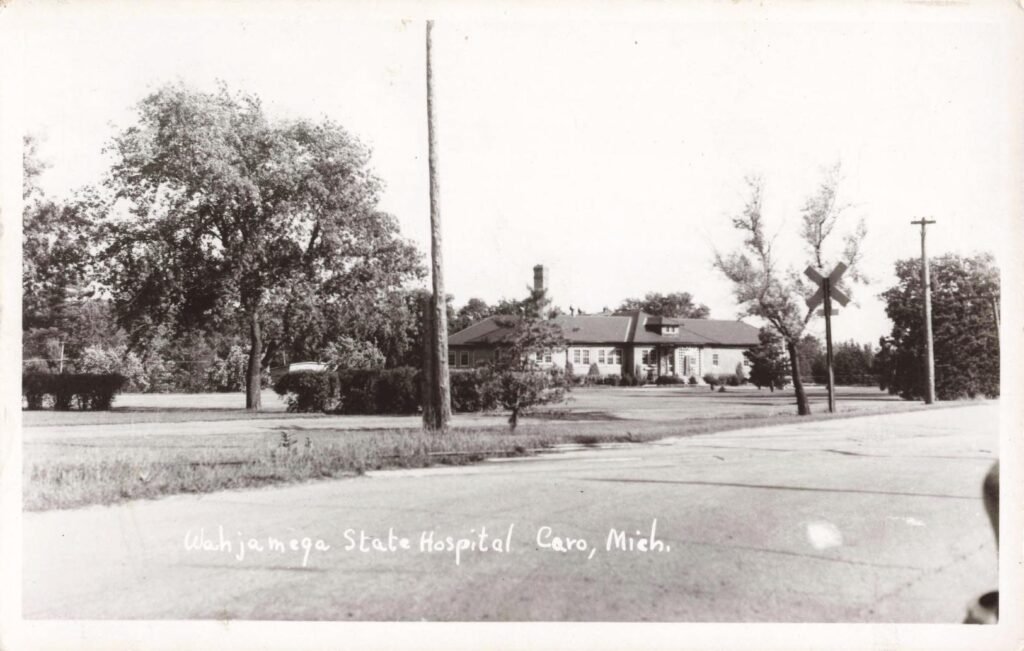
Wahjamega began with the lumber operations of William A. Heartt and Charles Stuck. Their mill went up in 1853. Heartt opened a store that year, added grist milling in 1859, and served as the first postmaster. The unusual name combined initials from six Heartt family members. Wahjamega became a railroad station in 1878 and once competed for the Tuscola County seat.
The state opened the Caro Farm Colony for Epileptics there in 1914. The site later became the Caro Center, and Michigan completed a replacement psychiatric hospital in 2023. The state campus is active institutional property.
What the history suggests: The early community used sawmill and grist-mill machinery, logging chains, store hardware, railroad seals, coins, buttons, and farm equipment. However, the state hospital campus should not be entered or searched. Wahjamega belongs on a research map, not on a casual detecting itinerary. Only separately owned surrounding parcels could be considered, and only after the owner gives written permission.
Which Sites Look Most Promising on Paper?
Tire and Linkville have the strongest mix of documented stores, rail activity, and farm shipping. Cash and Watertown add mill and retail sites. Ellington offers a well-documented stage-and-store crossing. Charleston may hold a distinct 1881 fire layer, but that makes it more sensitive, not less.
Glencoe, New Greenleaf, Speaker and Elmwood have shorter or thinner records. They may still produce personal items, but a detectorist could spend hours sorting modern farm metal without finding a 19th-century object. Wahjamega is historically important but is a poor choice for legal access because of the active state facility.
The most useful first tool is not a detector. It is a stack of plat maps, parcel records, aerial photos and owner contacts. A careful search starts by identifying the former store, depot, hotel, mill or house lot, then confirming who owns it today. A small button with a recorded location can say more about a vanished Thumb community than a bucket of unidentified iron.
Metal detecting Michigan ghost towns can support local-history research when detectorists respect property boundaries, record locations and follow state law.
Works Cited
Chapman Brothers. Portrait and Biographical Album of Sanilac County, Michigan. Chapman Brothers, 1884.
Geo. A. Ogle & Co. Standard Atlas of Sanilac County, Michigan. Geo. A. Ogle & Co., 1906.
GOLDDIGGER and Mosquito Publications. Site Locator for Michigan: Ghost Towns, Old Forts, Coin Beaches, Indian Sites, Battlefields, Treasure. N.d. Digital scan supplied for research.
Hardy, Michael. “History of Helena Michigan.” Thumbwind, 20 June 2025.
Hardy, Michael. “Linkville Michigan History, 1890-1930.” Thumbwind, 25 Jan. 2026.
Historical Marker Database. “Village of Cash.” Marker L2256C, accessed 20 Aug. 2026.
Huron County Economic Development Corp. “Ghost Towns of Huron County.” 19 June 2026.
Michigan Department of Natural Resources. “Metal Detecting.” State of Michigan, accessed 20 Aug. 2026.
Michigan State Historic Preservation Office. “Archaeological Investigation.” Michigan Economic Development Corp., accessed 20 Aug. 2026.
MIGenWeb. “Ellington Village.” Adapted from History of Tuscola County, Michigan, H.R. Page & Co., 1883.
MIGenWeb. “Village of Wahjamega.” Adapted from History of Tuscola County, Michigan, H.R. Page & Co., 1883.
Robinson, John. “The Shadow Town of Valley Center: Sanilac County, Michigan.” 99.1 WFMK, 13 Jan. 2020.
“Speaker, Michigan, Registered Cover.” 1879. Postal artifact image and catalog listing, eBay, accessed 20 Aug. 2026.
State of Michigan. “Governor Whitmer, State and Local Officials Commemorate Completion of New $85 Million Caro Psychiatric Hospital.” 5 June 2023.
Watertown Township history. Portrait and Biographical Album of Sanilac County, Michigan. Chapman Brothers, 1884. Transcribed by Genealogy Trails.