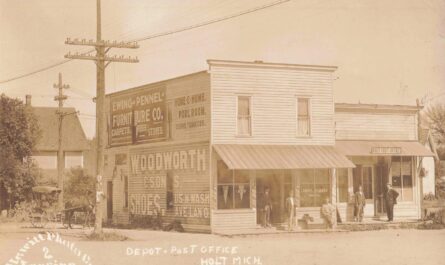
 by
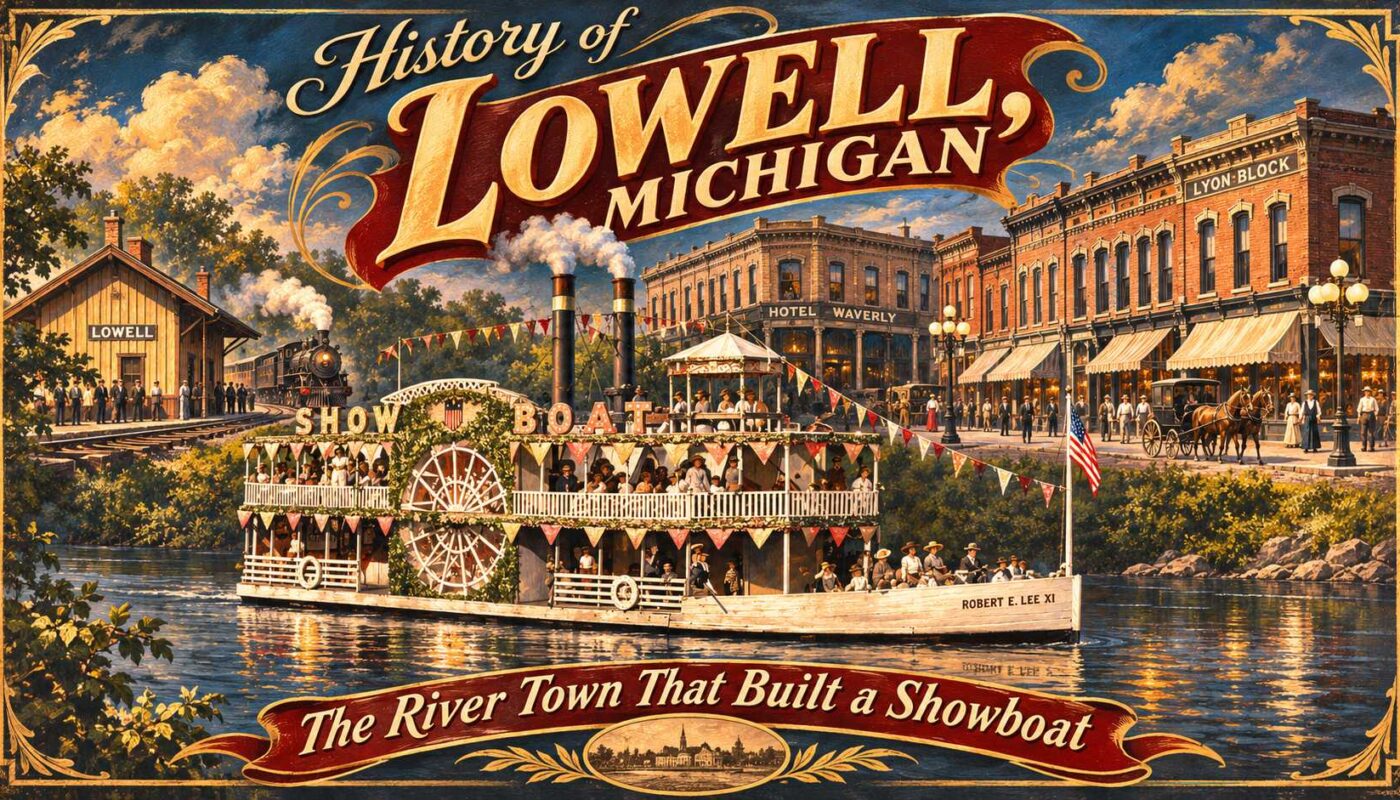
In February 1932, a group of Lowell businessmen gathered in the back room of Dexter Look’s drugstore to discuss a problem. The Great Depression was hurting local businesses, and they needed a reason for visitors to come downtown. Someone proposed building a Mississippi-style showboat on the Flat River.

It was an unusual idea for Lowell, Michigan, a small Kent County community far from the Mississippi. But the town had depended on its rivers for generations. The History of Lowell, Michigan, includes fur traders, lumberjacks, flour mills, and railroad workers. Now residents were preparing to use the same river for entertainment.
Table of Contents
Watch: Lowell, Michigan: The Town That Built a Showboat in 1932
History of Lowell Michigan: Two Rivers and a Trading Settlement
The Flat River meets the Grand River just south of Lowell’s downtown. Long before European settlers arrived, Odawa communities lived along these waterways. One settlement north of the confluence was associated with Chief Cobmoosa, an important Odawa leader whose family remained connected to the region during the early settlement period.

The rivers also attracted fur traders. Joseph La Framboise developed trading operations across western Michigan, and his wife, Magdelaine, continued the business after his death in 1806. She became a successful merchant at a time when women rarely controlled enterprises of that size. Her trading network helped connect Native communities and European markets.
In 1831, Daniel Marsac established a trading post near the mouth of the Flat River. A settlement later developed under the name Dansville before adopting the name Lowell in 1851. What began as a river crossing and trading location gradually became a commercial village.
Waterpower, Lumber and the First Flour Mills
By the 1840s, settlers recognized that the Flat River offered more than transportation. Its current could turn mill machinery. Cyprian Hooker established an early gristmill and ground his first wheat on July 4, 1847. Farmers who previously faced long journeys to process grain now had a mill closer to home.
Lumbering soon became another major industry. Workers harvested timber during the winter, and spring log drives moved the cut trees downstream. At the mills, workers turned logs into lumber for homes, stores, and other buildings. Farmers often joined logging crews during the colder months, creating another source of seasonal income.
Among Lowell’s most important lumber businesses was King, Quick and King, which operated a sawmill from 1871 to 1892. Its owners recognized that the supply of marketable timber would eventually decline. In 1890, Frank Twining King, Francis King, Reuben Quick, and Charles McCarty established the King Milling Company by acquiring an existing flour mill.
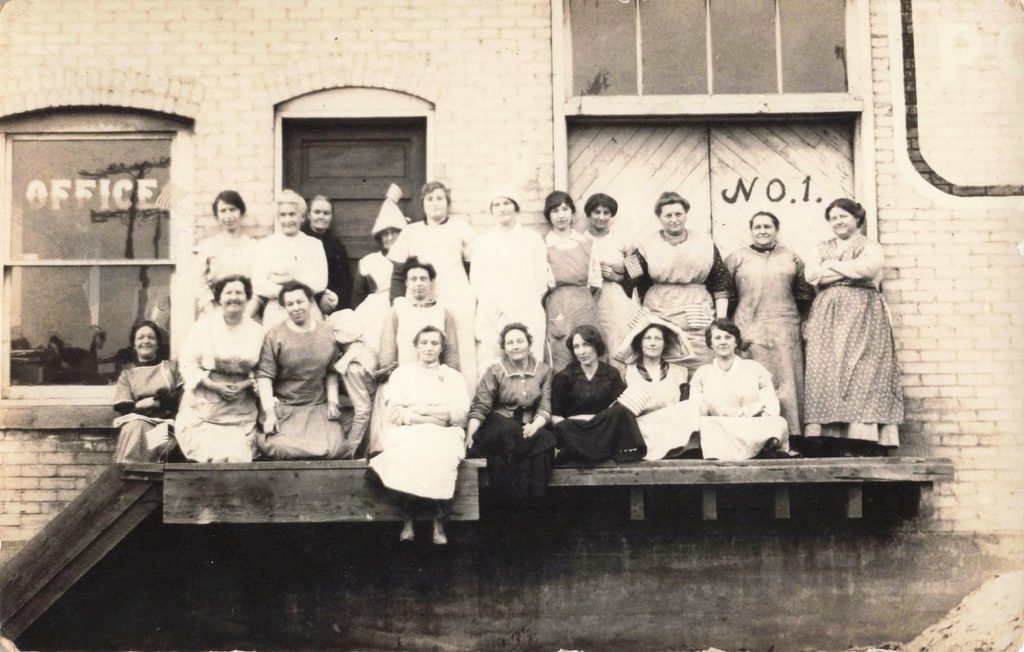
That move helped Lowell make the transition from a lumbering economy to a more diversified industrial and agricultural center. Grain could come from area farms and distant suppliers, while flour could be shipped to customers far outside Michigan. King Milling became one of the town’s longest-running businesses.
Main Street Became Lowell’s Commercial Center
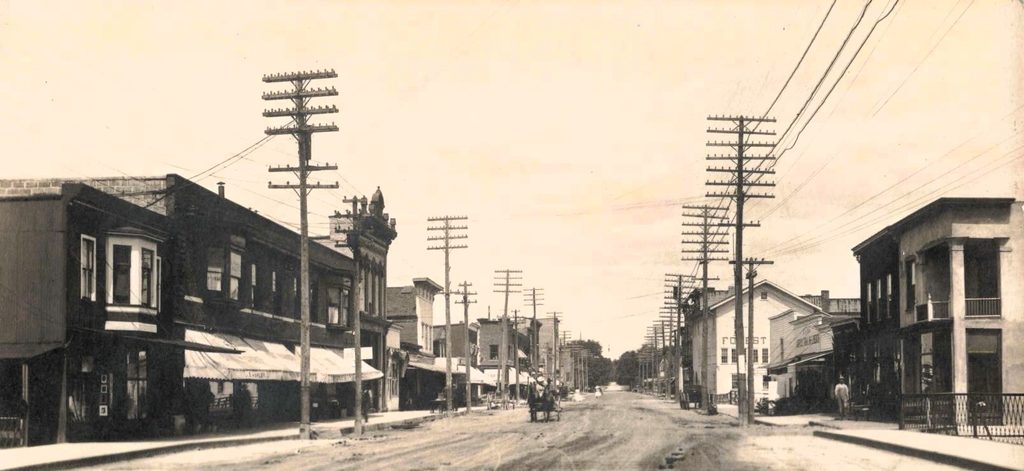
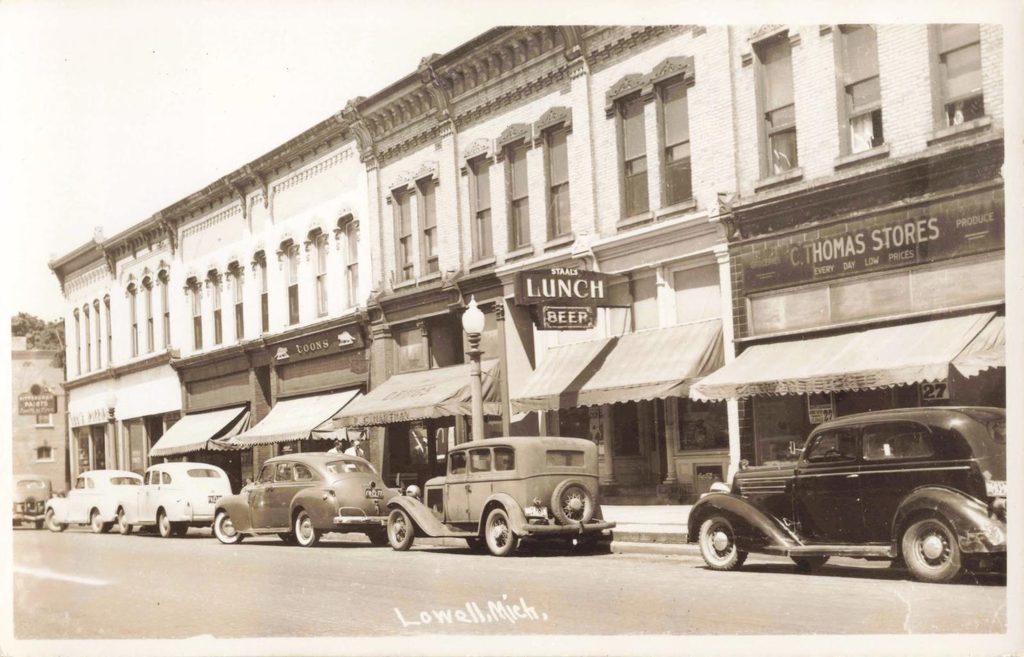
Lowell’s early Main Street reflected its importance to the surrounding countryside. Hardware dealers supplied farmers with tools and equipment, while clothing merchants, grocers and other businesses served the needs of families. The gradual replacement of wooden buildings with brick structures gave the downtown a more substantial appearance.
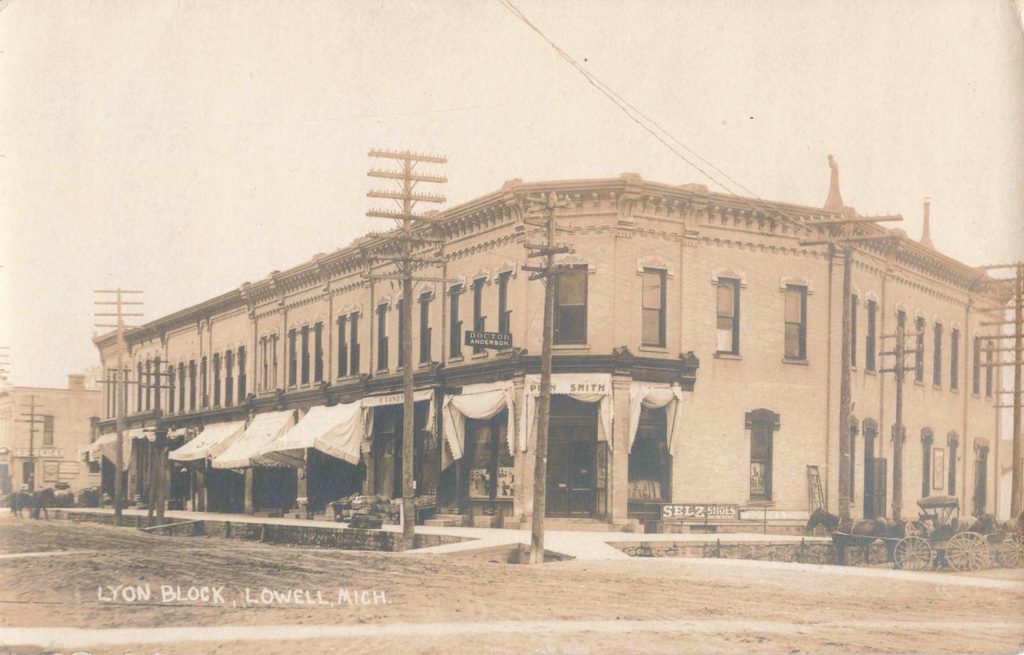
The Waverly Hotel was another prominent landmark. Originally opened as Train’s Hotel on May 21, 1884, it provided accommodations for travelers and visiting businesspeople. Guests arriving by railroad could hire horse-drawn transportation to reach the hotel, where they could dine and stay under one roof.
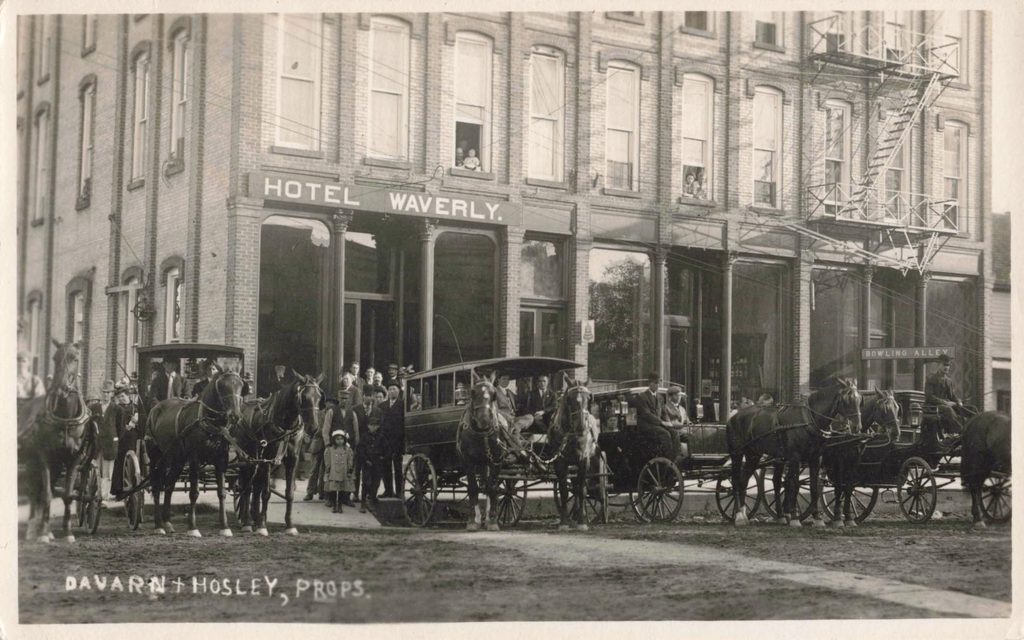
The streets themselves were busy working spaces. Delivery wagons, shoppers, and pedestrians shared the roadway. Storefront awnings sheltered merchandise, and business signs competed for customers’ attention. A trip downtown could involve shopping, meeting friends, or arranging transportation for the next journey.
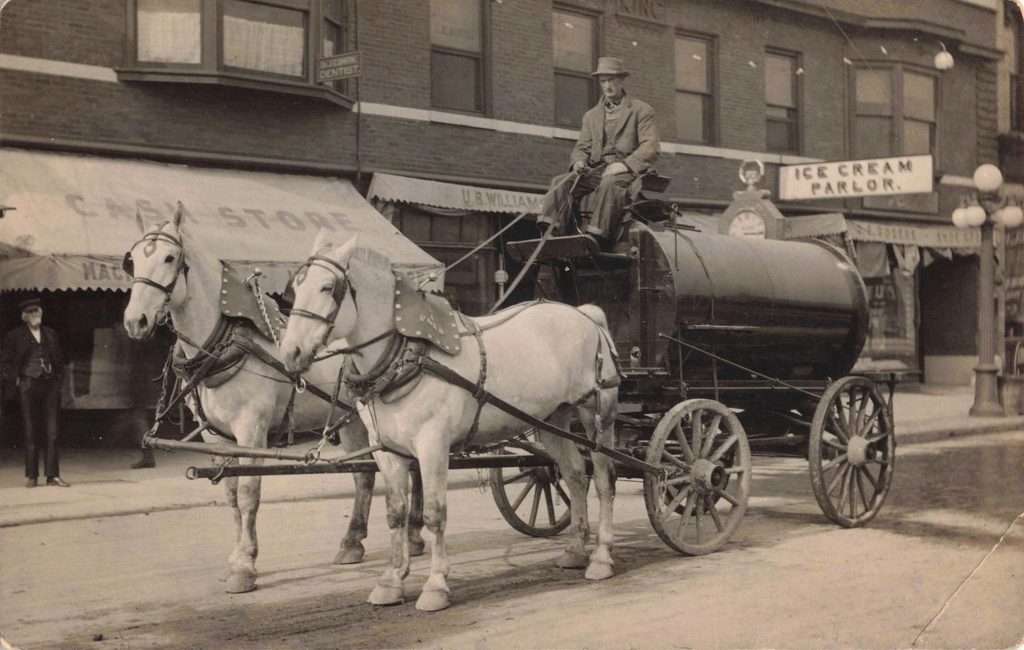
Railroads Connected Lowell With Distant Markets
The arrival and expansion of railroad service changed how Lowell did business. The Lowell and Hastings Railroad connected local industries during the late 1800s. Tracks eventually served manufacturers, lumberyards, and mills, allowing products to move without depending entirely on wagon transportation.
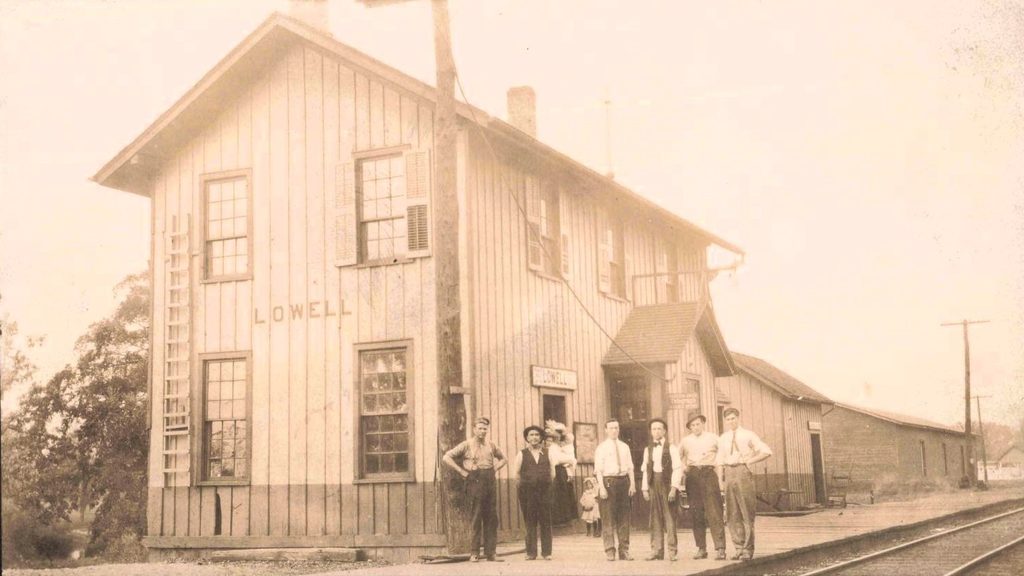
On Jan. 4, 1900, a new Lowell depot opened for scheduled service between Grand Rapids and Saginaw. The station was considered an important improvement. According to the Lowell Area Historical Museum, the local newspaper even encouraged homeowners near the tracks to improve their properties’ appearance for passing visitors.
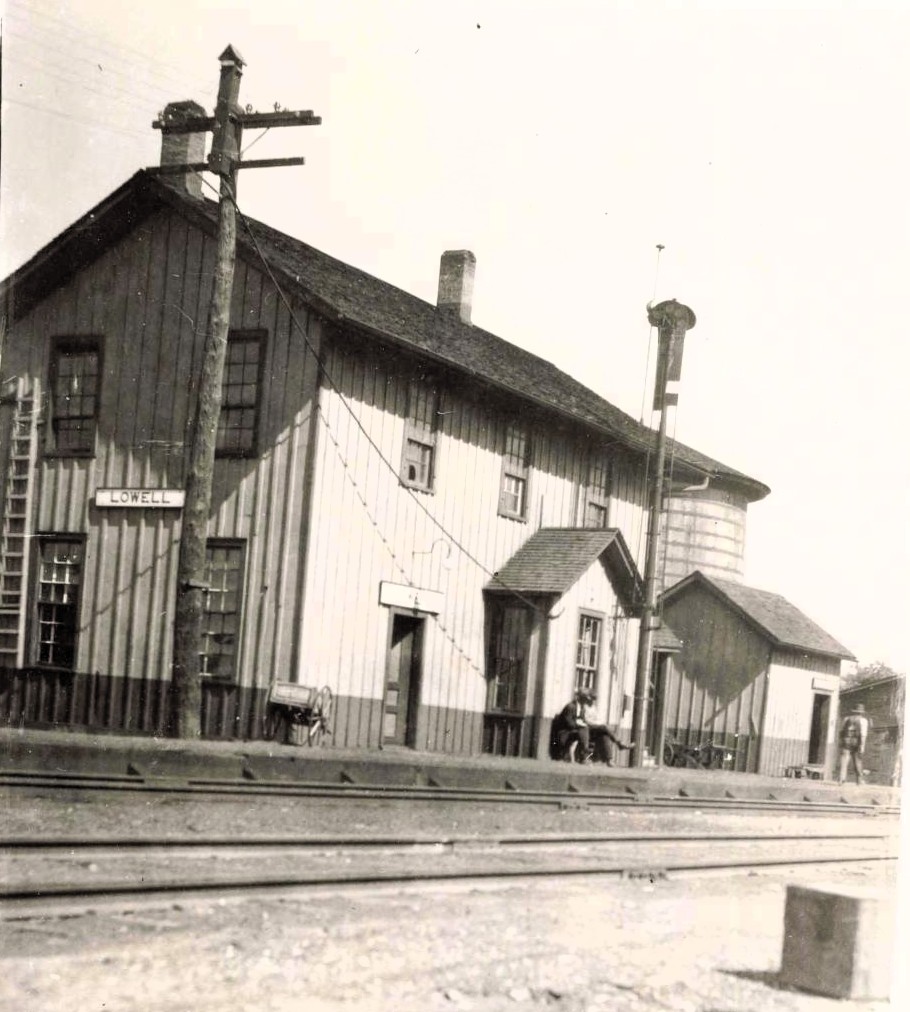
The railroad’s industrial importance was considerable. In the first 15 days of March 1915, the Pere Marquette Railroad received 47 carloads of commodities at Lowell and shipped out 45. Those shipments included grain, merchandise, lumber, and other products local businesses needed.
The connection allowed King Milling to reach distant customers. In March 1930, the company shipped a carload of flour to Rocky Mount, North Carolina, more than 1,000 miles away. For a town that had once relied on the river to move timber, the railroad opened a much larger market.
Fire and Flood Repeatedly Changed Downtown Lowell

The same rivers that supported Lowell’s industries also threatened its buildings. Serious flooding occurred in 1904 and again in 1905. During the second flood, water swept across several dams, washed out part of Main Street, and caused nearby buildings to collapse. Residents quickly began constructing a temporary wooden crossing.

Fire was another recurring danger. On Jan. 19, 1884, a blaze near the post office destroyed 20 downtown buildings. Business owners rebuilt, often using brick rather than the wooden construction that had made earlier fires especially destructive.
Even the village’s public electrical system was repeatedly damaged. Lowell developed municipal electric service in 1895 after residents objected to high private utility rates. The generating facilities suffered flood damage, a 1916 fire, and the collapse of a powerhouse into the river in 1917 when unstable ground gave way.
These setbacks were expensive, but electric service had become essential to the community. The public utility continued operating, and Lowell eventually rebuilt its generating facilities.
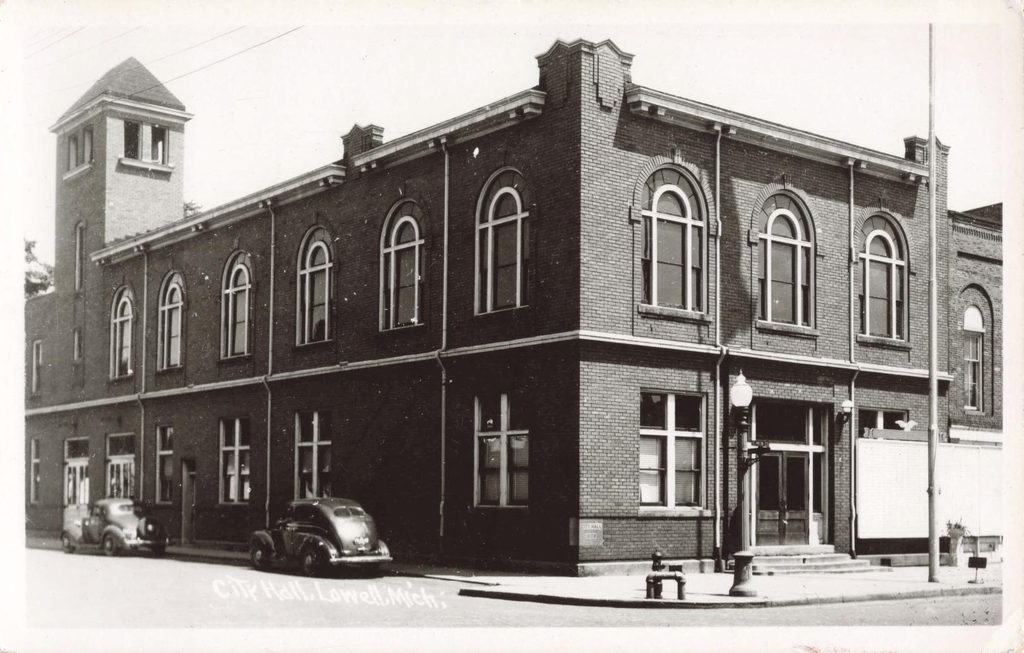
Schools, Telephones and Entertainment Changed Daily Life in Lowell
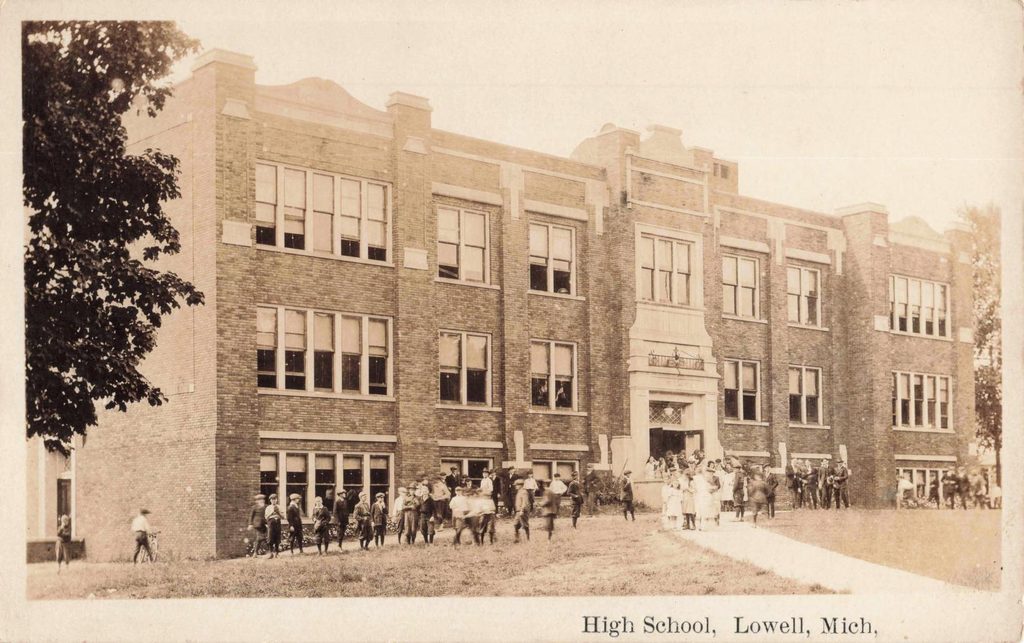
By the early 20th century, Lowell was developing institutions that would shape life outside the mills. Schools provided education for local children, while churches, civic groups and public buildings gave families places to gather. The town’s growing business district offered services that earlier generations had traveled considerable distances to obtain.
Telephone service brought one of the most interesting changes. In the early days, operators connected calls manually. These women, often called the Hello Girls, handled ordinary conversations and helped residents reach emergency services. In 1921, operators were rescued from a smoke-filled building during a fire, only to return to work about an hour later.
Podcast: The Hello Girls of Lowell: The Fire, the Switchboard and the Last Call
By 1930, Lowell had 735 telephones handling approximately 3,000 calls daily. The switchboard operators remained an important part of the community until automatic dialing arrived in January 1953. Their departure marked the end of a familiar occupation.
Entertainment was changing as well. The Strand Theatre opened in June 1928 with 514 seats, a pipe organ and facilities for motion pictures and live performances. As talking films became popular, its owners invested in updated projection and sound equipment. For Lowell residents, an evening at the Strand offered an affordable night out without leaving town.

The Lowell Showboat Brought Visitors During the Depression
When the Depression damaged Lowell’s economy, residents turned toward entertainment to attract customers. In February 1932, local leaders discussed creating an event that would bring visitors into town. Their eventual choice, a Mississippi-style showboat, was unusual but well suited to a community already identified with its rivers.
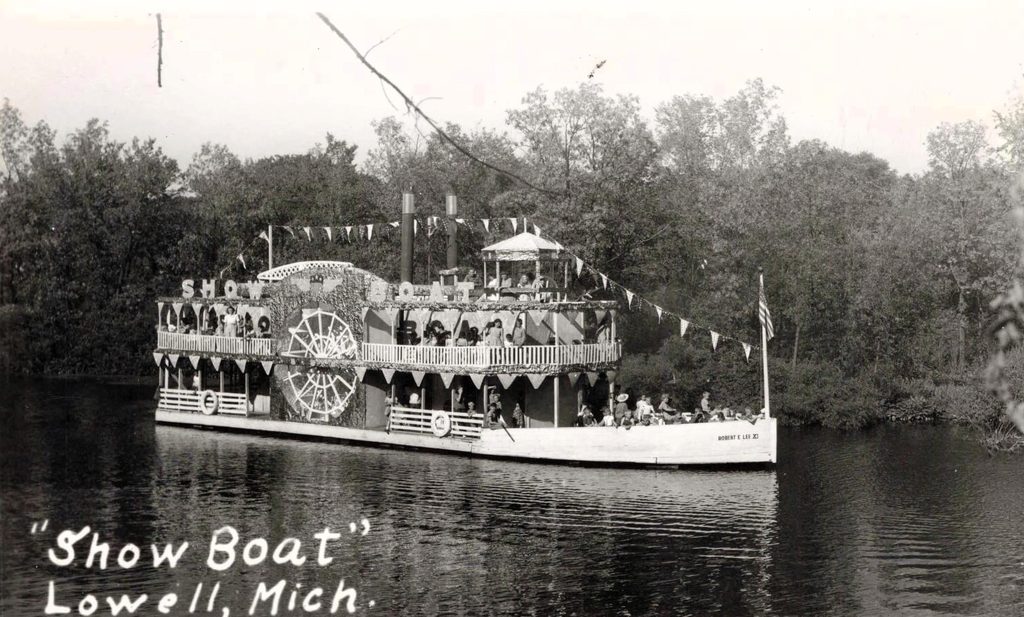
The first vessel, named the George Washington, floated on oil drums. Local organizations helped finance and organize the performances. According to the Lowell Area Historical Museum, the first event drew nearly 5,000 attendees and generated approximately $1,200 in receipts.
A second Showboat, the Robert E. Lee, followed in 1935. Its appearance was modeled on Mississippi paddlewheel steamers, although the shallow Flat River required very different engineering. The decorative smokestacks and paddlewheel helped create the appearance of a grand riverboat.
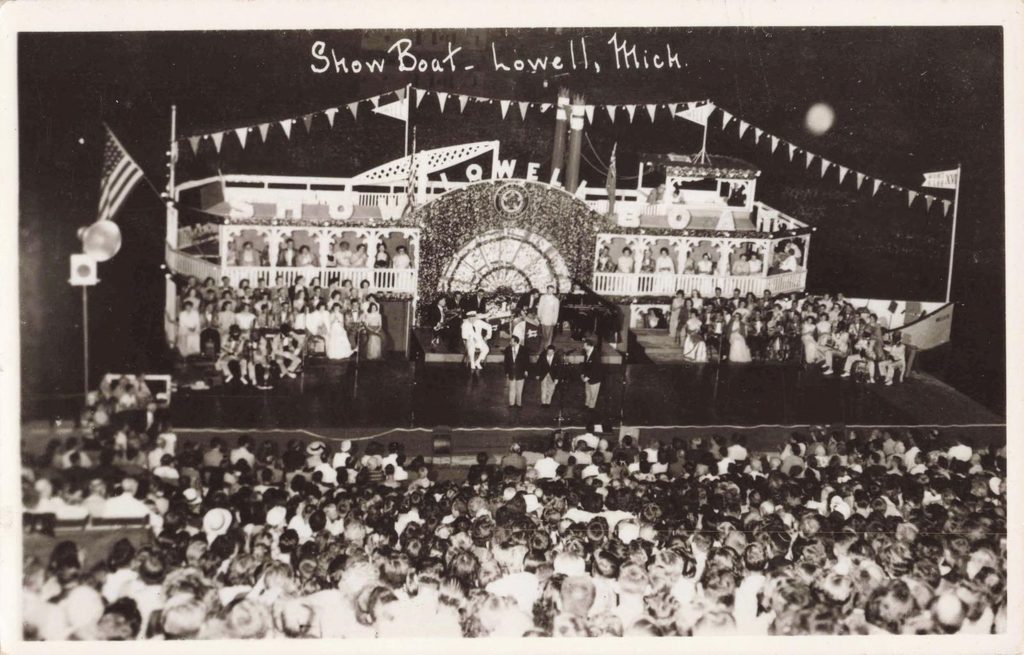
The entertainment combined music, local performances, and visiting acts. Early programs also included minstrel-style shows that reflected racial stereotypes common in American stage entertainment during the period. Those performances are part of the Showboat’s history and should be understood within that broader context.
What made the event important to Lowell was the degree of community participation. Residents helped organize performances, prepare the boats, and welcome visitors. Businesses gained customers, while the town developed an annual attraction that reached an audience far outside the surrounding countryside.
King Milling and the Changing Town After World War II
Lowell’s industries continued operating even as entertainment and retail businesses grew. The King Milling Company remained closely tied to the community. In March 1943, a fire destroyed part of the milling complex, but the company rebuilt and continued production.

The History of Lowell, Michigan’s history can still be traced through its surviving buildings and industrial sites. Much of the historic business district remains recognizable, and King Milling continues to connect the city with its earlier agricultural economy. The Downtown Lowell Historic District was added to the National Register of Historic Places in 1999.

Another reminder stands north of town. The Fallasburg Covered Bridge, built in 1871 across the Flat River, preserves an important part of the region’s early transportation system. Its timber structure dates to a time when horses and wagons were the usual means of travel.
Lowell’s old railroad depot was demolished in 1989, but Main Street and the river still reflect many of the choices that shaped the community. The mills stood where waterpower was available, merchants set up businesses along the main route through town, and the Showboat used the same river that had carried lumber decades earlier.
That is perhaps the most revealing feature of Lowell, Michigan’s history. The Flat River powered industry before it became a stage for summer entertainment. The same waterway helped create two very different chapters in the town’s development.
Lowell, Michigan: Historical Timeline
Michigan Moments | Kent County History
Lowell, Michigan:
Historical Timeline
From the fur-trading years to the famous
Lowell Showboat, follow the people and
events that shaped this river town.
1831–1953 | 15 Historical Milestones
OPEN THE TIMELINE ▼
CLOSE THE TIMELINE ▲

Choose an era or view all 15 events. Select any event to read the story behind it. Historical images are drawn from the Lowell postcard collection. Image dates may differ from the dates of the events they illustrate.
1831
Daniel Marsac Establishes a Trading Post
Early commerce at the river junction
River
Trading
Years
Daniel Marsac established a trading post on the south side of the Grand River, opposite the mouth of the Flat River. The location already had an established Odawa presence. The trading post became an important early commercial site and helped establish the settlement that eventually became Lowell.
Historical source: Lowell Area Historical Museum
1847
The First Wheat Is Ground at Hooker’s Mill
Waterpower helps build a farming economy
Flat River
Milling
On July 4, Cyprian Hooker’s gristmill ground its first wheat. The mill used waterpower from the Flat River to turn grain into flour. Farmers gained a nearby place to process their crops, while waterpower helped attract additional mills and industries.
Historical source: Lowell Area Historical Museum
1861
Lowell Incorporates as a Village
A growing settlement gains local government
Village
Charter
Lowell officially incorporated as a village in 1861. The community had developed from its early trading settlement into a center for milling, commerce and nearby farming. Incorporation provided a formal municipal government as the town continued expanding.
Historical source: Lowell Area Historical Museum
1871
Fallasburg Covered Bridge Is Built
An important crossing north of Lowell
Covered
Bridge
The present Fallasburg Covered Bridge was built across the Flat River about five miles north of Lowell. Constructed from timber, the bridge served horse-drawn traffic and connected communities along the river. It remains one of Michigan’s oldest surviving covered bridges still used for vehicle travel.
Historical source: Fallasburg Historical Society
1884
A Devastating Fire Changes Main Street
Twenty downtown buildings destroyed
On Jan. 19, fire swept through Lowell’s commercial district. It destroyed 20 buildings, including wooden structures along Main Street and near the bridge. Rebuilding changed the appearance of downtown, where substantial brick commercial buildings became an important feature.
The Lyon Block photograph illustrates Lowell’s later brick business district, not the fire itself.
Historical source: Lowell Area Historical Museum
1890
King Milling Company Begins Operations
Flour replaces lumber as a major industry
Local lumber businessmen Francis King, Frank Twining King, Charles McCarty and Reuben Quick purchased the Superior flour mill and organized King Milling Company. As the white-pine lumber industry declined, flour milling provided Lowell with a major continuing industry.
The company later expanded across the Flat River and developed stronger railroad shipping connections.
The aerial image was taken later and illustrates Lowell’s developed milling and railroad district.
Historical source: Lowell Area Historical Museum
1895
Lowell Develops Municipal Electricity
The village establishes public power
Electric
Power
After dissatisfaction with private electric rates, village officials established a municipally owned electric utility. A generating dam was built nearly nine miles north of Lowell on the Flat River, with electric lines carrying power back into town.
The system would face expensive damage from floods, fire and the collapse of a powerhouse in 1917, but municipal electricity became an important part of local life.
Historical source: Lowell Area Historical Museum
1900
A New Railroad Depot Opens
Lowell connects with regional train service
On Jan. 4, the new Pere Marquette Railroad depot opened in Lowell. Scheduled trains connected the town with Grand Rapids and Saginaw. Rail service made it easier for businesses to receive supplies, ship manufactured products and reach customers in distant markets.
The depot became a familiar landmark for travelers. The original building was eventually demolished in 1989.
Historical source: Lowell Area Historical Museum
1905
The Flat River Flood Damages Downtown
Water destroys buildings and roadways
A severe flood sent the Flat River rushing through downtown Lowell. The west-side King Milling dam was washed away, along with parts of the bridge and roadway. Several buildings lost their foundations and were carried downstream.
Among those endangered was businessman Henry Schreiner, who narrowly escaped when his building collapsed. The flood demonstrated how closely Lowell’s fortunes remained tied to the river.
The Main Street image illustrates the historic commercial district, not the flood itself.
Historical source: Lowell Area Historical Museum
1921
The Hello Girls Return After a Fire
Telephone operators help keep Lowell connected
Telephone
History
A fire filled Lowell’s telephone exchange with smoke, forcing operators to be rescued from the building. Within approximately one hour, they were back at work connecting telephone calls.
Known as the Hello Girls, the operators connected residents with businesses, doctors and emergency services. Their work was essential before automatic telephone dialing.
Historical source: Lowell Area Historical Museum
1928
The Strand Theatre Opens
A new downtown entertainment destination
In June 1928, the Strand Theatre opened in downtown Lowell. The new auditorium featured 514 seats and a pipe organ for movie presentations and live entertainment.
The Strand became a popular gathering place, and by 1930 the theater had installed equipment for talking motion pictures. The building added a modern form of entertainment to a town long known for its mills and local businesses.
Historical source: Lowell Area Historical Museum
1932
The First Lowell Showboat Takes the Stage
A Depression-era idea attracts thousands
During the Great Depression, Lowell business leaders wanted to bring more visitors to town. Their unusual solution was a Mississippi-style showboat on the shallow Flat River.
The first vessel, named the George Washington, floated on oil drums. The opening event attracted nearly 5,000 people, according to the Lowell Area Historical Museum, and became the beginning of a major community tradition.
The accompanying postcard shows a historic Showboat performance; it is not dated to the first event in 1932.
Historical source: Lowell Area Historical Museum
1935
A New Showboat Arrives on the Flat River
The Robert E. Lee expands the tradition
A second Showboat, named the Robert E. Lee, was built in 1935 to resemble the large riverboat steamers once seen on the Mississippi River. Decorative smokestacks, railings and a paddlewheel gave the vessel a theatrical appearance.
The Showboat performances included music, comedy and minstrel-style entertainment, a form of theater that used racial stereotypes. The event became a long-running attraction supported by community members.
This later postcard shows the Robert E. Lee II, illustrating the design used by subsequent Lowell Showboats.
Historical source: Lowell Area Historical Museum
1943
Fire Strikes the King Milling Company
A major industry rebuilds during wartime
King
Milling
On March 7, a major fire destroyed the Superior mill at King Milling Company. Firefighters from neighboring communities helped respond to the blaze.
Despite shortages of construction materials during World War II, the company rebuilt the mill using modern concrete construction and updated milling equipment. The project was completed in 1945.
Historical source: Lowell Area Historical Museum
1953
Lowell Says Goodbye to the Hello Girls
Automatic telephone dialing arrives
In January 1953, Lowell converted from manual telephone exchanges to automatic direct dialing. Residents could now connect many calls without assistance from a switchboard operator.
The Lowell Ledger marked the change with a farewell to the Hello Girls, whose work had connected families and businesses for generations. Their departure was another sign of the technological changes reaching small-town Michigan.
The accompanying downtown view illustrates the period when Lowell’s business district was adapting to new transportation and technology.
Historical source: Lowell Area Historical MuseumFrequently Asked Questions About Lowell, Michigan History
When was Lowell, Michigan, founded?
Daniel Marsac established a trading post near the mouth of the Flat River in 1831, helping establish the settlement that became Lowell. The community adopted the Lowell name in 1851 and incorporated as a village in 1861
What industries were important in early Lowell?
Lowell’s early economy depended heavily on lumbering, sawmills and flour milling. The Flat River provided water power, while railroads later helped local manufacturers and agricultural businesses ship products to distant markets
When did the Lowell Showboat begin?
The first Lowell Showboat was built in 1932 during the Great Depression. Local business owners and civic organizations developed the event to attract visitors and support downtown commerce.
What historic attractions remain in Lowell?
Lowell retains many of its historic downtown commercial buildings, and the Flat River still passes through the city. The nearby Fallasburg Covered Bridge, built in 1871, remains an important historic landmark.
Share Your Lowell Memories
Do you remember an old Lowell business, a favorite evening at the Strand or summer performances beside the Flat River? If your family has historical postcards, letters, or stories about the community, share them in the comments. Those personal accounts can add useful details to the town’s recorded history.
? Works Cited for the History of Lowell Michigan
Fallasburg Historical Society. “Fallasburg Covered Bridge.” Fallasburg Historical Society. Accessed 22 Nov. 2026.
Hahn, Thelma Peckham. “A Brief History of Lowell.” Dec. 1930. Michigan GenWeb, Kent County. Accessed 22 Nov. 2026.
Lowell Area Historical Museum. “108 & 110 West Main.” Along Main Street, Lowell Area Historical Museum. Accessed 22 Nov. 2026.
Lowell Area Historical Museum. “120 W. Main.” Along Main Street, Lowell Area Historical Museum. Accessed 22 Nov. 2026.
Lowell Area Historical Museum. “302 W. Main: Waverly Hotel.” Along Main Street, Lowell Area Historical Museum. Accessed 22 Nov. 2026.
Lowell Area Historical Museum. “305–307 E. Main, Part I.” Along Main Street, Lowell Area Historical Museum. Accessed 22 Nov. 2026.
Lowell Area Historical Museum. “315 W. Main.” Along Main Street, Lowell Area Historical Museum. Accessed 22 Nov. 2026.
Lowell Area Historical Museum. “Dams.” Historical Topics, Lowell Area Historical Museum. Accessed 22 Nov. 2026.
Lowell Area Historical Museum. “Flood.” Historical Topics, Lowell Area Historical Museum. Accessed 22 Nov. 2026.
Lowell Area Historical Museum. “King Milling.” Historical Topics, Lowell Area Historical Museum. Accessed 22 Nov. 2026.
Lowell Area Historical Museum. “Madame.” Historical Topics, Lowell Area Historical Museum. Accessed 22 Nov. 2026.
Lowell Area Historical Museum. “North Side of Main Street Bridge.” Along Main Street, Lowell Area Historical Museum. Accessed 22 Nov. 2026.
Lowell Area Historical Museum. “Railroad Depot.” Historical Topics, Lowell Area Historical Museum. Accessed 22 Nov. 2026.
Lowell Area Historical Museum. “Telephone.” Historical Topics, Lowell Area Historical Museum. Accessed 22 Nov. 2026.
Lowell Area Historical Museum. “Theater.” Historical Topics, Lowell Area Historical Museum. Accessed 22 Nov. 2026.
Lowell Area Historical Museum. “X Marks the Spot.” Lowell Area Historical Museum. Accessed 22 Nov. 2026.
Michigan Moments. “Lowell, Michigan Historical Postcard Collection.” Michigan Moments Digital Collection, Google Drive. Accessed 22 Nov. 2026.
Straub, Judy. “A Brief History of the Lowell Showboat.” Lowell Area Historical Museum, 17 Mar. 2000. Accessed 22 Nov. 2026.