 by
by 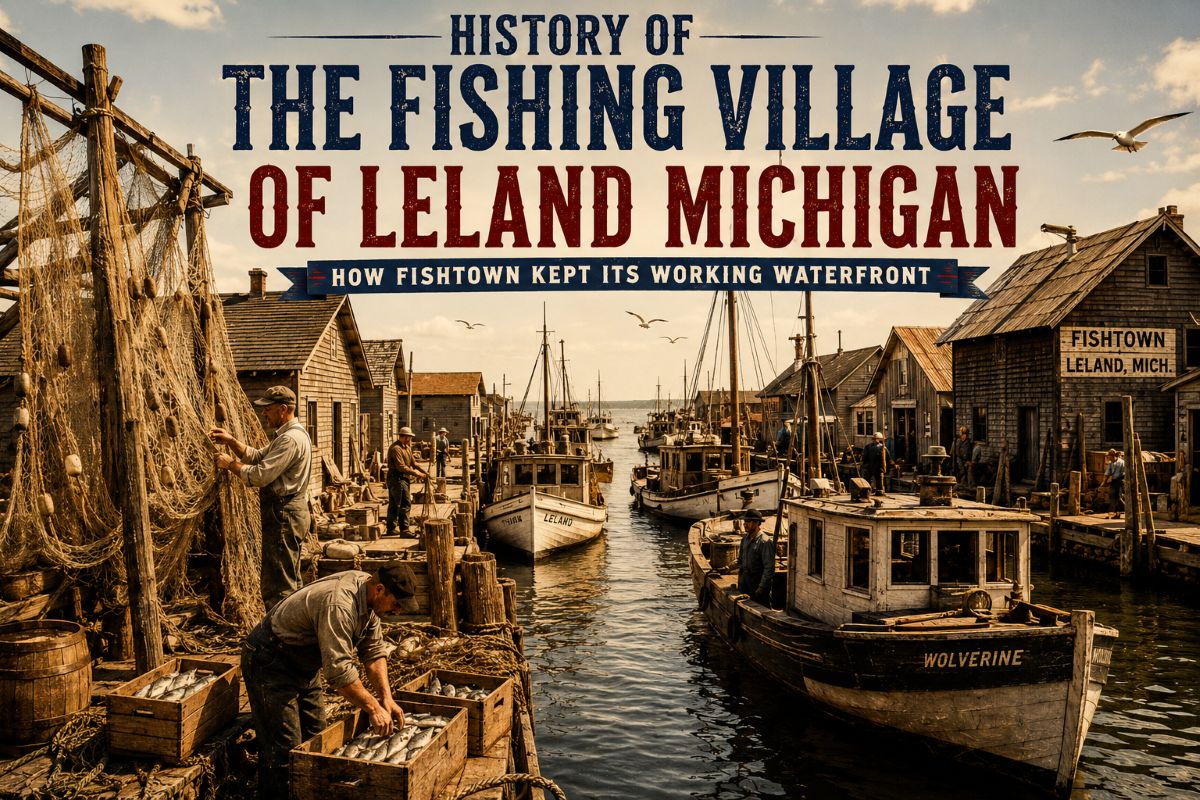
The History of the Fishing Village of Leland, Michigan, begins at a short river with a long memory.
Leland sits where the Leland River, also known as the Carp River, runs into Lake Michigan. The river connects Lake Leelanau to the big lake, and that narrow passage shaped nearly every chapter of the town’s past. Before hotels, shops and summer cottages, this was an Odawa fishing site. Local history sources identify the earlier settlement name as Mishi-me-go-bing, tied to canoe landings at the river mouth.
That water route made the site valuable. Fish could be taken. Boats could land. Later, timber, iron, passengers and tourists would all move through or near the same place.
Watch – The Fishing Village of Leland Michigan: How Fishtown Kept Lake Michigan’s Old Fishery Alive
Listen – The Fishing Village of Leland Michigan: One of The Last Commercial Fisheries on Lake Michigan
The Dam That Changed Leland
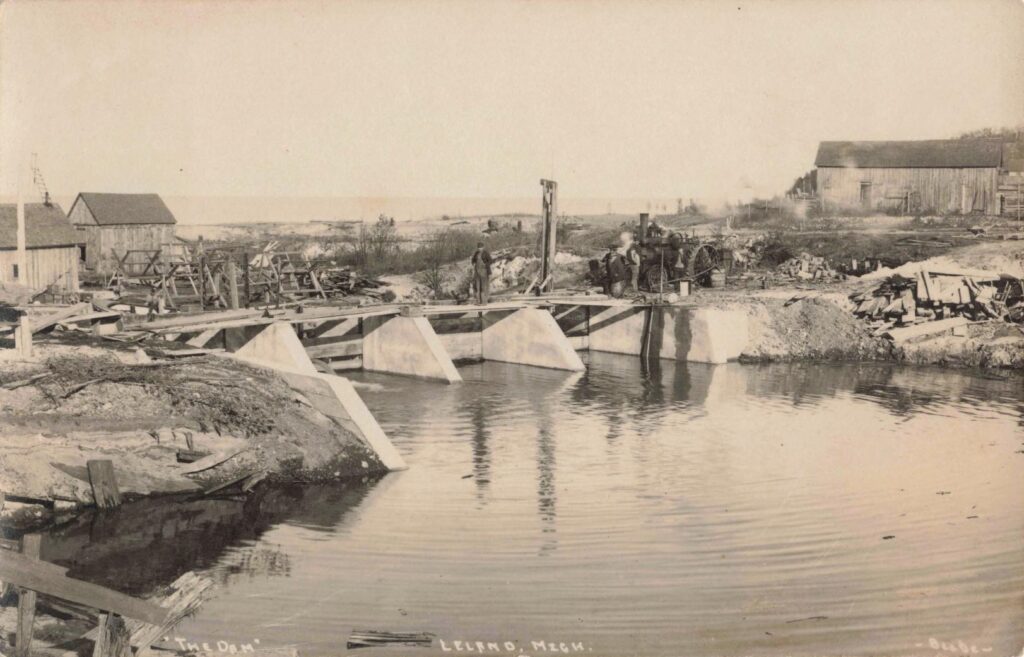
The modern village took shape in the 1850s. Antoine Manseau, Antoine Manseau Jr., and John Miller built a dam and sawmill near the outlet of the Carp River. The dam raised water levels and helped create the conditions for milling, shipping, and settlement. A sawmill was a practical engine for a young town. It turned forest into lumber and lumber into buildings, docks, and boats.
The dam also changed the movement. Boats could not simply pass between Lake Michigan and the inland lake system as before. Leland had to adapt to a controlled river.
Before Fishtown, Leland Was an Industrial Port
The History of the Fishing Village of Leland, Michigan includes a chapter that may surprise modern visitors. Leland was once an iron town.
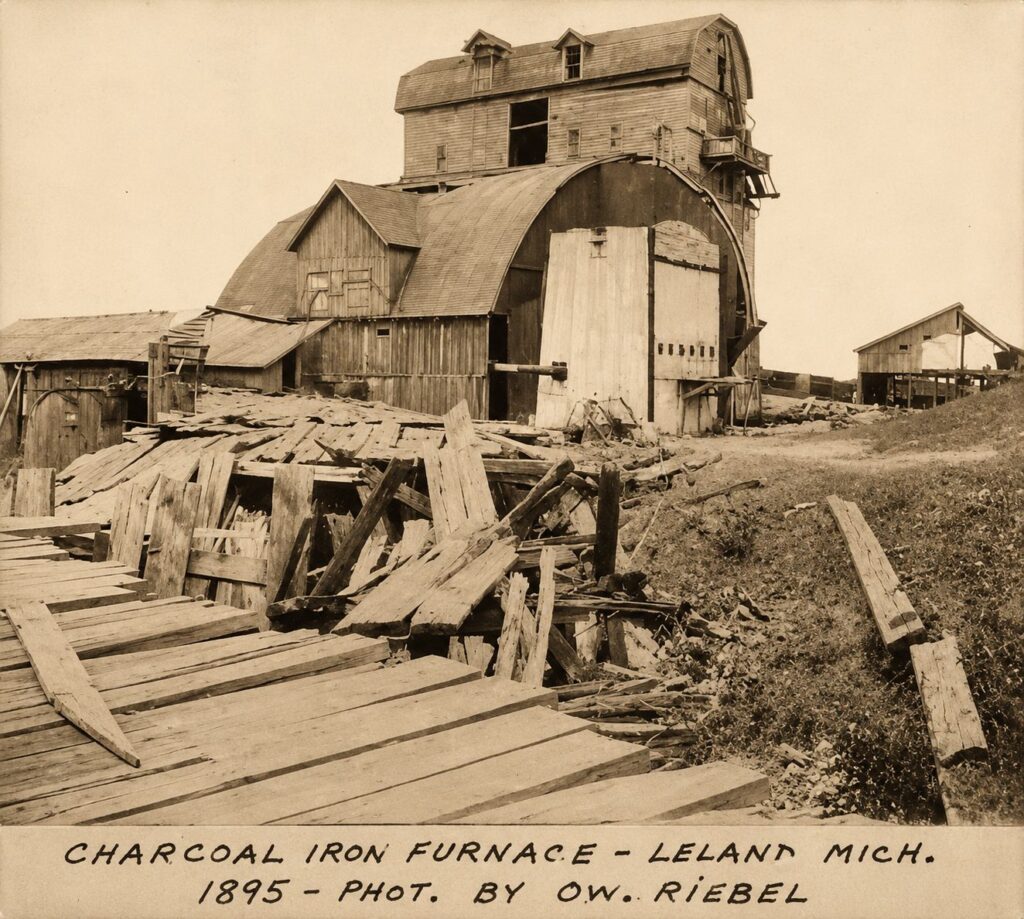
From 1870 to 1884, the Leland Lake Superior Iron Company operated an iron smelter north of the river mouth. It used ore from the Upper Peninsula and charcoal made from local hardwood. At its peak, the operation produced up to 40 tons of iron per day, according to local historical reports. When the iron business failed, the site was sold to the Leland Lumber Company.
That industrial past left an unusual trace. Leland Blue, the prized beach collectible, began as slag from the old smelting operation. It is not an ancient stone. It is industrial waste transformed by time, water, and human interest.
That is the strange insight at the center of Leland’s story: one of Michigan’s most nostalgic waterfront towns was shaped first by labor, smoke and industry.
The Rise of the Fish Tugs
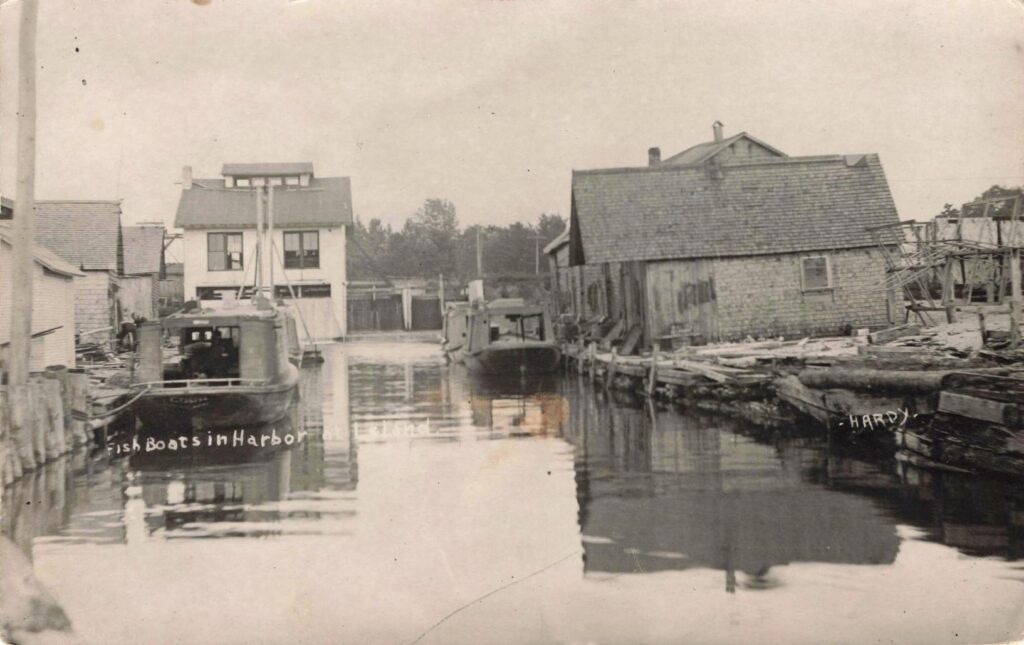
Commercial fishing had deep roots in Leland, but it became more visible and more organized in the late 1800s and early 1900s. Fishermen shifted from open boats toward enclosed, gas-powered craft. That change allowed larger operations and more regular work on Lake Michigan.
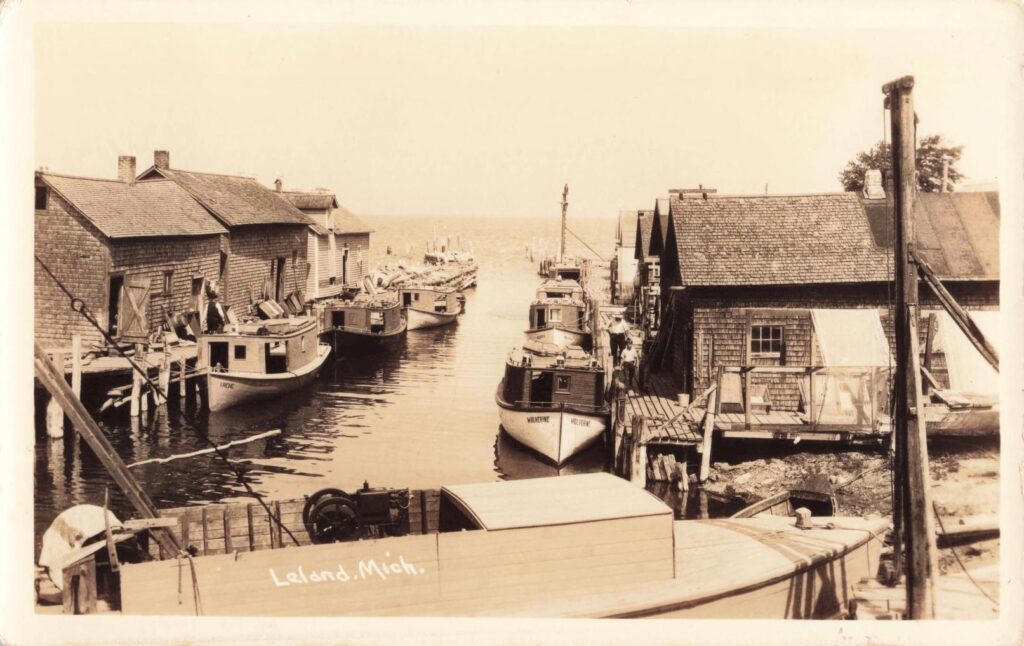
The shanties along the Leland River were built because fishing required space. Nets had to be dried, mended, and stored. Fish had to be iced, cleaned, smoked, and sold. Boats needed close dockage. The river channel became a compact business district built for work, not display.
Fishtown Preservation says the shanties served as net-mending sheds, ice houses, smokehouses, and storage buildings. Some remain tied to commercial fishing while others now house small businesses.
The Name Came Later Than the Work
Many people assume Fishtown was always called Fishtown. It was not.
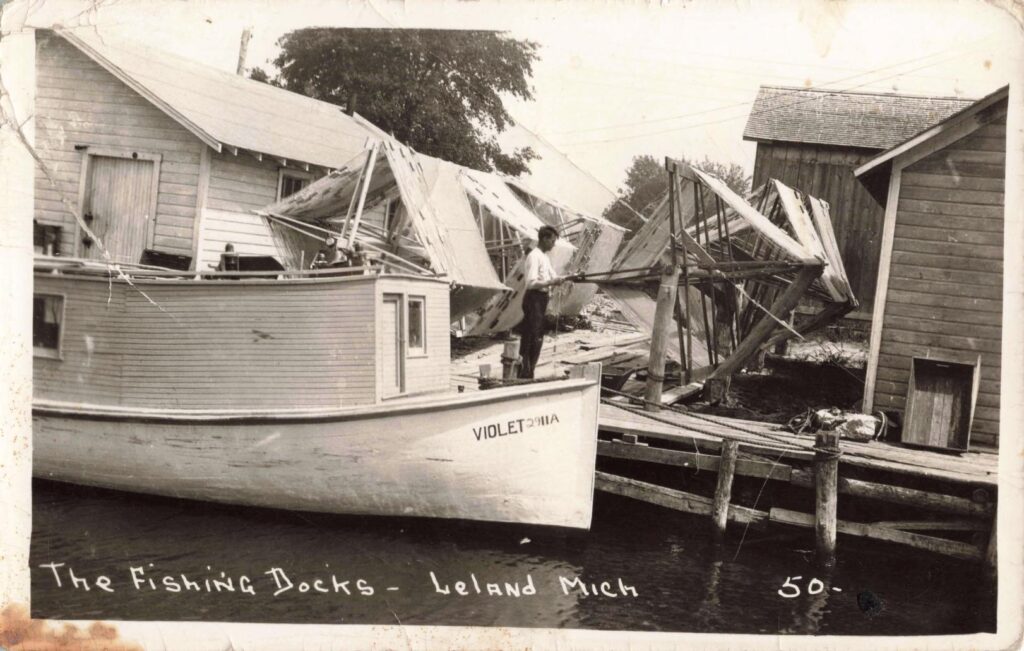
Carlson’s Fishery notes that the name was not used for the district until the 1940s, influenced by the Carlson family’s work. The fishing district itself was far older. That fact is significant because it separates the brand from the place. Fishtown was first a working waterfront. The name came after generations of labor had already defined it.
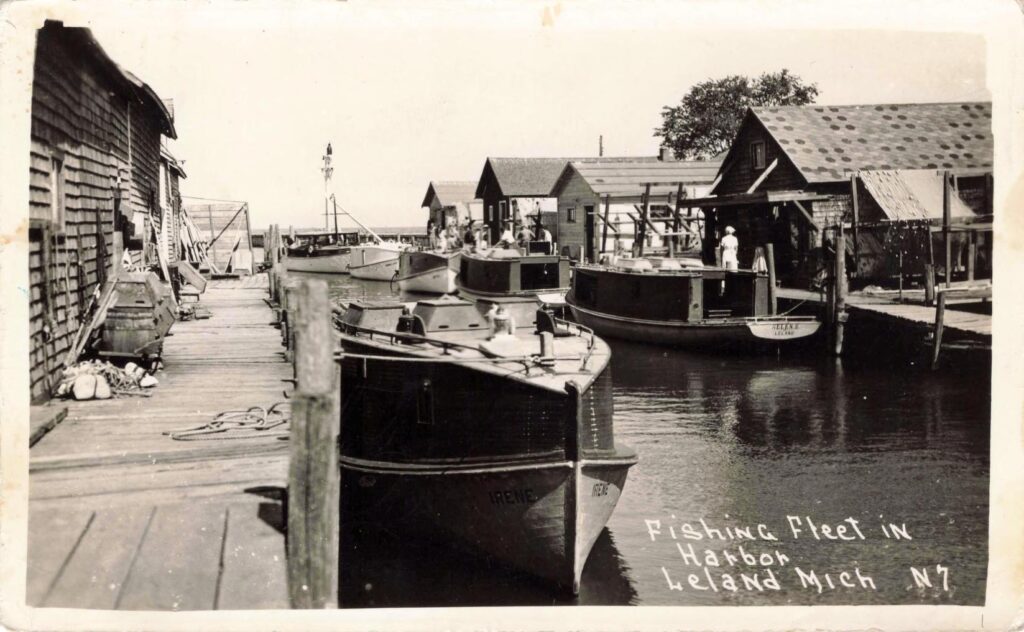
The Carlson family has been tied to the commercial fishery since the early 1900s. Michigan State University’s Traditional Arts Program notes that five surviving historic shanties have housed the Carlson fishing operation and that the family worked the same fishing grounds for more than a century.
Tourism Arrived, But Fishing Stayed
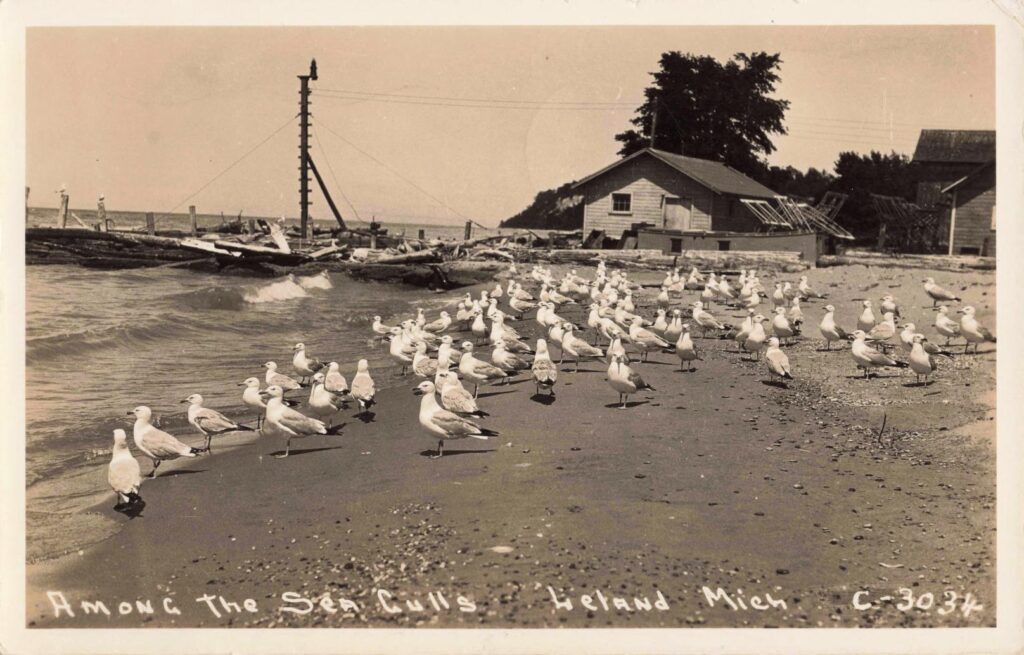
Around 1900, Leland changed again. Wealthy and middle-class visitors from Midwestern cities began coming north for cool air, lake views, and summer stays. Some rented rooms. Some built cottages. Resort life grew as lumber and heavy industry faded.
In many lake towns, tourism erased the working waterfront. In Leland, the result was more complicated. Visitors came for the same rough-edged district that fishing families used every day. That tension helped preserve the old character. The shanties were useful, then familiar, then beloved.
The History of the Fishing Village of Leland, Michigan, is not a simple story of replacement. Fishing, ferry service, shops, restaurants, and seasonal visitors all shared the same small district.
Nets Were the Real Machinery
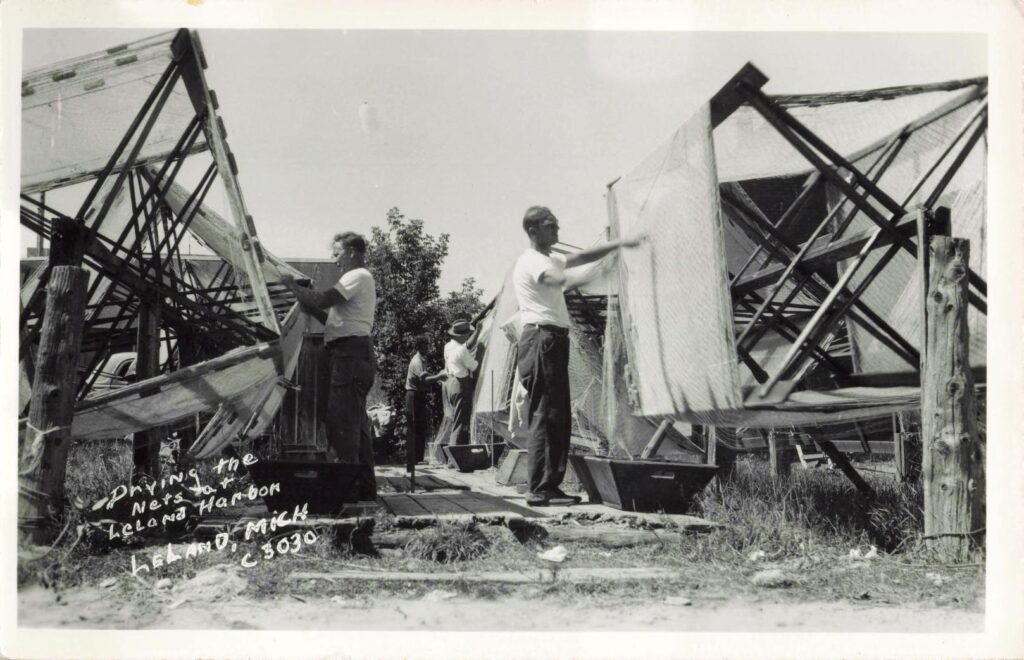
The most useful attached views may be the net-drying scenes. Boats draw attention, but nets made the business possible.
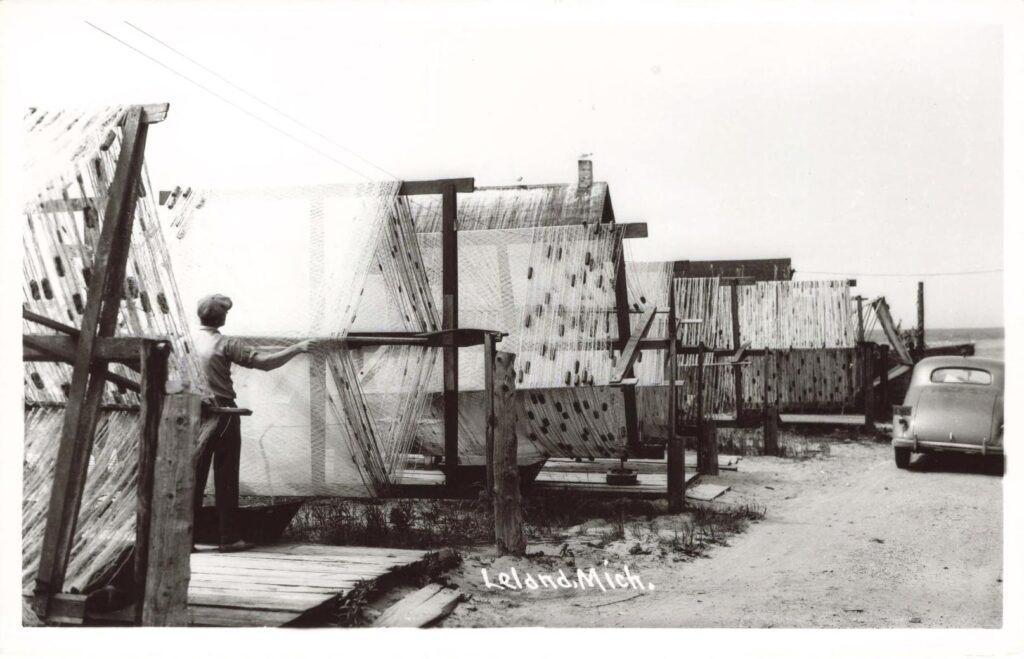
Net work was slow and skilled. Nets had to be kept clean and dry. Holes had to be repaired. Lines had to be arranged so they could be reused without tangling or failure. A fish tug without sound nets was just a boat.
Breakwaters, Lamprey and Midcentury Pressure
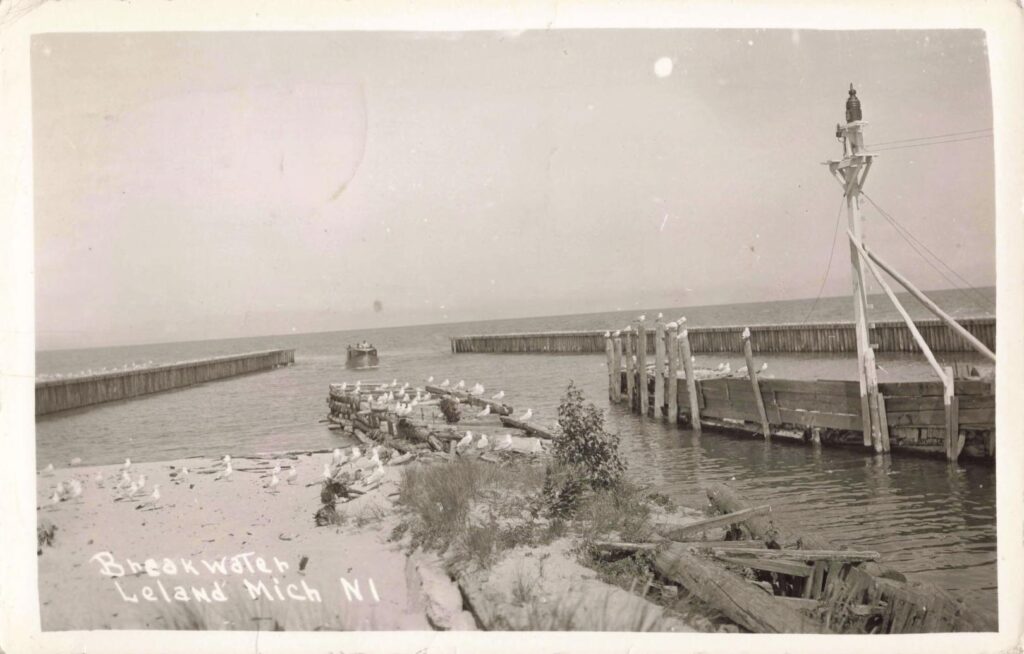
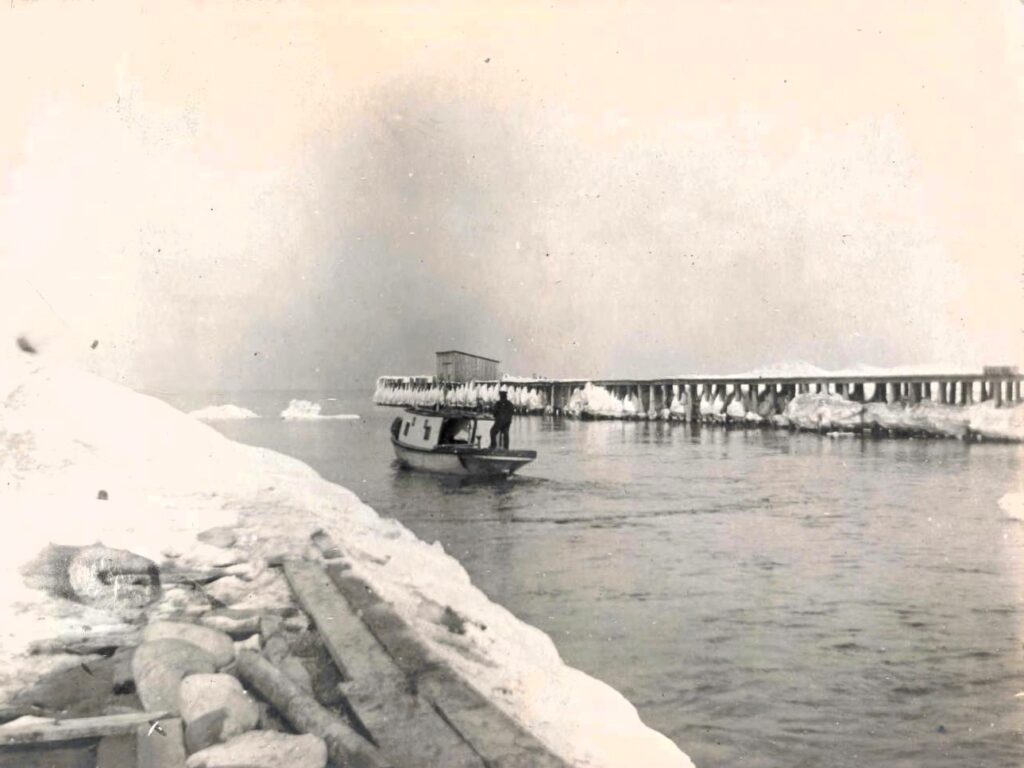
In 1937, breakwaters were built at Leland’s Lake Michigan harbor. They helped protect boats and supported the fishing industry. But the Great Lakes fishery faced severe pressure by the 1940s. Sea lamprey populations grew across the upper Great Lakes and fed on lake trout, lake whitefish and ciscoes, species central to commercial fishing.
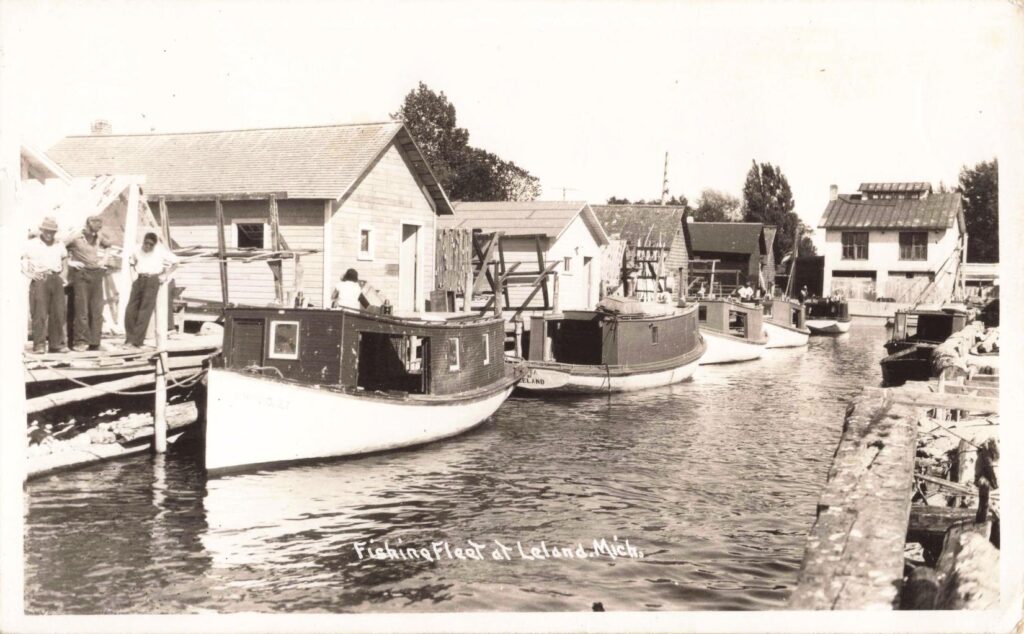
This was not only a Leland problem. It was a Great Lakes crisis. Fishing families had to adjust to lower catches, new regulations, changing markets and greater uncertainty.
Still, Leland did not lose its waterfront identity. Fish tugs continued to work. Carlson’s remained part of the town’s economic and cultural life. The district adapted without fully surrendering its older form.
Why Leland Is Historically Unique
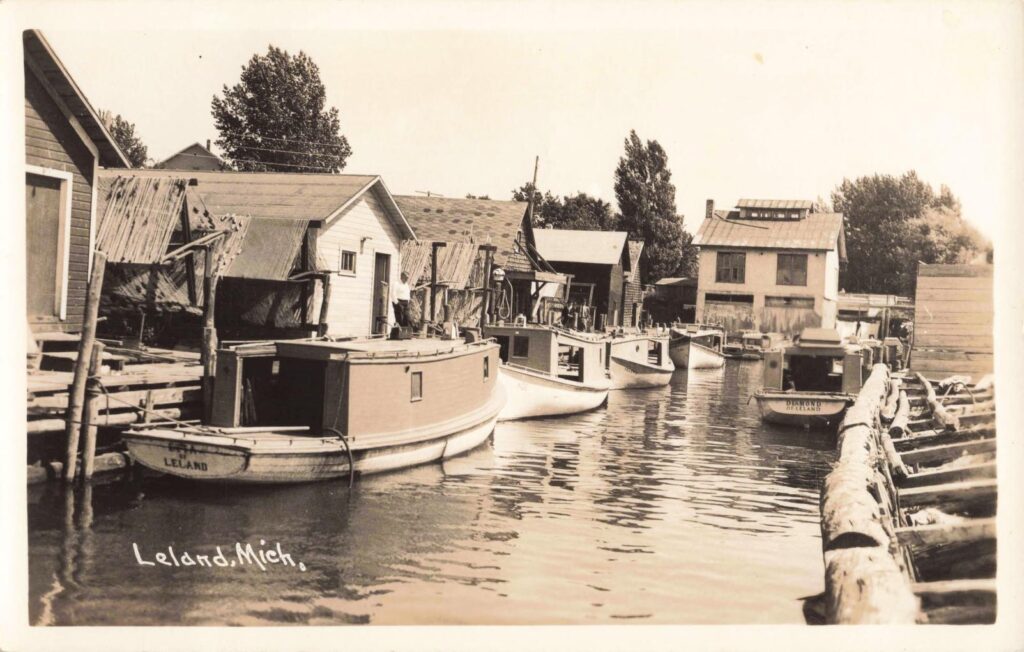
Leland’s unique aspect is not just that old buildings survived. It is that the district kept a visible link between commercial fishing, public access, ferry service and tourism in one small waterfront area.
Michigan’s State Historic Preservation Office describes Fishtown as Michigan’s last traditional commercial fishing village. The Fishtown Preservation Society acquired key shanties, smokehouses, docks, vessels and fishing licenses in 2007. In 2022, Fishtown Historic District was listed on the National Register of Historic Places.
That preservation work did not freeze Leland in time. It helped keep the older waterfront readable. Visitors can still understand why the buildings are where they are, why the docks crowd the river and why smoked fish remains central to the town’s identity.
History of The Fishing Village of Leland Michigan Still Speaks Through the Docks
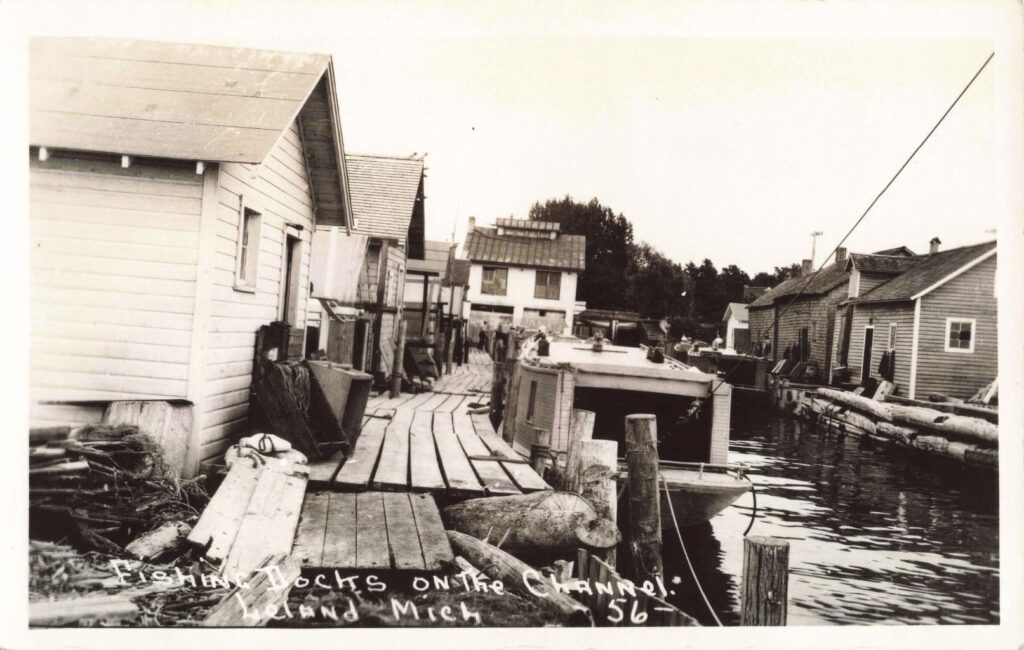
The History of the Fishing Village of Leland, Michigan, is a story of change without total erasure.
It begins with Native fishing grounds. It moves through a dam, a sawmill, steamer docks, and an iron furnace. It shifts into lumber, then commercial fishing, then tourism. Along the way, the small shanties of Fishtown became some of the most recognizable working buildings in Michigan.
Leland’s best lesson is direct. A place does not need to be grand to be historically important. Sometimes a narrow channel, a line of worn buildings, and a few old fish tugs can explain more than a monument.
The History of the Fishing Village of Leland Michigan is the story of a town that found a way to keep its working past in public view.
Images on this page may contain affiliate links in which we may receive a commission. See our affiliate disclosure for details.
Works Cited for the History of The Fishing Village of Leland Michigan
Carlson’s Fishery. “Fishtown.” Carlson’s Fishery.
Fishtown Preservation. “Fishtown’s Shanties.” Fishtown Preservation.
Fishtown Preservation. “What We Do.” Fishtown Preservation.
Glen Arbor Sun. “A Historic Journey Through Leland’s Fishtown.” Glen Arbor Sun.
Great Lakes Fishery Commission. “Sea Lamprey.” Great Lakes Fishery Commission.
Jeffris Family Foundation. “Fishtown.” Jeffris Family Foundation.
Leelanau.com. “Leland Blue Stone.” Leelanau.com.
Leland, MI. “Our History.” Leland, Michigan.
Michigan Economic Development Corporation. “Fishtown, Former School Buildings, Frank Lloyd Wright-Designed Neighborhood Among New Sites Listed in the National Register of Historic Places in Michigan.” MEDC, 14 July 2022.