
 by
by 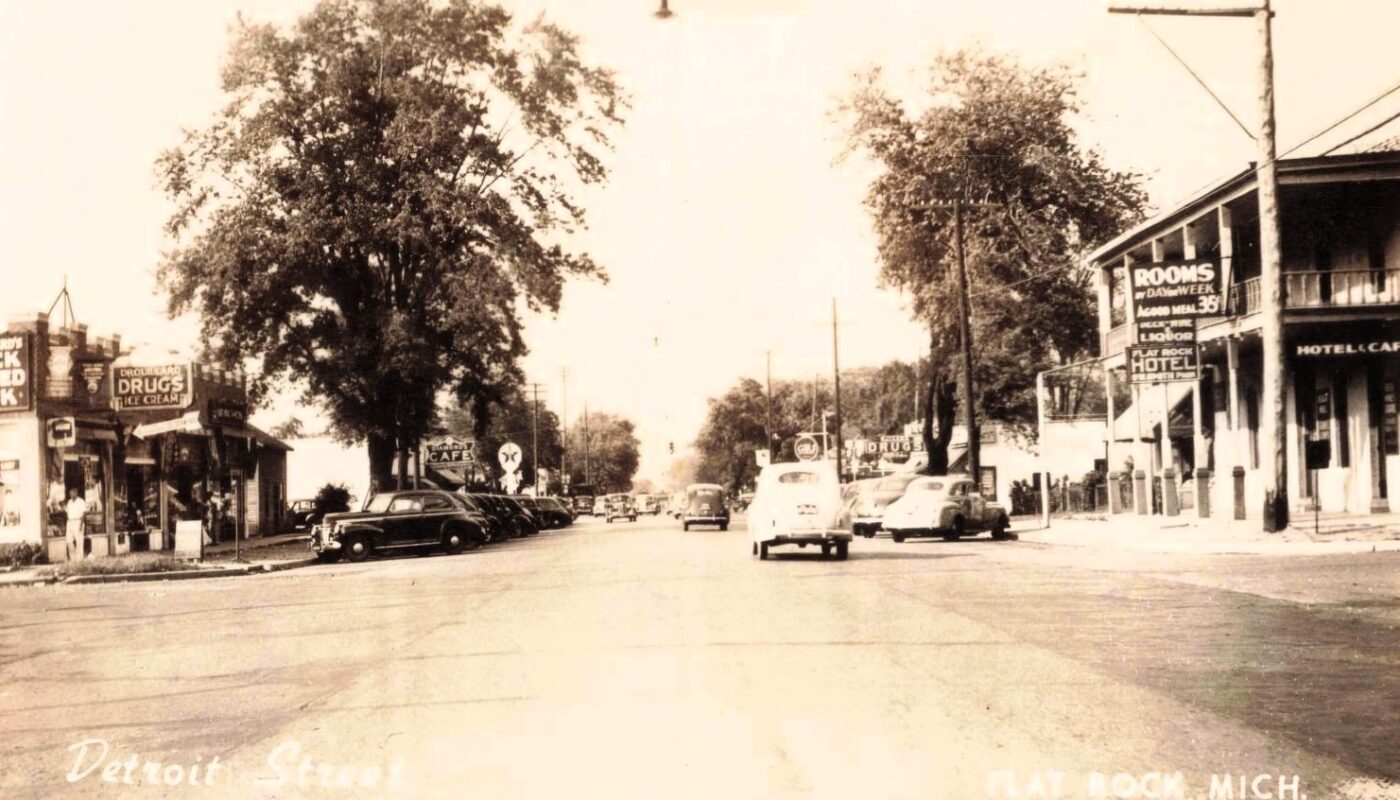
The Huron River gave Flat Rock its name and much of its work. Mills used its current before Henry Ford arrived. A railroad later connected the village to factories and markets. By the 1930s, automobiles filled streets that had been dirt within living memory. From an old Huron River dam to Ford’s headlamp plant, seven shifts show how the history of Flat Rock grew from a mill settlement into a Michigan town linked to the automobile age and wider world.
Table of Contents
Watch: History of Flat Rock, Michigan – The River That Powered Ford’s Lamps
Flat Rock in the Early 1900s
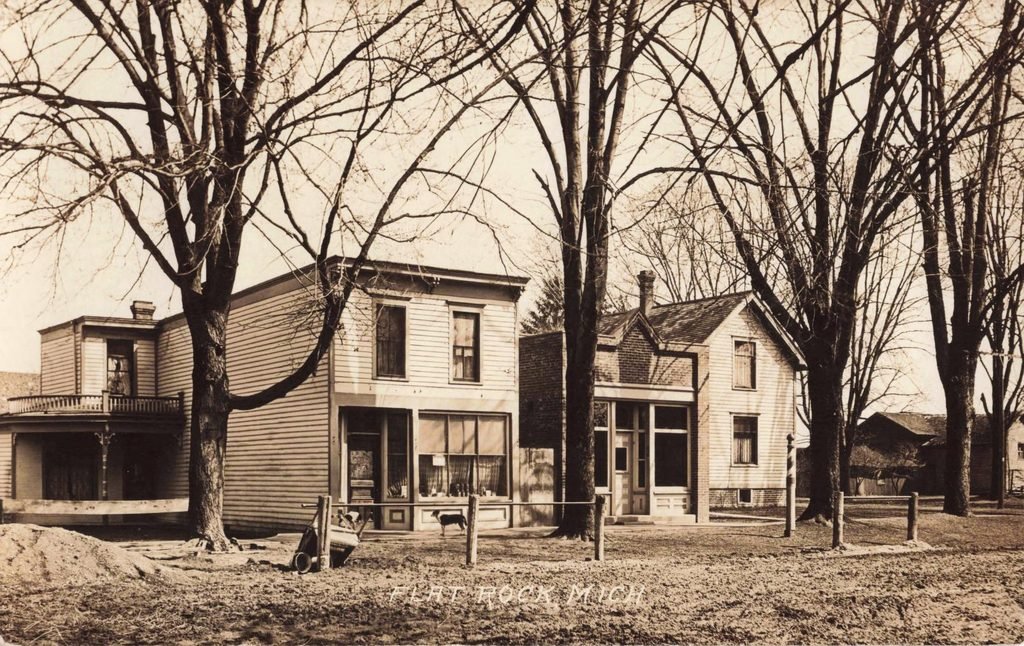
That change is evident in a set of early-20th-century Flat Rock views. They show the places that carried daily life: a dam, a station, churches, a meeting hall, businesses, and front porches. This was a period of immense change. With the advent of electricity, automobiles began to appear, and the world began to get a little smaller with the use of the telephone and the paving of roads.
The History of Flat Rock Michigan Begins at the River
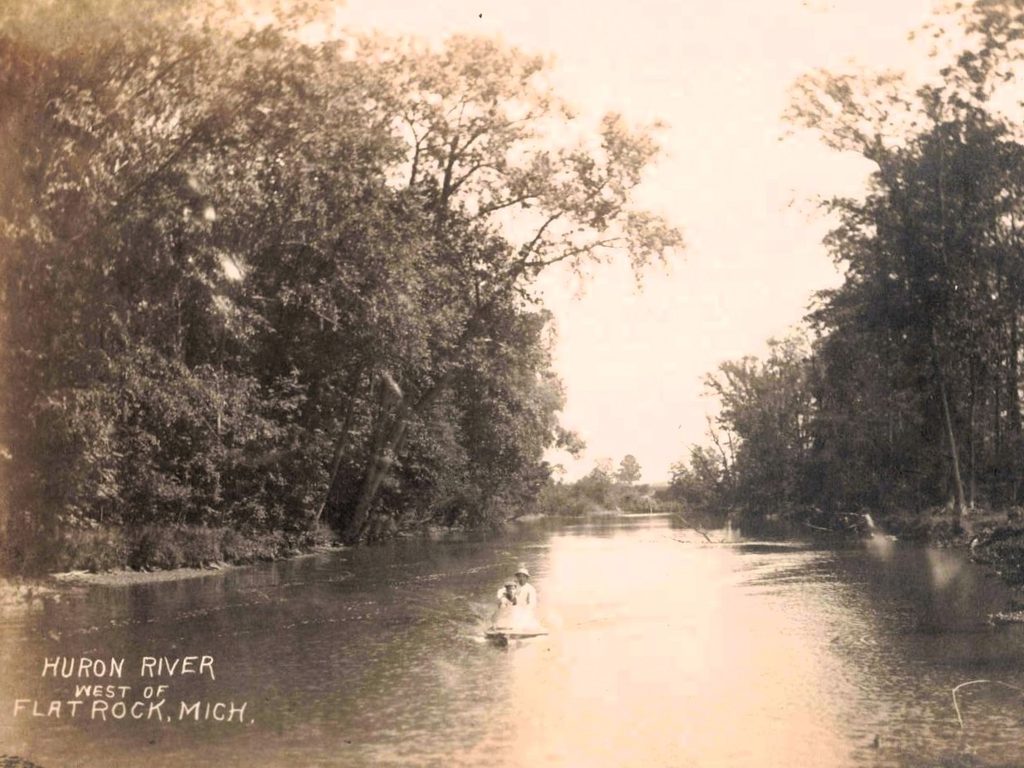
The Wyandot and other Indigenous people knew the Huron River corridor before the town existed. Their presence is part of the area’s history, not merely a lead-in to the settler period. In 1798, a French priest recorded the name Grosse Roche, referring to limestone beside the river. The English name Flat Rock kept the physical feature at the center of local identity.
Solomon Sibley acquired land here in 1818 and sold it to Michael and Jacob Vreeland in 1824, according to the federal Advisory Council on Historic Preservation. Sources vary on the exact year members of the Vreeland family first arrived. The land transfer gives us a firm date. The family’s name appeared in Vreelandt, one of the early village plats. Another was called Smooth Rock.
By 1828, the same federal account describes stores, mills, and about 250 inhabitants in the area. Lumber and grain processing served nearby farmers. Water power made those activities practical, and local trade gave people reasons to meet in town.
A Canal Plan Failed, but the Village Carried On
Backers of the Gibraltar and Flat Rock Land Company laid out Flat Rock in 1838. They hoped to help build a canal route from Lake Erie toward Lake Michigan. The scheme did not succeed. Flat Rock survived because its residents had more than one way to make a living.
This is an easy part of the story to miss. The spectacular proposal failed, while mills, stores, farms and the river continued to support people. By the late 1800s, railroad service also provided the community with more reliable access to regional markets.
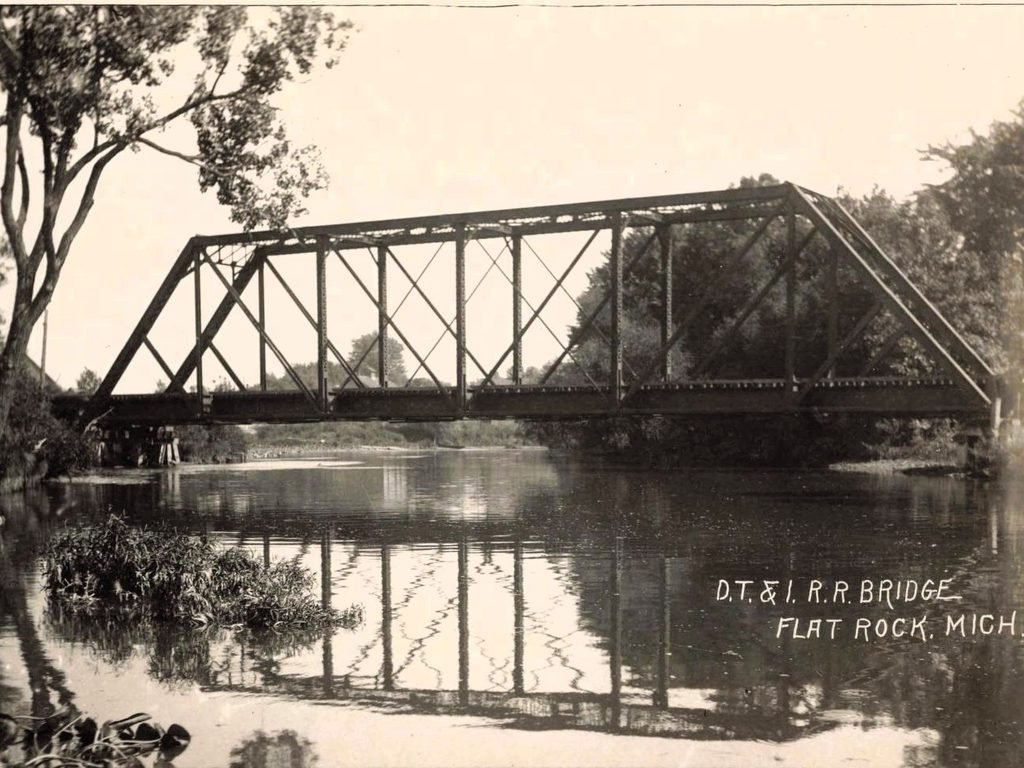
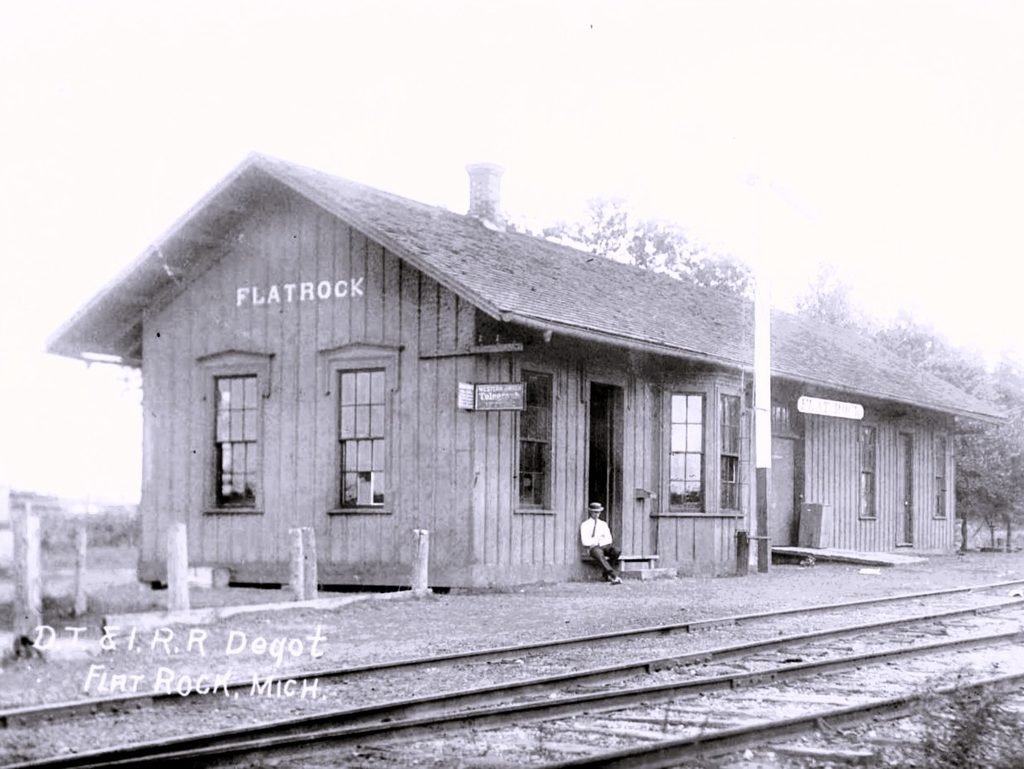
The Detroit, Toledo and Ironton depot and bridge in the supplied collection are reminders of that connection. The cards are labeled 1912. A train station set a schedule for freight and passengers. Its presence linked a small Huron River town with routes far outside Wayne County.
A Cement Road and the Work of a Growing Town
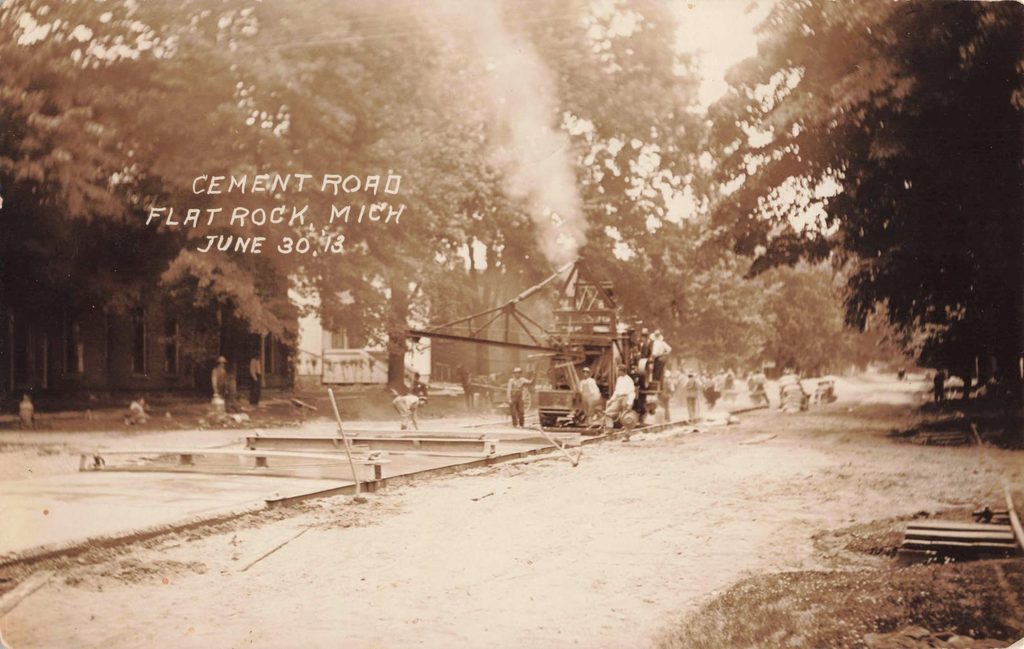
The most direct image of change may be the card dated June 30, 1913. A crew is laying a cement road. Forms, machinery, and workers occupy the street. The card records the labor that made the journey to town smoother. It also shows that roads did not become modern all at once.
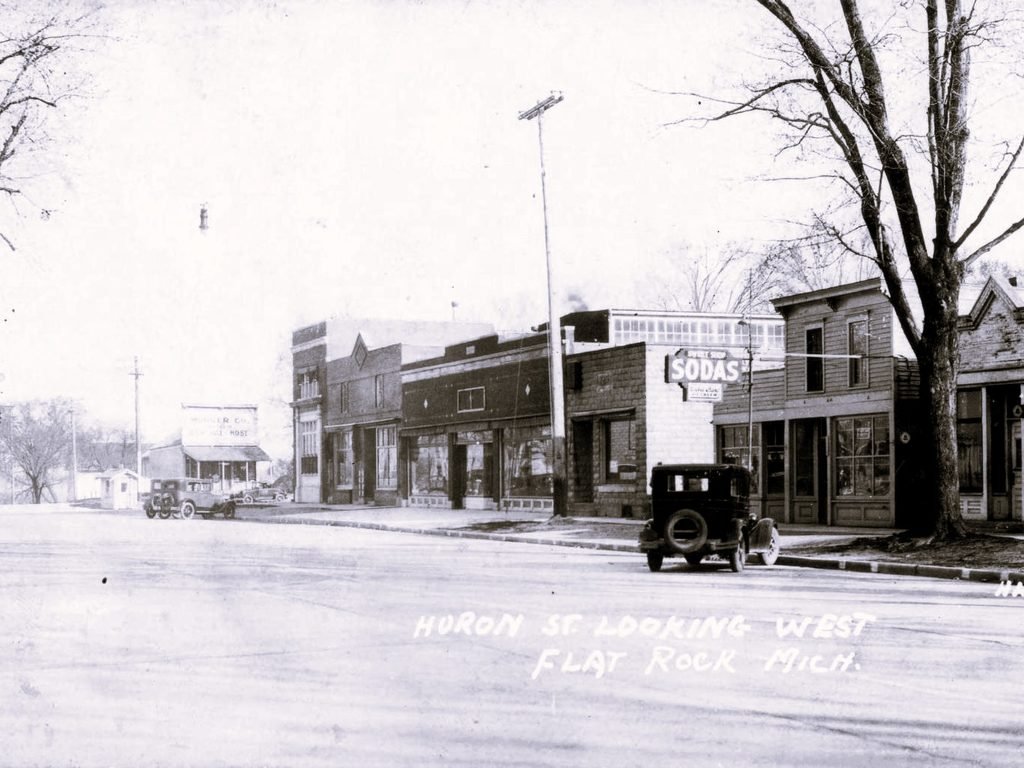
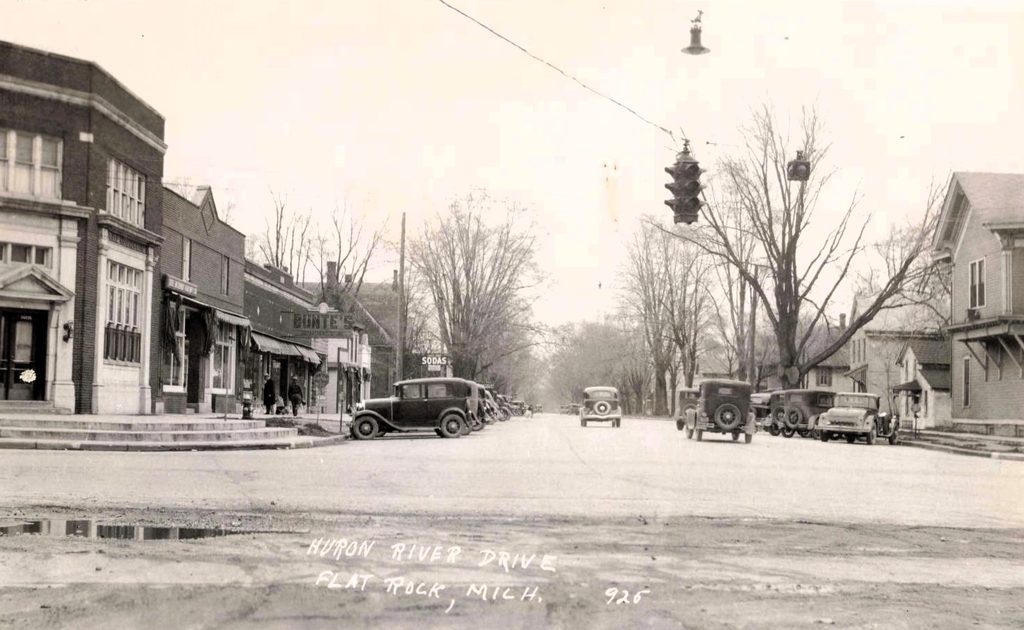
Street views from Telegraph Road, Detroit Street and Huron Street trace a town adjusting to more traffic. Some are undated, so they should not be forced into a precise timeline. A Huron Street view marked 1931 and another of Huron River Drive marked 1936 provide firmer anchors. Cars, paved surfaces, and business blocks point to changed travel habits.
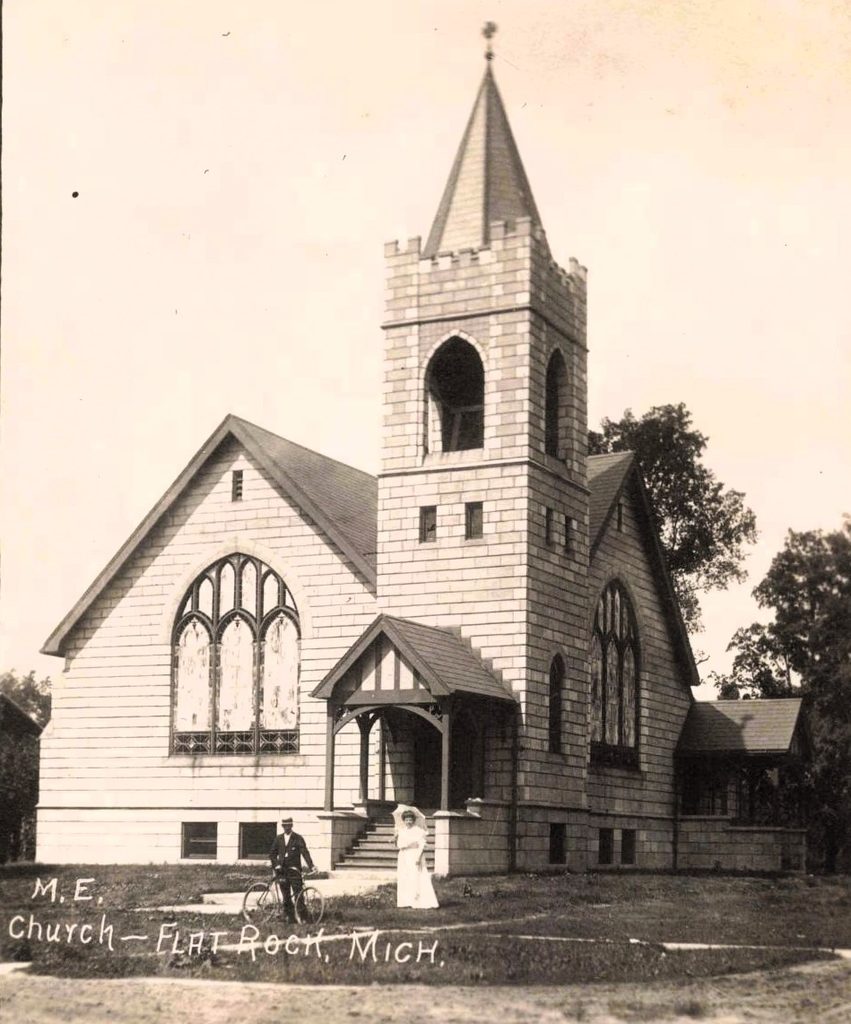
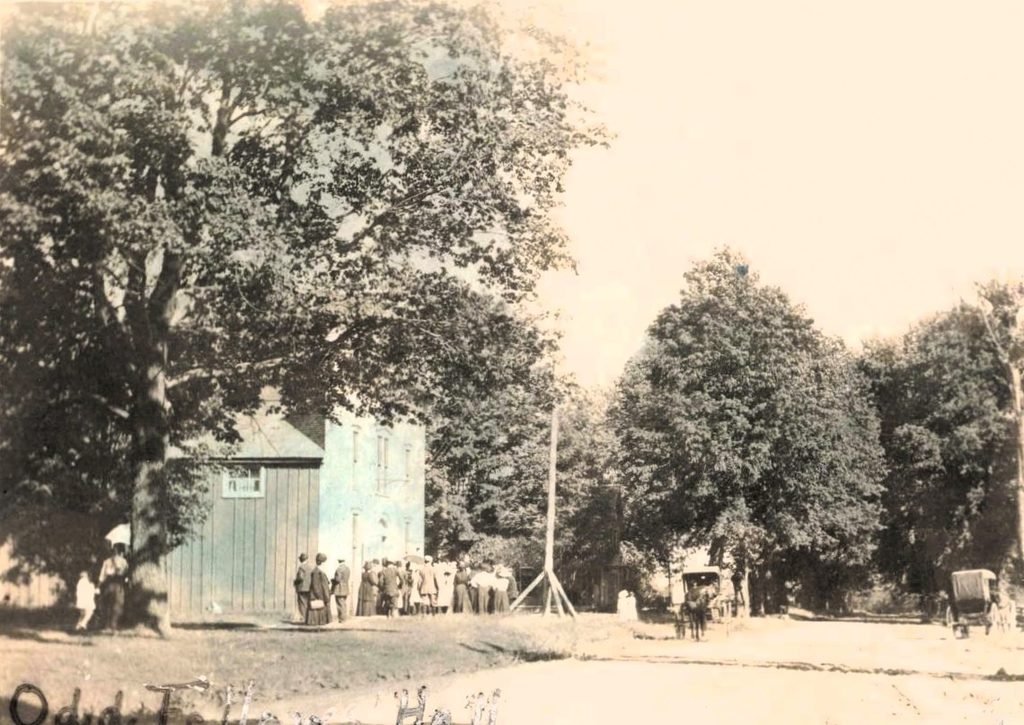
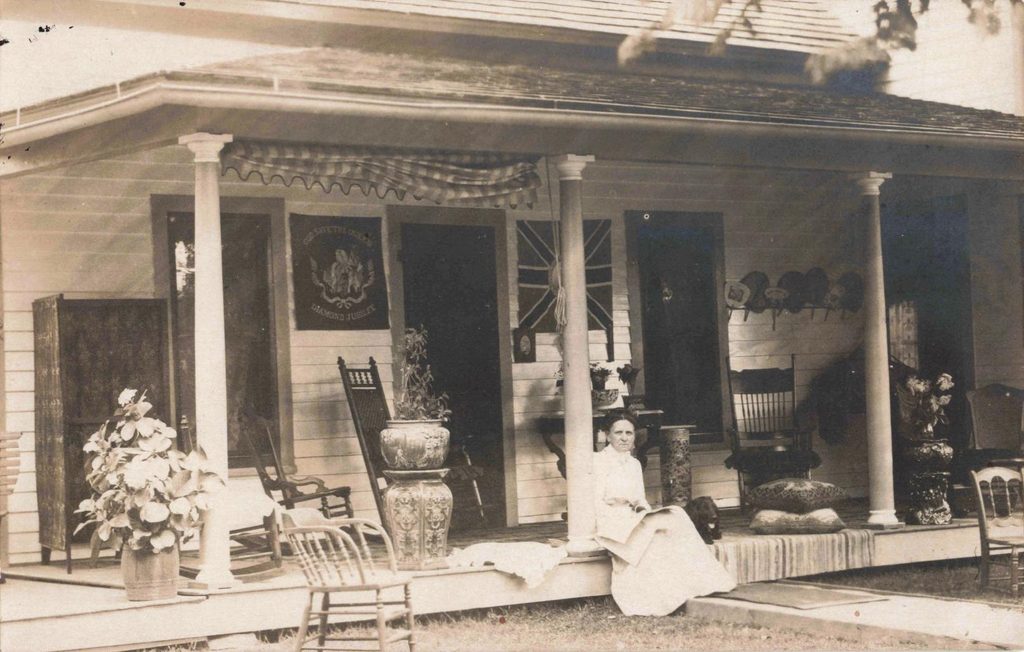
Local institutions grew along those roads. A card labeled 1909 shows the Methodist Episcopal church. Another labeled 1912 shows the Odd Fellows hall. They point to worship, meetings, and mutual aid outside the day’s commercial work. A front-porch view preserves a smaller piece of town life. Its occupants have not been identified, so the image should be presented without invented names or a guessed family story.
The History of Flat Rock Michigan, Meets Henry Ford
Ford’s plan for Village Industries called for smaller factories in rural communities. Flat Rock offered water power and a rail connection, along with a local workforce. Ford developed a factory for automotive lamps, a hydroelectric installation, and a water filtration plant. Architect Albert Kahn designed the complex, according to the Michigan Historical Commission marker.
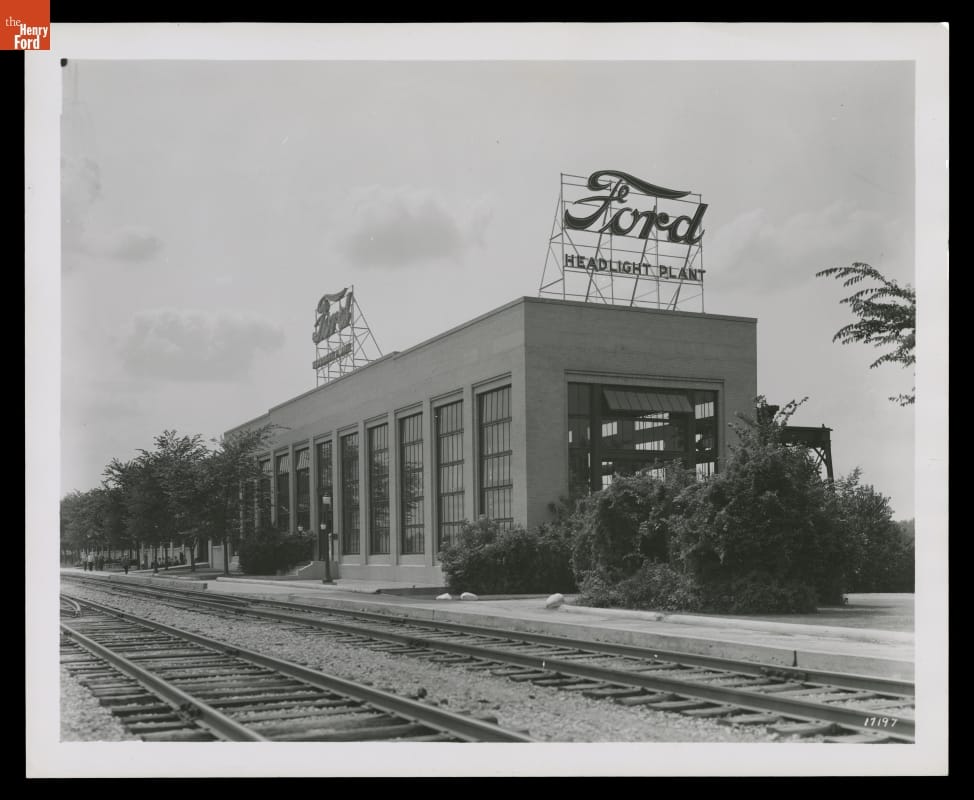
The Henry Ford’s collection records say the lamp factory opened in 1923. Some short town histories use 1925 for the plant, while federal heritage material links that year with the arrival of village lighting and water. For a clear account, it is better to state the 1923 production date and treat later service milestones separately. The village incorporated in 1923 and became a city in 1965.
The factory made parts that traveled much farther than Flat Rock. The Michigan historical marker reports 52 million lamp assemblies between 1923 and 1938. It also says hydroelectric power and factory jobs helped sustain the town during the Depression. Ford production ended in 1950, according to both the marker and The Henry Ford.
A second connection ran on rails. Henry and Edsel Ford bought the Detroit, Toledo and Ironton Railroad in 1920. Michigan’s transportation department records that a Ford-built electric locomotive began working between Dearborn and Flat Rock in 1925. This was a small town linked to a major experiment in industrial transport.
What the Old Streets Still Tell Us
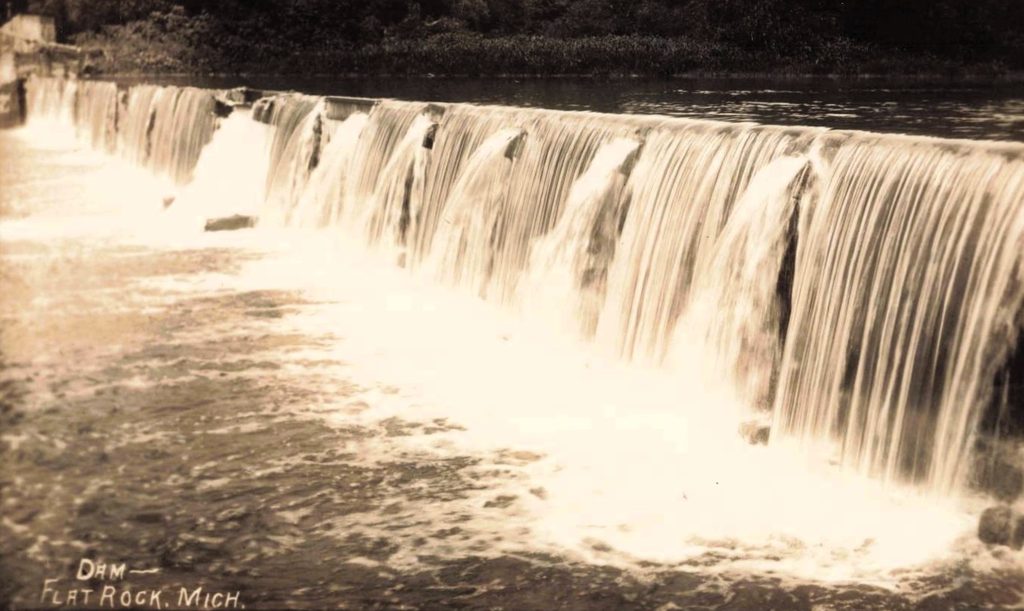
The History of Flat Rock, Michigan, is often told as a march from mills to motorcars. The stronger reading is that one industry grew out of another use of the same place. Ford did not invent the town’s interest in the river. The dam view identified as 1911 predates his factory. His engineers found a community with a long record of putting water to work.
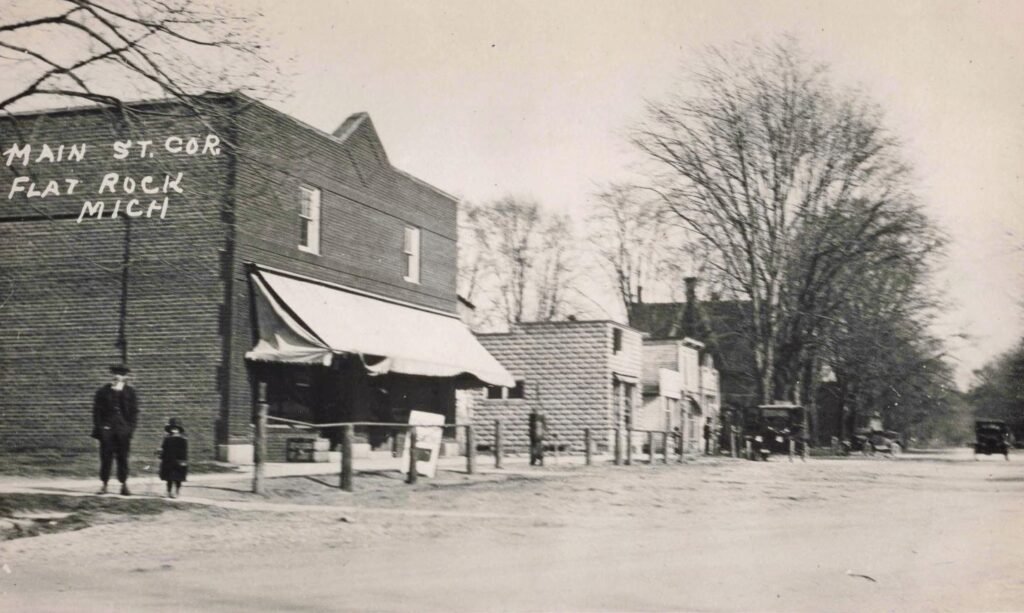
Not every plan succeeded. The canal failed. Businesses changed hands. Ford eventually shut the lamp operation. Still, the old views let us trace how people worked, worshipped, traveled, and built roads through a period of rapid change. Flat Rock’s distinctive story lies in that meeting of river power, local institutions, rail service and automobile production on a few southeast Michigan streets.
Works Cited for the History of Flat Rock
Advisory Council on Historic Preservation. “Flat Rock, Michigan.” Advisory Council on Historic Preservation. Accessed 26 Sept. 2026.
Flat Rock Historical Society Staff. “A Reverse History of Flat Rock: From Industrial Prosperity to Frontier Origins.” Flat Rock Historical Society, 21 Nov. 2025.
Ford Motor Company, Engineering Photographic Department. “Aerial View, Ford Motor Company Headlight Plant, Flat Rock, Michigan, 1927.” 19 Oct. 1927. The Henry Ford.
Ford Motor Company, Engineering Photographic Department. “D.T. & I. Railroad Locomotive No. 16 at Ford Motor Company Headlight Plant, Flat Rock, Michigan, 1923.” 26 July 1923. The Henry Ford.
Michigan Department of Transportation. Michigan’s Railroad History. Jan. 2015.
Michigan Historical Commission. “Ford Motor Company Lamp Factory.” Historical marker L2198, 2008. The Historical Marker Database, transcription and images by Joel Seewald, 25 Sept. 2020.
Sanborn Map Company. Sanborn Fire Insurance Map from Flat Rock, Wayne County, Michigan. Oct. 1929. Library of Congress.