
 by
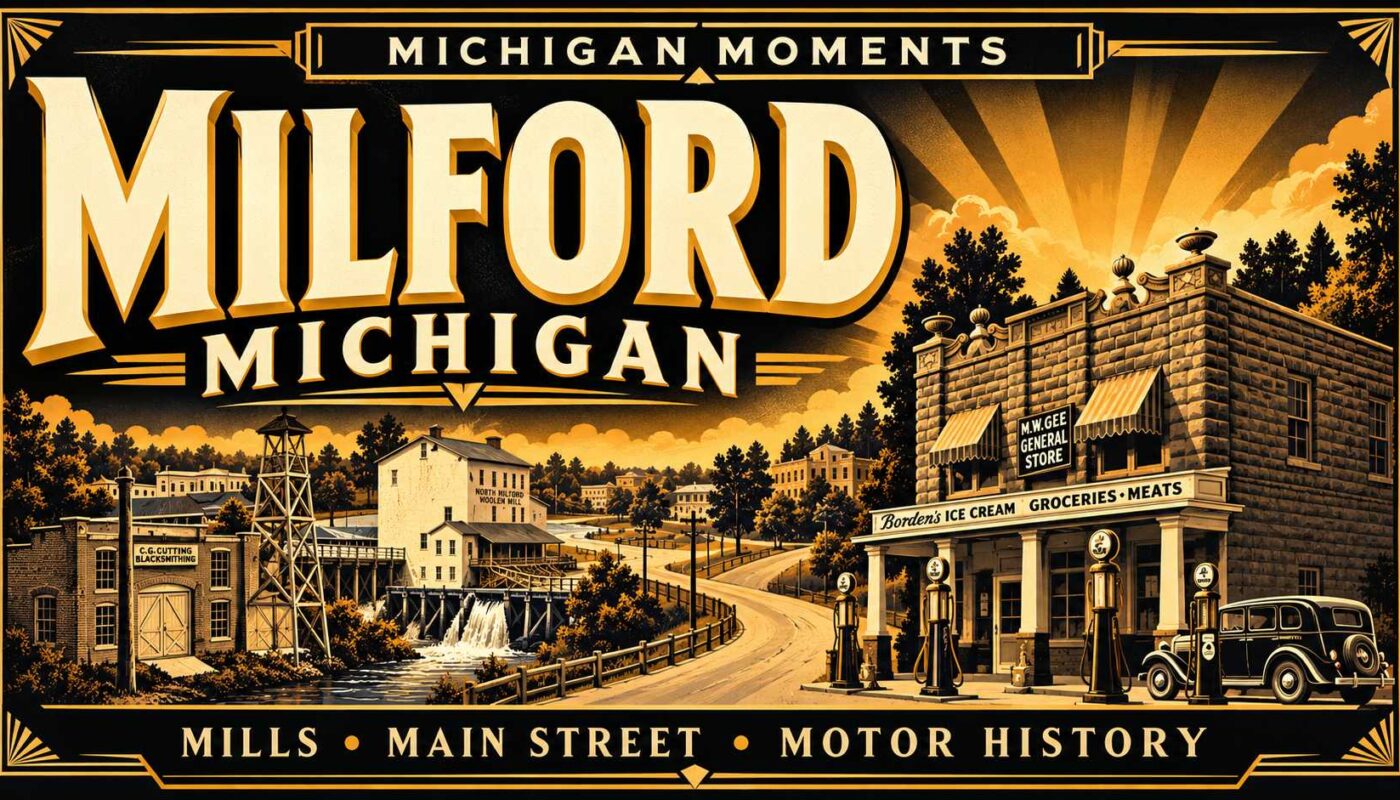
The history of Milford Michigan begins with water. Long before automobiles filled Main Street, settlers looked at the Huron River and Pettibone Creek and saw something practical: power.
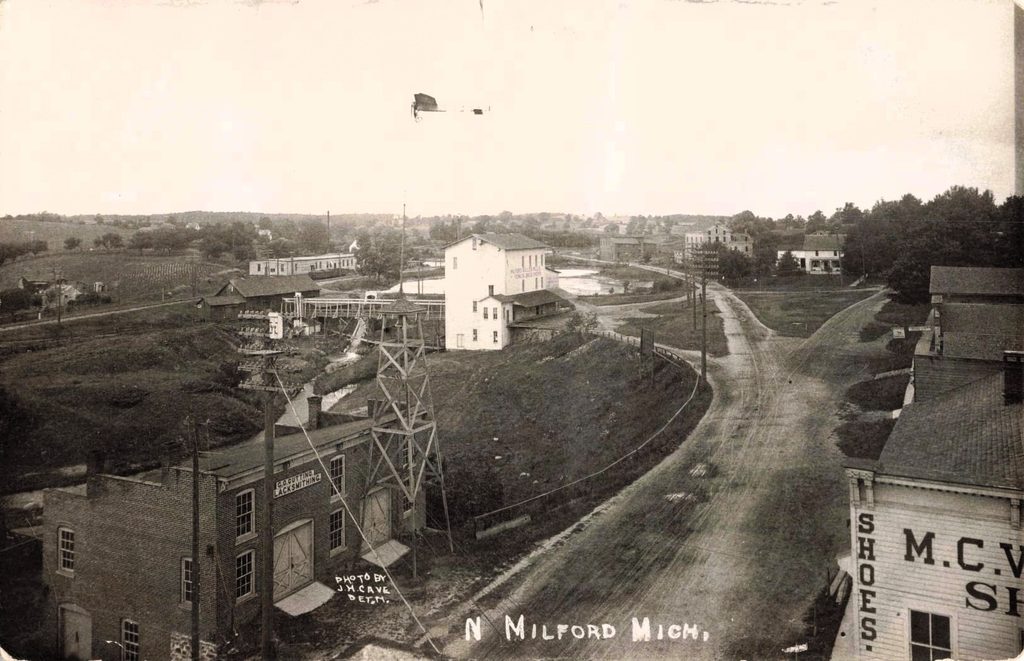
Elizur and Stanley Ruggles selected the area for a sawmill in the early 1830s. By 1832, milling activity had begun. Luman Fuller added a gristmill in 1834. Dams later created the Lower and Upper mill ponds along Pettibone Creek.
Those mills gave Milford a reason to exist. Lumber could be cut locally. Grain could be ground. Farmers had a nearby trading center. Stores, hotels, churches, and houses followed.
History of Milford Michigan Begins With the Mills
Jacob Peters became a central figure in Milford’s industrial story. He arrived in 1846 and acquired the old Fuller mill property the following year.
The Peters operation eventually included a gristmill, woolen works, and barrel-making operations, with a tannery nearby. An 1871 account reported that the flour mill could produce more than 100 barrels a day. They carded wool, spun it, and manufactured it into cloth for sale.
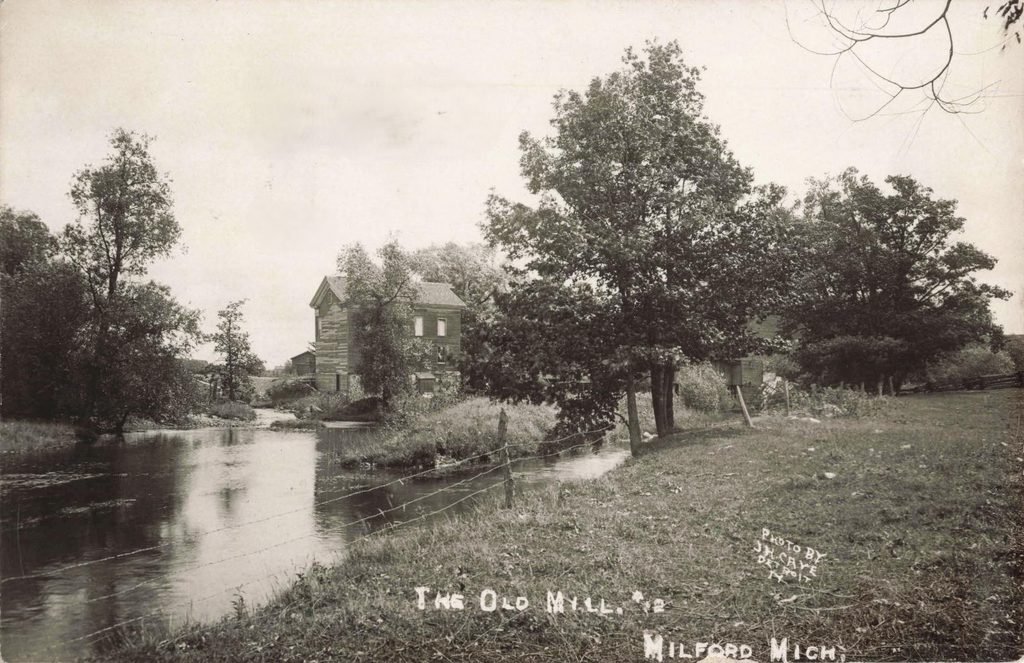
Milford was not simply a collection of homes around a country crossroads. It was a small manufacturing center that served the surrounding farmland.
The Railroad Changed Milford — But Not Immediately for the Better
The arrival of rail transportation produced one of the more unexpected chapters in the history of Milford Michigan.
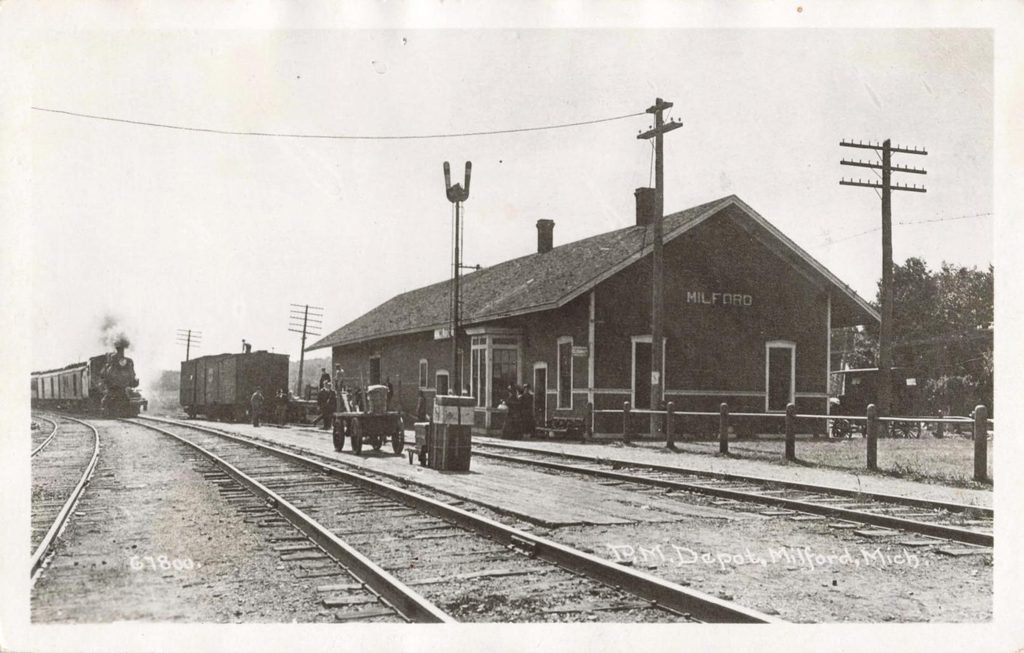
People often remember railroads as automatic engines of prosperity. Milford’s experience was more complicated. An 1871 account reported that when railroad service reached other communities before Milford, some of Milford’s old trading business moved away. Farmers and merchants could reach markets elsewhere more easily.
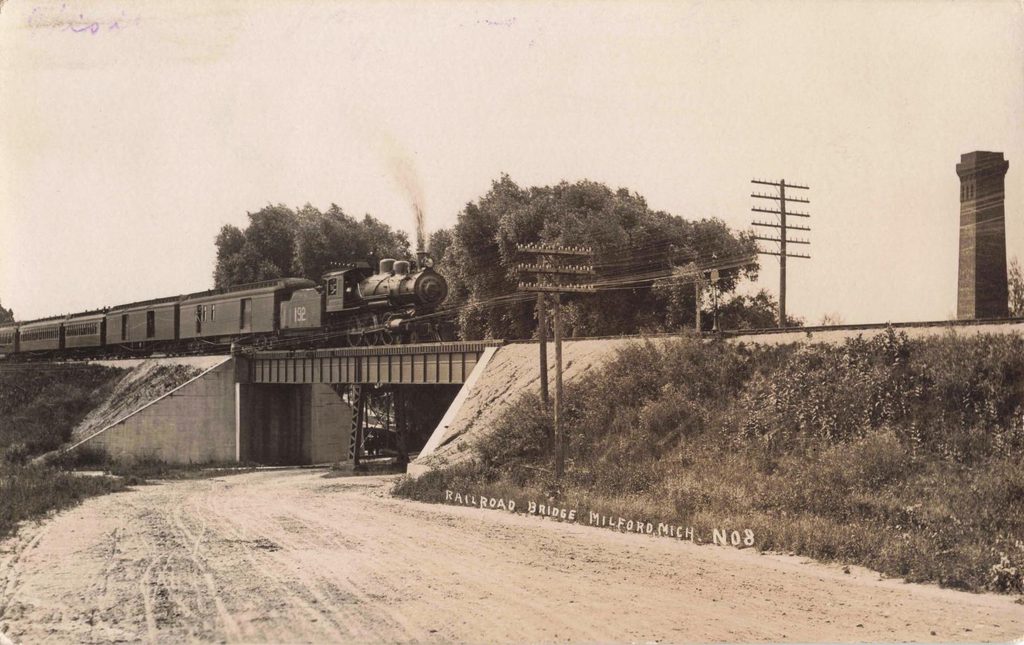
Only after the Flint & Pere Marquette route reached Milford in 1871 did the village gain the direct advantages of rail service.
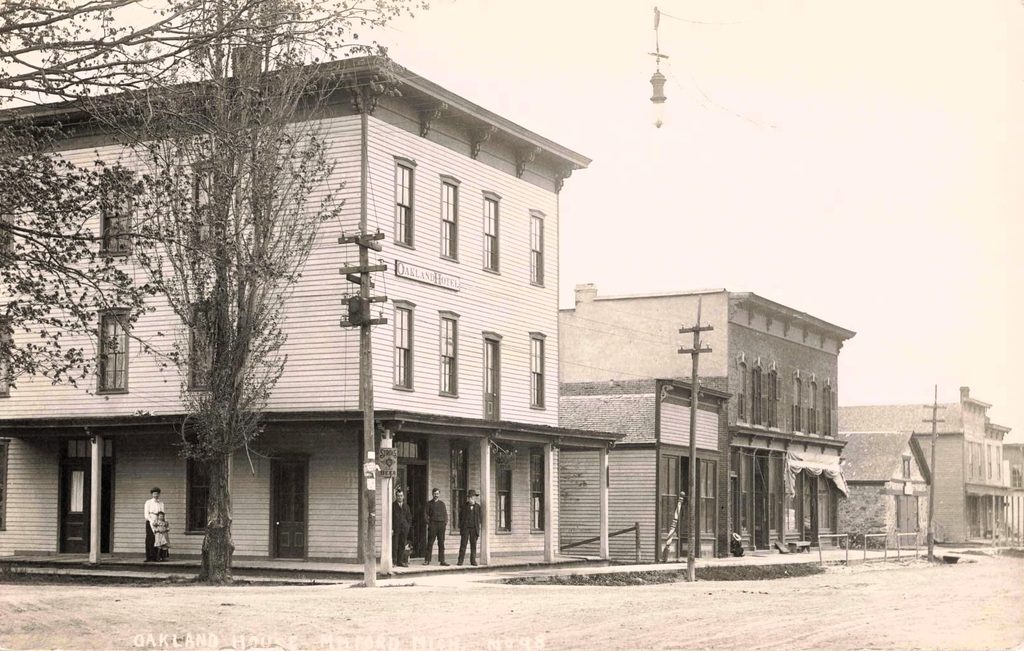
Farm products could move to larger markets. Freight arrived more efficiently. Travelers filled local hotels. New commercial buildings and houses appeared during the following decades.
The Milford Times also began publication in 1871, giving the village a weekly record of local business, politics, travel, celebrations and everyday life.
Electric Light Comes to a Small Michigan Village
Water continued to give Milford an advantage.
In 1892, a dynamo installed at the old Peters mill began generating electricity. Power first served industrial operations, then homes, businesses, and street lamps.
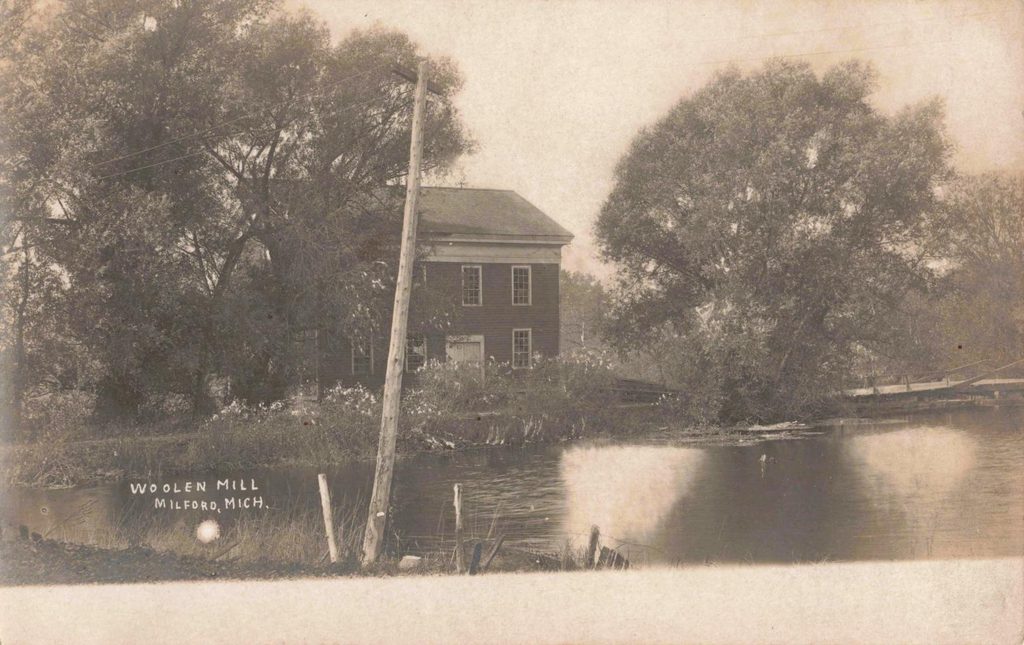
For residents accustomed to oil lamps and dark roads, electric lighting changed daily life. Stores could operate more effectively after sunset. Streets became easier to use at night. Milford had adopted a technology still unavailable in many small communities.
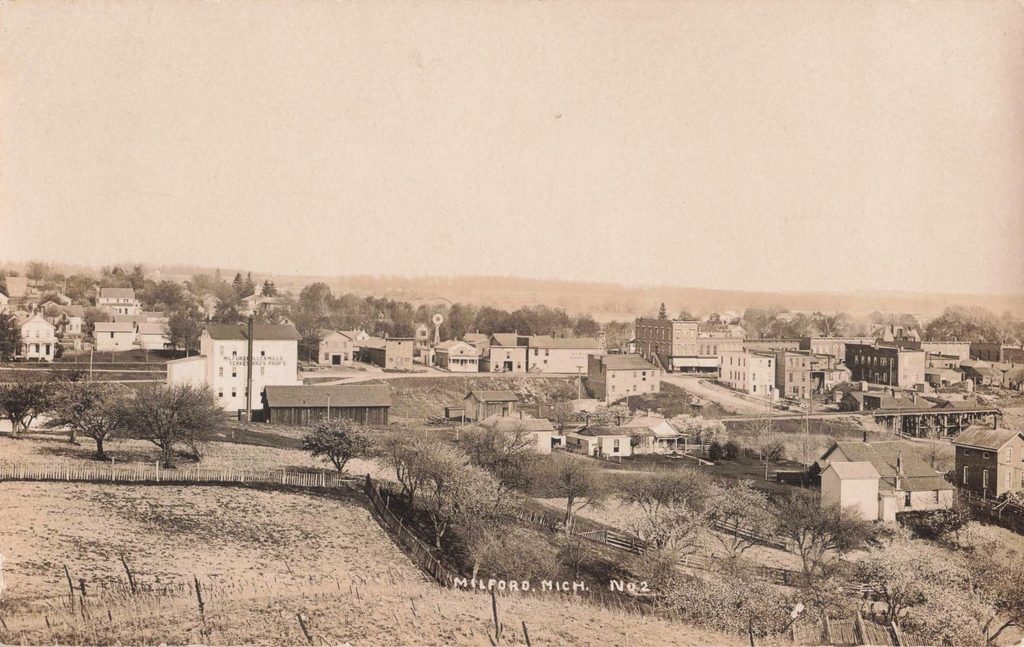
The Peters mills themselves did not survive much longer. In 1911, they were removed as Frank Hubbell reorganized the river’s waterpower system and developed a new dam downstream.
The buildings disappeared. The water remained useful.
Main Street Meets the Automobile
The automobile arrived in Milford before most residents could have guessed how thoroughly it would change Michigan.
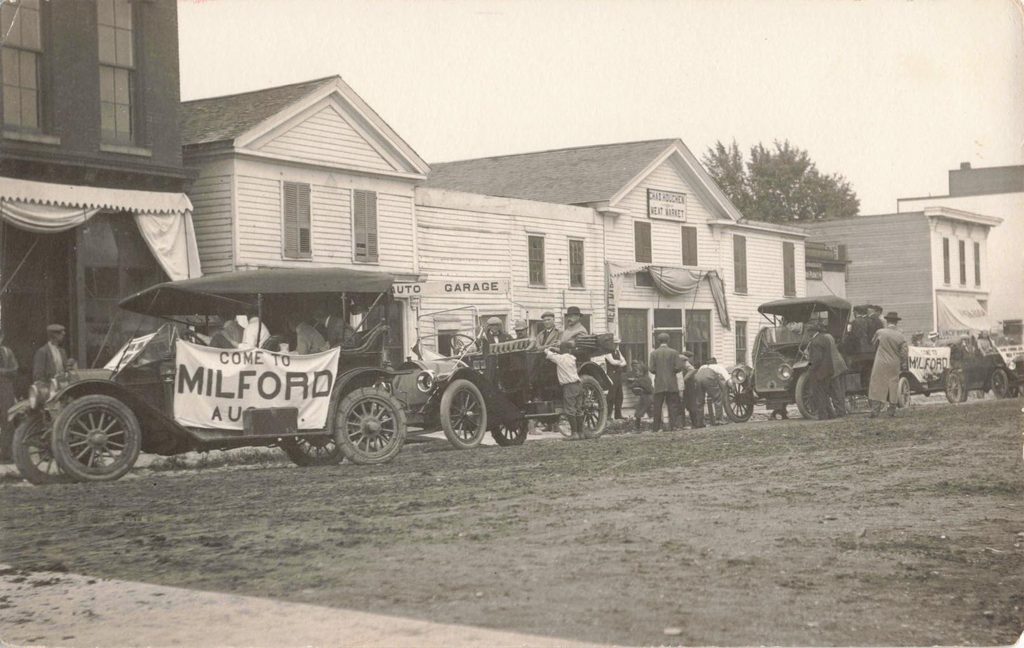
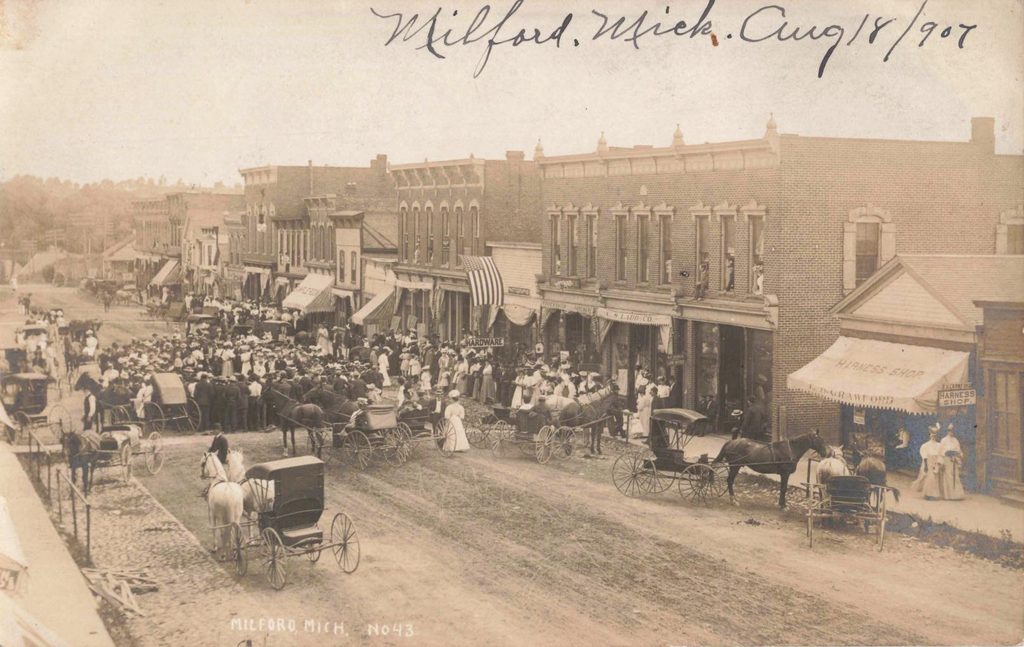
F.W. Bacon, owner of the Peters Mill, reportedly bought Milford’s first automobile in October 1900. By 1910, rural mail carriers were using automobiles. Garages and filling stations began to appear alongside older blacksmith shops, stores, and hotels.
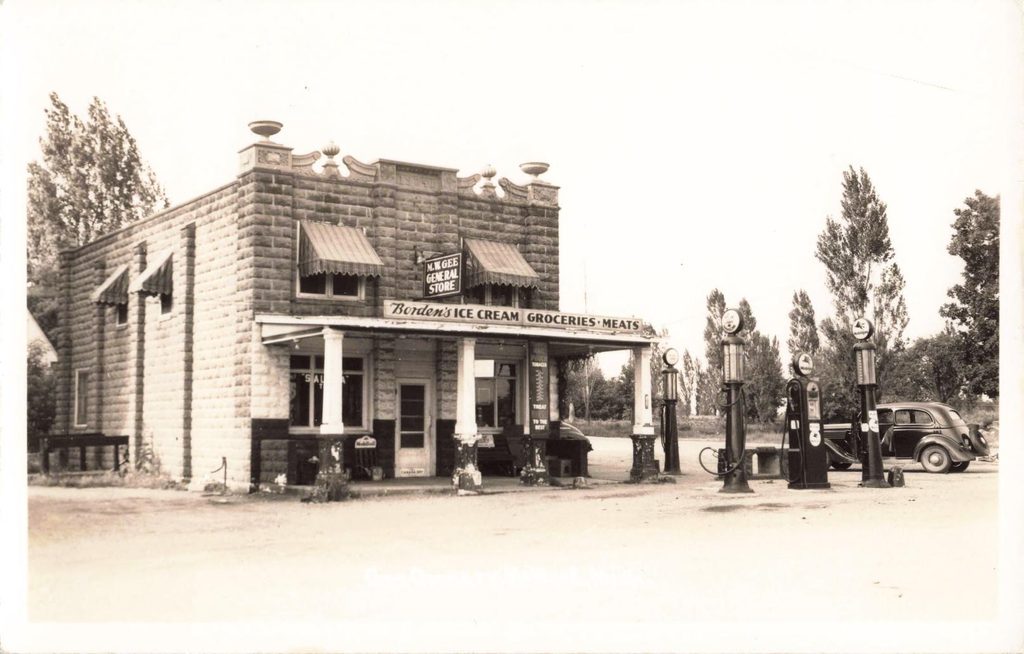
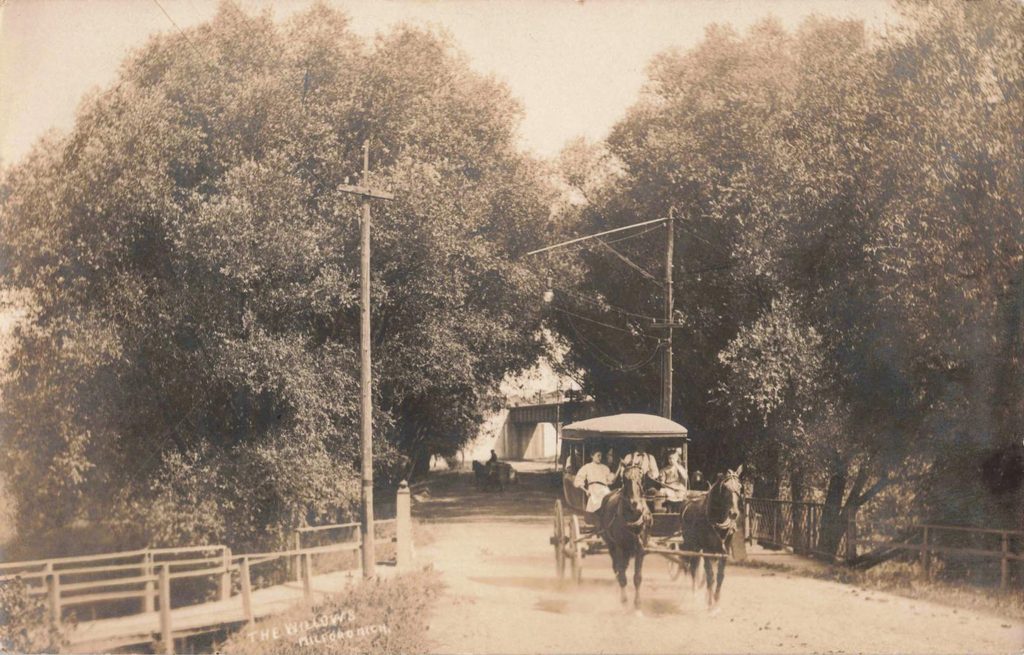
Main Street became a place where two transportation ages briefly overlapped. Horse-drawn wagons still appeared while automobiles parked at the curb. Storefront awnings shaded pedestrians as gasoline pumps appeared outside businesses.
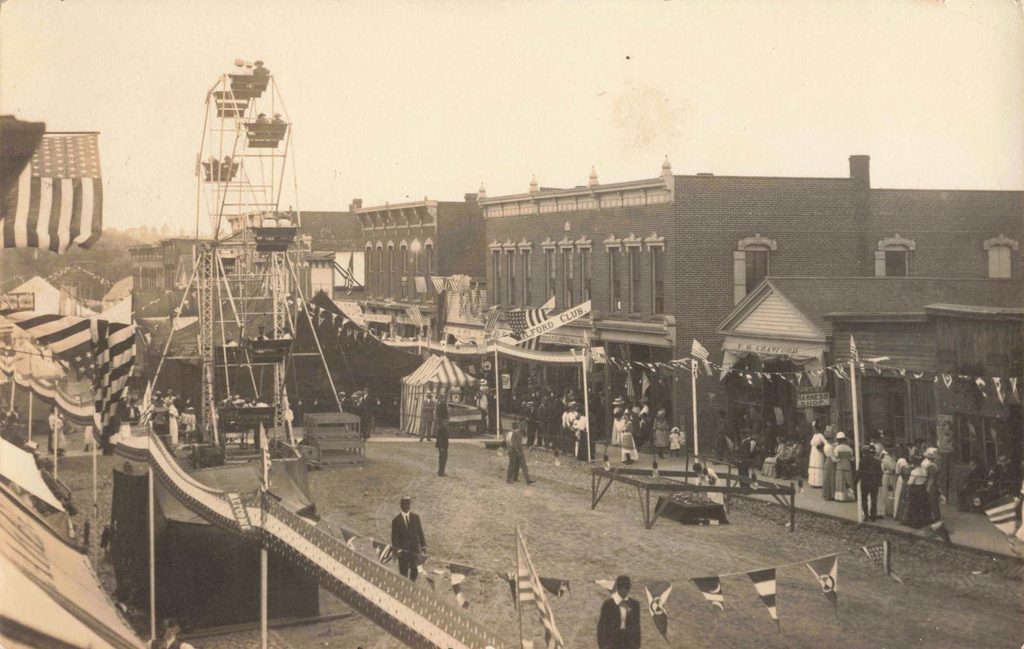
Milford also remained a social center. Beginning in 1880, local fairgrounds hosted agricultural competitions, livestock exhibitions, baseball, and entertainment. The gathering eventually became the Oakland County Fair and remained in Milford until 1949.
Hotels and the Social Life of Milford
Travelers needed places to sleep, eat and conduct business.
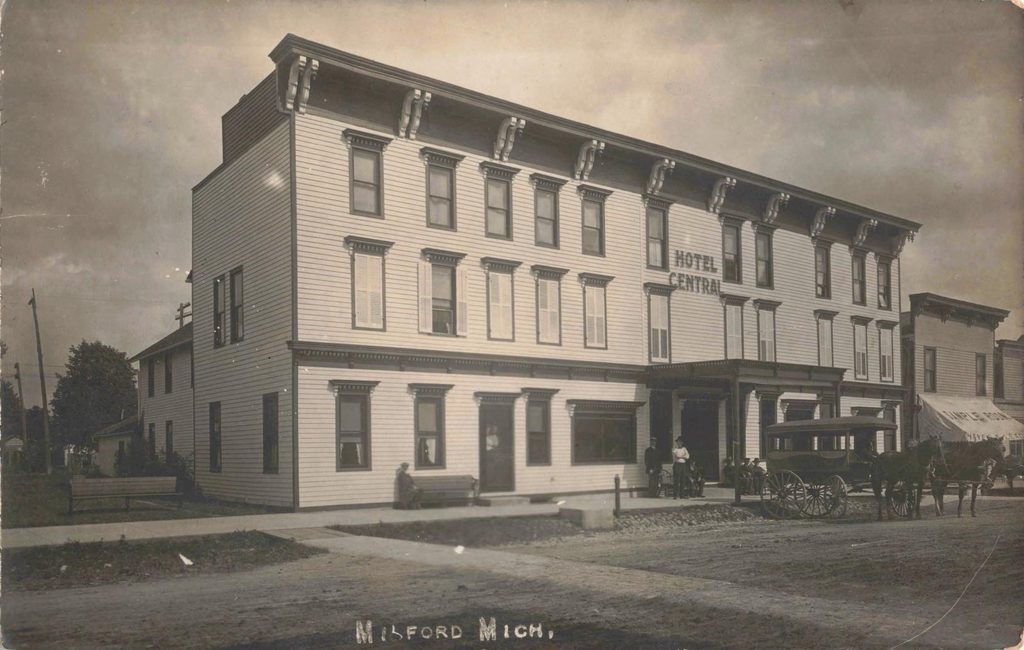
The Central Hotel had operated under several names by the late nineteenth century. The Gleeson family acquired it in 1892. Fire damaged the building on July 4, 1918, destroying part of the upper floor and other sections of the complex.
The hotel survived. Howard and Bernice Fawcett bought it in 1935 and renamed it Ye Olde Hotel. Their daughter later recalled a Main Street serving shoppers from Milford and neighboring communities.
General Motors Arrives Outside Town
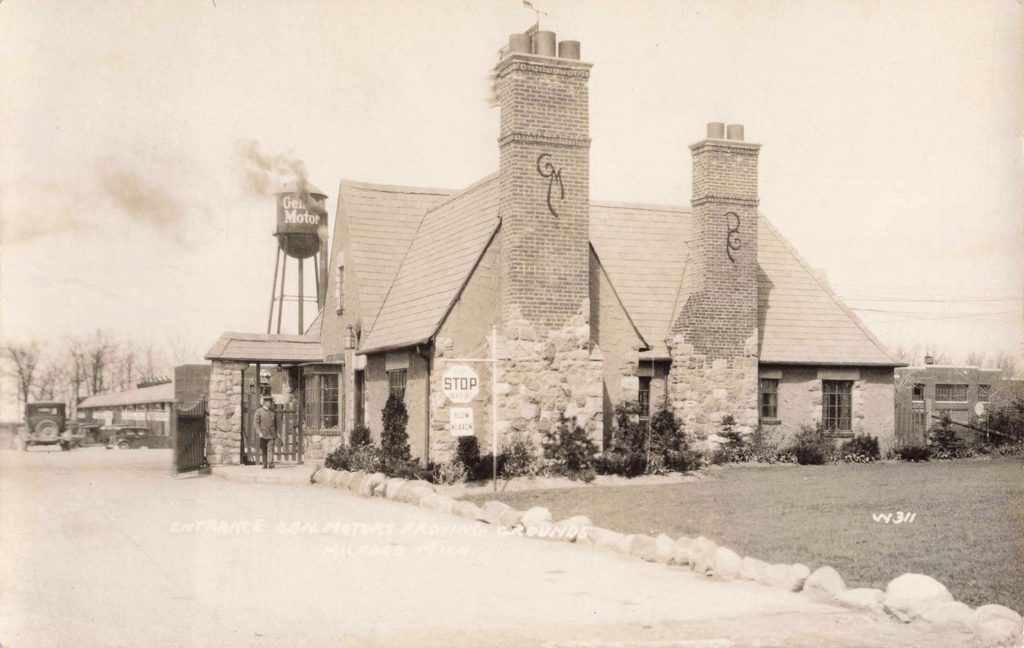
The next major change in Milford, Michigan’s history came in 1924.
General Motors selected 1,125 acres west of the village for an automobile proving ground. Engineers and drivers could test vehicles away from crowded city streets.
The facility also affected Milford. Workers needed houses, meals, stores, and local services. The automobile industry was no longer confined to Detroit. It had reached the farm country around Milford.
Henry Ford Reuses Milford’s Old Waterpower
Henry Ford pushed the connection even further.
During the 1930s, Ford developed small rural factories known as Village Industries. He aimed to combine factory work with agricultural life.
Milford already had what Ford needed: water, mill ponds, and a manufacturing history.
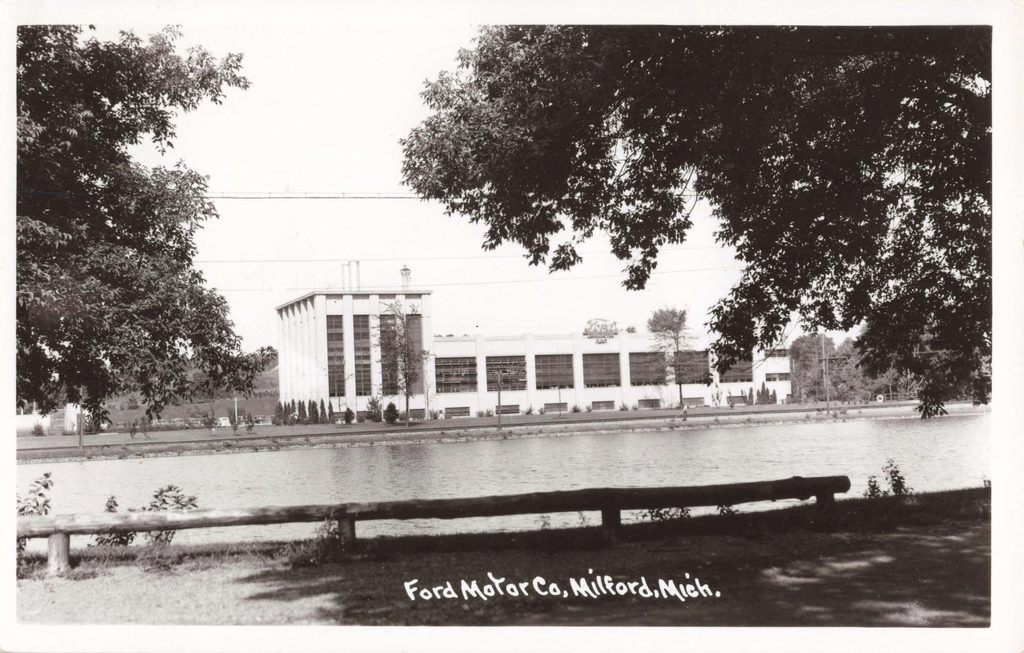
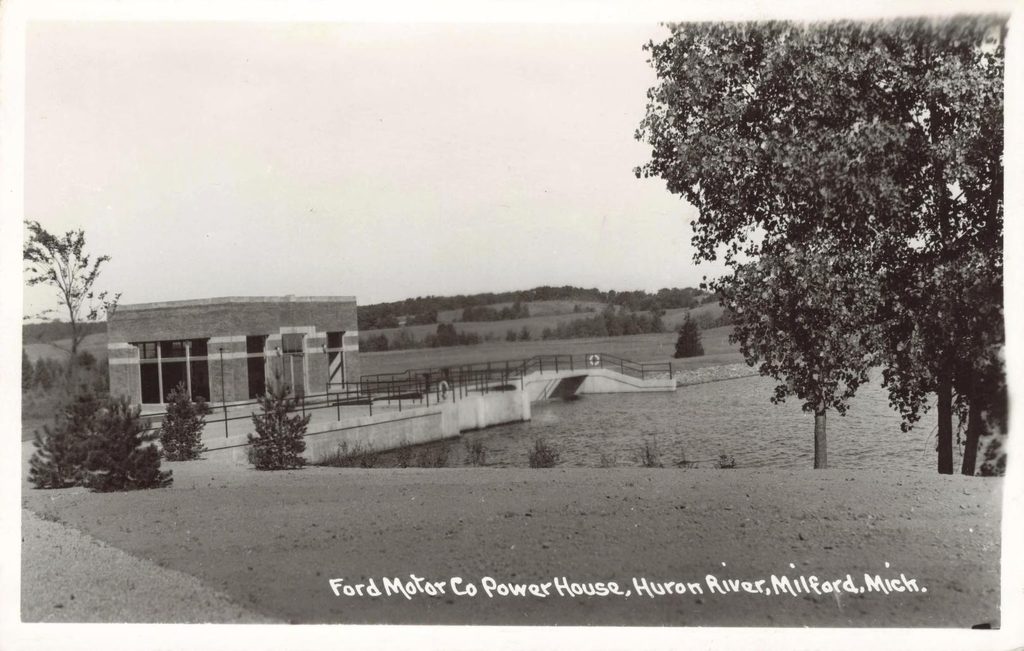
In 1938, Ford built a carburetor factory beside the Upper Mill Pond. Albert Kahn’s architectural firm designed the factory and hydroelectric installations.
Milford Historical Society research states that the plant employed about 350 workers, with farmers making up 53% of the workforce. Production reached roughly 1,700 carburetors per day.
That creates the most unexpected connection in Milford’s story.
The water that attracted mill builders during the 1830s later helped support a factory producing parts for Ford automobiles. Milford did not simply replace its old industrial system. It reused the same natural advantage for a new century.
Why the History of Milford Michigan Still Feels Familiar
Milford’s past shows up in ordinary places.
A hotel tells the story of railroad travelers. A filling station records the rise of the automobile. A mill pond recalls early industry. A depot marks the connection between farms and distant markets. A Ford factory shows how Detroit’s automobile economy reached into small communities.
Milford, Michigan, therefore, is not a simple story of old buildings giving way to new ones.
It is a story of adaptation.
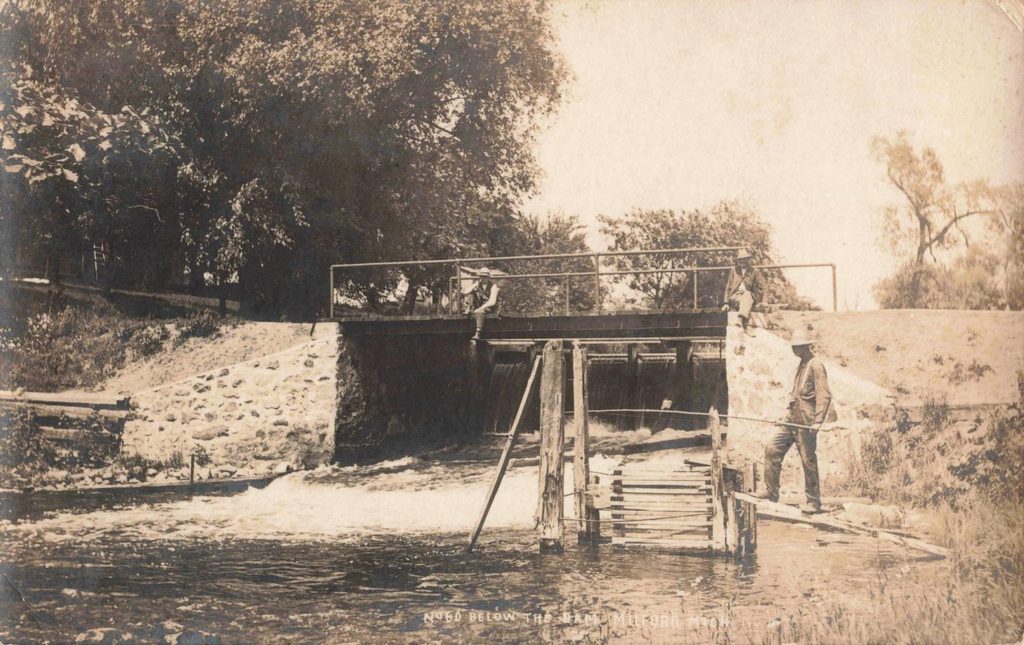
The machinery changed. Transportation changed. Jobs changed. Yet the Huron River, Pettibone Creek, Main Street, and the old mill sites kept shaping Milford’s development.
By 1940, someone standing in Milford could see traces of several Michigan eras at once: nineteenth-century brick stores, a railroad, automobiles, gasoline stations, farm traffic, and a modern automobile factory.
Few places show the transition from Michigan’s mill economy to its automobile economy so clearly within one compact community.
Works Cited
Library of Congress. “Sanborn Fire Insurance Map from Milford, Oakland County, Michigan.” Sanborn Map Company, July 1901.
Library of Congress. “The Milford Times (Milford, Mich.) 1871-Current.” Directory of U.S. Newspapers in American Libraries.
Milford Historical Society. “A Brief History of Milford, Michigan.” Milford Historical Society.
Milford Historical Society. “Milford’s Automotive Heritage Sites.” Milford Historical Society.
Milford Historical Society. “Peters’ Mill History.” Reprinted from The Milford Times, 1 July 1932.
Milford Historical Society. “Power Station Restoration Project.” Milford Historical Society.
National Park Service. “North Milford Historic District.” National Register of Historic Places Collection.