 by
by 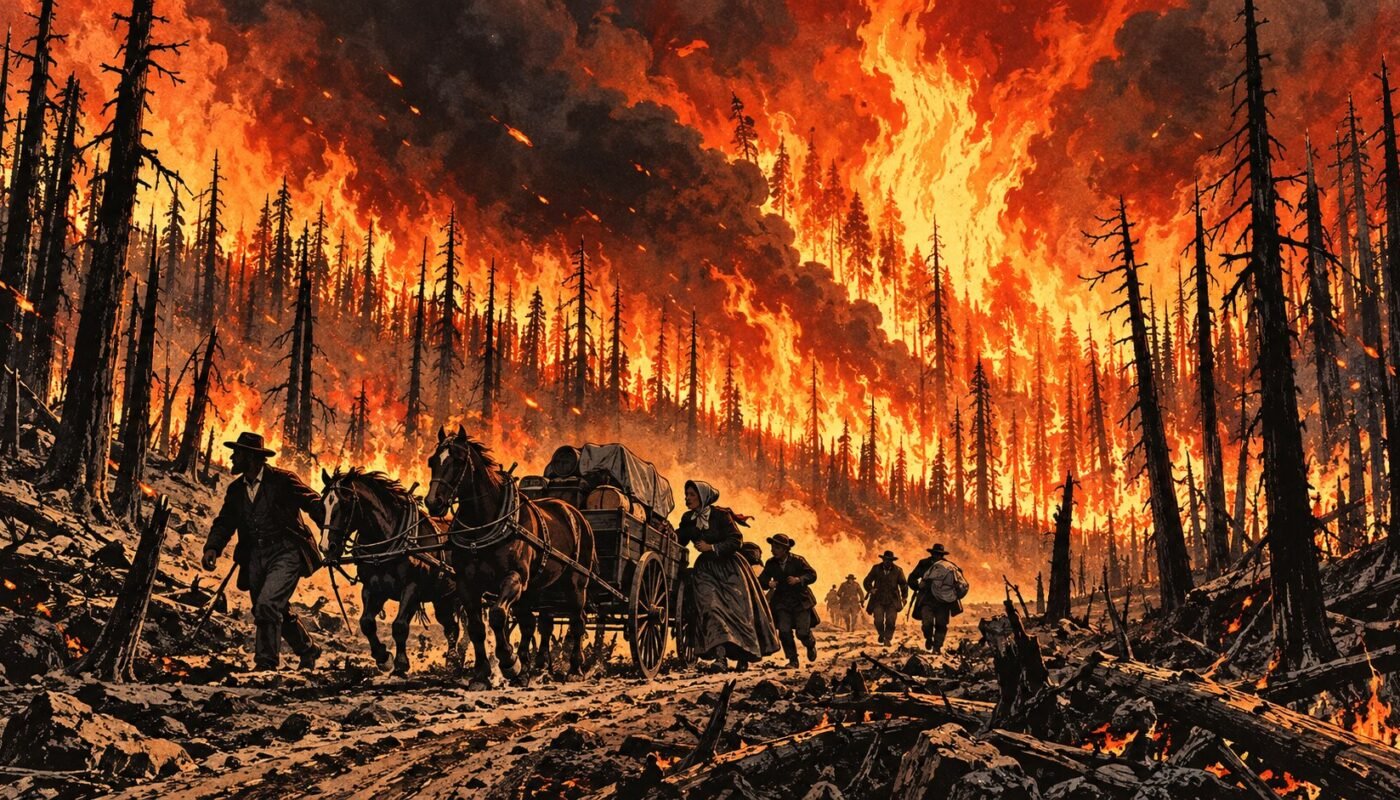
EGLE’s interactive history examines the wildfire that killed hundreds, displaced thousands, and launched the American Red Cross’ first major relief effort.
LANSING, Mich. — A new interactive story map is bringing fresh attention to the Great Thumb Fire of 1881, the massive wildfire that swept across Michigan’s Thumb and helped shape the region’s farming communities.
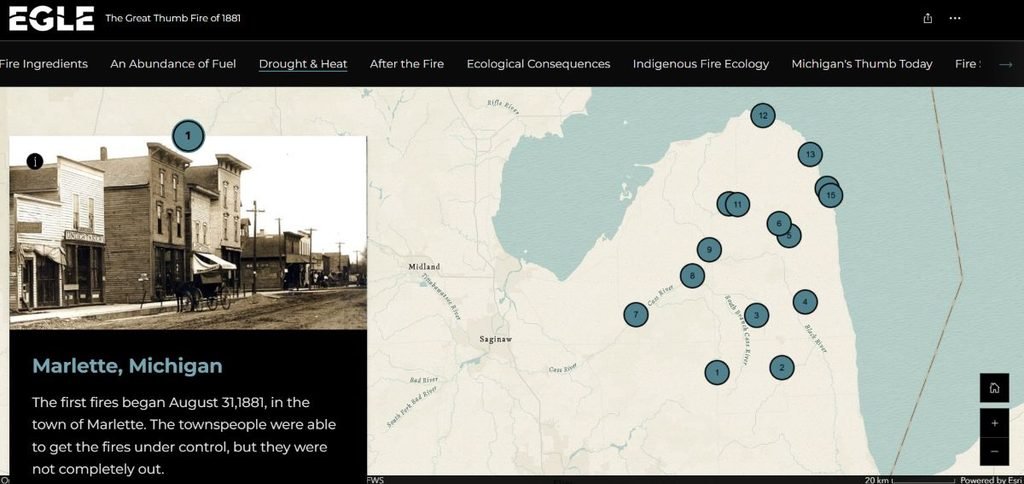
The Michigan Department of Environment, Great Lakes, and Energy highlighted the online resource Oct. 7. EGLE Classroom created the map for updated lessons within the Michigan Environmental Education Curriculum Support program.
The Great Thumb Fire story map examines the fire’s causes, destruction, and lasting environmental effects. It also covers the region’s recovery and the American Red Cross’s response after it reorganized.
EGLE lists Thumbwind.com as one of the sources used to create the story map. Thumbwind’s cited coverage includes the 2021 article, “1881 Michigan Fire Forever Changed the Thumb,” which draws from the federal government’s 1882 investigation, historical newspapers and American Red Cross records.
Drought and Logging Debris Fed the Great Thumb Fire of 1881
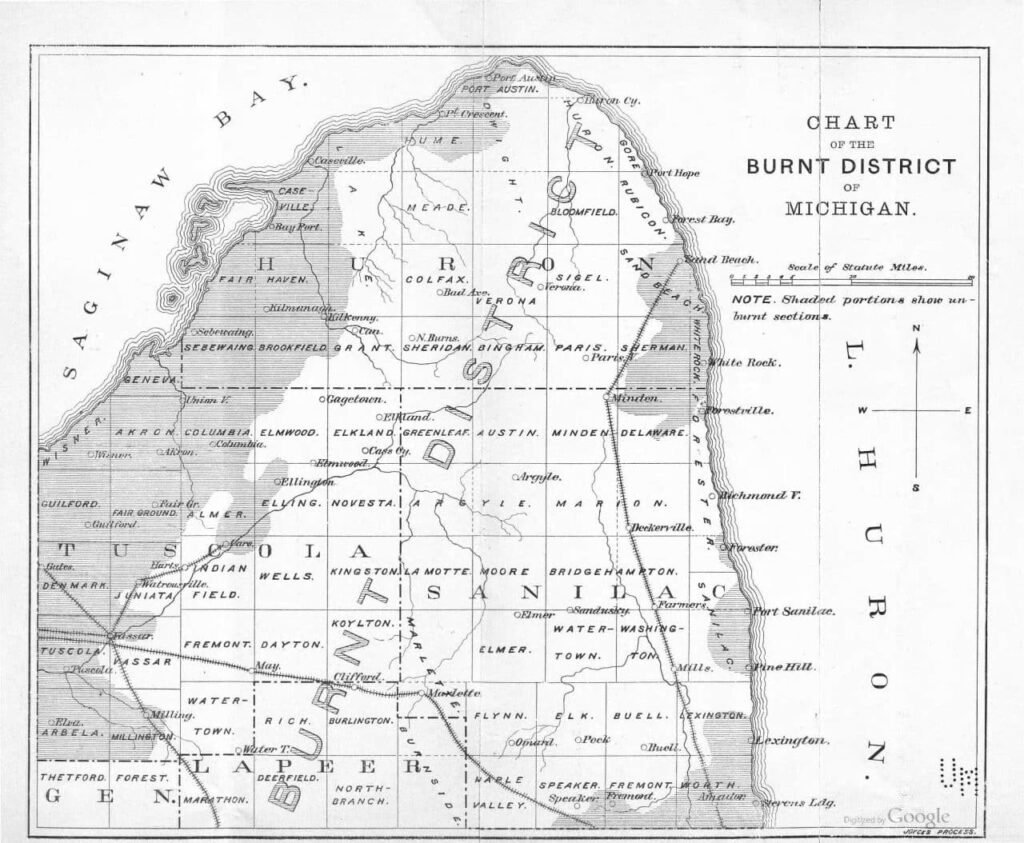
Several smaller fires were already burning across the Thumb in late August 1881. Settlers commonly used fire to clear brush and logging debris from land they hoped to farm.
A prolonged drought left fields, swamps and forests extremely dry. Logging companies had also left branches, treetops and other combustible debris—known as slash—across large sections of cutover land.
Strong winds turned the scattered fires into a fast-moving firestorm in early September. The flames traveled eastward toward Lake Huron, destroying farms, homes, timber and entire settlements across Huron, Sanilac, Tuscola and neighboring counties.
Michigan’s official hazard analysis estimates the fires burned more than 1 million acres over six days. The report places the death toll at 282 and property losses above $2 million in 1881 dollars. Exact casualty figures remain uncertain because some victims were never identified or recovered.
Communities Fled Toward Lake Huron
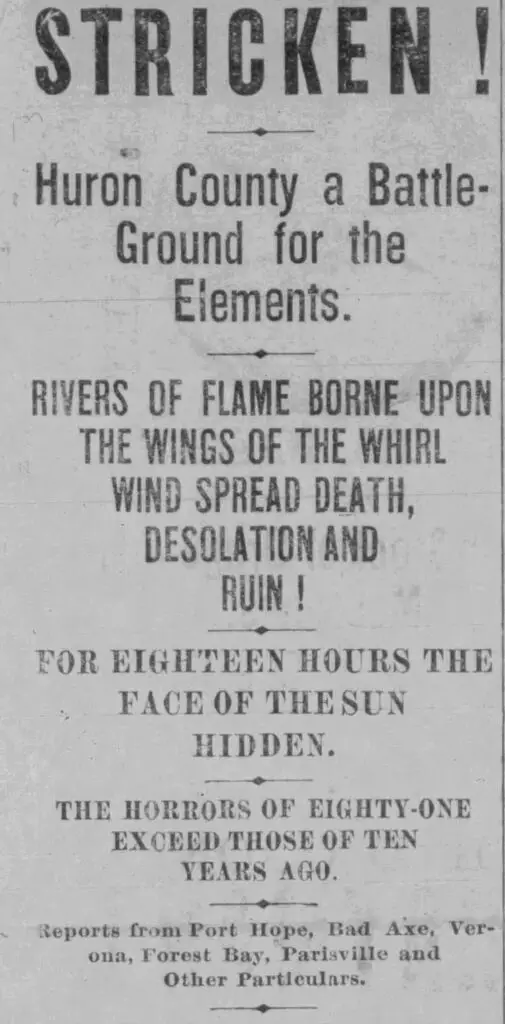
Survivors fled toward roads, wells, cleared fields, and the Lake Huron shoreline. Thousands emerged to find their homes, livestock, crops and stored food destroyed as winter approached.
Bad Axe survived largely because residents crowded into the brick courthouse and worked to keep its walls and roof wet. Other communities, including Deckerville and Richmondville, suffered extensive destruction.
Michigan’s forest-management history identifies land-clearing fires and sparks from steam locomotives as major causes of the destructive wildfires that followed the logging era. The 1881 disaster eventually helped push Michigan toward organized fire protection and reforestation.
Disaster Launched Red Cross Relief Work
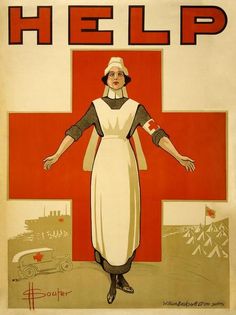
The fire also became an important chapter in American humanitarian history. Clara Barton and her associates had established the American Red Cross on May 21, 1881, only months before the disaster.
On Sept. 4, the organization began its first disaster-relief operation by assisting victims of the Michigan forest fires. Red Cross histories say local chapters collected money, clothing, furniture, food and other supplies for an estimated 14,000 people who needed assistance.
Original records from that response remain available through the Library of Congress. Its digitized Clara Barton Papers contain correspondence and other documents concerning the organization’s 1881 Michigan relief work.
Fire Changed the Thumb’s Economy and Ecology
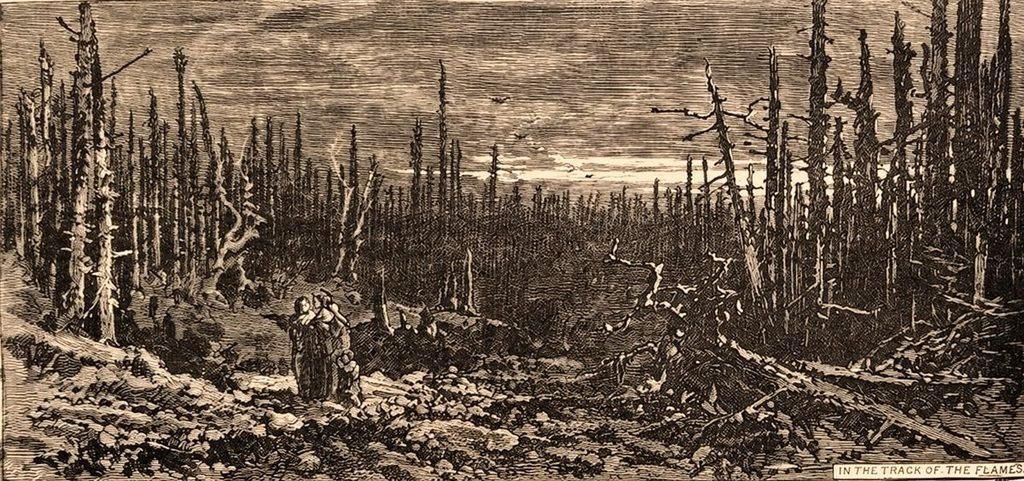
EGLE uses the disaster as a Michigan example of ecological succession, the process through which plant and animal communities return and change after a major disturbance. The fire’s aftermath also accelerated the Thumb’s transition from logging to agriculture.
For Thumb residents, the map offers more than a classroom lesson. It connects the region’s farming history, settlement patterns, and present-day communities to one of Michigan’s most destructive disasters.
The story map is available through EGLE Classroom’s MI EnviroLearning Hub. Because it is an educational overview rather than a new scholarly study, check casualty estimates and individual accounts against archival records before treating them as definitive.