
 by
by 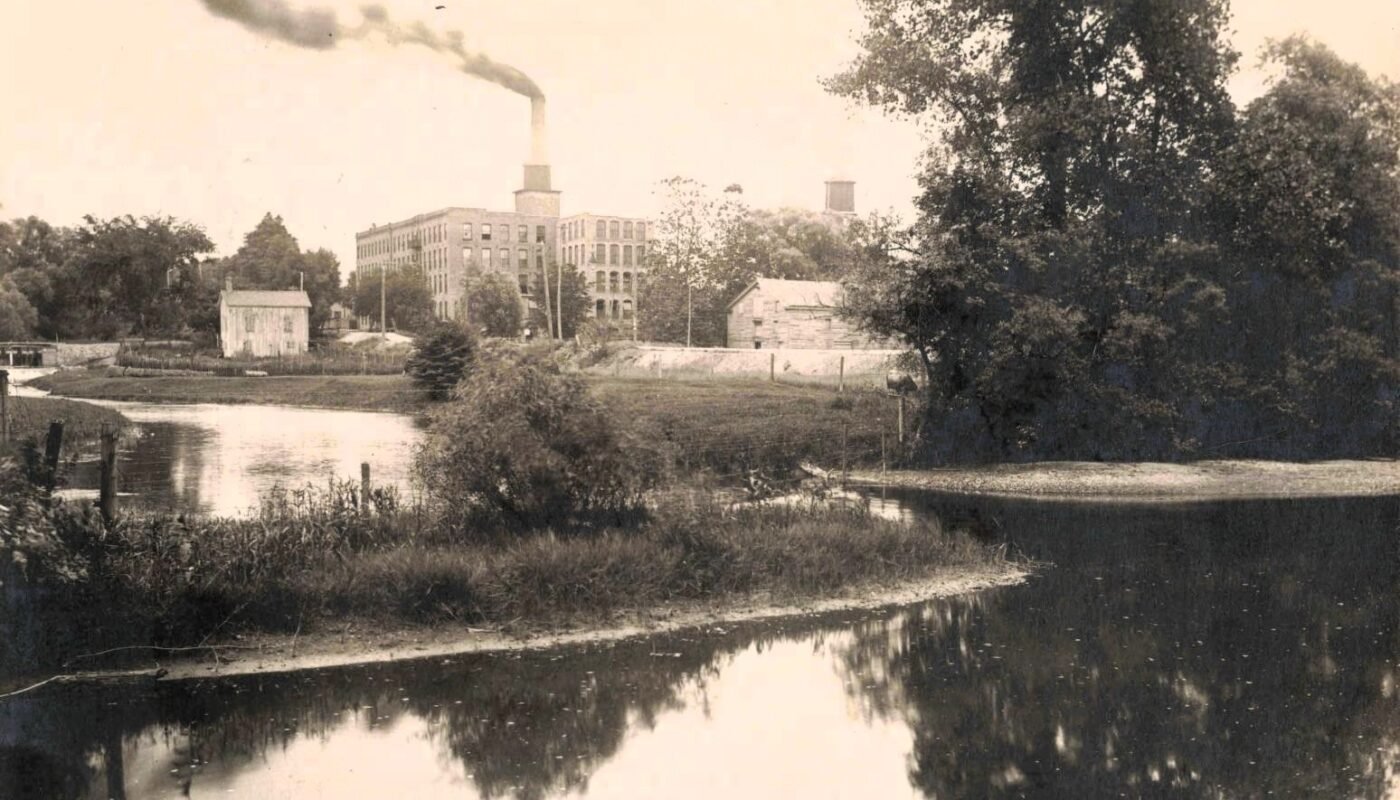
For generations, a tall smokestack rising above the River Raisin announced that Clinton, Michigan, was more than a farming community and Chicago Road stagecoach stop. It was a manufacturing town. At the center of that industrial era stood the Clinton Woolen Mill.
Village businessmen established the Clinton Woolen Mills in 1866 to utilize wool produced in the surrounding region. The original factory was completed in 1867 at a reported cost of $95,000. It quickly became an important employer in northern Lenawee County.
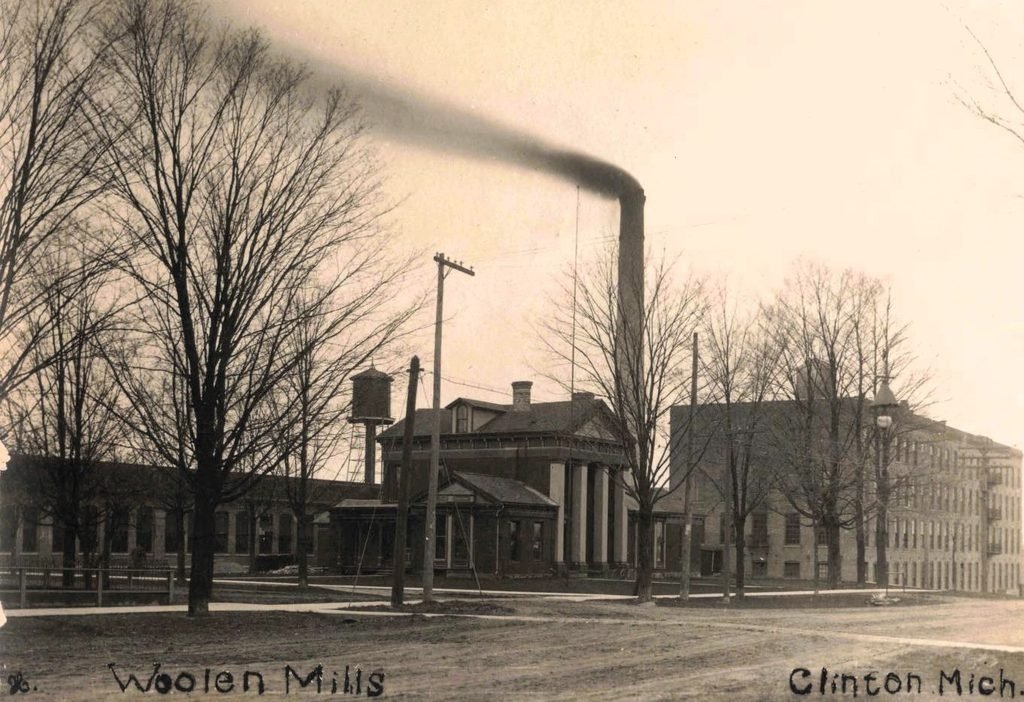
The operation was large by small-town standards. An 1881 Michigan business directory described the mill as representing an investment of $180,000 and producing about $150,000 worth of goods annually. The same directory listed woolen goods among Clinton’s important shipments.
Then Disaster Struck The Mill
In 1886, fire destroyed the original mill. A contemporary newspaper account reported a loss of nearly $150,000 and said about 90 employees were laid off. The fire reportedly followed an explosion after gasoline fumes escaped from a broken pipe and came into contact with a lantern.
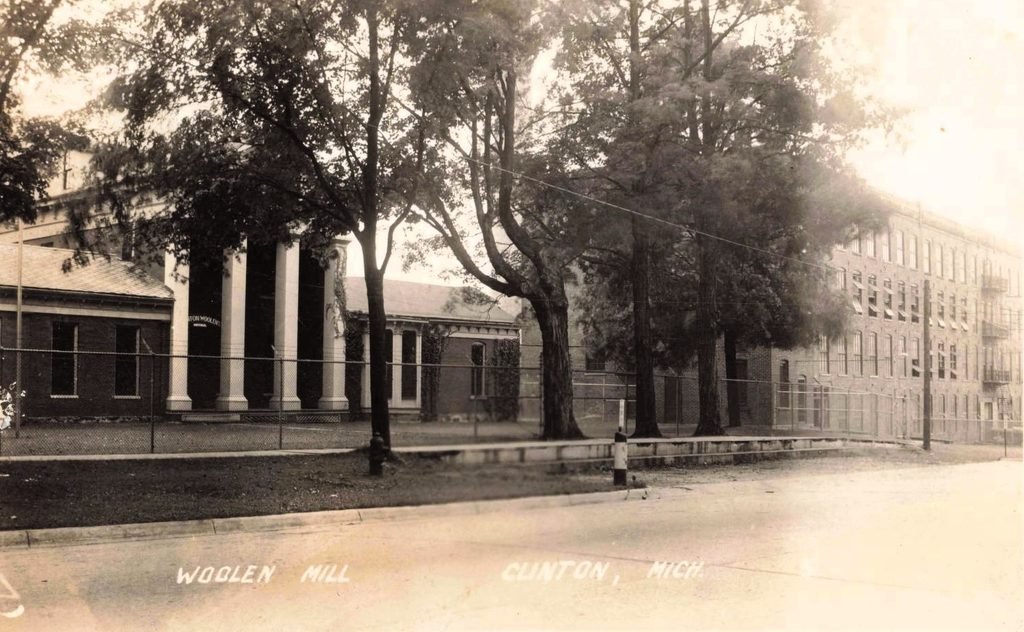
The shutdown did not last long. Michigan’s historical marker for the site says the company was operating again within a year. The rebuilt complex eventually included massive four-story brick factory buildings that dominated Clinton’s western approach.
By the early 20th century, the mill was an established textile producer. A 1906-07 textile directory listed the Clinton Woolen Manufacturing Co. as a maker of cassimeres and uniform goods, operating dozens of steam-powered looms and its own dyeing and finishing equipment.
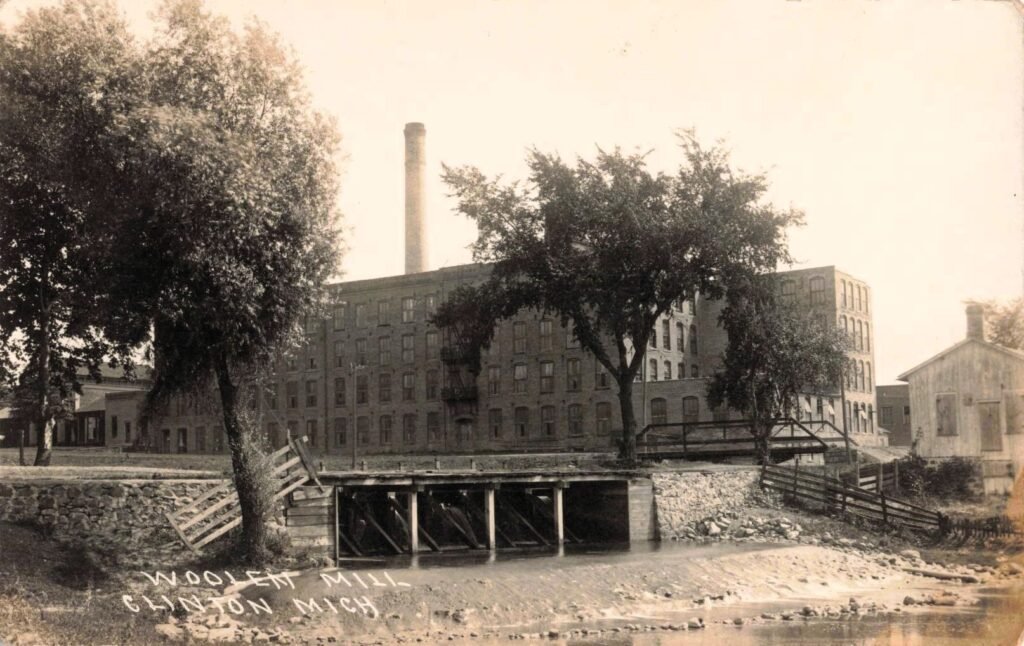
A 1909 Lenawee County biographical account reported production averaging about 1,300 yards per day and employment approaching 100 workers.
Clinton Provided Cloth For Uniforms For a Century
The Historical Society of Clinton says the mill supplied cloth used for military clothing during the Spanish-American War and both World Wars. It also produced material for police, fire and school uniforms and automobile upholstery. Those claims fit the mill’s documented role as a producer of uniform goods, although individual military contracts would require additional records to trace in detail.
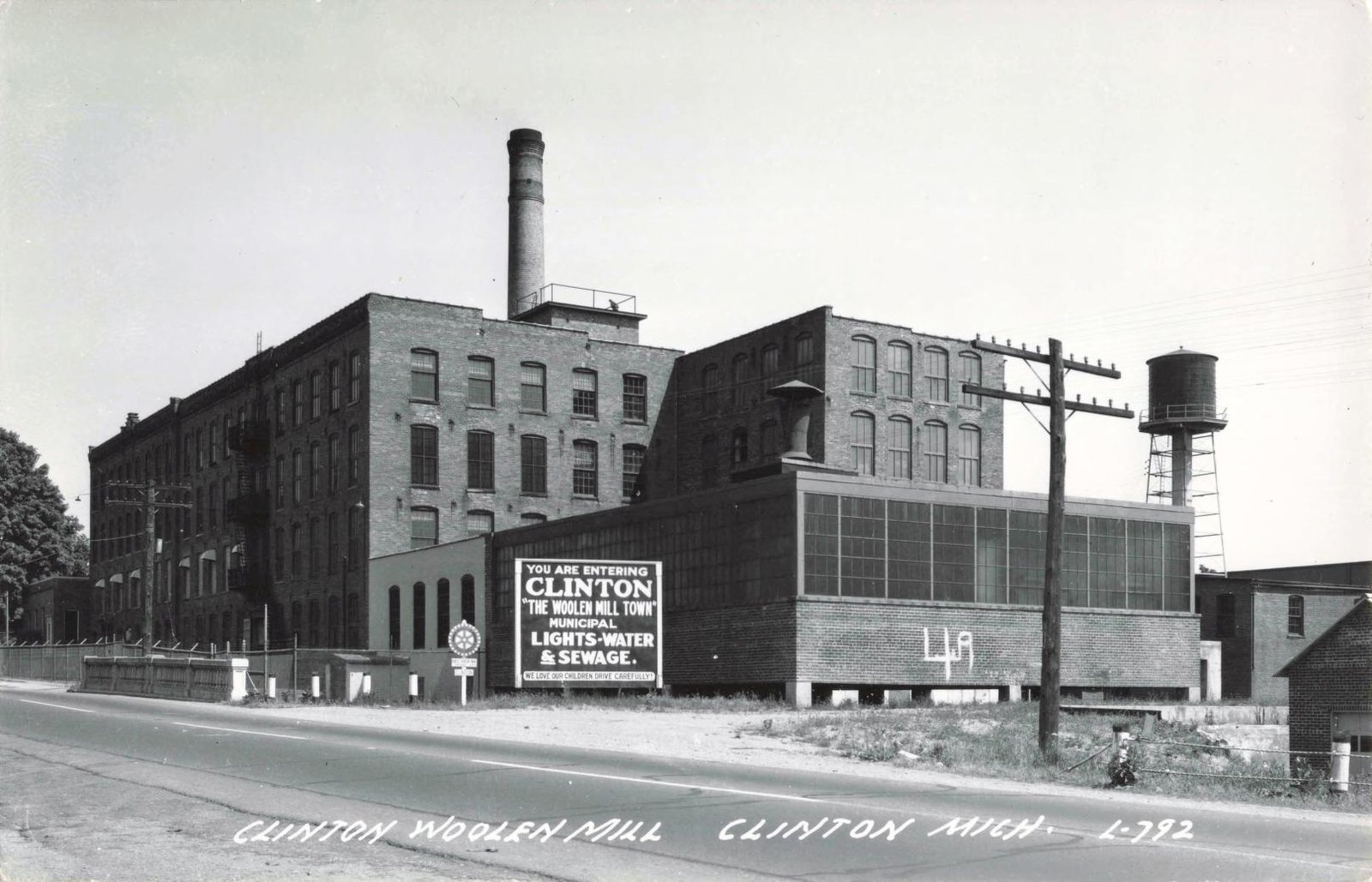
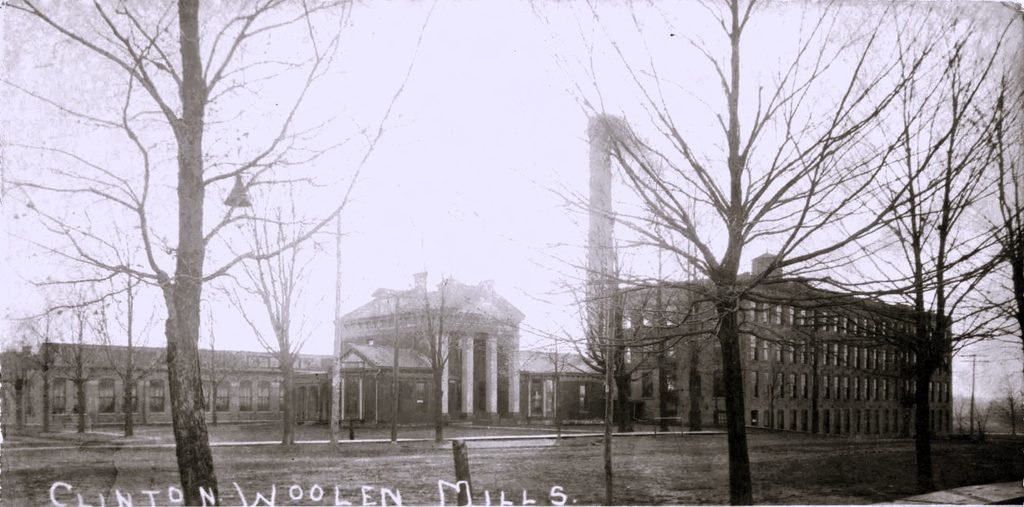
The photographs offer their own record of the complex. Some show the formal columned office building facing the street. Others show the enormous brick manufacturing blocks behind it. The tall smokestack appears again and again, sometimes sending a heavy plume across the Clinton sky. Another view places the mill beyond the River Raisin, showing how closely industry and the waterway were centred in town.
One later photograph carries a simple roadside message: “You Are Entering Clinton — The Woolen Mill Town.” It also noted that the town had electricity for lights, city water and sewers, a unique claim of technical advancement in the early 1900s.
It was not empty civic advertising. For decades, the mill had provided jobs, wages and an industrial identity to a village of modest size.
Production ended in 1957. The state historical marker calls the Clinton operation one of the last woolen mills in the area. By then, the company had operated for more than 90 years.
The buildings remained long after the machinery stopped. A 1992 photograph still shows the huge brick structures and smokestack standing beside Michigan Avenue.
Fire Takes The Clinton Woolen Mill
On April 16, 2007, fire returned to the site. Village records state that the Clinton Woolen Mill was destroyed, while the Historical Society of Clinton says the two large four-story factory buildings burned.
The old postcards now preserve something the street itself can no longer: the scale of the mill when it was operating. Clinton was once a place where factory whistles, fine hotels, machinery, workers and smoke from a towering stack marked the working day.
For nearly a century, wool helped put this Lenawee County village to work.