 by
by 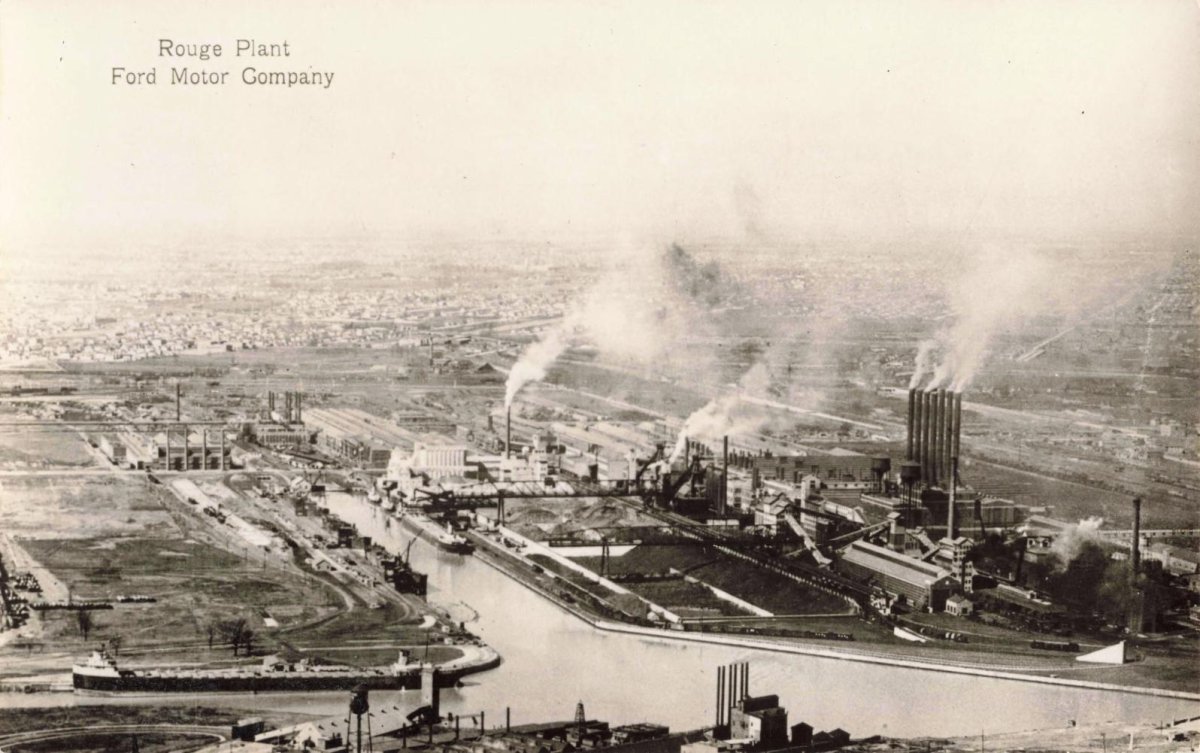
Michigan was once dismissed as a worthless swamp by early federal surveyors, a region supposedly too muddy and mosquito-ridden to support a growing nation. This early skepticism did not last long once the world realized what sat beneath the soil and across the vast forests of the Upper Peninsula.
It’s common to feel overwhelmed by the overlapping colonial claims and dry dates often found in schoolbooks. Understanding the most significant historical events in Michigan requires looking at the “why” behind the growth, rather than just memorizing a timeline. You might know that a town exists, but you may not know the specific resource boom that put it on the map.
We’ll examine the specific conflicts, resource booms, and industrial shifts that transformed our state from a remote frontier into a global manufacturing hub. This look at our past covers everything from the timber industry in the Thumb to the labor movements in Flint, providing a clear guide to the sites you can still visit today to see this history in person.
Key Takeaways
- Learn how European powers fought for control over the Great Lakes, turning the region into a strategic military bottleneck for global trade.
- Identify the specific resource booms, including the 1840s copper rush in the Upper Peninsula, that turned these historical events in michigan into catalysts for national growth.
- Understand how the introduction of the assembly line in 1913 and the $5 workday changed global manufacturing while driving massive immigration to Detroit.
- Recognize Michigan’s position as a social leader, from becoming the first government to abolish the death penalty in 1846 to hosting Dr. King’s 1963 Walk to Freedom.
- Pinpoint specific locations across the state where you can still see the physical remains of these industrial and social shifts.
Frontier Conflict and the Struggle for Great Lakes Control
The Great Lakes acted as a massive natural funnel for 17th-century voyagers and traders. Because travel by land was nearly impossible through the dense forests and swamps, the waterways became the only viable highways. Controlling the narrow passages between the lakes, such as the Detroit River and the Straits of Mackinac, gave European powers a strategic bottleneck. These History of Michigan milestones show how water routes dictated where forts were built and where trade flourished. Understanding these early historical events in michigan helps explain why our major cities sit where they do today.
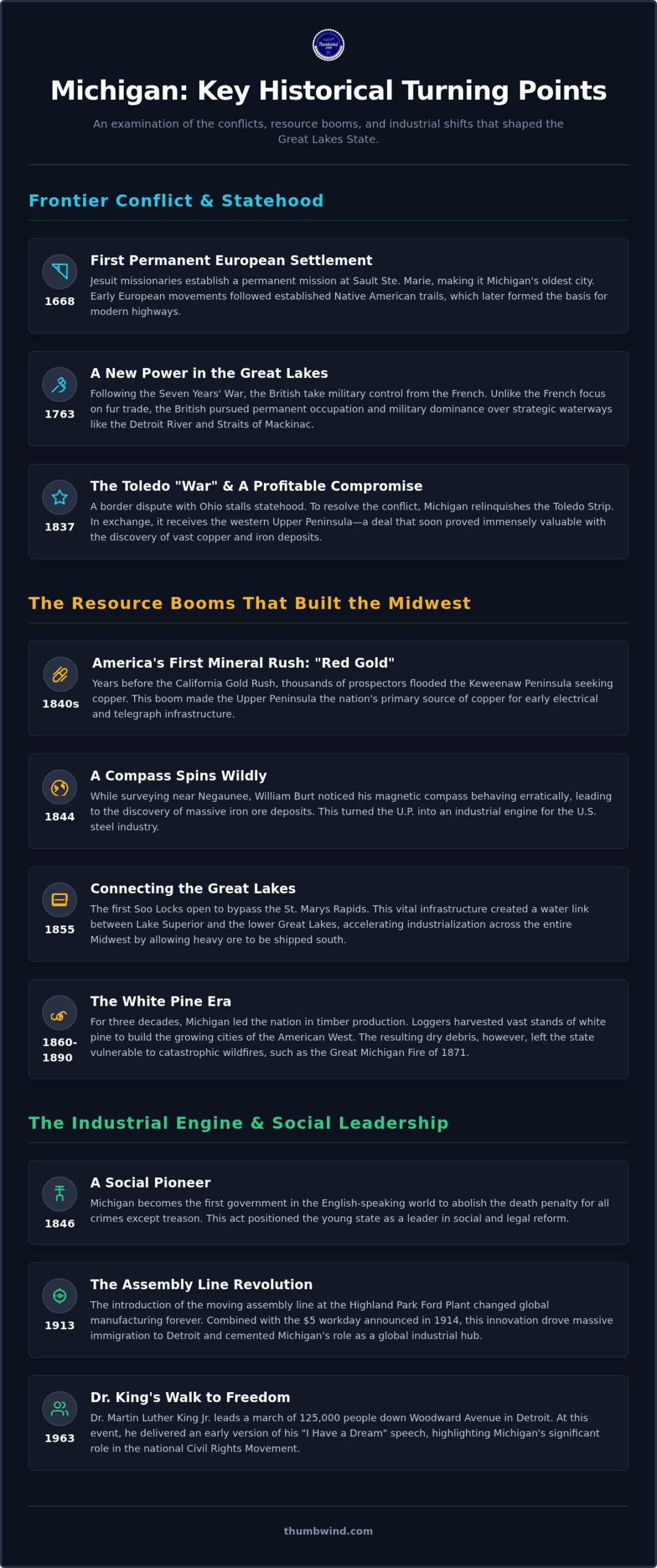
The early French presence focused almost entirely on the fur trade, creating a network of small outposts and seasonal camps. This changed after the Seven Years’ War when the British took military control in 1763. Unlike the French, the British focused on permanent occupation and military dominance, which often led to friction with the local tribes. By the time the Americans took over, the region was primed for a different kind of growth.
In June 1805, a massive fire leveled the entire settlement of Detroit in a single day. While the loss was total, it allowed Judge Augustus Woodward to implement a radical new city plan featuring wide avenues and circular parks. You can compare the modern layout to this map of Fort Detroit to see how much the area changed. Shortly after, the 1819 Treaty of Saginaw opened up the interior of the state. This agreement ceded millions of acres, including much of the Saginaw Valley and the Thumb, making large-scale farming possible for the first time.
The First European Footholds
Historical records indicate Etienne Brulé reached Lake Superior in 1622, though he left no written accounts of his own. By 1668, Jesuit missionaries established a permanent mission at Sault Ste. Marie, making it the oldest city in the state. These early settlers didn’t just wander aimlessly; they followed the established history of Native American Indian trails. These footpaths provided the blueprint for what would eventually become Michigan’s modern highway system.
The Toledo War and Statehood
Michigan’s path to statehood was stalled by a fierce border dispute with Ohio known as the Toledo War. Both sides claimed a small strip of land that included the mouth of the Maumee River. In 1835, militias from both territories marched toward the border, but the conflict remained largely bloodless. To resolve the standoff, Congress offered a compromise. Michigan would give up the Toledo Strip in exchange for the western portion of the Upper Peninsula. While many residents at the time felt cheated, the find of massive copper and iron deposits soon proved the U.P. was the far better deal. Michigan finally joined the Union as the 26th state on Jan. 26, 1837. You can see the boundaries established during these historical events in michigan on this 1837 Michigan map.
The Resource Booms that Built the Midwest
In the 1840s, the Keweenaw Peninsula became the site of the nation’s first major mineral rush. This event occurred years before the more famous 1849 Gold Rush in California. Thousands of prospectors arrived in the Upper Peninsula seeking copper, often called “red gold.” This boom established the region as the primary source of copper for the country’s early electrical infrastructure and telegraph wires.
Moving this heavy ore south presented a massive logistical challenge due to the St. Marys Rapids. In 1855, the first Soo Locks opened to create a vital water link between Lake Superior and the factories in the lower Great Lakes. This connection accelerated industrialization across the entire Midwest. These infrastructure projects remain some of the most influential historical events in michigan because they dictated the path of regional commerce for over a century.
The lumber era followed the mining rush, with Michigan leading the nation in timber production between 1860 and 1890. Loggers harvested vast stands of white pine to build the growing cities of the American West. However, the dry debris left by logging operations made the state vulnerable to catastrophic wildfires. In October 1871, the same day as the Great Chicago Fire, wind-driven flames tore through communities across the Thumb and the U.P., causing widespread destruction that changed the face of these regions forever.
Copper and Iron in the Upper Peninsula
William Burt discovered iron ore near Negaunee in 1844 while surveying the land. He noticed his magnetic compass spinning wildly, indicating a massive deposit just beneath the surface. This discovery turned the U.P. into an industrial engine for the U.S. steel industry. The sheer volume of ore moving through the state created significant shipping risks, as seen during the Soo Locks disaster of 1909 when a ship crashed into the lock gates.
The Lumber Era and the Thumb Region
Saginaw and Bay City became known as the “Lumber Capitals of the World” during the height of the timber boom. The 1881 Thumb Fire eventually ended the era by burning through the remaining forests, which cleared the way for the region’s famous bean and sugar beet farms. As the big timber money moved west, many small communities survived by hosting Village Industries that provided stable manufacturing jobs in rural areas. You can find more about these local shifts by reviewing our list of 45 significant events in Michigan history.
The Industrial Engine and the Rise of Labor
In 1913, Henry Ford changed the world at his Highland Park plant. He introduced the moving assembly line, which cut the time required to build a Model T from 12 hours to roughly 90 minutes. This shift didn’t just change car building; it transformed how the world manufactured goods. These historical events in michigan created a blueprint for modern industry that companies still use today.
The $5 workday followed in 1914, nearly doubling the average industrial wage. This move attracted thousands of workers from around the globe and the American South, turning Detroit into a massive center for immigration. These workers formed a new middle class that could finally afford the very products they spent their days building. It was a radical economic experiment that succeeded in creating a stable consumer base.
During World War II, the state earned its reputation as the “Arsenal of Democracy.” Factories that once produced family sedans shifted to making tanks, planes, and jeeps. The Willow Run plant in Ypsilanti became famous for rolling out one B-24 Liberator bomber every hour at its peak. This massive industrial output was essential to the Allied victory and cemented Michigan’s status as a global manufacturing powerhouse.
The Automotive Revolution
Ransom E. Olds actually created the first mass-produced car, the Curved Dash Oldsmobile, in 1901. While Ford often gets the most credit, Olds proved that Detroit had the technical foundation to support an entire industry. Ford later looked to decentralize his operations to help rural areas. He established Henry Ford’s Village Industries, placing small factories in towns like Northville and Milford so workers could stay connected to their farming roots.
The Labor Movement and Social Change
The 1936-1937 Flint Sit-Down Strike remains one of the most critical historical events in michigan. Workers at General Motors refused to leave the plant for 44 days, eventually forcing the company to recognize the United Auto Workers (UAW). This victory changed the balance of power between companies and employees, leading to the birth of modern labor rights and benefits.
The Great Migration brought a massive wave of African Americans to Detroit seeking these high-paying factory jobs. This demographic shift changed the city’s cultural and social fabric, though it also led to significant racial tensions and housing struggles. In 1941, a massive strike at the Ford River Rouge plant finally brought the last major automotive holdout into the union fold. If you want to see the neighborhoods where these workers lived and built their communities, take a look at our guide to Michigan roadside attractions.
Social Evolution and the Modern Great Lakes State
In 1846, Michigan became the first English-speaking government in the world to abolish capital punishment for all crimes except treason. This early commitment to social reform set the stage for later historical events in michigan that would challenge the status quo. By the mid-20th century, the state’s industrial strength and social activism began to merge in ways that influenced the entire nation.
This legacy of social progress is mirrored in modern efforts to amplify voices of perseverance, such as those found on the I’m Still Rolling Podcast, which explores real stories of resilience and life after adversity.
The 1963 Walk to Freedom saw over 125,000 people march down Woodward Avenue in Detroit. It was during this event that Dr. Martin Luther King Jr. first delivered a version of his “I Have a Dream” speech, two months before the famous March on Washington. The 1967 Detroit Rebellion followed just four years later, a conflict sparked by police raids and long-standing racial inequality. This event accelerated the movement of residents to the suburbs and fundamentally changed the geography of Southeast Michigan.
By the 1970s, the global oil crisis and rising competition forced the state to look beyond the assembly line. The economy began a slow transition toward healthcare, technology, and specialized services. While manufacturing remained a core part of our identity, this era marked the beginning of a more diversified economic approach that continues to define the region today.
Civil Rights and the Walk to Freedom
The June 1963 march down Woodward Avenue remains one of the largest civil rights protests in American history. Michigan’s powerful labor unions provided the organizational strength and funding needed to support the national movement. These partnerships led to significant state-level legislative changes, including stronger fair housing and employment laws that served as models for other states.
Preserving the Past for the Future
Today, Michigan balances its industrial legacy with a growing focus on heritage tourism. Sites like Mackinac Island and The Henry Ford Museum allow visitors to see the physical evidence of these historical events in michigan. You can find a deeper list of these milestones in our guide to 45 significant events in Michigan history. This spirit of innovation now powers modern projects, as old industrial sites and rural fields appear on the Michigan wind farm map to meet future energy needs.
Mapping the Future through Michigan’s Past
From the early frontier conflicts over Great Lakes waterways to the social movements that reshaped our cities, Michigan has always been a state defined by rapid change. These historical events in michigan show a pattern of using natural resources and industrial grit to overcome massive challenges. Whether it’s the 1840s copper rush or the 1913 assembly line, our past provides the foundation for our current tech and service economy. Understanding these shifts helps us see the logic behind our modern highways, neighborhoods, and farms.
For more than 15 years, Thumbwind has provided factual regional reporting to help residents connect with their local heritage. Our work is fact-checked by local Michigan journalists and features an extensive archive of Great Lakes historical photos. Explore more Michigan history and regional news at Thumbwind to find your next roadside destination. Take a drive to these historic sites this weekend and see the legacy of our state for yourself. There’s always a new detail to learn about the places we call home.
Frequently Asked Questions
When did Michigan officially become a state?
Michigan joined the Union on Jan. 26, 1837, as the 26th state. The process was delayed for several years due to a border dispute with Ohio over the Toledo Strip. This standoff eventually led to a compromise where Michigan accepted the western portion of the Upper Peninsula in exchange for the disputed land near Toledo.
What was the most significant event in Michigan during the Civil War?
While no battles occurred on Michigan soil, the state provided over 90,000 soldiers to the Union cause. One of the most famous units was the 24th Michigan Volunteer Infantry, which suffered heavy casualties at the Battle of Gettysburg. These historical events in michigan highlight our state’s massive contribution to the preservation of the Union.
How did the Erie Canal impact Michigan’s early history?
The completion of the Erie Canal in 1825 made it much easier for settlers to reach the territory from New York and New England. Before the canal, traveling west was expensive and physically exhausting. The new water route dropped transportation costs by nearly 90 percent, leading to a massive population boom that helped Michigan qualify for statehood.
Why is Michigan called the Great Lakes State?
Michigan earned this nickname because it is the only state that touches four of the five Great Lakes: Superior, Michigan, Huron, and Erie. It has over 3,200 miles of freshwater coastline, which is more than any other state except Alaska. This unique geography shaped the state’s development, from early fur trading to modern shipping and tourism.
What was the ‘Arsenal of Democracy’ in Michigan history?
This term refers to Michigan’s role as the primary manufacturing hub for the Allied forces during World War II. After the attack on Pearl Harbor, Detroit’s automakers stopped building civilian cars and began producing tanks, jeeps, and aircraft engines. The Willow Run plant in Ypsilanti was a central part of this effort, producing thousands of B-24 Liberator bombers.
What caused the Great Michigan Fire of 1871?
The Great Michigan Fire of 1871 was caused by a combination of a prolonged summer drought and strong winds from the southwest. Loggers had left behind massive piles of dry branches and brush, known as “slash,” which acted as fuel for the flames. On Oct. 8, 1871, fires broke out across the state, burning millions of acres in the Thumb and along the Lake Michigan shore.
Disclaimer
Information published on Thumbwind.com is provided for general informational purposes. While we make reasonable efforts to keep articles accurate and current, details such as prices, hours, regulations, access conditions, and other information may change without notice. Readers should verify important details with the appropriate business, agency or official source before making travel, financial or other decisions. Thumbwind.com is not responsible for the content, availability or practices of third-party websites linked from our articles.