
 by
by 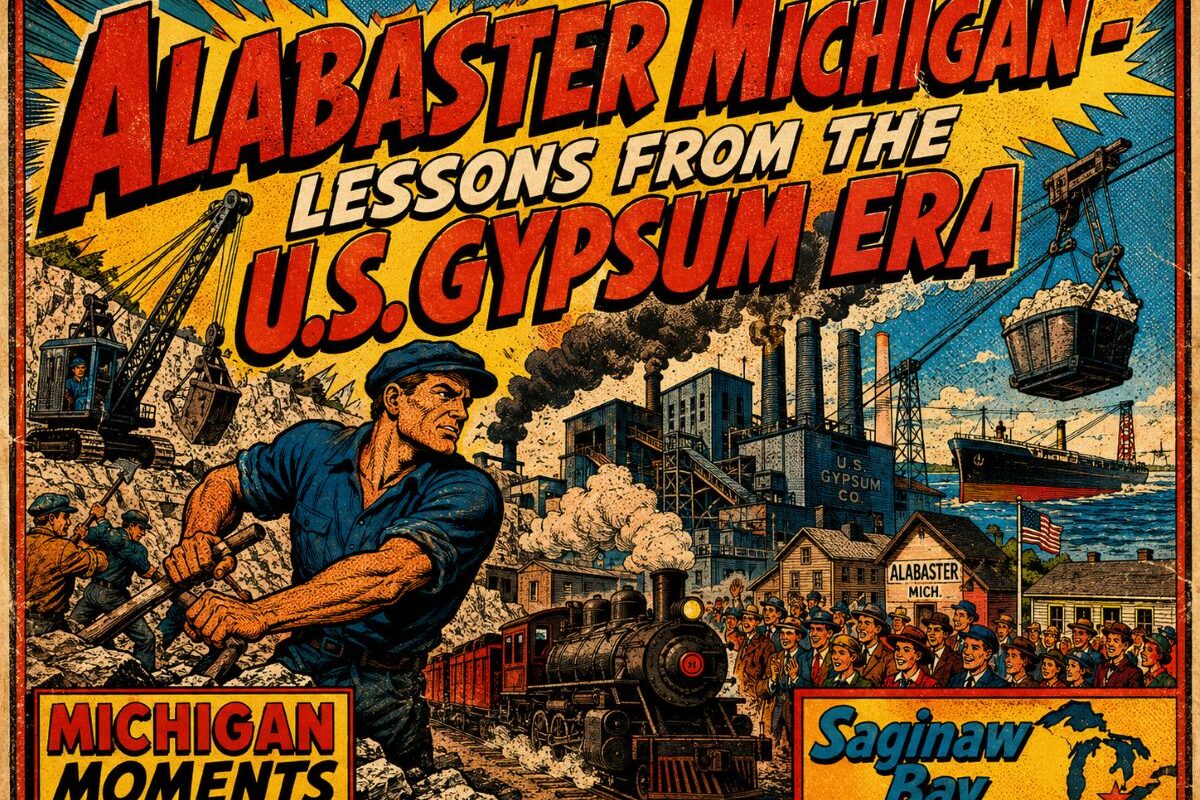
The history of Alabaster Michigan begins with a white mineral pulled from the ground near Lake Huron. In the early 1900s the home of paster and sheetrock was not built around tourism, politics or a courthouse square. It was built around gypsum. Today it’s a Michigan ghost town.
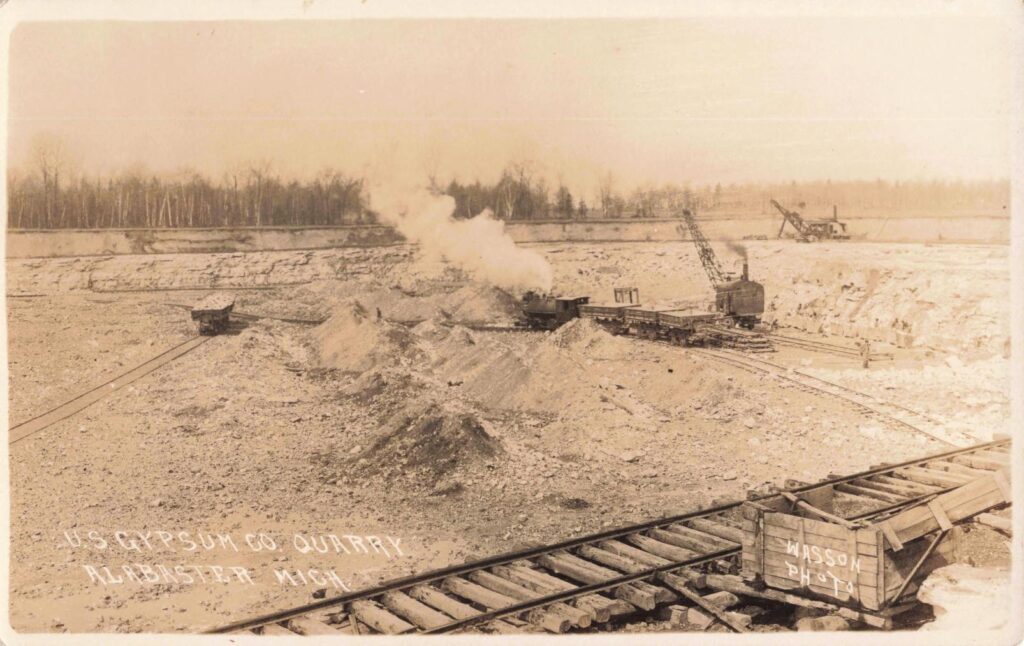
By the late 1800s and early 1900s, Alabaster township Michigan had become one of the state’s most distinct industrial towns. The U.S. Gypsum Co. operated a major quarry and plaster mill there. The mineral was cut from the earth, hauled by rail and processed into plaster products used in homes, schools and businesses across the country.
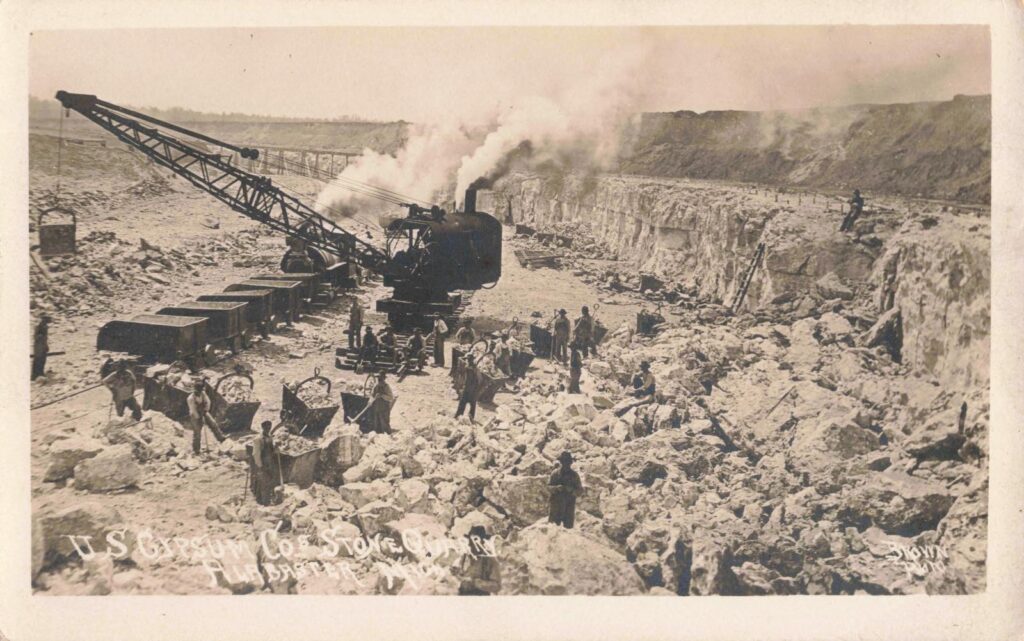
The old photos show a place with a clear purpose. Steam shovels worked below the quarry rim. Rail lines bent through the pit. Men stood beside carts filled with broken stone. In the distance, smokestacks marked the mill.
The area took its name from a fine variety of gypsum identified offshore by Douglass Houghton in 1837. Prospectors later found larger deposits nearby. B.F. Smith opened the quarry in 1862, and the operation became one of the defining industrial sites of northeastern Michigan. The Alabaster Historic District, later listed on the National Register of Historic Places, covers about 400 acres tied to the open-pit quarry, processing buildings, rail lines and the company town.
Table of Contents
Watch- Alabaster Michigan’s Lost Mill Town: The Fire That Changed Everything
A Company Town Built Around One Employer
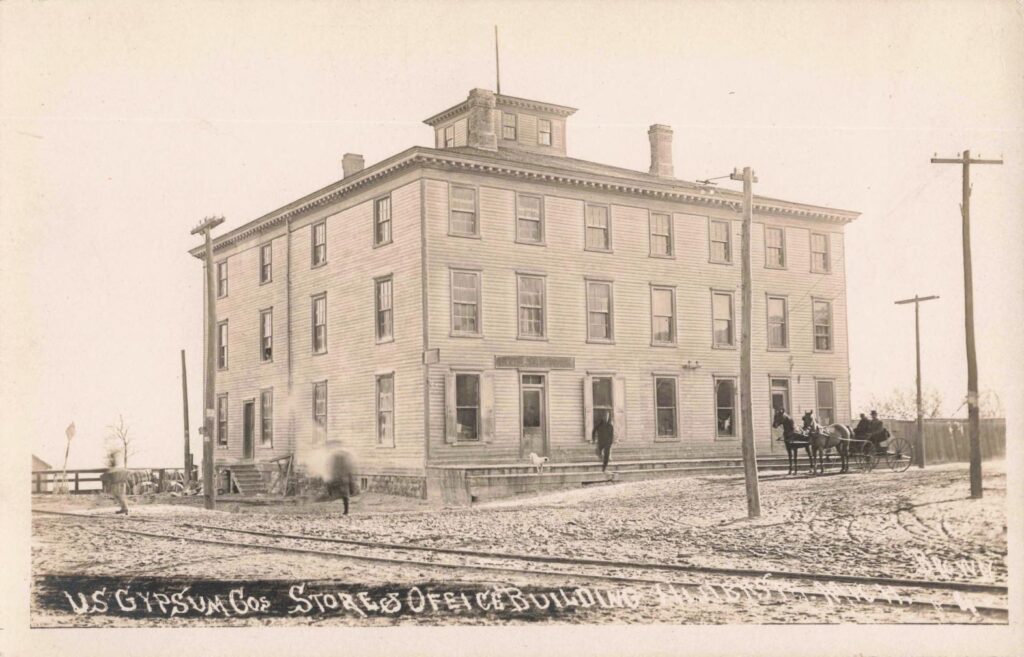
Alabaster was not a resort town. It was a work town. The quarry and mill shaped nearly every part of daily life. The company store, office building, schoolhouse, hotel and rows of worker homes stood within sight of smokestacks, rail cars and piles of white stone.
The photos show a place that had one dominant purpose. Men worked in the quarry, at the mill, along the tracks and near the docks. Families lived close to the plant because the plant governed the clock. A whistle could mark the day more clearly than a church bell.
Michigan’s gypsum industry was already well established by the early 1900s. George P. Grimsley’s 1904 report for the Michigan Geological Survey placed Alabaster among the state’s key gypsum districts and described the value of Michigan plaster production at a time when builders still depended heavily on plaster, cement products and land plaster.
The Quarry Floor Was the Engine Room
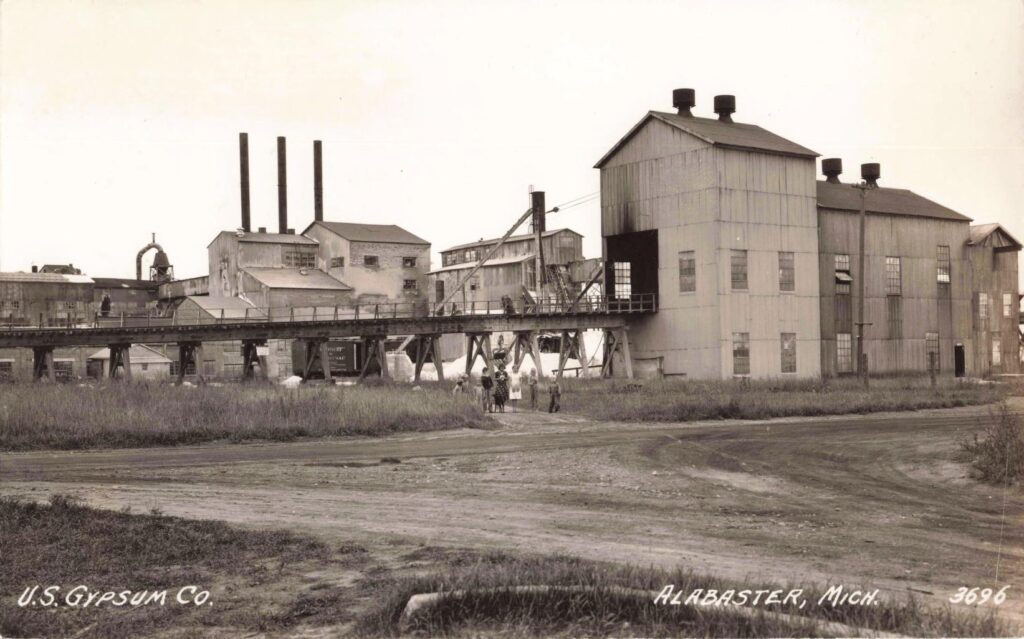
The quarry photographs are some of the strongest images in the set. They show a carved-out industrial bowl, steam equipment, rough rail lines and men working among broken rock. There is little romance in the scene. The labor looks hot, dusty and exacting.
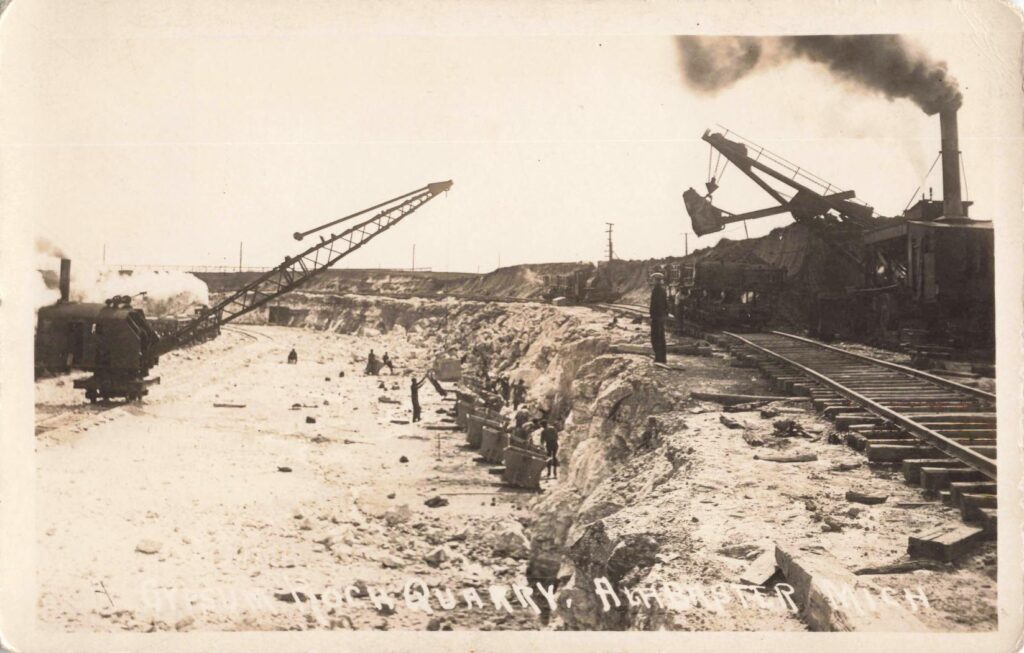
Gypsum was blasted or cut from the quarry, loaded into small rail cars and moved toward the mill. At the plant, it was crushed, heated and processed into plaster products. Those products were then shipped out by rail or across Lake Huron.
The History of Alabaster Michigan is also a rail story. Tracks threaded through the quarry and past the mill. In several images, rail cars sit directly beside processing buildings. A “Railroad Crossing” sign in one photograph says much about the town’s layout. Industry crossed through daily life, and daily life adjusted.
The Aerial Dock Carried Gypsum Over Lake Huron
One of Alabaster’s most striking features was its aerial dock over Lake Huron. The old image shows towers marching into the water, with buckets suspended from cables. The system carried gypsum from shore toward vessels offshore.
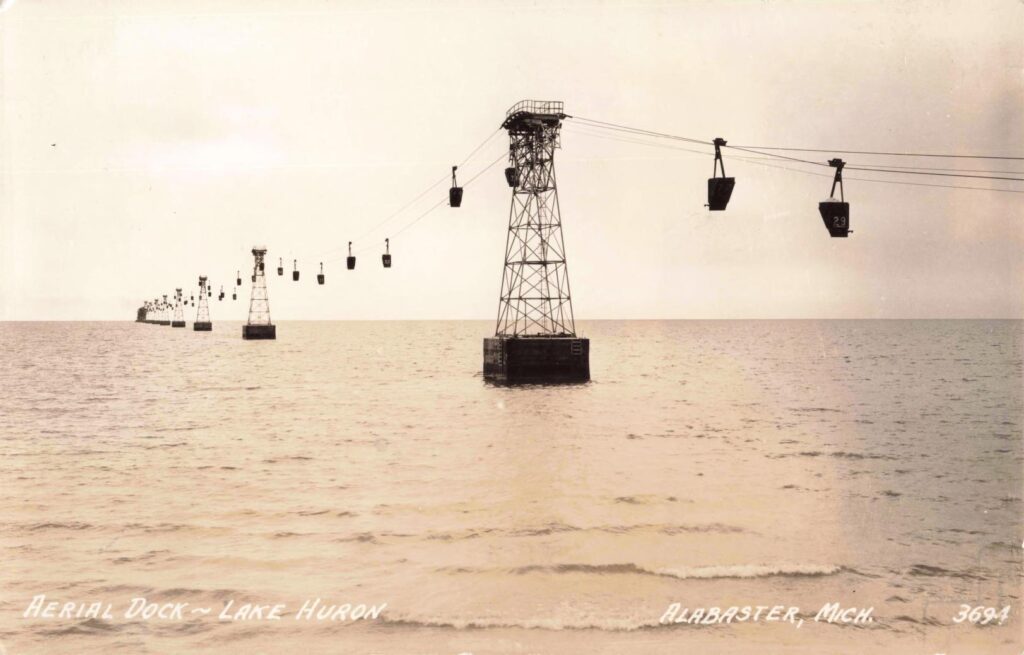
Later accounts describe the tramway as stretching more than a mile into Saginaw Bay. It worked like a horizontal lift, moving loaded buckets toward ships and returning them for another load. The marine tramway became one of the most memorable industrial sights on the Lake Huron shore.
The structure looked almost delicate from a distance. It was not delicate work. The dock existed to solve a shipping problem. Alabaster needed to move heavy material from land to lake traffic. The aerial dock did that with speed and economy.
School, Hotel and Home Life in an Industrial Town
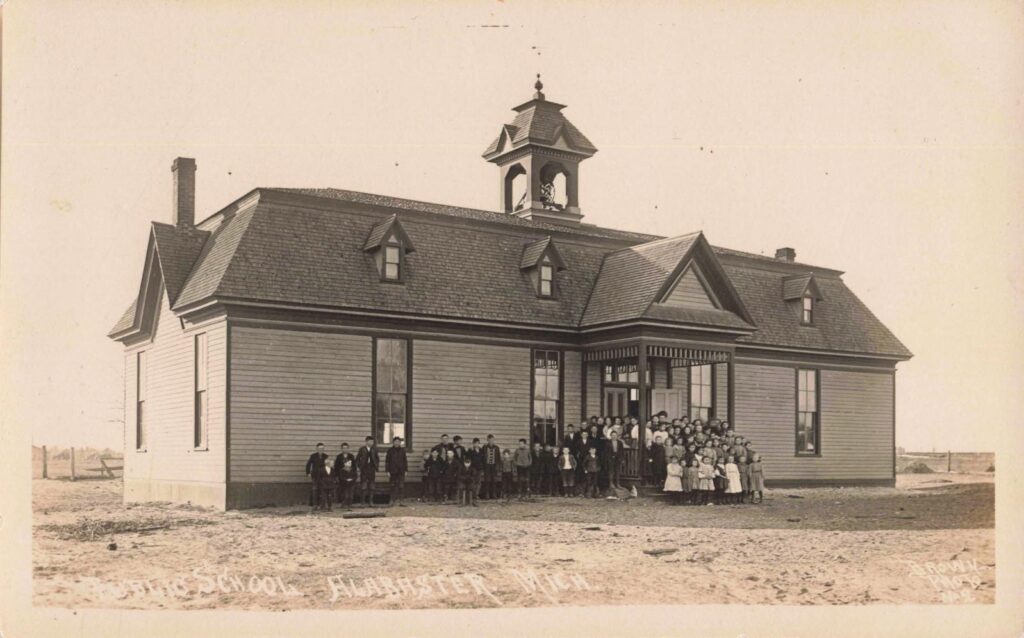
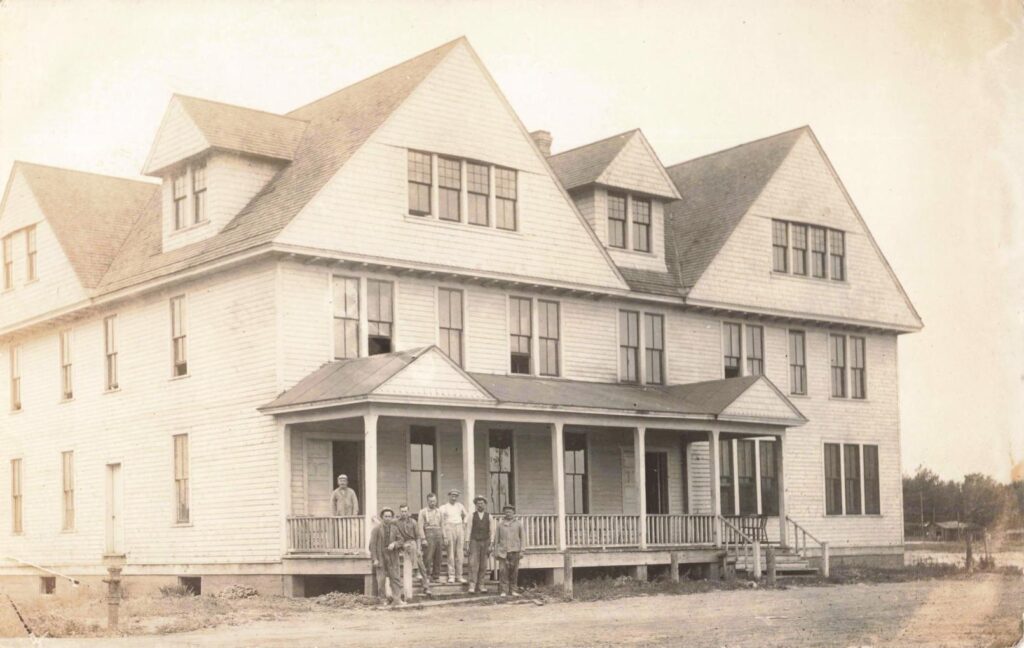
The photos also show the quieter side of Alabaster. The schoolhouse stands in a sandy clearing, with children gathered near the front. Another image shows the Lakeview Hotel, with early automobiles parked nearby and plant smoke rising behind it.
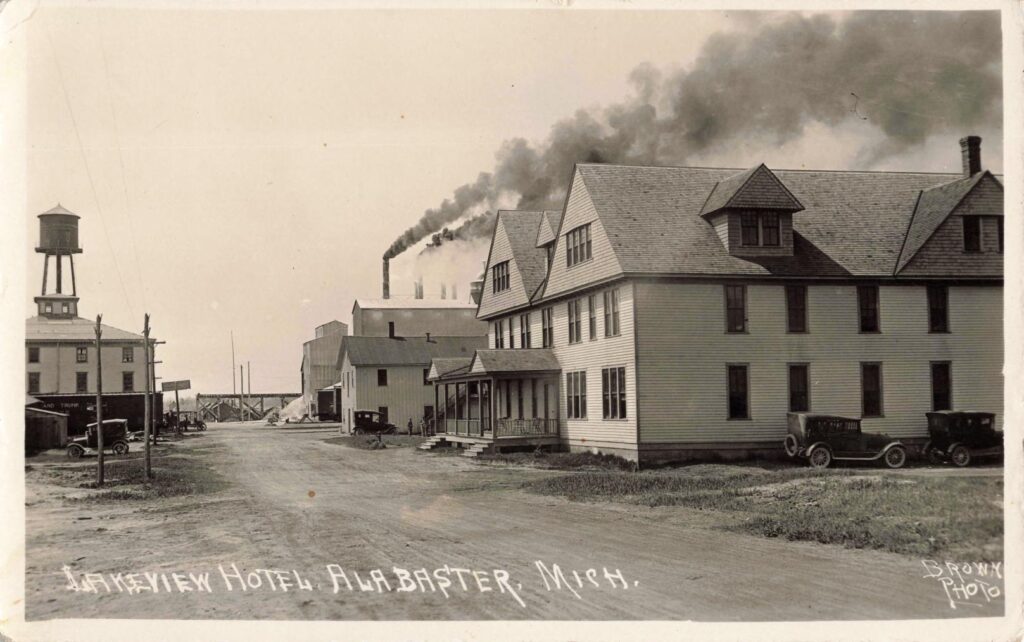
These images keep the town from becoming only a story of production numbers. Workers had families. Children attended school. Travelers and salesmen needed lodging. Horses, wagons and later automobiles moved along streets that were never far from smoke or machinery.
The 1910 Fire That Stopped the Mill
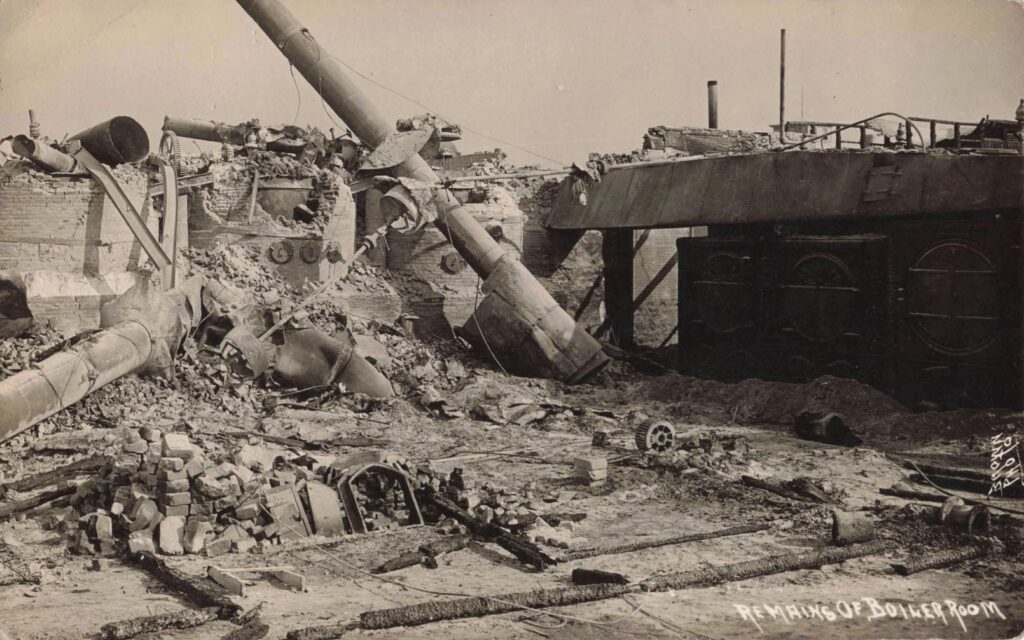
The most dramatic chapter in the History of Alabaster Michigan came in October 1910. A fire swept through the U.S. Gypsum plant. A newspaper account reported that the mills, docks and warehouses burned to the ground, with damage estimated at more than $125,000. The clipping said the fire began in the basement of a storeroom and spread because fire protection in the community was not enough to stop it.
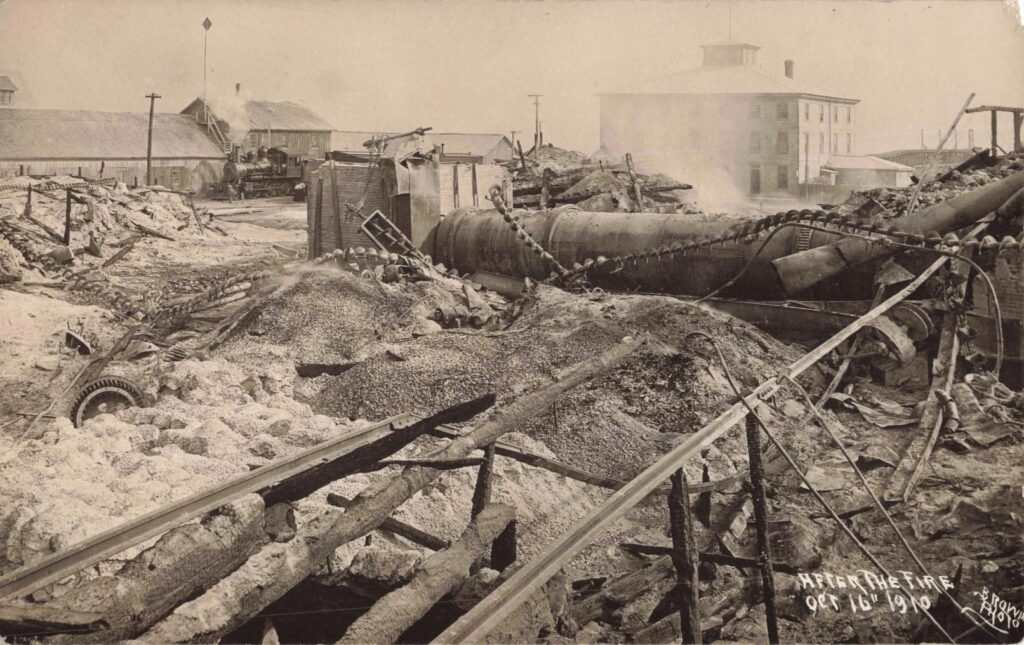
The report noted that only 10 employees were in the building when the blaze started. All escaped. That fact likely saved the disaster from becoming a mass casualty event. Even so, the fire threatened the town’s economic base. Alabaster depended on the mill. When the mill burned, paychecks, shipping and production all stopped.
Rebuilding Was Not Optional
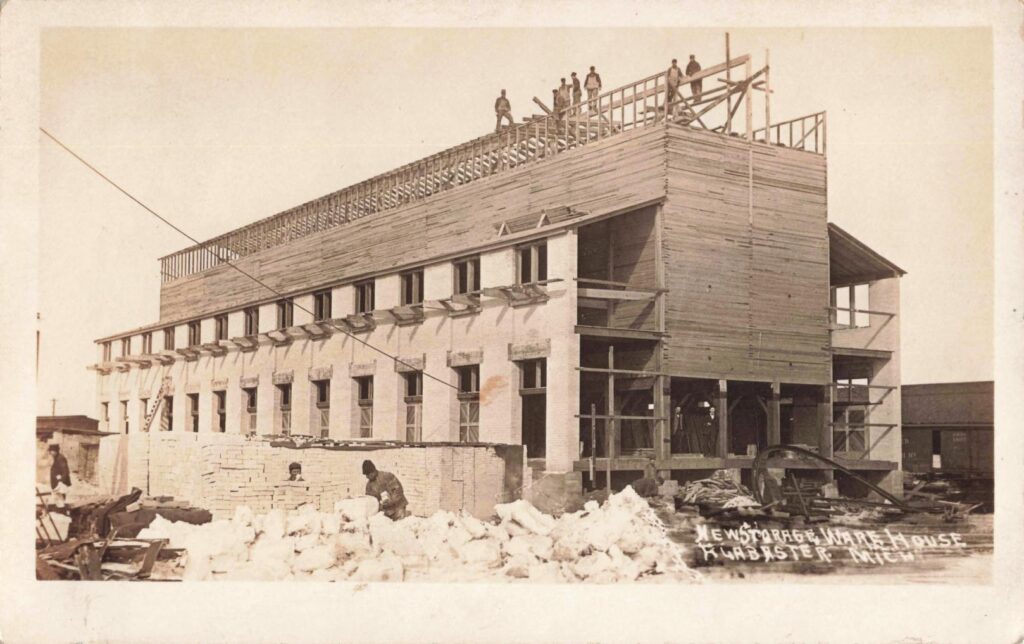
The company moved quickly. The same news account said workers began clearing debris while parts of the ruins were still warm. A manager identified as Mr. Robinson said a new plant would be running within six months. The mill’s reported daily capacity had been more than 3,000 barrels of gypsum. That number explains the urgency. Alabaster was not a side operation. It was a major producer.
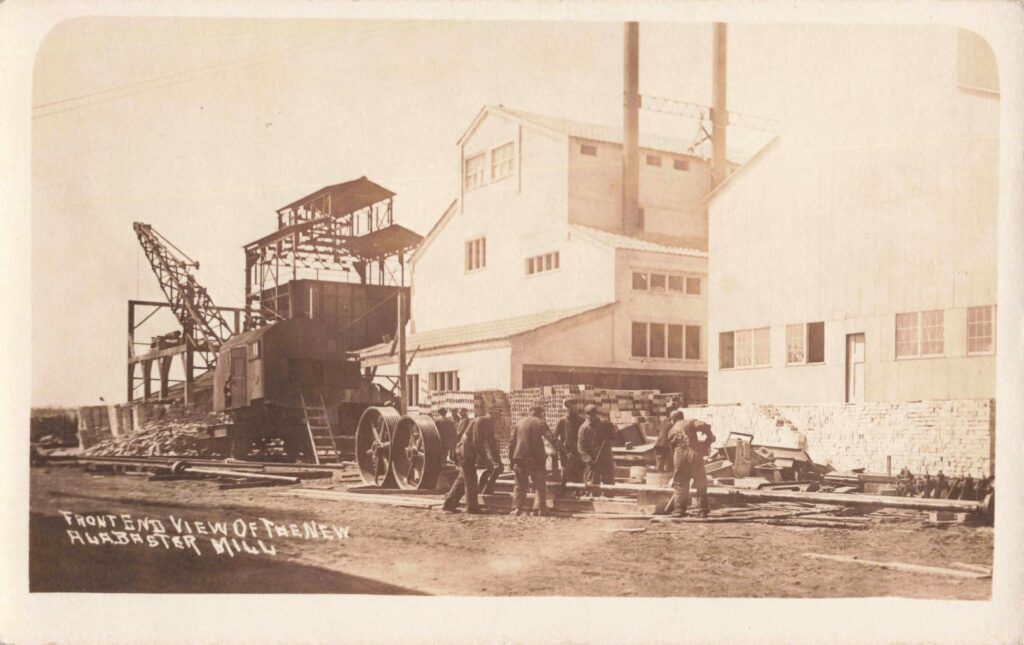
The rebuilding photos are especially useful because they show a town refusing to pause for long. Men stand on roof framing. Materials are stacked in front of new walls. Heavy equipment sits close by. The rebuilt mill was not merely a replacement. It was a statement that Alabaster would keep its role in the gypsum trade.
Why the History of Alabaster Michigan Still Draws Attention
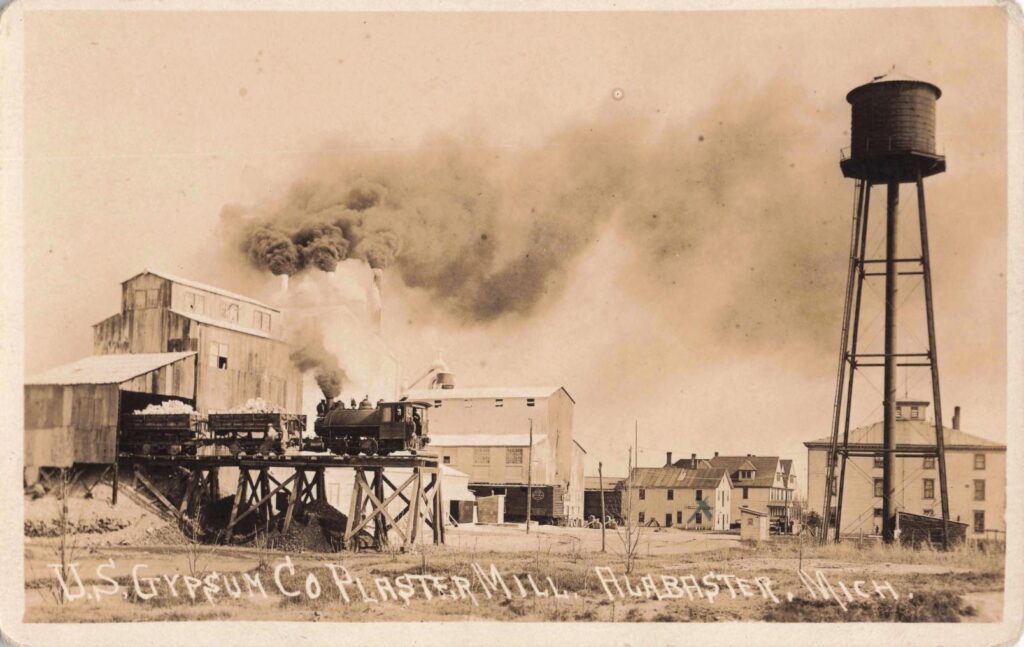
The history of Alabaster Michigan still holds public interest because it tells a clear American story. A useful mineral was found. Capital followed. Workers came. A town formed. Fire struck. The plant came back. However today the area is known as the ghost town of Alabaster.
That story did not end in 1910. USG’s roots remain tied to Alabaster Township. In 2024, reports said gypsum production began at the new Avery Quarry in Iosco County, linking modern operations to a company history that reaches back more than a century.
Alabaster’s old photos are more than scenic keepsakes. They are evidence. They show the scale of the quarry, the closeness of the company town and the force of the 1910 fire. They also show the discipline of rebuilding. In that sense, the history of Alabaster Michigan is not only about a place. It is about how one Michigan community was organized around work, risk and Lake Huron shipping.
Why Alabaster Is Known Today as a Michigan Ghost Town
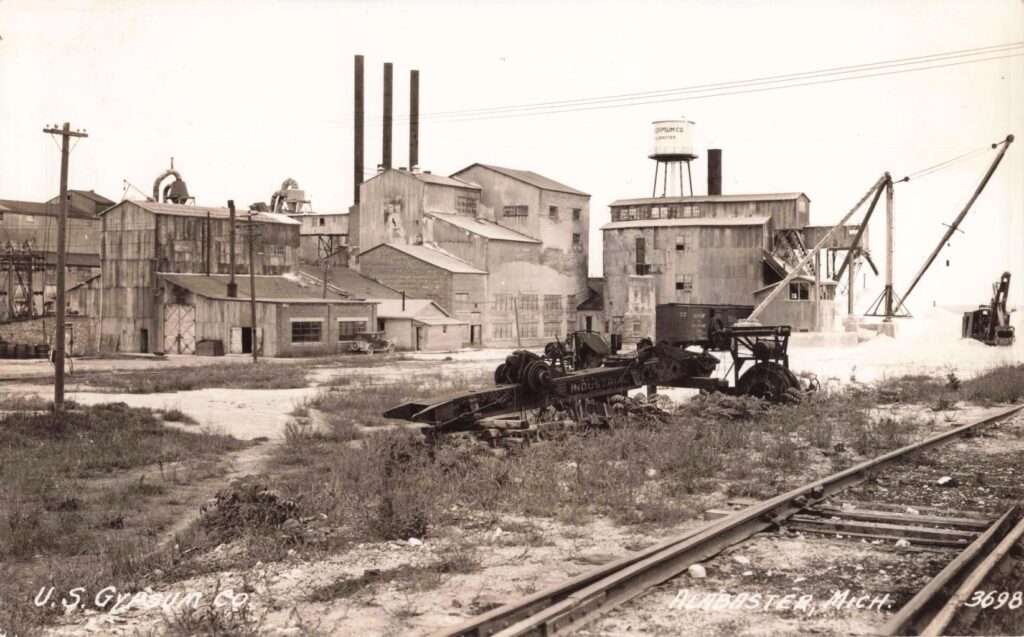
The history of Alabaster Michigan did not end with the 1910 fire. The plant was rebuilt, the quarry kept working and gypsum remained valuable. But the old company town slowly lost the pieces that had once made it feel complete.
The decline became clear in 1962, when the Alabaster post office closed for good. In a small industrial settlement, a post office was more than a place to send letters. It was a public marker that said a town still had a center. Once that closed, Alabaster’s old village identity weakened.
Stores disappeared. Worker homes were removed or left empty. Churches that once served Catholic, Lutheran and Methodist families no longer anchored daily life in the same way. The company town that had supported quarrymen, mill workers, schoolchildren and hotel guests faded into memory.
That is why Alabaster is often described today as a Michigan ghost town. The phrase does not mean Alabaster Township is empty. People still live in the township, and the gypsum district remains part of Michigan’s industrial record. The term refers to the old company village — the clustered settlement built around U.S. Gypsum, the quarry, the mill and the Lake Huron shipping system.
Watch Videos For Nearby Towns of Alabaster
Watch More Town Stories Near Alabaster, Michigan
Alabaster’s gypsum story connects with a larger Saginaw Bay and northeast Michigan history. These nearby Michigan Moments episodes look at towns shaped by railroads, shipping, farming, fishing, industry and small-town change.
Tawas
A Lake Huron town shaped by waterfront travel, regional trade and Michigan’s sunrise coast.
Watch TawasAu Gres
A Saginaw Bay community tied to fishing, boating, shore life and changing coastal commerce.
Watch Au GresOmer
One of Michigan’s smallest cities, with a story tied to rail service, river traffic and Arenac County life.
Watch OmerPinconning
Famous for cheese, Pinconning also reflects farming, highways and small-town trade near Saginaw Bay.
Watch PinconningWest Branch
A northern Michigan crossroads shaped by rail lines, highways, shopping and regional travel.
Watch West BranchLinwood
A Saginaw Bay town tied to shoreline life, fishing, boating and the working communities of Bay County.
Watch LinwoodFAQs About Alabaster and U.S. Gypsum
Why is Alabaster, Michigan, considered a ghost town?
Alabaster is often called a Michigan ghost town because the old company village tied to U.S. Gypsum has largely disappeared. The township still has residents, but the former industrial village, with its company store, hotel, school, worker homes and post office, no longer functions as it once did. The closing of the Alabaster post office in 1962 marked a clear point in that decline.
What was mined in Alabaster, Michigan?
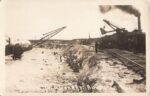
Alabaster was known for gypsum mining. U.S. Gypsum operated a large quarry and plaster mill there for many years. The gypsum was processed into plaster and related building products. The quarry, rail lines, mill buildings and Lake Huron shipping system made Alabaster one of Michigan’s notable gypsum centers.
What happened during the 1910 Alabaster mill fire?
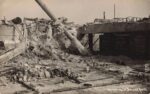
On Oct. 16, 1910, a major fire swept through the U.S. Gypsum plant at Alabaster. Newspaper reports said the mills, docks and warehouse burned, with losses estimated at more than $125,000. The fire started in a storeroom area, and local fire protection could not stop the spread. Ten employees were inside when the fire began, and all escaped.
What was the Lake Huron aerial dock at Alabaster?
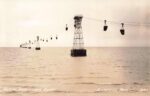
The Lake Huron aerial dock was a cable-and-bucket tram system used to move gypsum from shore to waiting vessels offshore. It allowed U.S. Gypsum to ship heavy material across the Great Lakes without relying only on a standard pier. The aerial dock became one of the most striking industrial features in the History of Alabaster Michigan.
Images on this page may contain affiliate links in which we may receive a commission. See our affiliate disclosure for details.
Works Cited in the History of Alabaster Michigan
“Alabaster.” The Historical Marker Database, accessed 11 June 2026.
“Alabaster, MI.” MichiganRailroads.com, accessed 11 June 2026.
“National Register of Historic Places — Single Property Listings, Michigan.” National Archives and Records Administration, updated 31 Aug. 2021.
Grimsley, George P. “The Gypsum of Michigan and the Plaster Industry.” Geological Survey of Michigan, vol. IX, part II, Robert Smith Printing Co., 1904.
“New Michigan Gypsum Plant Opens.” Rock Products, 19 June 2024.
“USG Hosts September Quarry Tour Day in Michigan.” Walls & Ceilings, 1 Oct. 2024.
“Gypsum & Alabaster.” Michigan in Pictures, 28 July 2012.