 by
by 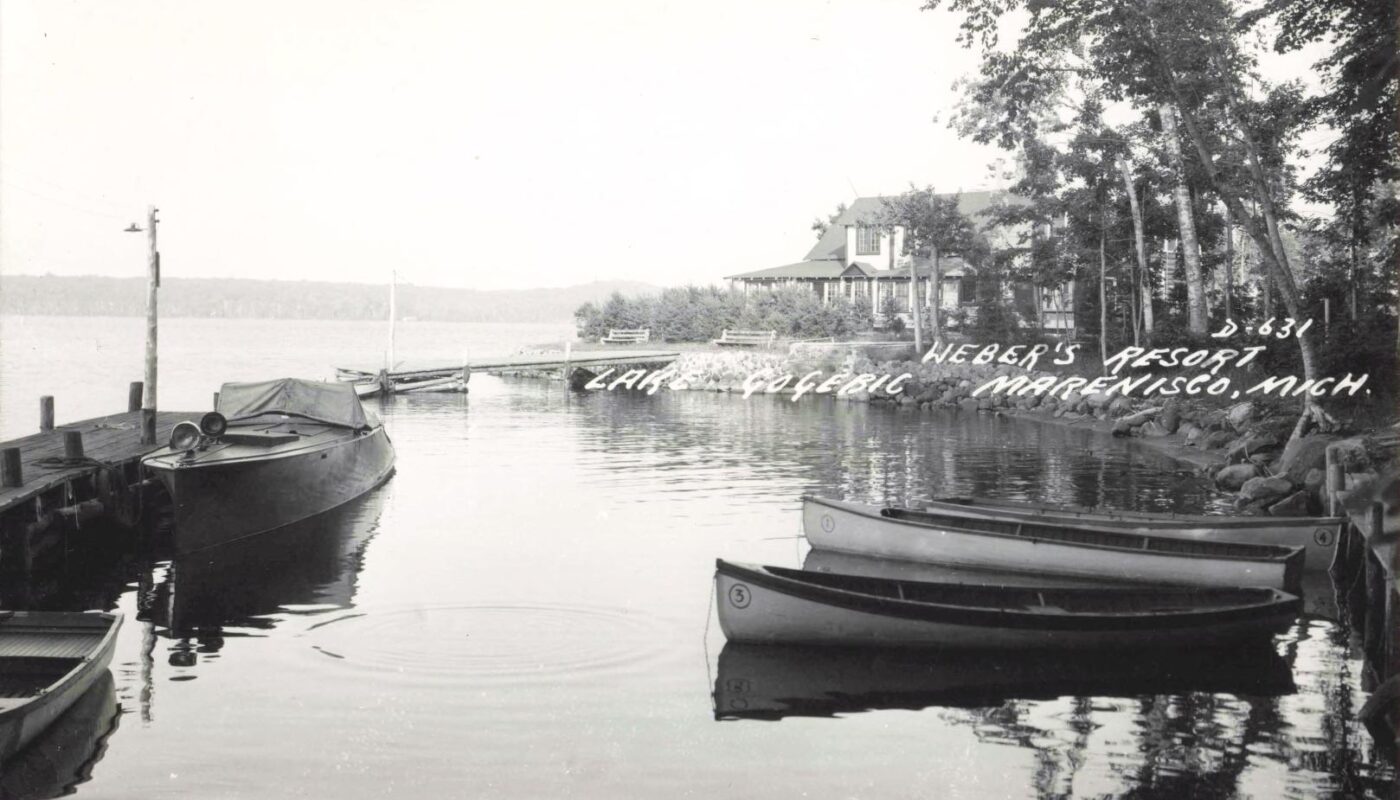
The history of The Resorts of Lake Gogebic Michigan is not just a story about cabins and fishing. It is a story about how a working timber region became a vacation place.
Lake Gogebic sits in the western Upper Peninsula, near Marenisco and Bergland. It is the largest inland lake in Michigan’s U.P., with 13,380 surface acres and 36 miles of shoreline. The lake crosses Gogebic and Ontonagon counties and even sits in two time zones. That unusual geography helped make it feel remote, memorable and just a little strange to visitors who drove north for summer trips.
The resorts around Lake Gogebic grew during the early and mid-20th century. Their appeal was simple. Guests came for clean cabins, meals, tap rooms, docks, rowboats, swimming, fishing and quiet evenings by the water. Some places were modest. Others had more money behind them. Together, they created a shoreline economy that lasted for generations.
From Timber Country to Vacation Country
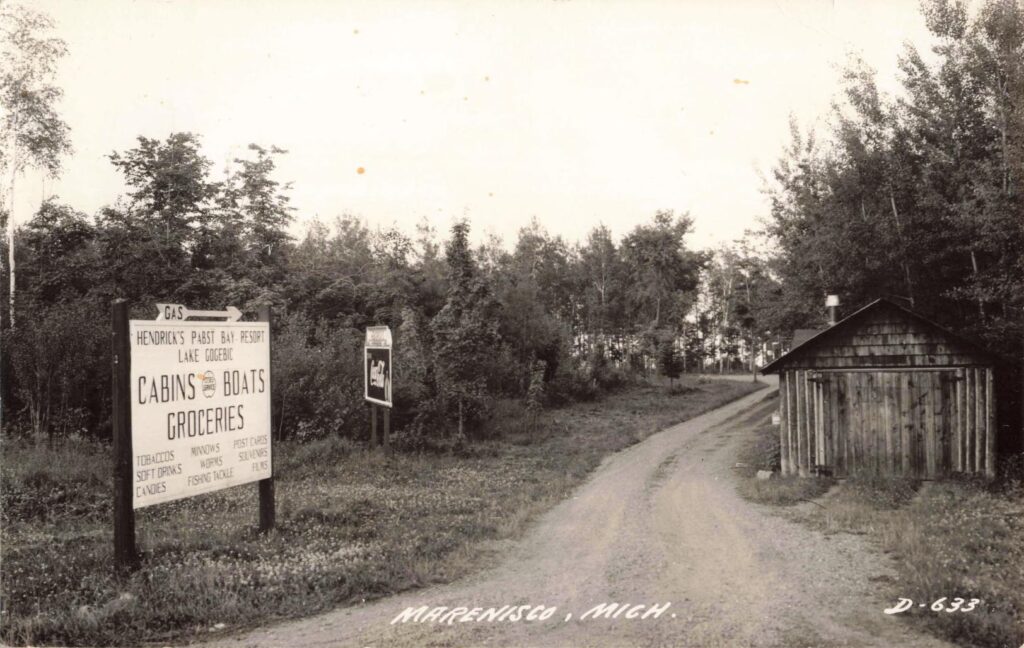
Marenisco was not first known as a resort town. It was a former center of logging, lumber mills and charcoal manufacturing. Its location near US 2, M-64 and old rail lines made it part of the working economy of the western U.P.
That industrial past helped make tourism possible. Roads brought supplies. Rail lines brought people closer. Timber wealth built some private lodges. As logging declined, the lake remained. Families, anglers and vacationers began to see the same area in a new way.
That is the counterintuitive part of the history of The Resorts of Lake Gogebic Michigan. The vacation era did not replace the timber era overnight. It used its routes, buildings and business habits.
Weber’s Resort and the Classic Lake Stay
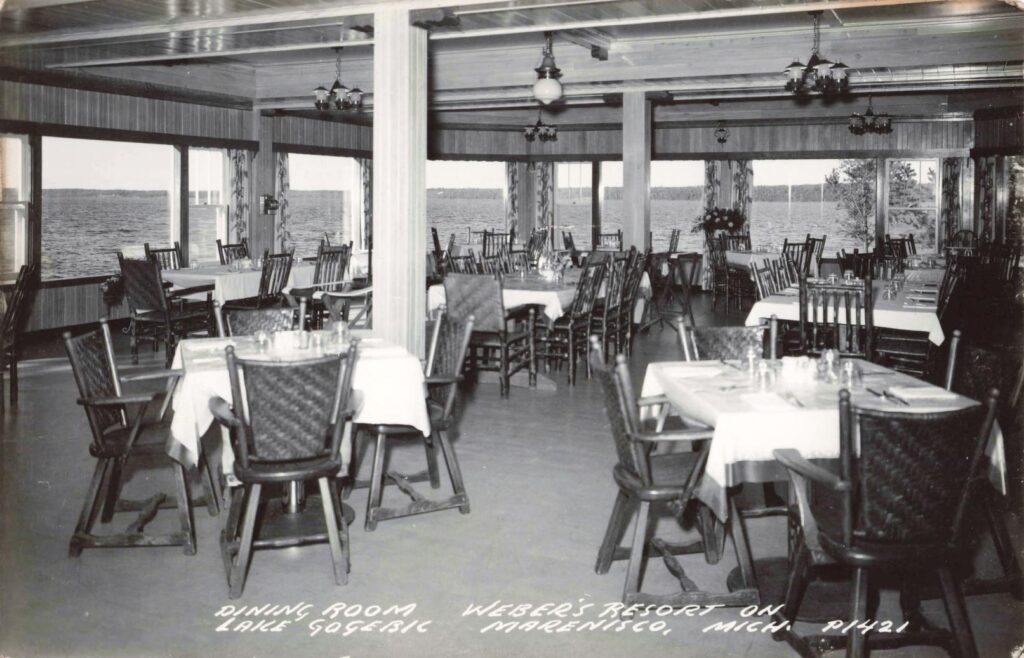
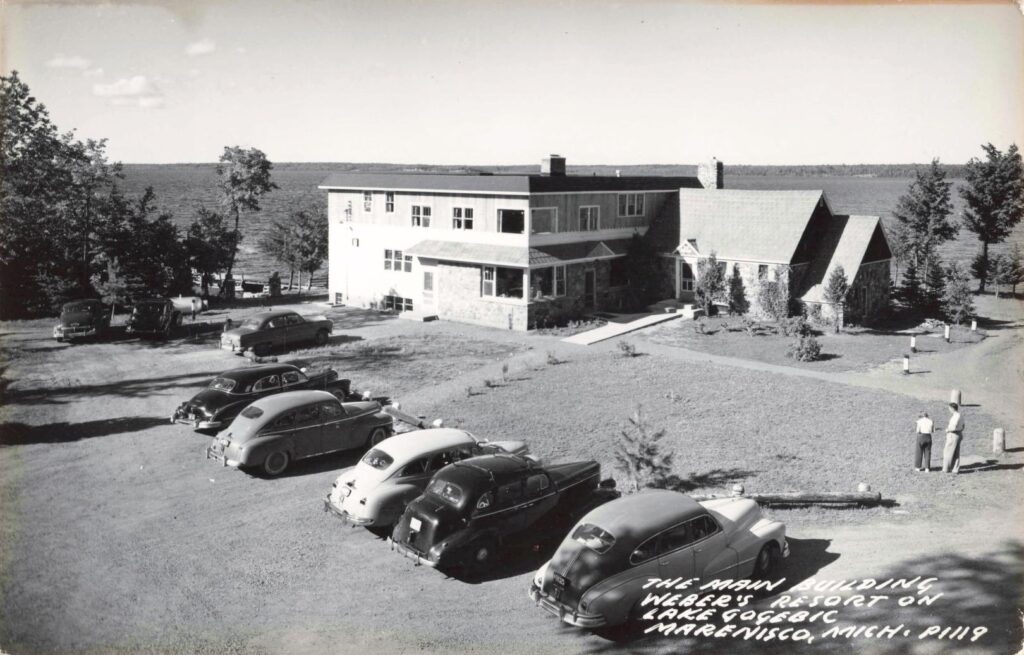
Weber’s Resort appears in several views from the Lake Gogebic resort period. The images show a main building, cabins, cars, a dining room and shoreline access. That mix tells us what guests expected from a northwoods vacation.
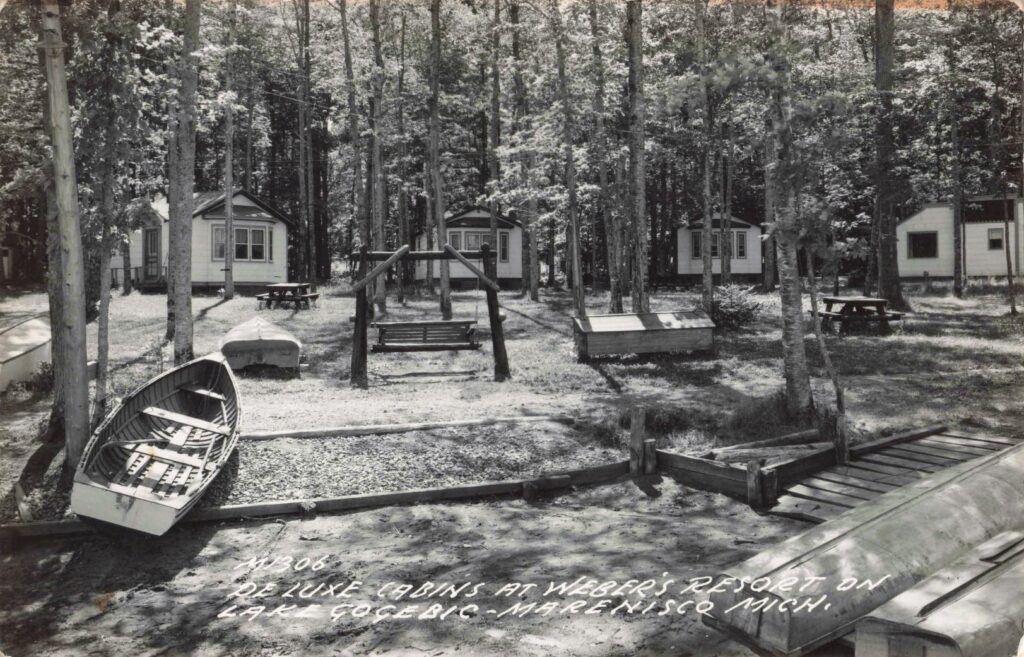
A resort was not just lodging. It was a self-contained place. Guests needed meals, boats, bait, a dock, a room and someone who knew the lake. Resort owners had to provide comfort without losing the rustic appeal that brought people north in the first place.
The dining room at Weber’s Resort is especially useful for understanding the old resort experience. Tables are set, chairs are ready, and the lake can be seen through the windows. In an era before chain restaurants reached every highway, the resort dining room was part of the trip.
Alligator Point Resort and the Social Side of the Lake
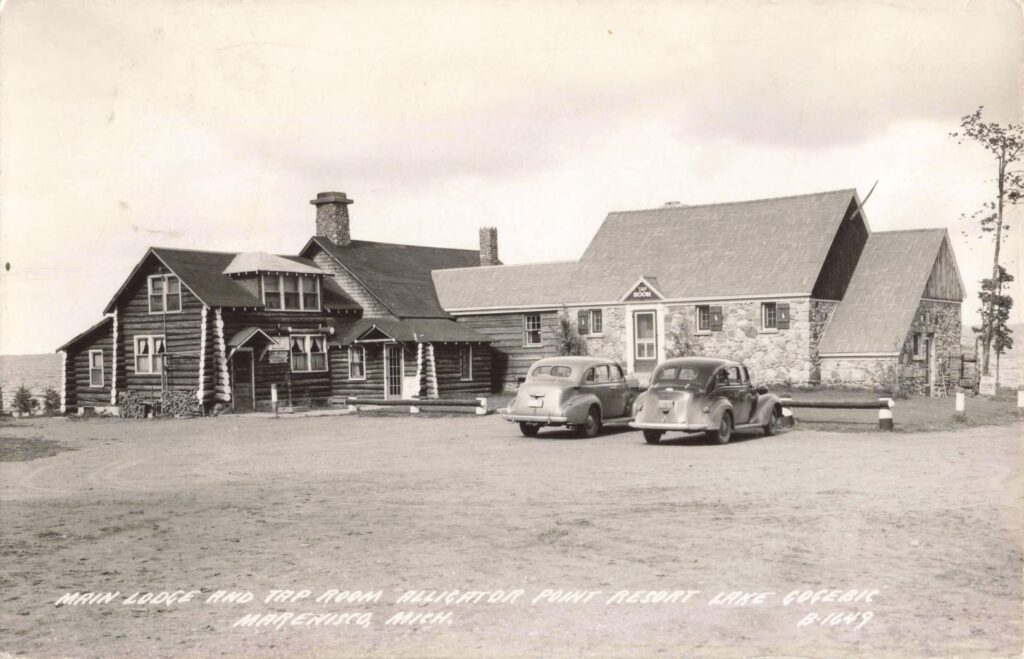
Alligator Point Resort shows another side of Lake Gogebic’s resort culture. A postcard record identifies the “tap room at Alligator Point Resort Lake Gogebic” in Marenisco. The site name lines up with Alligator Point, a mapped feature in Gogebic County.
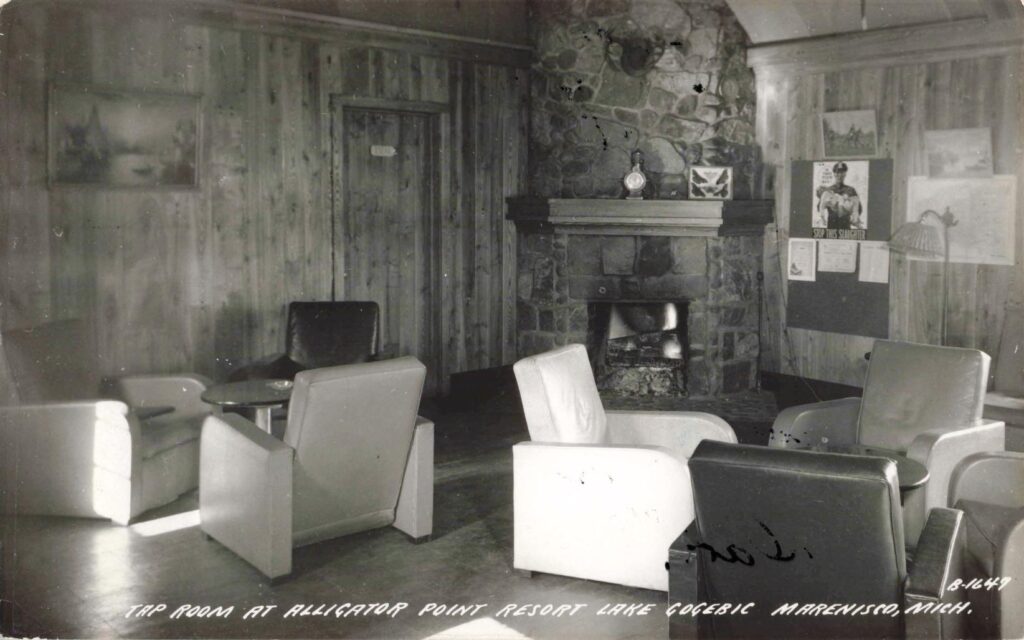
The tap room is important. It shows that these resorts were not only sleeping quarters. They were social places. Guests gathered after fishing. They waited out bad weather. They talked with other travelers. They ate, drank and traded stories.
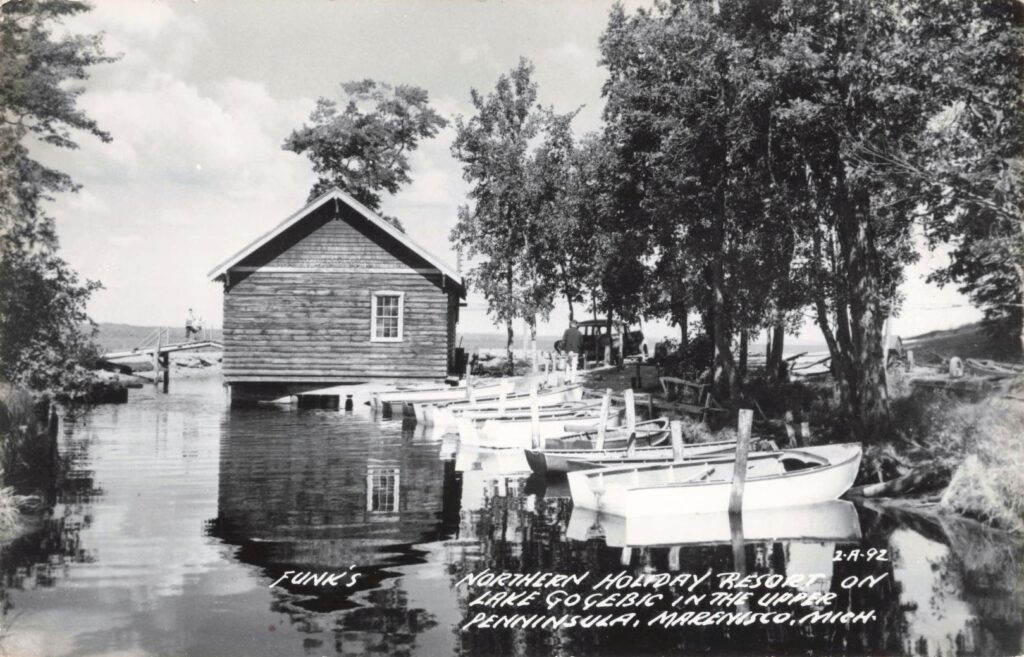
Funk’s Northern Holiday Resort and the Bonifas Connection
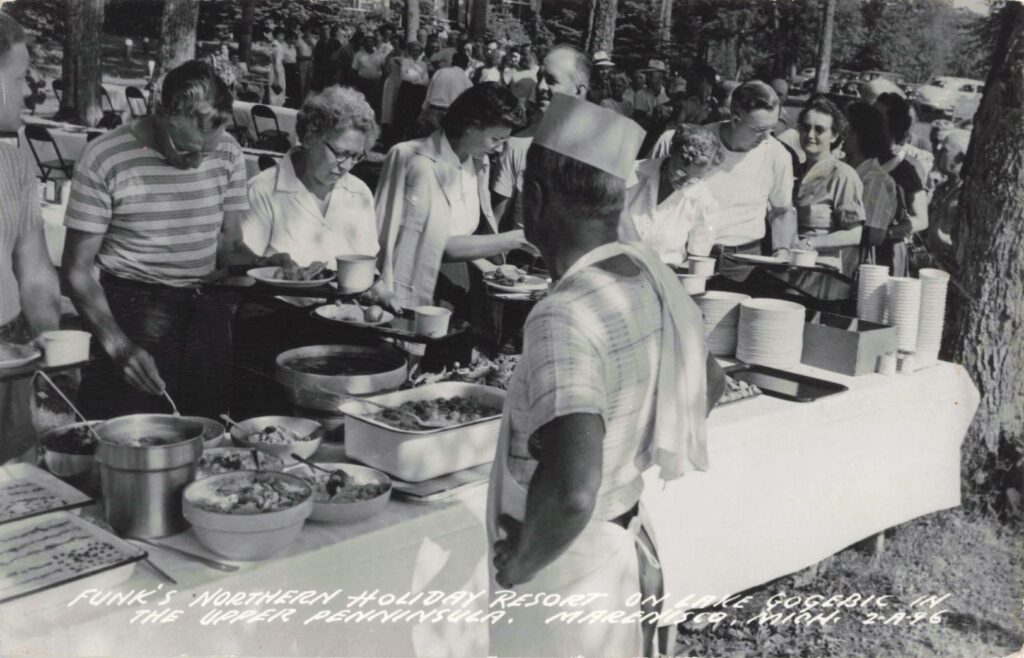
Funk’s Northern Holiday Resort carries one of the most complex stories on the lake. Local history links the broader Bonifas/Funk property to lumber money, private lodge life and later names including 500-Bushal Club and Villa St. Thomas. Gogebic County history notes that ancient burial mounds were found in 1931 on Lake Gogebic property owned by William Bonifas, later associated with those names.
William Bonifas was a major lumberman. His Lake Gogebic lodge has been described as a large property built with materials tied to his Marenisco mill. Later accounts say the property became associated with the Funk family. Some accounts also connect the lodge circle with famous industrial-era guests and with writer Edna Ferber’s lumber-country work.
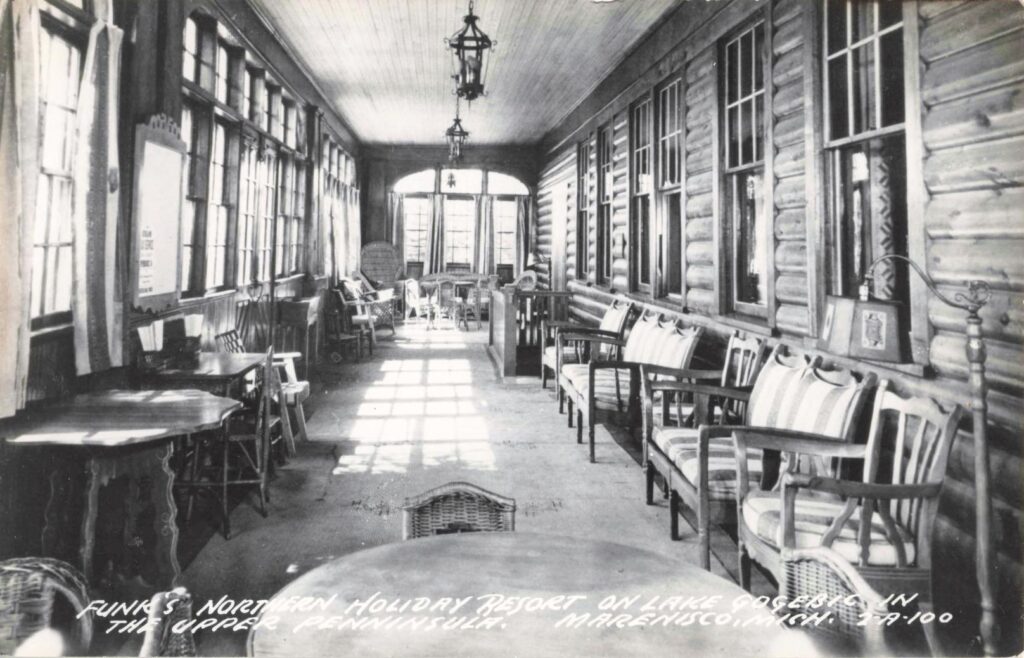
What is clear is that Funk’s represents a higher-end side of the lake’s resort history. It was not only a cabin camp. It was part of a larger story of timber money, private recreation and changing land use.
White House Resort and the Shore House Tradition
The Gogebic Michigan Highwayman – The Last Stagecoach Robbery in North America
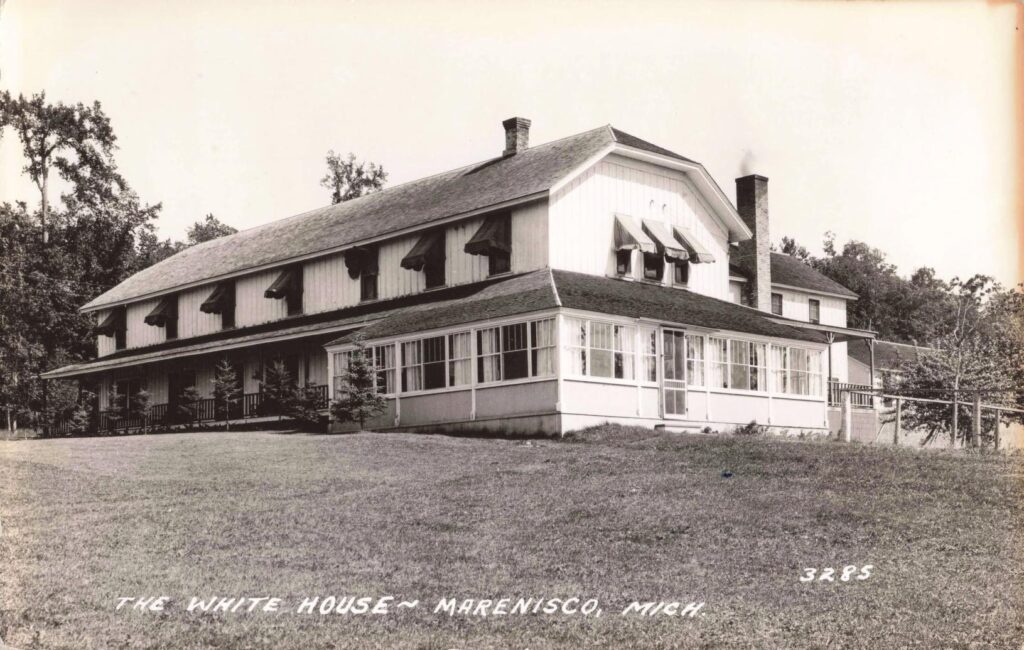
According to Dennis D. Rolando’s 2006 Marenisco history booklet, the White House Inn was built by the Milwaukee, Lake Shore & Western Railroad and, by 1889, had become a summer retreat for wealthy visitors from Chicago and Milwaukee. The resort included a hotel with a long porch and 14 cottages. It was advertised as a fisherman’s paradise, with black bass and trout in Lake Gogebic. A room, meals and fishing privileges reportedly cost $3.
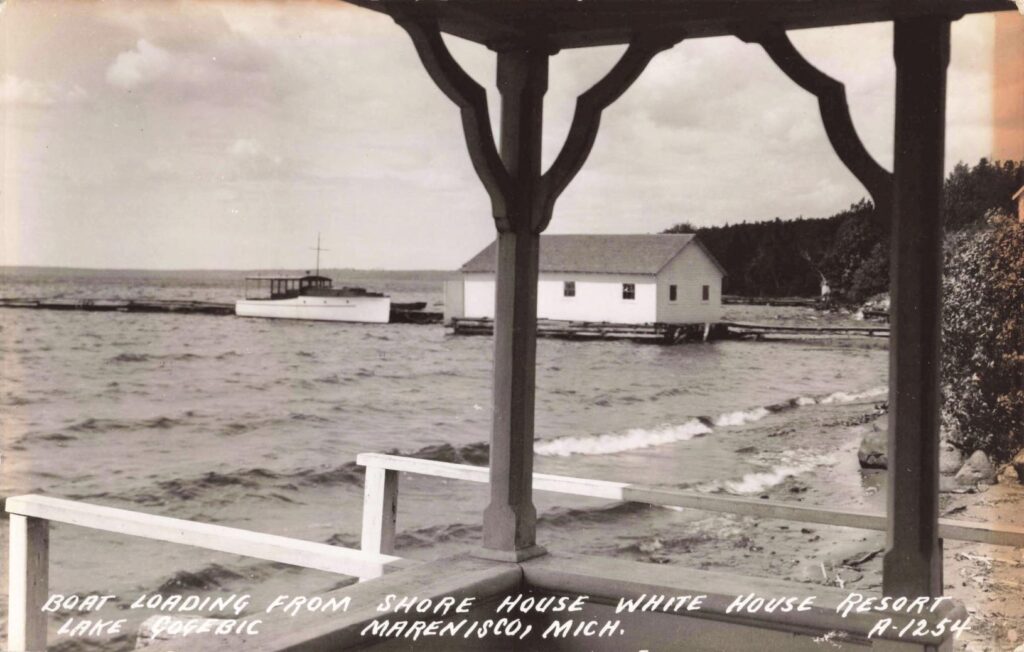
It shows that Lake Gogebic’s resort trade did not begin only with the automobile. Before families arrived by car, some tourists reached the lake by train. Guests stepped off at Gogebic Station, then rode about 10 miles by stagecoach to the inn. The trip itself became part of the resort experience: rail travel, a wagon road through the woods, and a first view of Lake Gogebic from the high ground above the shore.
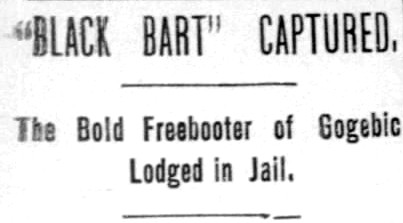
But the White House Inn also became tied to one of Michigan’s more unusual crime stories. On Aug. 26, 1889, a resort stagecoach driven by Theodore Damuth was traveling from Gogebic Station toward Lake Gogebic. Among the passengers were two bankers, Donald Macarcher of Minneapolis and Adolph Fleischbein of Belleville, Illinois. The previous day, Fleischbein had fished with a resort guide named Reimund Holzhey.
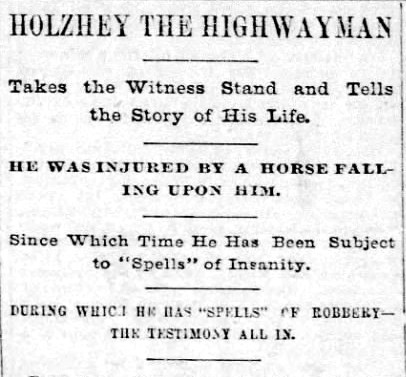
As the stagecoach neared the inn, Holzhey stepped from the woods armed with two revolvers and stopped the coach. During the robbery, he shot Fleischbein. Fleischbein died the next day in Bessemer, a death likely worsened by the distance from medical care. Holzhey was captured five days later in Republic, Michigan, convicted in November and sent to the state prison in Marquette. Rolando’s account states that the 1889 robbery is believed to have been the last stagecoach robbery in Gogebic County, and possibly in Michigan and the Northwest United States.
The White House Inn was premier lakeside resort with porches, cottages and fishing parties. It was part of a brief moment when the western Upper Peninsula still had frontier travel habits, railroad resort marketing and deep-woods isolation all at once.
Public Parks Changed the Lake
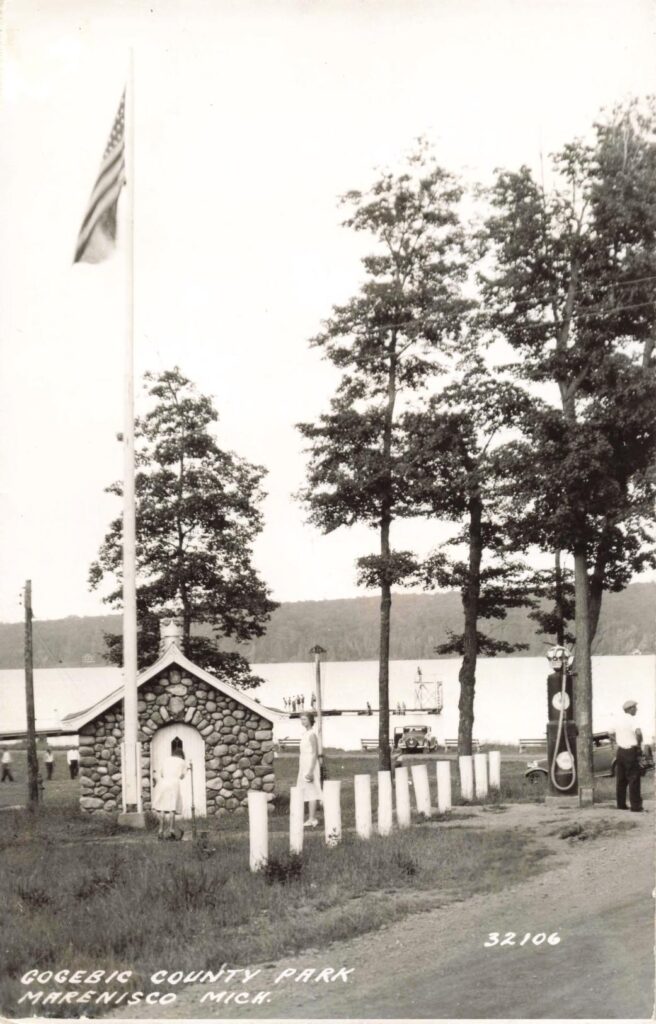
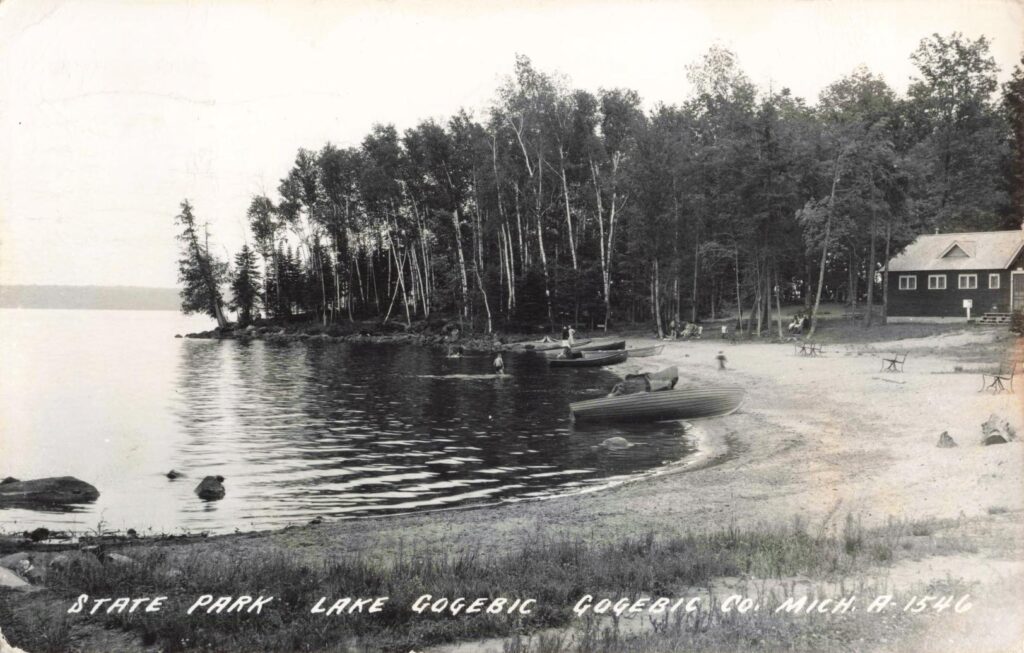
The rise of public recreation changed Lake Gogebic. Lake Gogebic State Park opened to the public in 1930 after Gogebic County acquired land in 1926 and deeded it to the state. Additional property came from E.J. Stickley and W. Bonafas.
That was a major shift. Resorts still served paying guests, but public parks gave more families access to the lake. Camping, swimming, boating and picnicking no longer required a private resort stay.
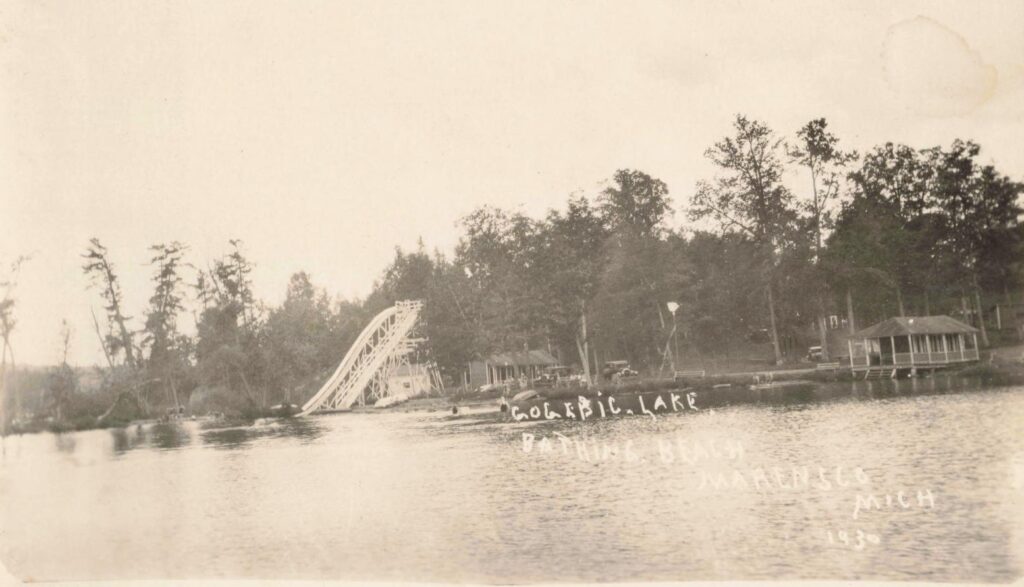
Lake Gogebic County Park remains another public access point. Today it has direct lake access, campsites, a pavilion, a swimming area, a pier, playground equipment and boating access.
Why the Lake Gogebic Resort Era Still Holds Attention
The history of The Resorts of Lake Gogebic Michigan still draws interest because it feels familiar. A family arrives by car. A cabin waits under trees. The lake is nearby. Someone rents a boat. Someone catches dinner. Someone sits in a dining room and looks out at the water.
Many old resort names faded. Some may have changed ownership. Some buildings may be gone or altered. But the pattern is still easy to understand.
Lake Gogebic’s resort era was built on practical comforts. Cabins. Meals. Gas. Groceries. Bait. Boats. Docks. Public parks. That simple mix turned a remote U.P. lake into a summer address for generations.
The history of The Resorts of Lake Gogebic Michigan is also a reminder that tourism did not arrive in a blank place. It followed industry. It followed roads. It followed rail lines. It followed timber money. Then it became its own economy.
That is why Weber’s, Funk’s, White House, Alligator Point, Hendrick’s/Pabst Bay, Gogebic County Park and Lake Gogebic State Park belong in the same story. They show the full range of the lake’s past, from private lodge life to public recreation.
Lake Gogebic did not need a grand hotel to become memorable. It had water, fish, cabins, food, boats and long summer days. For many Michigan families, that was enough.
Works Cited For the Resorts of Lake Gogebic