Aboard the Miss Port Sanilac 1960
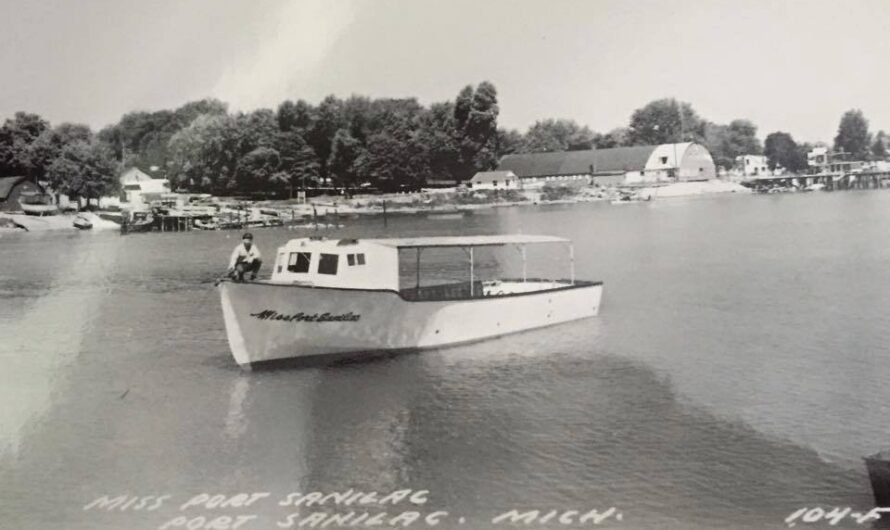
The Miss Port Sanilac is a 38-foot fishing vessel that was built in 1958 in Pigeon Michigan. Today the Miss Port Sanilac operates out of Port Sanilac Marina for charter tours, wreck viewing, and diving.

News History & Fun in Michigan
The Miss Port Sanilac is a 38-foot fishing vessel that was built in 1958 in Pigeon Michigan. Today the Miss Port Sanilac operates out of Port Sanilac Marina for charter tours, wreck viewing, and diving.
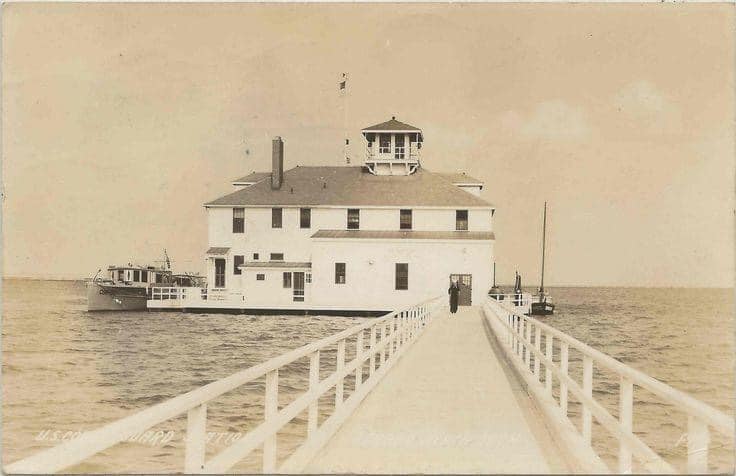
The Coast Guard Station at Harbor Beach, originally built in 1910 and relocated in 1935, served as a training facility during WWII before closing in 1987. Despite preservation efforts, the station was demolished in 2004. It played a significant role in the Great Lakes waterway system and local maritime history.
While neglected, with broken windows, faded peeling paint and vines almost covering one end, this historic depot helped make the region an economic powerhouse for the eastern shore of the Thumb for decades
In October of 1871, a great forest fire swept across much of the Thumb region including the section of Michigan that included the lands of the former colony of Ora Labora. The colony was in the process of being disbanded and the lands sold off, but large holdings remained including some cabins and buildings. The colony’s benefactor and primary landowner, the Harmony Society immediately sent $200 for distribution among the needy.
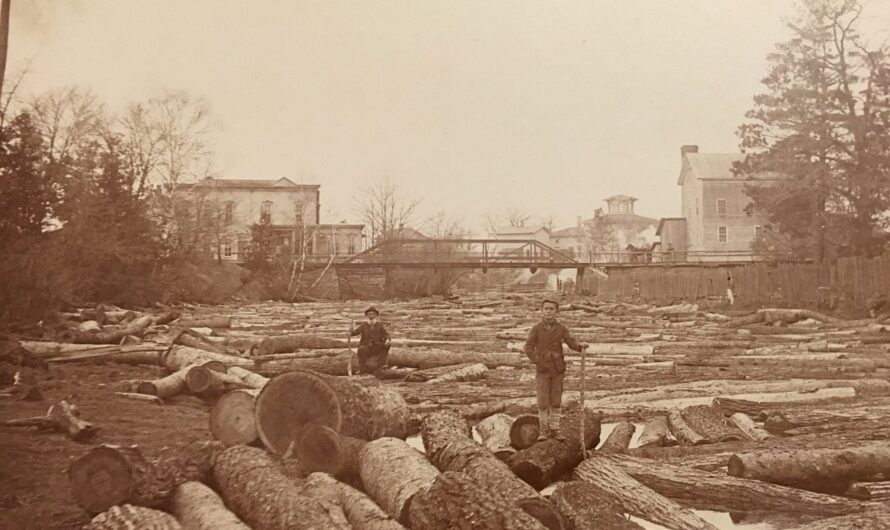
In spring, the winter logging operations ended, and the long run to the sawmill began. In this picture, two men, called River Hogs, worked to keep the logs moving along the Pigeon River to the sawmill in Caseville. The work took skill and was dangerous. River Hogs were paid up to $3.50 per day.
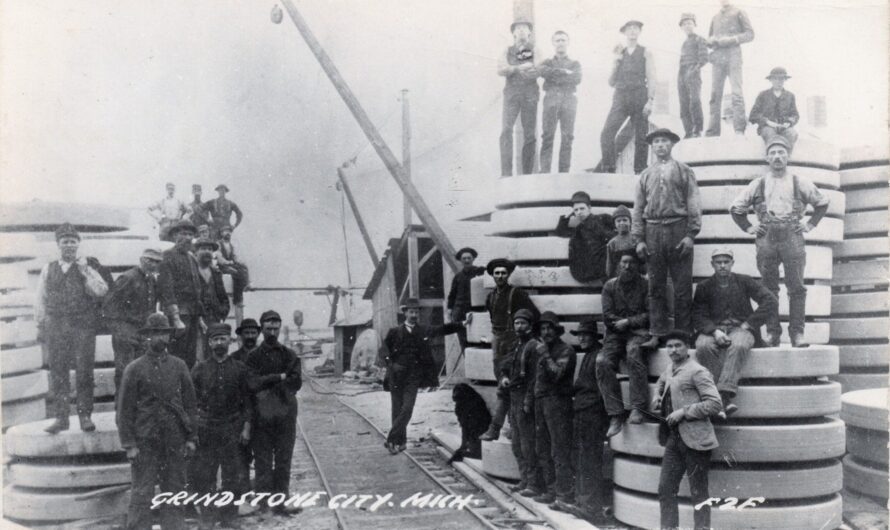
From the 1830s until the 1910s, Grindstone City Michigan produced the premier grinding wheels in the United States. In 1888, the Cleveland Stone Co. Purchased the property owned by Worthington and Sons and became the sole owner of all quarry properties.
Quarry Works Grindstone City in the 1920s This shot of the quarry in Grindstone City in the early 1900s reveals the basic tools used to extract the stone to be used for grindstones. Note the ginpole’s in the distance and horse-drawn …
The idea of straw bale gardening from a book by Joel Karsten. Joel comes to us from Minnesota where the growing season is incredibly short and the soil tough to cultivate.