 by
by 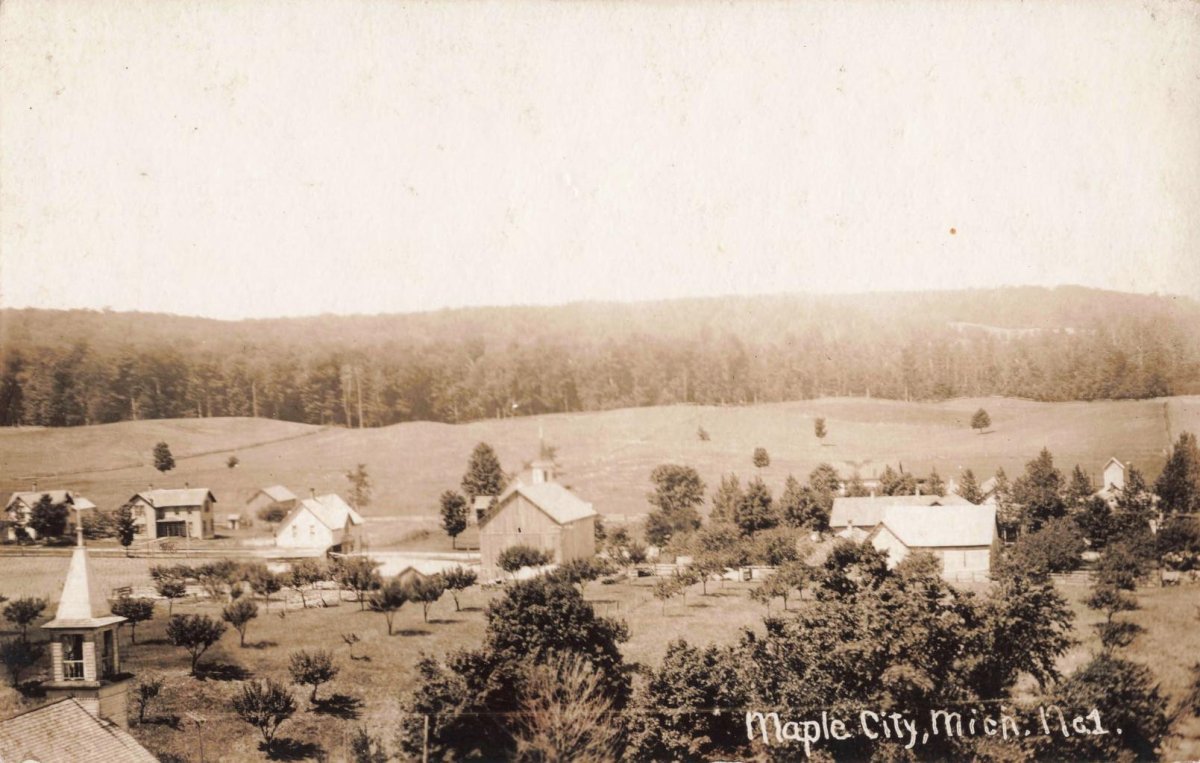
Long before it became a quiet residential hub in Leelanau County, Maple City was known to Michigan loggers and laborers simply as "Peg Town." The village didn’t start as a farming community, but as a specialized industrial center fueled by the 1866 arrival of William Parks and J.T. Sturtevant. These men established a factory that produced shoe pegs, the tiny wooden pins used to hold soles to boots before the widespread use of stitching or glue.
If you’ve driven through the intersection of County Roads 616 and 667, you’ve likely felt the pull of the past while looking at the local architecture. Most visitors find only surface-level facts online, but the history of Maple City Michigan is deeply tied to the Homestead Act of 1862 and the grit of families who claimed 160-acre plots in the surrounding Kasson Township. These settlers turned a dense forest into a productive landscape that outlasted the factory that gave the town its first name.
This guide examines the chronological development of the village and the specific industrial challenges that shaped its early years. You will learn about the pivotal shift from a manufacturing hub to a central Leelanau community and identify the historical names that still define the area today. We will also look at the surviving landmarks that bridge the gap between the 19th-century "Peg Town" and the modern village of 189 residents.
Key Takeaways
- Identify how the specialized shoe peg industry led by William Parks and J.T. Sturtevant established the village as “Peg Town” in 1866.
- Understand the specific legal requirements settlers faced under the Homestead Act of 1862 to secure 160-acre plots in Kasson Township.
- See why the 1875 postal application for the name “Maple” was rejected and how the community secured the “Maple City” designation instead.
- Trace the history of Maple City Michigan by examining the archival records and civic contributions of the founding Burke and Herbert families.
The Industrial Roots of Peg Town (1866)
The story of Maple City begins in 1866 within the rugged boundaries of Kasson Township. William Parks and J.T. Sturtevant arrived not as farmers, but as industrial opportunists looking to capitalize on the region’s dense hardwood forests. They established a factory dedicated to the production of shoe pegs, which were essential components in 19th-century footwear construction. Before automated stitching became the industry standard, cobblers used these tiny wooden pins to secure the soles of boots to the uppers. This specialized manufacturing effort is the cornerstone of the History of Maple City and defined the village’s early economic identity.
Parks and Sturtevant chose this specific site because of the massive stands of hard maple trees. Maple was the preferred material for shoe pegs because it didn’t compress easily and held its shape when driven into leather. The factory transformed the quiet Leelanau woods into a noisy, productive hub that supported dozens of families long before the area was known for its orchards.
To better understand the modern layout and character of this area, watch this helpful video:
Manufacturing in the Leelanau Wilderness
Converting maple logs into millions of tiny pegs was a grueling, labor-intensive process. Workers first cut the logs into thin cross-sections or disks. These disks were then split into thousands of uniform wooden spikes. The pegs had to be dried and polished before they were ready for sale. Logistics presented a major challenge for the factory owners. In the 1860s, Leelanau County lacked reliable roads, so teamsters hauled heavy loads of pegs over primitive trails to Lake Michigan ports. This early industry had a lasting environmental impact. Intense timber harvesting cleared the hilly landscape, opening the way for the agricultural settlement that followed.
The Legacy of the Peg Town Name
For nearly a decade, the community didn’t have an official name, so residents simply called it "Peg Town." It was a functional title that reflected the village’s sole major employer. Even after the village established a post office and officially became Maple City in 1875, the old name stuck. Many locals continued to use "Peg Town" in casual conversation for generations. This industrial founding was part of a larger pattern of development seen across the state. You can learn more about how these early industries shaped the region by exploring 45 significant events in Michigan history. The early history of Maple City Michigan serves as a reminder of the era when wooden pegs were as valuable as the timber they came from.
The Homestead Act and Settlement in Kasson Township
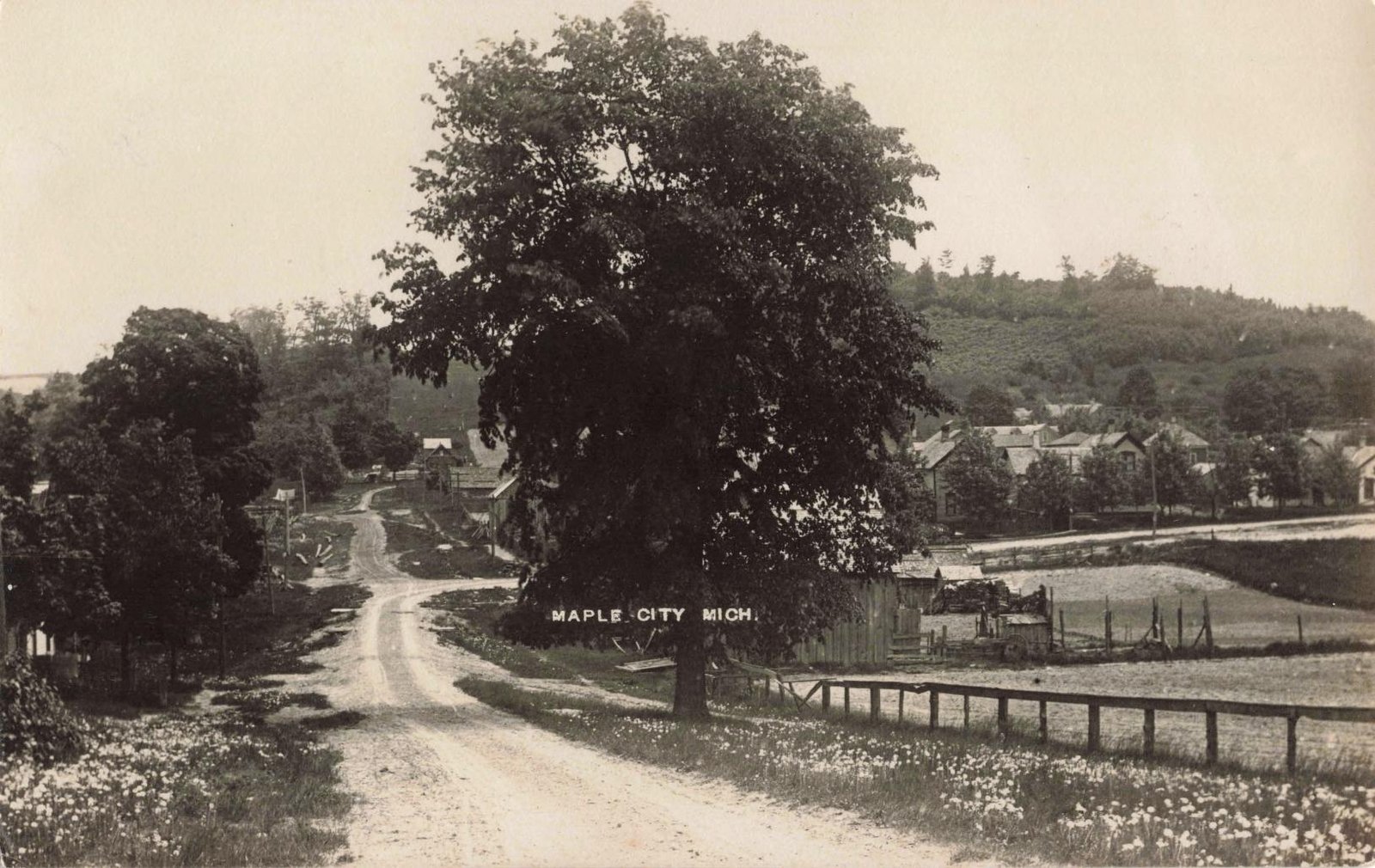
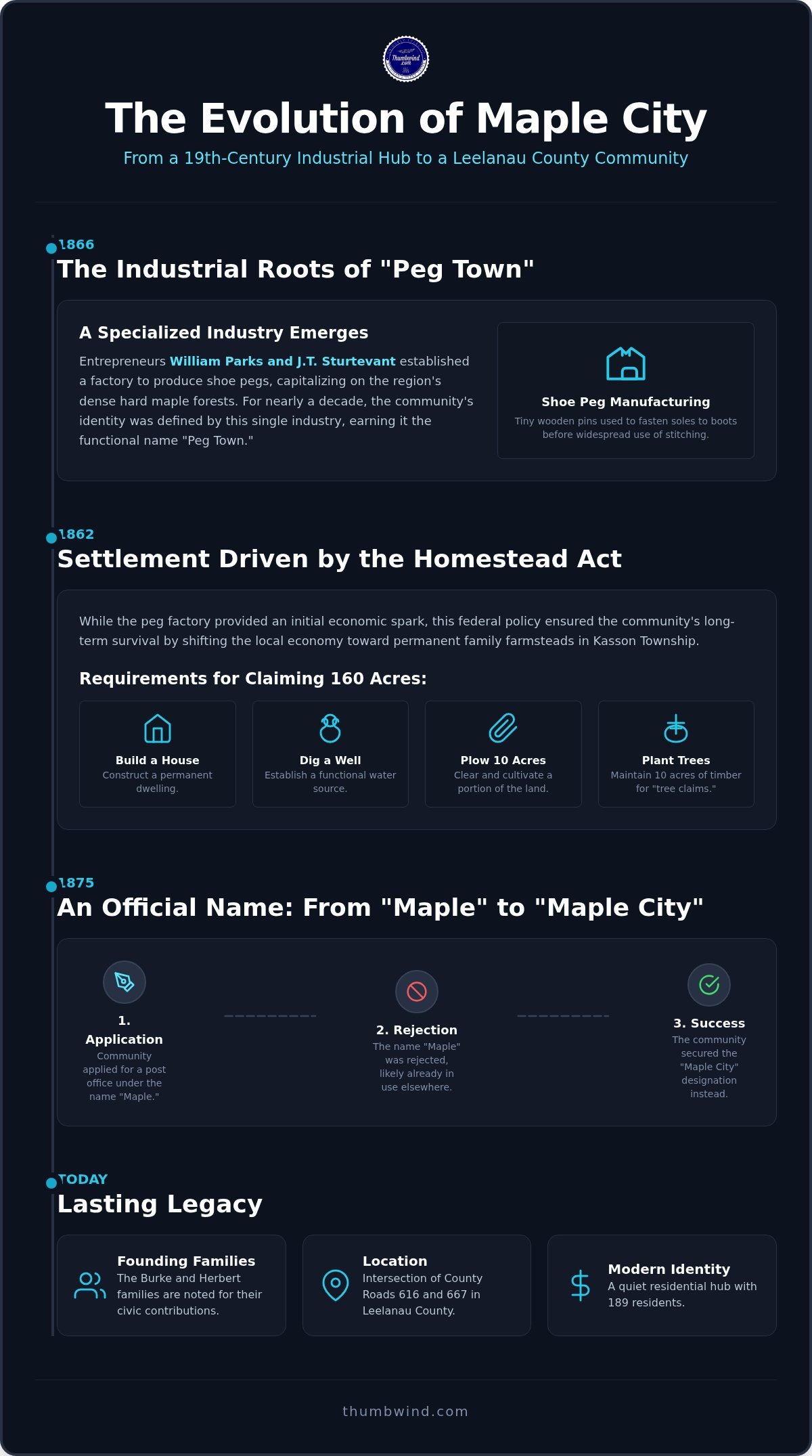
While the shoe peg factory provided the initial spark for the village, the Homestead Act of 1862 ensured its long-term survival. This federal policy allowed individuals to claim 160 acres of public land, provided they were willing to live on and improve it. It was a primary driver in the history of Maple City Michigan, shifting the local economy from temporary industrial labor to permanent family farmsteads. As the peg factory consumed old-growth timber, the arrival of homesteaders brought a new sense of permanence to the Leelanau wilderness.
To secure a final deed to their land, homesteaders had to meet specific physical requirements over a five-year period. They were required to build a permanent house, dig a functional well, and successfully plow at least 10 acres of soil. In the rolling, often rocky hills of Leelanau County, this meant months of grueling labor just to remove enough stumps and stones to plant a basic crop. The work was slow, but it established the first real community infrastructure outside of the factory walls.
Settlers also frequently utilized the "timber culture" or "tree claim" provisions of the era. This required them to plant and maintain 10 acres of timber on their property to ensure future wood supplies. This created a sharp contrast in the local landscape. While industrial peg production stripped the hills of their original hardwoods, the agricultural expansion that followed sought to replant and manage the forests that remained.
Claiming the Quarter-Section
The legal process for claiming land required filing an application at a regional land office and eventually finding witnesses to verify the improvements. Located roughly 15 miles west of Traverse City, Kasson Township was a dense, intimidating wilderness in the mid-1800s. Clearing 160 acres of old-growth maple was a task that often required the cooperation of entire families and neighbors. For a deeper look at the early land parcels and the families who claimed them, the official Kasson Township history provides excellent context on the original plats.
From Orchards to Farmsteads
The early plowing efforts of these homesteaders laid the groundwork for the cherry and apple orchards that define the area today. Before these families arrived, the region was largely unmapped and unsettled by European standards. Viewing an 1837 Michigan map reveals that Leelanau was still unorganized territory just thirty years before the founding of Peg Town. If you want to stay connected to these stories of Michigan’s past, you can subscribe to Michigan Moments for weekly updates on regional heritage.
The Transition to Maple City and Civic Expansion
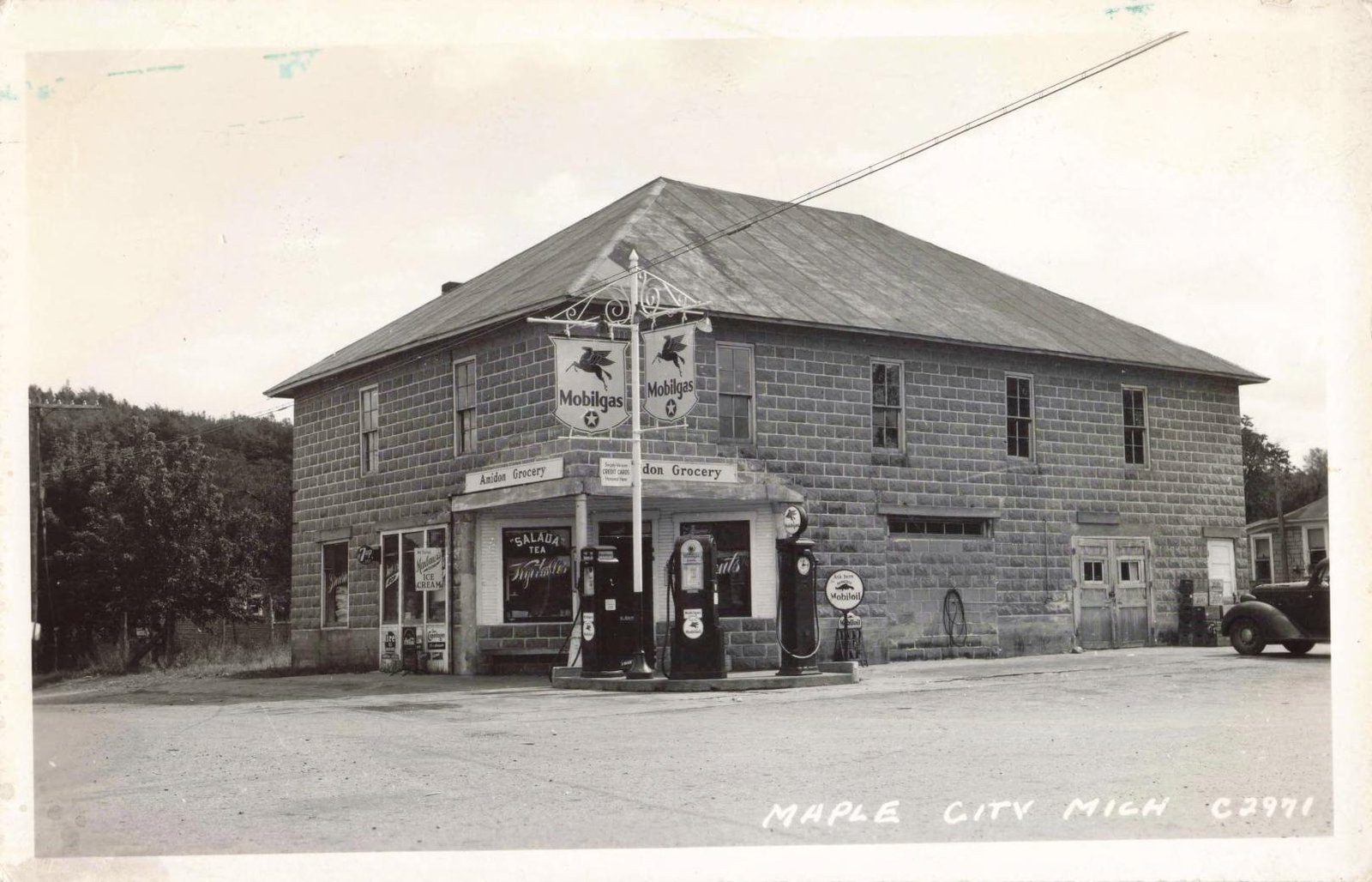
By the mid-1870s, the community had outgrown its "Peg Town" moniker. On March 9, 1875, the federal government officially established a post office for the village. Residents initially requested the simple name "Maple" to reflect the surrounding forests that fueled their economy. However, postal authorities granted the name "Maple City" instead, likely to avoid confusion with other existing locations in the state. This formal designation marked a turning point in the history of Maple City Michigan, moving it from a temporary lumber camp to a permanent civic entity.
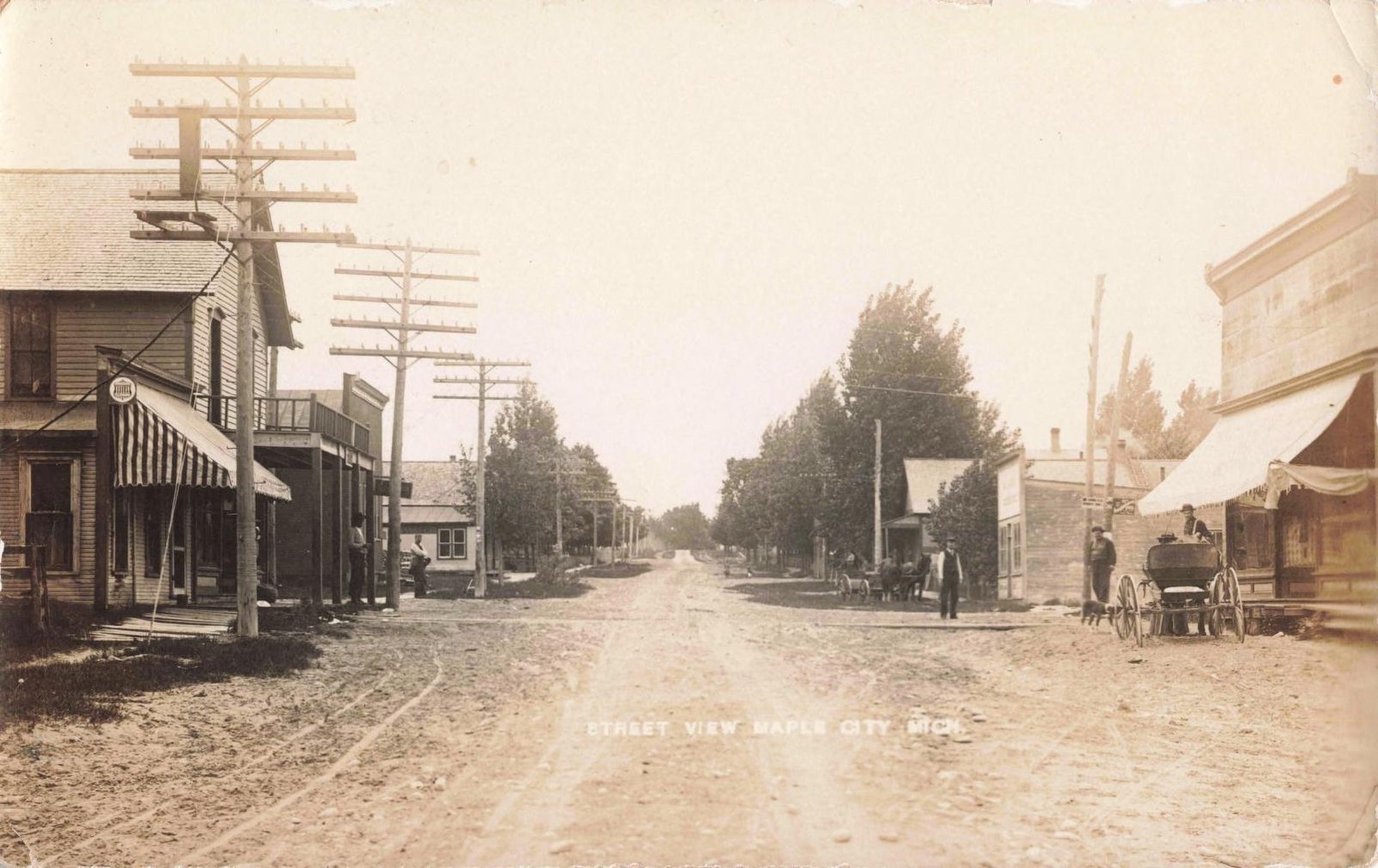
Infrastructure followed the mail service. A general store became the village’s commercial anchor, providing essential supplies to homesteaders who no longer relied solely on the factory’s company store. Will Blackhurst opened a blacksmith shop, a vital service in an era when horses and iron tools were the primary movers of agricultural progress. These businesses transformed the intersection into a reliable stop for travelers moving between the Lake Michigan shoreline and the growing city of Traverse City.
Religious and Social Evolution
Social life in the village centered on shared faith and communal gatherings. In 1890, the Friends Meeting House was constructed just east of the village center. This Quaker establishment served as a spiritual home for many early settlers for over two decades. In 1916, the building underwent a significant transition when it was converted into a Catholic Church. This change reflected the shifting demographics of Leelanau County as new immigrant families arrived to work the land. These institutions provided stability for rural families as the initial industrial boom began to fade.
The Decline of Early Industry
The shoe peg factory could not survive the rapid evolution of manufacturing technology. As automated stitching machines and new adhesives became standard in footwear production, the demand for wooden pegs plummeted. The factory eventually closed its doors, forcing the community to pivot. Agriculture became the dominant force, with many families focusing on the orchards that still define the region. The proximity to Lime Lake also began to draw early tourists, laying the groundwork for the modern seasonal economy. The village successfully transitioned from a specialized manufacturing hub into the central community of Kasson Township.
Tracing the Legacy of Maple City’s Founding Families
The history of Maple City Michigan is best understood through the families who remained long after the factory whistles went silent. While industrial owners provided the initial capital, it was the persistent labor of residents like the Burke and Herbert families that turned a temporary camp into a permanent village. Archival records from the late 19th century frequently cite these names in land deeds and township governance roles. John Donovan, another prominent figure in the community’s early development, became linked to the Burke lineage through marriage, creating a network of kinship that anchored the village during economic shifts.
Self-sufficiency was a necessity in the Leelanau wilderness, and the village’s survival depended on more than just timber. Local tradespeople provided the essential services that allowed the community to function independently. These included:
- Will Blackhurst: The local blacksmith whose shop was vital for repairing agricultural tools and shoeing horses.
- General Store Operators: Merchants who supplied homesteaders with goods that weren’t available at the factory store.
- Civic Leaders: Early residents who organized the first schools and maintained the primitive road system connecting Kasson Township to Traverse City.
Preserving the Archive
The Leelanau Historical Museum in Leland serves as the primary repository for photographs and documents related to these founding figures. These records help distinguish documented history from local assumptions, providing a clear view of how the village transitioned from "Peg Town" to a residential hub. Visitors are encouraged to explore local landmarks and cemeteries where the names of early settlers are still visible on headstones. Understanding why this community endured while others vanished requires looking at Michigan Ghost Towns to see how different economic foundations led to the abandonment of other industrial sites.
Maple City in the 21st Century
Today, the village functions as a quiet but essential gateway for those traveling toward the Sleeping Bear Dunes National Lakeshore. With a 2026 population estimated at 189 residents, the community maintains a steady residential and agricultural base. It avoids the "ghost town" status of its peers because the early pivot to farming created a stable economy that outlasted the shoe peg industry. The legacy of the original homesteaders lives on in the orchards and farmsteads that still define the surrounding Kasson Township landscape.
Preserving the Legacy of Leelanau Heritage
Maple City stands as a rare example of a Michigan industrial settlement that didn’t crumble after its primary factory closed. By successfully pivoting from shoe peg manufacturing to sustainable agriculture, the village avoided the fate of many forgotten timber towns. Understanding the history of Maple City Michigan requires looking past the modern storefronts to the legacy of the homesteaders who cleared these hills. These early residents didn’t just build a factory; they established a community capable of outlasting industrial shifts.
Since 2009, Thumbwind has utilized primary sources and regional archives to document these transformations across the state. We focus on verified data to ensure that the stories of families like the Burkes and Herberts remain accurate for future generations. These historical narratives provide a necessary bridge between the rugged "Peg Town" era and the vibrant residential area we see today. Each landmark and family name serves as a reminder of the persistence required to settle the Leelanau wilderness.
Exploring the backroads of the Great Lakes State often reveals that even the quietest intersections have a story to tell. We invite you to keep looking closer at the landscapes around you.
Frequently Asked Questions
Why was Maple City originally called Peg Town?
Maple City was originally called Peg Town because of the shoe peg factory established by William Parks and J. T. Sturtevant in 1866. This industrial site was the community’s sole major employer, and the name served as a functional label for the settlement. For nearly a decade, loggers and laborers used the nickname until a post office was established. It remains one of the most distinct industrial origins in Leelanau County history.
What did the shoe peg factory in Maple City produce?
The factory manufactured tiny wooden pins called shoe pegs, which were essential for 19th-century footwear construction. Cobblers used these maple pegs to secure boot soles to the uppers before automated stitching became widespread. The abundance of hard maple trees in the surrounding wilderness made the site ideal for production. These pegs were polished and shipped over primitive trails to Lake Michigan ports for distribution to larger markets across the Midwest.
How did the Homestead Act affect the settlement of Maple City?
The Homestead Act of 1862 allowed settlers to claim 160-acre plots in Kasson Township, provided they lived on the land and improved it. This federal policy was a driving force in the history of Maple City Michigan, as it brought in families who intended to stay long after the timber was cleared. Requirements like building a house and plowing 10 acres shifted the local economy from temporary manufacturing to permanent, stable farmsteads.
When did the name officially change to Maple City?
The name officially changed on March 9, 1875, coinciding with the establishment of the village’s first post office. Residents had initially petitioned the federal government for the name "Maple" to honor the local forests. Postal authorities granted the name "Maple City" instead, likely to prevent confusion with other Michigan towns. This formal designation helped the community move past its identity as a rugged lumber camp and into its role as a civic center.
What happened to the Friends Meeting House in Maple City?
The Friends Meeting House was built in 1890 as a place of worship for the local Quaker community. It served this role for over two decades until it was converted into a Catholic Church in 1916. This change reflected the shifting demographics of Leelanau County as new immigrant families arrived to work the orchards. The building’s transition highlights how the village’s social and religious institutions adapted as the original industrial base declined.
Is Maple City considered a ghost town?
Maple City is not a ghost town, though it had industrial roots that often lead to abandonment in other regions. It remains an active residential community with a population of 189 as of 2026. Unlike abandoned mining or lumber camps, the village successfully transitioned to an agricultural and tourism-based economy. Its proximity to Lime Lake and the Sleeping Bear Dunes keeps it a relevant hub for both year-round residents and seasonal visitors.
Disclaimer
Information published on Thumbwind.com is provided for general informational purposes. While we make reasonable efforts to keep articles accurate and current, details such as prices, hours, regulations, access conditions, and other information may change without notice. Readers should verify important details with the appropriate business, agency or official source before making travel, financial or other decisions. Thumbwind.com is not responsible for the content, availability or practices of third-party websites linked from our articles.