 by
by 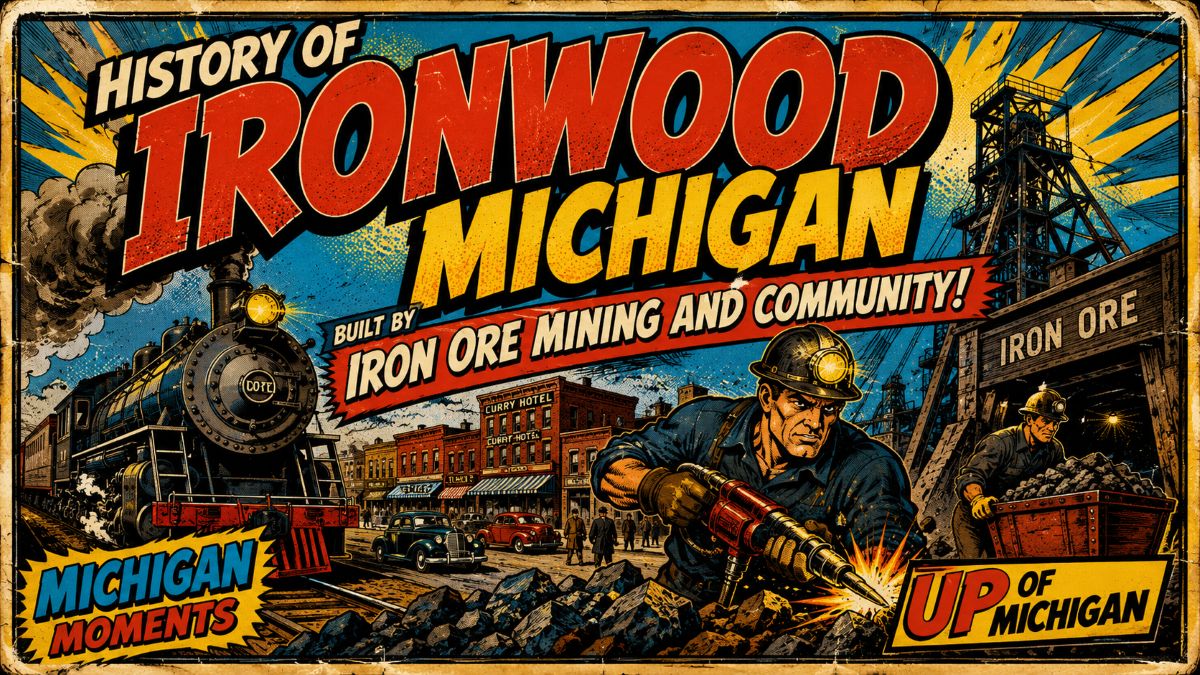
Michigan Moments Video
Ironwood Michigan History: Built by Mining and Community
Historic images show how iron mines, railroads, immigrant families, downtown commerce, severe winters and ski jumping shaped this western Upper Peninsula city.
Watch “History of Ironwood Michigan — Built by Iron Ore Mining and Community,” presented by Michigan Moments.
What This Ironwood History Video Shows
Ironwood grew rapidly after a railroad line reached the settlement in late 1884. Trains delivered workers, equipment and household goods while carrying iron ore toward Great Lakes ports and American steel mills.
The photographs featured in this video show the Ironwood Depot, underground miners, Aurora Street businesses, the Curry Hotel, Grand View Hospital, deep winter snow, the Wolverine Ski Jump and the region’s early airport.
Together, the scenes show that Ironwood Michigan history was shaped by more than mining. Rail service, immigration, health care, retail businesses, winter sports and public investment also helped turn a mining camp into a city.
Scenes From Ironwood’s Mining Years
The Mine Whistle Sets the Schedule
The video opens with the sound that once governed much of daily life. Mine whistles signaled shift changes and marked the beginning or end of work for thousands of residents.
Ironwood was an industrial city where household schedules often followed the operating hours of the mines.
The Railroad and Ironwood Depot
The Milwaukee, Lake Shore and Western Railway reached Ironwood in late 1884. Rail service helped the settlement grow by bringing in supplies and workers while providing an efficient route for iron ore.
The Ironwood Depot was built in 1892 and later became a local museum and community office.
A Mining Camp Becomes a City
Forest camps and temporary buildings were replaced by brick storefronts, hotels, theaters and saloons as Ironwood’s population increased.
Ironwood incorporated as a city in 1889. By 1891, six local mines employed more than 3,000 men.
Working Below Ground
Miners descended through shafts before sunrise to drill, blast and move iron ore. The work was physically demanding, and underground accidents could be deadly.
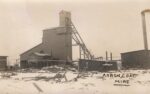
Former mine sites within Ironwood included the Norrie, Aurora and Pabst groups, each containing multiple shafts and support buildings.
Aurora Street and the Curry Hotel
Aurora Street served as Ironwood’s main commercial corridor. Stores, banks, theaters, restaurants and hotels stood within walking distance of nearby residential districts.
The video presents the Curry Hotel as a meeting place for residents, mine officials and traveling sales representatives.
Grand View Hospital
Grand View Hospital served Ironwood and the surrounding mining region. The video recalls a period when medical workers treated industrial injuries, serious respiratory infections and other illnesses.
Hospitals and company clinics were vital institutions in communities where heavy industry placed workers at regular risk.
Winter Buries the Streets
Ironwood’s location near Lake Superior places it within a heavy-snow belt. Historic photographs show roads, sidewalks and storefronts buried after major storms.
Residents dug paths between homes and streets while businesses and mines continued operating through long winters.
The Wolverine Ski Jump
The Gogebic Range Ski Club organized in 1935 and built a 60-meter jump at Wolverine Hill. The first competition at the site was held during winter 1937.
Ski jumping became a major spectator sport and a point of pride for Ironwood and other Upper Peninsula communities.
Ironwood Looks to Aviation
The Gogebic-Iron County Airport was dedicated in 1930. Its development showed that the region was investing in newer forms of transportation even as some mines began slowing.
The airport added another link between Ironwood and communities outside the western Upper Peninsula.
“This town was built by hands. It was shaped by weather, work and neighbors.”
How Railroads Built Ironwood
Ironwood Michigan history changed sharply when the railroad arrived in 1884. Before regular rail service, moving workers, machinery and large quantities of ore through the western Upper Peninsula was slow and costly.
Trains made large-scale mining practical. Supplies and equipment could be delivered directly to the district, while loaded ore cars traveled toward ports at Ashland and Escanaba. From there, ships carried the ore to steel mills.
Passenger service also brought miners, merchants and families into the new city. The depot became one of Ironwood’s main points of arrival and a physical link to the rest of the country.
Iron Mining Drives Rapid Growth
Iron ore findings created a rush of investment during the 1880s. Mining companies opened shafts and built surface facilities near what became Ironwood’s residential and commercial districts.
By 1891, the Ashland, Aurora, East Norrie, Newport, Norrie and Pabst mines were operating in Ironwood. More than 3,000 men worked in those mines.
The city’s population reached 7,745 in the 1890 census and rose to 15,739 by 1920. That growth created demand for housing, schools, stores, churches, health care and public services.
Immigrant Families Shape Ironwood Michigan History
The mines drew workers from several European countries. By 1920, more than 37% of Ironwood residents were immigrants, and more than 90% had at least one parent born outside the United States.
Finnish residents made up about one-quarter of the city’s immigrant population. Swedish, Polish and English families were also strongly represented.
These families formed churches, societies, businesses and athletic clubs. Their food traditions, languages and winter sports became part of local culture.
Aurora Street Becomes the Commercial Center
Aurora Street developed into Ironwood’s downtown business corridor. Stores sold groceries, furniture, clothing, medicine and household supplies to mining families.
Hotels served mine officials, sales representatives and other travelers. Theaters and saloons provided entertainment after work, while banks handled mine payrolls and business accounts.
Several historic commercial buildings remain along Aurora Street. The district still reflects the period when Ironwood was one of the largest mining communities in the western Upper Peninsula.
Winter Sports Take Root
Long winters affected nearly every part of Ironwood life. Heavy snow could bury roads and block entrances, but it also supported a strong skiing culture.
Ski jumping drew large crowds during the early 20th century. The Gogebic Range Ski Club built the Wolverine jump in 1935 and held its first competition there in 1937.
Torger Tokle set a 216-foot record at Wolverine in 1942. The jump remained a symbol of regional winter sports even after the original upper structure was later damaged by high winds.
Ironwood Adjusts as Mining Slows
Ironwood’s mines faced rising operating costs as shafts became deeper. Demand also fell during the Great Depression, while newer methods made lower-grade ore from open-pit mines more competitive.
Several mines closed during the 1920s and 1930s. The city continued investing in transportation and public facilities, including the airport dedicated in 1930.
The last iron mine within the city closed during the mid-1960s. Former mine sites now form part of Miners Memorial Heritage Park, where signs and reconstructed features identify the Norrie, Aurora and Pabst mining areas.
Key Facts About Ironwood Michigan History
- Iron ore findings helped establish Ironwood during the 1880s.
- The railroad reached the settlement in late 1884.
- Ironwood incorporated as a city in 1889.
- Six mines employed more than 3,000 men by 1891.
- The Ironwood Depot was built in 1892.
- Ironwood’s population reached 15,739 by 1920.
- Immigrant families formed a large share of the city’s population.
- The Gogebic-Iron County Airport was dedicated in 1930.
- The Wolverine Ski Jump was built in 1935.
- The first Wolverine competition was held in winter 1937.
Edited Video Transcript
Open the complete Ironwood video transcript
0:00 — This is Michigan Moments, sharing the pioneering history of the Great Lakes State.
0:06 — In Ironwood, Michigan, everything once began with the sound of a whistle.
0:11 — Trains brought men, families and hope, while carrying iron ore out into the world.
0:16 — This was not a quiet place. It was a working town, a city that knew how to labor and how to wait.
0:24 — For people arriving by rail, the train station appeared first. Ironwood grew quickly after iron ore was found beneath the Gogebic Range during the 1880s.
0:31 — Within a decade, forests and temporary camps gave way to brick storefronts, hotels and saloons.
0:38 — Mines operated around the clock. The mines shaped nearly every hour of the day.
0:46 — Men descended underground before sunrise. Some did not return until dark. Others did not return at all.
0:54 — Yet workers took pride in their jobs. A miner’s wage fed families and paid for clothing, schoolbooks and occasional entertainment.
1:05 — Downtown Ironwood was busy. Aurora Street was lined with shops, theaters, hotels and saloons.
1:14 — The Curry Hotel stood near the center, offering rooms, meals and a place to gather.
1:18 — Traveling sales representatives stayed there. Mine managers dined there, and residents met friends nearby.
1:26 — Every storefront served a purpose. Grocers sold tea and coffee. Furniture stores offered payment plans, and pharmacists prepared medicine by hand.
1:33 — People walked, talked and knew one another.
1:39 — When illness or injury came, Grand View Hospital served the region. Before larger hospitals, mining companies operated clinics for their workers.
1:45 — Broken bones and pneumonia were familiar problems. Nurses cared for generations of local families.
1:57 — Winter ruled Ironwood. Snow fell in feet rather than inches.
2:00 — Streets disappeared beneath snow. Residents dug paths from their doors to sidewalks, while children played near buried storefront signs.
2:07 — Life did not stop because of snow. On a wooded hillside outside town stood the Wolverine Ski Jump, a wooden tower built for distance and daring.
2:16 — Finnish immigrants were an important part of Ironwood’s population, bringing traditions, food and a strong interest in winter sports.
2:26 — By the early 20th century, ski jumping was more than entertainment. It was a source of community pride.
2:33 — By the 1930s, Ironwood had an airport. It was a sign that the city was looking forward even as some mines slowed.
2:40 — This city was built by hands. It was shaped by weather, work and neighbors.
2:48 — Ironwood still remembers what it once was.
2:53 — Thanks for listening. Please follow us for future episodes. This has been Michigan Moments, offering bite-sized stories from Michigan history.
Historical Sources
Watch More Michigan Moments
See more short videos about Michigan mining towns, railroads, historic businesses and Great Lakes communities.
View All Michigan MomentsVideo presented as part of the Michigan Moments history series from Thumbwind Publications LLC.
Related Posts